


Architectural Metal Gains New Range Through BŌK Modern’s Fabrication
Delivering structurally integrated metal systems end to end, BŌK Modern keeps design, engineering, fabrication, and project management under one roof, an arrangement that lets the team solve problems while there is still room in the schedule and the budget to solve them. In this interview, Jonathan D. Bodway, Principal and General Manager, and Steve Duncan, Creative Design Lead, discuss what that model makes possible, the fabrication advances expanding the range of architectural metal, and why they want a fabricator in the room before the details are drawn.
Metropolis: BŌK Modern works as a single-source provider of structurally integrated metal systems, a model that keeps design and fabrication on the same side of the table. Broadly speaking, how does that shape what the company is able to deliver?
BŌK Modern: One of the biggest advantages is that everyone is working toward the same goal from the beginning. In construction, information can get fragmented as projects move between designers, manufacturers, contractors, and installers. When design, engineering, fabrication, and project management sit at the same table, you can solve problems earlier and design to a specific timeline and budget from the start.
Metropolis: The company brings decades of combined expertise across architecture, engineering, construction, and industrial design. What has stayed constant in BŌK Modern’s approach, and where is the thinking evolving now?
BŌK Modern: We’re always going to come back to clean details and simple installation. Great design comes from listening to all the players on the team. Behind every solution we offer was an architect, installer, contractor, or owner who was trying to solve a specific problem and was willing to work through it together with us. That’s always going to be a north star in our work. What’s evolving is the range of tools and perspectives we can bring into the design conversation. In particular, we’re seeing exciting developments in computational design, artificial intelligence, and building science. At the same time, we’re drawing inspiration from disciplines outside of architecture entirely.
I love this exploration of what becomes possible when architectural metalwork intersects with other fields. Sometimes the best ideas come from biology, healthcare research, fashion, music, or industrial design. For example: Pattern is a thread that ties together the work we do with an industry like fashion. Fashion looks at patterns, so we love seeing pattern trends we can pull into our design work at BŌK. That extends to performance patterns, for example: are there biophilic patterns for better health outcomes? Is there better acoustic performance relative to patterns? We have a project called Casa Adalante where a pattern was used artistically to reflect the fabric of the local community. We love seeing all the ways patterns can be used in metal and the ways outside industries can influence those patterns.
Metropolis: Powder coat technology and raw material applications have both moved considerably in recent years. What has that expansion put within reach for designers who want range without giving up authenticity or sustainability?
BŌK Modern: Architects increasingly want materials that feel honest and authentic, considering key factors like lifecycle, resilience, and long-term maintenance. That’s where a lot of innovation is happening right now. Improvements in powder coating technology mean designers have a wider variety of colors and saturations, without compromising longevity or warranty. Combined with digital printing and perforation, the artistic potential has never been more exciting. When it comes to honest materials, we collaborate with architects and installers to design solutions with corten, a material that ages and weathers naturally over time. The best part: the more it ages, the better it looks.
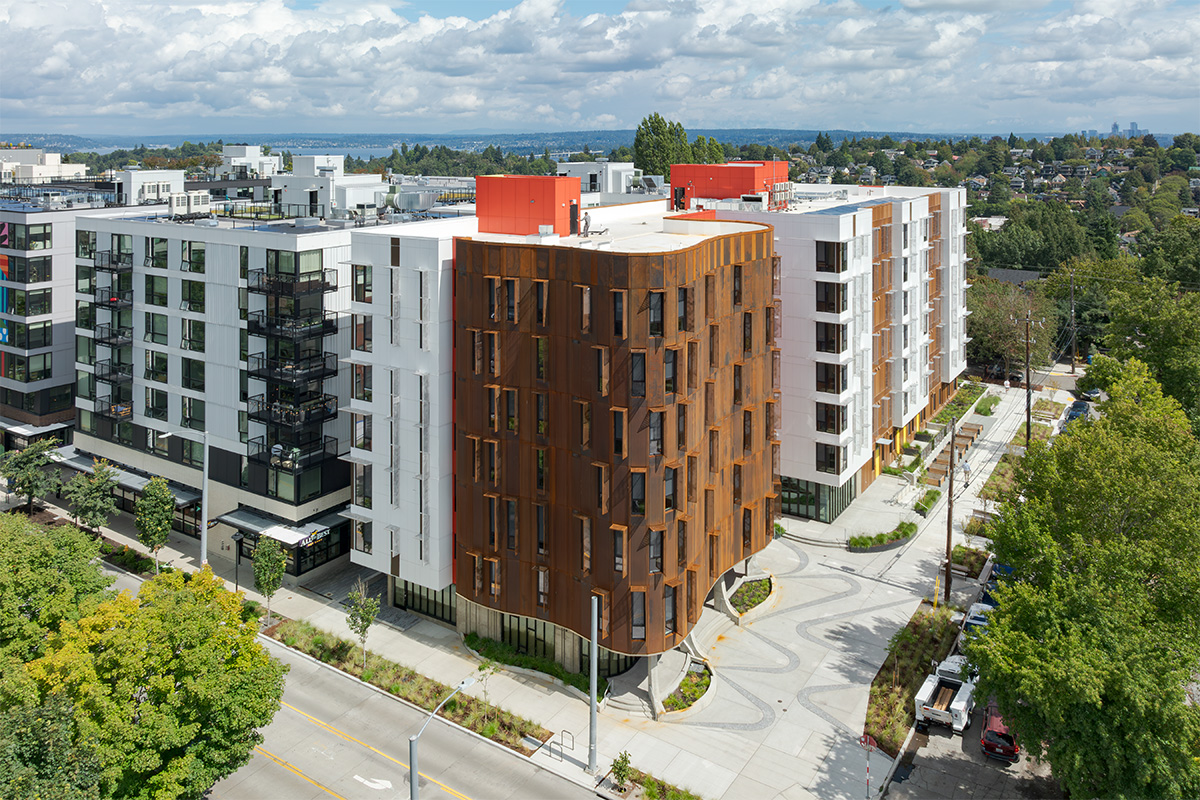
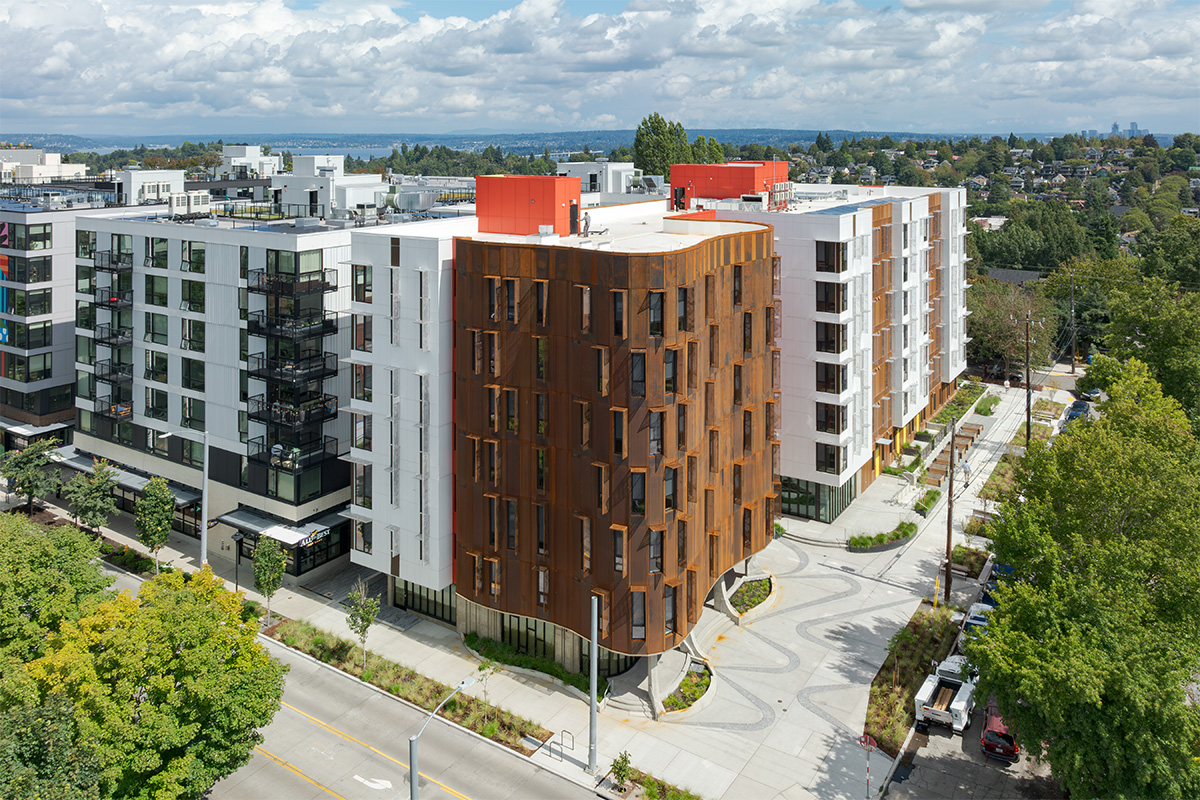
Metropolis: Ground-up construction and renovation each set their own terms. Recent work makes the contrast visible, from the rainscreen wrapping a new curved corner at Africatown Plaza to the custom golden pattern recalling a 1966 brise-soleil at Hacienda Heights. Can you speak to some of the ways the company’s systems and early design process adapt between the two?
BŌK Modern: We love working in both arenas. In both cases, we’re trying to understand the big idea and then develop systems and details that support it. Sometimes that means creating something entirely new; other times, it’s helping carry an existing story forward in a meaningful way. Ground-up work means we can be working with a blank slate, and there’s usually a little more time in the schedule to optimize our approach for performance and install.
Renovation work requires a slightly different mindset because you’re entering into an existing story that needs to be honored. There are additional limitations around install, timeline, and aesthetics. It’s why some of our favorite projects are renovations. Often, unforeseen conditions come up on-site, and this is where our team shines. Our system of brackets, fasteners, and slotted panel openings affords the installer some freedom to make micro-adjustments in the field. Our panels are often the last thing to go up on the building. We accommodate real-world field conditions, which means our project managers can often find solutions to unforeseen challenges without disrupting the schedule or the design intent.
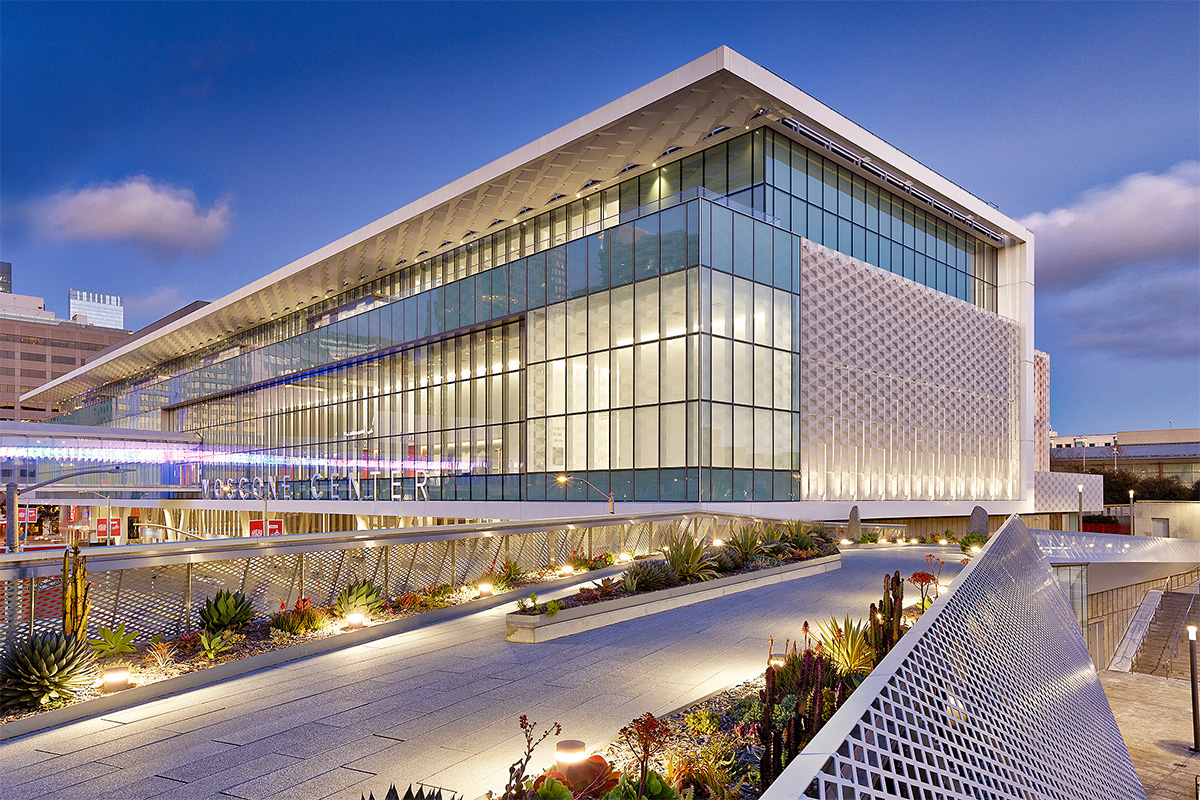
Metropolis: BŌK Modern’s team developed a self-reinforcing scrim at the Moscone Center expansion, a three-story screen that hangs from a single row of structure at the roof and is pinned out from the building for lateral support alone. Projects like that one point to a larger way of thinking about how a panel carries its own load. How would you describe that philosophy, and how does it continue to show up in the work today?
BŌK Modern: Sometimes the most cost-effective solutions come from looking back to the old ways of doing things. At Moscone Center, the panels are configured in a running-bond pattern, a hallmark of masonry construction for millennia. When applied to the metal panels on this project, we were able to significantly reduce the structural steel required. Combined with modern laser-cut perforation technology, we can create a super-graphic façade because the seams between panels are so understated. As a philosophy, it comes down to one question we return to on every project: how can we make this simpler?
Metropolis: Early design collaboration sits at the center of how BŌK Modern works, with the fabricator engaged at the concept stage rather than once a specification is complete. What does that timing make possible, for the design and for the construction that follows?
BŌK Modern: We like to talk about cost, install strategy, and timeline early on. These are topics for the earliest design conversations, so the architect doesn’t waste time drawing details that won’t meet the project’s budget. The same logic applies when GCs and installers are at the table early. We love it when GCs and installers are involved early, too. We’re going to optimize our design from a material cost standpoint, but it’s just as important to educate everyone on how easy our systems are to install so the team can work up a realistic and competitive labor number as well.
Metropolis: Modern fabrication has changed what architectural metal can do, and the possibilities keep growing. Looking to the years ahead, where do you see the field going, and how would you like BŌK Modern to help shape it?
BŌK Modern: We’re entering an exciting period where the lines between design, manufacturing, and technology are becoming increasingly blurred. Increasingly, owners are building their broader team earlier to include installers, fabricators, and manufacturers. This puts owners and architects in the driver's seat of pushing “what comes next” in the world of design.
We love it when architects view us as an extension of their team, like co-creators, with the technical answers needed to push the envelope. Rather than reacting to cost overruns once the design is fully baked, we’re seeing owners take a proactive approach through design contracts with fabricators like BŌK Modern. It’s the most direct path to a design where everyone is happy, because the owner has assembled a dream team of specialists. The architect can deliver on aesthetics and vision, the GC can provide cost and schedule certainty, and the installer understands the pragmatics of getting the project built.