


Beyond Color: The Science of Light in Commercial Floors
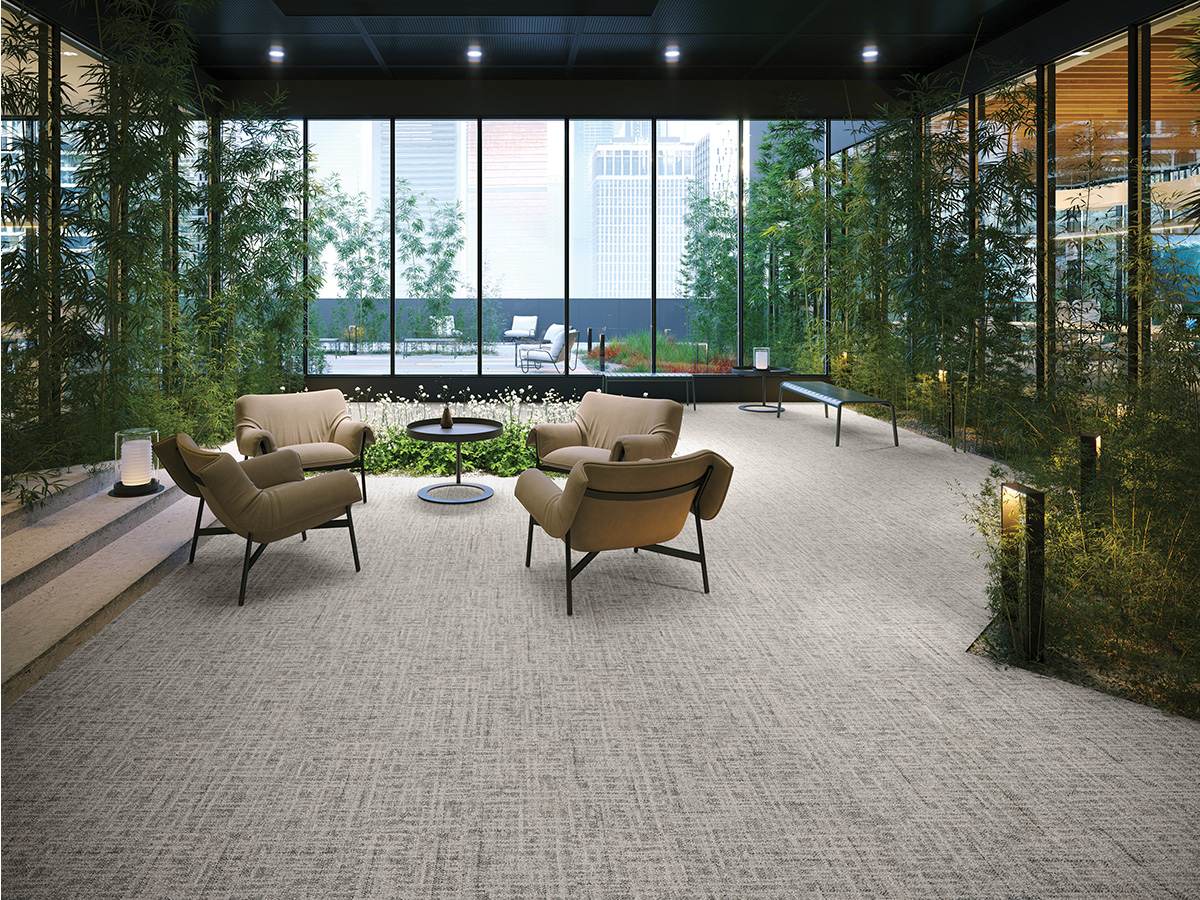
Every space unfolds as a collection of surfaces—planes that catch, scatter, or absorb light. Across the floor, those interactions reveal themselves through shifts in tone, gloss, and texture, shaping both atmosphere and efficiency. The behavior of that light is defined by its Light Reflectance Value (LRV)—the percentage of visible light a surface returns to its surroundings. It’s a small number with broad impact, shaping brightness, comfort, and energy use across commercial spaces. Recent advancements in material performance have expanded how LRV can be applied. Mohawk Group’s Duracolor Tricor® fiber, engineered with built-in stain and soil resistance, allows lighter, high-LRV carpet to maintain its appearance and integrity in demanding environments.
Light as a Material
The measure of reflected light is rarely just technical—it defines how color, finish, and texture interact in real space. By considering LRV early in the design process, surfaces can be calibrated to support comfort, clarity, and overall performance. “LRV has become a critical strategic metric because it connects surface color directly to tangible performance outcomes,” explains Jackie Dettmar, Vice President of Marketing, Product Development, and Design at Mohawk Group. “Beyond aesthetics, designers use LRV to anticipate a space’s overall brightness and energy profile.”
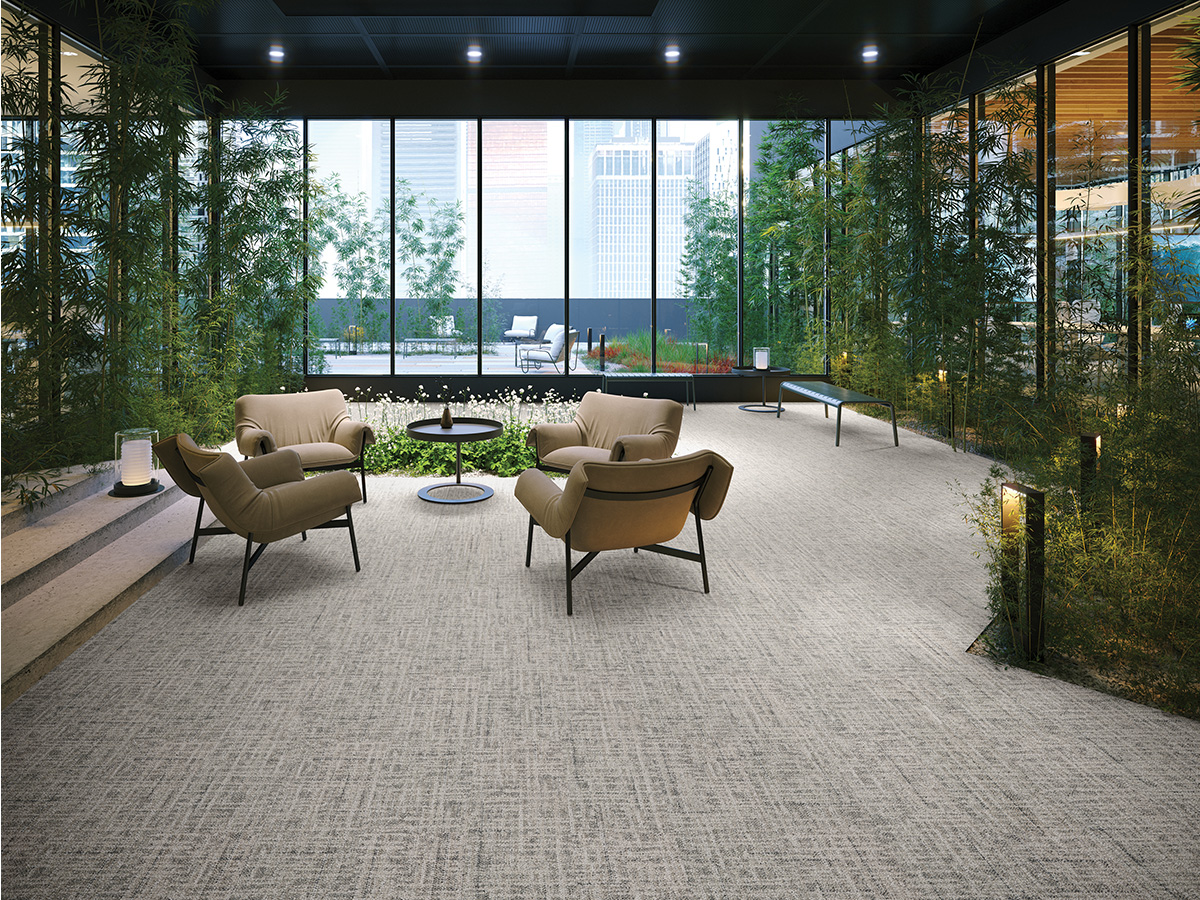
Dettmar notes that LRV also shapes how spaces are perceived and experienced. In healthcare settings, “high-LRV (light-colored) flooring can make a room appear cleaner, fresher, and more uplifting, which helps boost patients’ spirits,” she says. Floors with mid-range values offer a sense of stability and calm ideal for recovery, while darker flooring can provide warmth and quiet for rest. Across both healthcare and retail environments, contrasting LRVs improve visibility and navigation for people with low vision—directly supporting comfort and safety.

“Perhaps most importantly, LRV is a key tool in influencing the occupant’s overall comfort, visual comfort, and mood, which in turn can affect behavior and outcomes in all commercial spaces,” adds Dettmar. “In retail, for instance, high-LRV floors create a welcoming atmosphere that encourages customers to enter and stay longer, enhancing their experience and potentially impacting sales.”
Performance and Perception
While LRV influences how a space looks and feels, its application often comes down to maintenance and longevity. Mohawk Group’s Duracolor Tricor® technology addresses a long-standing concern around specifying lighter, high-LRV flooring in performance-driven environments. “The primary hesitation with specifying high-LRV (white or light-colored) flooring has always been the fear of stains and difficult maintenance,” says Dettmar. “The assumption was that designers had to sacrifice aesthetic and wellness benefits for practicality.” Duracolor Tricor® technology has effectively solved this challenge by engineering permanent, built-in stain and soil resistance directly into the carpet fiber.
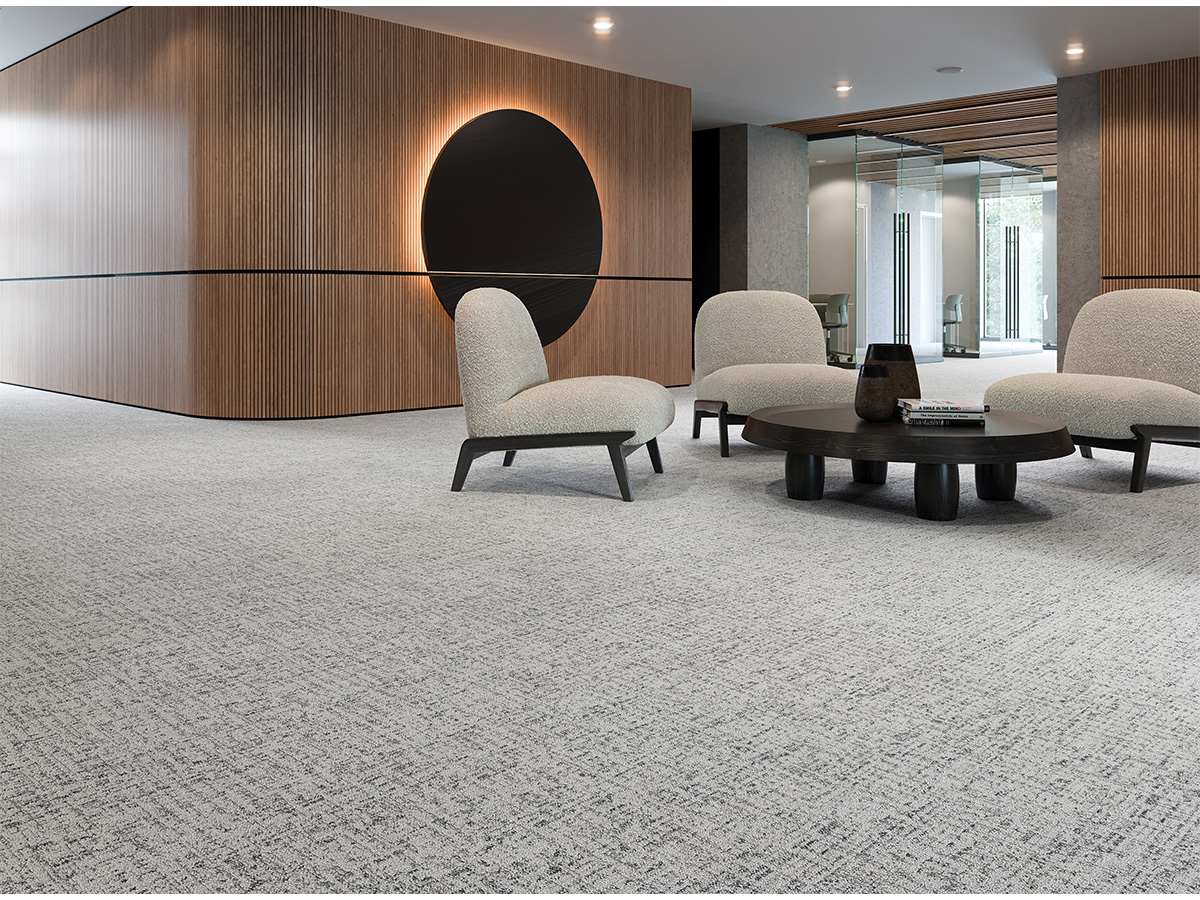
By embedding stain and soil resistance directly into the carpet fiber—instead of applying it as a temporary surface treatment—Duracolor Tricor® provides a durable, low-maintenance solution. The technology allows the full benefits of high-LRV flooring—brightness, energy efficiency, and mood enhancement—to be realized without compromising long-term performance or increasing upkeep demands.
Together, these innovations link measurable performance to the sensory qualities of space, translating the science of reflection into surfaces that sustain comfort, clarity, and light over time.