


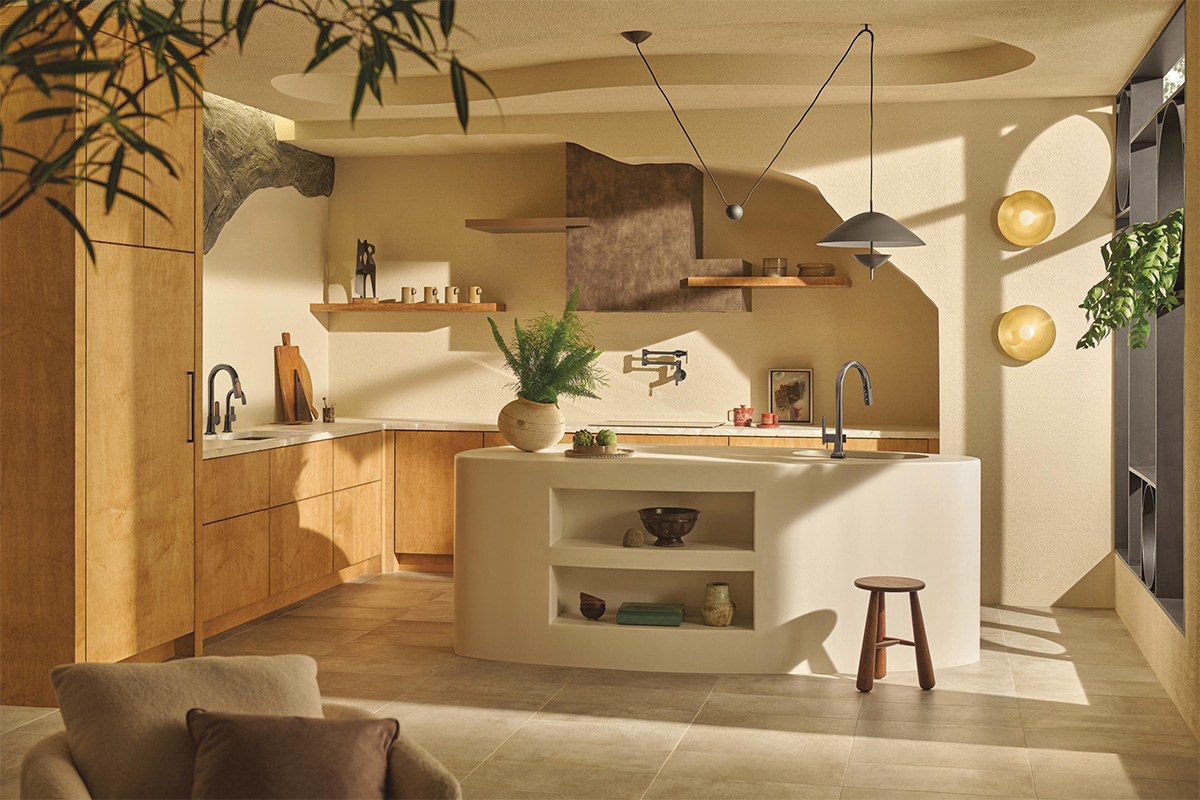
Brizo® Introduces Frank Lloyd Wright® Kitchen Collection
Frank Lloyd Wright once said “No house should ever be on a hill or on anything. It should be of the hill. Belonging to it. Hill and house should live together each the happier for the other.” Through decades of work that helped define 20th-century American architecture, his designs followed the structure of the site, the grain of the wood, the direction of light. This philosophy takes on a new form in the Frank Lloyd Wright® Kitchen Collection by Brizo®. Created in collaboration with the Frank Lloyd Wright Foundation, the kitchen collection marks the brand’s second tribute to the architect. Like their 2021 bath collection, this new release explores Wright’s design language through form and material.
Material and Form
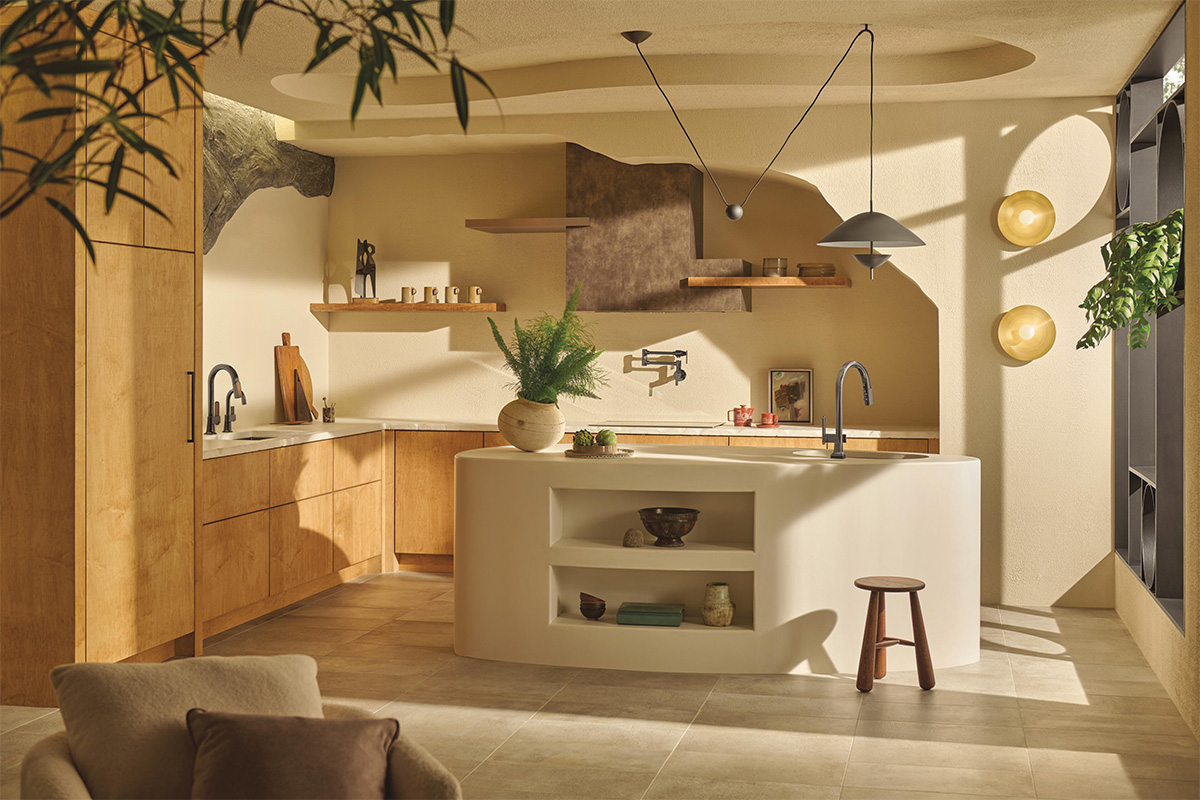
The collection centers on two faucet profiles and three handle types, unified by a shared formal language. Rounded and squared arches, geometric angles, and precise connection points echo Wright’s vocabulary of asymmetry, contrast, and natural structure.
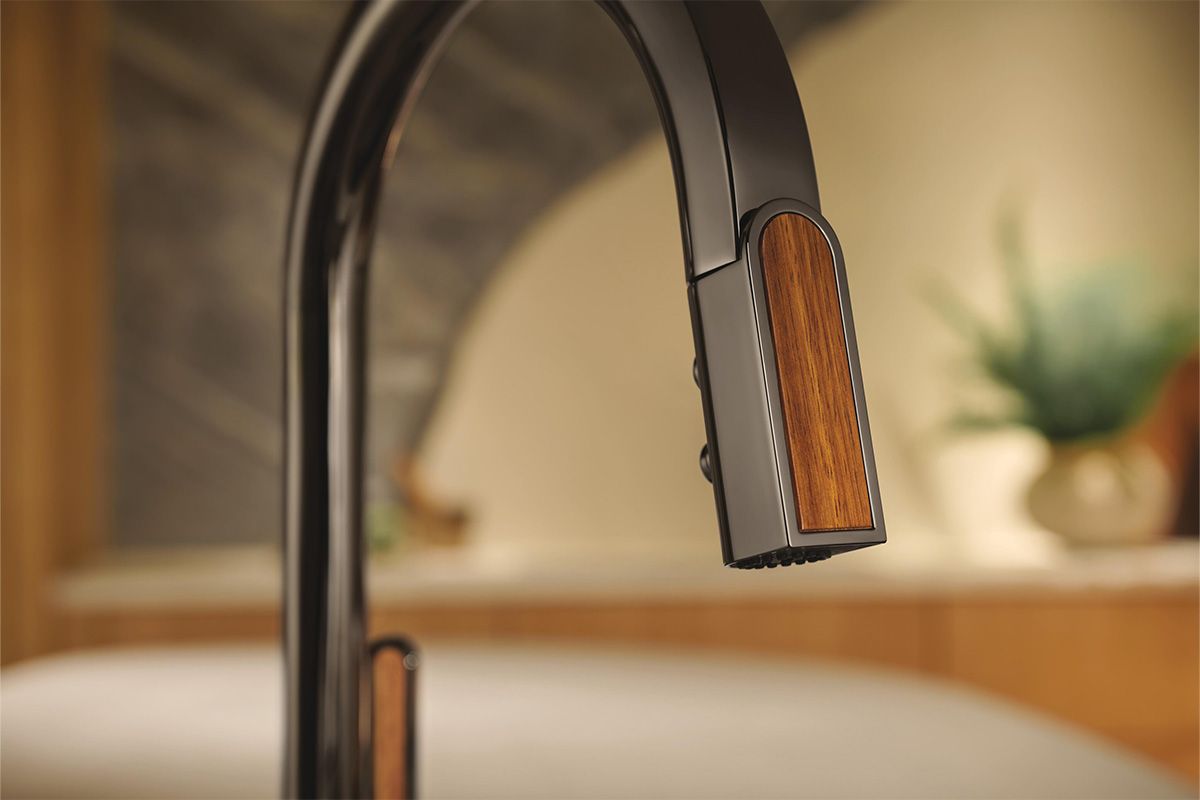
Concrete, glass, and Guyana Teak wood accents reflect Wright’s focus on materiality and the natural world. Surface finishes unify the series while introducing variation through tone and reflectivity, with options like Brilliance® Stainless Steel, Polished Chrome, Brilliance® Luxe Gold®, and Brilliance® Black Onyx.
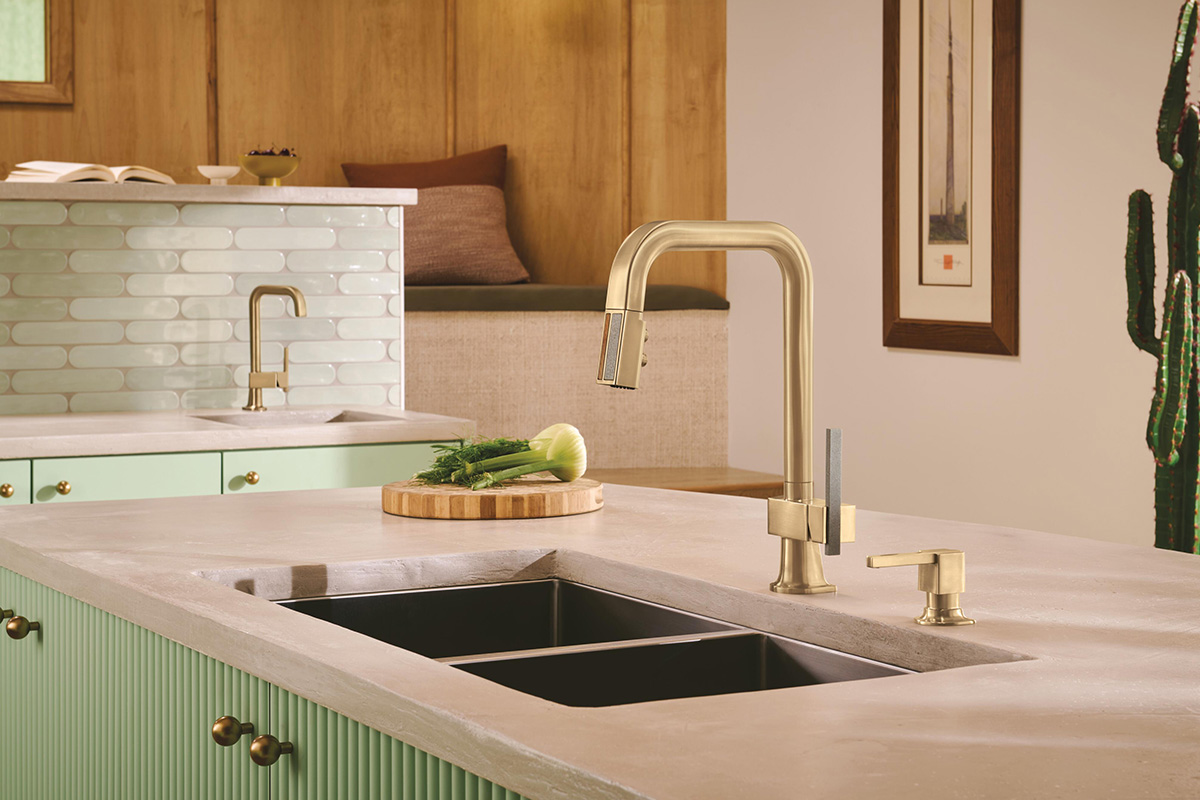
The full suite includes fixtures for kitchen, bar, and beverage stations, as well as a pot filler and soap dispenser. Each element fits within a unified system that supports the surrounding architecture. The collection promotes reduced water consumption and uses recyclable packaging, aligning with shared goals around environmental responsibility and long-term use.
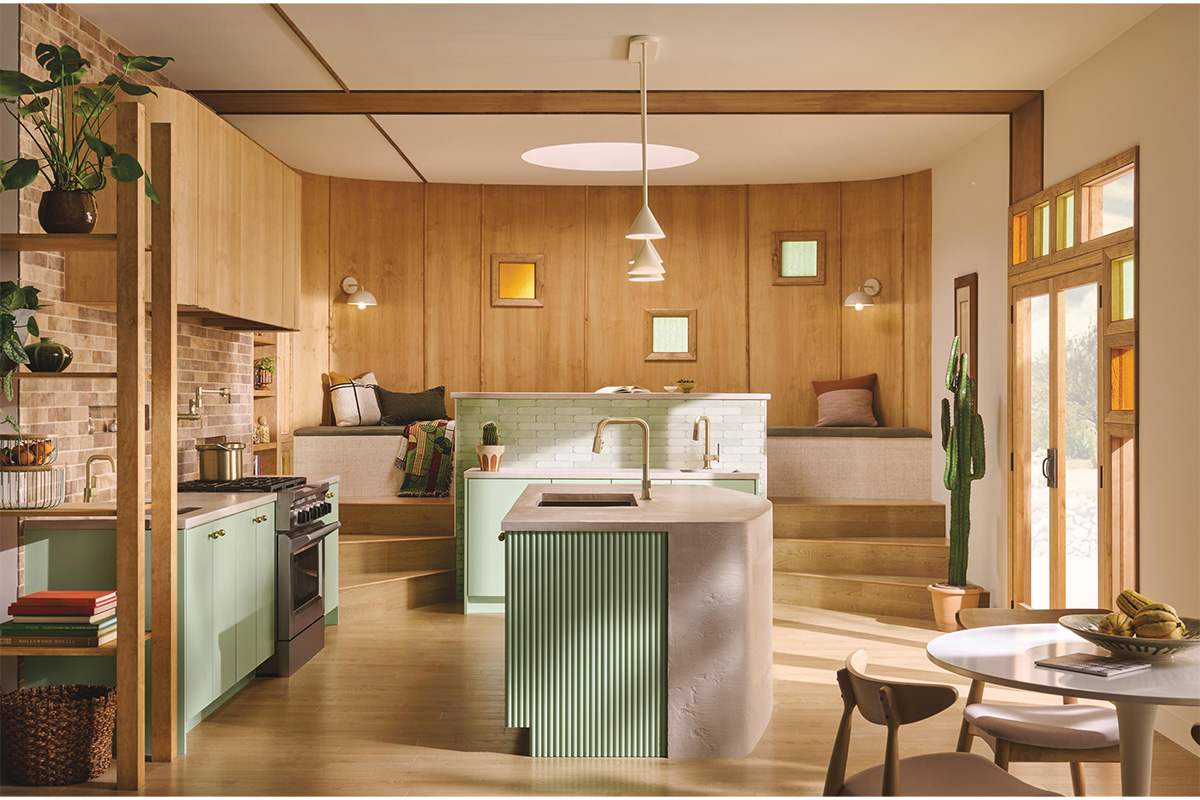
From Concept to Context
The Brizo® team worked closely with the Frank Lloyd Wright Foundation to explore how the architect’s philosophy could inform the kitchen environment. Rather than focus solely on visual references or material choices, they approached the collection through the lens of Wright’s core principles—considering how ideas like spatial flow, belonging, and integrity might guide form, function, and daily use. The foundation’s perspective helped clarify those questions, supporting a direction that looked forward while remaining rooted in principle. That shared pursuit of better living, grounded in principle and adapted to present-day rituals, informed every part of the collection’s development.