


Emotion And Materiality Defined Through Vibia Lighting
Textured woods radiate warmth, polished metals project clarity, and organic papers drape light in an inviting glow. For Vibia, materials are the vocabulary of mood, and lighting is the syntax that binds them. The Barcelona-based brand aims to enhance well-being by transforming spaces through design, technology, and light. With a portfolio of over 60 collections, Vibia creates environments that breathe—shifting and responding to time, use, and emotion.
Material and Craft
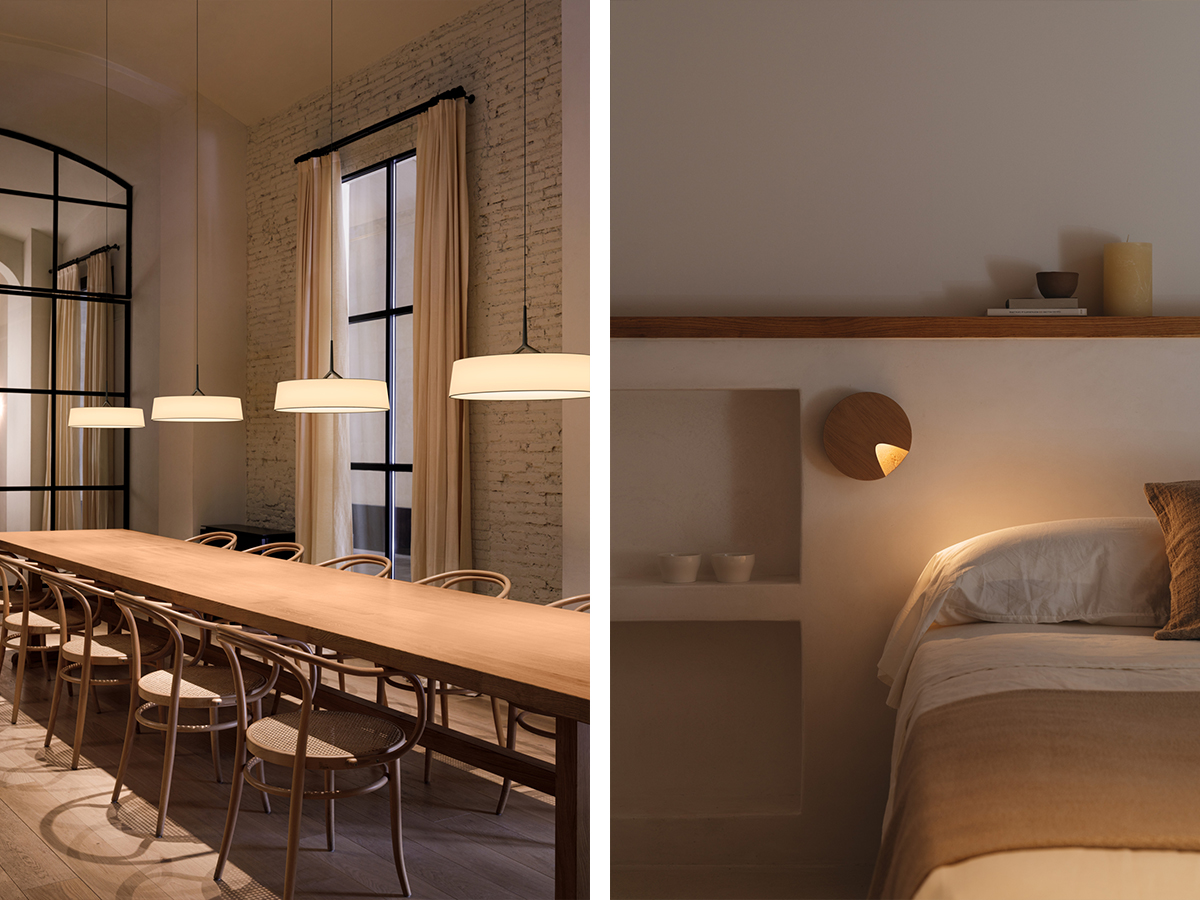
Vibia’s collections hinge on materials that provoke visceral reactions, and the Dama pendant by Ludovica+Roberto Palomba embodies this ethos. Its industrial aluminum frame cradles a paper diffuser—a fragile, tactile material that softens illumination into an amber-toned glow. The tension between metal’s modernity and paper’s organic imperfection transforms stark spaces into sanctuaries of calm, proving that warmth can coexist with minimalist rigor. “We decided to dare with an unexpected touch using paper—a noble and tactile material, almost fragile and intangible, which imbues the lamp with warm light,” says Roberto Palomba. “This way, the blackness of the metal contrasts with the softness of the paper, lending a contemporary feel to the overall expression.”

Martín Azúa’s Dots collection explores the interplay of scale, texture, and light to create a refined, intimate ambiance. Glowing circles cast direct and indirect beams along a wall, forming a dynamic composition of halos and shadows. Dots Glass enhances this effect with a sleek diffuser of layered transparent optical glass, where the LED source emits a soft, 360-degree glow. The aluminum-edged design lends a subtle, moonlit quality, seamlessly integrating into transitional spaces and damp environments. Meanwhile, Dots emphasizes craftsmanship through crisp lines and organic contours. Rendered in sustainable American Walnut or White Oak wood, the material’s subtle imperfections—knots and delicate ridges—lend a sense of depth and warmth that shape intimate retreats within expansive spaces.
Texture and Function
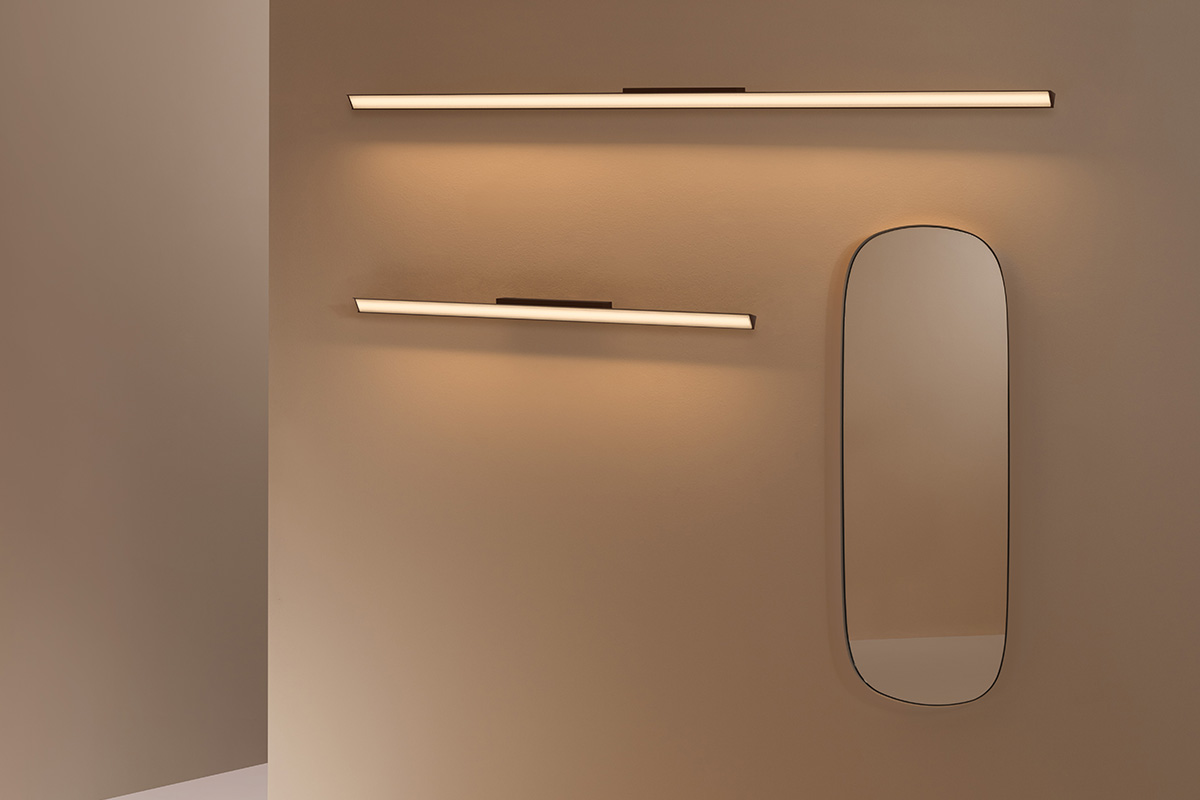
Vibia blends aesthetics with practicality through texture. The Spa collection—designed by Ramos & Bassols—uses fluted polycarbonate strips to diffuse light in high-humidity environments. Its tapered ribs eliminate glare, while tiltable shades direct illumination precisely where needed. An IP44 rating ensures durability against moisture, and wipeable surfaces simplify maintenance without compromising the collection’s clean lines.
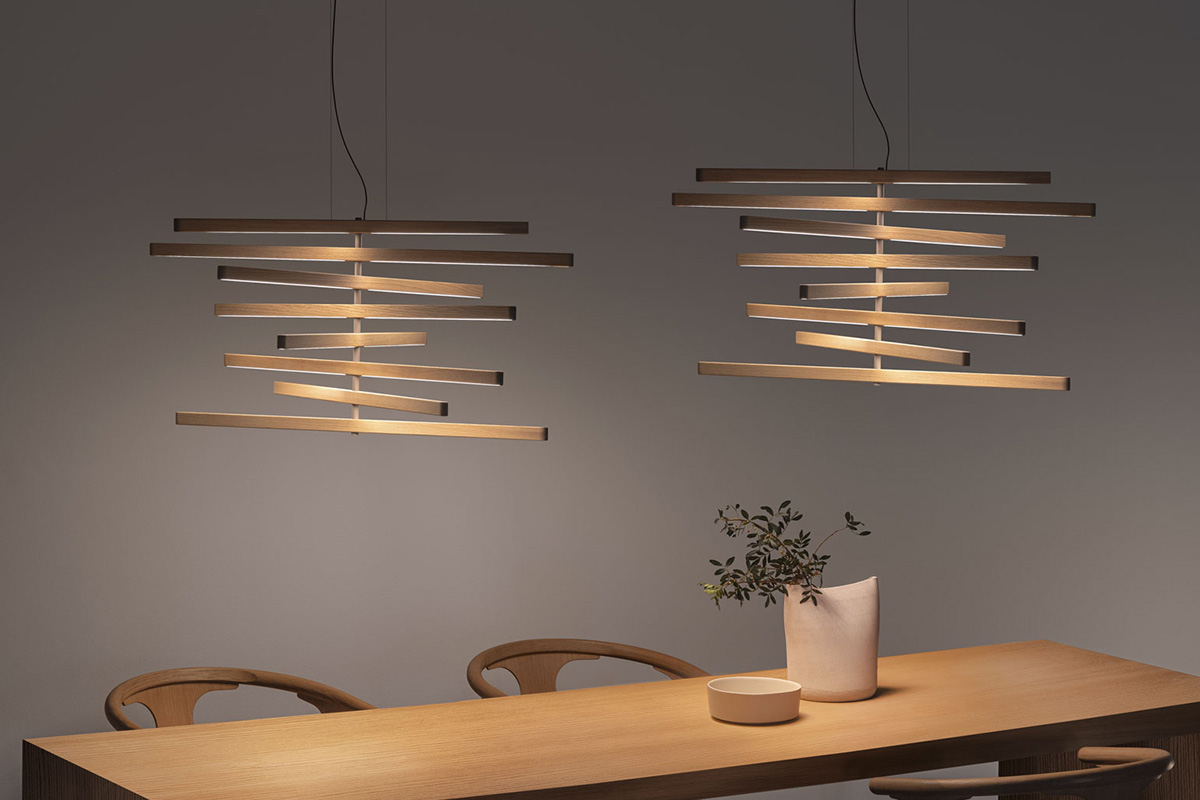
Arik Levy’s Rhythm Wood transforms texture into kinetic art. Wooden sticks, crafted from white oak or walnut, rotate along vertical or horizontal axes. As they turn, natural grain patterns interact with LEDs to cast rippling shadows that mimic tidal rhythms. The fixture evolves with perspective, rejecting static beauty for dynamic, living light that shifts like the passage of time itself.
Contrast and Composition
Vibia’s collections also thrive on tension. The Duo Petra ceiling light designed by Ramos & Bassols cloaks matte aluminum in supple slate, molded using techniques typically reserved for wood. The stone’s mineral veins radiate soft downlight, while the metal shell reflects ambient coolness—a dialogue of opposites that adds emotional depth to minimalist interiors. This marks the first use of stone in such a complex bending process, blending geologic weight with ethereal luminosity.

Antoni Arola’s Flamingo Mini layers translucent thermoplastic planes along a near-invisible cable. Light diffuses like breath on glass, its ethereal glow juxtaposed with razor-sharp geometry. By separating the LED source from the shade, the design achieves a paradox: illumination that feels weightless yet anchored, serene yet structurally precise.
