


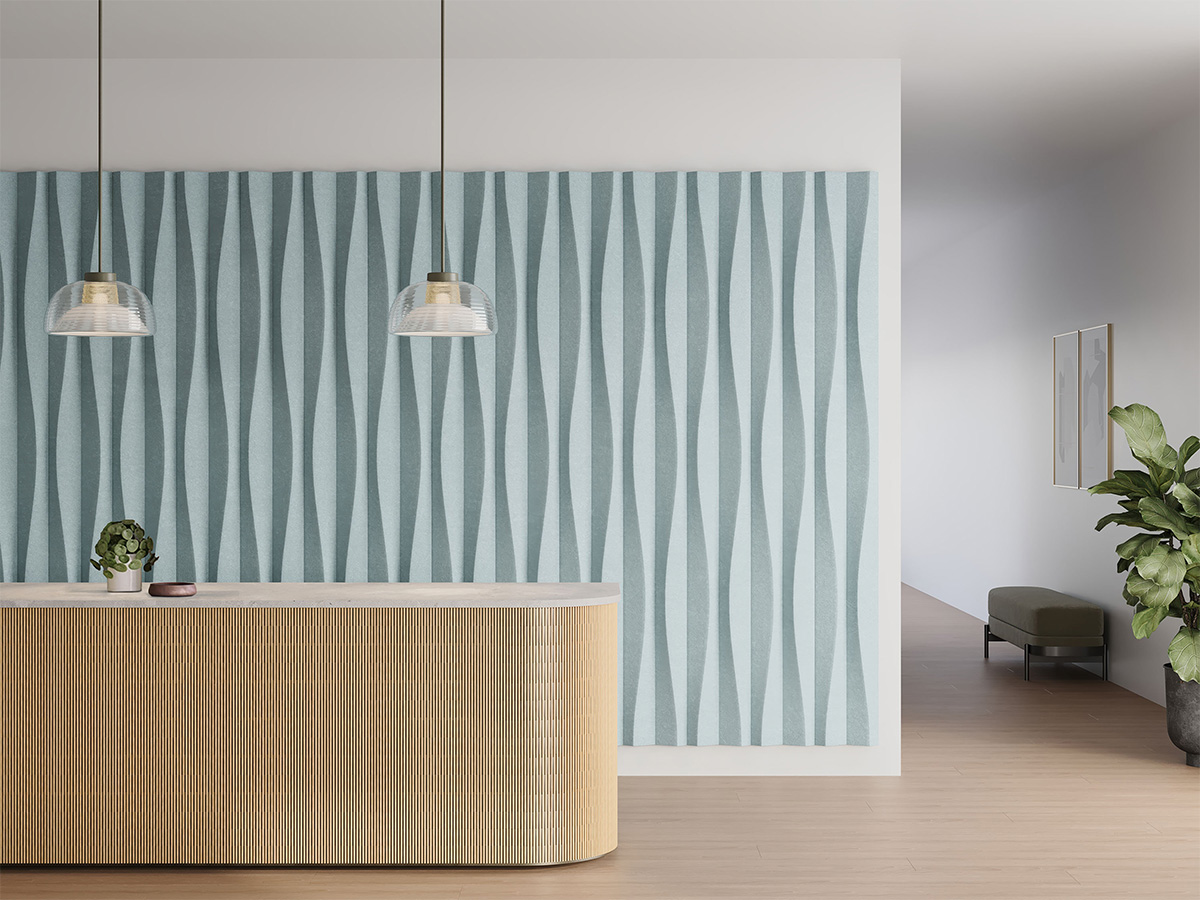
FilzFelt Explores Form and Sound with Bernd Benninghoff
For Bernd Benninghoff, the behavior of materials often defines the direction of his work. The furniture designer and interior architect, based in Mainz, Germany, has spent years investigating how folding, tension, and repetition can generate spatial structures. His latest collaboration with FilzFelt applies that study to four acoustic wall panels—Drift, Mesa, Peak, and Valley—crafted from wool felt and recycled substrate.

As in much of his work, Benninghoff drew insight from architecture. He cites a visit to a building by Japanese architecture firm SANAA in southern Germany as a key influence. “I was fascinated by the architecture of the industrial structure that features an undulating façade of large acrylic glass modules that wrap around the entire building like a curtain,” he says. “It gives the building an incredible lightness and elegance.” That sense of movement carried into the collection’s folded acoustic forms. Designed for straightforward assembly with z-clips, the panels are produced in a standard eight-foot height, with side extensions available for wall-to-wall configurations.
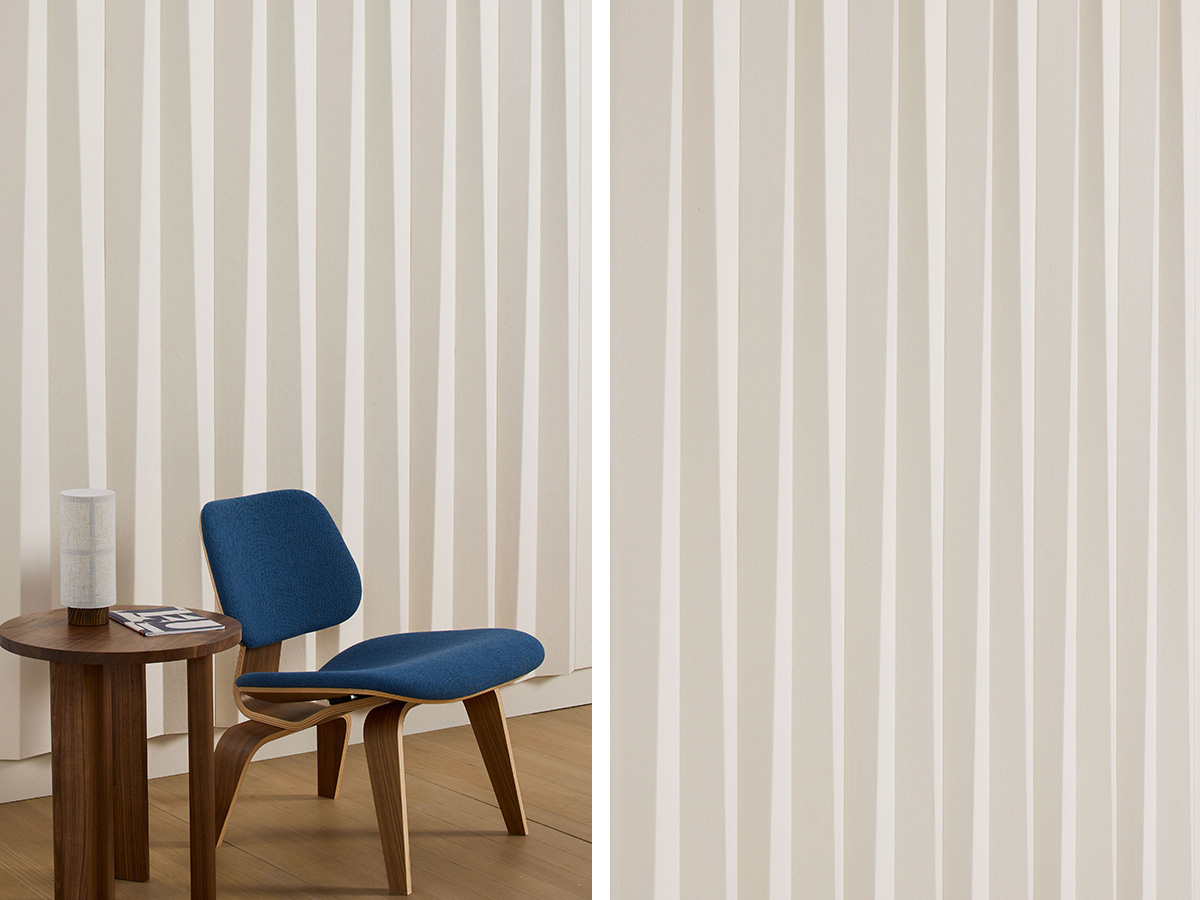
Benninghoff’s approach bridges technical precision with an awareness of how form influences atmosphere, a quality that continues to define his collaborations with FilzFelt. “My goal is to develop products that are easy to manufacture and to install,” he explains. “At the same time, they should generate a strong three-dimensional surface that creates a warm atmosphere and plays with light and shadow.” The four designs interpret this idea through variations in geometry and relief. Drift, Mesa, Peak, and Valley feature folded, dimensional surfaces that form angular patterns projecting from the wall, creating depth, texture, and shifting light.

Constructed from 100 percent wool design felt and an Akustika substrate containing 60 percent post-consumer recycled content, the panels achieve a Noise Reduction Coefficient of 0.90, providing exceptional sound absorption in offices, lobbies, and hospitality environments. “I can’t think of a better surface material for this collection,” says Benninghoff. From a technical point of view, the felt acts as a hinge and makes folding possible. Its flexibility and stability are ideal for this particular application. At the same time, this wonderfully soft and supple material fits in with the theme of a flowing curtain.”
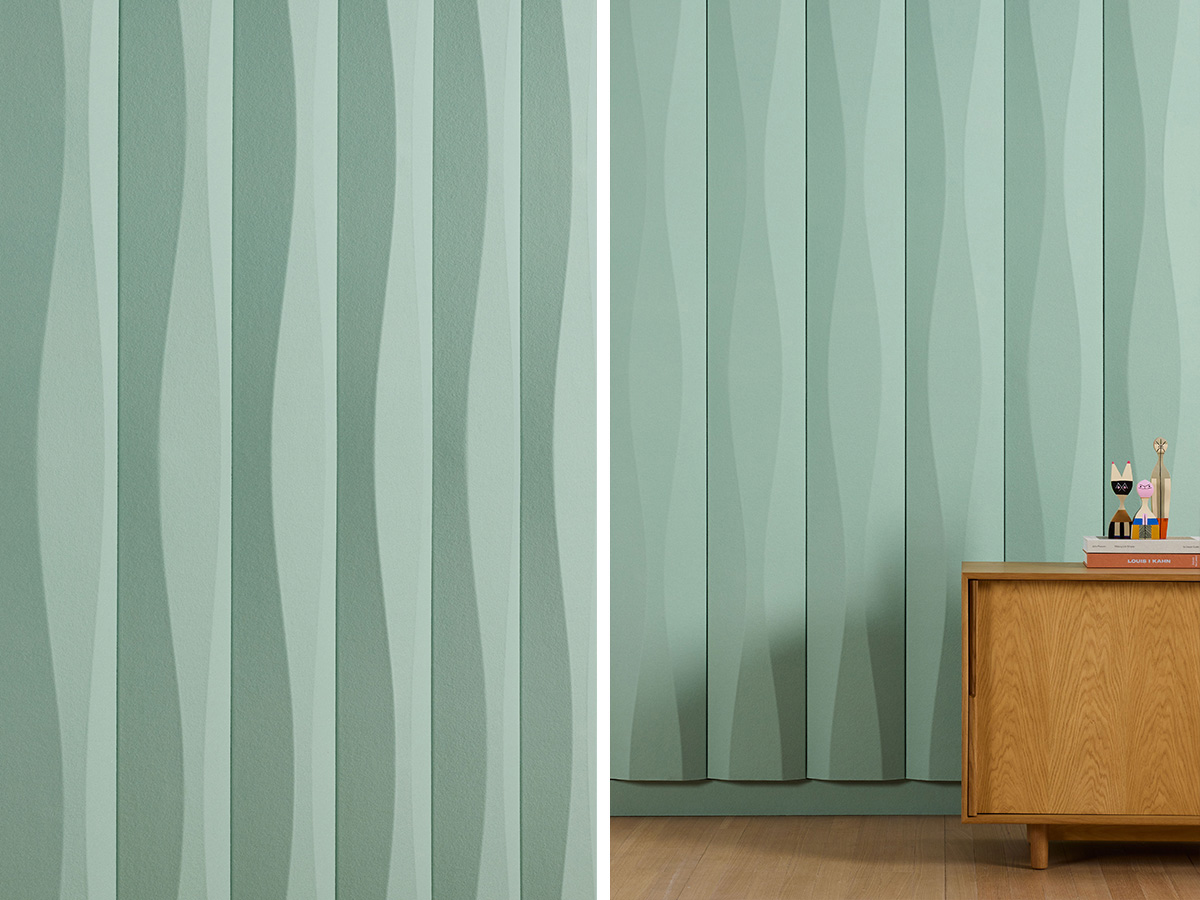
The wool felt is also fully biodegradable and compostable, free of formaldehyde, chemical irritants, and VOCs, and certified to Oeko-Tex Standard 100. Offered in 95 colors, the palette moves from natural neutrals to saturated tones that emphasize the dimensional character of the folded surfaces.
FilzFelt’s collaboration with Benninghoff demonstrates how geometry, material, and acoustic performance can align within a single surface. The four designs transform sound control into architectural expression, translating process and precision into form.