


For Interface, Good Design Starts Before the Floor Goes Down
An Interface carpet tile carries less material than it once did. Its backing has been reduced by more than half, its internal layers reworked to use roughly one-third of their previous volume. Yarn constructions achieve the same performance at lower weights, and stain resistance is integrated into the fiber itself. Taken together, these shifts point to a broader approach.
They are the starting coordinates of a circularity effort more than three decades in the making—where products are designed for life and made to last, so they can be used again and again. It extends across every stage of a product’s life, from the design decisions that determine how much material is used, to the inputs that shape its composition, to the systems that keep it in use long after installation.
Designed for Life
Reductions in material use and changes to construction carry through to how a floor performs over time. “This is not a new shift for Interface. For the last 30+ years, we’ve designed our products for circularity from the start,” explains Mikhail Davis, Director, Global Market Sustainability. “It’s a full life cycle approach that starts with how products are designed, what materials go into them, how they are installed, how long they stay in use, and what pathways exist for renewal afterward.”
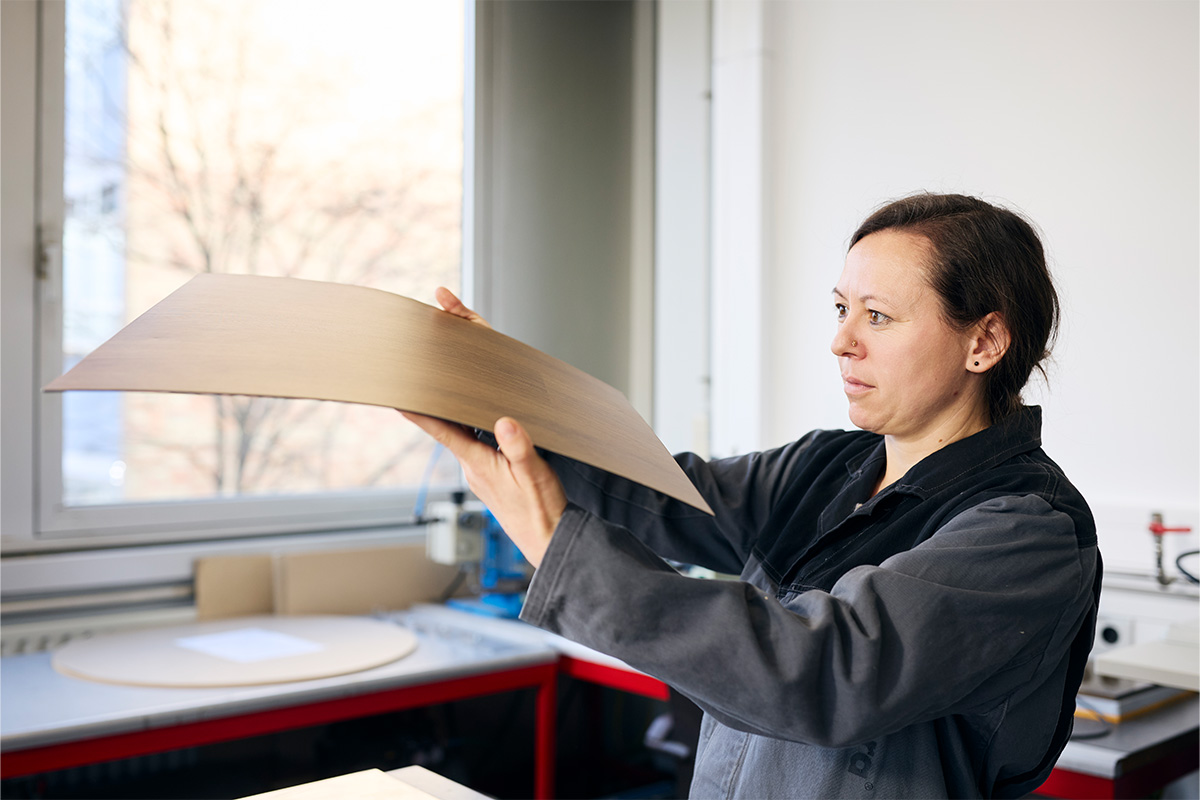
At Interface, this is reflected in the design and installation of the flooring itself across carpet tile, LVT, and nora® rubber. Modular formats allow sections to be replaced individually, keeping the larger installation in place. Installation methods such as TacTiles® and nTx eliminate the need for adhesive, allowing tiles to be lifted intact and used again. Lighter constructions reduce the amount of material required from the outset and carry those efficiencies forward over time.
Longer-lasting floors mean fewer replacements over time. That reduces the demand for new materials and manufacturing, where a significant share of embodied carbon is concentrated, helping keep flooring in use longer and materials in play with less disruption.
Materials That Matter
Material choices determine how much carbon is built into a product from the start. Within Interface’s flooring systems, that begins with reducing reliance on virgin inputs and rethinking what goes into each product component. Recycled content keeps existing material in circulation, while bio-based materials and captured carbon introduce new inputs with lower embodied impact.
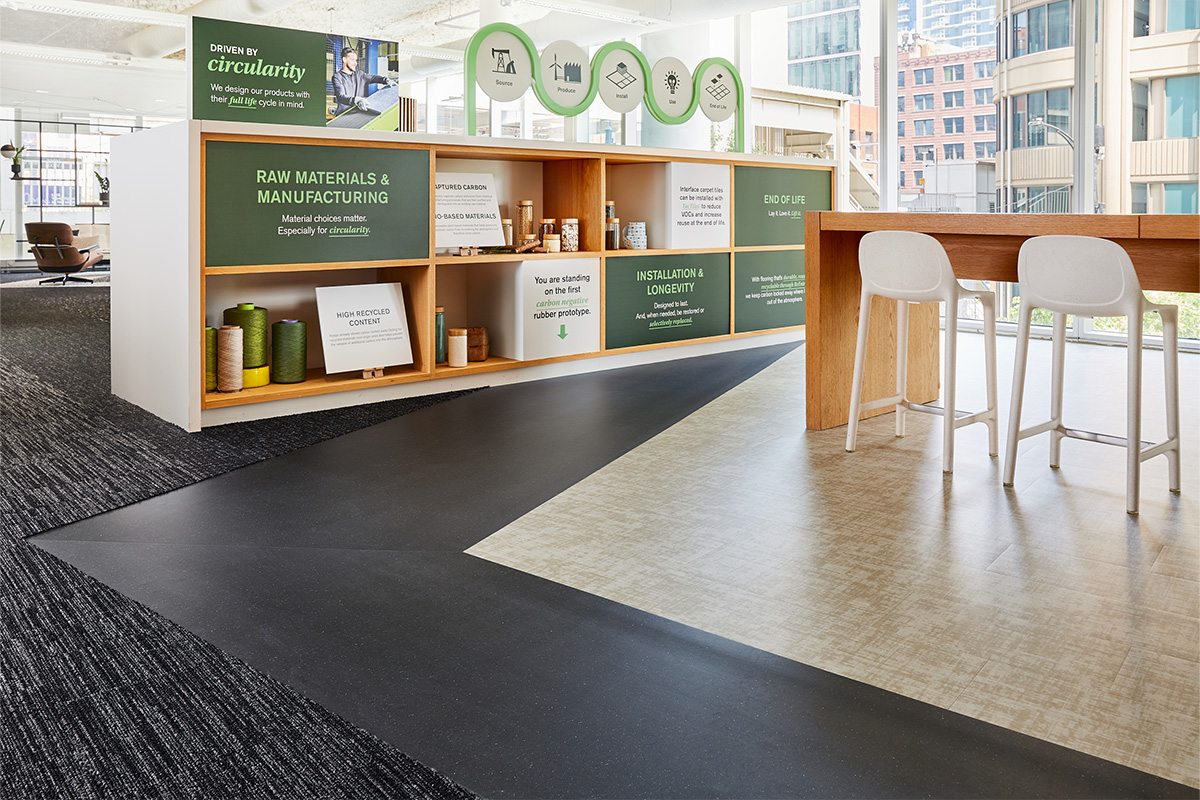
“We leverage the materials in our CQuest™ backing, supporting the development of cradle-to-gate carbon negative carpet tile products, achieved without relying on offsets,” explains Davis. “In nature, plants absorb carbon dioxide from the atmosphere and store it. Using plant-derived materials keeps that carbon in the product rather than returning it to the atmosphere.” Bringing these materials into production requires coordination across sourcing and manufacturing, along with consideration for how they perform over time and how they move through reuse and recycling pathways. The same objective carries through: reducing the need for new production and keeping products in use longer.
Built for What Comes Next
End of use marks the beginning of the next phase. For Interface, that phase is planned in advance, with pathways for reuse, recycling, and recovery built into how flooring is specified and removed. Through its regional ReEntry® programs, Interface coordinates the collection, sorting, and redirection of flooring at end of use. Materials are evaluated for their next application, whether reuse, recycling, or material recovery, based on what is feasible within a given region.
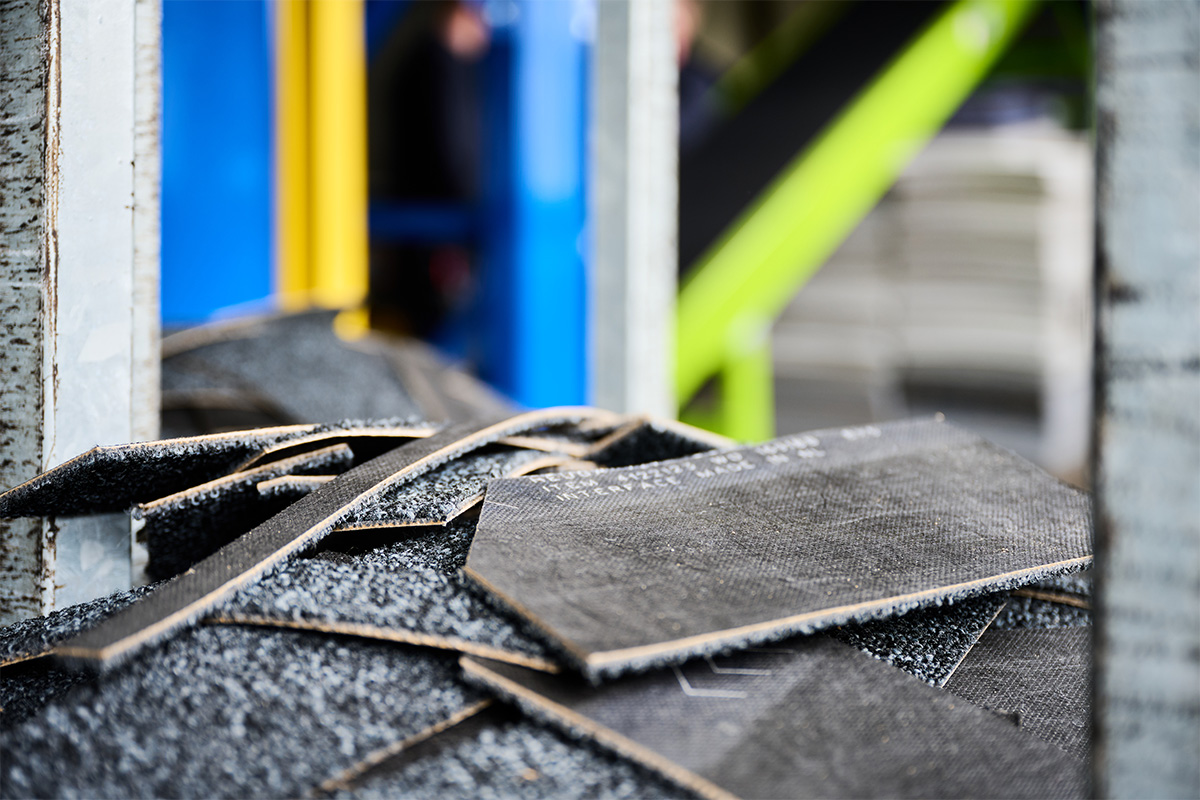
In a recent project with Dexus in Australia, that process played out across two cities. Existing carpet tile was lifted in Brisbane, assessed for reuse, and reinstalled in a Sydney office. Approximately 500 square meters of flooring was kept in use, diverting around 1.9 tonnes of material from landfill and reducing the need for new production.
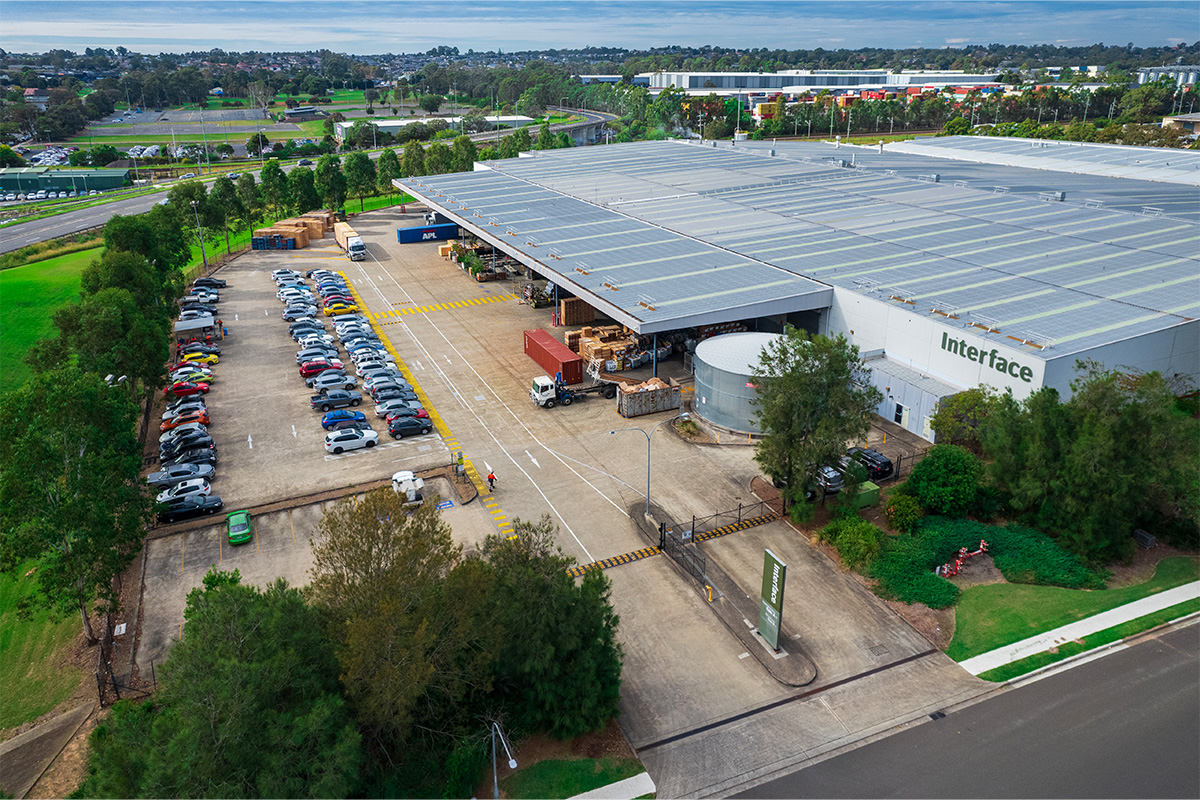
The project is one example of what Interface describes as a shared goal: the company develops the materials, products, and renewal systems, while specifiers determine whether those lower-carbon outcomes are realized in practice. In 2025, customers who specified Interface's low-carbon flooring helped avoid nearly 345,000 metric tonnes of carbon emissions compared to industry averages. This is the equivalent of removing more than 80,000 cars from the road for a year.