


GKD’s Mediamesh Turns Woven Steel Into a Transparent Display
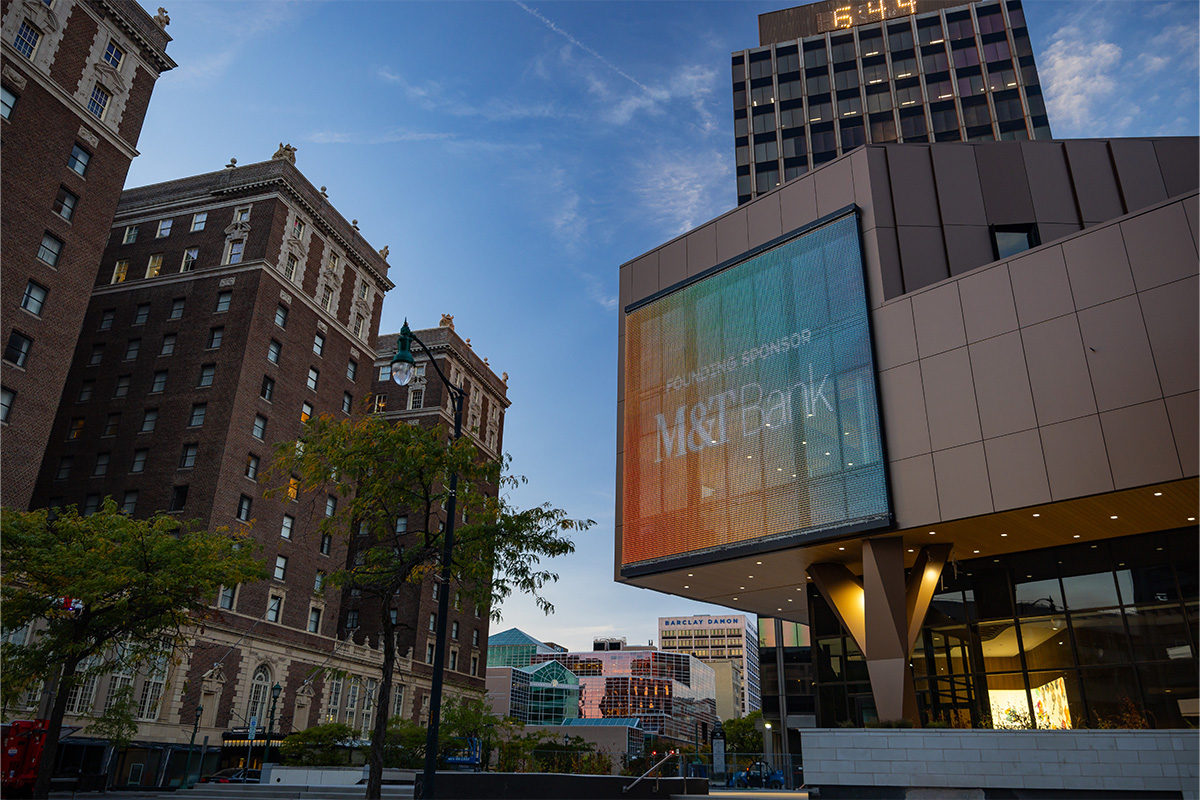
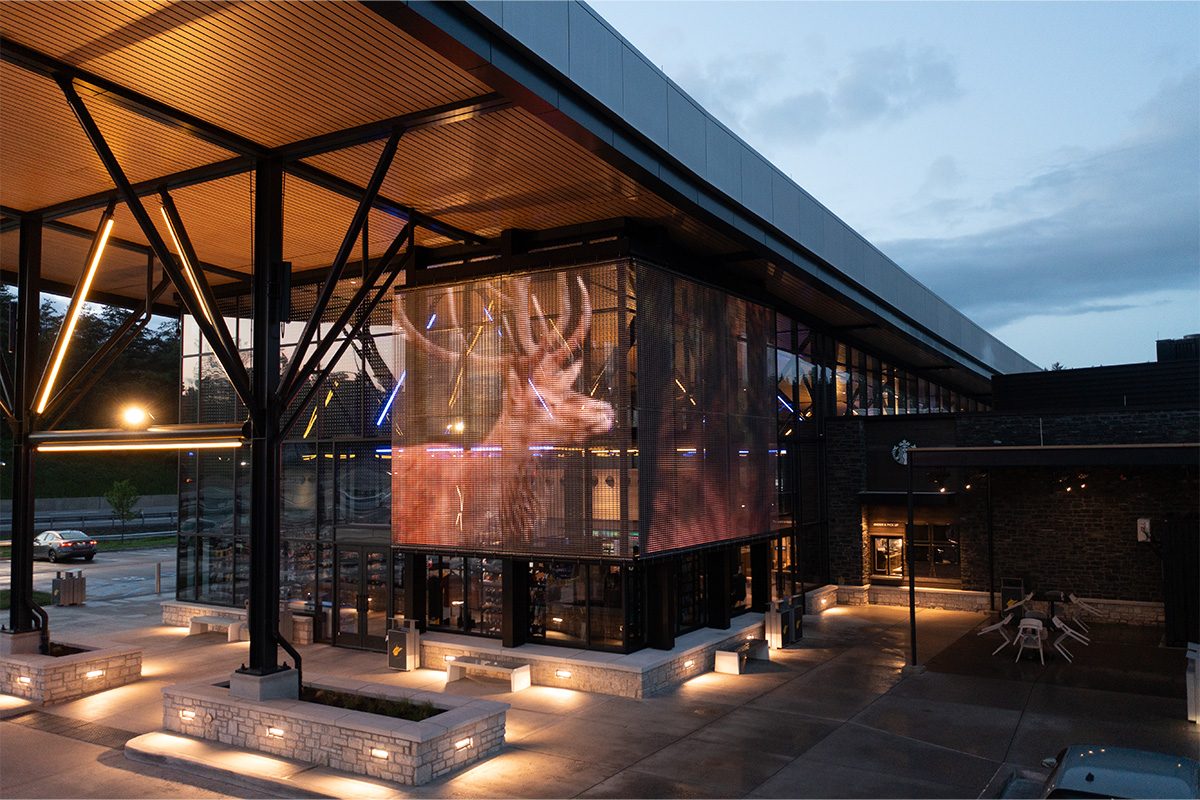
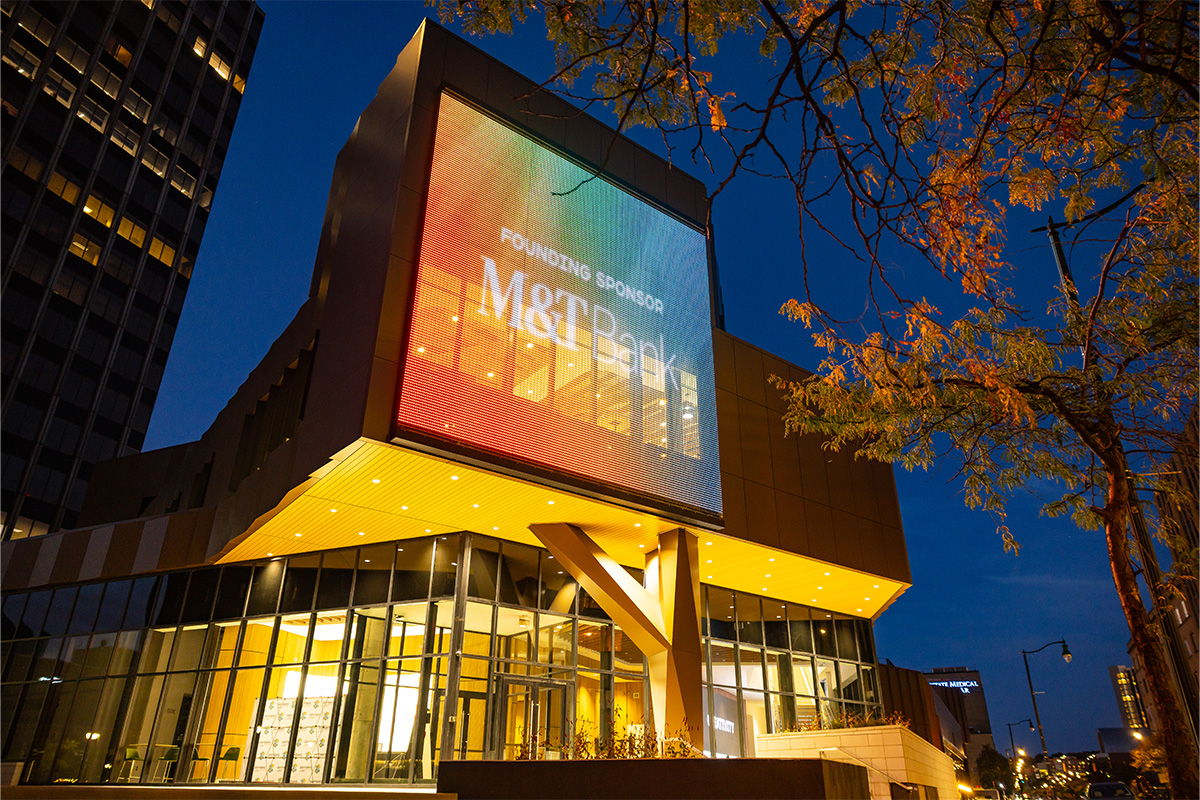
In downtown Syracuse, the upper wall of an innovation hub comes alive with color and moving images after dark, holding the eye from across the street. By day it settles back into a fine stainless-steel mesh. The same weave surfaces several hundred miles south, along Interstate 77 in West Virginia, where a new travel plaza carries it around a ninety-degree corner and turns scenes of the state toward the passing traffic. Both are Mediamesh, GKD Metal Fabrics' transparent media façade, a woven screen that gives a building a voice and a visual identity, carrying graphics, color, and motion on its face and letting daylight, air, and views pass straight through.
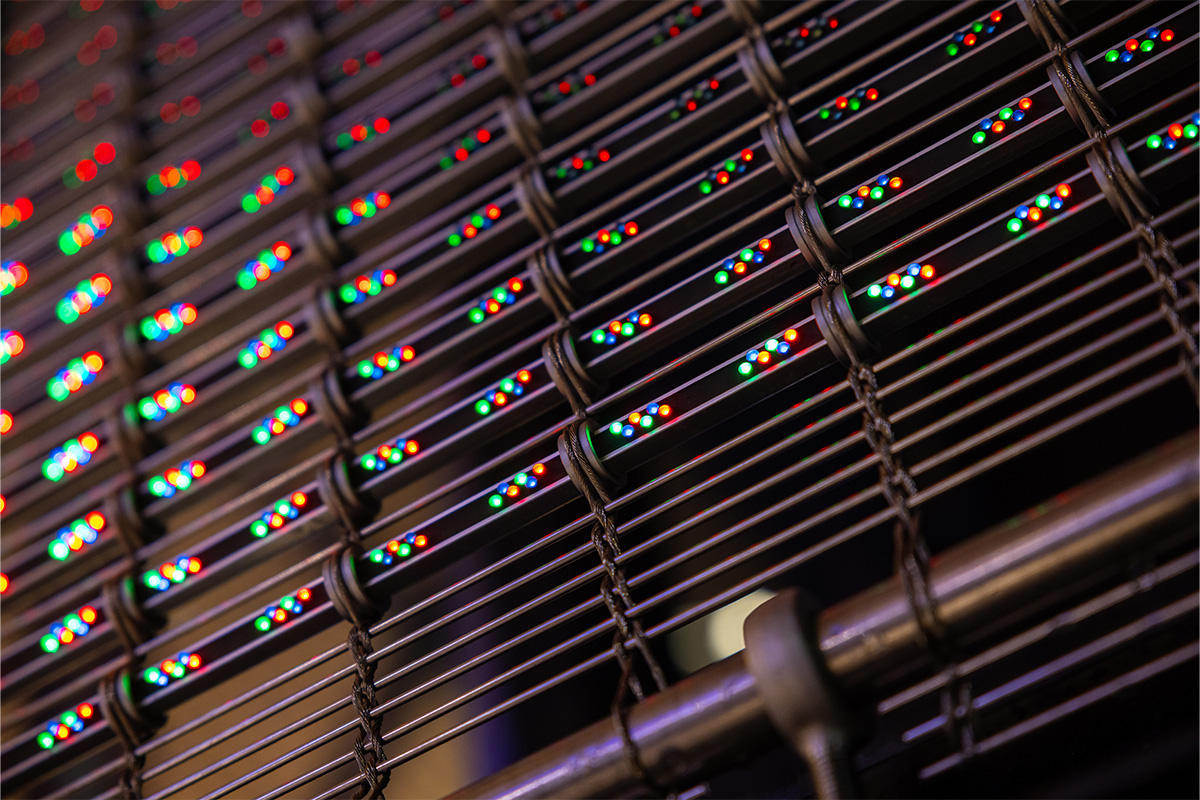
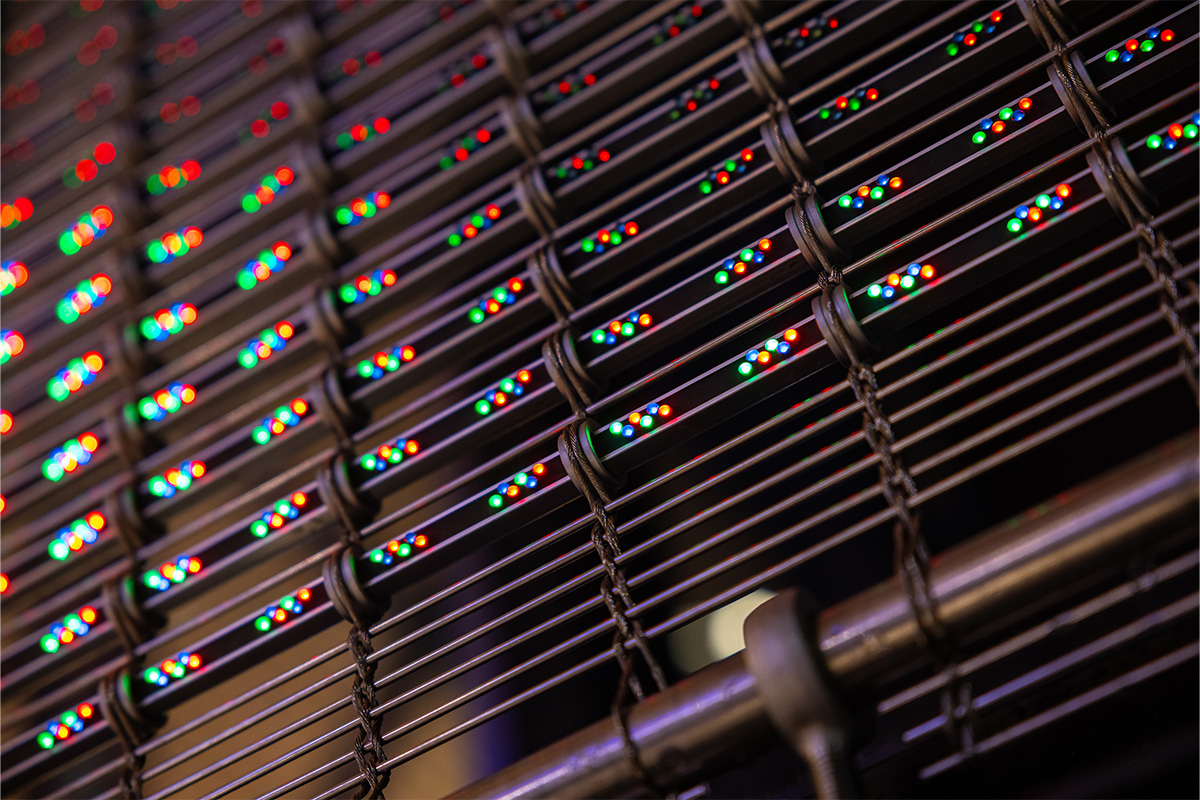
Mediamesh starts as a length of woven stainless steel, with rows of LED running through it. The metal supplies the tension and strength, and the diodes carry the image, facing outward so the picture reads from the street and the room behind keeps its daylight and its view. “It operates much like a screen over a window allowing for light and ventilation,” explains Andy Franks, territory manager at GKD Metal Fabrics. “The woven LED lights do not decrease its transparency, therefore someone in a building is able to look through Mediamesh to see outdoors. Because the LEDs are front-facing, people inside the building will not see the digital display or experience added light.”
The fabric also brings an environmental benefit. At up to sixty percent transparency, the weave serves as a sunshade, softening the glare on the floors inside. Air passes through the gaps between warp and weft, easing the load on mechanical ventilation and keeping the space from feeling sealed. “Occupants retain clear, natural views looking outward, and daylighting naturally enters the building to prevent a closed-in, claustrophobic feel,” adds Franks.
GKD designed the systems with long term benefits. Since the woven steel lasts longer than the diodes it carries, an older display can be refreshed by replacing the LED components and leaving the mesh in place. According to Franks, owners update only the LEDs “for a fraction of the cost and time of a total system replacement.”
In Practice
In Syracuse, the INSPYRE Innovation Hub got its screen as part of a full rebrand. CenterState CEO set out to turn a startup incubator into a place for founders to "dream, build, and scale," and asked QPK Design for a façade to match. It had to be bold enough to signal the new purpose and respectful of the extensive glazing already wrapping the building. Mediamesh answered on both counts, reading across the block after dark and staying transparent by day. GKD calls the proprietary system the only one of its kind at this scale, a canvas for animation, video, and live data.
In West Virginia, the screen rises on the new Beckley Travel Plaza, built as part of a program to replace facilities that had served the interstate for more than thirty years. HNTB designed the building, GKD's American operation engineered and fabricated the mesh, and Expromo supplied the LED work, cabling, and on-site installation. Together they carried the job from concept to completion in about a year. Wrapping two faces of the entrance, the display stays legible for drivers at highway speed and holds to a brightness the setting called for. Through the weave, the glass doors remain visible from the lot.
In both projects, transparency does the defining work: an exterior that shows an image and an interior that keeps its daylight and view.