


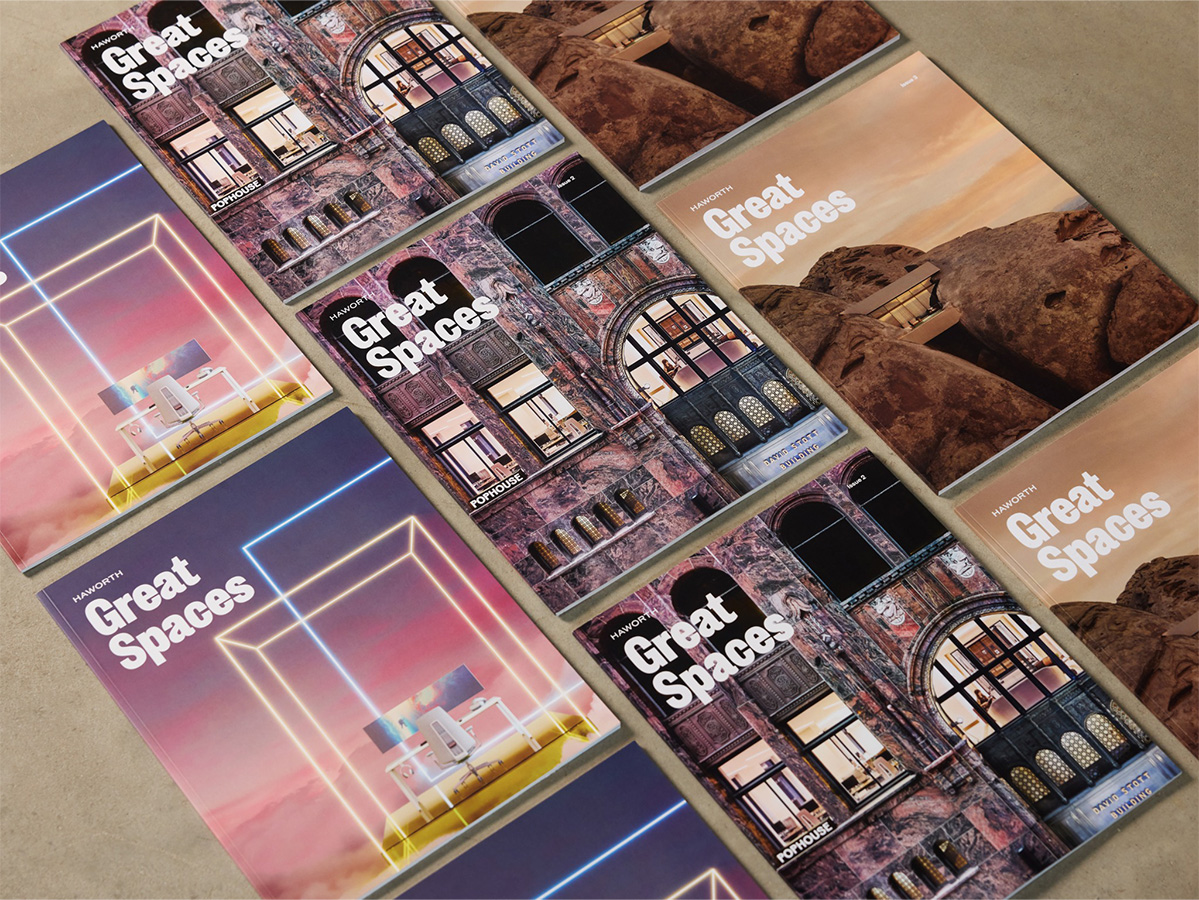
Haworth’s Great Spaces Magazine Builds Its Third Issue Around Creating Balance
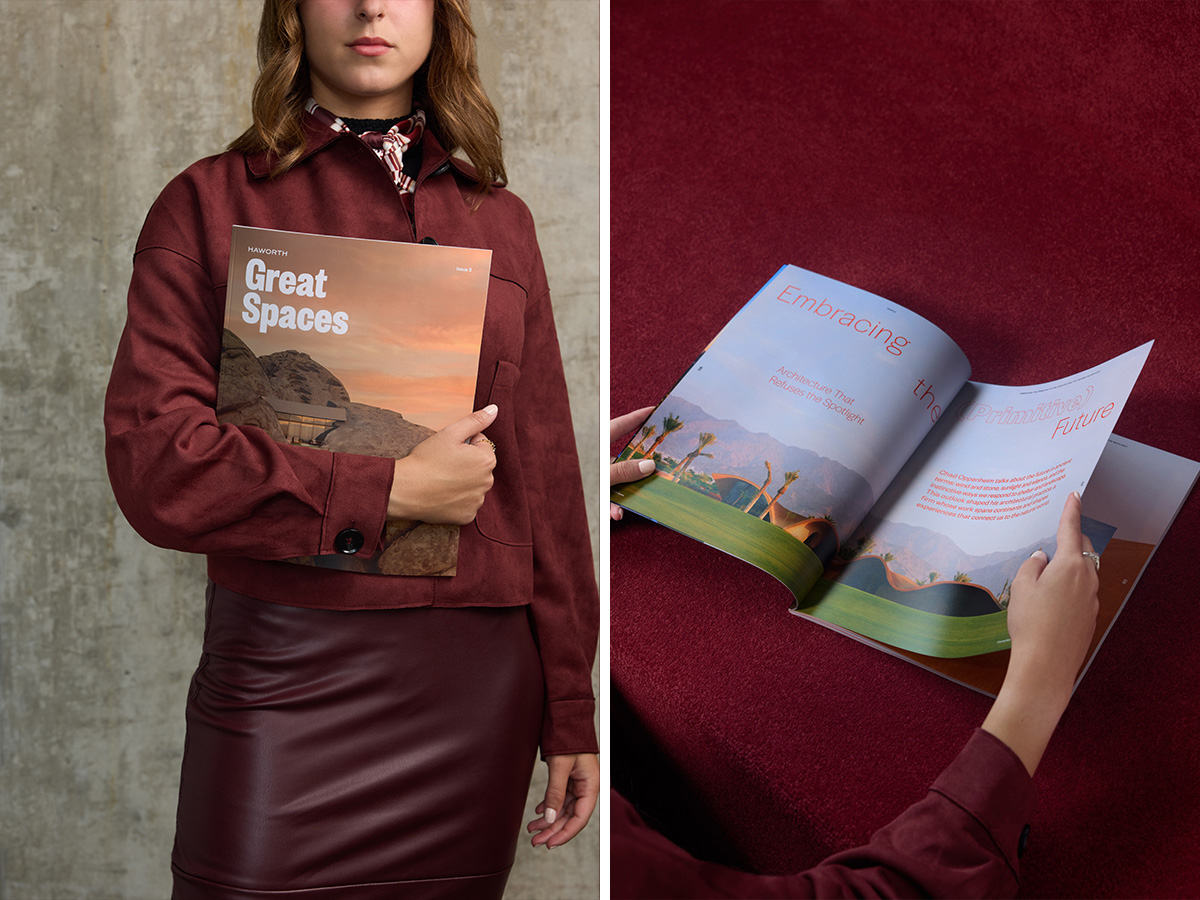
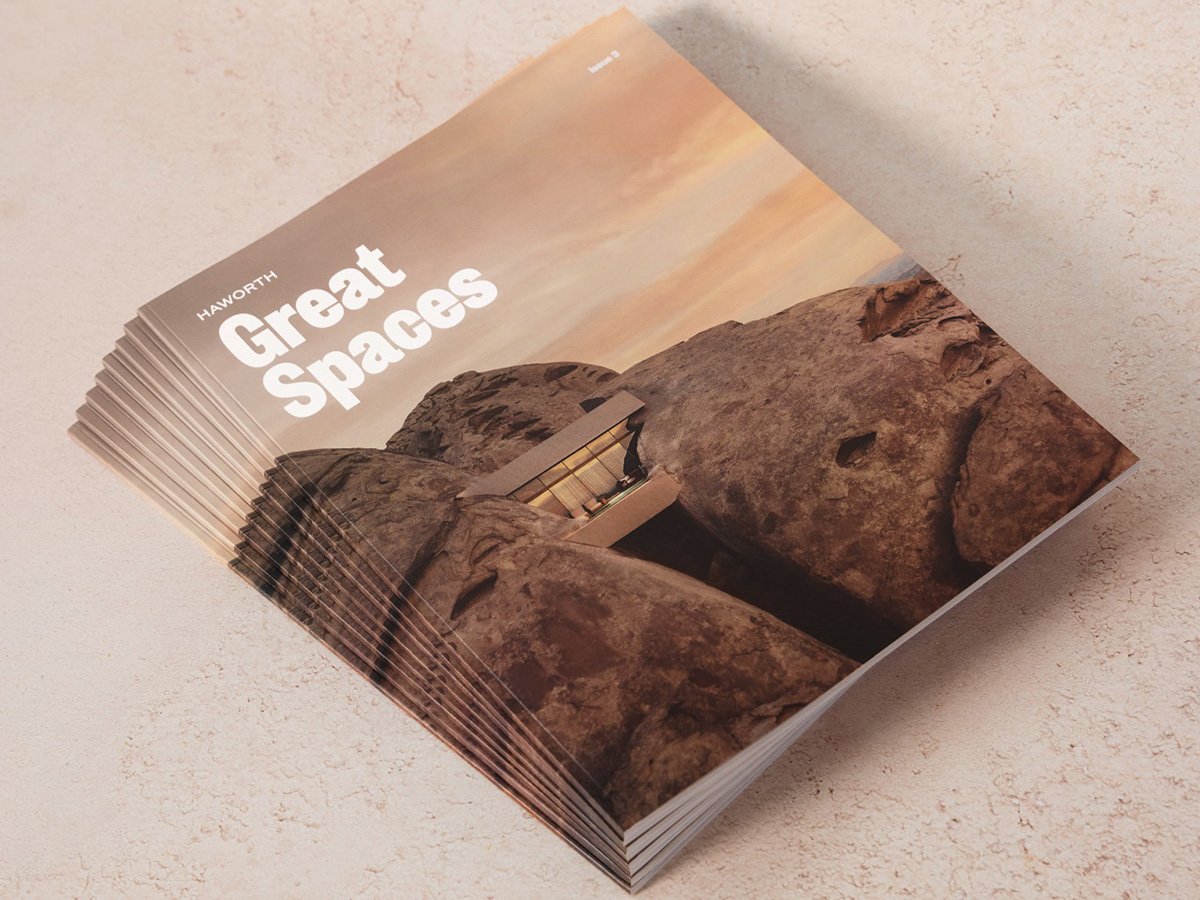
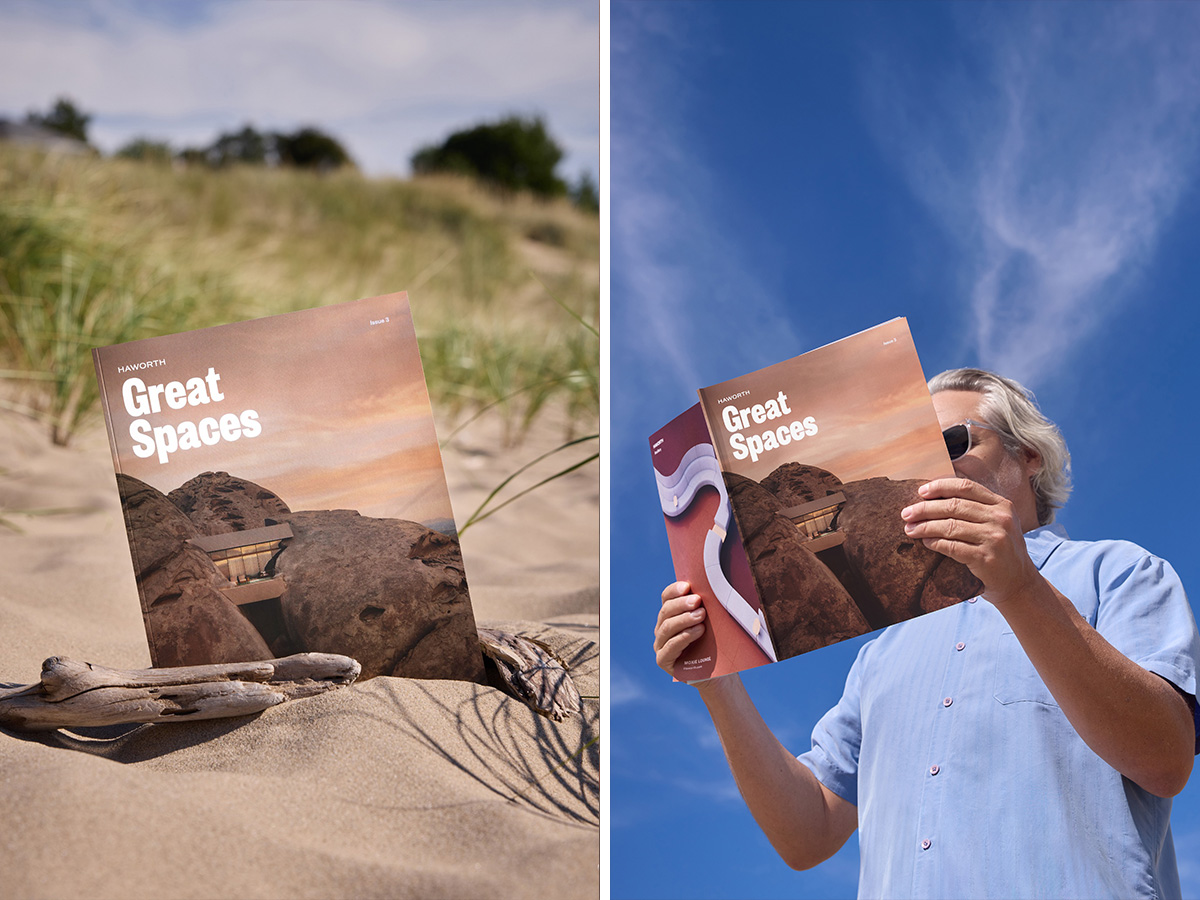
After days on the road and hours on foot crossing the Saudi Arabian desert, architect Chad Oppenheim came upon a rock formation whose shade and crevices offered relief from the heat. “That’s the project,” he said. “It’s right there. We just have to uncover it.” The site became Desert Rock, a resort set into the Hejaz Mountains, and an image of it now appears on the cover of the latest issue of Great Spaces.
Haworth launched the magazine in 2025 as a print and digital publication offering a curated mix of design inspiration, industry perspective, and workplace thinking. Its title points to an idea Paul Nemschoff, the company’s Vice President of Global Strategy & Marketing, explores in his letter to readers. “The attributes of great spaces can be hard to describe, yet we all know one when we enter,” he writes. “Walk into a room and you can tell instinctively whether it was designed to be more than a physical space. You can feel it.”
Issue 3 takes Creating Balance as its theme, looking at how design can bring nature and the built environment into closer harmony for the benefit of the people who use them. It opens with Oppenheim’s profile before moving into health, acoustics, and the office, and the stories return to a question the magazine poses at the outset: how a space can serve competing needs, such as privacy and community or focus and restoration, without shortchanging either.
Beyond the Brochure
Haworth’s original plan was to refresh its corporate brochure, until a closer look at what its customers and partners wanted from the company’s content pointed toward something larger. Conversations around workplace design, technology, sustainability, and culture were shifting quickly, and the team saw room to take part in them more fully. “Great Spaces complements Haworth’s existing research and thought leadership by providing a more editorial and human-centered lens,” says Kurt Vander Schuur, the company’s brand ambassador. “While our research helps uncover important insights, the magazine explores how those ideas come to life through people, projects, and experiences. It creates space for broader conversations and unexpected perspectives.”
Each issue begins with a set of recurring subjects, among them design leadership, innovation, well-being, lessons from the past, and great spaces put to use. The editorial team then turns to the discussions shaping work and the built environment and asks, “Who is bringing a unique perspective to this topic?” Some answers lead to globally recognized names, while others bring forward people readers may not know yet. “Ultimately, we’re looking for contributors who challenge conventional thinking, inspire new ideas, and help our readers better understand what’s next,” Vander Schuur says.
Finding Balance
Creating Balance emerged over the course of the issue’s development, beginning with Oppenheim’s early commitment as a contributor and resurfacing as other stories took shape, from teams weighing focus against collaboration to individuals looking for healthier ways to handle pressure. “By the time the issue came together, Creating Balance felt like a theme that connected every story while also reflecting something deeply relevant to all of us,” Vander Schuur says. “In many ways, balance is something everyone is striving for, whether in the spaces we design, the work we do, or the lives we lead.”
Oppenheim’s feature makes the clearest case for the theme, following a practice that starts from the landscape and allows it to set the terms. At Desert Rock, detailed scans of the stone outcrops informed how rooms tuck into the shade, while solar studies and thoughtful orientation help moderate the heat before any mechanical systems come on. “That philosophy of building with the land rather than on it perfectly captured the spirit of Creating Balance,” Vander Schuur says. “His work demonstrates how design can be both ambitious and restrained, creating extraordinary experiences while remaining deeply connected to the natural environment.”
In the magazine’s Workplace Knowledge section, the theme moves indoors. Dr. Allan Hamilton, a neurosurgeon whose career spans military medicine and high-altitude expeditions, explains that performance climbs under pressure only up to a threshold. “A little bit of stress will make you perform at a higher level,” he tells the magazine. “But that benefit has a limit.” Richard Ellerbeck, global acoustics consultant for BuzziSpace, brings similar thinking to sound and the competing demands of teamwork and heads-down tasks. “You need to make the office a better place to work than home,” he says. “You can do that by having the right balance of available spaces for collaboration and focus work.”
Haworth’s own research carries the theme into the data. Its 2026 Global Employee Experience Survey, which drew on 3,300 knowledge workers across 11 countries and 20 industries, found that restorative activities account for 22 percent of the workday. A profile of Bandwidth’s headquarters in Raleigh, North Carolina, then shows balance in built form, from trails and shaded porches that draw employees outdoors to custom workstations co-created by the two companies, with curved shrouds arcing over each desk to limit visual and acoustic distraction.
Looking Ahead
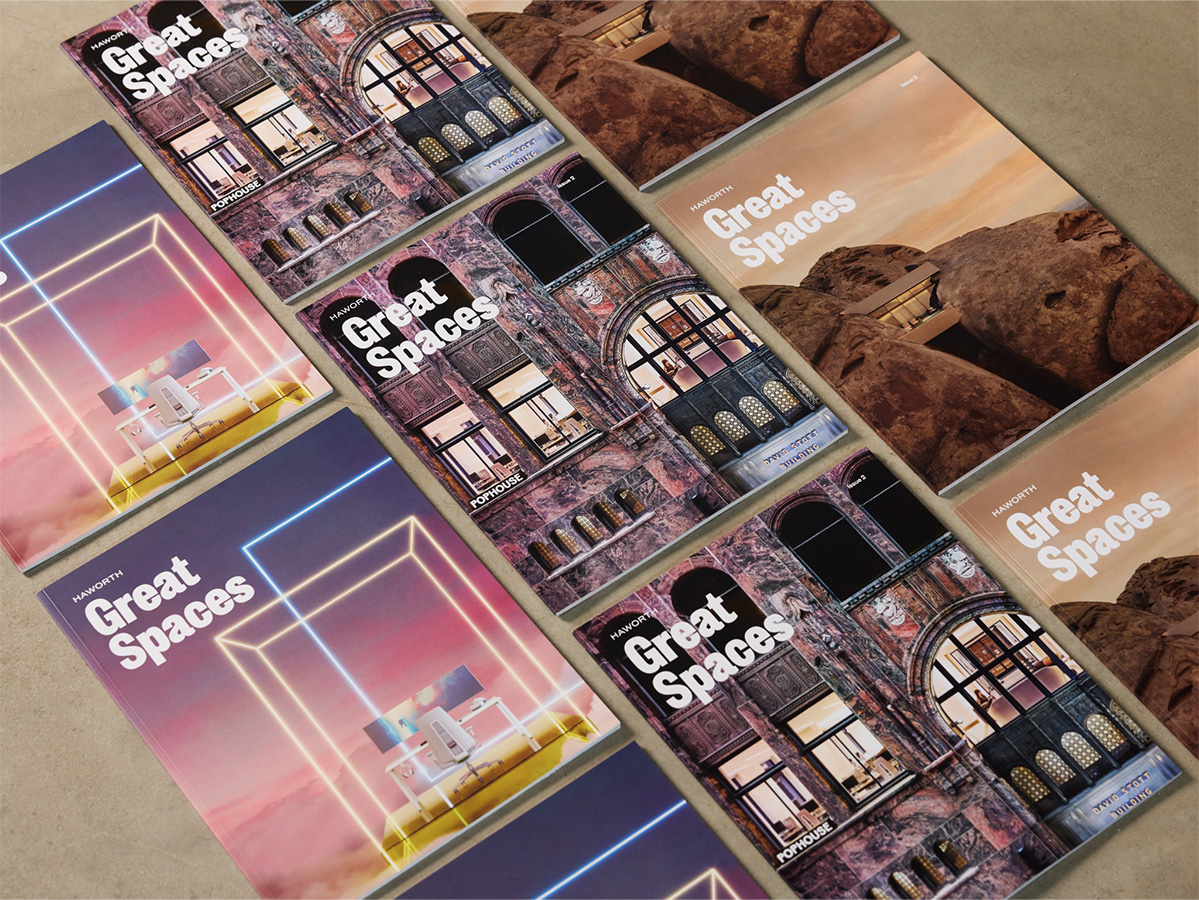
With Issue 4 already in progress and early planning begun on Issue 5, Great Spaces will continue to widen its circle of contributors, pairing the customers behind exceptional spaces with experts and researchers working on the subjects shaping the field. Over three editions, the magazine has developed into a forum for ideas and conversation.
For all that range, the purpose has held steady since the launch. “At its core, our mission remains the same,” Vander Schuur says. “We want Great Spaces to be a publication people can pause with amid a busy day, a place to discover new ideas, explore thought-provoking perspectives, and find inspiration. If readers come away feeling refreshed, informed, and inspired to think differently about the spaces around them, then we’ve accomplished what we set out to do.”
Issue 3 is available by signing up through Haworth’s website, while the earlier editions, Issue 1 and Issue 2, can be viewed online at any time.