


How Chilewich Rugs Move From a Studio Hand Loom to Floors Indoors and Out
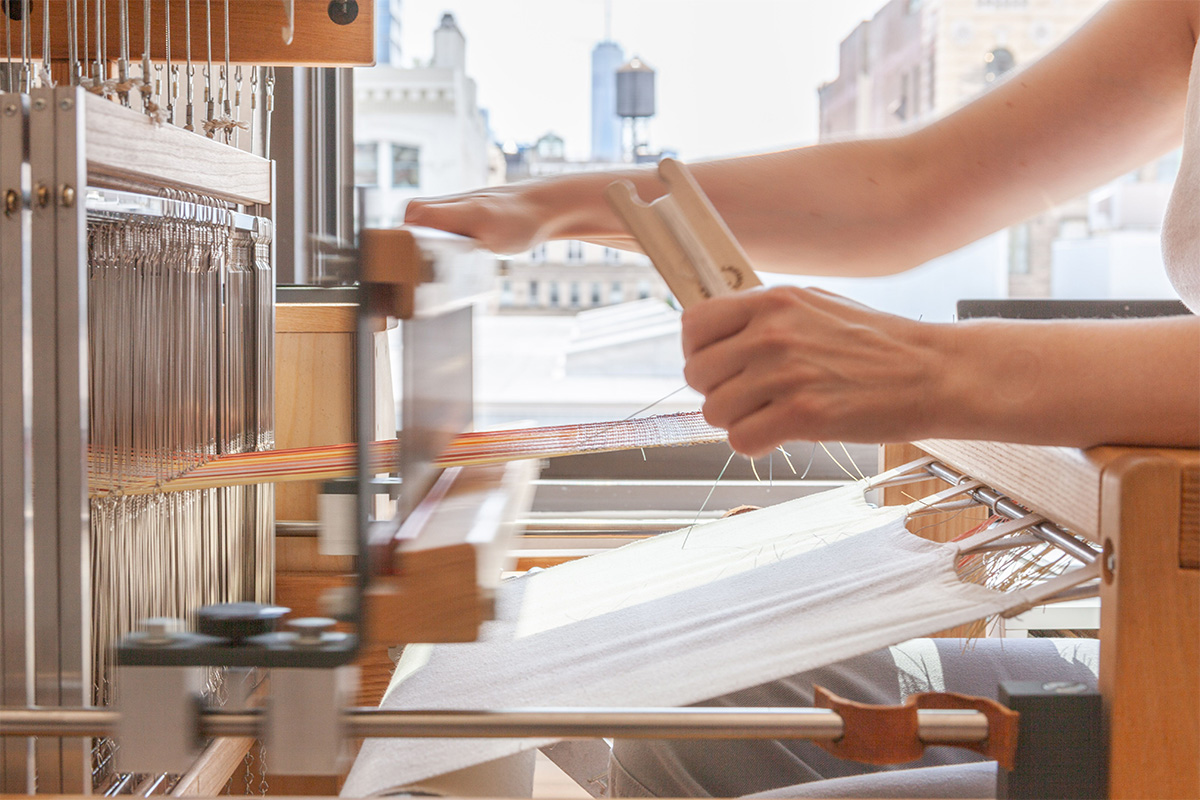
Now and then, a sample coming off the hand-operated dobby loom in the Chilewich design studio in New York outruns the idea that started it. Designers use the loom to trial pattern, scale, and construction in real time, and alongside the prototypes that land as envisioned or take a few rounds of refinement, the occasional happy accident becomes an entirely new weave. The ones that move forward head into production by way of custom-colored TerraStrand yarn, industrial looms in Alabama, and a lamination facility in Chatsworth, Georgia. The finished Chilewich rugs are built for years of daily use, indoors or out, from materials the company continues to refine.
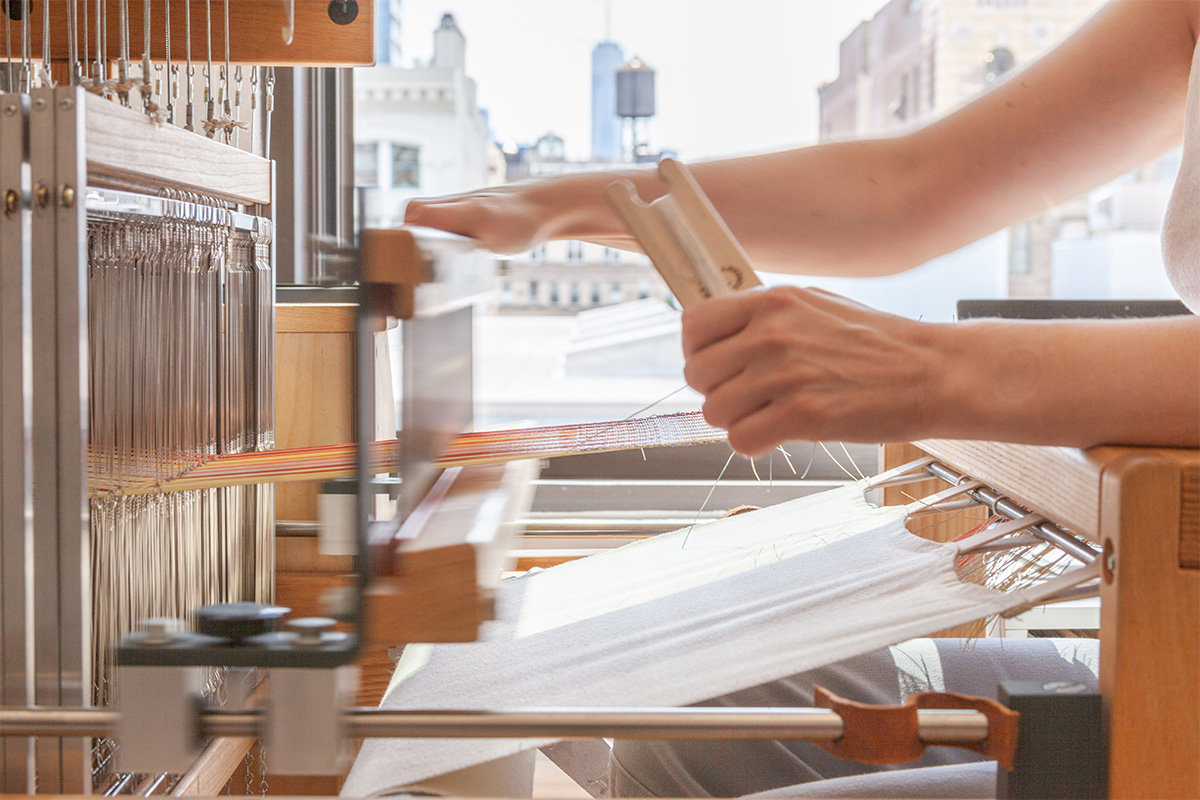
Each collection begins with the in-house team weighing what the assortment needs, from large-scale jacquards to textural surfaces, so that new concepts sit alongside existing rugs such as Basketweave, Foxtail, and Wiggle. “Our dobby loom was set up specifically to mimic industrial looms,” says Alyson Ainsworth, Design Director. A pattern refined by hand in New York reaches the mill largely unchanged.
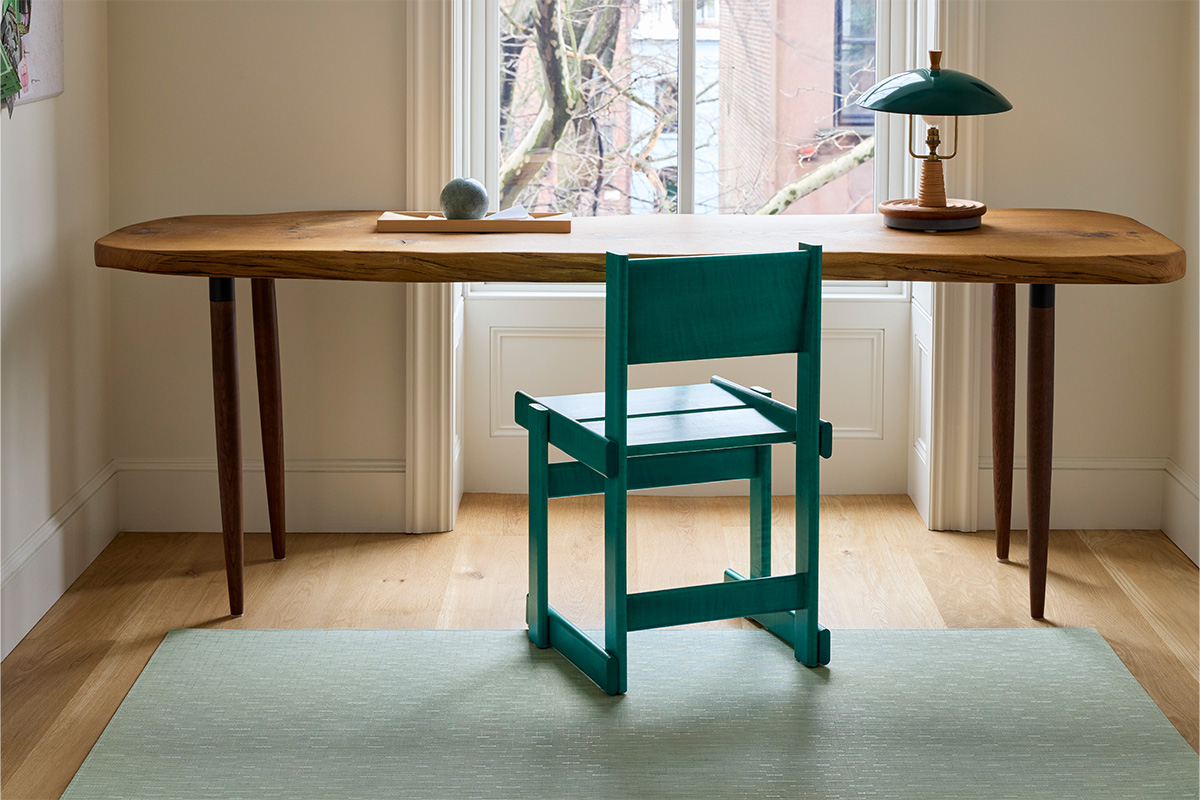
Palettes are settled early, inside TerraStrand, the proprietary fiber behind every Chilewich surface. The range runs from Ecru and Honey to Seaglass and Deep Sea, and most colorways come from a library honed over more than twenty years. When something new is needed, designers often set aside Pantone chips and hand-paint swatches in gouache, a flat, matte medium, to pin down the exact tone. “That color is ultimately formulated into phthalate-free PVC pellets that get extruded on top of our core yarn,” says Kristin Harris, Vice President of Design + Creative. “And voila, yarn!” Beyond individual hues, the team blends several strands, including bi-color versions that carry two shades at once, to add depth and dimension to the final weave.
Scaling Up
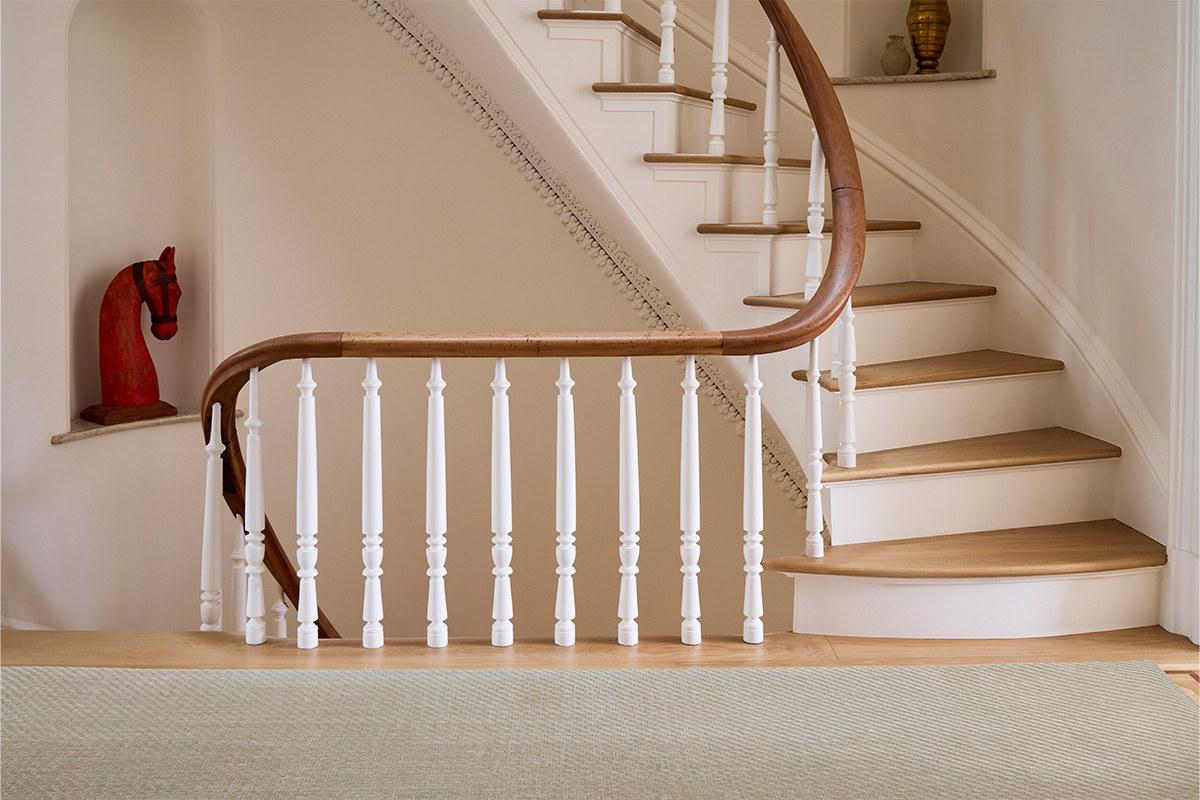
After the pattern and palette are resolved, production moves south, to a weaving mill in Alabama and then the Chilewich facility in Chatsworth, Georgia, for assembly. Each rug’s TerraStrand face is laminated to a flexible, slip-resistant base of commercial-grade synthetic latex, which adds comfort underfoot and works as a built-in rug pad, while self-bound edges finish a profile barely more than an eighth of an inch thick, low enough for most doors to swing over. “Beneath the woven textile surface, we have recently added an impermeable moisture barrier similar to that of our installed flooring,” says Greg Epperson, Director of Technical Services. “This helps to prevent spills and other liquids from passing through the rug to the floor below.”
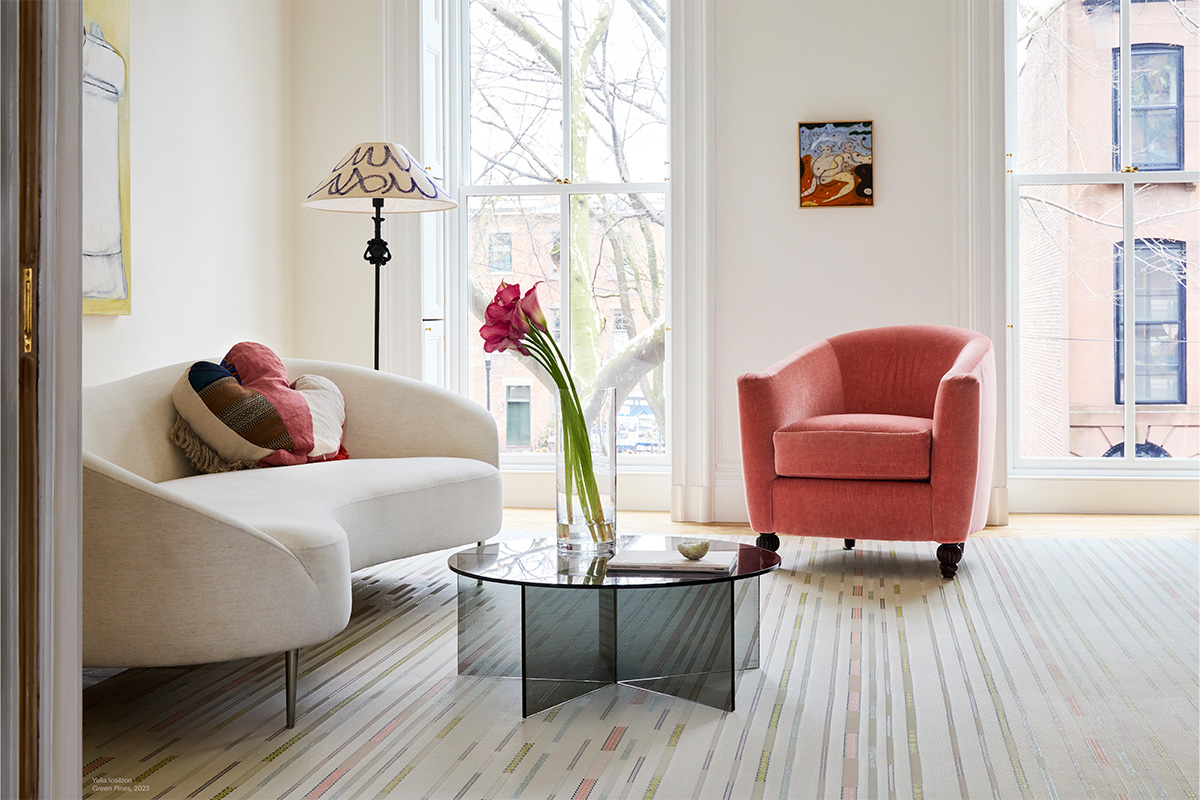
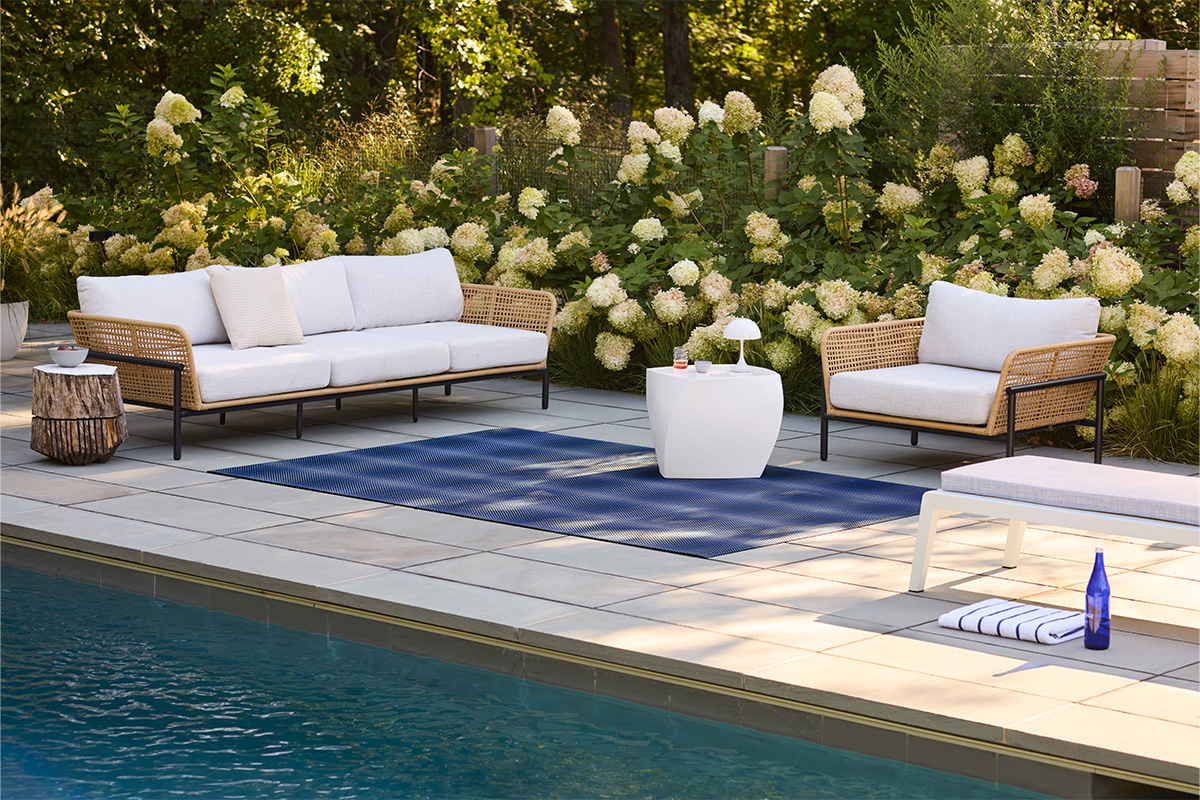
Engineered as one integrated system, the line suits residential and commercial settings, from entryways, kitchens, and playrooms to patios, pool decks, and other high-traffic spaces. The weave resists stains, fading, mold, and mildew and cleans with a damp cloth or mop, while antimicrobial protection from Microban is built into the yarn at the polymer level. The collection carries GreenGuard and Green Label Plus certification for low VOC emissions and appears in healthcare settings that include major hospitals. Every piece is made in the United States, and custom orders carry no minimums, with most shipping within three weeks. Holding their texture for years, the rugs also spare the waste of frequent replacement.
Material Choices
What goes into TerraStrand also shapes where each rug ends up. “At Chilewich, sustainability is both a priority and an ongoing process, and it all starts with materials,” says John McPhee, CEO. For more than a decade, the strand has been softened with a soybean-derived compound in place of petroleum-based plasticizers, cutting greenhouse gases by 40% compared to conventional vinyl, and recycled content joined the mix in April 2025.
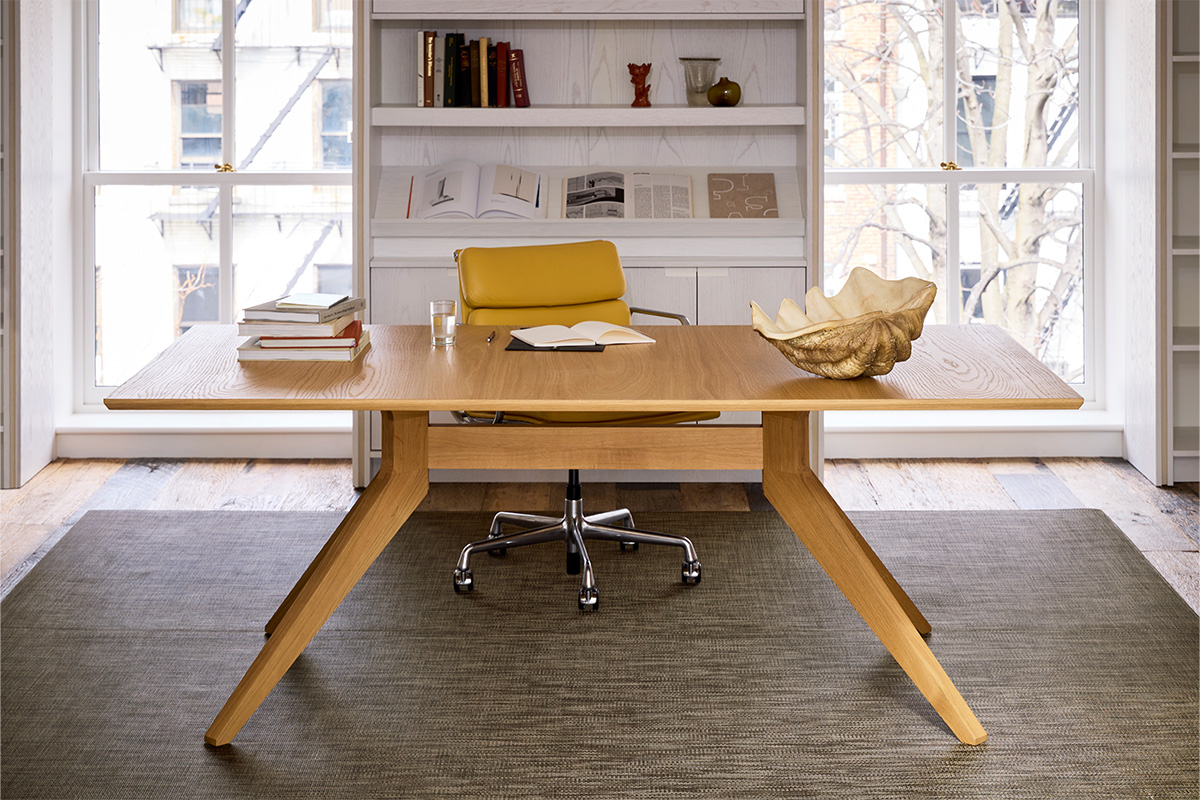
Because chemical contaminants can build up in reprocessed plastics, the company chose carefully sourced postindustrial stock that keeps its products free of phthalates, heavy metals, and PFAS. Every product made with the fiber now holds a reclaimed share of at least 14%, and with the latex backing contributing its own portion, each rug reaches a minimum of 25% overall.
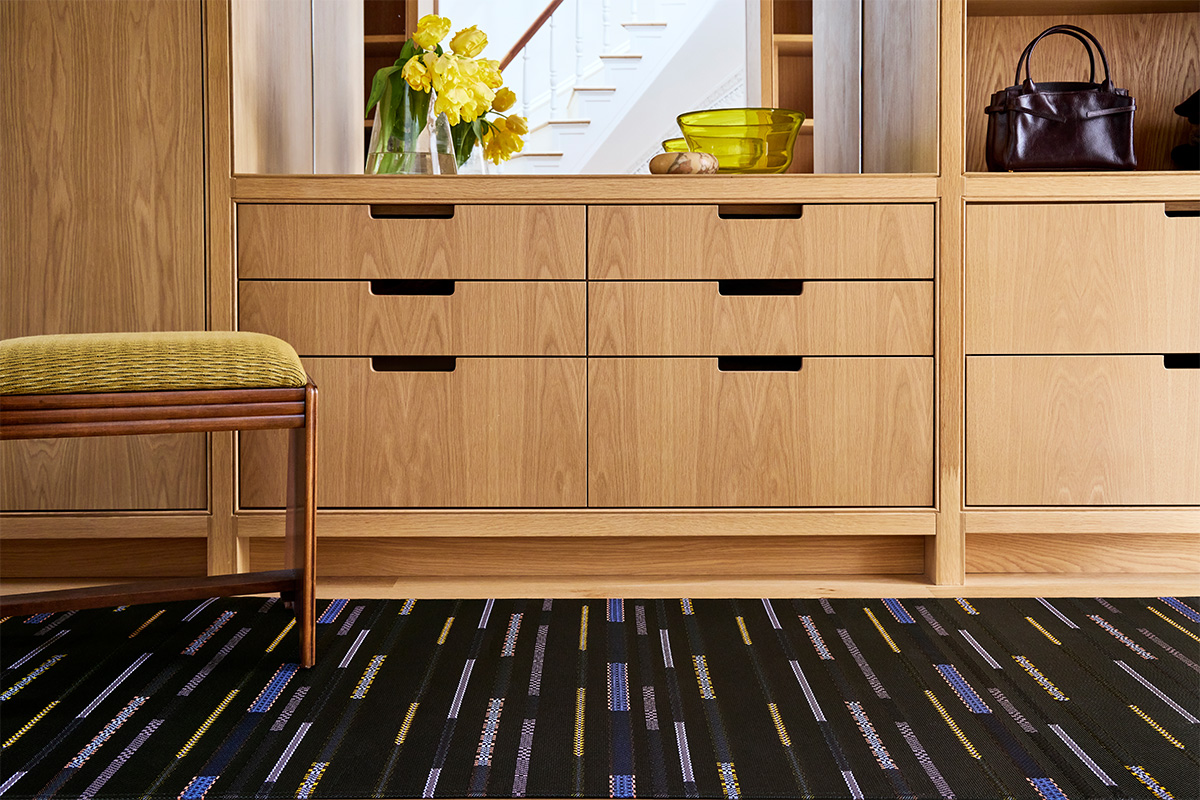
Since September 2025, TerraStrand has carried a patented enzymatic additive that stays dormant through everyday use and accelerates biodegradation once a rug lands in an oxygen-deprived setting such as a landfill, leaving no microplastics behind. “We first connected with the team at Worry Free Plastics in 2023 and saw in their innovative technology a way to transform the ‘end of life’ of our products without affecting their distinctive look and feel, commercial-grade durability, easy care, and indoor/outdoor versatility,” says McPhee. Evaluations began in early 2024, and after several rounds of testing with the weaving mill, textiles made with the treated yarns “passed with flying colors,” he adds. The next step is making the extruded layer, 70% to 80% of each strand, fully regenerative, so it can return to the earth as nutrient-rich soil.