


Humboldt Sawmill Company Redwood Shapes Enchanted Hills Camp
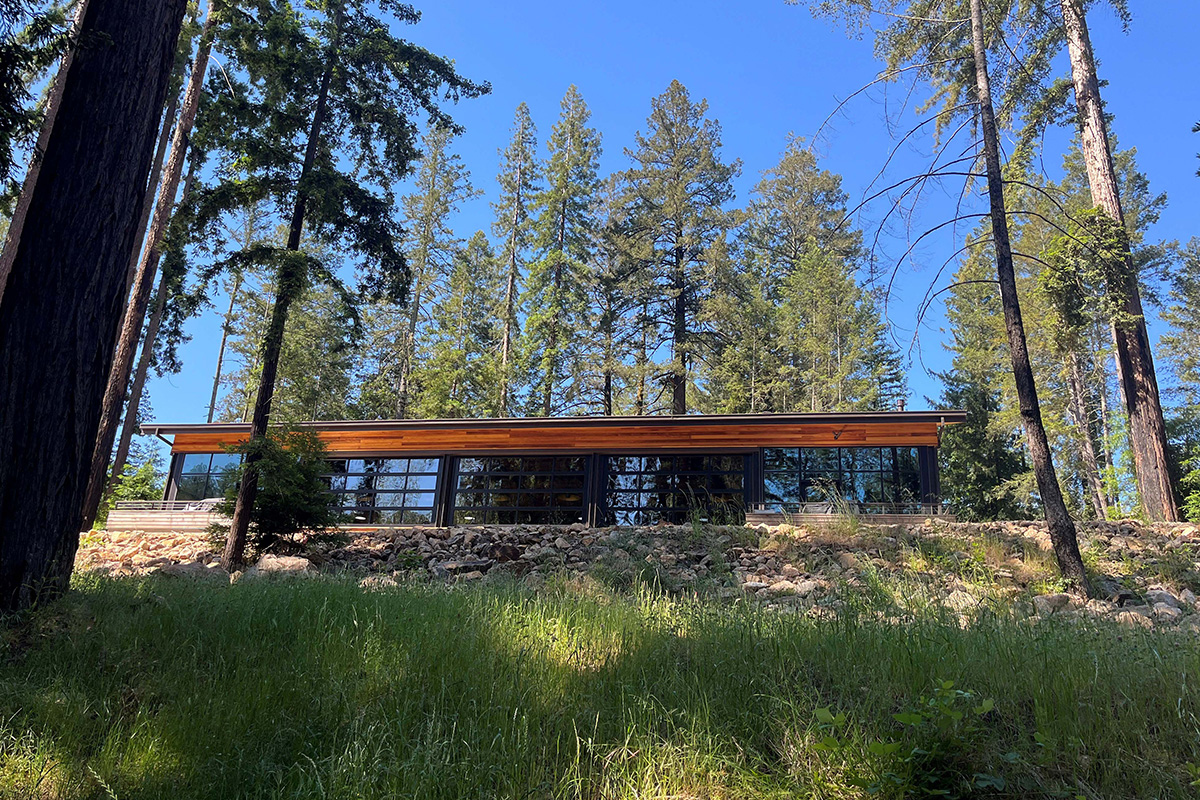
High above the valley floor, on the wooded slopes of Mt. Veeder in Northern California’s Napa County, Enchanted Hills Camp sits among the ridgelines and redwoods of the Mayacamas Mountains. Just ten miles west of downtown Napa, the 311-acre site has long offered a retreat into nature for blind and low-vision children, adults, and families. Operated by LightHouse for the Blind and Visually Impaired since 1950, the camp has grown into a vital gathering place rooted in independence, community, and connection to the land.
In 2017, wildfire swept through the area, destroying over half of the camp’s structures and damaging hundreds of trees. The response was immediate: a collaborative rebuilding effort led by Perkins&Will, Wright Contracting, and the LightHouse team, informed by feedback from blind users across California. The new master plan restores the camp through phased construction—making space for both continuity and long-term transformation.
Material That Grounds and Guides
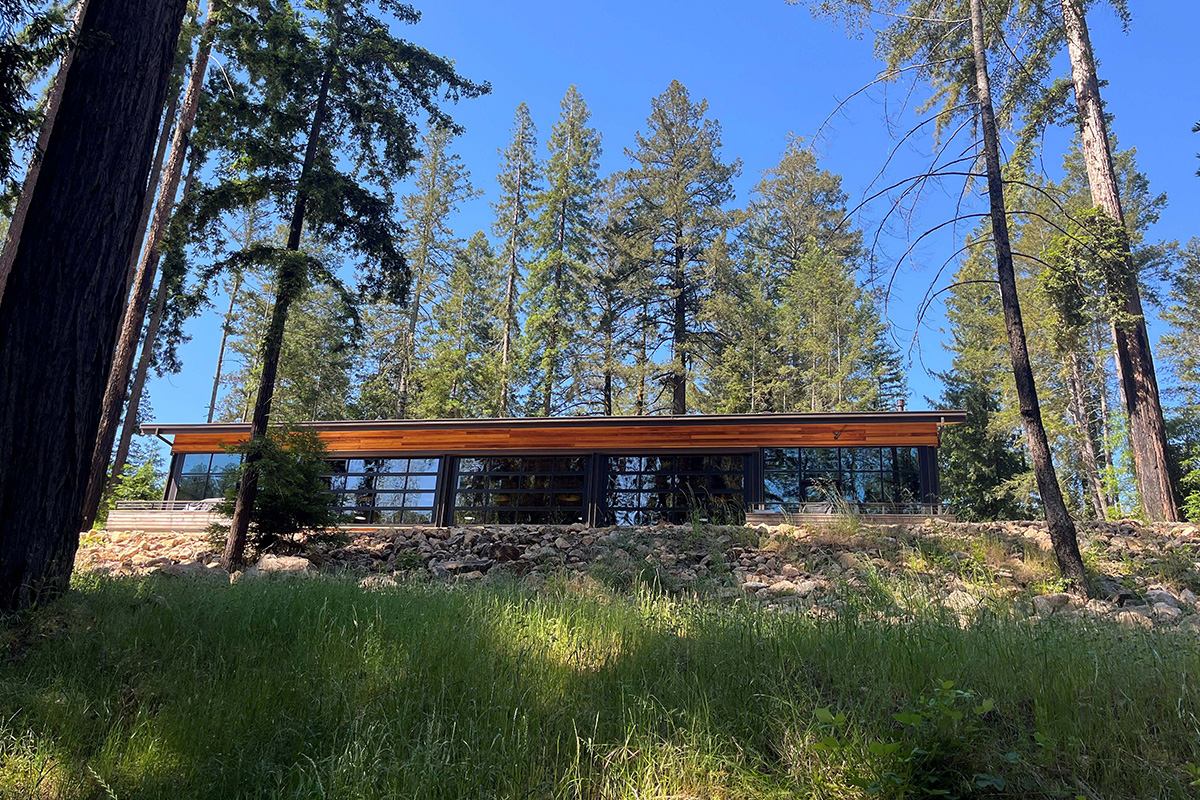
Redwood quickly became integral to the design approach. Surrounded by dense woodland, the camp’s original buildings had long drawn from the landscape visually. In the rebuild, redwood served not only to ground the new structures in their environment but to meet a range of sensory, acoustic, and environmental needs. Humboldt Sawmill Company supplied the FSC-certified redwood used throughout the project—from interior cladding to exterior siding and large communal decks.
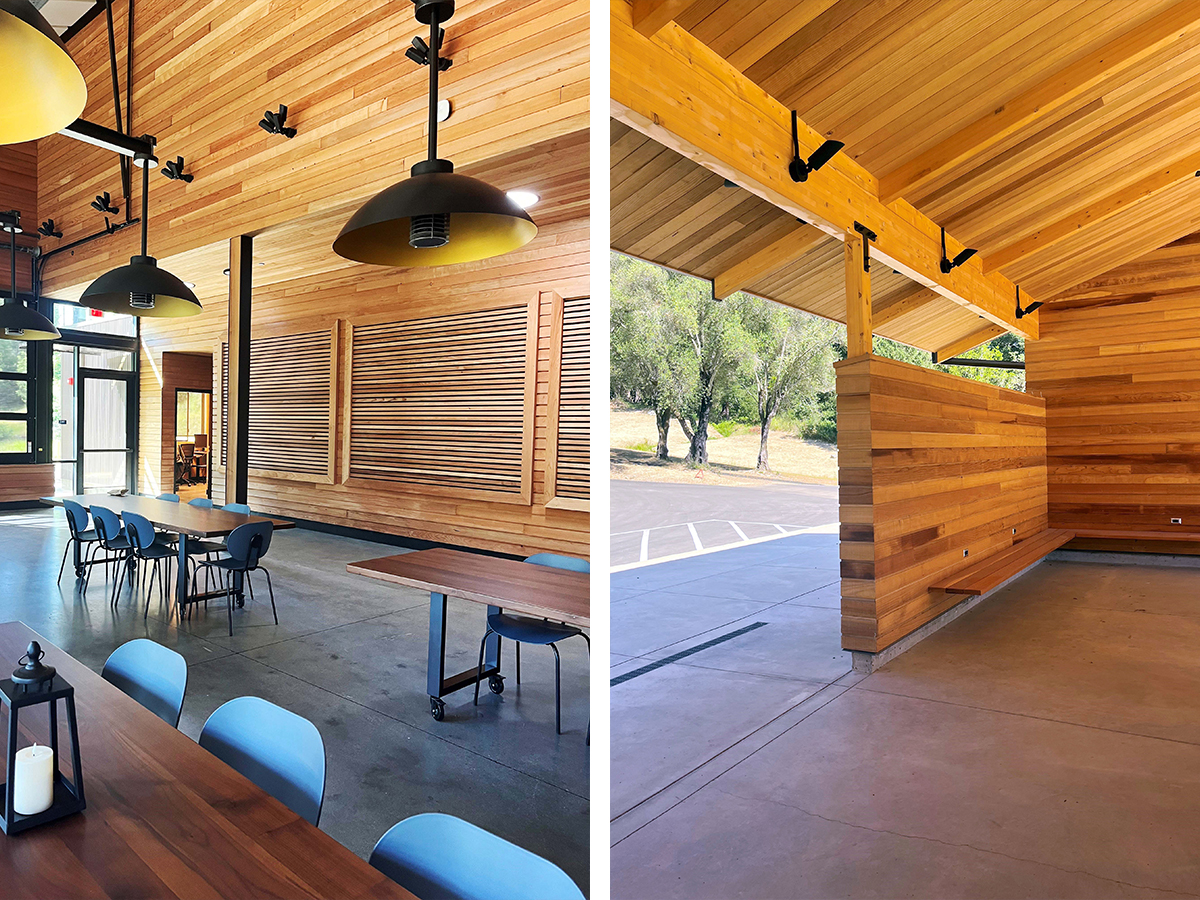
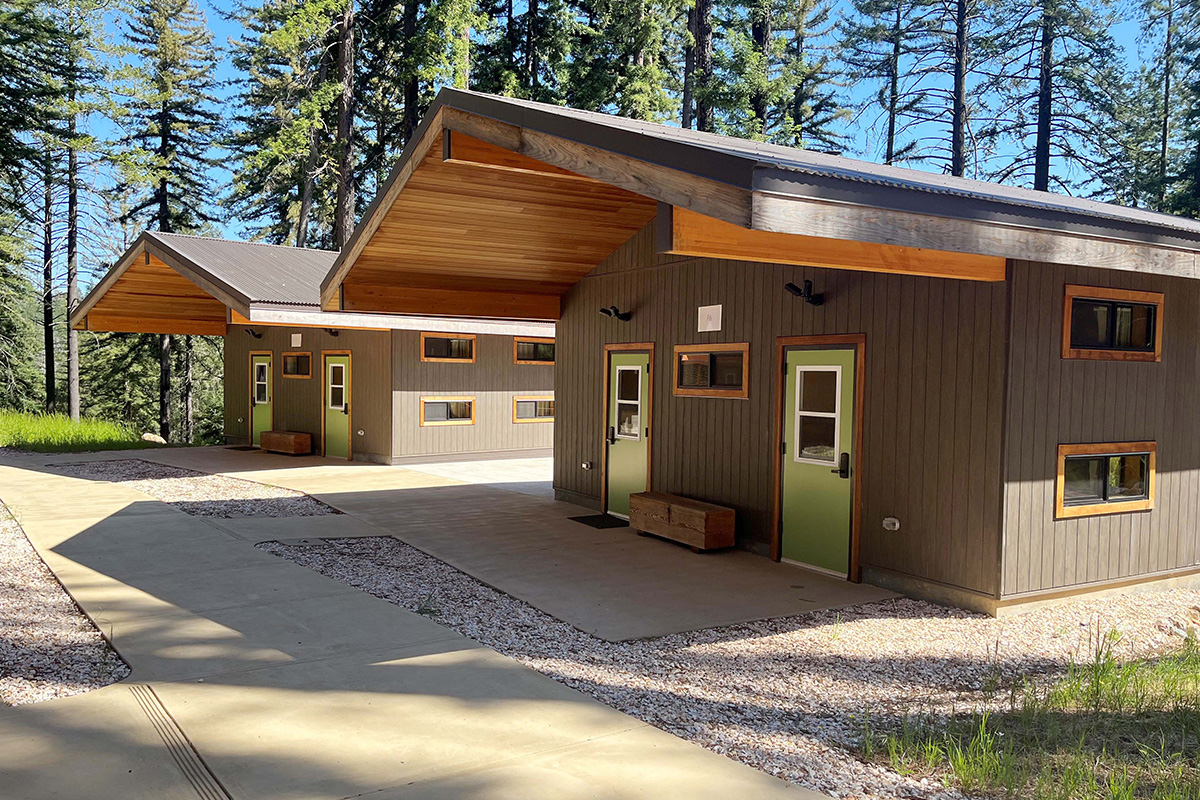
The Forest Commons Building, a new 7,000-square-foot hub for gathering and meals, is wrapped in redwood pattern stock. The material’s natural warmth and acoustic benefits are especially valuable in a setting where many users rely on sound to orient themselves. Redwood’s surface texture also supports tactile navigation, a principle carried across cabins, bath houses, and the welcome center.
Design Through Sensory Input
Each detail reflects user feedback. In the bath houses, storage cubbies feature embossed symbols and tactile notches that allow campers to locate and identify their belongings independently. Transitions between materials were designed to guide movement. Throughout, redwood reinforces both the physical and sensory experience of moving through space.
The material’s environmental profile was another factor. Humboldt Sawmill’s forests in Northern California are managed for long-term yield and ecological resilience. For every tree harvested, at least seven are planted. The forests themselves sequester more than 4.4 million tons of carbon dioxide equivalent annually—helping to offset emissions well beyond the boundaries of the project. In its finished form, redwood continues to store carbon, making it a climate-conscious choice for high-performance design.
Resilience Built into the Landscape
Beyond new buildings, improvements included underground electric and water infrastructure, new water tanks, a photovoltaic system, and enhanced circulation across the site. Redwood decking extends into a grove near the heart of the camp, providing space for concerts, programs, and community events beneath the trees.
Today, Enchanted Hills Camp continues to welcome campers across generations. The rebuild has deepened its connection to place—not only through design, but through the careful selection of materials that support durability, orientation, and sustainability in equal measure.