


Interface Moves Toward Carbon Negativity Through Circularity
Nature offers an underlying order—patterns of growth, traces of movement, and structures formed over time. These cues have informed Interface’s work for years, shaping carpet tile constructions, supporting the company’s earliest carbon negative material formulations, and guiding installation approaches that consider how resources move through continuous cycles.
This perspective guides the company's goal of becoming carbon negative by 2040. Circularity organizes the work ahead, establishing loops that keep materials in circulation and support long-term decarbonization. The direction reflects decades of internal research and frames Interface’s broader approach to designing for sustained material flow.
Learning from Nature
Interface’s work with natural systems deepened through its partnership with Biomimicry 3.8, an organization focused on studying and applying strategies found in nature—a lens that often guided the company’s innovation efforts. “Every time we ask nature to help us solve a problem, we end up with a solution that is bigger than we imagined,” says Mikhail Davis, Director, Global Market Sustainability. The collaboration has influenced installation approaches, with innovations such as TacTiles™, a glue-free attachment system for carpet tile, and shaped carpet tile constructions like Entropy™, which was designed to use multiple dye lots without visual disruption. It also informed the development of Interface’s earliest carbon negative products, drawing from nature’s example of storing carbon in trees, flowers, and rocks.
Interface recently hosted the Biomimicry for the Built Environment Leadership Retreat, a gathering developed with Biomimicry 3.8 to explore how principles observed in natural systems can support broader circular systems. The event extended the company’s long-running collaboration with Biomimicry 3.8, which has shaped product design, installation systems, factory planning, and even company goals.
Driving Circularity
Circularity shapes Interface’s approach to material development, directing decisions about what enters and re-enters production. At NeoCon this year, Interface introduced a carbon negative resilient flooring prototype, marking a new step in its materials research. “When you introduce materials that have never been used in a product type before, you have to make sure they meet performance standards and can be sourced reliably,” Davis says. “NeoCon was a big moment for us because it showed how far we’ve come in rethinking the materials we use.”
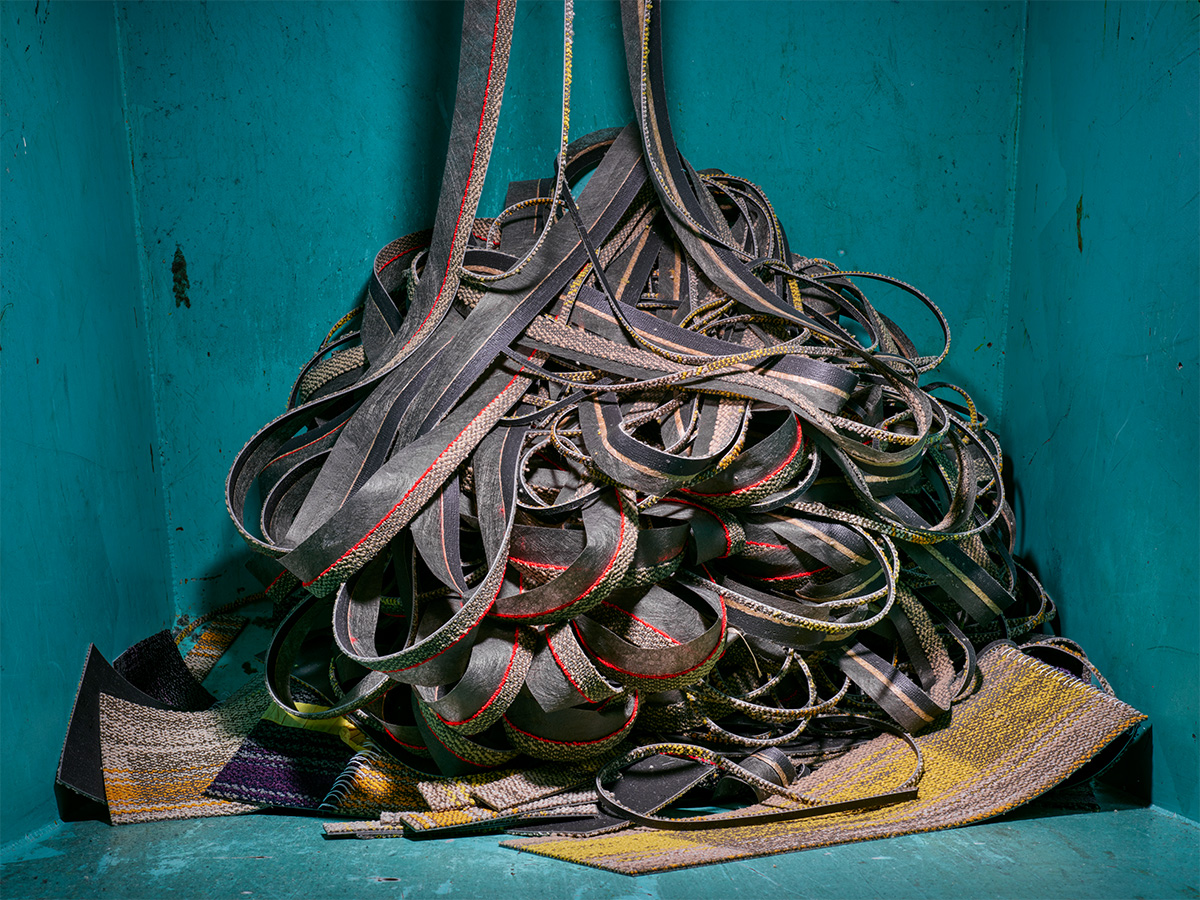
The presentation also included a demonstration of Interface’s growing materials strategy, which leans on recycled content and biobased ingredients containing stored carbon. “Leveraging learnings from our carbon negative carpet tile innovation, our team achieved an industry-first: rubber flooring with a carbon negative footprint, measured cradle-to-gate without offsets,” Davis says. The development reflects continued collaboration with suppliers to integrate low-footprint human-made and biobased inputs, with performance and availability shaping each decision.
Scaling Circular Systems
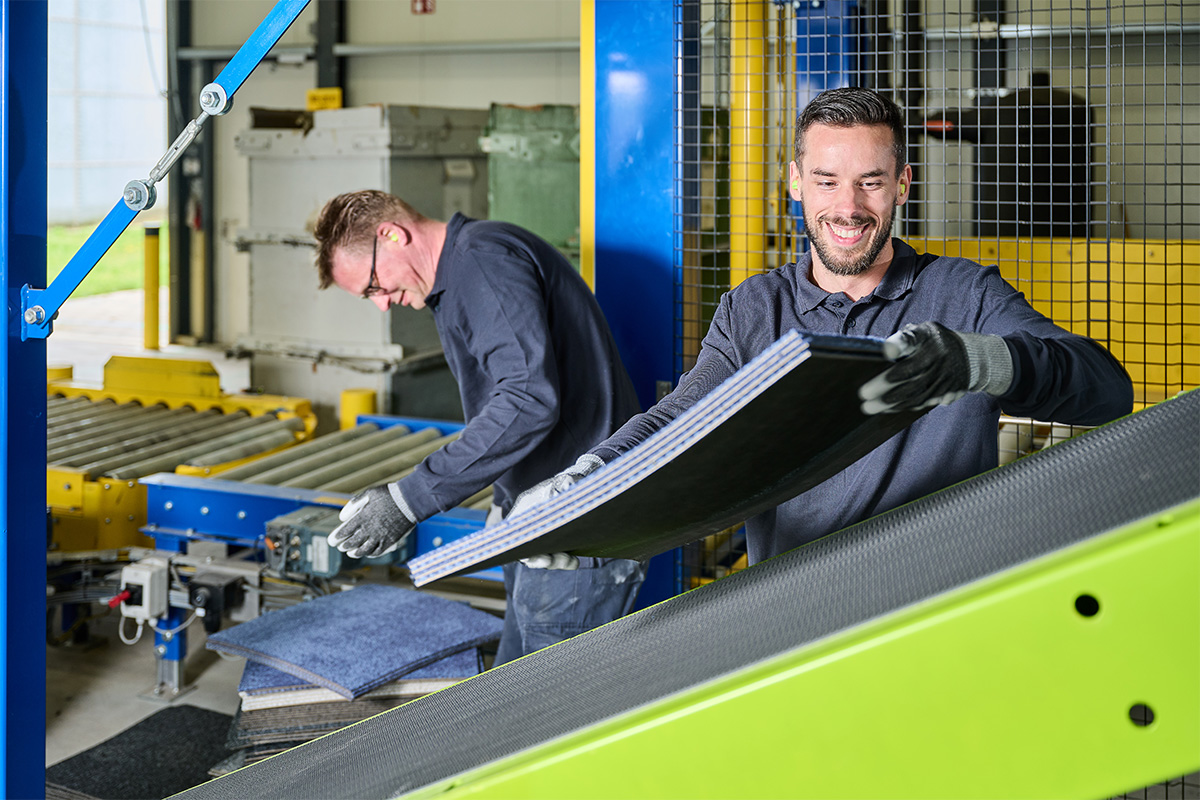
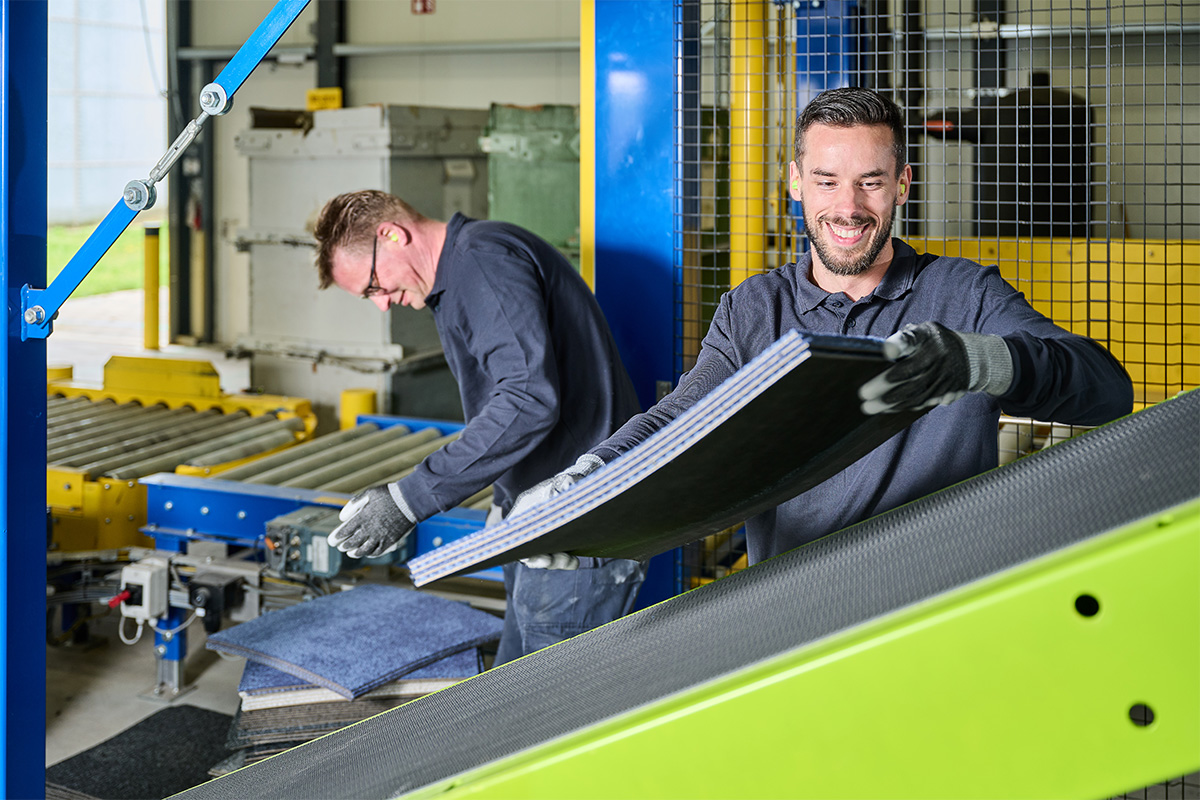
Attention to material inputs carries through to how products move at the end of their use, where circularity relies on established systems for return and recycling. Earlier this year, the renovation of the Austin Convention Center offered a large-scale example of this work. Turner Construction identified that the existing carpet tile was Interface product and coordinated its return through the ReEntry® program, with Page and LMN Architects supporting broader waste-reduction planning for the project.
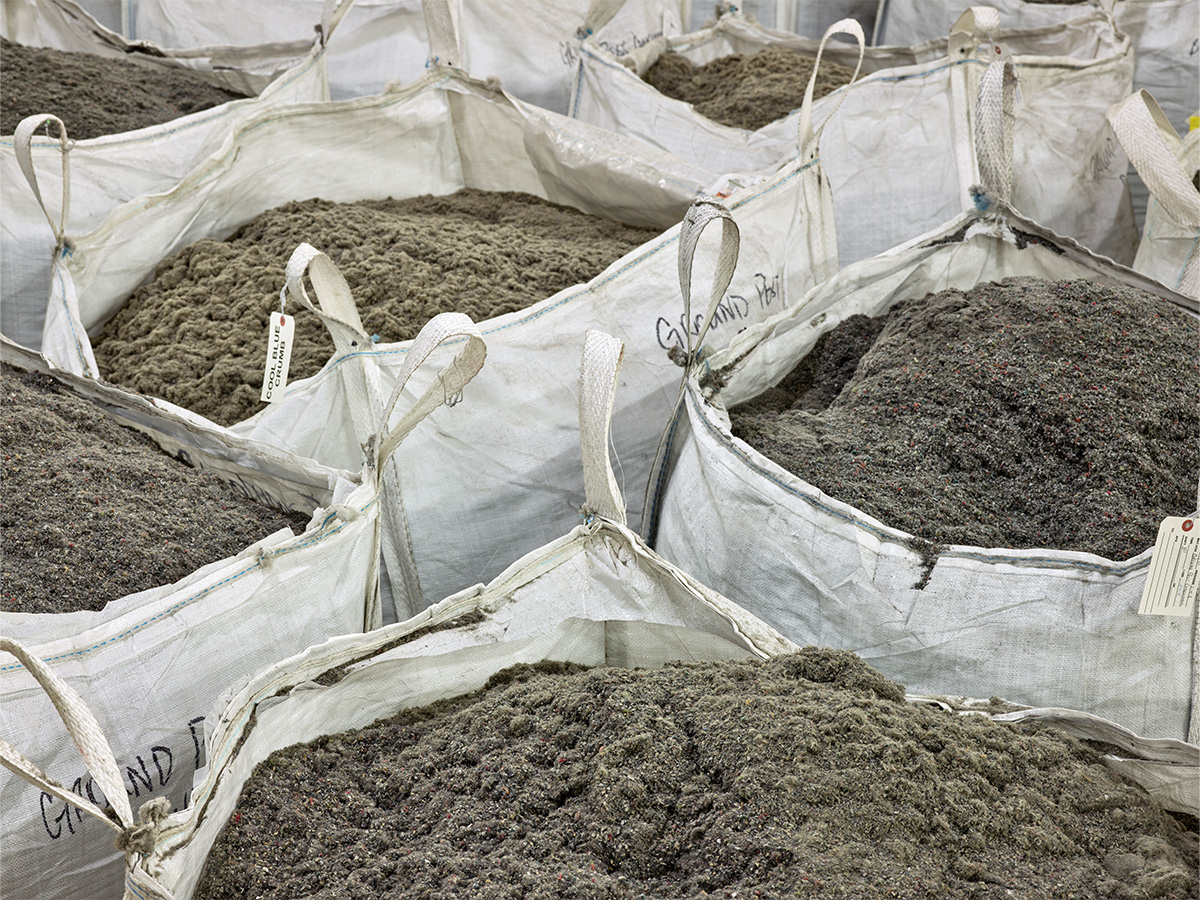
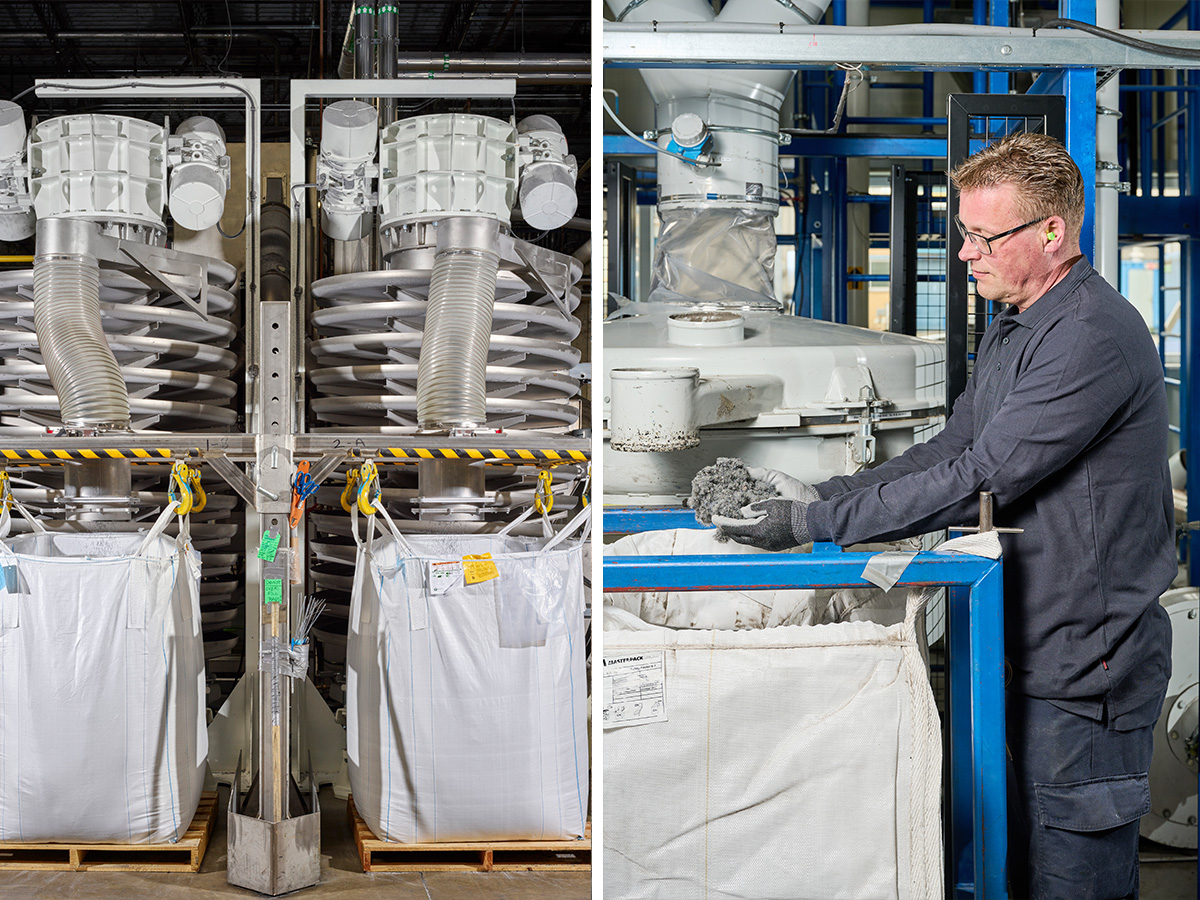
More than 70 tons of material arrived at Interface’s recycling facility—a volume that stood out even within a program accustomed to significant returns. “Seeing truck after truck of old carpet tile arrive at our facility in a single day was unprecedented,” Davis says. The timing aligned with Interface’s recent reformulation of its GreenCircle Certified GlasBac® backing to include closed-loop content, and the project supplied valuable post-consumer material that can be screened, shredded, ground, and reintegrated into new products. “This is exactly what we promised Austin Convention Center when they installed Interface years ago,” Davis says. “When you select products backed by a third-party verified recycling system, end-of-life recycling becomes simple and achievable.”
Industry Collaboration and the Path Ahead
Steps across product development, supply chain partnerships, and large-scale takeback contribute to Interface’s long-term carbon negative direction. The company’s 2040 goal frames this work, emphasizing material choices, circular systems, and ongoing collaboration with customers and designers. “Creating a path to a carbon negative economy that does not include a robust circular economy is nearly impossible,” Davis says.
The direction relies on shared infrastructure and coordinated efforts across the industry, where materials can move through interconnected systems rather than isolated pathways. “Nature offers a great analogy,” Davis says. “A leaf doesn’t rely on the tree it fell from to turn it into soil—it’s part of a shared system.” The perspective guides how Interface approaches its next phase of material and system evolution, shaped by research, operational decisions, and the collective participation needed to keep carbon held within products over time.