


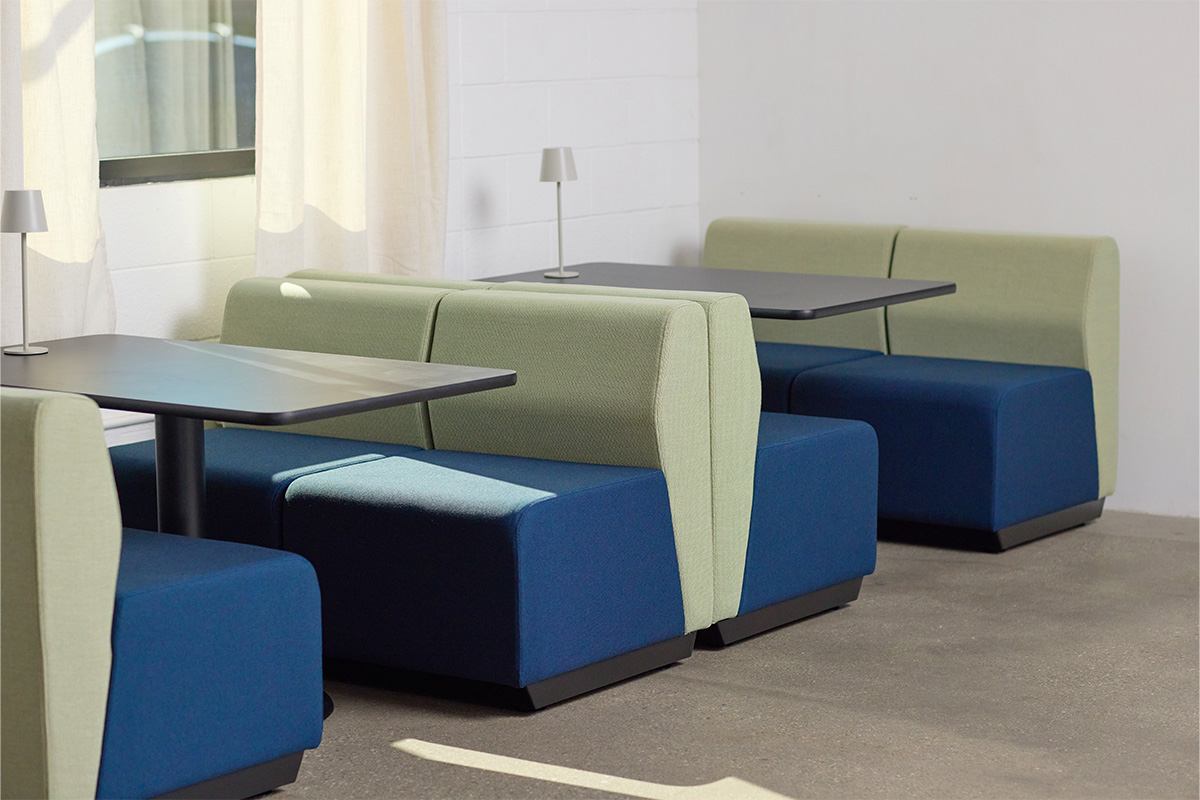
Koble by 9to5 Seating Forms Patterns of Use and Flow
Forward-facing or curved; shaped into corners, arcs, or closed loops, Koble arranges itself into purposeful spatial formations. The modular system from 9to5 Seating was conceived with connection in mind, guided by a visual language of elevation, rhythm, and alignment.
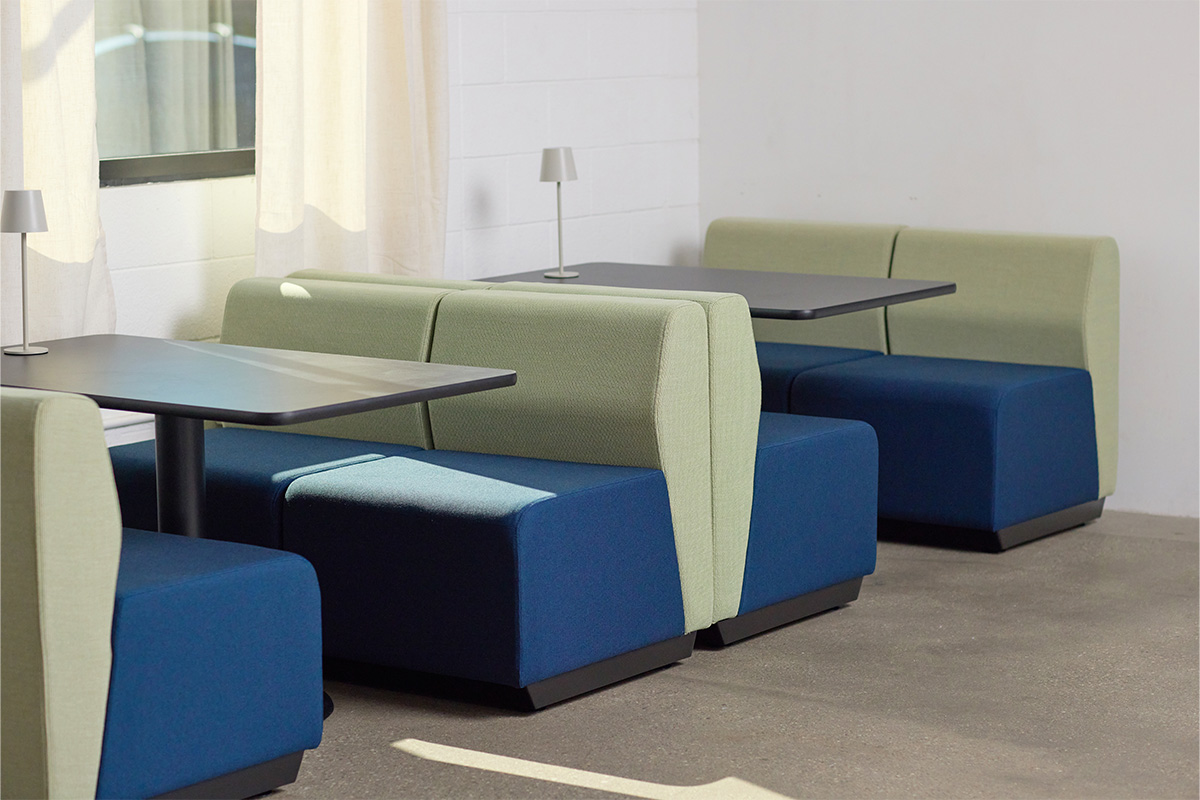
Developed as soft task seating, the collection introduces intentional ergonomics: a comfort-calibrated seat, an integrated lumbar curve for sustained support, and a recessed shadow base that elevates each module slightly above the floor for cleanability. The seat profile gently leans back, shaped for informal zones and longer periods of use, whether for tasks, casual meetings, or moments of pause. In any configuration, Koble shapes spaces that invite interaction and dialogue between users and the surroundings.
Configurations and Connection
The name Koble comes from the Danish word for “connect,” and the visual language makes that intention clear. Modules align in sequence or back-to-back, forming a distinctive angular spine that reinforces the system’s geometry. Upholstery supports these gestures, with contrasting tones emphasizing junctions and single-color applications allowing the overall shape to read as a unified form.
Popular combinations include forward-facing benches and enclosed runs, but the open-ended system supports both compact and extended layouts. Textiles are selected for durability across contract settings, balancing surface performance with compositional range. This approach to modularity extends to tools for designers. Koble is available through CET and 2020, as well as 9to5 Seating’s Chair Designer platform, where common layouts can be visualized and adapted in real time.
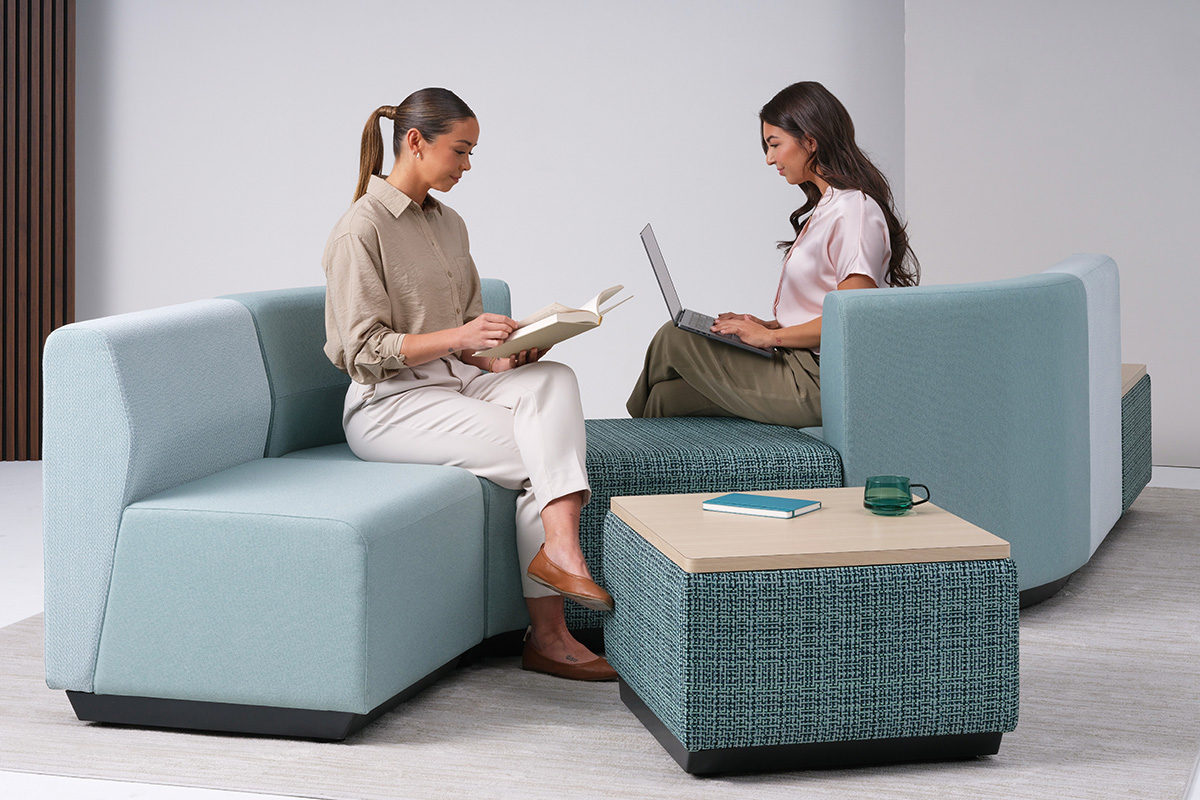
Formally, the system was shaped by references to both natural landscapes and the built environment. “We looked to natural promontories and urban skylines for inspiration, aiming to capture that same sense of bold elevation and geometric harmony,” says Mark Mannon, VP of Marketing and Product Development.
The angles, shadows, and sculptural lines in the system reflect those references—translated into seating that can articulate clean curves, sharp junctions, or uninterrupted lengths. “Even the material palette—ranging from warm woods to clean laminates—was selected to evoke both organic and contemporary cues,” Mannon adds.
Ergonomics and Material Intent
Koble was developed with a specific intention: to function beyond the lounge. Its seat is shaped for longer durations and informal work, with attention to posture and support built in from the start. “Ergonomics were foundational to Koble’s development,” says Mannon. “We knew that soft seating doesn’t always support upright engagement, so we designed Koble with a calibrated seat and integrated lumbar curve to promote active posture—even for tasks like laptop work. The balance of firmness and softness was carefully tuned to extend comfort over longer durations without sacrificing support.”
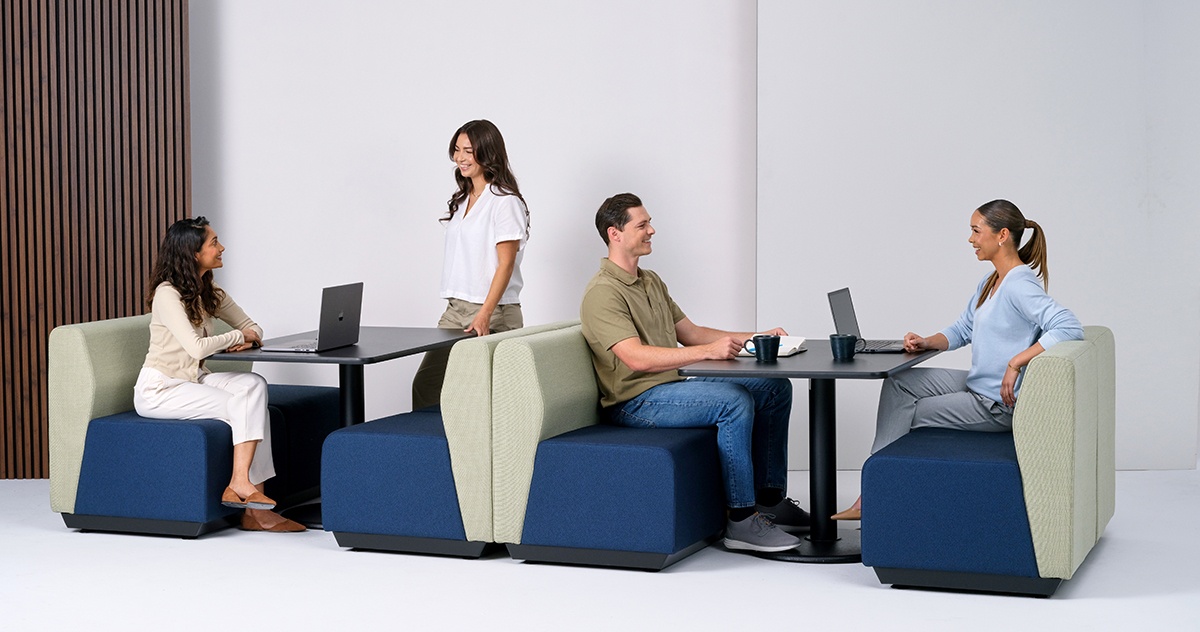
Each element reflects a utilitarian clarity. The structure is raised just slightly above the floor for cleanability, and components are made with recyclable wood. The collection is certified to both BIFMA LEVEL 2 and GREENGUARD Gold standards. Material options range from warm woods to smooth laminates, offering flexibility across contract and mixed-use environments.
Koble is suited to open plans, informal gatherings, and transitional zones. Its visual presence stays understated, while the modular framework leaves room for spatial improvisation. Each configuration responds directly to its setting, adapting in scale and shape to suit the surrounding environment.