


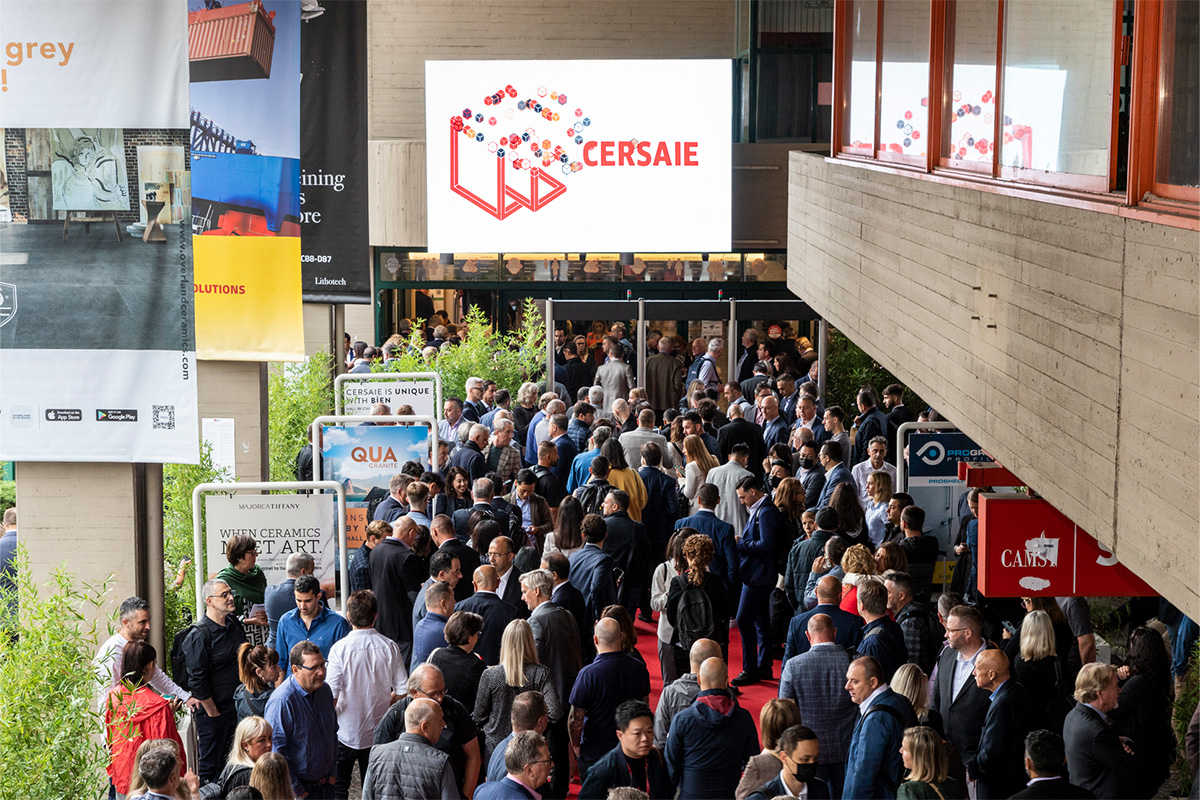
New Designs and Demonstrations Debut at CERSAIE
Glazed brick in terracotta red. Dusty pink checkerboards. Deep emerald mosaics, flecked with iridescence. At CERSAIE 2025, tile is approached as both surface and structure. Held in Bologna, Italy, from September 22 to 26, the International Exhibition of Ceramic Tile and Bathroom Furnishings brings together over 600 manufacturers from around the world and is expected to draw more than 100,000 visitors to the city's exhibition district. The annual fair gives architects and designers a first-in-market look at new trends and collections, plus the chance to engage with leading manufacturers and experience live installation sessions, technical forums, and talks by international architects through its annual lecture program, “Building, Dwelling, Thinking.” The fair is the only global design event to have hosted thirteen Pritzker Prize–winning speakers.
Installation Craft and Technical Innovation
This year's show introduces a newly expanded installation sector in Hall 19, where live demonstrations, training sessions, and technical materials will be presented across multiple zones. Assoposa, the Italian association of tile layers and installers, will lead programming in Tiling Town, offering real-time demonstrations of ceramic tile installation under site-like conditions. Technical seminars and qualification programs will run alongside these sessions, with attending architects, engineers, and surveyors eligible to earn professional training credits.
A dedicated path will guide visitors through each stage of the installation process, from substrate preparation to grouting and finishing. Nearby, an information desk from Formedil, Italy’s national body for training and safety in construction, will share updates on programs offered by Italian building schools, with a focus on ceramic tile installation. Adding to the programming, the Cersaie World Tiling Lab will bring four teams of young tile layers from Italy, Switzerland, Denmark, and Brazil to complete four distinct settings: a bathroom with a shower niche, an outdoor terrace, a living area with a staircase, and a facade with French windows.
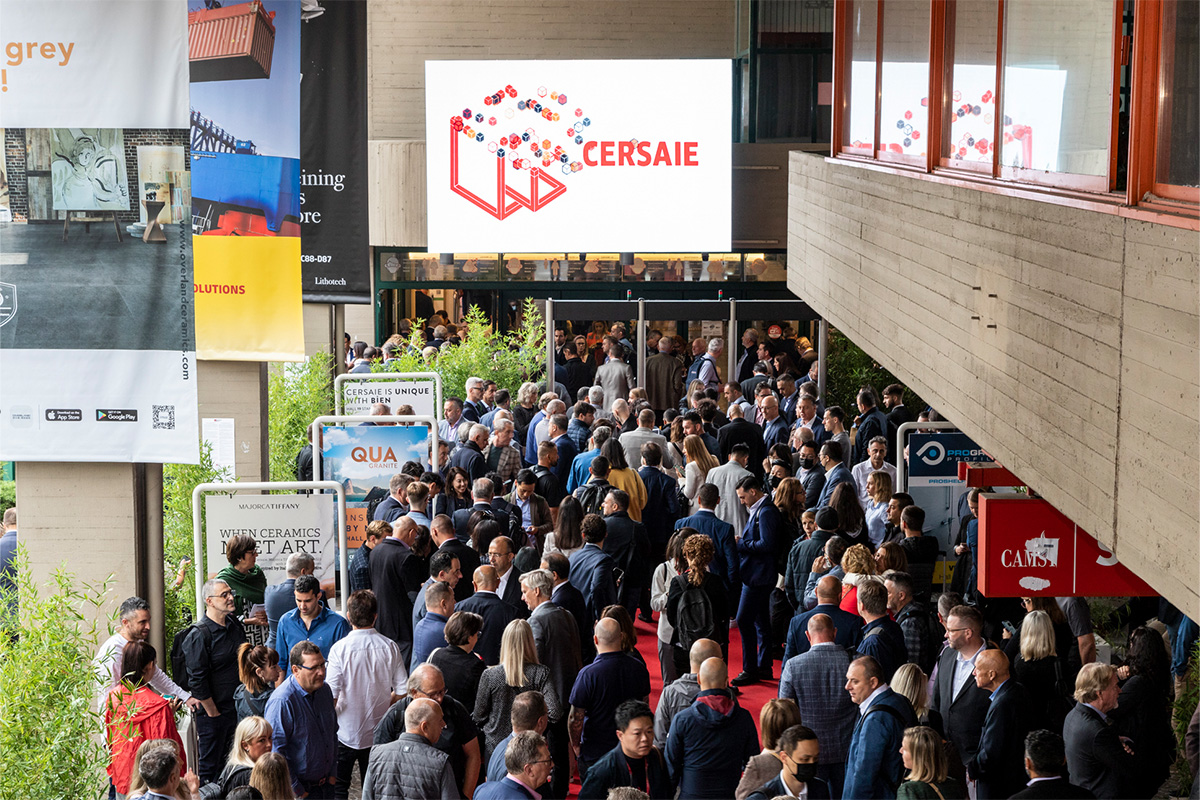
Expanding the Language of Surfaces
Collections on view will include ultra-thin slabs, oversized cladding, prefabricated vanities, modular pavers, and wall-mounted basins. Finishes shift between dry matte and mirrored gloss—often layered to respond to changing light—while extruded formats and dimensional profiles appear in open dividers and screens scaled to architecture.
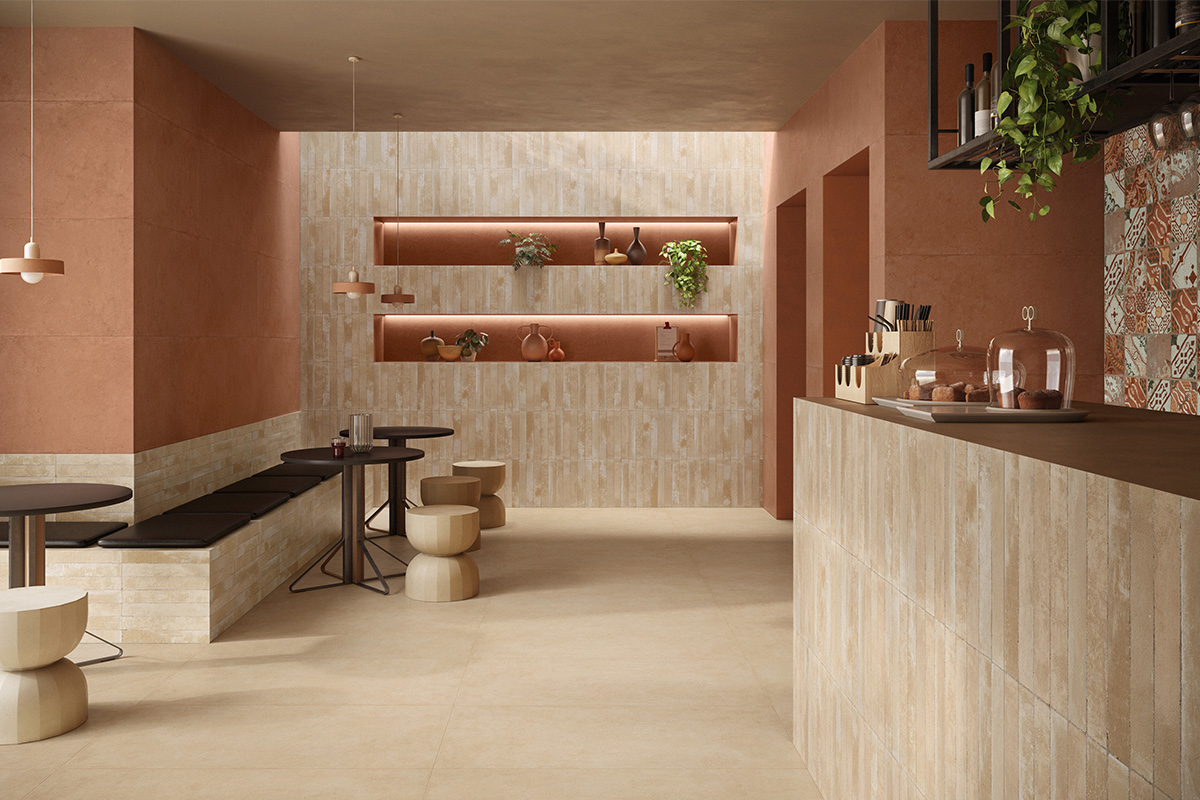
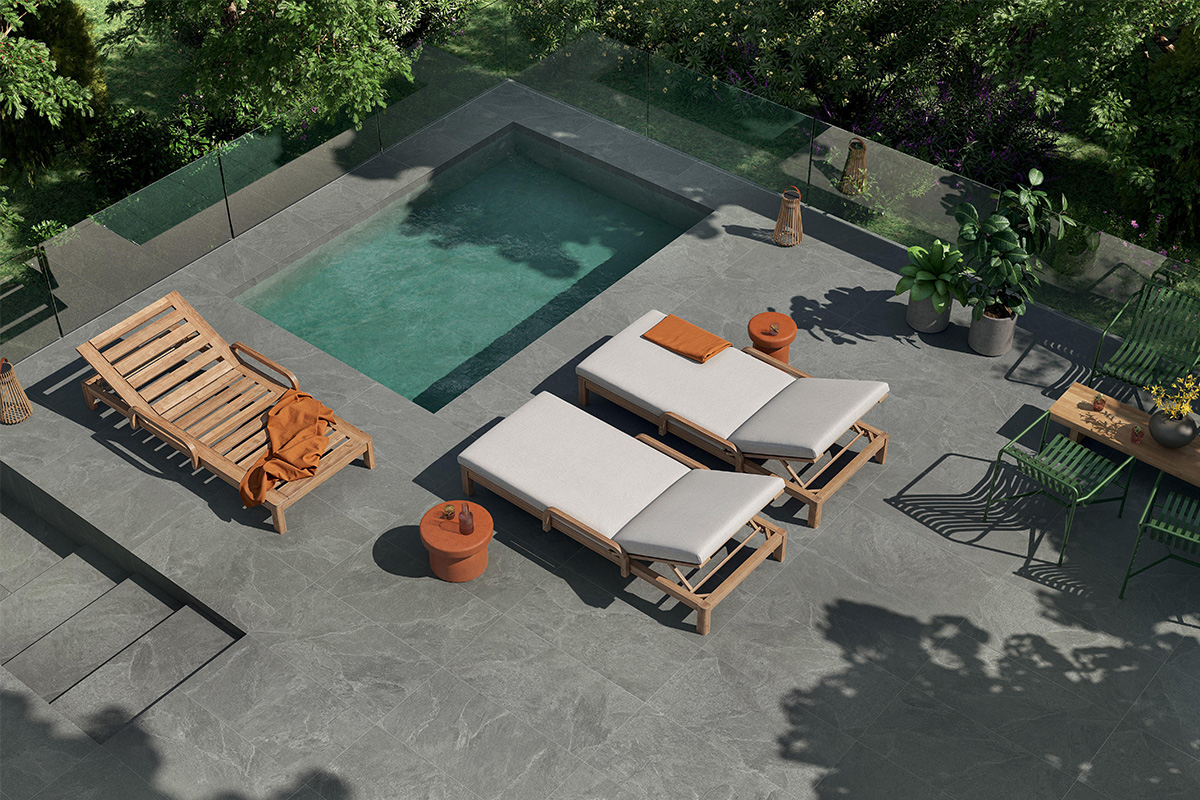
New introductions will also showcase wrapped volumes that define both interior and exterior spaces, with continuous surfaces extending across vanities, worktops, and reception counters. Porcelain’s resilience and material versatility will be emphasized through its expanding role in applications such as outdoor kitchens and facade systems, while large-format cladding will be highlighted for its ability to minimize joint lines—making it an ideal choice for commercial and institutional environments where durability and scale are key.
Revisiting Craft Through Format and Pattern
Across recent launches, small-format field tile, pressed brick proportions, and mineral glazes with controlled irregularity reframe surface as artifact. Some collections take their cues from early 20th-century textiles, while others introduce relief through carved motifs developed with Italian wood and stone suppliers. Ceramic versions of lava stone and aged hardwood are designed to retain the texture and reflectivity of their sources, calibrated for architectural use.
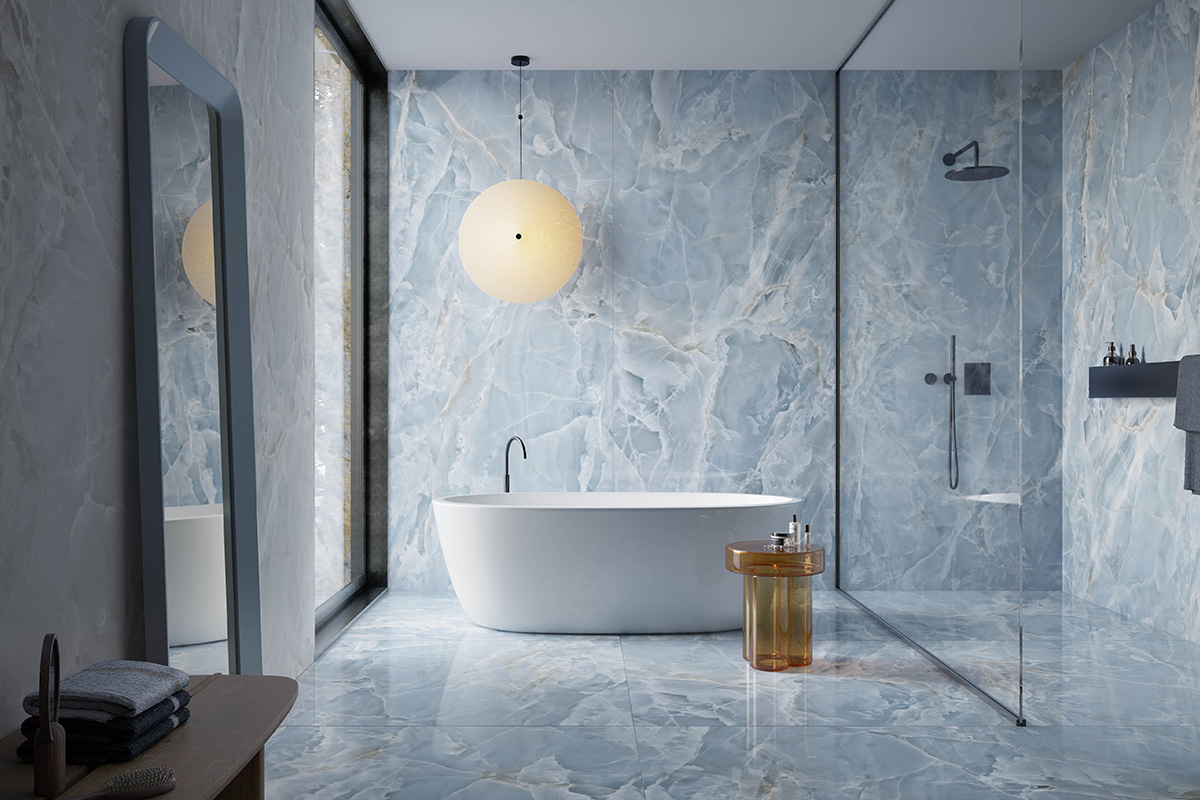
Palettes shift from desaturated green and sun-worn red to oxidized gold and cool navy, appearing in both tonal compositions and full-spectrum installations. Through gloss variation and slight hue changes, surfaces register movement without relying on contrast. In tightly structured series, form and color are aligned to create repeating patterns that behave as both finish and framework.
Beyond the fairgrounds, Bologna offers its own reference for material continuity, from tiled porticoes and ceramic signage to terracotta facades that define the city’s historic center.