


RT25 by jehs+laub for Davis Furniture Explores Material Form
RT25 began as a continuation of form—a chance to explore how manufacturing advances could reshape the sculptural leg structure, material palette, and engineering of a table collection first introduced as Riza. Designed by Markus Jehs and Jürgen Laub of jehs+laub for Davis Furniture, the new series reimagines its predecessor through refined geometry and a process informed by ongoing dialogue. In this interview, the designers share how the collection evolved—and how long-term collaboration continues to shape their approach to material and form.
Metropolis: What inspired the design of RT25, and how did that concept evolve throughout the process?
jehs+laub: RT25 stands for Riza Table 2025 and is a natural evolution of our original Riza Table Collection. As designers, we’re always looking for ways to refine our work—making each new design more efficient to produce, more sustainable, and ultimately more elevated in both form and function.
Evolving our designs allows us to build on everything we’ve learned from previous collections and channel that knowledge into something new. At times, the manufacturing capabilities of our suppliers shape the direction a design can take. But rather than seeing those limitations as obstacles, we view them as opportunities to innovate within constraints and creatively explore what's possible at a production level. As manufacturing technologies continue to evolve, we see it as our responsibility to stay ahead of those changes—to understand what’s possible and gradually incorporate new capabilities into our work. RT25 is a direct result of that mindset.
When we first introduced the Riza Table Collection in 2021, our goal was to create a series defined by four connected leg components joined together at the table’s column and then branched gracefully outward as they reached the floor. We achieved this by joining round tubular steel elements, incorporating a tapered detail at each foot to give the base its sculptural character.
With RT25, we carried forward that core concept—multiple components joined and spreading outward at the base—but reimagined it entirely by utilizing the latest in manufacturing technology to offer a new steel tube profile. The result is a table collection that feels both familiar and strikingly contemporary.
Metropolis: Were there any notable challenges during the construction or execution of RT25 that informed the final design?
jehs+laub: RT25’s design began by exploring the possibilities of tubular steel construction, and one of the main challenges was understanding how to apply a new profile to achieve a product structurally similar to its predecessor yet entirely renewed in its aesthetic expression.
Last year, when visiting a supplier in Italy, we discovered an innovative technology for shaping tubular profiles into unique geometries—similar to extruded aluminum but using steel, which is the ideal material for a product like RT25. This advancement allowed us to move beyond standard round profiles and explore more refined forms with greater structural integrity and visual interest.
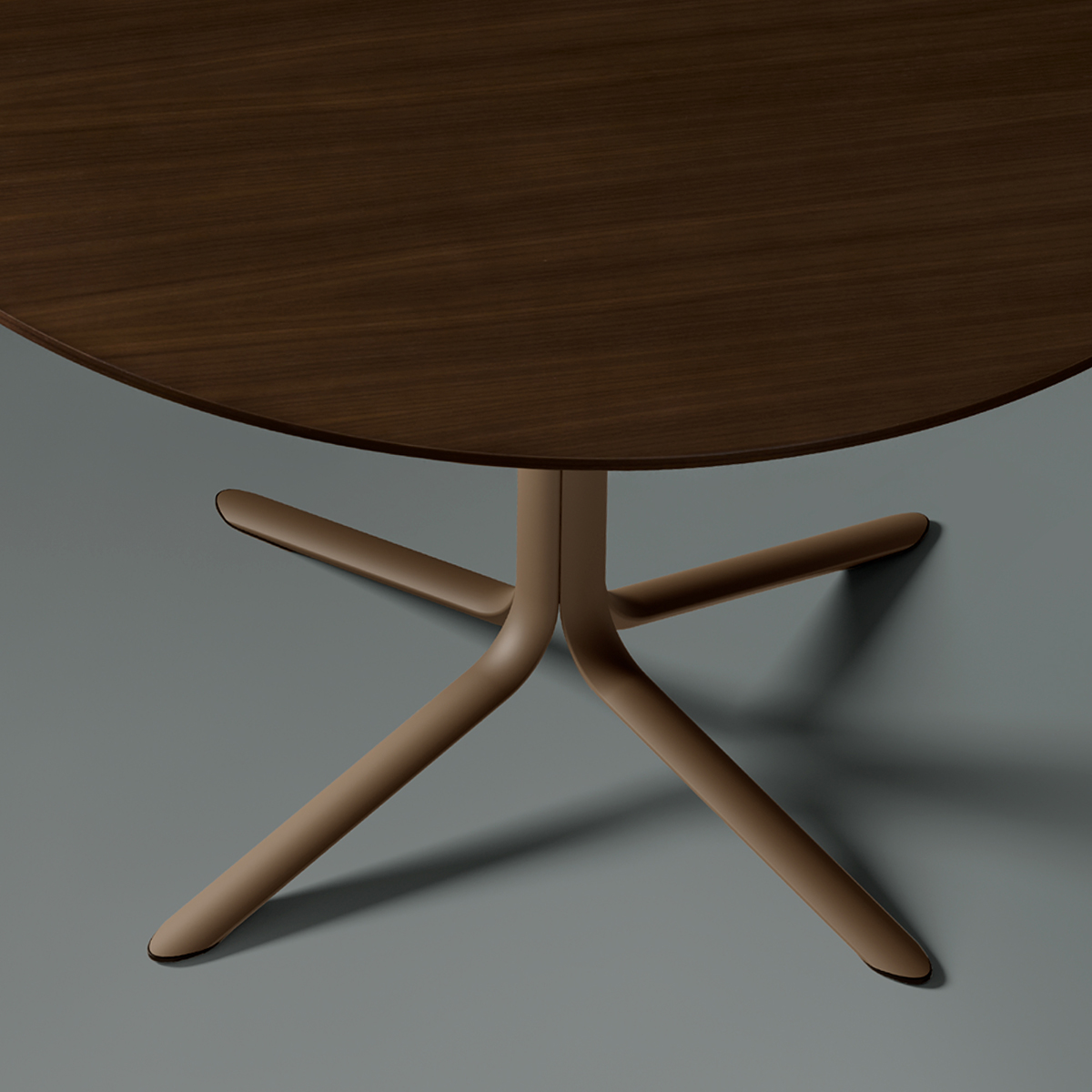
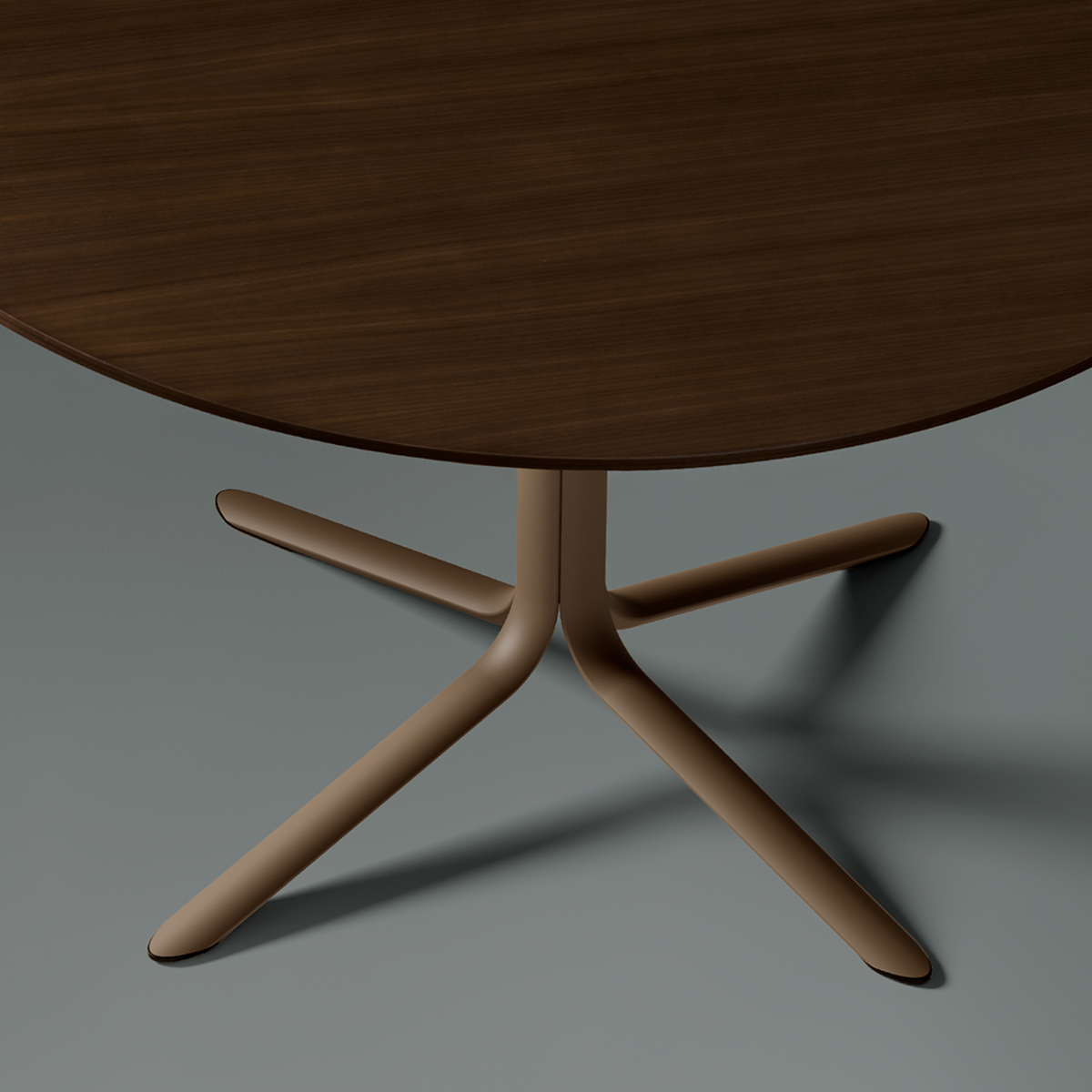
For RT25, we used this new technology to develop a custom softened teardrop profile that is more complex than the basic rounded shape used in the original Riza design. This shift not only introduced a new sculptural character but also gave the collection a distinctive, elevated presence that adapts seamlessly to a range of interior spaces.
Through several rounds of prototyping, we refined the form and resolved subtle transitions. Along the way, we simplified the assembly and implemented quiet improvements that enhanced both production and handling. While RT25 shares the branching-leg concept of its predecessor, it brings an entirely new design sensibility—tailored, expressive, and technically advanced.
Metropolis: Can you describe the design process behind creating the base of RT25? What considerations were made to ensure both functionality and stability?
jehs+laub: From the beginning, our focus was on developing a custom steel tube that would form both the foundation and the soul of the RT25 base. After multiple rounds of prototyping, we landed on its unique softened teardrop-shaped profile—one that defines the foot of the base and gives the table its signature vertical presence.
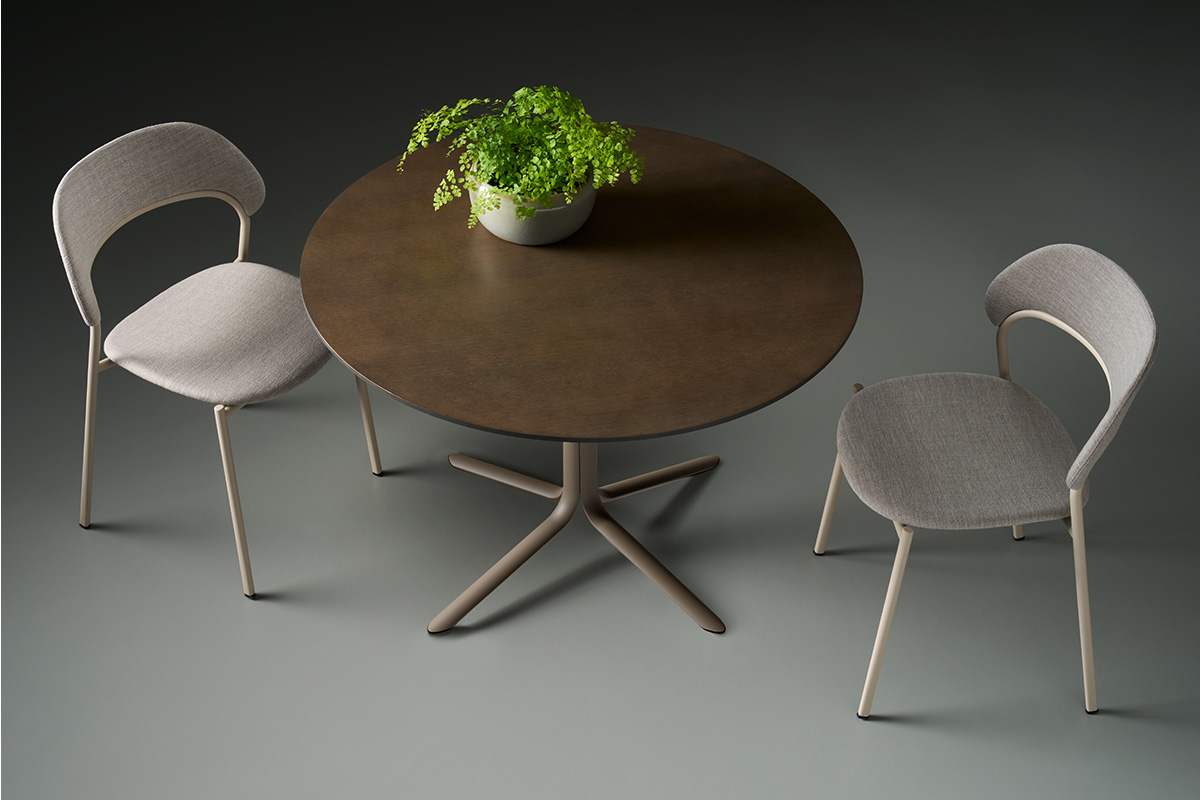
A major consideration throughout the process was whether to use a three- or four-leg frame. Both configurations had been explored in our earlier work on Riza. That research informed our decision to move forward with a four-leg solution for RT25—offering greater balance, stability, and flexibility across a variety of sizes.
We also took a close look at the overall statement of line. Reflecting on the broader scope of the Riza Collection, we intentionally curated a refined series of sizes and shapes for RT25—each designed to complement the form of the base and serve a range of applications while maintaining a cohesive visual identity.

Metropolis: The tubular steel base of RT25 is a distinctive feature. How does the base’s design contribute both aesthetically and structurally to the table?
jehs+laub: The tubular steel base is one of the most defining features of RT25—both visually and structurally. Its distinctive profile gives the table a sculptural presence, evoking the natural elegance of a tree trunk with roots extending gracefully toward the ground. This softened teardrop steel tube profile not only enhances the table’s visual identity but also plays a critical role in its stability. The base’s geometry distributes weight evenly and provides a strong, grounded foundation, while the branching legs ensure a balanced footprint across all size variations.
Aesthetically, the profile creates a dynamic interplay of curves and edges that shift subtly depending on the viewing angle, adding depth and movement to the form. The base appears organic yet precisely engineered—a quality that reinforces the table’s refined character and sense of quiet strength.
Metropolis: How does RT25 adapt to a range of interior styles and practical needs? And how do you see RT25’s materiality enhancing its versatility across different environments?
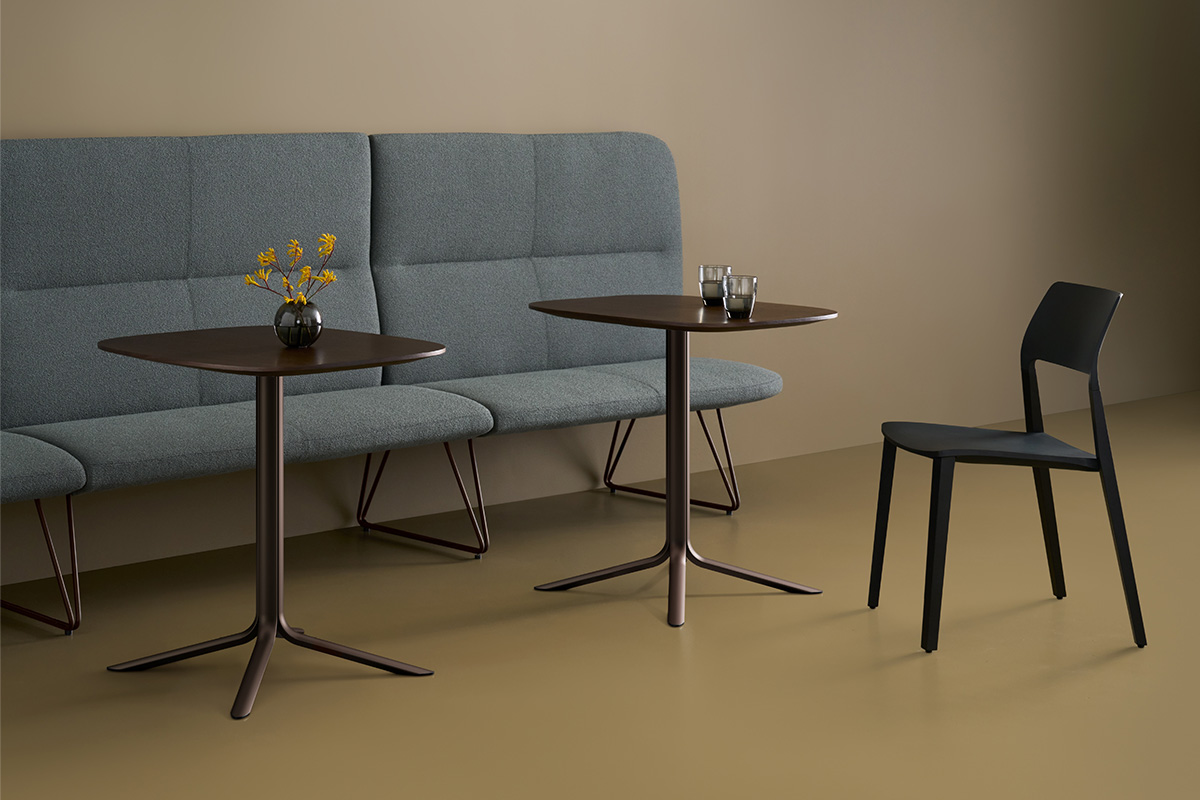
jehs+laub: RT25’s minimalist design allows it to seamlessly adapt to a wide range of interior styles—from refined corporate environments to creative collaborative spaces. Its clean, sculptural form is intentionally understated, making it a natural fit within a variety of architectural contexts.
Materiality plays a key role in that versatility. The steel base not only offers strength and durability but also provides an ideal surface for customization. Davis’ wide array of over 35 powder coat finishes—ranging from soft neutrals to bold statement colors—allows designers to tailor the table’s appearance to suit any environment or aesthetic vision.
In addition, RT25 is available with a curated selection of tabletop materials, including ash, oak, and walnut veneers, FENIX® Innovative Materials, and standard laminates. This diverse offering enables the collection to meet various practical needs while maintaining a cohesive design language. By combining a restrained, elegant silhouette with a broad range of finish options, RT25 becomes more than just a table—it becomes a flexible design solution for a variety of settings and functions.
Metropolis: How has your ongoing partnership with Davis evolved over the years, and how did it shape the development of RT25?
jehs+laub: Our partnership with Davis began nearly a decade and a half ago, and it’s been a truly rewarding journey. Over the years, we’ve developed several collections that have become key pieces in the Davis portfolio, each resulting from a shared design vision and a deep understanding of how we work together.
What makes this collaboration so enduring is that, even after all these years, we still approach every project with the same sense of curiosity and excitement—as if we’re setting out on a new design adventure. That mindset has always been a strength because no matter how much experience you bring to a project, the outcome can’t be entirely predetermined. Sometimes, the process leads to brand-new ideas that address emerging needs; other times, it’s about refining something existing into a more elevated solution.
That’s very much the case with RT25. The development was shaped by both our long-standing collaboration and the opportunity to apply new technology to a familiar concept—evolving it into something that feels entirely fresh yet rooted in our shared history of thoughtful design.
Metropolis: Are there any specific trends or shifts in the design world that you see influencing future collaborations with Davis? And can you share any hints about what might be next for your studio?
jehs+laub: The world is changing at an unprecedented pace—how we live, work, and interact with our environments is constantly evolving. In moments like these, having a reliable, forward-thinking partner like Davis is invaluable. Together, we can navigate these shifts and shape the future of design with a shared sense of purpose and creativity.
We’re deeply driven by curiosity, which naturally leads us to explore emerging technologies and evolving human behaviors. It’s not about chasing trends but rather understanding how design can respond meaningfully to how people live and move through space. That’s the kind of thinking that fuels our ongoing collaboration with Davis. With this partnership, we can explore new ideas and challenge conventional boundaries—always grounded in trust and mutual respect. As for what’s on the horizon…let’s just say, it’s a secret for now. Some things are better revealed in time.
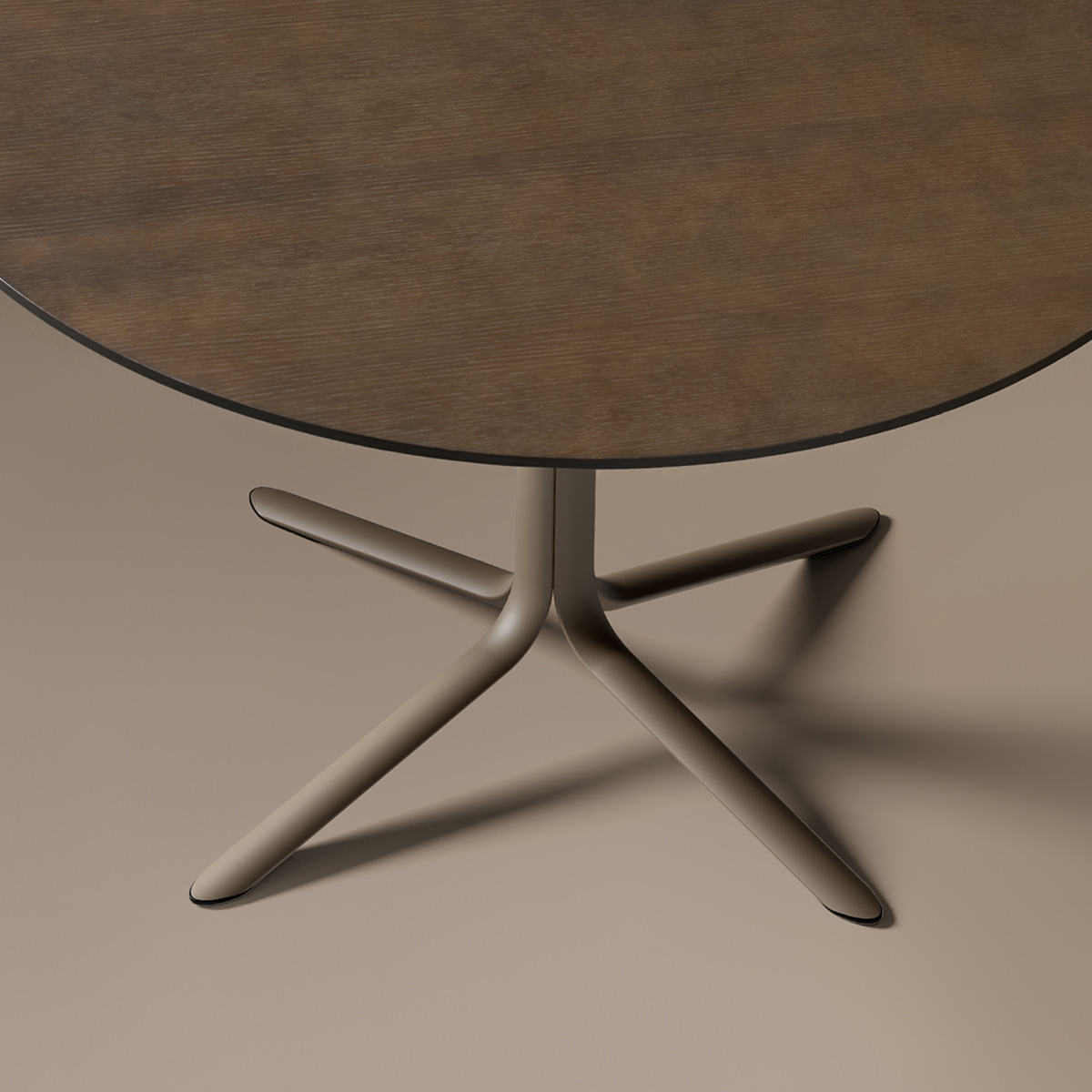
Through its continued partnership with Davis Furniture, jehs+laub evolve a familiar design language—expanding the sculptural vocabulary introduced with Riza. RT25 builds on that foundation with new material capabilities, refined geometry, and detailing shaped by time and process.