
2025 Planet Positive Awards > Innovation > Research & Development Winner
Regenerative Futures
HOK
HOK’s “Regenerative Futures” research represents an effort to redefine the architecture, engineering, and construction industry’s approach to ecosystem services, biodiversity, and community connections to nature in the built environment through a:
- Clear definition of regenerative development
- New methodology for design and bioinspired innovation
- Modeling methodology that quantifies ecosystem performance
A regenerative development is one that provides more ecosystem services than its adjacent habitat. It creates an ecosystem that is healthier because of human intervention and enables mutual conditions for the built environment and nature to co-evolve as one.
HOK’s design approach is inspired by nature’s wisdom and driven by data. The methodology begins by benchmarking ecosystem services the site provides—soil, water, air, biodiversity, health and well-being, carbon sequestration, and climate balancing.
Through partnerships with Biomimicry 3.8 and EcoMetrix Solutions Group, HOK teams conduct ecosystem service modeling of specific ecological sites and derive lessons from biological intelligence. They then benchmark and forecast the environmental, economic, and social impacts of projects to compare with those ecosystem service models and ensure a positive impact.
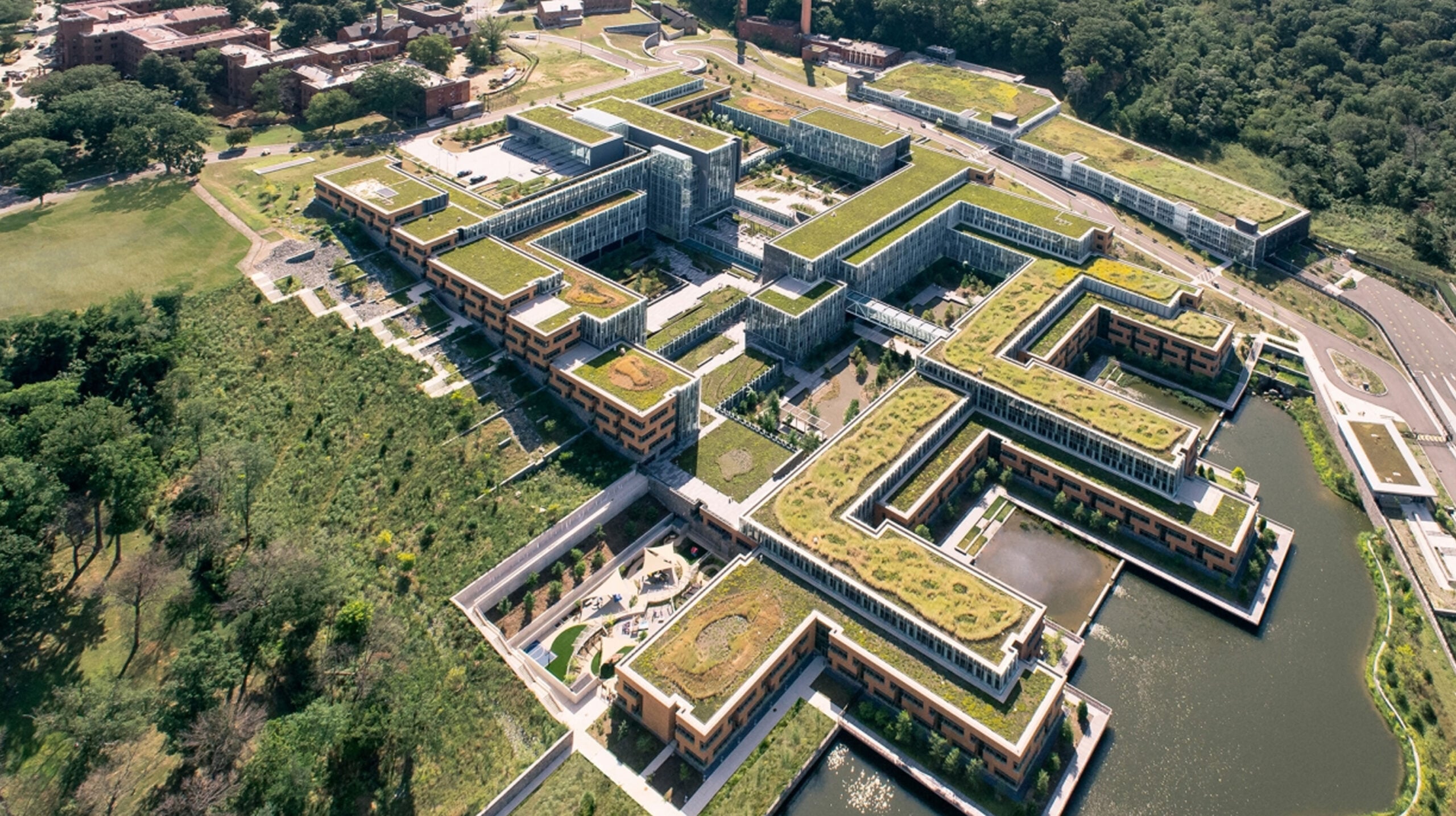
HOK has implemented this methodology across multiple projects, including modeling of built projects and/or those still growing for up to 10 years. Stanford’s Center for Academic Medicine was the first pilot project for this methodology, while the team has studied the progress of ecosystem services at the U.S. Coast Guard Headquarters in Washington, D.C., and LG North America Headquarters in Englewood Cliffs, New Jersey.
Ultimately, Regenerative Futures aims to shift the development paradigm from “do less harm” to “create abundance.”
- No tags selected