



December 5, 2025
Tracing Mass Timber’s Full Life Cycle
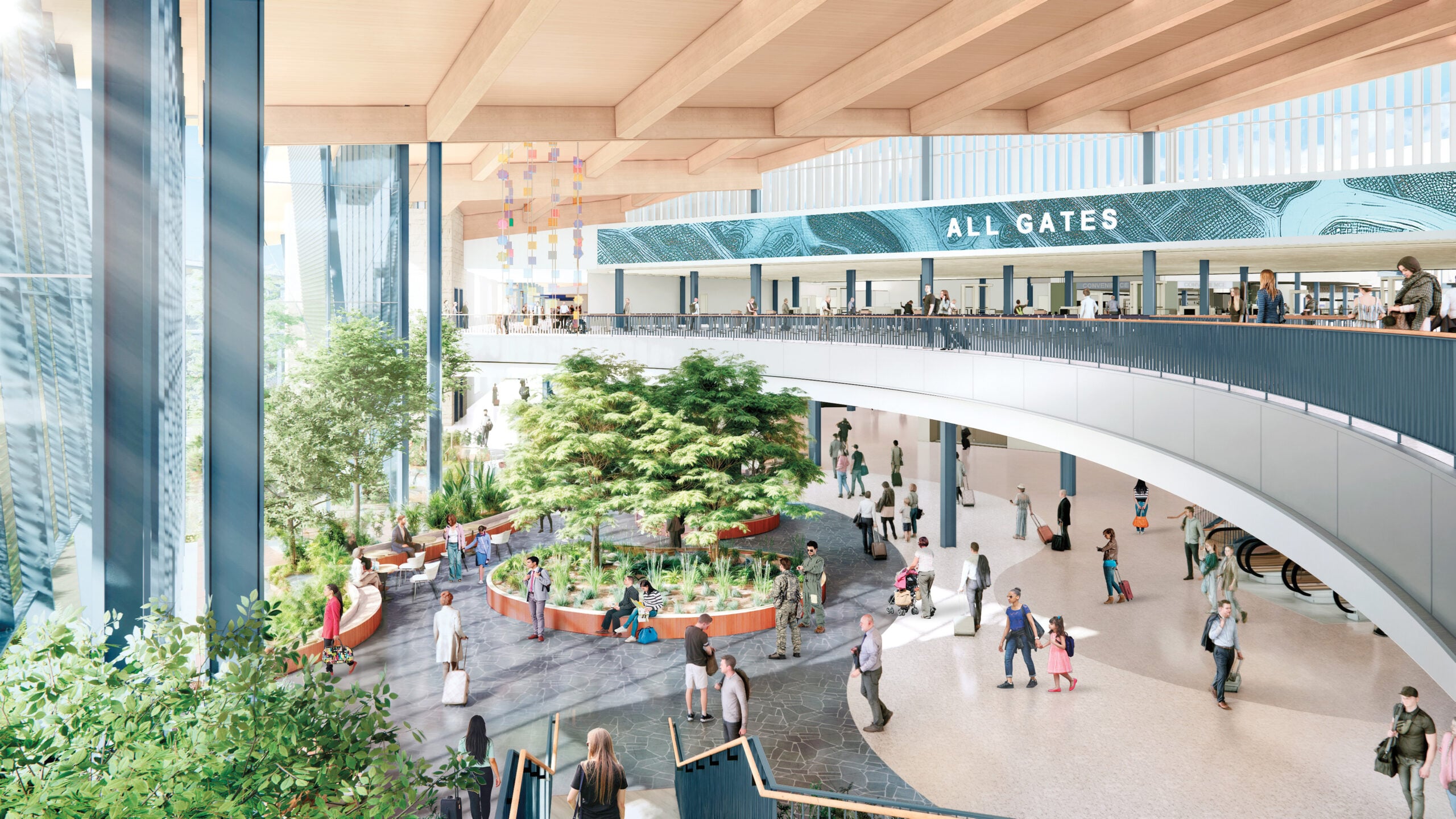
Barely a decade ago, mass timber was anointed as the sustainable alternative to building with steel or concrete. Those who initially doubted the engineered material’s tensile strength or fire resistance were assuaged by the International Code Council’s significant gesture of recognizing mass timber in the 2015 International Building Code. What’s more, mass timber’s lightness and flexibility make it ideal for fast and lean construction crews.
But when it comes to carbon and its overall emissions impact, mass timber has left a few questions unanswered. As journalist Jim Robbins noted in 2019 for Yale Environment 360: “A lack of understanding of the full CO2 picture has not kept the field from taking off.” Well, now that picture is coming into focus.
Design firm Corgan recently unveiled its Mass Timber Carbon Calculator. This free and open-source tool allows design teams to more accurately quantify the embodied emissions of specific projects. Typically, mass timber’s climate benefits are framed in terms of the wood’s capacity for carbon storage and lower emissions associated with manufacturing. Corgan has effectively repositioned the goalposts, using slash-related biogenic carbon and transportation emissions as integral metrics in the larger question of mass timber’s carbon impact.
“Our industry is ignoring the biogenic carbon that’s associated with the extraction and harvesting of timber from forests,” says Varun Kohli, principal and director of sustainability at Corgan. “So we asked, what happens if we include that? Will that mean mass timber is no longer the solution we thought it was?”


The Story Behind Corgan’s Mass Timber Carbon Calculator
Biogenic carbon is released through the decomposition or combustion of biomass. When excess tree parts like branches, bark, and stumps (collectively known as slash) are invariably left to rot after a harvest, they gradually emit much of the CO2 that the tree sequestered over its life. Harvests also reduce forests’ capacity to act as carbon sinks, meaning there are fewer trees to absorb what’s being released into the atmosphere and therefore further challenge the notion that producing mass timber is a strictly climate-neutral pursuit. “If you leave [slash] in the forest, off-gassing takes time, but nonetheless you’re not taking the entire tree,” Kohli says.
This practice of slash management, or lack thereof, is the crux of Corgan’s exercise. The streamlined tool factors in wood species (e.g., hemlock fir, Southern yellow pine, et al.), harvesting technique, and project location, as well as where regional manufacturing occurs. With these variabilities accounted for, biogenic carbon is the X factor.
The motivation for developing the calculator stems from a 2023 report released by the World Resources Institute, The Global Land Squeeze which concludes that previous assessments of mass timber’s carbon impact were incomplete. “Our accounting approach differs from many others that either fail to account for future forest regrowth or inappropriately view harvests as carbon neutral so long as forest carbon stocks remain stable on average,” the report reads.
In response, Kohli and his colleagues built a tool that traces impact “back to the forest.” “It’s not enough to go back to the fabrication facility,” he says, noting that this is roughly where the proverbial breadcrumbs have been traced to when project teams conduct a life-cycle assessment (LCA) of their building materials. “We also know that EPD [Environmental Product Declaration] data most likely will not count biogenic carbon,” Kohli adds.
Like its cousins, the Embodied Carbon in Construction Calculator (EC3) and One Click LCA, Corgan’s Mass Timber Carbon Calculator is designed to paint a more complete picture of practices we know are superior to the status quo but that have been compromised by half-finished datasets. Undoubtedly, when timber projects benefit from sustainably managed forests, regional material sourcing and manufacturing, and faster construction schedules, their carbon footprint is significantly lower compared with conventional builds.
“Mass timber is still a good solution for embodied carbon, but we’ve got to pay attention to the nuances,” Kohli says. “You can’t ignore the entire life cycle of mass timber, the piece that existed before fabrication. All told, though, it’s still a better product.”
Would you like to comment on this article? Send your thoughts to: [email protected]
- No tags selected
Latest
Viewpoints
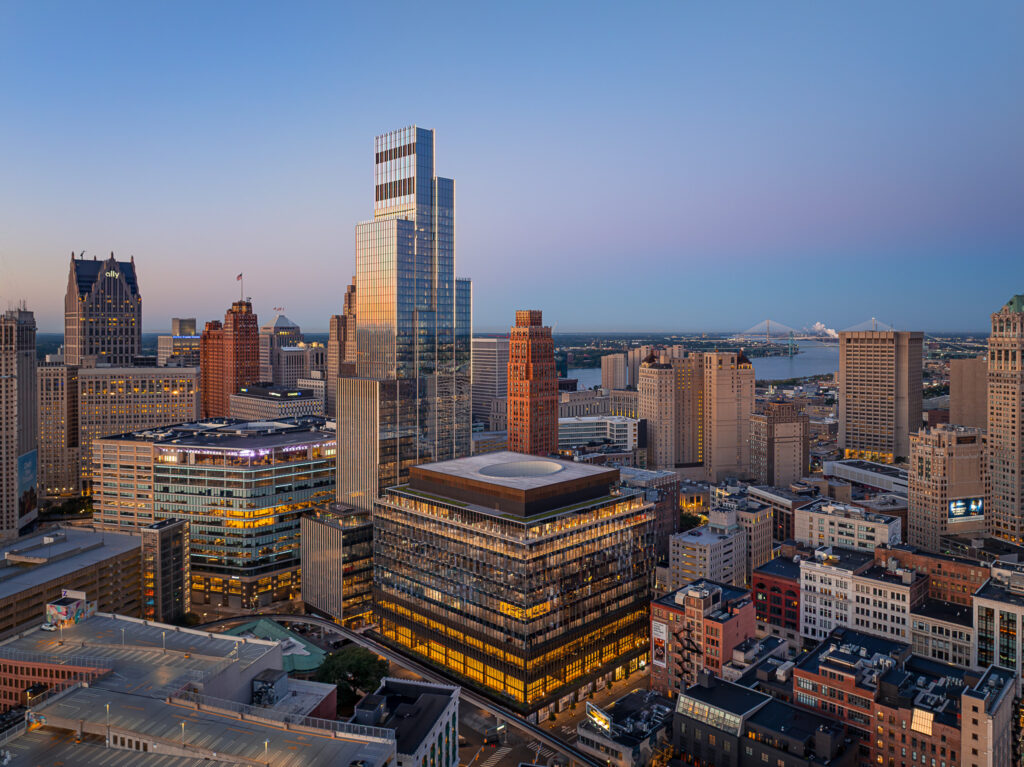
Detroit Month of Design: A City’s Work in Progress
Now in its 16th year, the celebration offers insights into the Motor City’s ongoing accomplishments without glossing over its hurdles.
Projects
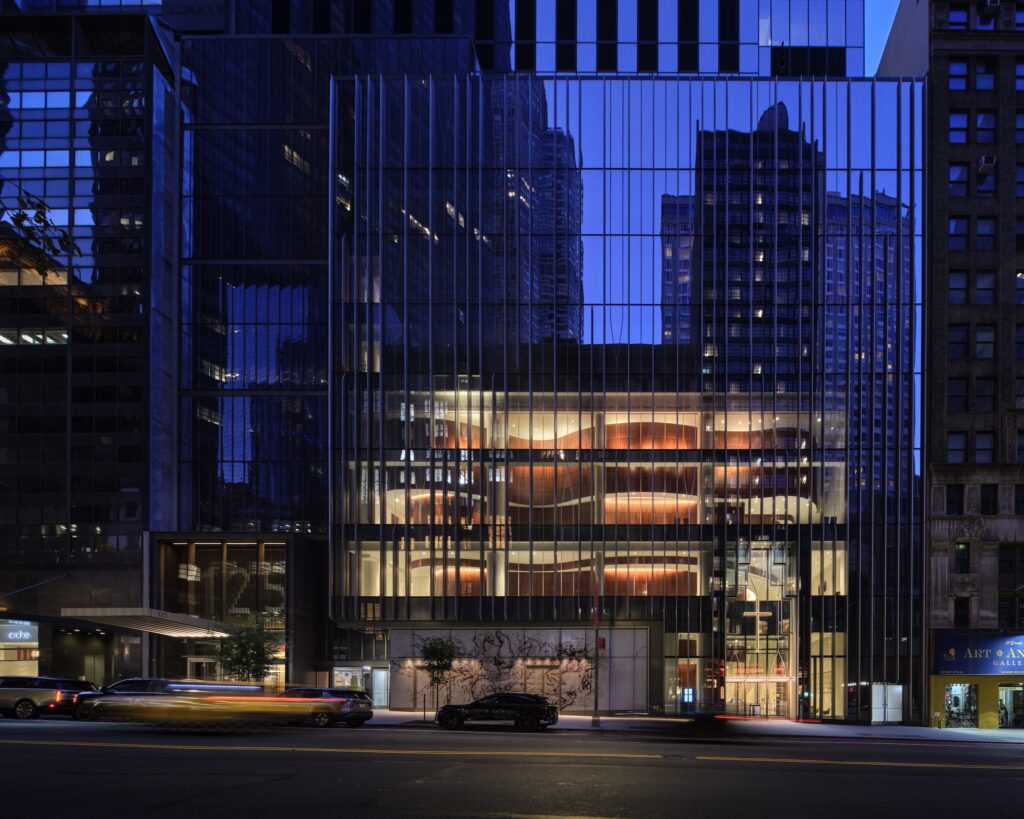
How a Hybrid Building Helped an Historic Manhattan Congregation Remain in Place
On Billionaire’s Row, FX Collaborative designed a new home for Calvary Baptist Church combined with an office tower.