


April 24, 2024
Four Pieces of Software By Architects, For Architects


02 KALEIDOSCOPE by Payette
Kaleidoscope assesses the embodied carbon emissions of different types of facade assemblies from various perspectives. Architects can evaluate their facade concepts based on environmental impact categories, life span, and biogenic carbon, and receive carbon emissions data per square foot, offering a straightforward metric for facade areas. Kaleidoscope is designed to complement, not substitute, whole-building life cycle assessments (LCA) in early design stages. It serves as a reference for the approximate magnitude of early LCA decisions, allowing designers to quickly compare the embodied carbon impacts of different standard building systems and design options.

03 LARK by ZGF and the University of Washington Applied Research Consortium (ARC)
Lark is open-source software designed to assist designers in simulating nonvisual light, which significantly influences the human circadian system. Light exposure, even at wavelengths we cannot see, has a profound impact on sleep-wake cycles, alertness, productivity, and overall health and well-being. Every light source and its interaction with indoor materials can either support or disrupt this rhythm, so being able to quantify and visualize these interactions can help designers enhance well-being. Lark v3.0 allows customization of spectral power distributions for the sky, sun, electric lights, glazing, and finishing materials.

04 VARID by Foster + Partners and the University of London
VARID (Virtual and Augmented Reality for Inclusive Design) is a design toolset employing VR/AR technologies to enhance design teams’ awareness of users with visual impairments. Through dynamic real-time image processing, VARID replicates various vision loss symptoms, including blurring, warping, or peripheral vision loss. This game-engine plug-in, compatible with a variety of VR/AR headsets, is data-driven and can generate personalized simulations based on specific clinical test results.
Would you like to comment on this article? Send your thoughts to: [email protected]
Latest
Viewpoints
Unmasking Design for Autism
When designing for neuroinclusion, we must consider intersecting identities and overlapping systems of oppression that shape people’s experiences of disability.
Viewpoints
MIT Future Fest Offered a Hopeful View of What’s Next
The inaugural five-day event brought together visionary leaders across design, technology, and art to address the world’s most pressing problems.
Profiles
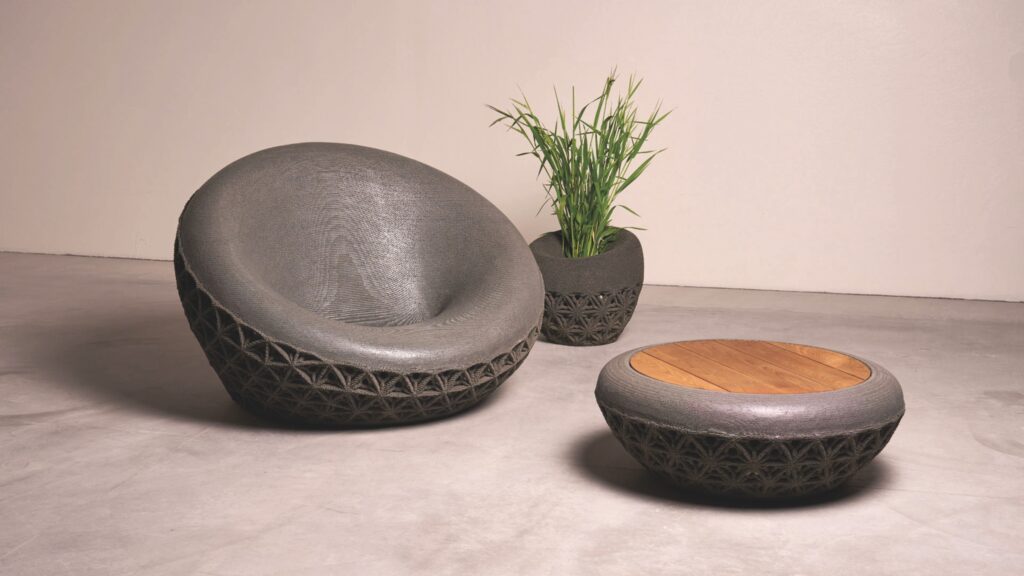
Common Object Studio Is Humanizing Concrete
Designed in collaboration with concrete manufacturer Mangrove, the studio’s Un Nido seating collection uses a leading-edge, low-waste additive process.