



November 19, 2025
Edith Heath’s Tiled Facade at the Norton Simon Museum Gets a Proper Restoration
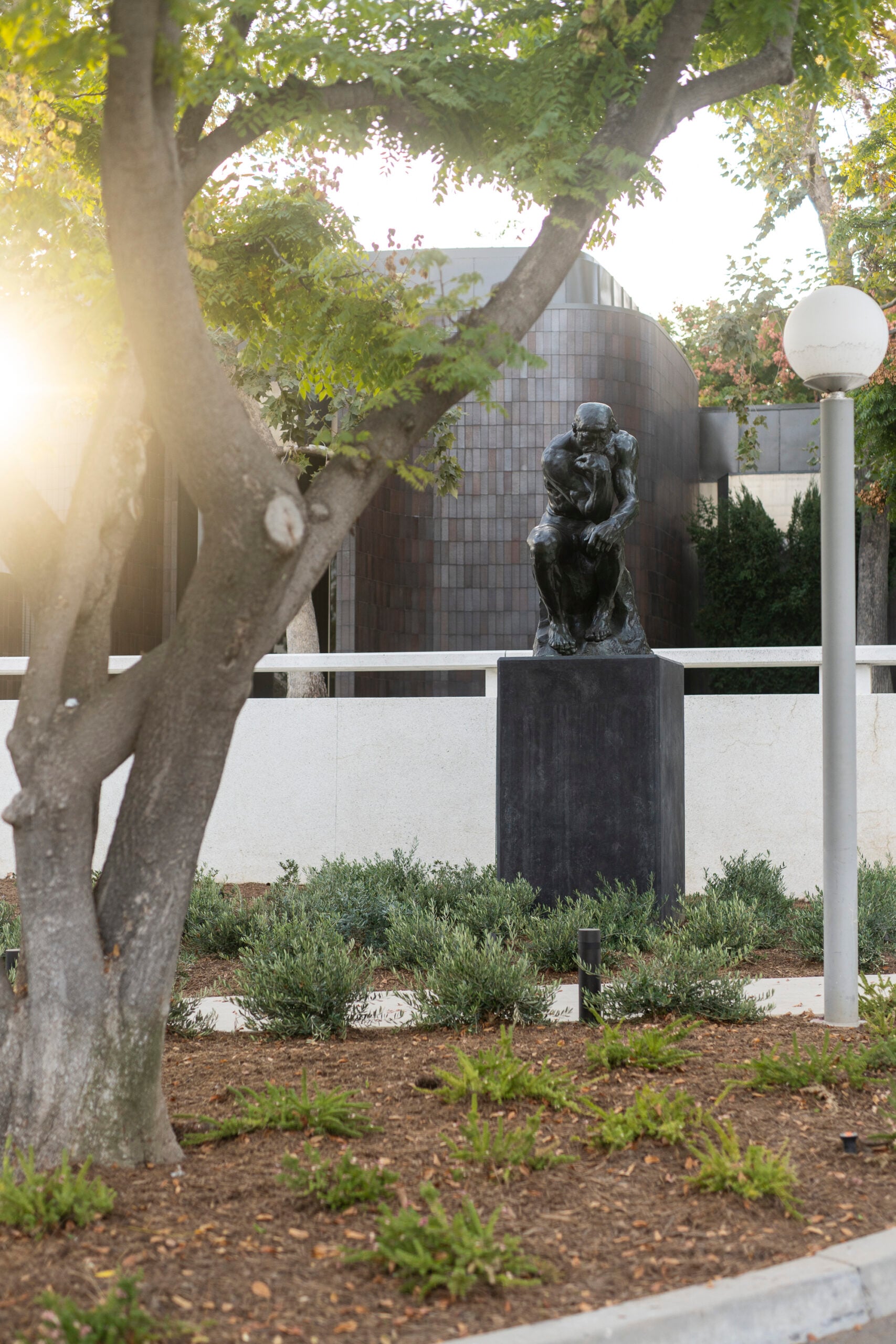
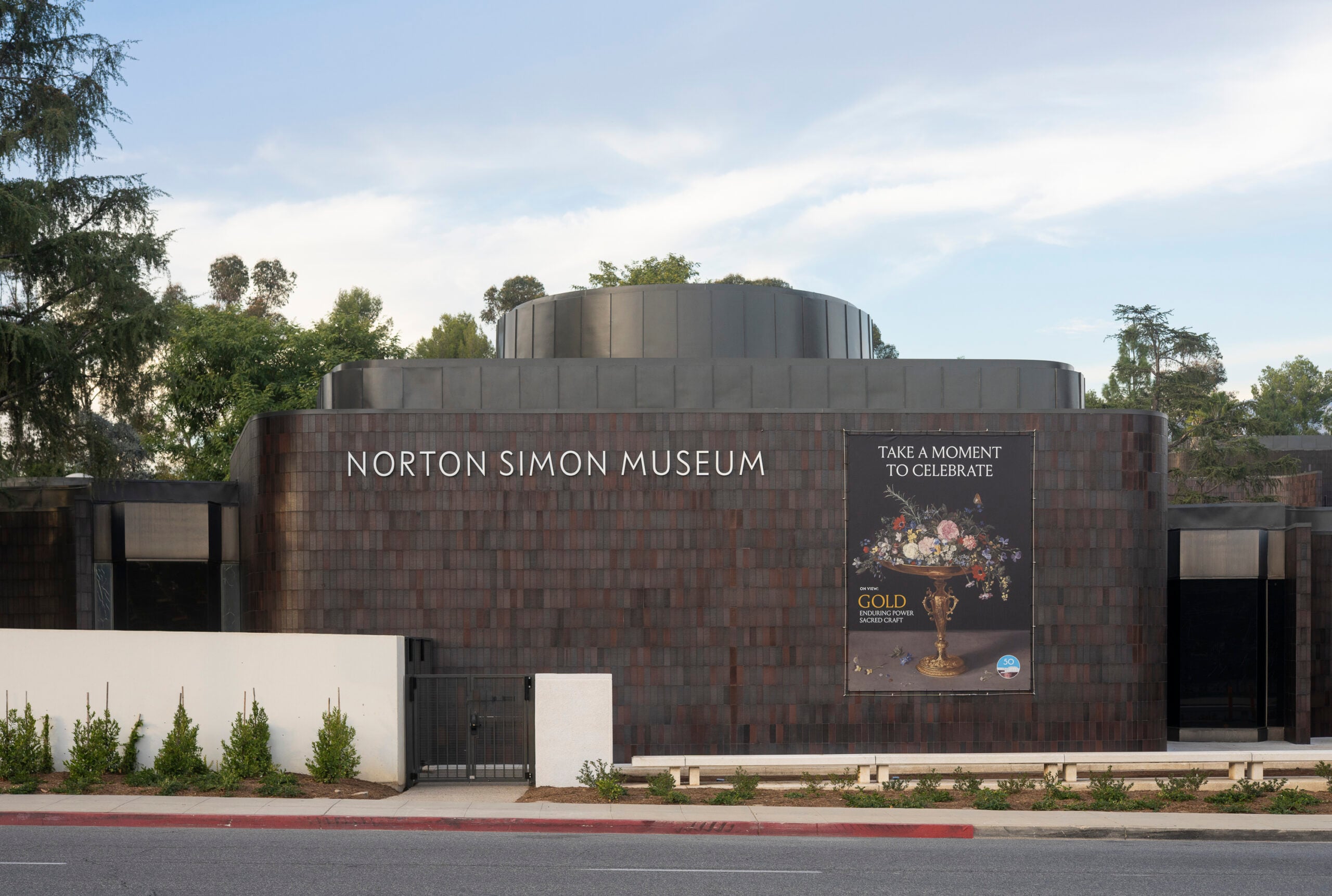
“We’d never done a real study of the condition of the tile—to study and to conserve the pieces—and to work with Heath to create new tile,” explains Leslie Denk, vice president of external affairs at the Norton Simon, about the surface that clads the vertically undulating building designed by Thornton Ladd and John Kelsey. Previous physical updates include interventions by Craig Elwood in the mid-1970s, Frank Gehry’s late 1990s gallery renovations, Nancy Goslee Power’s sculpture garden overhaul, and the Gensler-led theater remodel at the turn of the millennium.
While under the stewardship of Cathy Bailey and Robin Petravic, who in 2003 purchased the Bay Area business founded by Edith and Brian Heath in 1948, the Heath brand has resonated with new audiences, largely through the ever-evolving revitalization of its stoneware tabletop goods. Meanwhile, Edith Heath’s significant contribution to the field of architectural tile remains less discussed, outside circles of Heath fanatics and, in this case, Pasadena locals.

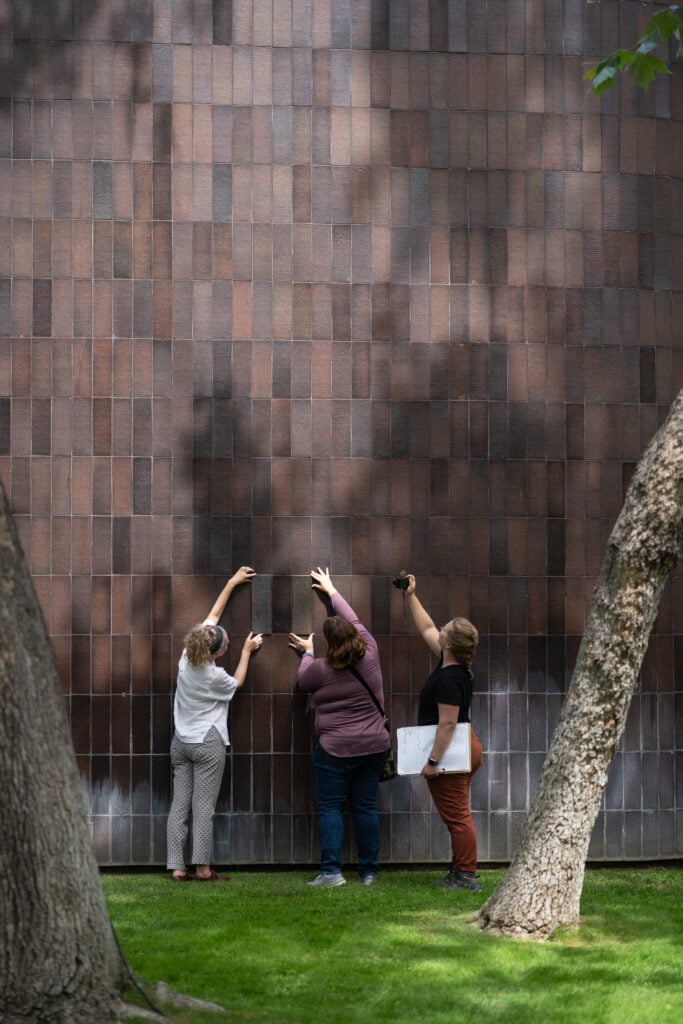
The original commission from architects Ladd and Kelsey called for 115,000 rectangular 5-inch-by-15-inch pieces, which Edith Heath artfully finished by layering Onyx with Red Brick glazes. The particular chemical reaction (which back then involved lead), yielded variegated dark browns, ranging from coffee ground-like shades to rusty reddish hues that were informed by the San Gabriel Mountains. These irregularly textured, densely mottled surfaces were intended for what was then the contemporary and modern art-oriented Pasadena Art Museum before reemerging in March 1975 as the Norton Simon Museum of Art at Pasadena.
In 1971, Edith Heath won the AIA Industrial Arts Medal award—the first time a non-architect was awarded this distinction—and the project helped fuel a growing demand for durable Heath products installed at buildings of all scales, from the Ford Foundation in Manhattan to the Hawaii State Capitol to private homes in Heath’s Marin County home turf.
The tile plan is part of a subtle refresh helmed by Pasadena-based historic specialists Architectural Resources Group (ARG) in collaboration with KC Restoration builders. “The main goal was to improve the street presence and draw people in,” says architect and ARG partner Liz MacLean of the effort that began in 2023. While reconsidering the site’s pedestrian access, visibility along Colorado Boulevard, and perimeter security, the team became determined to seize this opportunity to restore the Heath surfaces.


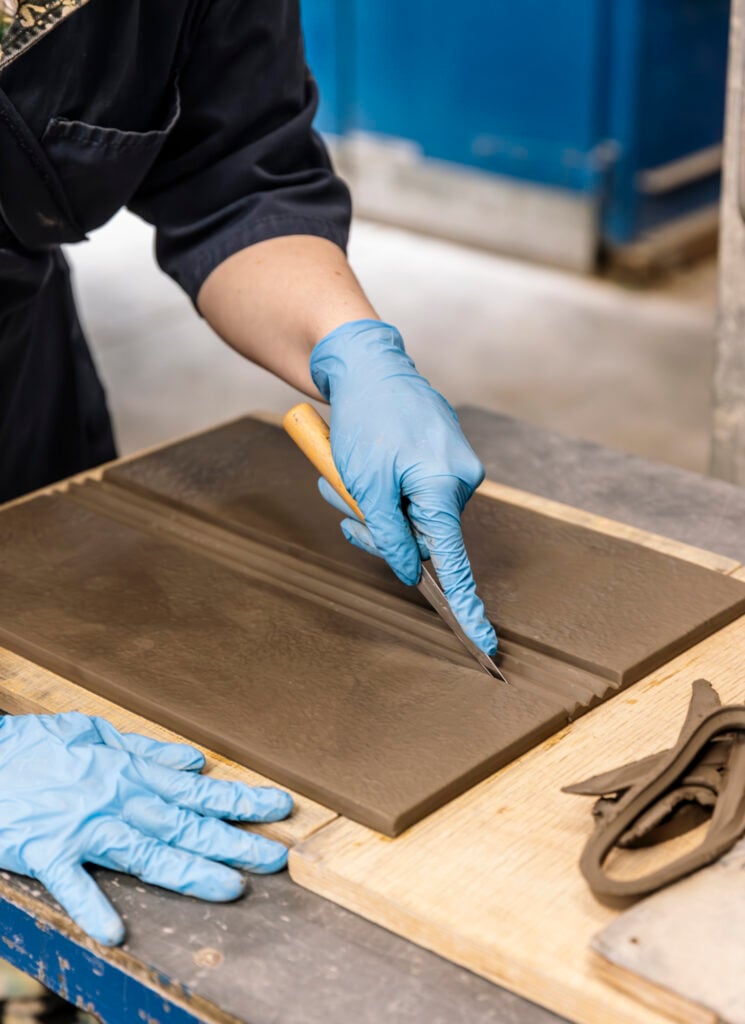

A flattened 3D model of a high-resolution scan became the foundation for mapping the facade’s 115,000 pieces. Conservators surveyed conditions and identified highly damaged areas in detail to determine how many tiles needed replacing. The existing tight tolerance between the tiles and 12 percent size reduction from the first pressing on the ram press mold to the final kiln output added to the complexity of inserting new pieces finished with Heath’s Redwood-Hematite glaze, a formula that was put into production in recent years inspired by the Norton Simon.
“We liken tiles to fingerprints and snowflakes,” says Eric Gaietto, tile sales director at Heath Ceramics. “No two are identical.” To retain the variation of color and texture in each section, old and new specimens were intentionally intermingled, with ARG conservators adding final blending and patching touches by hand. A new tile-covered curvilinear wall near the front entrance steps synthesizes the Norton Simon’s character with its evolving functional needs. The scope of work also encompasses sculpture garden repairs in consultation with SWA Group, and outdoor signage and wayfinding by Hunt Design.
With the exterior upgrade and tile restoration complete, the Norton Simon Museum is ready to meet this milestone with the integrity of its unique public-facing asset properly intact and honored. “The building’s secret super power is that Heath tile,” MacLean states.
Would you like to comment on this article? Send your thoughts to: [email protected]
Latest

Projects
UC Berkeley’s Newest Building Is All About Human Interactions
The Barbara and Gerson Bakar Gateway—home to the university’s College of Computing, Data Science, and Society—gently reminds data scientists and AI researchers of what’s really important.

Projects
ZD+A Brings a Modernist Mexico City House in Line with its Context
Architect Yuri Zagoin Alazraki reorganized the speculative house to respond to its site and create unique spaces for contemplation.