



November 24, 2025
A New Train Station Provides Access to Chicago’s West Side
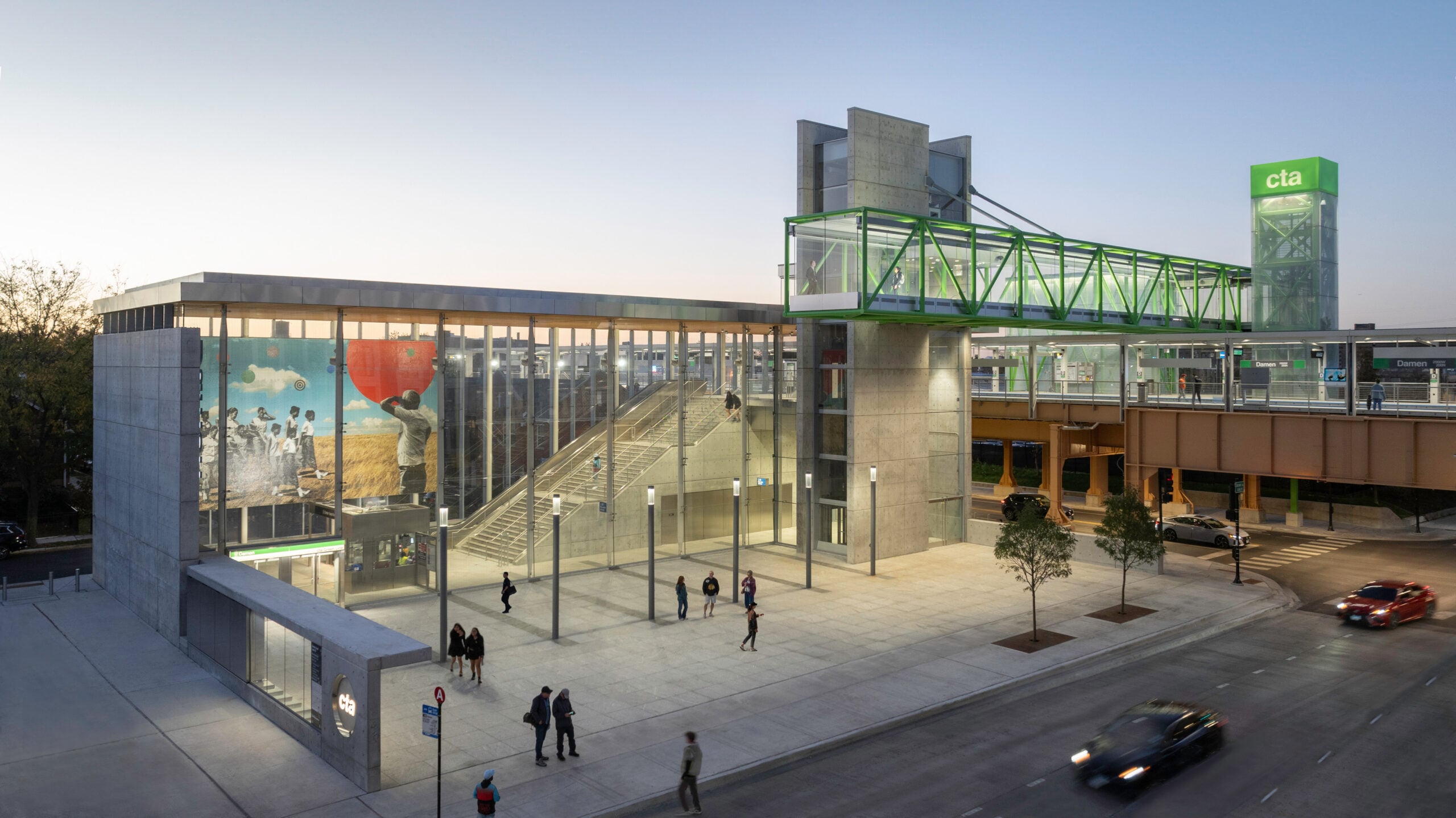
The Chicago Department of Transportation (CDOT) had commissioned Perkins&Will to design the station—operated by the Chicago Transit Authority—as a turning point for a neighborhood that had been without train access for 75 years. The original Damen station was demolished in 1949, and the construction of an expressway between the community and downtown created isolation. “The station brings back this disenfranchised neighborhood’s access to all of the great things that the city has to offer,” says Bryan Schabel, design director at the Chicago studio. It also offers “an opportunity to reinvigorate the area,” he adds, serving local residents, workers, students at nearby Malcolm X College, and the crowds heading to the United Center, the city’s sports and entertainment arena.
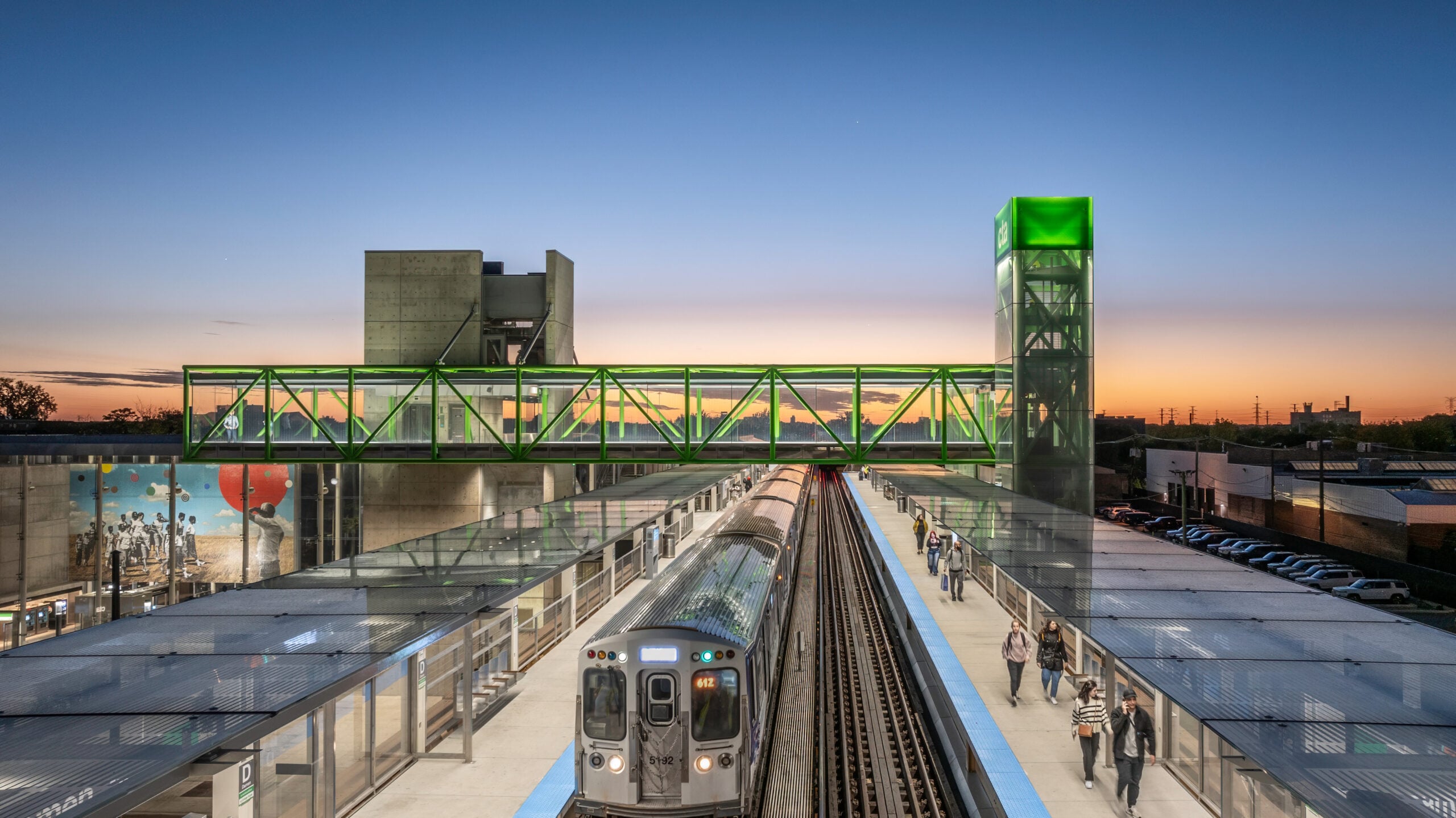
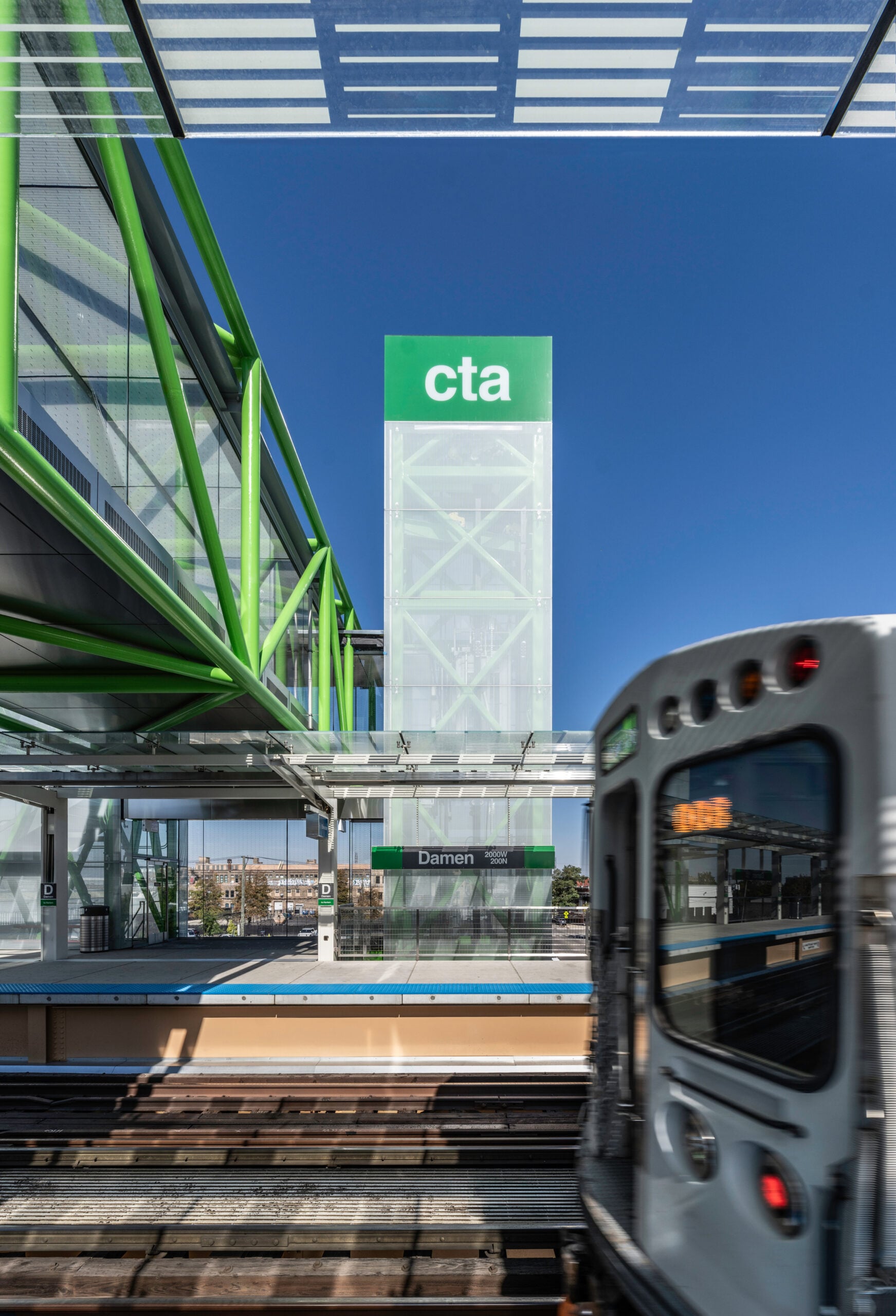
“We wanted to create a public space with a design that extended beyond just function,” says design principal Ralph Johnson. The team saw the station as an opportunity to provide both civic infrastructure and a neighborhood anchor, emphasizing intuitive wayfinding, transparency, and a strong visual identity. The glass-clad station house provides a clear view of the monumental stair inside. Dual elevator towers, positioned at each end of the platforms, create a recognizable silhouette, while the steel-trussed bridge nods to Chicago’s historic bascule bridges as it links the inbound and outbound platforms and frames sweeping skyline views. “We saw it as a collage of city elements,” Johnson muses.
A mosaic mural by local artist Fo Wilson greets passengers upon entry, strengthening the station’s role as a cultural gateway, and not just a transit facility. Selected through a city-led competition, Wilson researched the neighborhood’s demographic history and created a piece that reflects both its past and its aspirations for the future. “It tells a story about the community, and about hope,” Schnabel says.
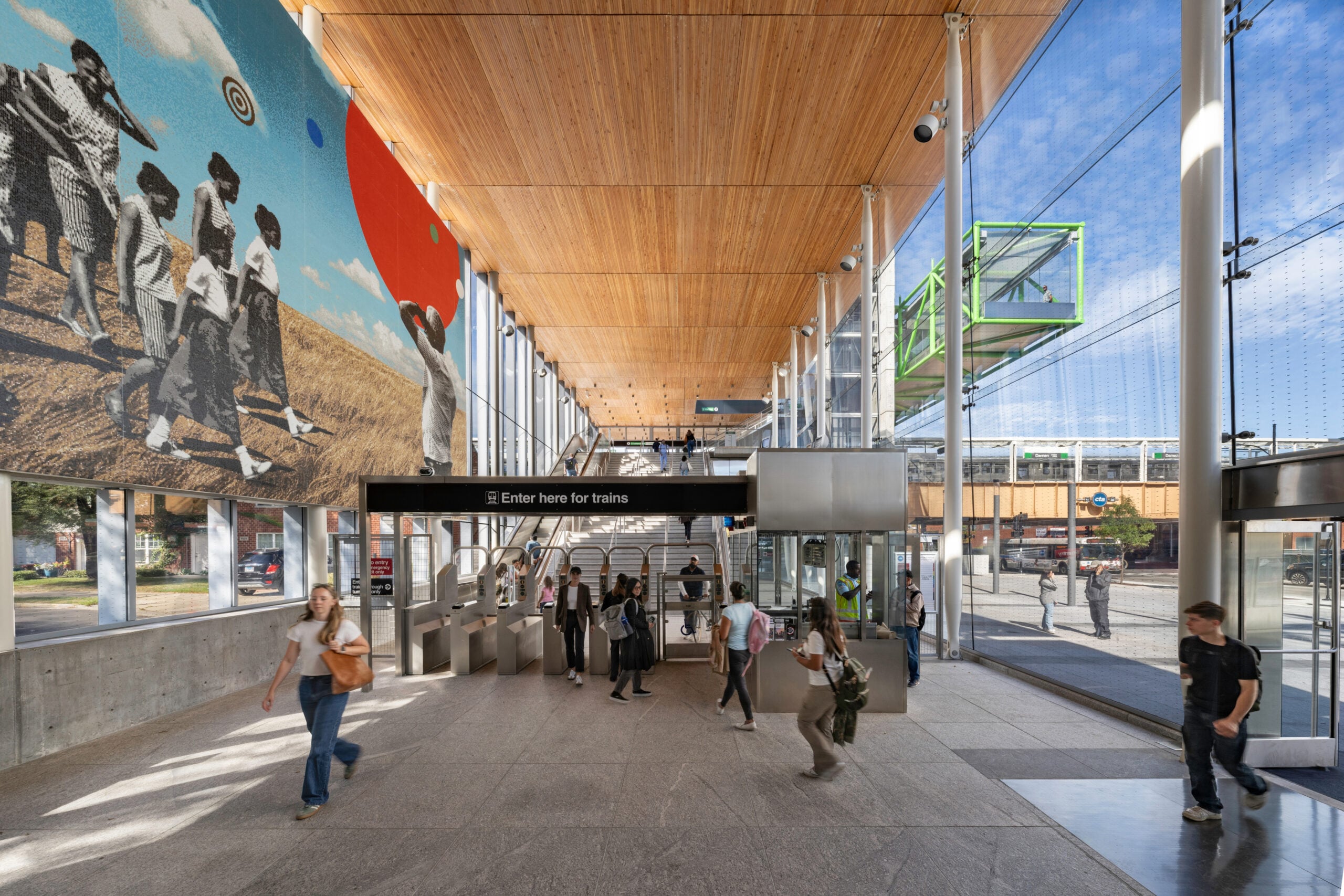
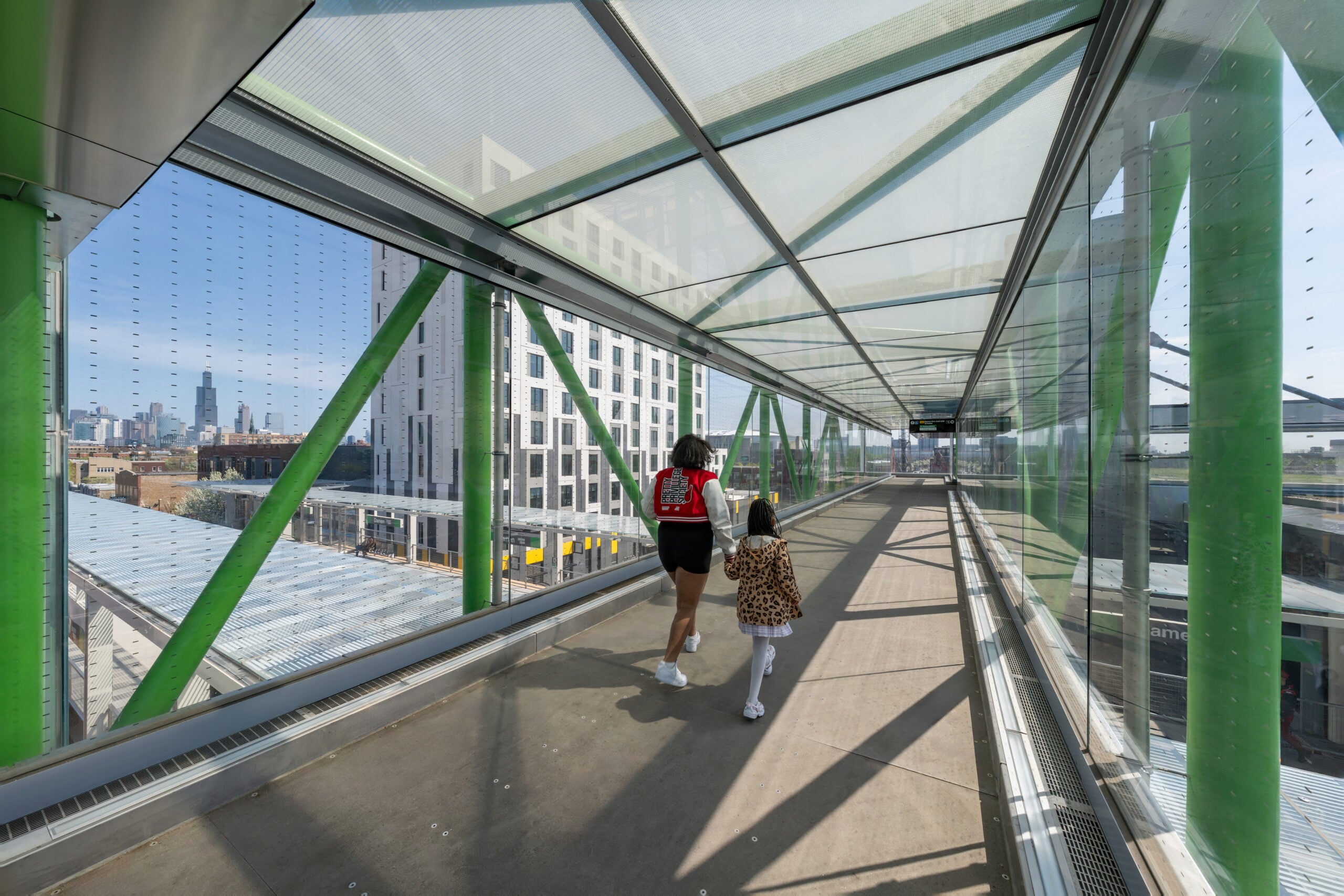
The look of the station wasn’t the only driving factor in the design. Sustainability was also a central consideration. The station’s green roof, which is visible from the elevated bridge, helps reduce heat gain. The team also explored mass-timber solutions, ultimately selecting nail-laminated timber (NLT) for its availability and ability to be fabricated by local craftsmen. “NLT brought warmth to the station and met the city’s sustainability goals,” Schnabel says. Mechanical systems were minimized, with most of the station naturally ventilated; the long glass walls are shaped to block winter winds while allowing airflow in the summer.
The station’s broader impact is starting to emerge, as other investments—such as the neighborhood development 1901 Project—move forward. “It’s too early to see the full effect,” Schabel notes, “but momentum is happening.” Johnson sees the station as a catalyst for safety, economic activity, and neighborhood pride. The plaza, he adds, is an important urban space—open, visible, and active. The architecture sends a message: this neighborhood deserves high-quality public investment.
Rader recalls one moment that captured that message clearly. Shortly before opening, a young boy rode his bike up to the fence, looked at the glass pavilion, elevator towers, and bridge, and asked, “Is that a museum?” Rader smiled and told him, “No. It’s for you.”

Would you like to comment on this article? Send your thoughts to: [email protected]
Latest
Viewpoints
Detroit Month of Design: A City’s Work in Progress
Now in its 16th year, the celebration offers insights into the Motor City’s ongoing accomplishments without glossing over its hurdles.
Projects
How a Hybrid Building Helped an Historic Manhattan Congregation Remain in Place
On Billionaire’s Row, FX Collaborative designed a new home for Calvary Baptist Church combined with an office tower.