



August 14, 2025
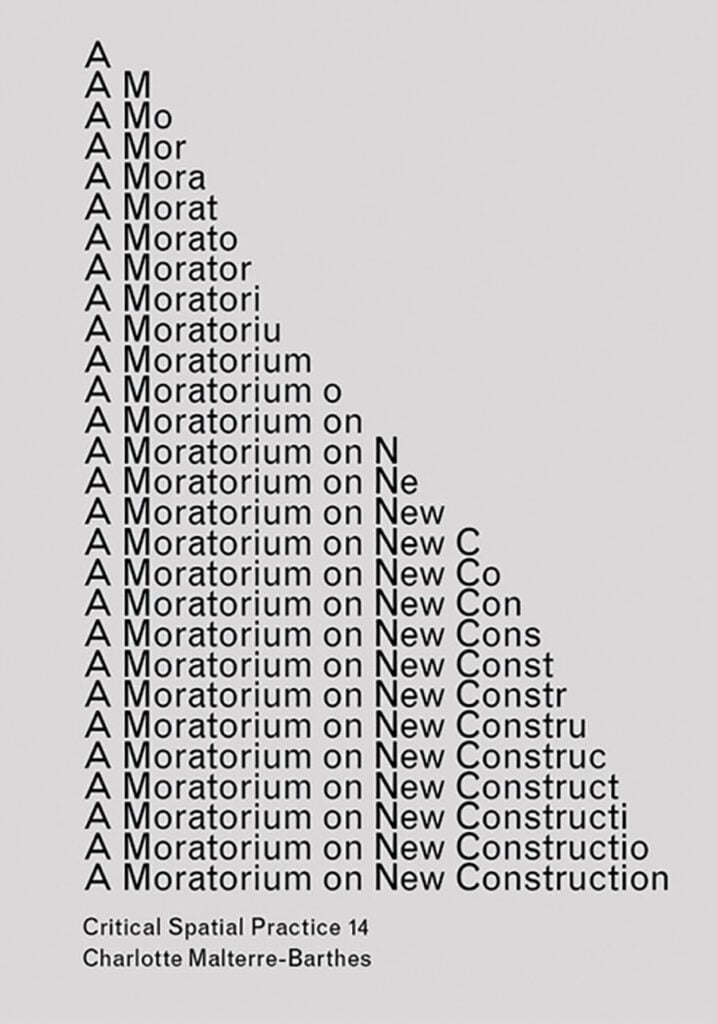
A Moratorium on New Construction
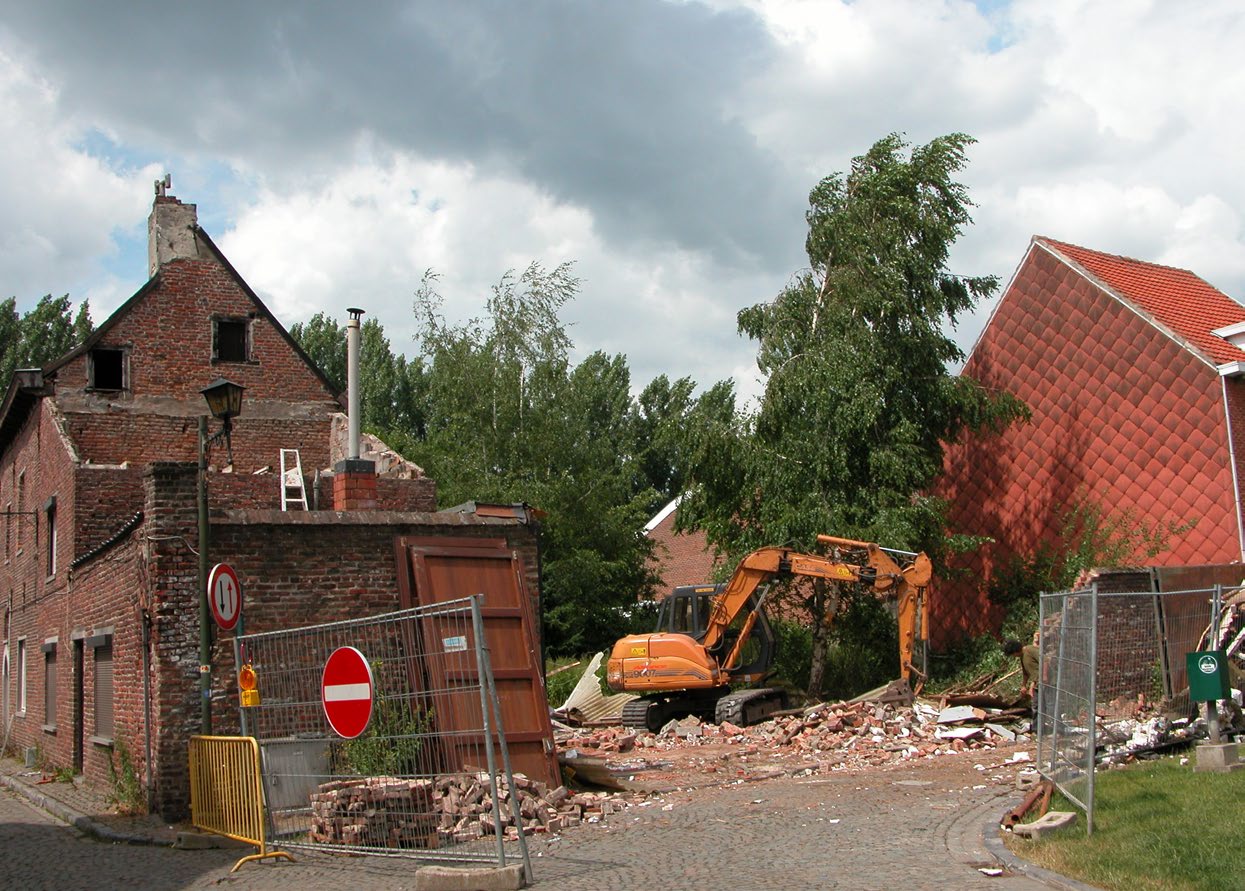
Charlotte Malterre-Barthes’s A Moratorium on New Construction is not simply a provocation—it is a nine-step manifesto that calls for a global freeze on building. Drawing from a wealth of case studies, historical precedents, and progressive thinkers, she constructs a picture of how such a halt could be implemented and sustained.
Malterre-Barthes, an assistant professor of architectural and urban design at the École Polytechnique Fédérale de Lausanne, argues that devastation, greenhouse gas emissions, resource depletion, and social injustice are inseparable from the act of building. A moratorium, she contends, “is unique in its clarity”—granting society a pause to repair damage, rethink priorities, and reimagine the very purpose of architects and our skills and value to our communities.
The book is not a detailed guide to achieving this utopian vision of stopping construction, and it acknowledges contradictions within the industry. Rather, it reads as an invitation to architects to act in line with the current times and be of service to people. By transforming vacant spaces into affordable homes, valuing existing materials over new extraction, and redefining architectural practice as an act of care and repair, architects could strengthen its relevance and agency in the face of climate crisis, inequality, deregulation, and automation.
Here, METROPOLIS shares some excerpts from the book that invite deeper reflection on the profession. —Francisco Brown
01. STOP BUILDING
“To build is also to destroy. To construct anything sets a series of actors, events, and transactions with harmful consequences in motion. From funding and legislating to designing and organizing, construction propels the extraction, transportation, processing, and installation of materials; the allocating, inhabiting, exploiting, and commodifying of space; and finally, the generating of waste via demolition. At every turn, there are corresponding adverse effects: known ones, such as ecological devastation and greenhouse gas emissions, but also lesser-identified outcomes, such as debt production, speculative financing, exploitative labor conditions, socially destructive mining, health hazards, racial discrimination, resource depletion, eternal pollution—these other, externalized, forms of social and spatial injustice are just some of the many nefarious arrangements that yield the architecture of our lives.”
“Until design and planning professionals have figured out how to change these devastating modes of engagement with the built and unbuilt environments, authorities everywhere should stop granting new building permits and enforce a construction ban. This is the premise of the proposed moratorium on new construction you hold in your hands. Such a call may seem drastic at first. But to address the massive, relentless, and senseless damage generated by construction and all its ancillary effects, a moratorium is unique in its clarity as a path toward the radical restructuring society urgently needs. As we problematize what, how, where, by and for whom, and for how long we build, an indefinite pause would allow us to assess, mitigate, correct, and repair the harm generated in the construction of the present world, granting respite today while plotting the course for a different tomorrow.”
02. HOUSE EVERYONE
“One place to begin is rejecting the implacable neoliberal presumption that affordable housing is best provided through new units, primarily by private forces. Offering a view outside this logic by jettisoning the dictate of new building brings emancipatory possibilities for residential production within the existing stock.”
“In the frame of a moratorium on new construction, tackling vacancy calls for radical measures. To stop building is to freeze the stock, which could be accused of limiting the possibility of generational wealth. The aforementioned legal tools could withdraw vacant spaces from the market toward redistribution, actively guaranteeing housing while compensating owners. The redesign and conversion of existing, vacant spaces into affordable, safe, enjoyable, and car-optional homes—instead of new construction—could become the backbone of a profound reinvention of the housing landscape, undoing decades upon decades of housing injustice, uneven investment, and extractivism.”

03. CHANGE VALUE SYSTEMS
“Efforts toward a virtuous circular economy are underway. Still, calculations of the real price of construction materials and their ‘hidden gray energy’ (their extractive origins) do not value the past, present, and future damage of lost living organisms, destroyed livelihoods, toxic legacies, and social wastelands they create. This might be because of limited metrics and the complexity of supply chains, but also because of the undervaluing of who is affected by extractive processes, a distorted view driven by economic interests, racism, classism, and a colonial mindset prioritizing profits over the living.”
“However, as long as the agents shaping value definition standards remain in the hands of the construction lobby, greenwashing will be the norm. Recycling still relies on extraction. Dismantling and demolition are also heavy carbon-generating activities.”
04. HALT EXTRACTION
“However, the encouragement of work that reframes discourses, epistemologies, and histories of exploitative economies concerning the built environment remains primarily confined to academia, research institutions, or politicized niches.”
“The backlash is already underway. BIPOC, feminists, queer, and anticolonial groups in cultural spheres are under attack from various sides, as ‘wokeness’ is made a slur. Since October 2023, there has been a gross conflation of anticolonialism with antisemitism and other unhelpful shortcuts. This means that this urgently needed research is hindered. Moreover, connecting building activities and material extraction to their earth-ravaging activities, necropolitics, and racialized oppression does not translate into correcting how construction is conducted and how architecture is produced. Most actors in the industry are yet to recognize these systemic and interconnected injustices and the material pillage and ecological devastation that space production propels—beyond carbon quantification myopia, plain defensive posturing, or basic greenwashing.”
“When extraction stops, architecture will have to deal solely with the existing stock—demolition and its heavy carbon release being out of the question. A post-extractive architecture values every existing building and element, and relinquishes formal control toward fostering other futures. A post-extractive architecture engages directly with matter while understanding its beginnings, production processes, and labor footprints. A post-extractive architecture advocates not to.”

05. REVOLUTIONIZE CONSTRUCTION
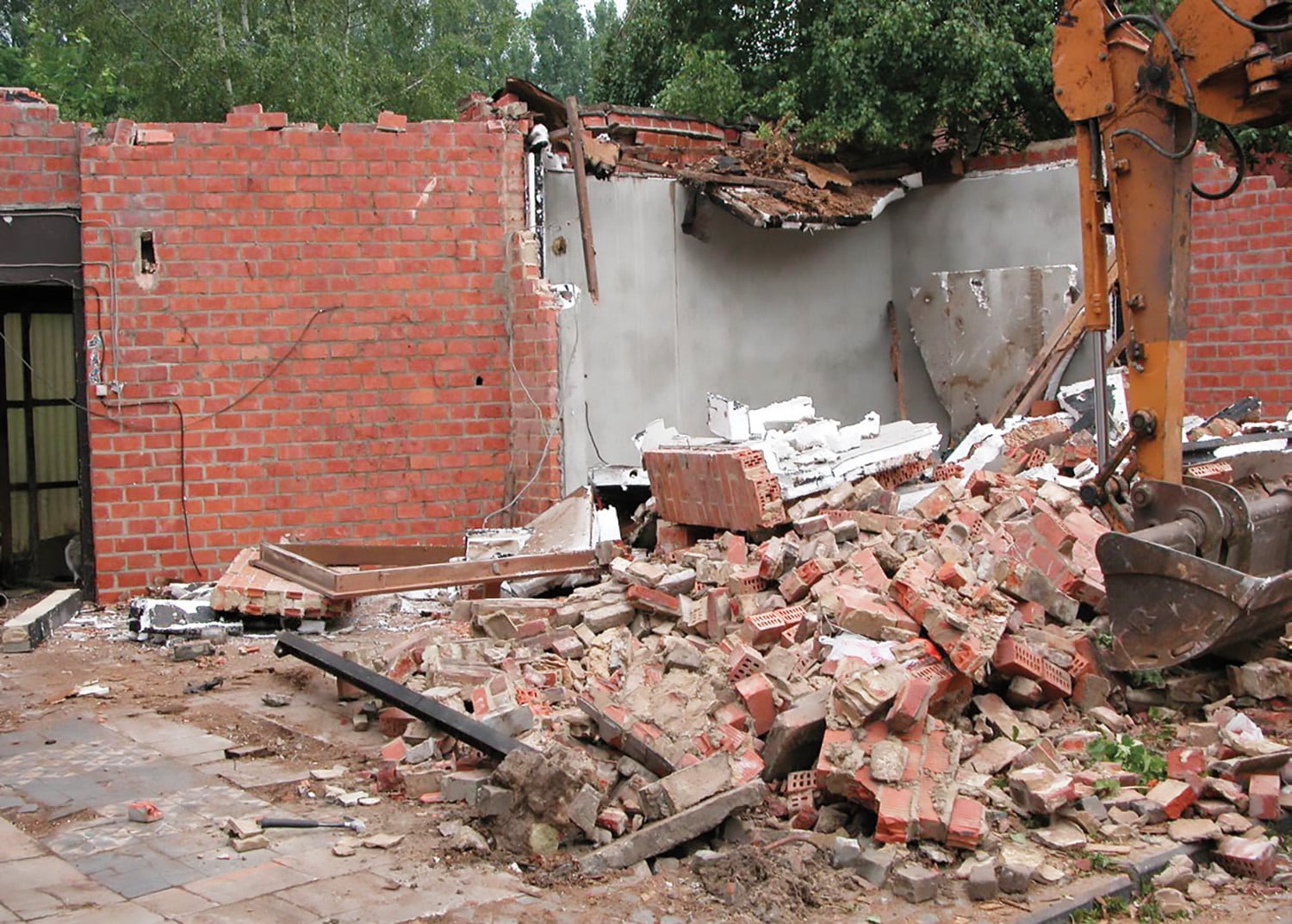
“What is required is a transformative shift in the public’s perception of the built environment: similar to the inconceivability of smoking in commercial flights today (banned in the US in 1988 and in 2002 in the EU despite opposition by virulent tobacco lobbies), the aim is for demolition to be unthinkable in the future, with new construction being an exceptional occurrence—at least until the ongoing crisis has been dramatically mitigated. Designers will charge clients not to, pivoting toward new tasks that require their abilities. Agents engaged in image production, desire-fabricating machines, and narrative creation can deploy their ability to spin stories to tell other construction tales, using transformative imagination to envision change through narratives.”
“Architecture is a solutionist discipline, assuming there is something to fix, with an instrumental approach to design and problem-solving intrinsically part of its mandate. Harnessing this characteristic, the discipline can address the obsolescence and inertia within its own system and use problem-solving skills to mitigate the harm that the construction industry causes to both humans and nonhuman entities. By doing so, architecture can become a practice of healing and reparation, and move forward as a discipline of strategic importance to face the polycrisis. To halt new construction is to practically seek what and how a revolutionized industry could do to counter its destructive ways. Reallocating capital, material, workforce, and imagination into the care and repair of the built and unbuilt environment toward other ways of space-making that do not cause devastation, a moratorium can change our relation to land, design, and matter—in thought and action.”
06. FIX THE OFFICE
“A professional suicide. Some have argued that this is what pausing new construction would mean. Yet to stop building new does not mean the end of architecture, but rather the end of the design practice as we know it.”
“This posits that the current architecture firm is an obsolete model—feeding off oppressive structures and plagued with internal shortcomings. Following the moratorium’s prompt, forcing a halt to new construction might allow for emancipation from patriarchal, patronizing, exploitative, and energy-intensive economic operations, toward post-extractive, ecological, and human modes of design work. This reformation of the profession could potentially be articulated as a form of strike vis-à-vis external forces—from the unchecked predatorial real estate milieu to state-led past and ongoing deregulation efforts dismantling protective fee regulations—for which the profession would need to be better organized and politically engaged.”

07. REFORM THE SCHOOL
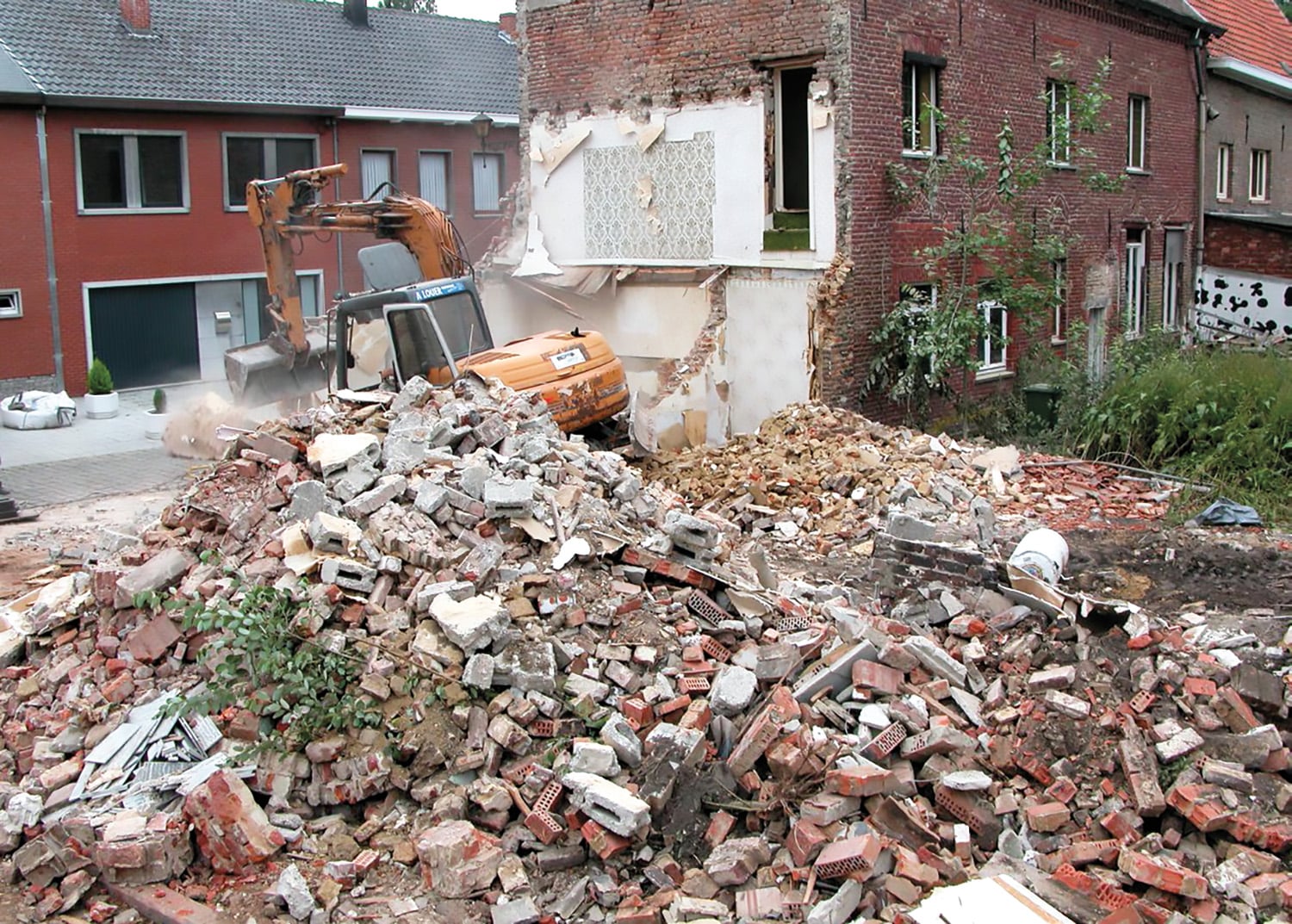
“For design schools housed within technological universities, this cultural homogeneity coincides with an emphasis on growth and techno-optimism rather than fostering ecological awareness and institutional transformation. This prioritization permeates the essence of curricular content, devaluing nonconventional examples and frugal practices, and neglecting their importance due to geographic origins, ethnicity, class, gender, or sexual orientation. Yet exploring all examples and precedents to face the current crisis is crucial.”
“Designers can leverage these props to enable the room to turn ‘into some new thinking and into a new set of relations, a new way of being together, thinking together,’ as per Harney and Moten. This approach takes up Black feminist thinker bell hooks, who believed that ‘the classroom remains the most radical space of possibility in the academy.’ Chairs, walls, windows, rooms, panels, screens, and desks have agency—they can replicate oppressive systems or help to question educational hierarchies in the classroom and how to navigate without dismissing power asymmetries. Learning and unlearning are multidirectional processes.”
08. DON’T DIG
“For instance, Japanese architect Mio Tsuneyama considers it a heritage to be passed to future generations and integrates the fungal micro-organisms in the soil within her designs. This is the way forward—rather than treating living matter again merely as a material to be subdued, reducing earth to another potential building material. Moving away from extractive mindsets, a transdisciplinary reinvention of planning would set the sector on the right track to pivot toward less damaging practices, to ‘reshape desire, reorient hope, reimagine possibility’ with regard to soil.”
09. TAKE CARE
“A case in point is the fact that, in many places, tasks like cleaning, preserving, nurturing, and fixing are executed by low-paid, racialized, and gendered laborers, their jobs perceived as menial.”
“After watching the documentary by Ila Bêka and Louise Lemoine that follows the meticulous journey of Guadalupe Acedo, the housekeeper in Lemoine’s father’s famously intricate Bordeaux house, Rem Koolhaas was irritated and commented on the lack of creativity of the cleaner: How could she be using such a ‘generic technique of cleaning [for] something so exceptional’ as his designs? These examples highlight a customary attitude among architects: Such matters are banal, domestic, and beyond their purview—users must adapt to design, not vice versa. In short, building maintenance does not pertain to the discipline; architects do not design for care.”
Would you like to comment on this article? Send your thoughts to: [email protected]
Latest
Projects
UC Berkeley’s Newest Building Is All About Human Interactions
The Barbara and Gerson Bakar Gateway—home to the university’s College of Computing, Data Science, and Society—gently reminds data scientists and AI researchers of what’s really important.

Projects
ZD+A Brings a Modernist Mexico City House in Line with its Context
Architect Yuri Zagoin Alazraki reorganized the speculative house to respond to its site and create unique spaces for contemplation.