



April 22, 2026
Wolf-Gordon’s Material Journey
Together, Rajagopal and Shaw explore Wolf-Gordon’s approach to material innovation and product development through the lens of sustainability. They discuss the evolution of the company’s offerings—CLAIR, RAMPART Resolve, and RAMPART Fiber—and what these products reveal about the strategies design-forward manufacturers are using to advance healthier, more sustainable materials.
Read an excerpt of their conversation below or listen to the full episode on the Surround Podcast Network.
Avinash Rajagopal (AR): Give me a kind of overview of how you’re thinking about sustainability, about materials, transparency, about health and well-being through interiors materials today at Wolf-Gordon.
Marybeth Shaw (MS): Our policy is to, No. 1, try to innovate and push the needle with our partner mills in the development of products, whether it’s wallcovering, wall protection—all the different categories that we bring to market.
We really do, as design companies, need to push our partner mills to go the extra mile and make products as absolutely safe as possible for human health and the environment. And I think all of that together yields the kind of progress that might not be instantaneous, overnight, miracle product, but that incrementally improves and brings products to market that are going in the right direction.
We are in a completely different world today than we were in 50 years ago. That is thanks to all the people who have contributed to sustainability in our industry in interior finishes. We don’t have heavy metals anymore. We don’t have formaldehyde. We don’t have substances that were so injurious to the environment.
First, we were concerned about environment and it’s more recently that we’ve really put the spotlight on human health. Constant pressure and continuous improvement, never being satisfied, is number one. We also know that our design specifiers need a lot of transparency and documentation. So with every product that we introduce we need to document everything that’s happening with the product and provide HPDs and EPDs so that they can effectively report, get their green certifications, and go ahead to use our products.
Commercial interiors and high-traffic environments require a higher level of performance than what you might be okay with in a residential setting. Wolf-Gordon has traditionally been in the commercial markets, so we have to move forward with this incremental improvement in sustainability and the formulation of products and, at the same time, make sure that we are giving our customers products that perform and stand up to what they need them to do in the interior.
AR: I agree. We know so much more about the impacts of interiors materials now but can you give me a sense of the longer journey before that? Wolf-Gordon, for instance, is known for cork materials. You were one of the first manufacturers to bring cork to commercial interiors. You’ve always experimented with earth- and health-friendly materials.
MS: Wolf-Gordon was founded in 1967, and at that point we were basically a vinyl wall covering and upholstery company. But from day one, we also offered natural materials. Cork was in the product line from the get-go.
Cork is a remarkable material for wallcovering and upholstery, exceeding a hundred thousand double rubs in upholstery. A beautiful miracle of nature that is super high performing, naturally antimicrobial. We’ve also had beautiful grass cloths and woven papers. Products that bring a real tactile sense of nature into the interior. And then we’ve also always had beautiful textile wallcoverings, natural linens.
In the early aughts we introduced a product called Organics, and that was a 100 percent natural kenaf wallcovering that was a beautiful natural collection with five different patterns. It was biodegradable; you could throw it on the field and not the landfill after using it.
That was quite innovative for its time. Following Organics a few years later, [we introduced CLAIR]. We had always wanted to put out a PVC-free, Type II wallcovering. We felt that this was long overdue, and working very closely with one of our partner mills, we were able to develop CLAIR and bring it to market in 2020, which was kind of a heroic act in and of itself because it was in the midst of the pandemic. We were far along with this product, and we wanted to get it out there, and we felt that it was really the moment because it was about health and wellness.
And not only is CLAIR a Type II wallcovering but it is bleach cleanable, and beautifully designed. We never want to compromise aesthetics for performance. We want them to go hand in hand. And that’s exactly what CLAIR has been able to do. We’re delighted because our interior design customers really want it and, in terms of price point, it’s comparable to any Type II wallcovering.
To follow up on CLAIR in 2021, we introduced RAMPART Resolve. RAMPART was our flexible wall protection that we introduced to the market in 2015, but initially it had a PVC construction. But RAMPART has so many wonderful sustainability aspects.
It is wonderful to put over a wall liner and eliminate the need for demolition and sending all of this rigid wall protection product to the landfill. It saves so much in cost by being able to be hung by a single worker, a paper hanger. And so with RAMPART Resolve, now a PVC-free construction that meets all of the testing necessary for wall protection, rigid or flexible, it was really a great innovation.
It’s so popular with our customers that are going after green certifications or trying to create healthy environments in healthcare facilities and schools, as well as healthy workplaces and hotel guest rooms.
AR: Wolf-Gordon and a few others were early pioneers in saying, we know vinyl is popular, but we see an increasing demand for alternatives to vinyl. So let’s try and develop those. And CLAIR was a real breakthrough. How did you work to make CLAIR comparable, a real comparable alternative to vinyl, and then also what was the design journey like?
MS: From the perspective of the product development, we worked with our partner mill to investigate all the different materials that could fit into the existing rotogravure and digital printing processes. With this kind of improvement, you can’t invent a process that requires $500 million worth of new equipment and a completely different production process.
Whatever we were testing out in those years had to perform in existing printing and embossing processes. Wallcovering mills are fascinating places; I love to go to factories of any kind to see things made, like many designers. We did a lot of tests with different composites that could replicate the performance characteristics of vinyl film.
And vinyl film does have many advantages. It takes ink beautifully, it embosses beautifully. That’s what we were up against is how can we find material that will take the print and be embossed and backed with existing equipment and really look beautiful, but meet all the Type II standards.
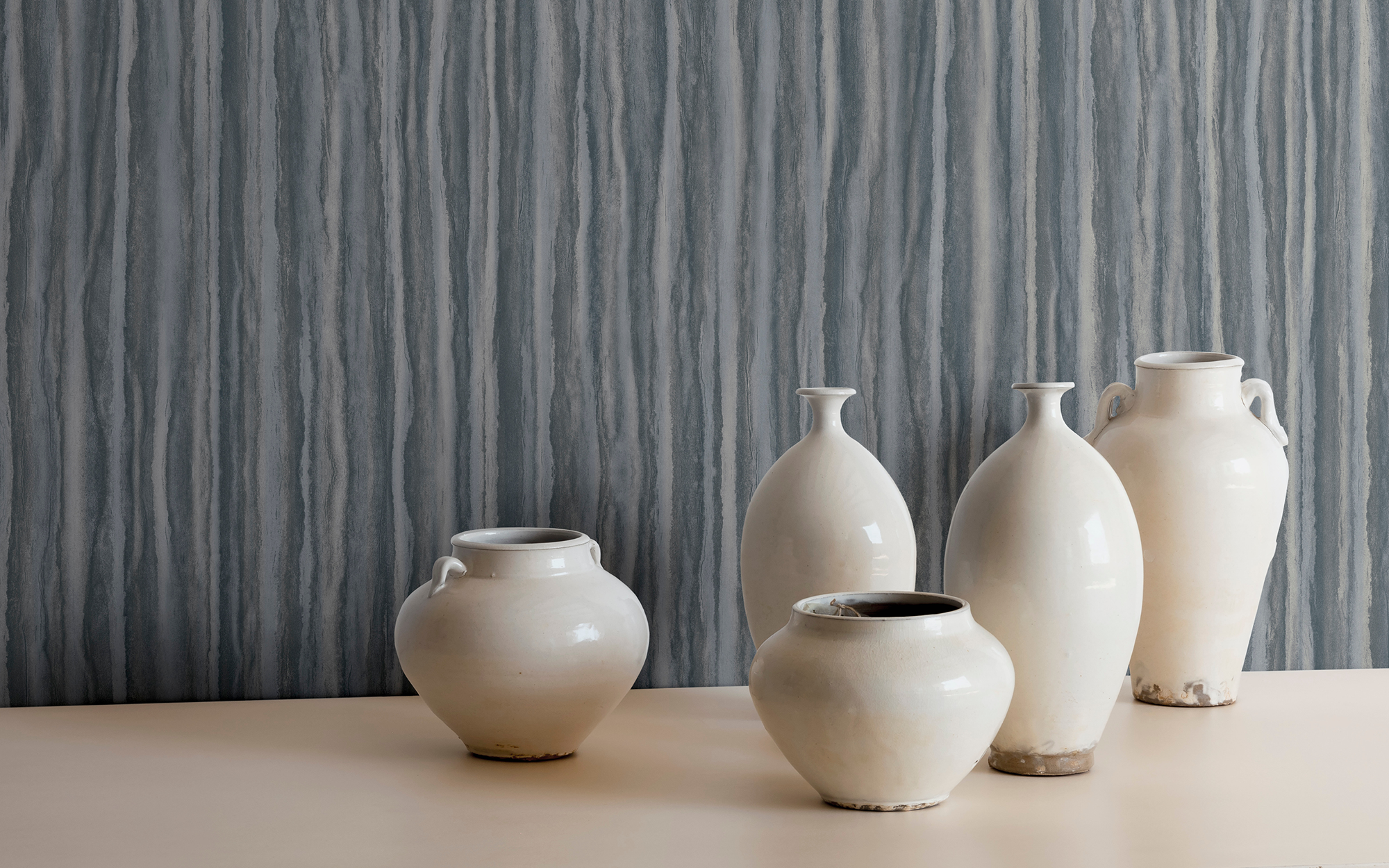
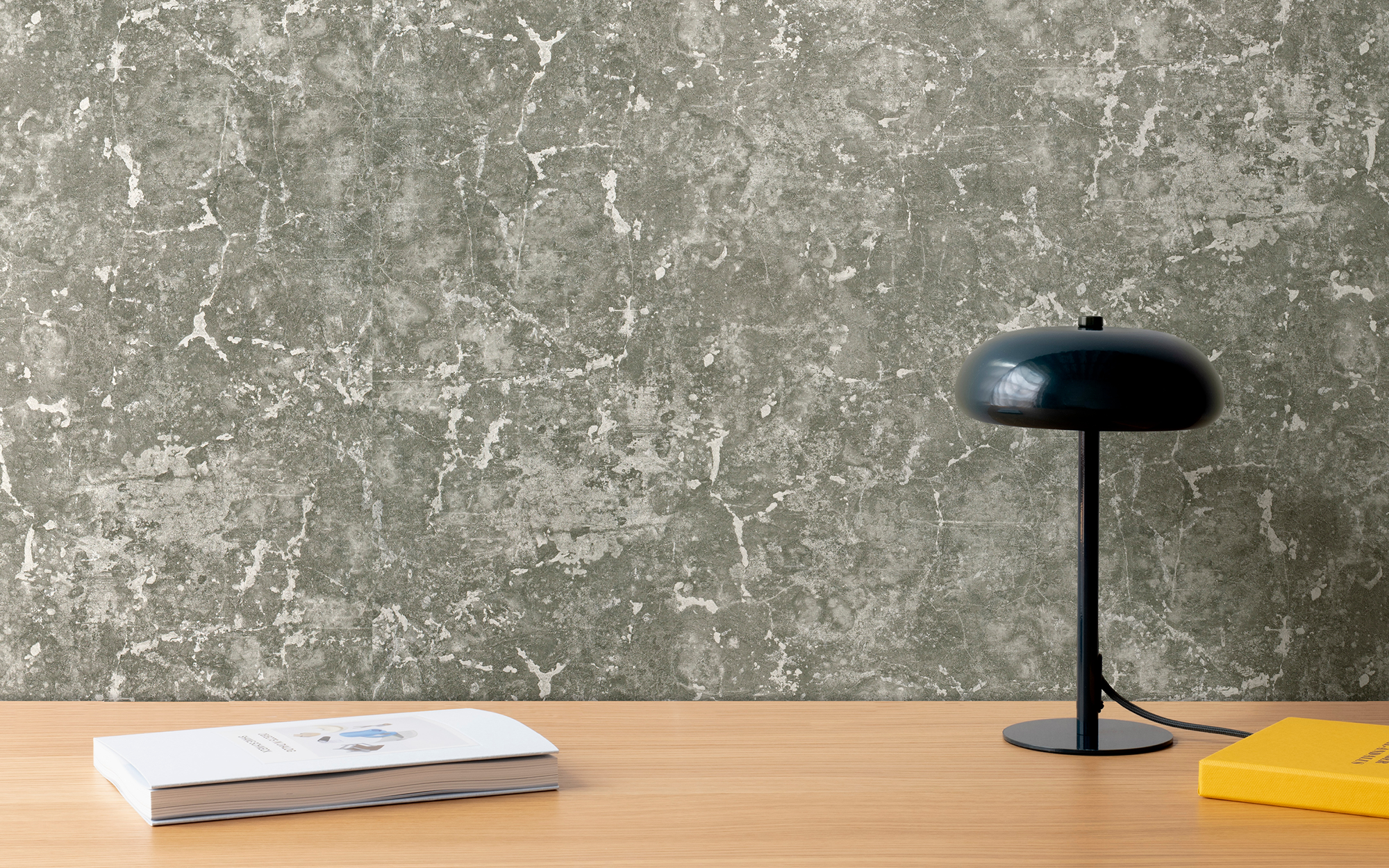
It took a long time, and we were able to bring it to market when we were developing the collection from a design perspective. Speaking of CLAIR, we were very much thinking about bringing natural materials inside. So in the CLAIR collection, you’ll find a lot of beautiful wood and botanical looks and grass cloth simulations, and the colorations are also inspired by nature in many patterns.
It’s not surprising that designers who are trying to create super healthy, environmentally sane environments are also in love with bringing nature inside.
And there’s a long history of that. We were designing for that type of specifier and that type of environment.
AR: You know, you did so much, too, to ensure that CLAIR would be a real option, right alongside the Type II vinyl offerings you already had. And I think that’s really important because, very often, a single specifier is not only working with one type of client or one kind of project. Different clients have different appetites, different budgets, and different abilities or capacities to take a risk. And so designers often have to deal with that reality. Having an option that’s truly comparable is so critical. And you did that again with RAMPART—what was that, a couple of years after?
MS: It was just one year later that we brought out RAMPART Resolve. And again, it became really popular in healthcare, education, and hospitality settings. One of the things that’s really important about all of these products is that we can also digitally print site-specific environments, where designers are really looking to put their signature, their brand, their own vision—what they have in mind and what they’re trying to convey with the wallcovering. We can do things that are extremely custom.
So I think RAMPART Resolve, certainly with its performance—being able to handle hard-body and soft-body impact tests, abrasion, and strong cleaning agents, especially in healthcare settings—was really the perfect time to introduce something that was PVC-free, bleach cleanable, beyond bleach cleanable, and appropriate for wellness.
AR: Our healthcare specifiers who are listening will probably know this, but vinyl really revolutionized wall protection. And it revolutionized how people clean very high-traffic areas like corridors and other healthcare spaces. So having something that could match that performance, so you don’t have to give up that ease, was really important. And I think the other thing is, as you mentioned earlier—and alluded to now—is that one, it could go over existing product, which means less waste and fewer materials going to landfill. And two, that it can be custom, which also reduces waste, right? You don’t have to use as many layers of materials or colors in a space. Your wall protection alone can do a lot for the aesthetics of the space.
While this was going on, I think you were already investigating a bio-based alternative there with RAMPART Fiber. So take us to the RAMPART Fiber story.

MS: About eight years ago, we started working with a small manufacturer that had a brilliant idea to use flax to create flexible panels that are obviously PVC-free. Beyond that, they’re bio-based. It was also a long period of R&D, and we tested the product over and over again until it installed properly and met our performance requirements.
But now it has arrived, and we call it RAMPART Fiber. We placed it within our RAMPART family of products because it is a wall protection. It performs to those same hard-body, soft-body, and abrasion-resistance tests, and it is a beautiful, organic-looking product that resembles a fine wood grain—quite regular in its vertical grain—and is made of rapidly renewable flax and bio-resins. It is actually USDA-certified bio-based, and it has many green certifications. It’s just a wonderful product.
It can also be beautifully digitally printed. So we’re really excited about RAMPART Fiber, and the response has been phenomenal in the market. We present it every day to specifiers—it’s a very compelling product. And again, any area that needs a little bit of extra high performance in a corridor or frequently trafficked space can also use it on millwork. We launched Fiber in 2025, so that was just four years after RAMPART Resolve.
I’m really happy about how the RAMPART family of products has grown. It’s really offering our customers an essential high-performance product with super-safe ingredients and beautiful design.
AR: I hope this gives our listeners a taste of the diversity of efforts you have to keep going as a manufacturer, right? You were actually in contact with this supplier of bio-based material from flax even before you developed CLAIR.
MS: Concurrently.
AR: Yeah, concurrently. What led to that approach of having multiple materials in development until you feel like they’re market-ready? Why is that important when you’re pursuing sustainable materials, especially really innovative sustainable materials?
MS: Well, because so many things fail. And going back to what I said at the beginning of the conversation, continuous improvement and constant pushing—that’s really what is required in this kind of sustainable product development. We have loads of ideas and we try them, and they fail. Some of them fail miserably and never make it to market. But there’s a lot that goes on behind the scenes in the years leading up to a significant product release. So, yeah, there’s no other way to say it except: try, fail, try again, fail again, and eventually arrive at something we have confidence in and can speak about honestly with our customers. And then they can have confidence in us.
Listen to “Wolf-Gordon’s Material Journey” on the Surround Podcast Network.
Would you like to comment on this article? Send your thoughts to: [email protected]
Related

Viewpoints
The Architecture & Design Film Festival Enters a New Chapter
ADFF 2026 brings together stories of reuse, climate action, architectural history, politics, gender, and public life.
Viewpoints
Drawing Collective Housing Back Into a Common Language
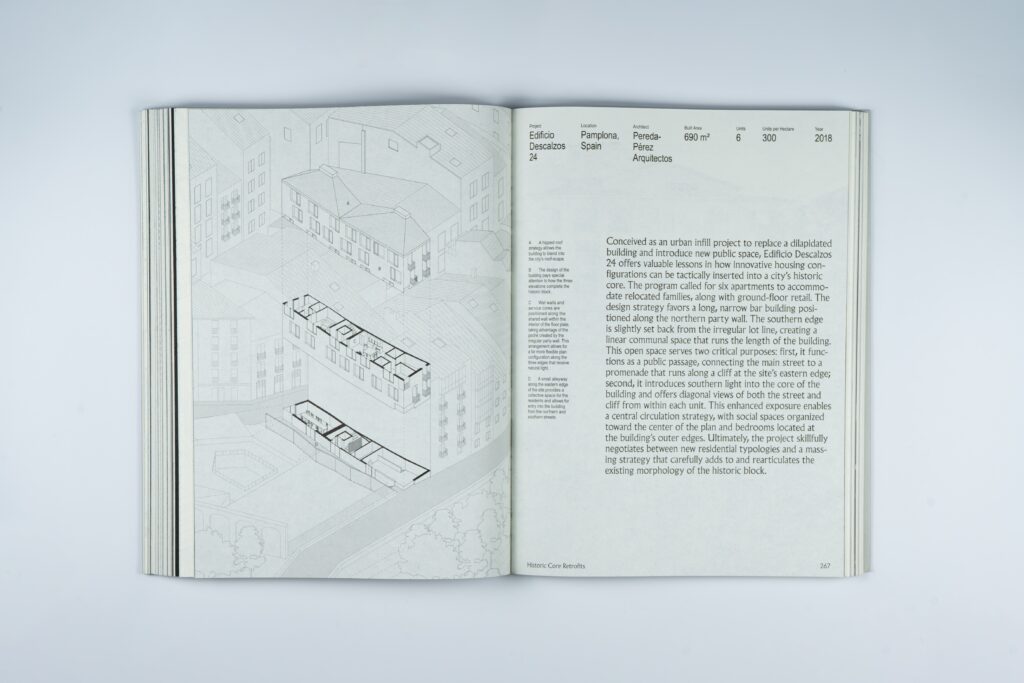
Felipe Correa’s Collective Living and the Architectural Imaginary, and why this survey of a century of collective housing was built to argue a point, not cover the field.