


October 19, 2026
How MillerKnoll is Powering the Future of Design
Building Resilient Workplaces
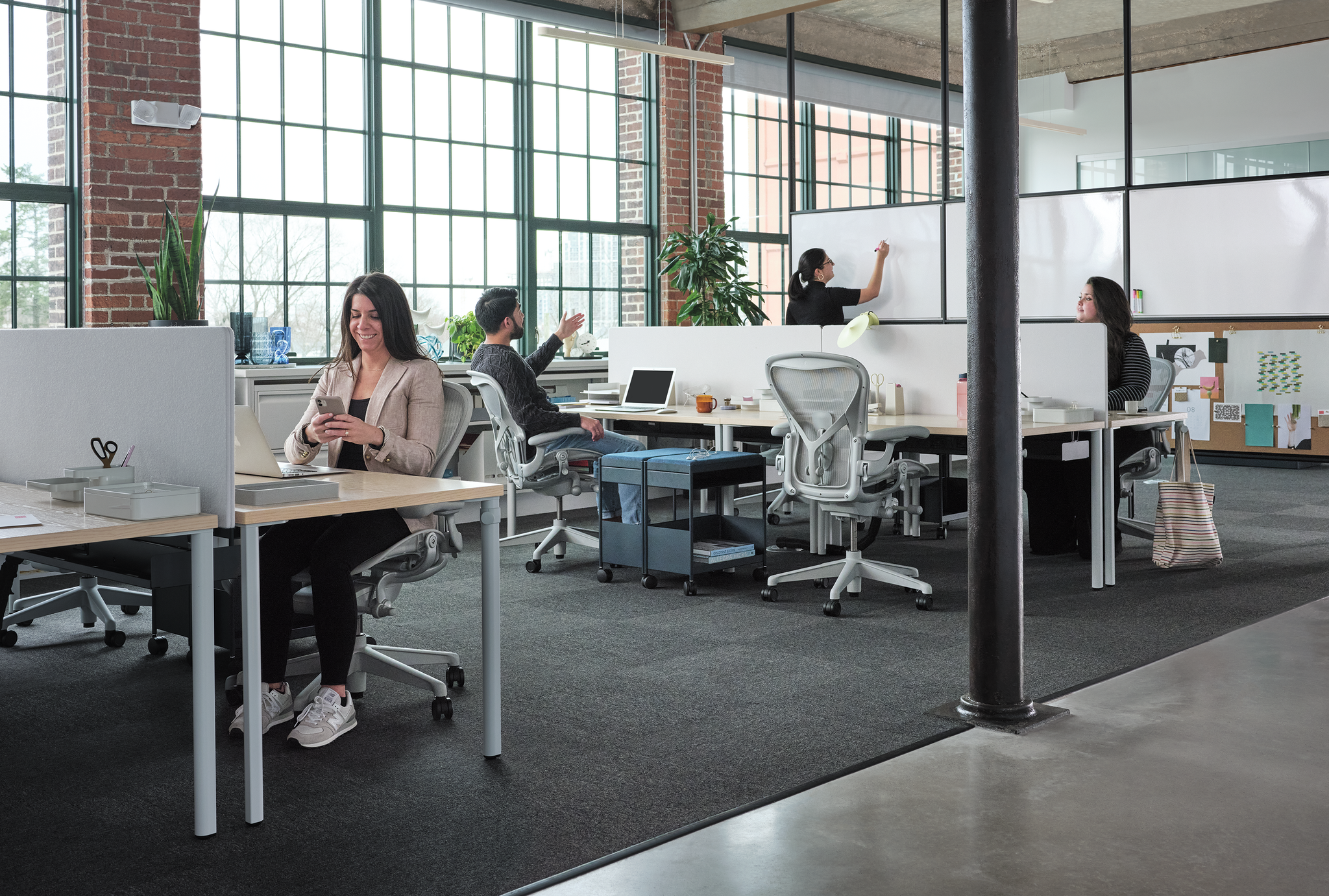
For MillerKnoll, to build resilient workplaces and to boost organizational performance, teams can no longer be viewed in isolation. “As technology reshapes how teams collaborate and employee expectations continue to shift, organizations are questioning whether their workplaces can keep up,” Anderson explains, “Questions about adaptability now extend beyond furniture and floor plans to include technology, culture, and the systems that support how people really work.”
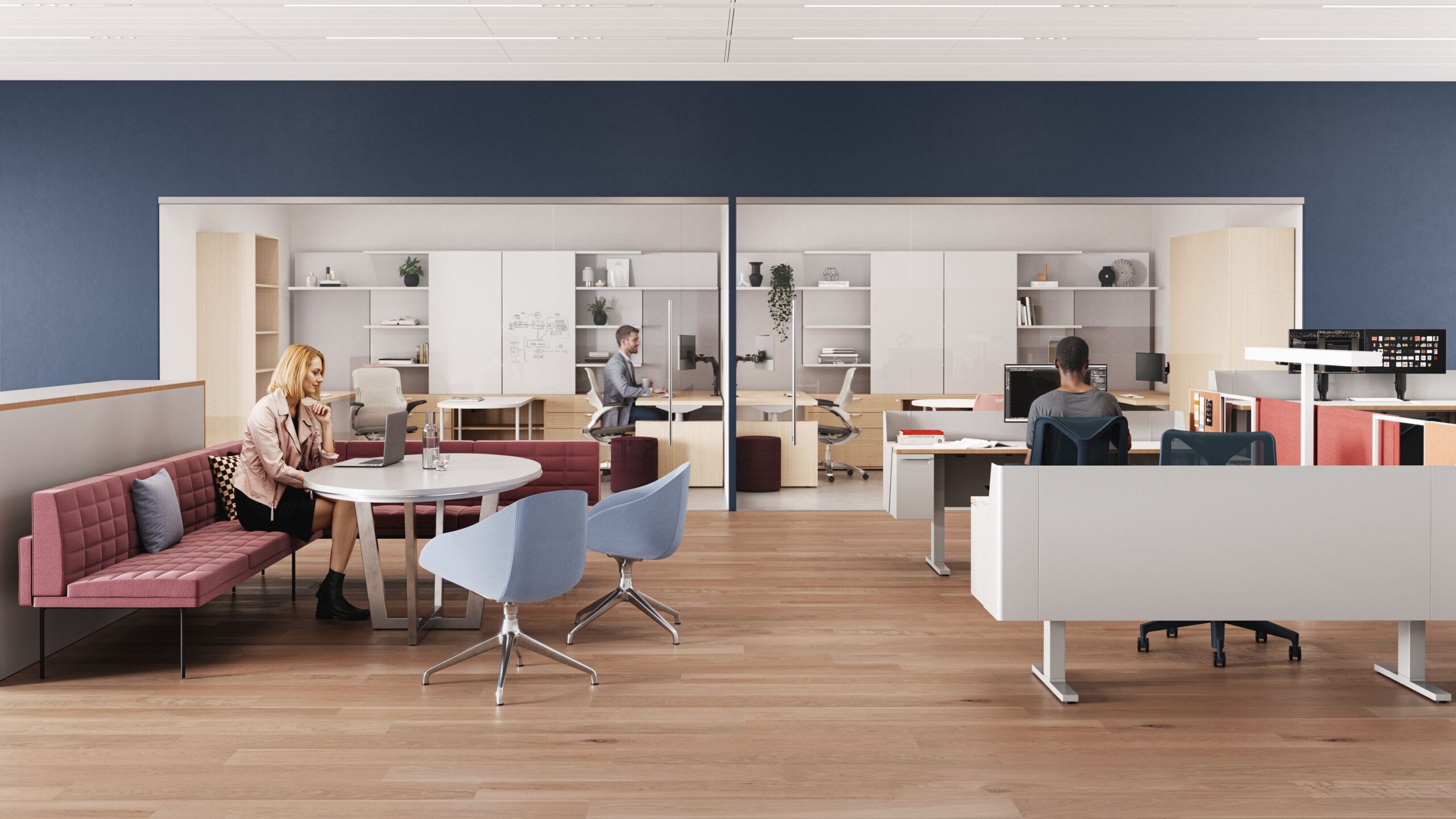
Rather than large fields of identical workstations, organizations are creating “team neighborhoods” that combine individual workspaces with areas for collaboration, meetings, focused work, and video calls. But these environments also need to evolve as teams grow, reorganize, and change how they work.
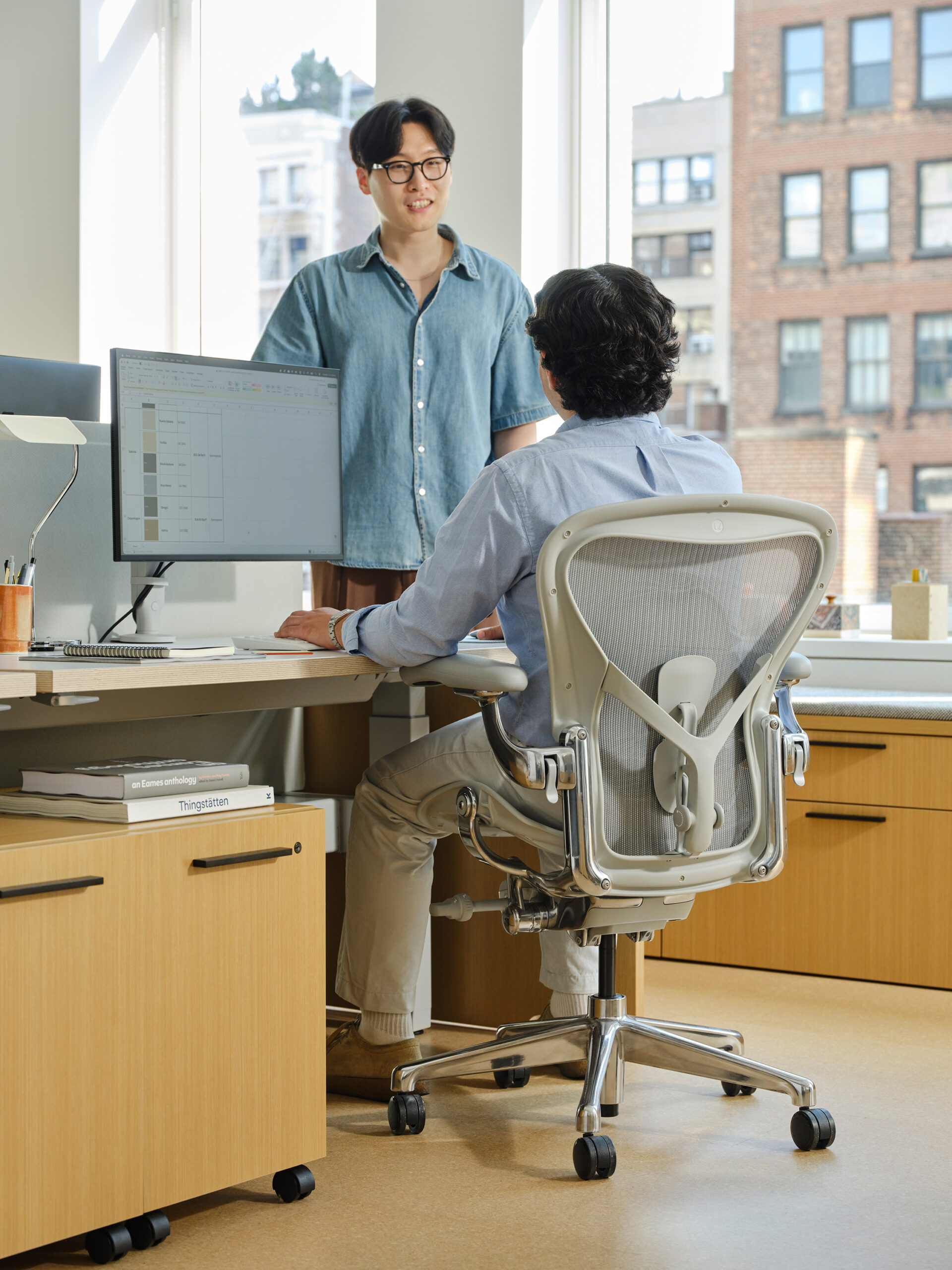
“Power and data infrastructure have historically posed significant constraints to this adaptation by anchoring furniture in place or limiting reconfiguration,” says Anderson. Even when furniture is designed for easy reconfiguration, connecting it to a building’s electrical infrastructure can require an electrician, slowing the process and increasing the cost. MillerKnoll’s research is focused in part on rethinking and reimagining that connection between the building and individual workstations.
The company sees DC power as one potential avenue. Although alternating current, or AC, has long been the standard for distributing electricity through buildings, many of the devices people use every day—including laptops, phones, tablets, and other workplace technologies—ultimately operate on DC power. The widespread adoption of USB-C has also helped standardize how DC power is delivered to personal devices.
Powering the Future of Design
That shift has opened new possibilities for workplace infrastructure. In 2024, Herman Miller introduced the OE1 Power Pack and Power Tray, allowing a battery to power multiple small electronic devices and, when paired with the Power Tray, larger devices such as monitors. In 2025, the company introduced Ello Power Access Solutions, providing USB-C access through compact power modules.
At Design Days 2026, Herman Miller also unveiled a prototype of the next stage of its DC-powered platform: Canvas Vista with DC Power. Designed to support specified configurations of Canvas Vista with up to eight height-adjustable workstations and monitors from a standard building electrical connection, the system is intended to reduce reliance on floor-core electrical infrastructure. It is anticipated to be available in 2027, subject to product specifications, applicable codes, and site conditions.
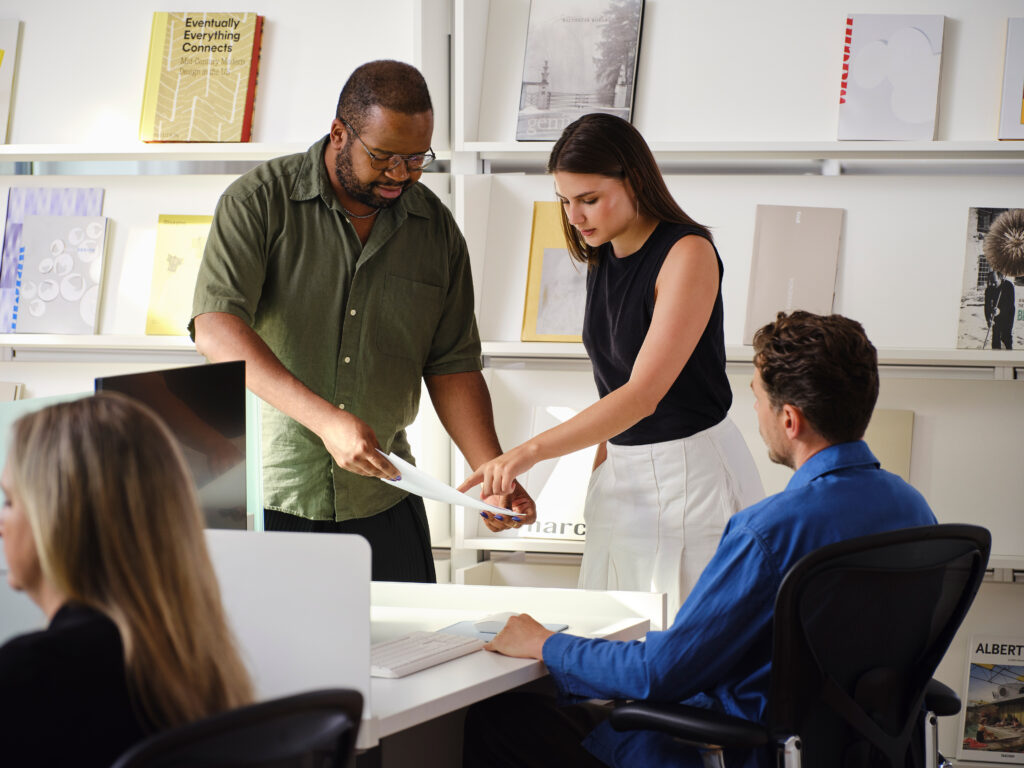
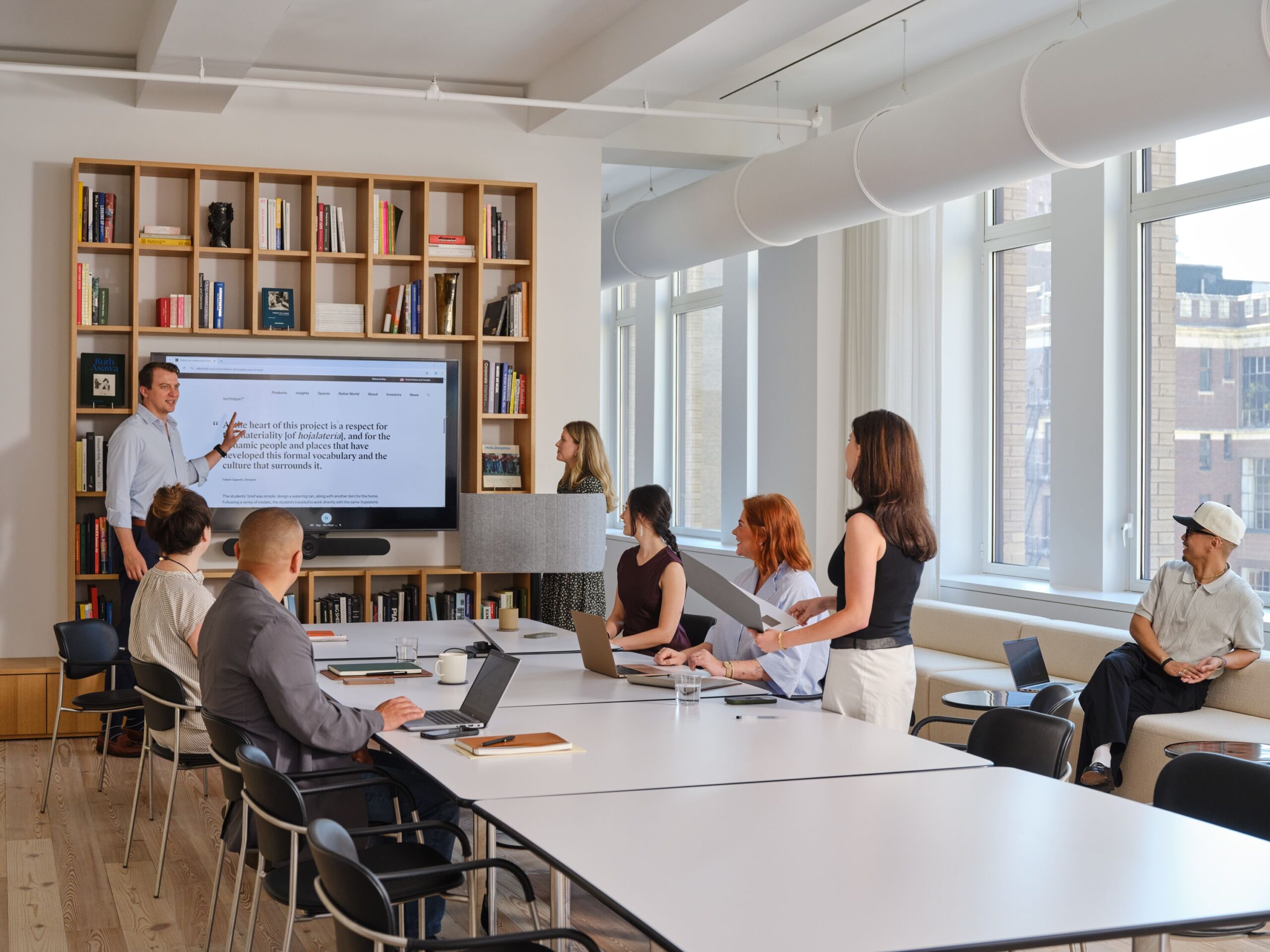
As AI becomes more embedded in everyday work, infrastructure will need to support both the devices through which people access AI-enabled tools and the changing ways teams work together. MillerKnoll anticipates greater demand for adaptable environments where teams can visualize ideas, test scenarios, and solve problems together. “The spaces that support this type of work must be highly agile,” says Anderson, “and the organizations that adapt most successfully to AI will be those whose workplaces can evolve as quickly as the work itself.”
Designing for People, Process, and Place
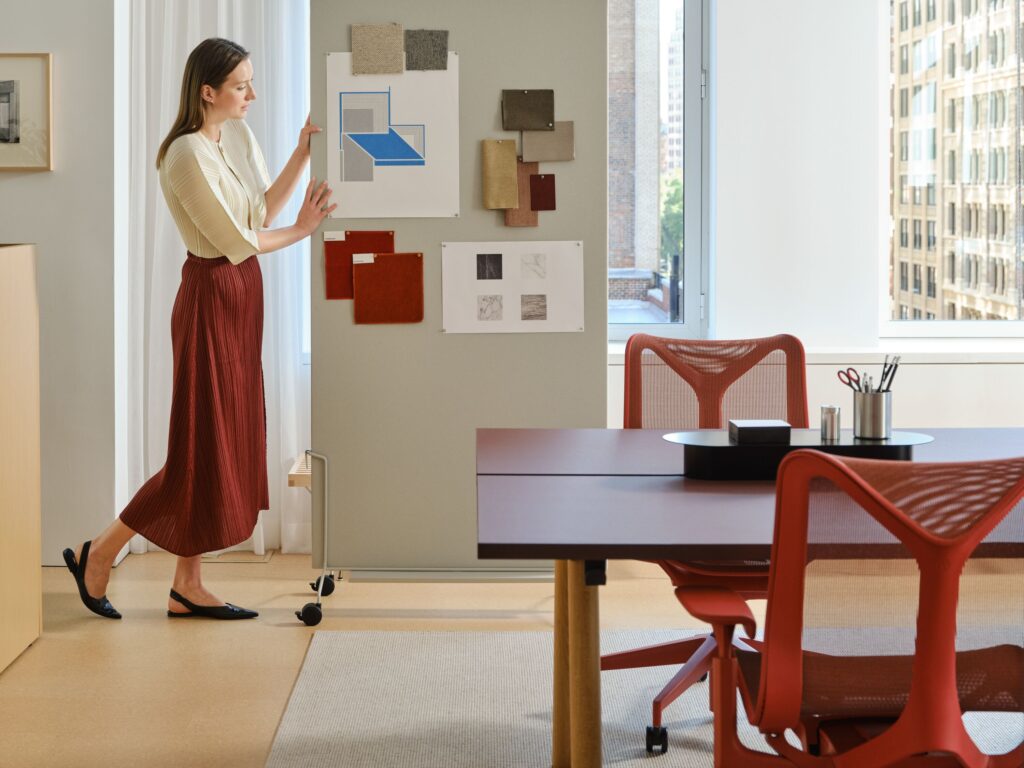
That agility also has implications for employee choice—Personal technologies have already untethered people from fixed workstations, giving them more freedom over where and how they work. The next step is ensuring that the physical environment can keep pace. Anderson notes, “When power becomes less of a constraint, organizations can create more intentional environments that give employees greater choice while making it easier to adapt spaces as needs evolve.”
While the goal is to create agile buildings, the company’s definition of an agile building is not centered on technology alone. MillerKnoll’s research framework starts with “people, process, place”—and in that order, Anderson says. “A building is truly agile when it doesn’t artificially constrain the community that occupies it from doing the things they want to do there,” Anderson says. “In other words, it’s not about the building or the technology—it’s about the people.”
For MillerKnoll, as work becomes increasingly digitized, the workplace needs to foster the things that technology can’t replicate on its own—collaboration, mentorship, learning, debate, creativity, friendship, and human connection. Designing for the next 10, 20, or 30 years, then, may be less about predicting exactly what work will look like and more about creating environments capable of changing alongside it. The truly future-ready workplace is not necessarily the one with the most advanced technology. It is one whose architecture, furnishings, technology, and infrastructure give people the freedom to adapt—and continue to shape the place around how they work. “In that sense, an agile building is not simply a smart building, but a people-centered platform for continuous change.”
Would you like to comment on this article? Send your thoughts to: [email protected]
Latest
Products
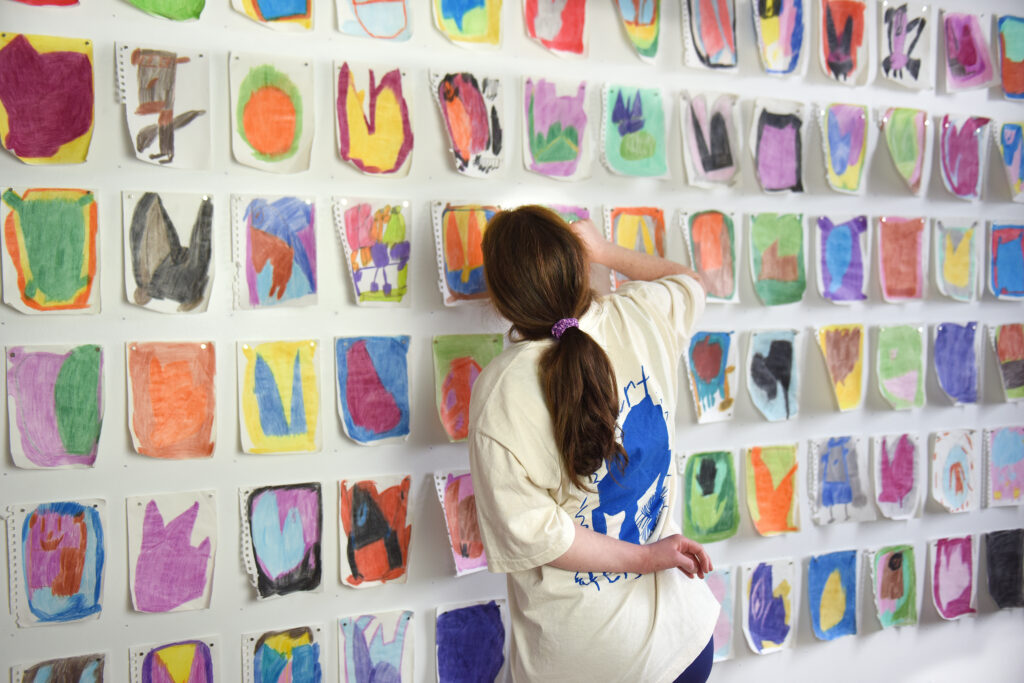
Momentum Partners with Interact Center to Empower Artists with Disabilities
A collaboration with the Minnesota nonprofit brings nine artists’ work to Momentum’s Digital Art Library, connecting commercial design with a broader vision of accessibility and human expression.
Projects
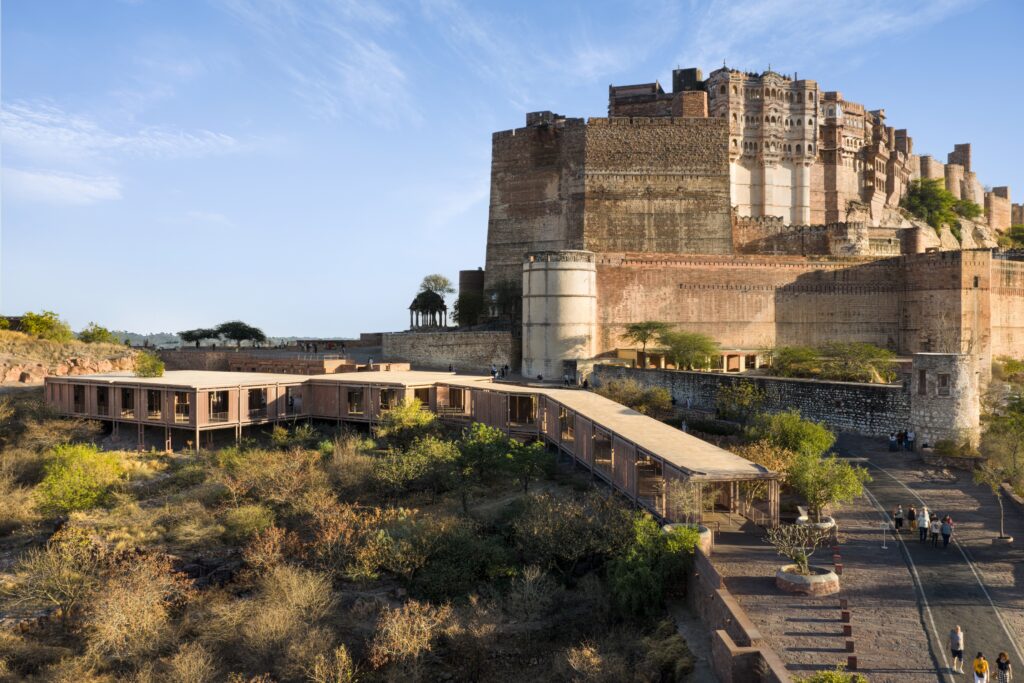
In Jodhpur, Studio Lotus Builds a Modular Future for Stone
Visitor Center at Mehrangarh Fort, sandstone-and-steel pavilions streamline visitor circulation, preserve rocky desert terrain, and give regional stone working traditions new applications.