



February 24, 2026
From Skyscrapers to Chairs: Rewriting SOM’s American Design Legacy
Over nearly a century, Skidmore Owings & Merrill has become synonymous with the modern skyline. As the architects behind some of the planet’s most recognizable towers—Burj Khalifa, One World Trade, Lever House— the firm has a reputation that is well earned. But that visibility may have obscured an equally consequential line of work taking place within SOM’s office walls: Since the earliest days of its 90-year history, the firm—now better known by its initials, SOM—has approached design as architecture of a total environment, from structure down to the scale of a chair or light fixture. “We designed from building to ashtray very early on,” says Satya Cacioppe, the firm’s head of product development.
Beyond functioning as mere furniture, these products formed the infrastructure for modern life as we know it—and it was happening just as modernity itself was coming online. As corporate America expanded after World War II, SOM helped define what it meant to work in a 20th-century office, designing campuses for companies like IBM, Reynolds Metals, and Connecticut General Life Insurance. Space was a tool for productivity, corporate identity, and social life, so SOM equipped its facilities with amenities like hair salons and bowling alleys—moves that foreshadowed the work-hard-play-hard tech campuses of the 2000s.
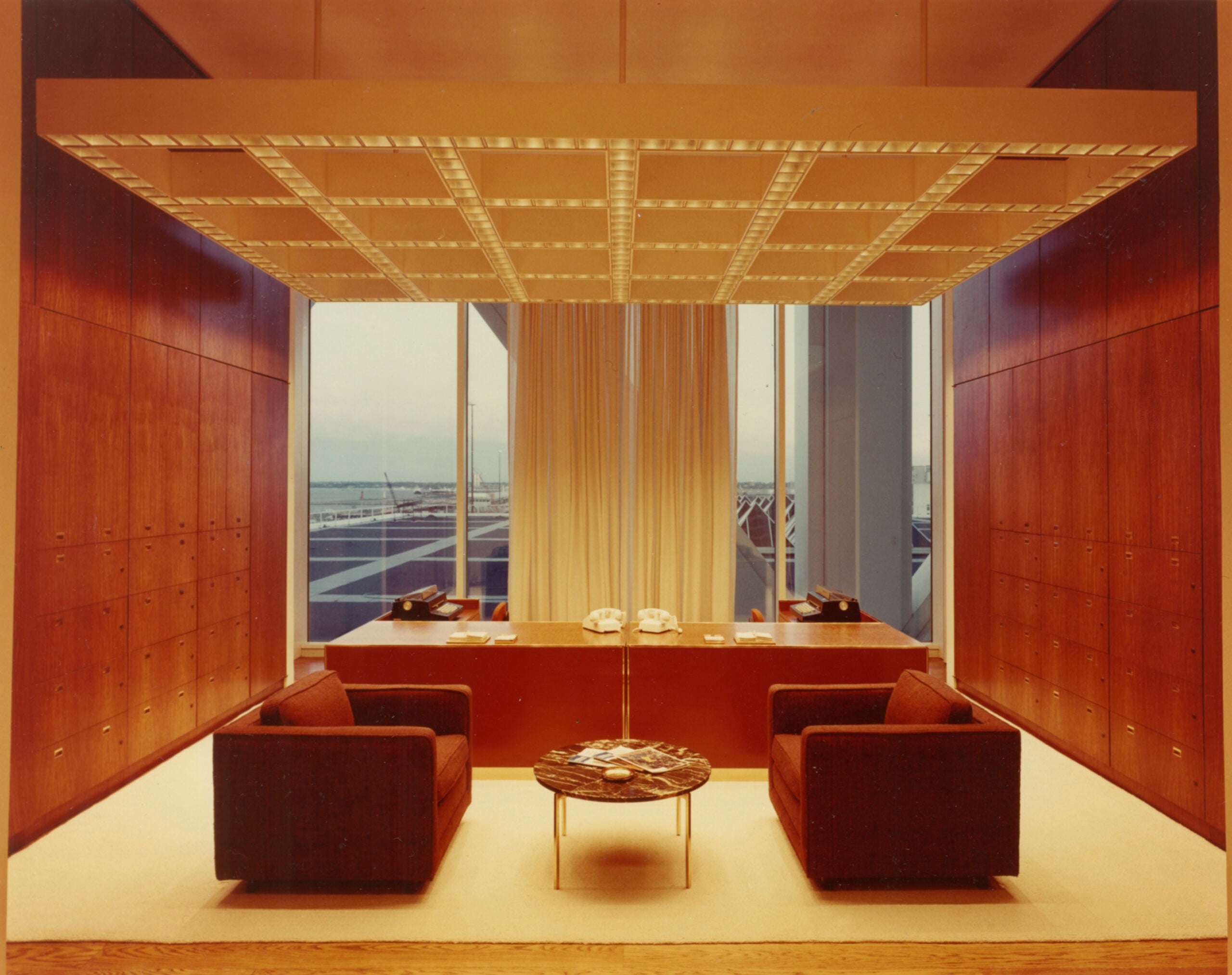
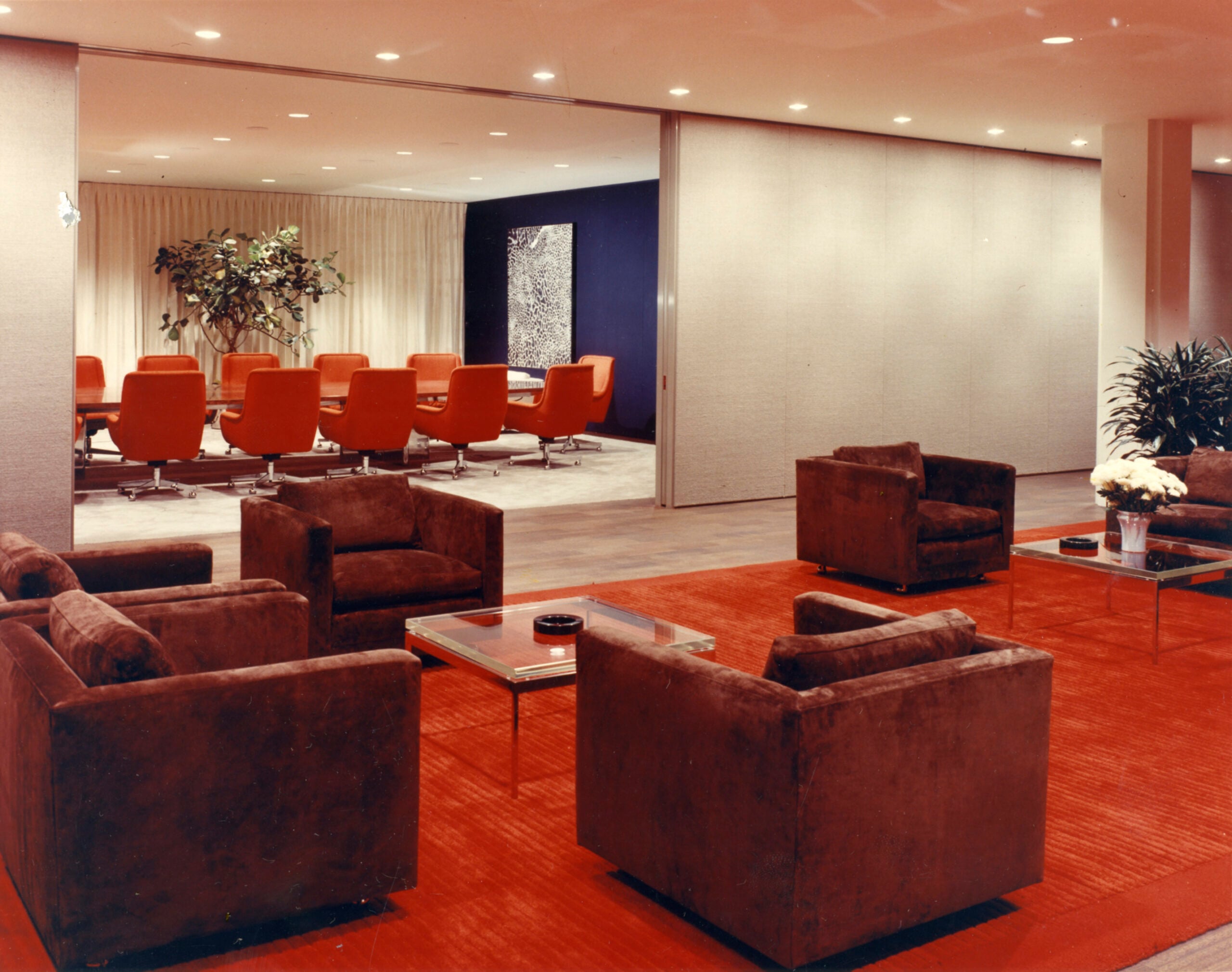
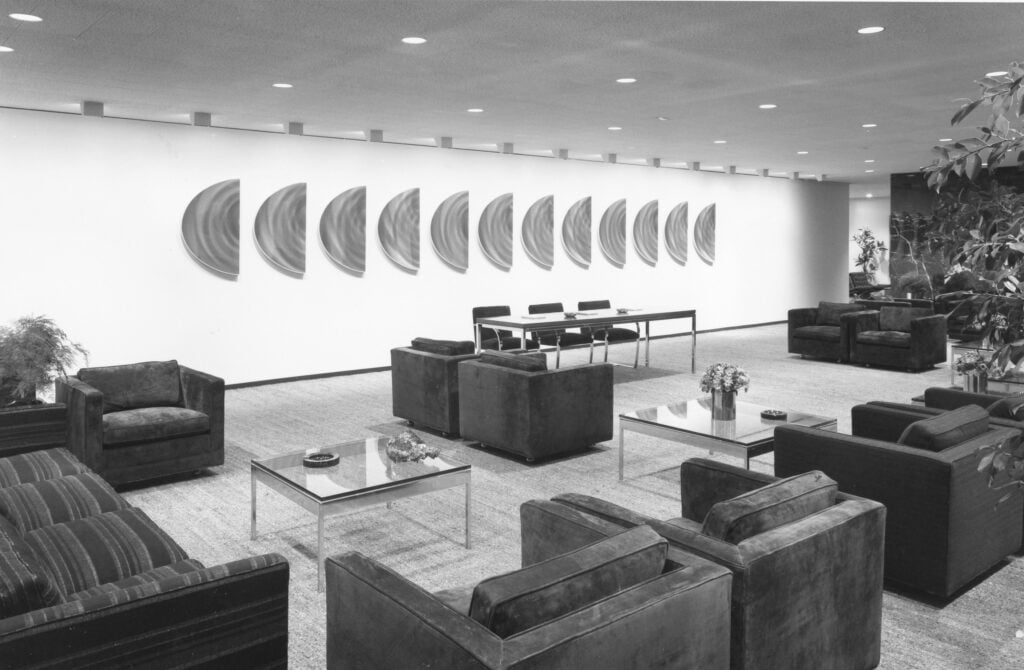
Skidmore, Owings & Merrill’s Archival Reckoning with Total Design
Furniture was always a part of the experiment. Desks and partitions helped organize the flow of labor, and seating arrangements afforded encounters and interactions. And yet, much of this furniture was never destined for fame, as it lived inside these discrete, client-facing worlds.
That’s changing, as the firm begins to excavate and reanimate the prototypes, sketches, and components that once lived inside its buildings. A couple of years back, Cacioppe was tipped off about a trove of furniture-related drawings in SOM’s New York office. “Even though our digital archive was showing buildings and interiors, there was this whole bit of paperwork that hadn’t hit the system yet—it was these drawings,” says Cacioppe.
Ruthless editing followed. Not everything is worthy of revival—so SOM set out to find the pieces that could still hold their own today. “The process has been looking broadly and paring and paring and paring,” says Chris Cooper, a design partner at the firm. The studio began rendering the furniture in contemporary interiors, testing whether it could still feel relevant outside of its original context. But time, as Cooper points out, is the ultimate curator. “If we think of the passing of time as a kind of filter that edits out mediocrity,” he says, “we have the luxury of seeing what has enduring value.”
But that doesn’t mean freezing the pieces in amber. Much has changed since many of SOM’s designs first saw daylight—from an evolved understanding of ergonomics to a greater awareness of the impact of furniture manufacturing on climate and health. “That doesn’t necessarily mean changing their form,” says Cooper, “but recognizing that manufacturing processes have changed, that seat sizes have changed, that the use of certain resources has changed.”
Products
In Collaboration with Teknion, SOM Reissues Designs from Its Archive
The new Ikon collection revisits work from SOM’s long-unsung interiors division, originally created for powerhouse clients, including Halston and IBM.
View Story

Rarify Brings SOM’s Hidden Furniture into Public View
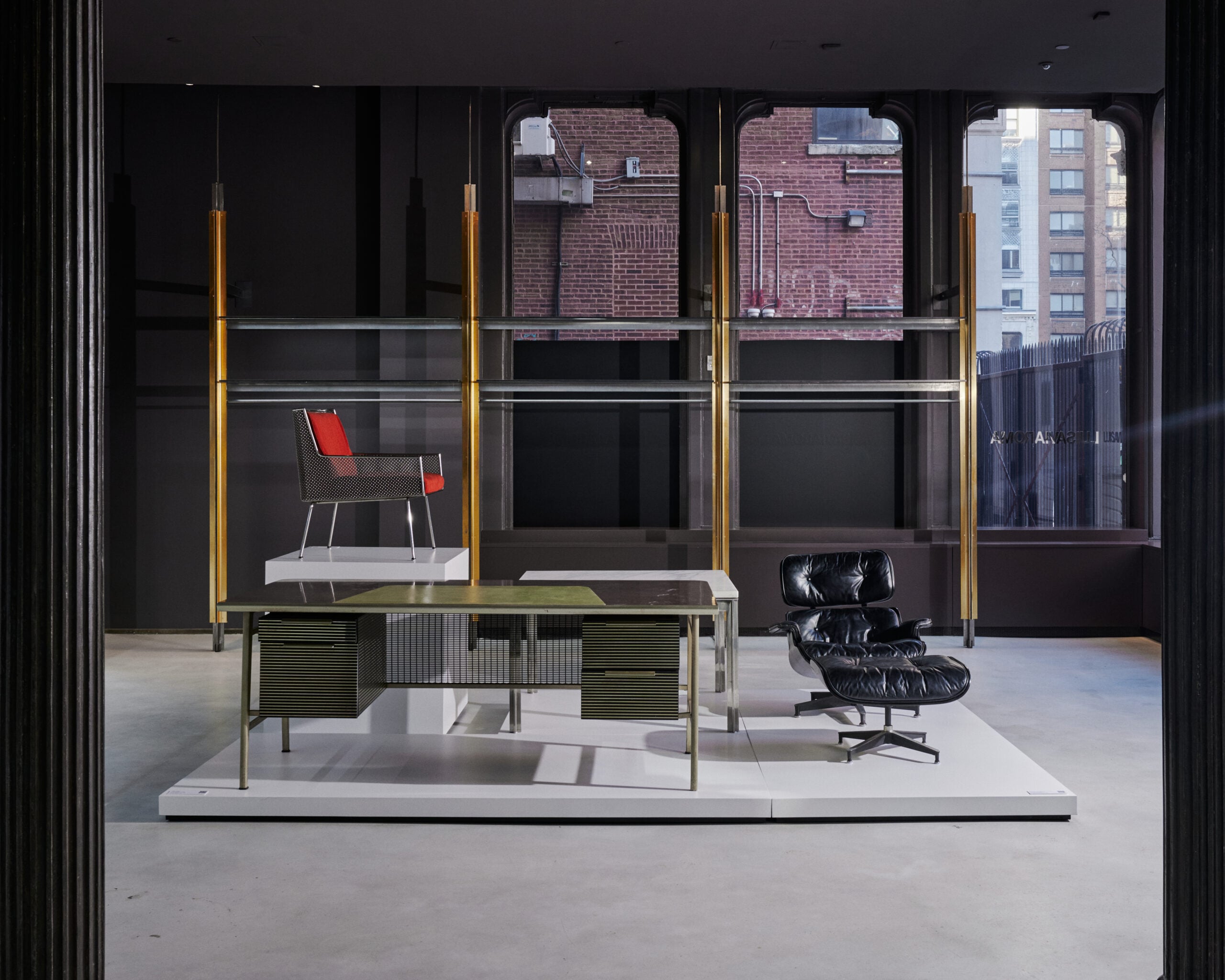
With Hidden Furniture Masterpieces, Skidmore, Owings & Merrill is finally repositioned not only as a producer of landmark buildings, but as a quiet author of one of the most consequential—and overlooked—furniture legacies in American modernism. Presented by Rarify, the exhibition reframes SOM’s interiors and furnishings as a parallel design lineage to the canonical narratives dominated by Herman Miller and Knoll. What emerges is a body of work shaped by architects such as Gordon Bunshaft and his collaborators, where furniture was not an accessory but infrastructure—integral to how postwar corporate America looked, moved, and projected power.
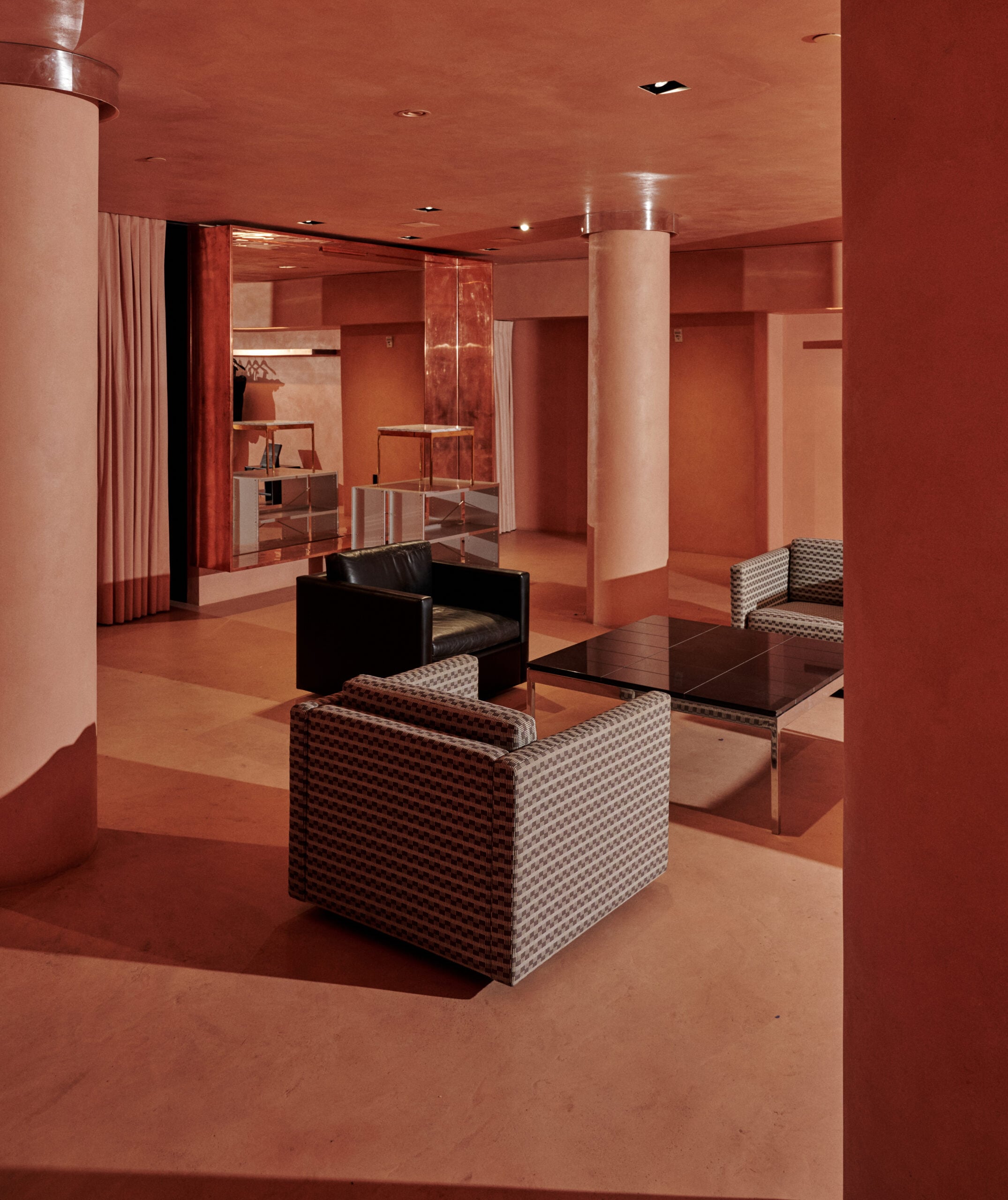
Spanning four decades of bespoke production, the exhibition reveals how SOM’s philosophy of total design produced a distinctly American modernism: rigorous yet luxurious, industrial yet deeply material. Archival photography by Ezra Stoller and rare objects anchor the furniture within a broader cultural and architectural context, while the installation at LuisaViaRoma New York underscores the relevance of these works today. As David Rosenwasser reminds us, “These are not prototypes or side projects; there are thousands of meticulously designed, project-specific works that defined how modern corporations looked, felt, and functioned.” Seen together for the first time, the furniture positions SOM alongside—and in conversation with—the titans of American design history. — Francisco Brown
Would you like to comment on this article? Send your thoughts to: [email protected]
Latest

Viewpoints
Detroit Month of Design: A City’s Work in Progress
Now in its 16th year, the celebration offers insights into the Motor City’s ongoing accomplishments without glossing over its hurdles.
Projects
How a Hybrid Building Helped an Historic Manhattan Congregation Remain in Place
On Billionaire’s Row, FX Collaborative designed a new home for Calvary Baptist Church combined with an office tower.