



March 19, 2026
In Collaboration with Teknion, SOM Reissues Designs from Its Archive
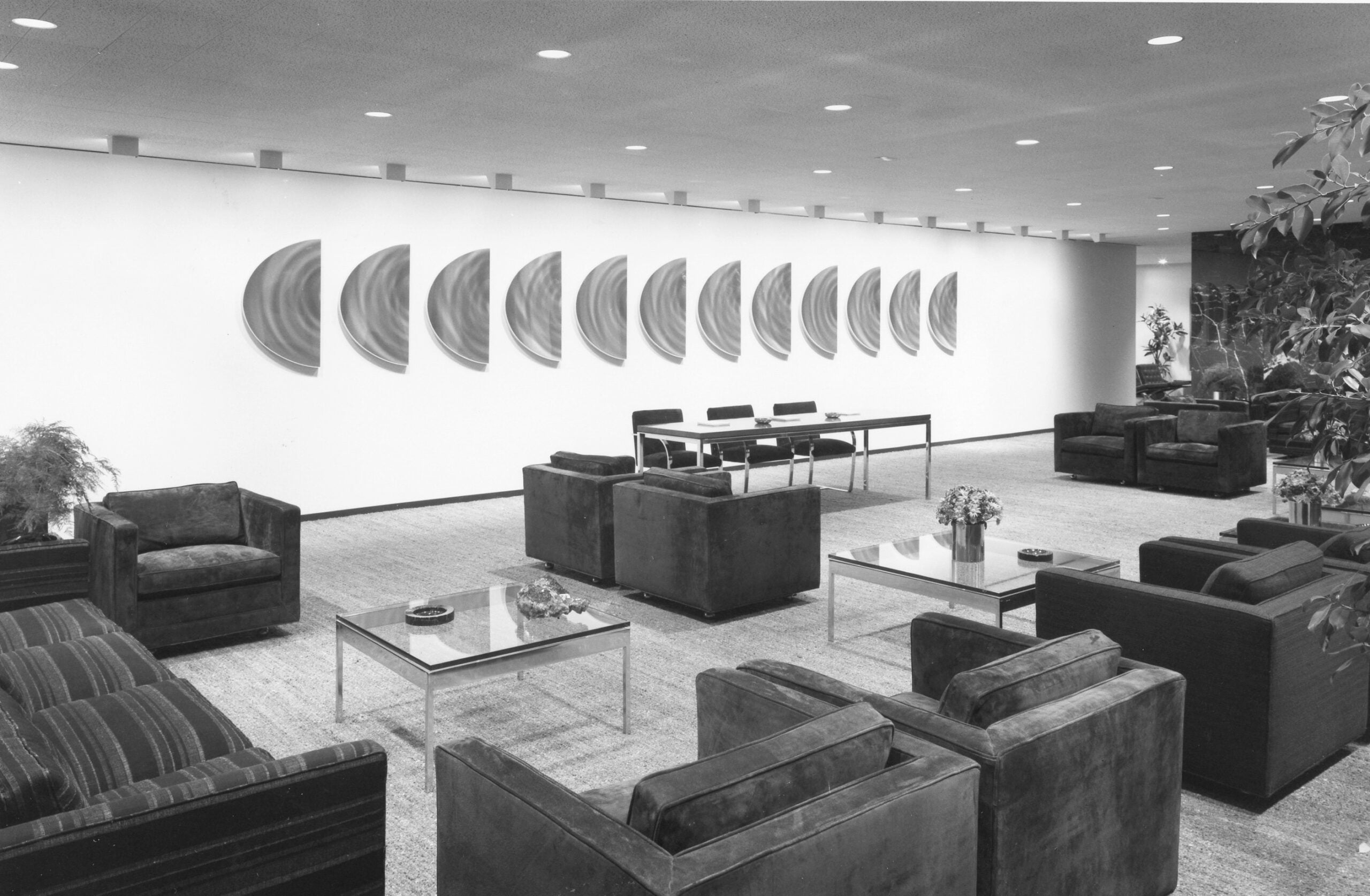
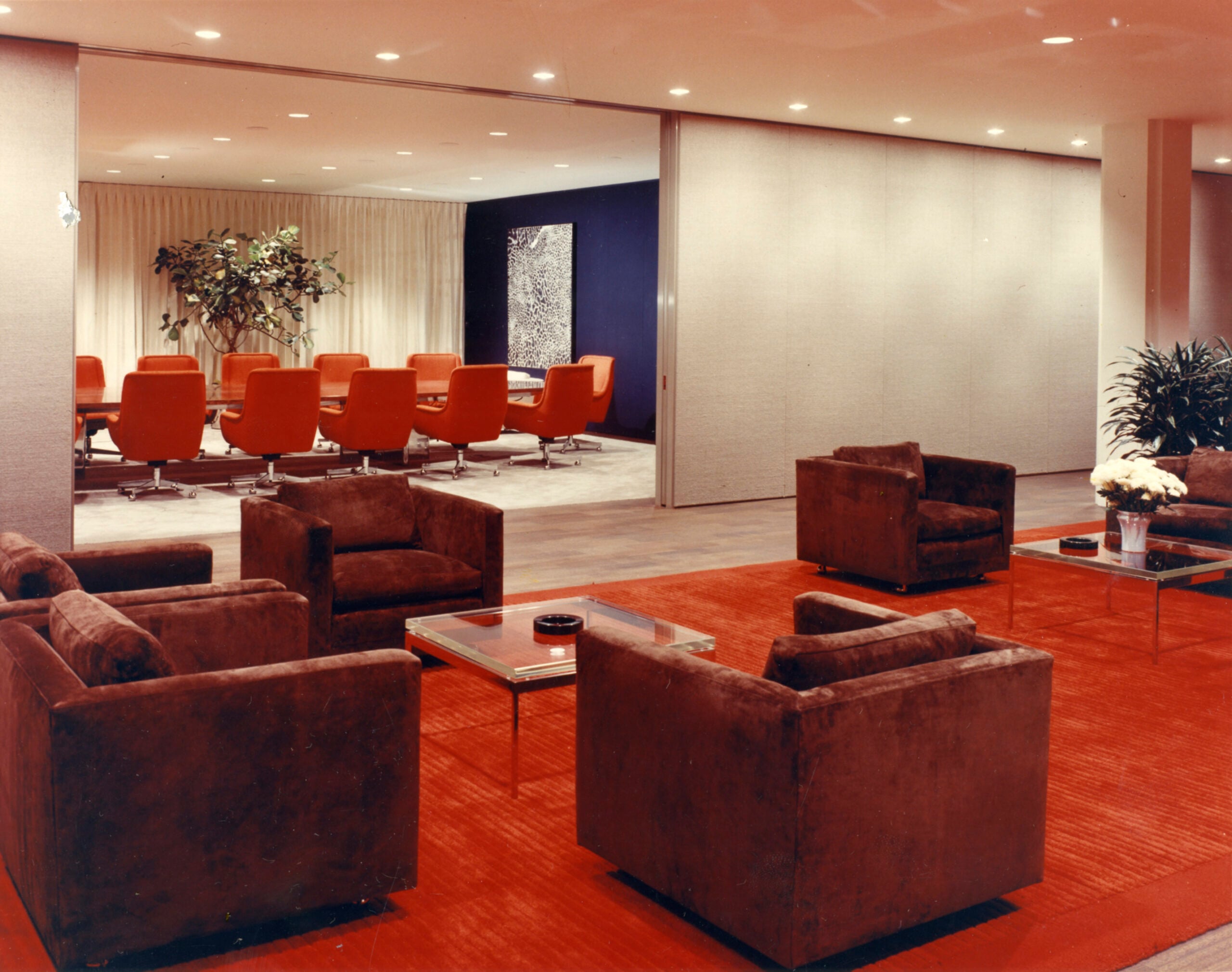
For decades, Skidmore, Owings & Merrill (SOM) designed furniture alongside its buildings—pieces created to support the evolving landscape of modern offices and corporate campuses. Much of that work lived quietly inside the firm’s projects, rarely entering broader production. But a recent look through the firm’s archives—sparked by the discovery of long-overlooked furniture drawings in the firm’s New York office—revealed a trove of designs that still feel remarkably relevant today. Rendering the furniture in contemporary interiors, the firm set out to revive and produce select pieces.
Much has changed since the designs first saw daylight—from an evolved understanding of ergonomics to a greater awareness of the impact of furniture manufacturing on climate and health. “That doesn’t necessarily mean changing their form,” says Chris Cooper, partner at SOM, “but recognizing that manufacturing processes have changed, that seat sizes have changed, that the use of certain resources has changed.”
And it’s exactly that mindset that drew SOM to Teknion as a manufacturing partner. This spring, the fruits of that labor will be revealed with the release of Teknion’s new Ikon collection. “Ikon isn’t about revival for nostalgia’s sake,” says David Feldberg, Teknion’s president and CEO. “There’s something deeply meaningful about helping great work find a second life and relevance today.”
Here, explore a selection of the designs being reintroduced as part of the Ikon collection.
Products
From Skyscrapers to Chairs: Rewriting SOM’s American Design Legacy
An exhibition by Rarify reframes SOM’s philosophy of total design by reassessing decades of forgotten furniture and interiors.
SOM 79 Chair
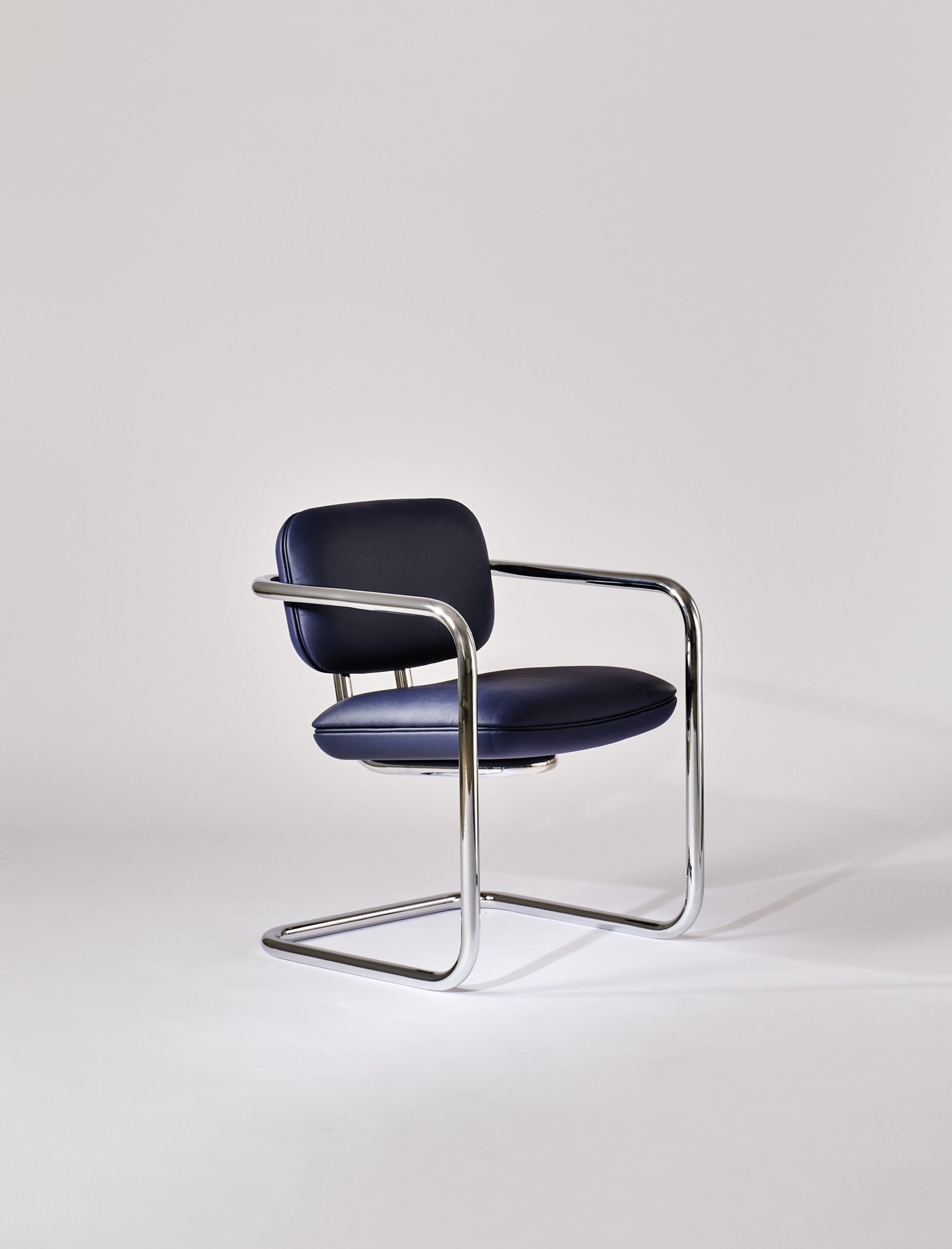
The SOM 79 Chair was shaped by the sensibility of the high priest of 1970s luxury himself: Halston. Designed by SOM’s Charles Pfister in 1979 for Halston’s Olympic Tower studio, the cantilevered chair appeared throughout the fashion designer’s Fifth Avenue headquarters as dining and desk seating. Pfister conceived the piece around a chromed, tubular steel frame, endowing it with structural clarity and high-gloss appeal.
For Teknion and SOM, a successful revival hinged on whether the chrome could meet current standards, as hexavalent chrome—the technique used in the original design—has since been revealed to be carcinogenic. “It was do-or-die for the product,” says Steve Delfino, Teknion’s vice president of corporate marketing and product management. After extensive research, the team landed on trivalent chrome plating, which delivers the same reflectivity and durability while meeting today’s environmental and safety requirements.
SOM worked closely with the manufacturer to preserve Pfister’s original proportions. “They have done a wonderful job keeping the design integrity of every single detail,” says Delfino. The result? A 1970s icon ready to meet the moment.
SOM 79 Table
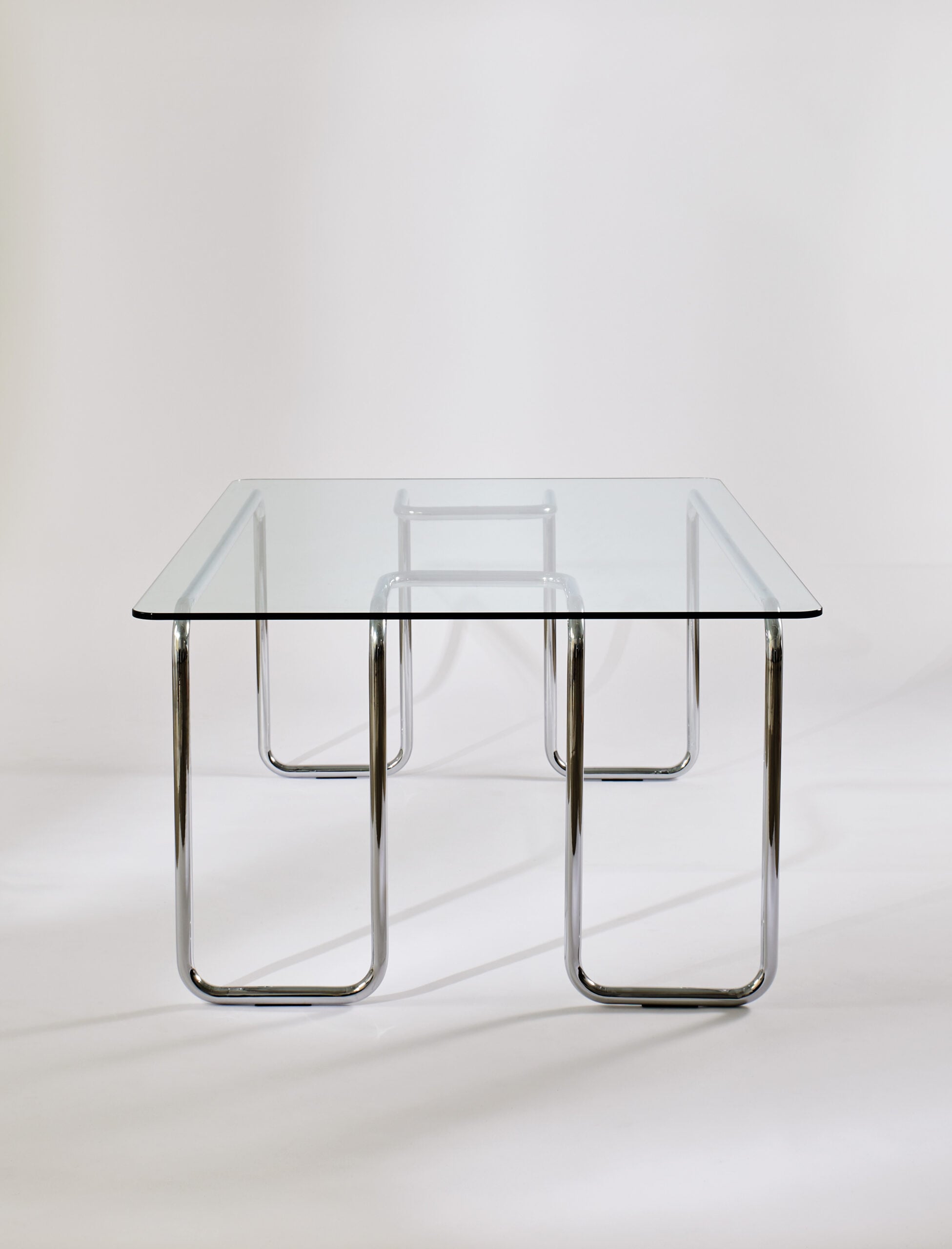
The SOM 79 table collection grew out of a gap in the original Halston furniture lineup. More directly: “It didn’t exist,” says Delfino. “We had to work with SOM to envision what it would have been.” Both companies agreed that the goal was to reimagine, not replicate.
Working from Pfister’s original chair, Teknion and SOM carried forward the same tubular steel proportions, curves, and chrome finish, sculpting them into a dining table and ancillary options—specifically, coffee and side tables. Cacioppe points out that this approach moves the line toward a family of products that reflects how spaces are designed now, with clients seeking environments that are “less corporate, less cold, and warmer, with more personality.”
Topped in 12-millimeter glass, the dining table “feels very luxurious,” says Magnus Aspegren, Teknion’s chief creative officer, who notes its generous proportions. Free of unnecessary decoration, the chrome frame and refined geometry do the work, reflecting an evolved expression of Pfister’s original.
SOM 79 Collection
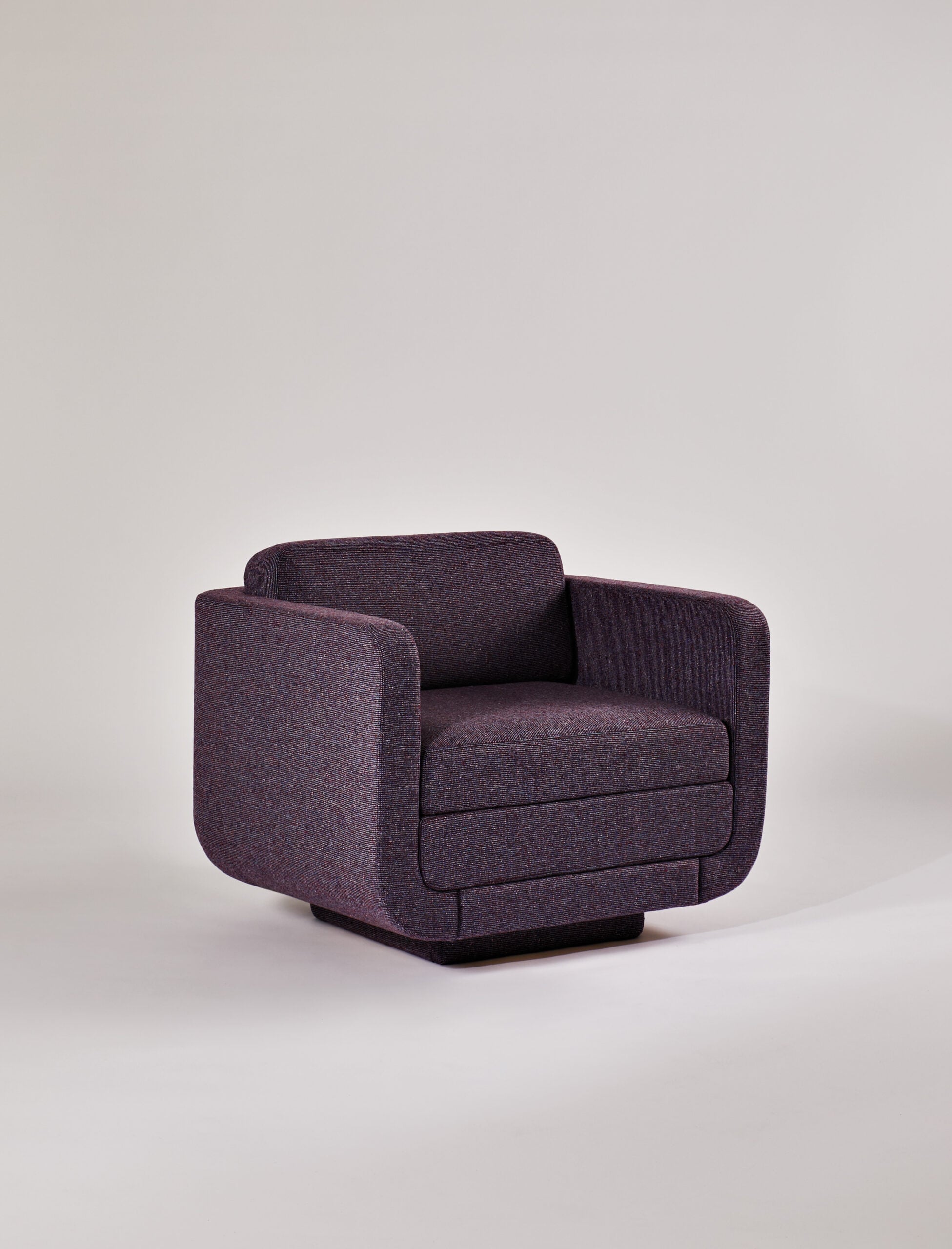
The SOM 76 collection draws from IBM’s design ethos, summed up by Thomas J. Watson Jr.’s famous line: “Good design is good business.” Developed in the context of SOM’s work for IBM, the design felt strikingly current when Teknion and SOM began evaluating it. “It was already remarkably relevant,” says Delfino.
The partners made microtweaks to the original for a better fit with today’s ergonomic standards. “Our improvements to comfort were very subtle,” Delfino notes, including a slight increase in scale and a return swivel for the chair. Sustainability is built into the fully upholstered design through repairable cushions, recyclable materials, and fabrics and foams that already meet Teknion’s high environmental benchmarks.
As Feldberg frames it, Ikon is “for anyone who loves design, values the legacy of great work and great designers, and wants to keep these designs alive.” The SOM 76 collection does all of that, translating IBM’s mantra into timeless furniture pieces calibrated to how people live and work now.
Would you like to comment on this article? Send your thoughts to: [email protected]
Latest

Viewpoints
Detroit Month of Design: A City’s Work in Progress
Now in its 16th year, the celebration offers insights into the Motor City’s ongoing accomplishments without glossing over its hurdles.
Projects
How a Hybrid Building Helped an Historic Manhattan Congregation Remain in Place
On Billionaire’s Row, FX Collaborative designed a new home for Calvary Baptist Church combined with an office tower.