


October 20, 2026
Common Object Studio Is Humanizing Concrete
Established in 2021, Common Object Studio (COS), based in Baltimore and Grand Rapids, Michigan, coheres the industrial and environmental design know-how of Fernando Ramirez and the engineering expertise of Justin Beitzel. Through an established portfolio of material explorations and furnishings, the duo has taken the oft-ascetic field of sustainability to task, treating circular design practices not just as a means of reducing waste but as a way to facilitate human experience.
“We can have a greater impact by engaging in the design process earlier, considering responsible material choices, reimagining manufacturing processes, and [incorporating a] broader set of user needs in order to move ideas into products,” says Ramirez. “Aesthetics don’t have to be compromised. By embracing new materials and ways of making, circular thinking can create new opportunities for beauty, expression, and emotional connection.”
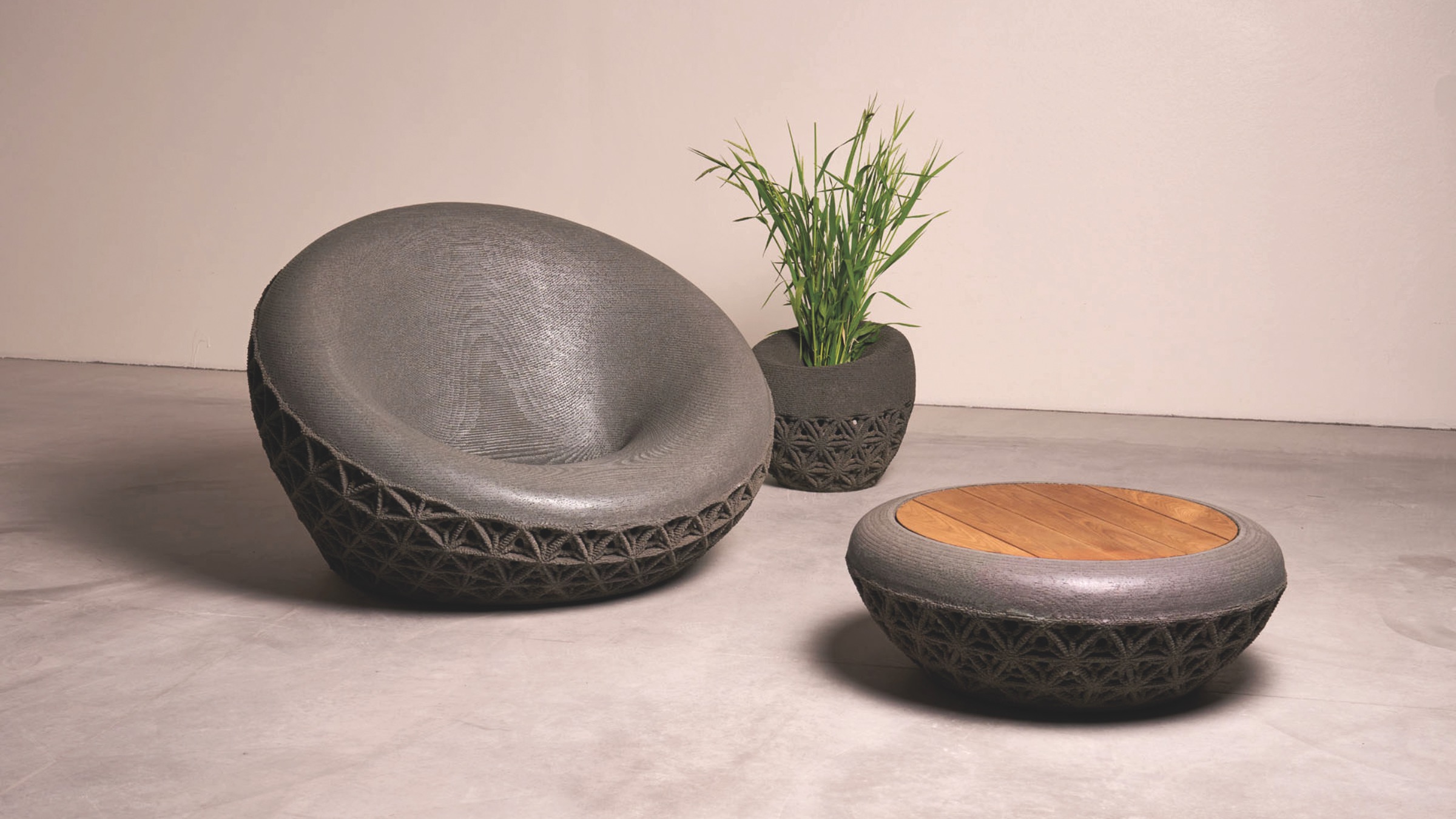
Cue Un Nido, a new seating concept the designers developed with Michigan-based advanced concrete producer Mangrove. Blending craft and additive manufacturing, Mangrove harnessed its proprietary selective paste intrusion (SPI) 3D-printing technique—using a locally sourced sand aggregate—to create a fluid, woven-form shell that challenges the common perception that concrete is always monolithic. The process leaves no material left over, resulting in a light, yet sturdy open-structure chair.
“We were also interested in challenging the common perception of concrete being cold and heavy,” Ramirez adds. The resulting form is more intricate and idiosyncratic, textured and tactile. “The project sits between digital fabrication and the human hand, demonstrating how contemporary manufacturing and craft can work together to create new meaning with familiar materials.” For him and Beitzel, the role of design is not just about problem-solving but also helping people connect with the qualities of materials, gain a more direct understanding of the processes involved, and in turn, forge a better bond with common objects.
Would you like to comment on this article? Send your thoughts to: [email protected]
Latest
Products
How MillerKnoll is Powering the Future of Design
As AI and new ways of working reshape the workplace, adaptable infrastructure is becoming essential to long-term flexibility.
Products
Momentum Partners with Interact Center to Empower Artists with Disabilities
A collaboration with the Minnesota nonprofit brings nine artists’ work to Momentum’s Digital Art Library, connecting commercial design with a broader vision of accessibility and human expression.