



May 19, 2026
Glasgow’s O’DonnellBrown Balances Conservation and Community Centered Design
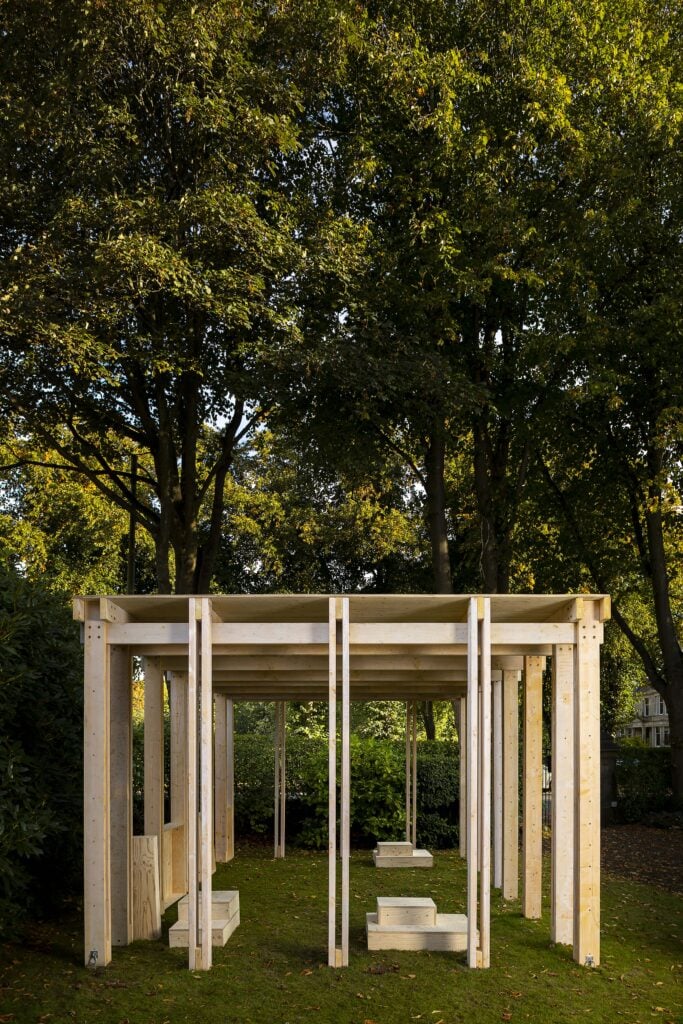
The idea behind the project was to create a prototype for low‑cost community and learning infrastructure, something repeatable, adaptable, and easy to assemble and disassemble. “There were only three lengths of timber used in the entire structure,” Brown continues. “Simplicity of structure was a major driver for the project.” The project and the research around it has led to more outdoor learning pavilion iterations, including an in-progress, off-grid learning facility for Edinburgh University in rural central Scotland.
Another notable heir to the Community Classroom typology is the Take a Bow Opportunity Centre in Kilmarnock, Glasgow, completed in 2025. Beginning in 2021, O’DonnellBrown led an intensive renovation of a poorly insulated, damp- and asbestos-ridden 1970s-era community center into a community space for a performing arts and youth development charity.
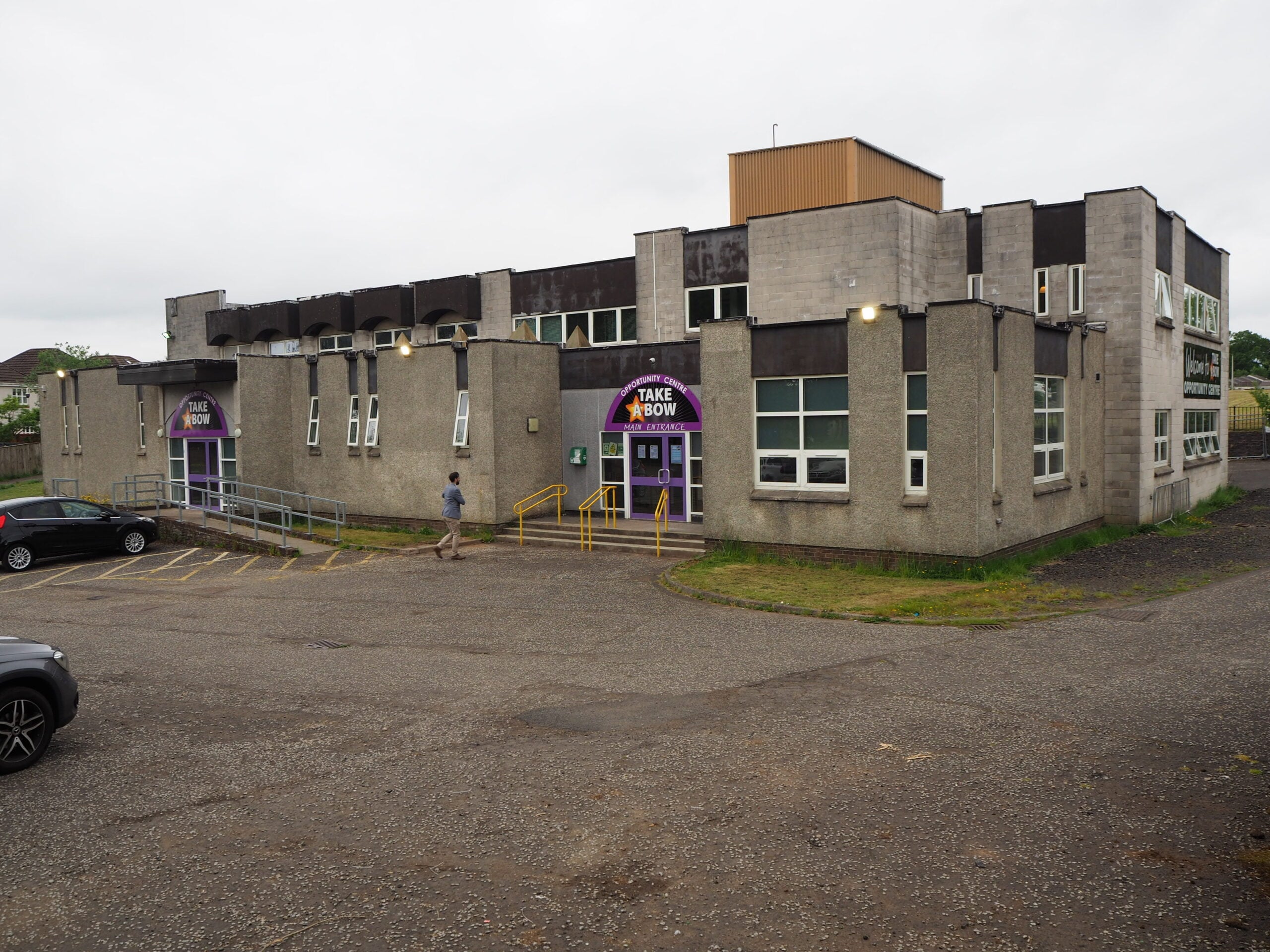
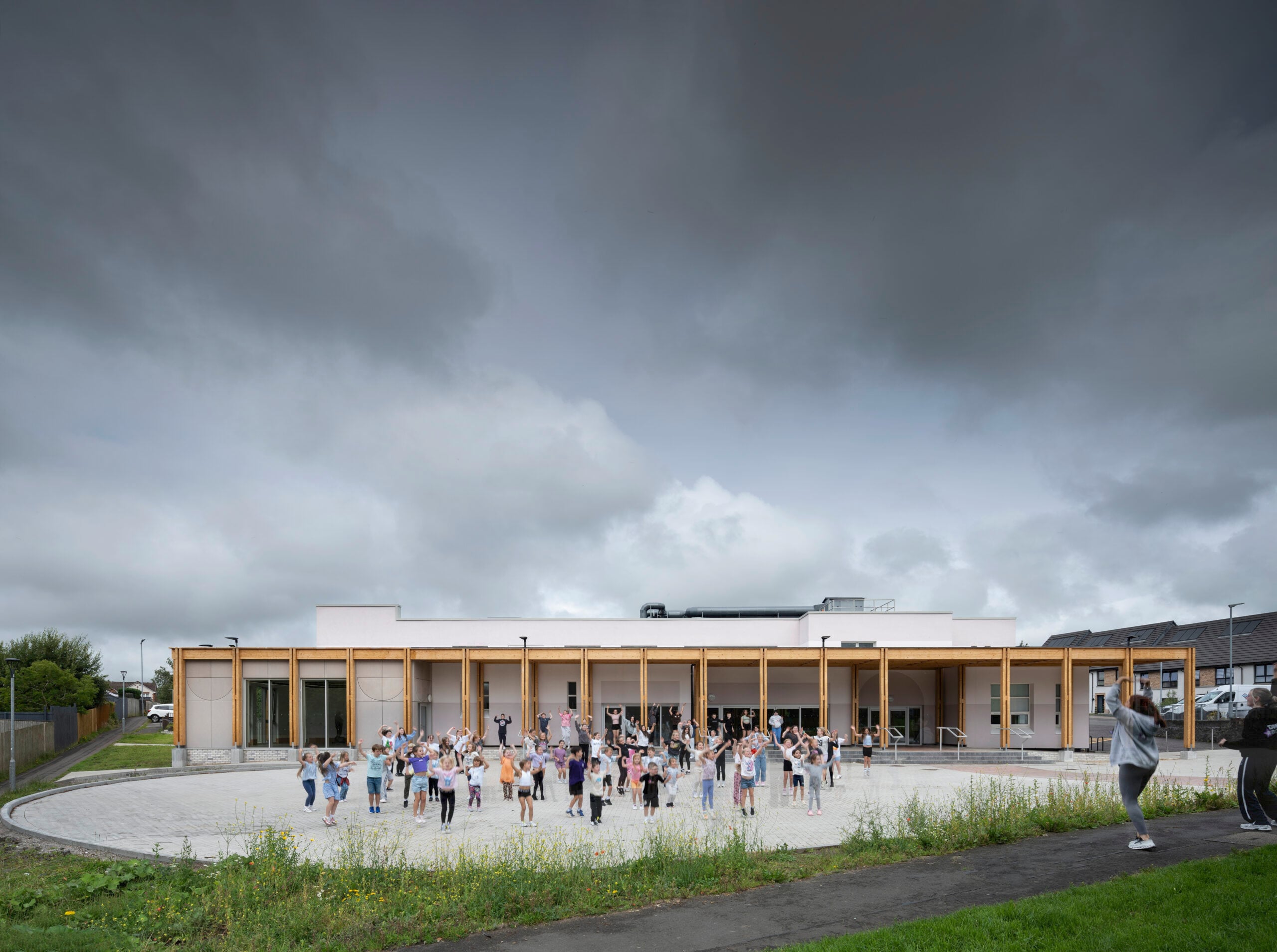
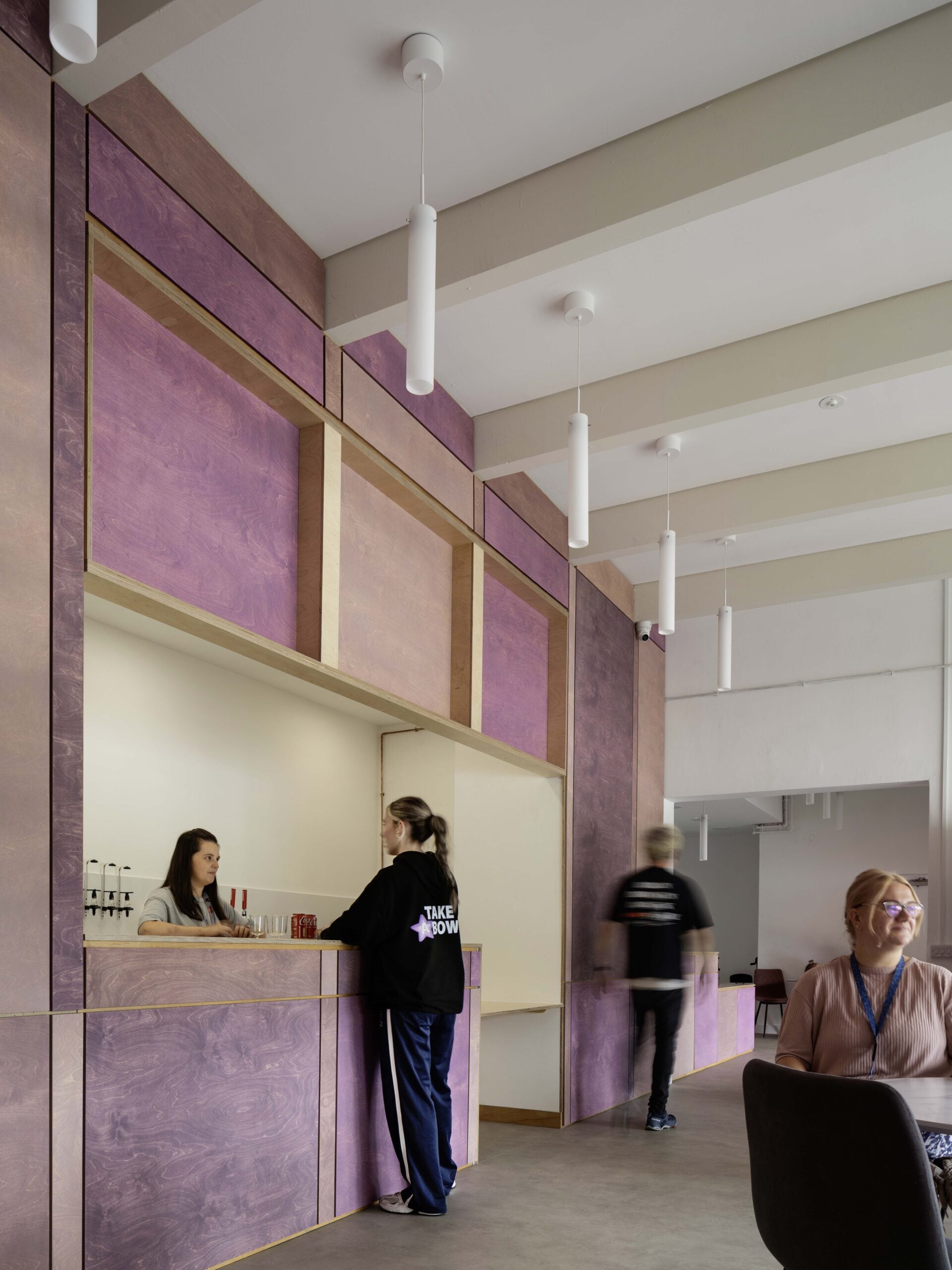
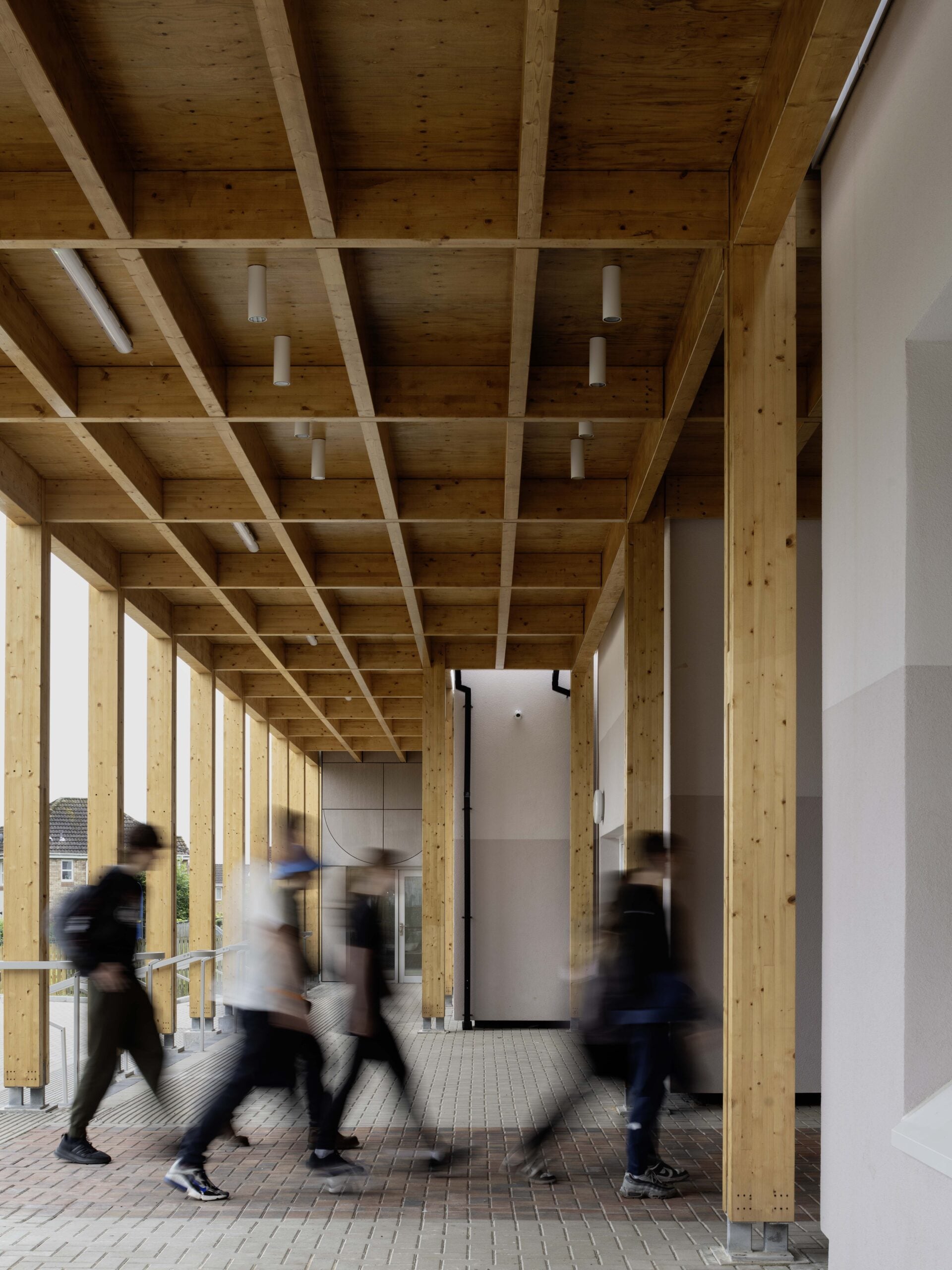
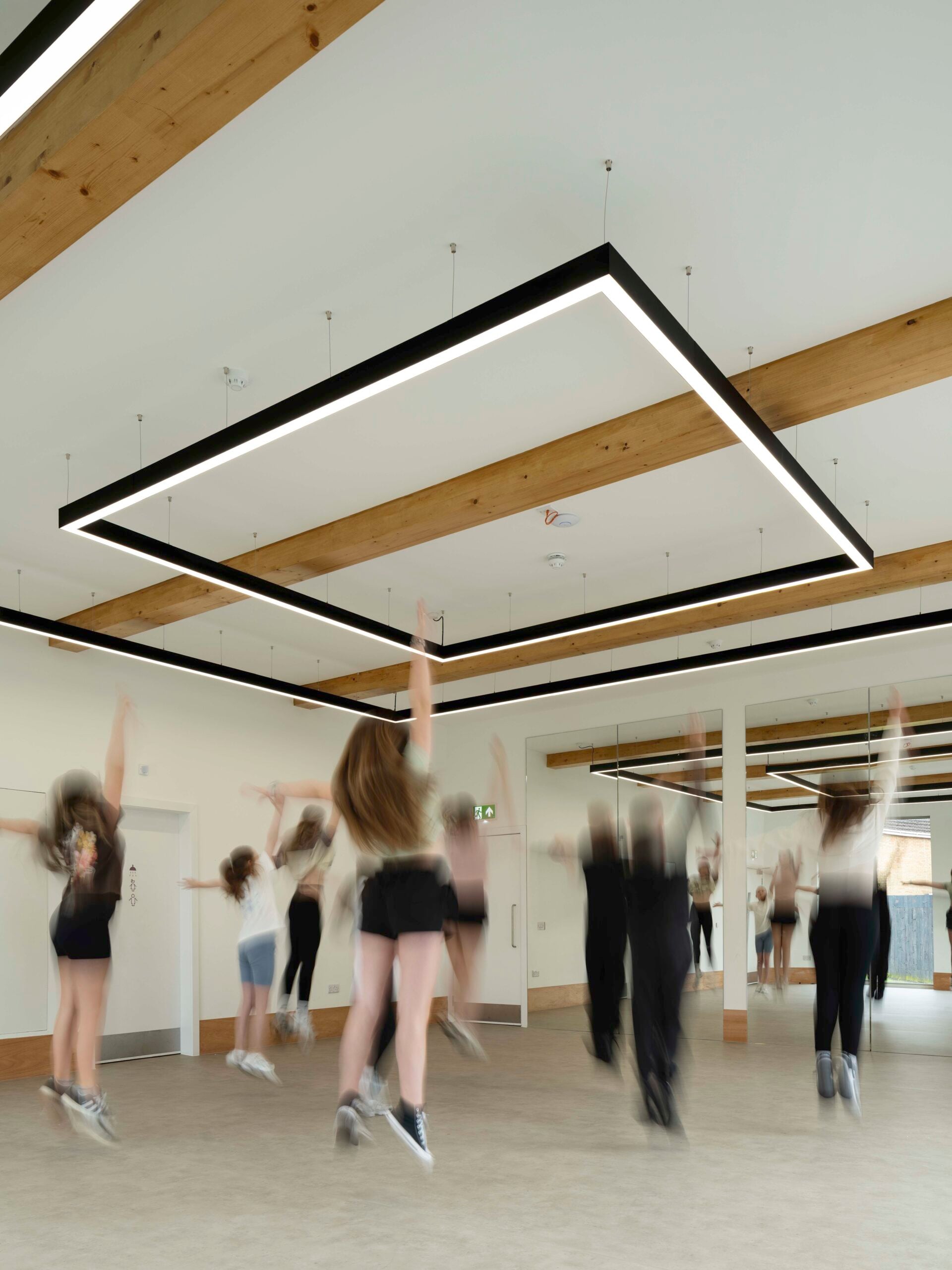
O’DonnellBrown’s retrofit proposal involved serious insulation upgrades to the walls, roof, and floor; opening up the front elevation with larger windows; moving the parking lot to the back to create a new public space that melds into the adjoining park; and adding “a modest extension on the facade” to create a proper changing area near the stage. The firm also collaborated with energy consultant Carbon Futures to develop an energy strategy that is in alignment with Take a Bow’s net-zero ambitions, reducing the building’s overall energy and carbon emissions by 70 percent.
“By adding a glulam colonnade across that elevation, we unified the new and existing parts of the building but also created an improved sense of arrival,” explains Michael Dougall, a director at O’DonnellBrown since 2022. The resulting timber canopy “provides a covered space that can be used by the adjoining cafe and for outdoor performances,” and represents a “continuation and refinement of the detailing we developed for the Community Classroom.”
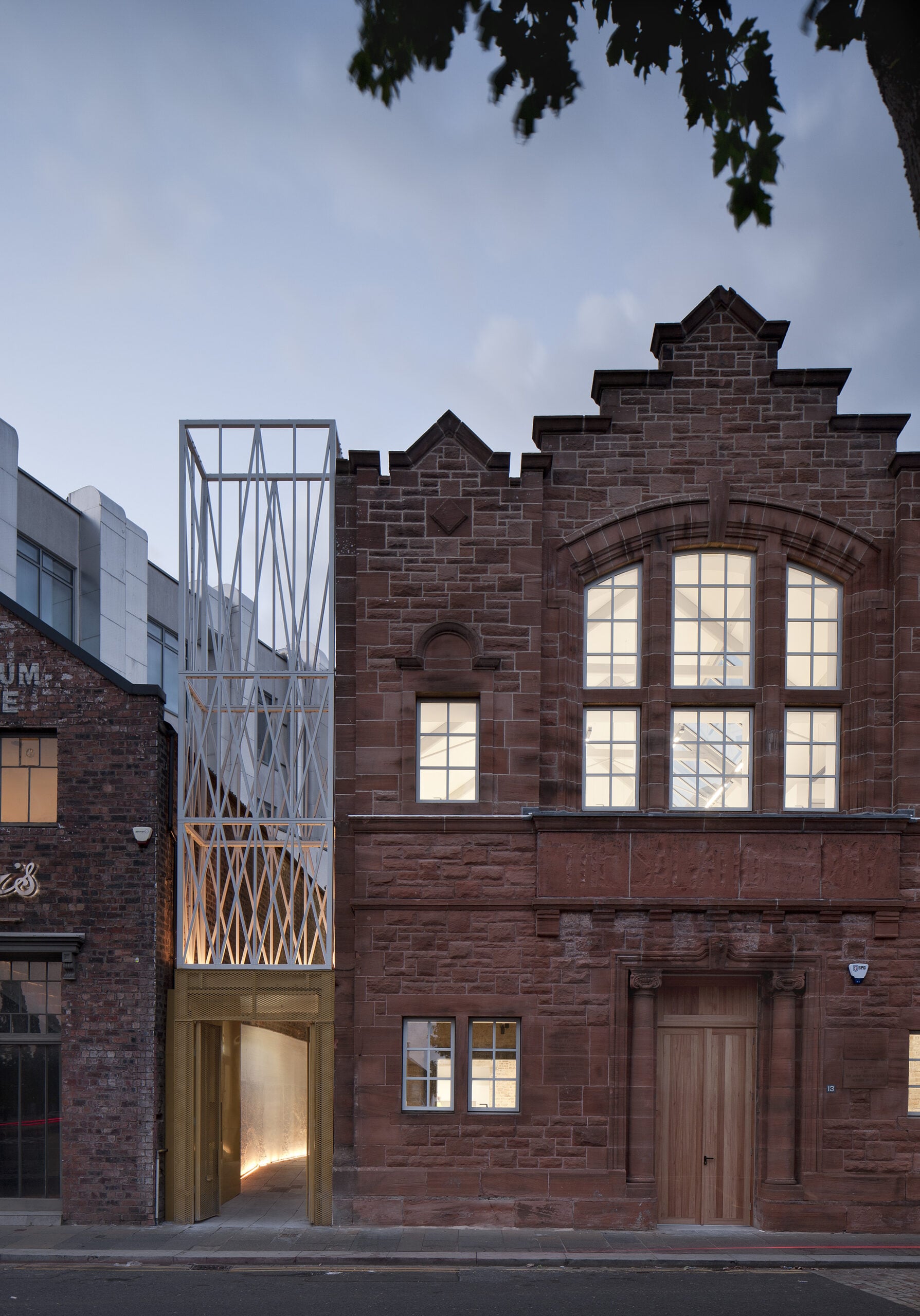
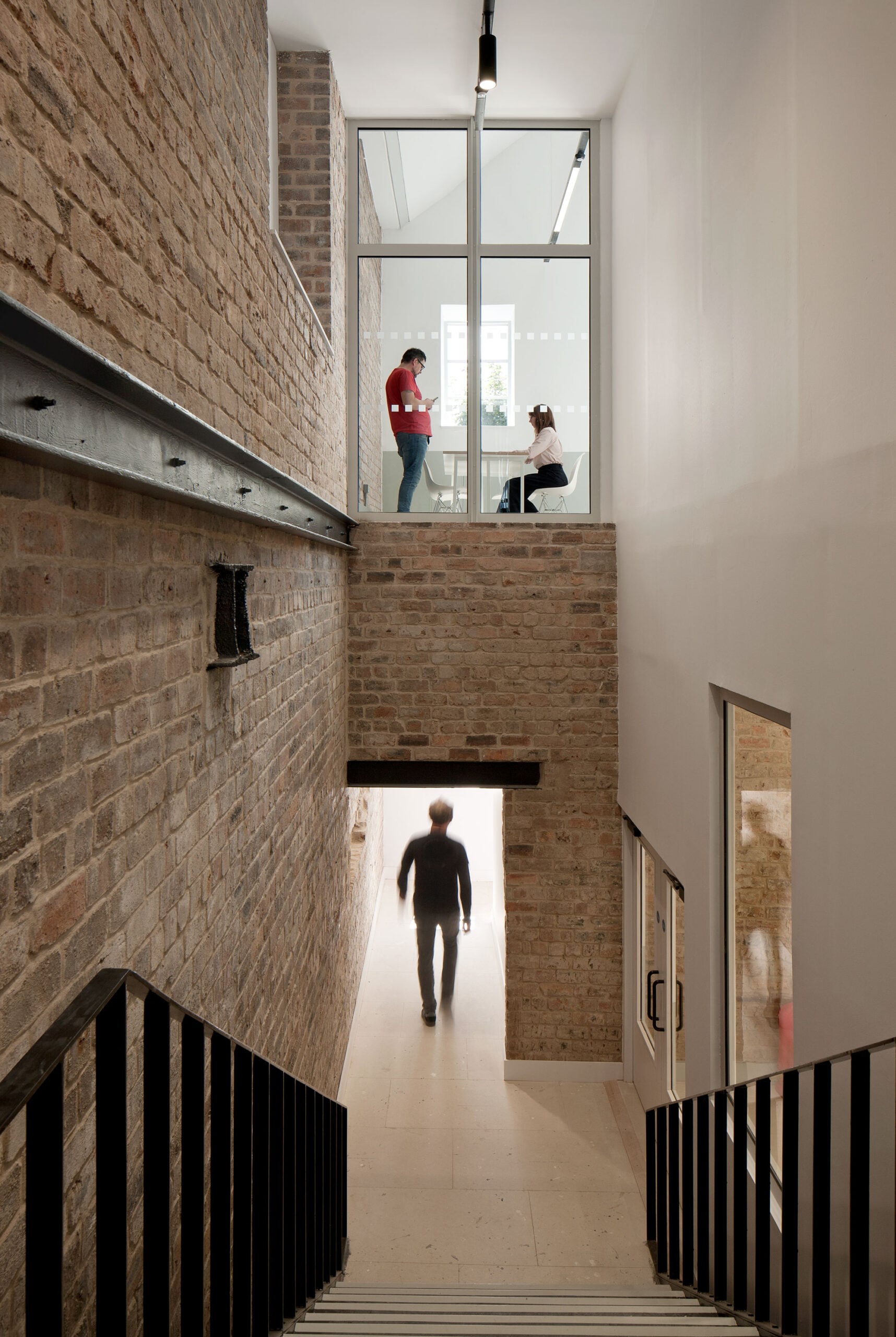
From one-off buildings to masterplans, the firm has developed a specialization in “taking often quite tricky,” vacant or historic buildings and sites across the UK and reimagining them, imbuing them with fresh purpose, functionality and, importantly, a “viable future” says Jennifer O’Donnell. “Often these are redundant public assets taken on by charitable organizations who have the drive and commitment to turn these buildings into assets that will be used by the community for years to come,” adds Dougall.
He is referring to the Take a Bow project but also the recently completed Millport Town Hall on the Island of Cumbrae, located a scenic one-hour drive and 8-minute ferry ride from Glasgow. What started as feasibility study back in 2018 became a six-year labor of love for both architect and client, the latter, a passionate group of locals who made over 140 funding applications in order to complete the project (and won a staggering 50 percent of them.) The project now houses a large hall for ticketed performances, several smaller spaces that can be used by local clubs and charities and, perhaps most importantly, three apartments that will be rented out for short-term stays as a way of providing a steady income stream to help cover the venue’s running costs.
Back in Glasgow, the firm continues its work in dynamic adaptive reuse projects. In New Olympia House, a 2023 office retrofit of a 1927 former Salvation Army Citadel, the architects employed an extensive “defurb” strategy that improved the building’s energy efficiency, provided an accessible entrance, and freed up the maximum amount of flexible floor space while also exposing brickwork, roof trusses, and existing timber linings. The studio is also in the process of converting the ornate, landmarked 1870s Pipe Factory in the city’s East End, into office and educational spaces for a local arts organization.
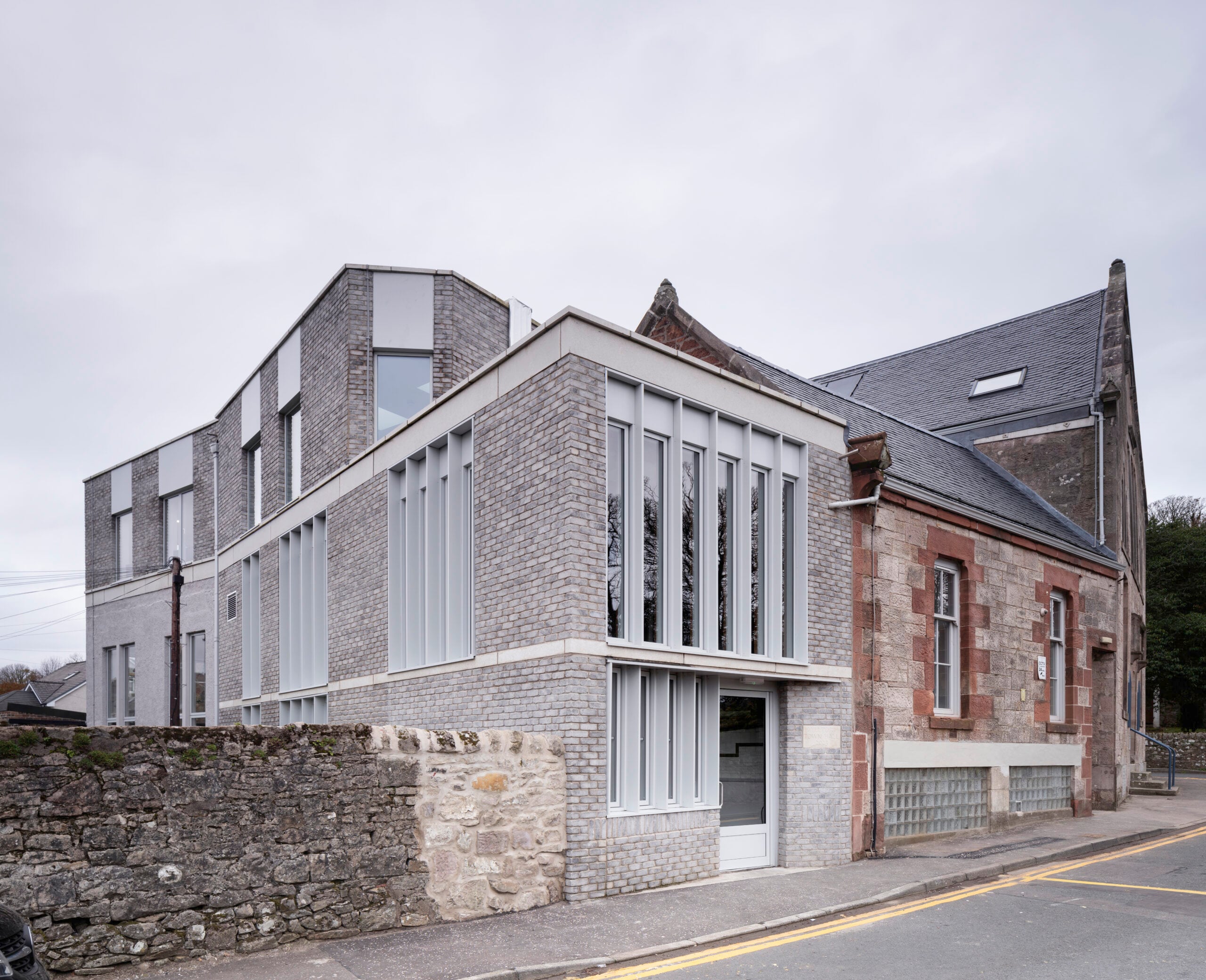
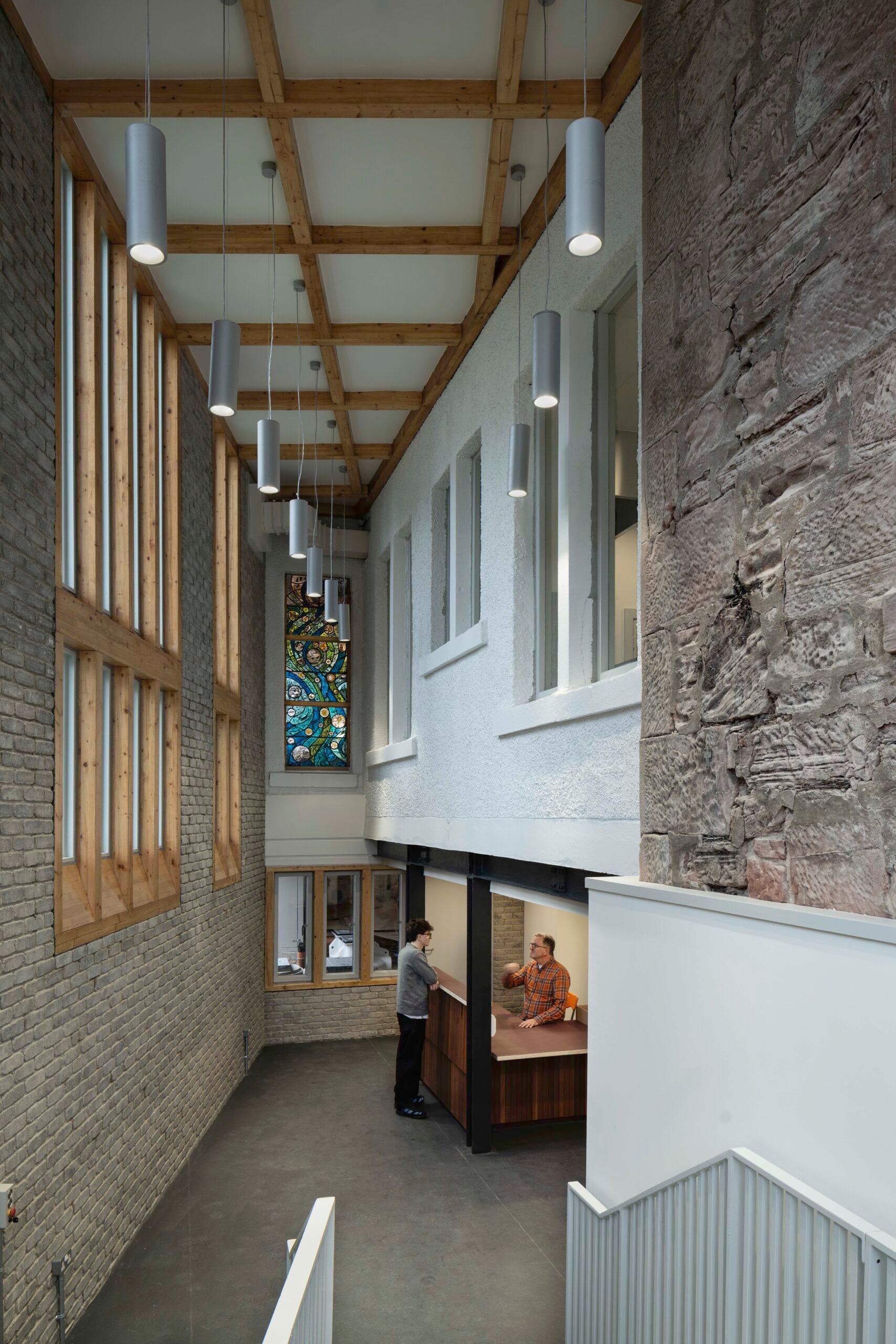
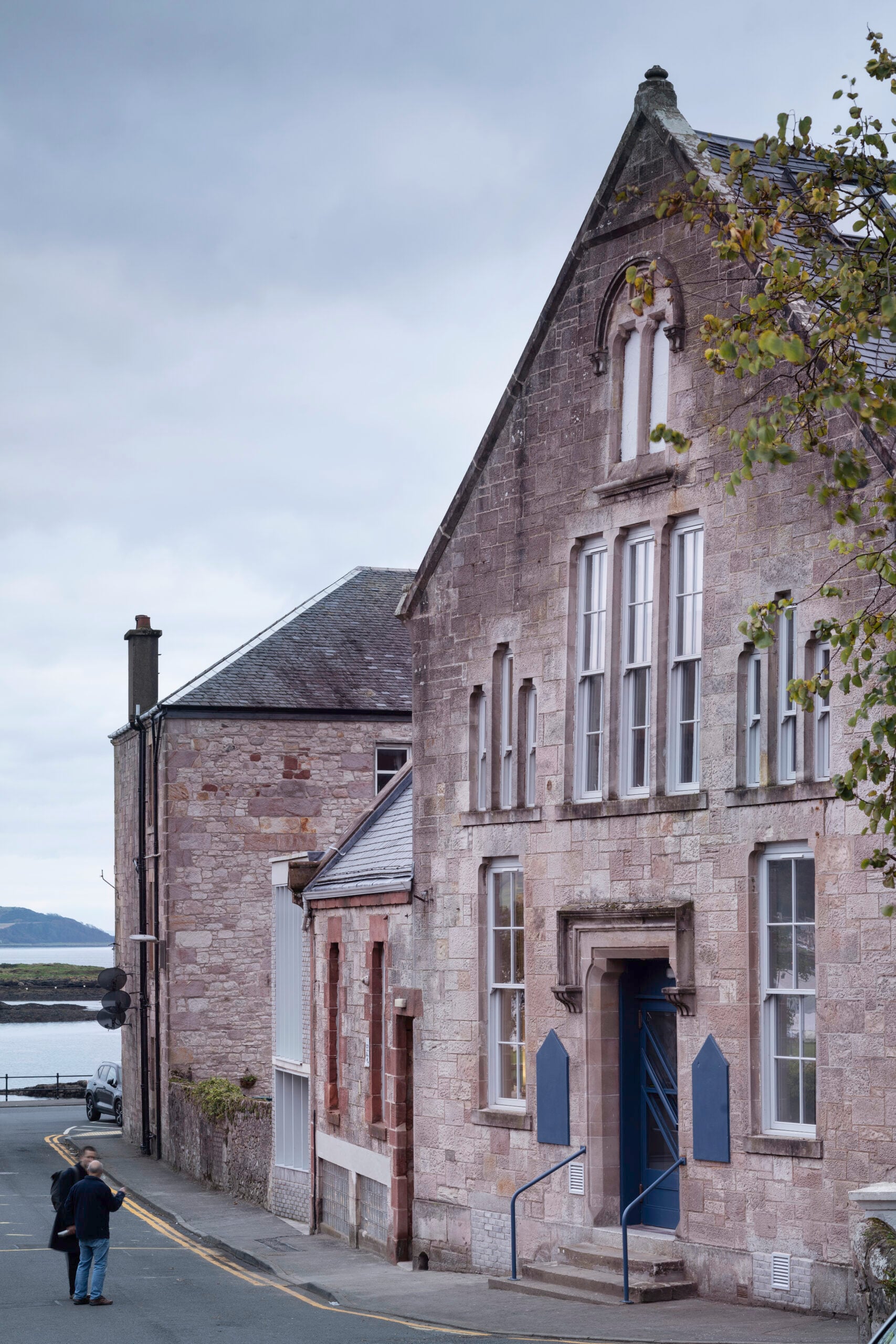
“There’s often this tension between balancing a conservation approach with much needed energy improvements,” says O’Donnell who is currently working towards becoming a conservation accredited architect. For the practice, conservation and retrofitting aren’t separate specialties, she says, since the same principles of understanding the significance of site and structure, such as repairing before replacing, retaining embodied carbon and designing for reversibility, are the same. “Taking a conservation approach to projects should be the default approach, encouraging us to look more closely, intervene minimally, and make long-term decisions that respect heritage and sustainability.”
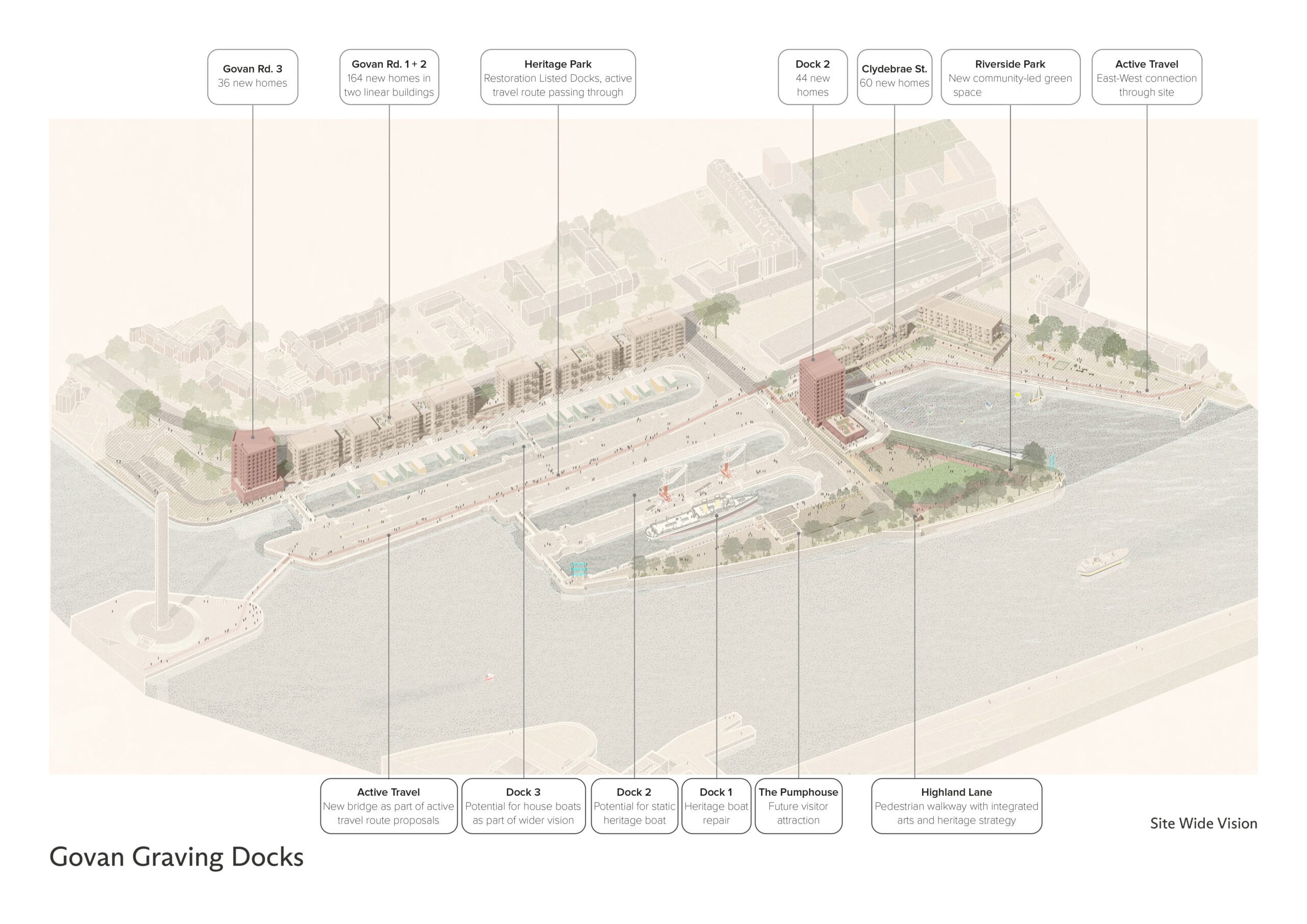
Before I leave, the architects take me to see their progress on the Govan Graving Docks site on the south side of Glasgow. A 22-acre historic shipbuilding site that has been vacant since the late 80s, it is slowly being transformed to include a new riverside park, 304 homes along its southern perimeter, a waterside trail, and historic ship repair facilities in one of the former dry docks. At least two previous planning applications post-2000 had failed (one, somewhat shockingly, “included infilling the docks as parking silos” says O’Donnell), so when the practice started working on the masterplan for Govan Graving Docks back in 2020, it spent almost three years having conversations and running workshops with over 20 local organizations and various government and city institutions to understand what they really wanted. “Like many of the projects we work on it’s been about that intersection of relationships that enables something to gain traction,” says O’Donnell. “We thrive in that space where we have to unstick things to move forward.”
Would you like to comment on this article? Send your thoughts to: [email protected]
Latest
Viewpoints
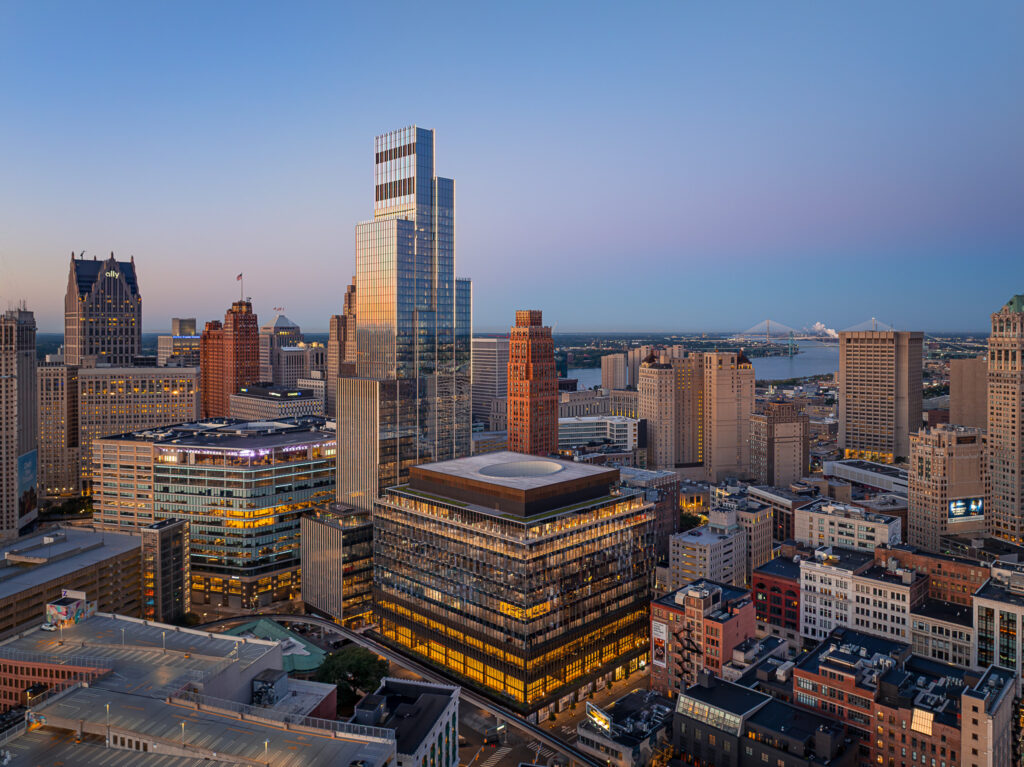
Detroit Month of Design: A City’s Work in Progress
Now in its 16th year, the celebration offers insights into the Motor City’s ongoing accomplishments without glossing over its hurdles.
Projects
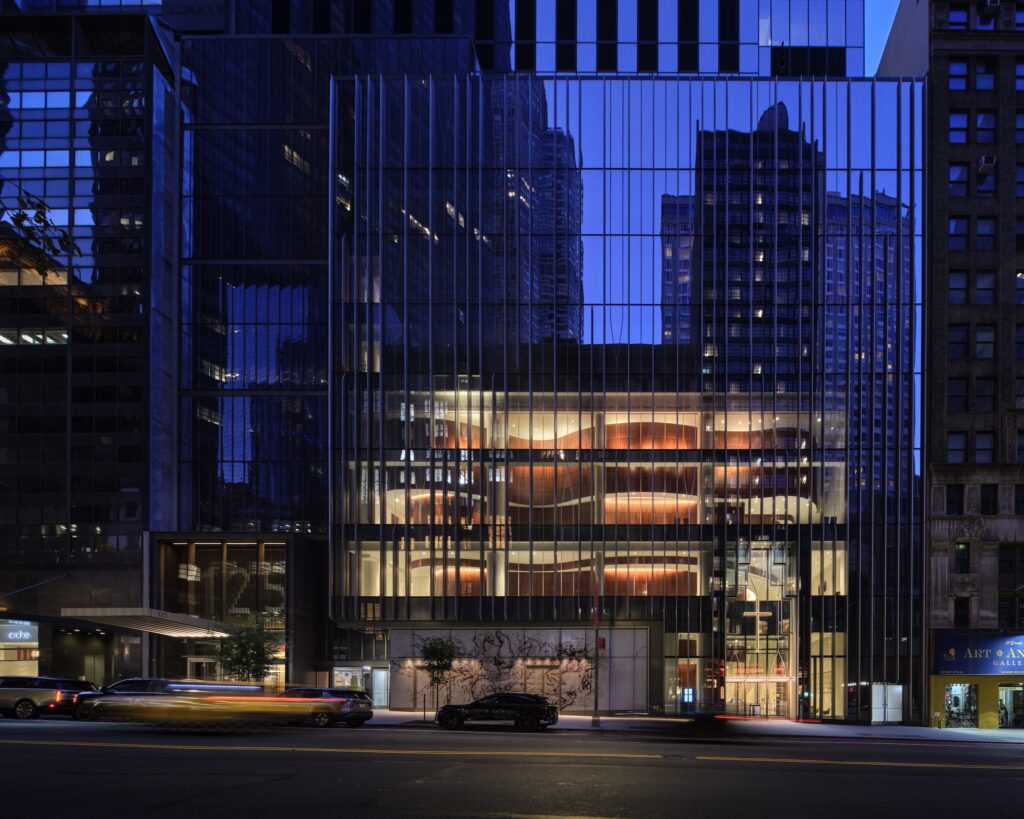
How a Hybrid Building Helped an Historic Manhattan Congregation Remain in Place
On Billionaire’s Row, FX Collaborative designed a new home for Calvary Baptist Church combined with an office tower.