


November 9, 2026
Toni L. Griffin Is Reimagining What a Just City Can Be
If you’ve lived in an American city at any point over the past three decades, you’ve likely had a front-row seat to the ever-shifting portrayal of cities in national news coverage. Cities seem to exist in a Schrödinger’s cat-like reality: depending on the viewer, they are places to fear and avoid, or cultural and creative magnets. These are false binaries, of course, but a true picture of American cities requires looking past current site conditions and into the past, the invisible element with some of the biggest design implications for our cities today.
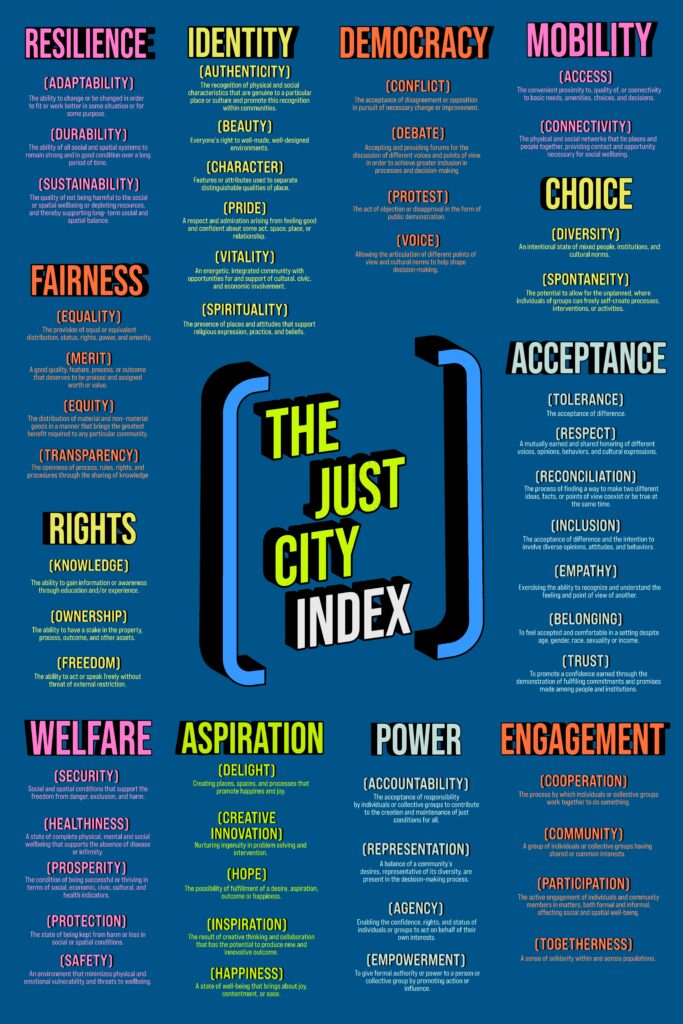
The patchwork quilt that defines today’s American cities- the past planning and policy decisions stitched together with current priorities and urban issues- has been a recurring focus of Toni L. Griffin’s work as a planner, designer, architect, and researcher. Through the Just City Lab at Harvard’s Graduate School of Design, she developed the Just City Index, a 50-value vocabulary that helps communities define what justice looks like in their own place. Through her firm, urbanAC, she has applied that thinking to reparative planning projects from Detroit to Pittsburgh to Chicago. Her work was recently recognized with the 2026 ULI Prize for Visionaries in Urban Development, which the Urban Land Institute calls the most prestigious honor in the land use and development community. The prize celebrates her decades of leadership in equity-centered planning and design and her ability to turn ideals of justice into practical tools and development outcomes for cities.
In this edited conversation, Daphne Lundi speaks with Griffin about how her path from architecture to urban planning shaped her theory of reparative, justice-centered practice, how the Just City Index was built to adapt as cities face new crises, and how she uses collage as a narrative tool to highlight histories that urban planning often leaves out.
From Architecture to Reparative Urbanism: Designing Beyond the Site
I first encountered your work through Harvard GSD’s Black in Design Conference in 2016. I see that conference, and the work you developed through the Just City Lab, as an important framework for a generation of urbanists, and especially Black urbanists. You’re both a practitioner and an educator. How does one inform the other, and how has your pedagogical practice evolved?
Toni L. Griffin: Even the reference to the start of the movements and organizations like BlackSpace, and the creation of Black in Design, started by Black students at Harvard Graduate School of Design, which coincided with my first year back at Harvard, is overwhelming, humbling, and affirming. The ways we created space for these conversations to happen, and for practice to spin off from them, illustrate the intention I had for seeing this work as movement building. And the fact that it’s been ten years is a bit unreal.
I started my career as an architect and practiced for about 11 years in Chicago, where I received my license. As an architect, you’re taught to speculate and imagine futures for a site. While I was at SOM, I moved from architecture to urban design, where you learn to speculate and imagine at the urban scale. That was fantastic, because it brings in many more constituents than a single client.
When I made that pivot, from architect to urban designer to urban planner, that’s when the pedagogical shift happened for me. It was no longer only about seeing a site and imagining what it could be. It forced me to ask: Why is this context the way it is today? Whose lives did it affect before the inhabitants there today? What am I trying to repair as part of its prospect as a public space or as a building? So the foundation of what I was aiming to do as a designer gained a deeper purpose and meaning, and that’s where my aspiration to understand what reparative design work could really look like comes from.
Since launching the Just City Index, the issues cities are tackling have shifted in ways that feel different from ten years ago. COVID showed us how deeply spatial disparities shape who is protected and who is exposed. Immigration has become a defining urban issue in many cities. How has the framework, or your approach to it, evolved in the face of new and emerging urban policy issues?
TG: The Just City Lab work began in 2011, when I joined the City College of New York Spitzer School of Architecture to start the J. Max Bond Center. Max Bond was a very important role model for me. The opportunity to honor him by serving as the center’s first director was deeply meaningful to me. I named it the J. Max Bond Center on Design for the Just City because Max Bond believed that architecture was a social practice.
I was interested in setting up the center to explore design research around a central question: can design impact social and spatial justice? By this point, I had worked in four different cities, including Chicago, Newark, D.C., and New York. The problems, or underlying conditions, were the same and affected the same people, but each city’s cultural, political, and economic dynamics and histories shaped how I viewed approaches to them.
This was at a time when frameworks around sustainability, resiliency, happiness, and equity were very popular and mainstream, but to me they were static, singular, and prescriptive. This was also coming after the murder of Trayvon Martin and Michael Brown, when the reporting at the time expanded to examine urban conditions of where the events happened and the urban policies that created racialized segregation of cities, communities, and housing complexes where these young men lived and died. I then believed that speaking of justice – not equity-, or thinking about a just city was a way to create more urgency around the outcomes we wanted, but that there needed to be a far broader and more accessible vocabulary to describe our aspiration for the places we want to live in. Communities and cities needed to articulate what a justice-centered or just city would look like, because justice in Ferguson is not the same as justice in Albuquerque, Johannesburg, Bogotá, or Rotterdam.
We need fluid, adaptive, and open-ended frameworks. That investigation started at the Bond Center, and when I had the opportunity to come back to the GSD and expand that work as the Just City Lab, we published the Just City Index in 2017. It is a 50-value vocabulary that enables communities, organizations, and city leaders to craft a value proposition that more meaningfully addresses the conditions of injustice they faced at the time. It is also grounded in the historic legacy of what contributed to that harm in the first place, so design interventions can be more precise in creating more just, equitable, sustainable, beautiful, inclusive, and safe futures.
In that way, the Index is set up to adapt to changing crises, conditions, political contexts, and episodic events that cause harm or disruption because the just city values of today may not be the ones we need for the just city of the future – long term.
Through the Just City Mayoral Fellowship, you’ve worked with mayors and their staff on urban policy in cities of very different scales. What trends have you seen in mayoral leadership? What do you make of this moment, and of the communication and policy approach of this new generation of mayors and city executives?
TG: I think mayors hold the coolest elected position you could have. I love it because, one, I love cities. And two, because their ability to shape policy for a collection of communities, at both the largest scale that can affect everyone in the city and the hyper-local scale of a resident or business on a block, can be so powerful and so immediate in its agency. So I’ve always admired the community-committed people who self-select to run for these positions, because being that engaged in community means making sacrifices of your time and anonymity to lead a city forward and be neighbors in community with those you hope to lead and make life better for.
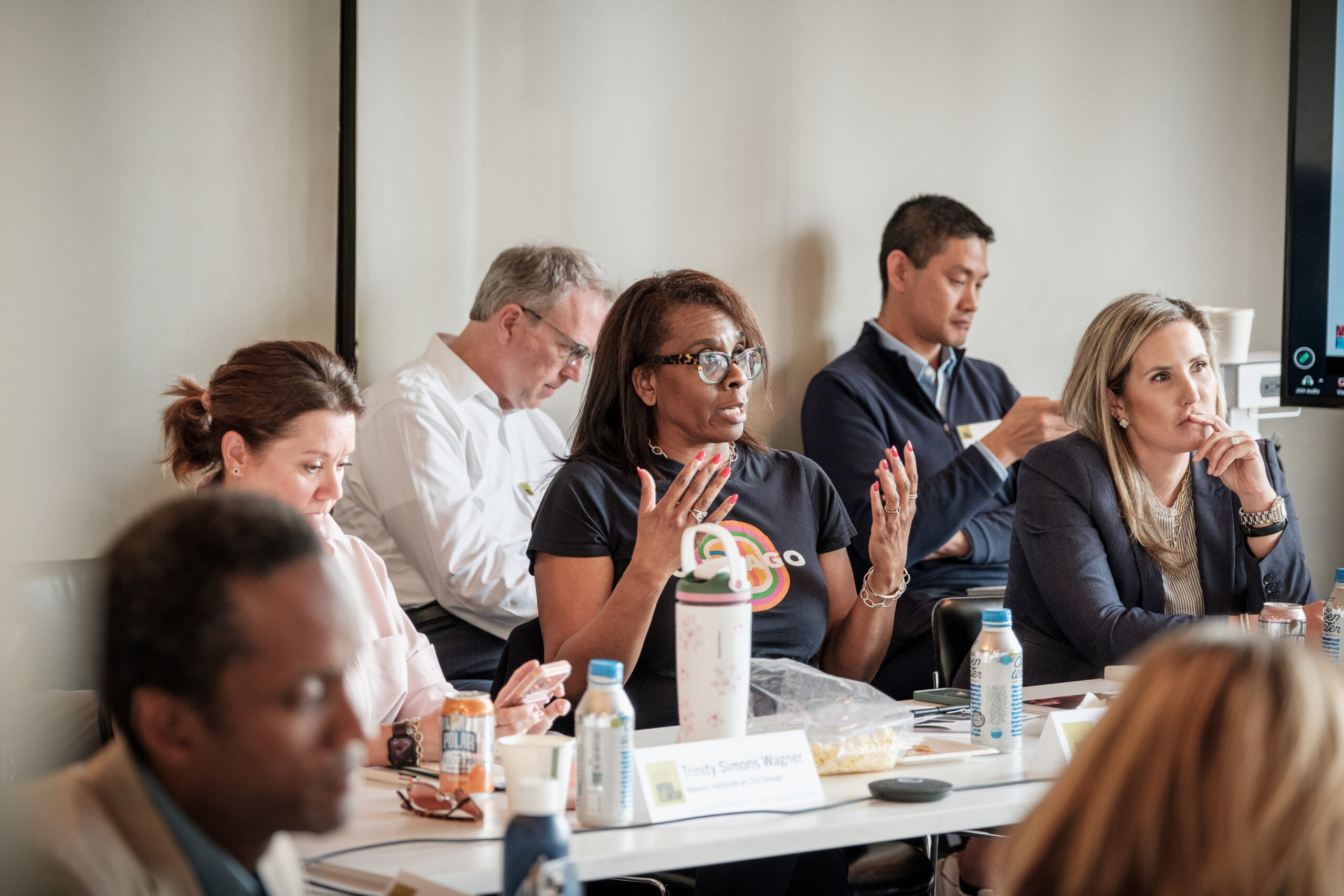
We conceived of this program during the first summer of COVID. In 2019, the Just City Lab convened the Just City Assembly, where I brought together about 40 or 45 practitioners, scholars, thinkers, and educators. The Lab had a body of work at that point, and I wanted a peer review and to be in community with like-minded colleagues, not only to reflect on what we were each doing in this space, but to be self-critical: Are we doing enough? Is it making a difference? Is it really possible to achieve a just city? We ended the Assembly with a manifesto workshop where we drafted recommendations for projects, pedagogies, policies, politics, participation. We outlined the measures we needed to deploy to deepen the effectiveness of the work. Trinity Simons Wagner, who still serves as Executive Director of the Mayors’ Institute on City Design (MICD), was one of our disruptors in the session.
So, when COVID hit, and then the murder of George Floyd in the summer of 2020, Trinity called to ask whether we could help MICD support mayors by bringing elected leaders into the design justice space. I proposed a class, a version of the traditional Mayors’ Institute on City Design that could be centered on design justice, and that summer I wrote a curriculum. Seven mayors, all African American, went through the 11-week online program, which focused on how design could help them create safe public realms, whether through mutual aid and services or through the design of public space to support small business stability or safe social connectivity in a time of extreme isolation.
Fast forward seven years, and with different federal leadership, we continue to receive an increasing number of applicants still interested in addressing deep, chronic inequality in their communities. Many cities have been stripped of some of the capital and human resources they had several years ago to address these issues, but they’re still finding creative ways to lean into this work and talk about it with their constituents.
They remain deeply interested in addressing chronic inequality, whether that’s income and racial segregation in their cities, housing access, access to public services and infrastructure, or health outcomes. Environmental justice also remains a very high-priority issue.
The cities and mayoral cohorts are also becoming increasingly diverse. About 25 or 26 states have been represented in the program to date, so we’ve covered half the country. We’ve had 46 mayors participate over the last six years. The smallest city was about 21,000 people, and the largest, Albuquerque, was over 550,000 residents. Regardless of size or region, injustice exists in small towns and large cities alike. For example, along the Mississippi River, we have Moline, Illinois, on one end and St. Louis on the other. Few urban places in the U.S. have been untouched by these conditions.
The Just City Index: Building Frameworks for a Changing Urban Landscape
The city has always been an important scale and unit for policy, design, and planning, but it feels more important than ever given the current federal administration. Through your firm, urbanAC, you’ve been developing a theory of practice around restorative, justice-centered urbanism. How have you seen cities evolve and shift in this moment? What kinds of enabling governance structures and policies do cities need to advance spatial justice?
TG: I’ve had the great fortune and privilege of having a home at Harvard to teach, together with a platform to research and explore, alongside my practice, Urban American City (urbanAC), which is really a community of practice of professional colleagues and former students who are interested in working differently. The ability to build and explore theories and frameworks of restorative change at the Graduate School of Design, through coursework and the lab, allows me to bring real-world conditions into critical examination, ideation, and creative innovation. Then we push it back out into the world to test: Can we actually make that a design policy or a design intervention? Can we alter the processes and methods for how we build space, and the policies and tools we build with, so that those spaces advance more just outcomes? That cycle has been essential to me.
In my day-to-day work, I’m often thinking about climate policy at the scale of the city. The communities that lived through redlining and discriminatory land use policy are often the same ones most at risk from extreme heat, flooding, and other extreme weather hazards that have become more frequent because of climate change. How do you think about reparative justice policies as it relates to climate change?
TG: Climate adaptation is one of the clearest examples of reparative justice. At urbanAC, we’re building climate resiliency into our approaches to infrastructure, land use, and population retention strategies, in ways that also repair the effects of historic discriminatory and exclusionary practices. That’s why an understanding of the development history of a place, as a spatial site condition, a political economy condition, and a cultural condition, is so important for designers of all disciplines to understand.
One way this is happening for us is through land use, the most conventional tool urban planners use. We first tested this by leading the Detroit Future City Strategic Framework Plan. We looked at the existing land use map of Detroit’s 139 square miles, which was predominantly residential and single-family, against the map of its current conditions of vacancy, population density, and the ecological systems that have been emerging across the city over the last half century. Our team, including Stoss Landscape Urbanism, wanted to consider what it would mean to use land in more mixed-use and productive ways by incorporating some of the current “urban wild” conditions, and how these ecologies could become more multifunctional.
We created hybrid, productive land-use typologies and development models that combine living, working, and landscape. This helped the community see the choices not as whether we should shrink or grow, but as how it could grow in very different ways than it did a century ago while still building back density. That means allowing larger parcels with multiple buildings, and a mix of land uses set within a productive ecological system that can handle stormwater or support food cultivation. The final framework plan codified new land use categories for a new type of urbanism.
A different example is the work we’re co-leading on Pittsburgh’s first comprehensive plan. When we started, they didn’t have an existing land use map, so we created one, and it looks like any other land use map you’d see in a major city. But Pittsburgh is a city of hills, valleys, and runs. It is one of our most beautiful topographic cities. We talk about San Francisco that way, but Pittsburgh is equally stunning and picturesque. Very few pieces of property in Pittsburgh are not subject to the immense effects of climate change and extreme weather events, through flooding, through landslides, through being built on top of a former coal mine, where rainfall can erode the underpinnings of your home, your sidewalk, or the city’s public stair system. A simple ravine or run that creates a beautiful natural feature in the neighborhood can, when a footbridge gives way in a flood, keep a kid from getting to school. It’s just that visceral.
So we’ve been excited to embed that topographic reality into future land use categories, urban form and urban character guidelines, and the public policies that create more sustainable city infrastructure systems most at risk from climate hazards. We hope these new land use categories will be adopted and set a precedent for how other cities can fundamentally change how future land use is mapped, giving property owners and developers more certainty and predictability about how to move forward.
Your connection with the GSD creates a rare opportunity to test policies, embed them in real planning processes, while also having the space of a research institution to test, reflect, evolve, and iterate. That should be part of planning practice all the time, but if you’re sitting in a municipal office, that’s often not the case. You’re just moving from project to project. How do you see the role of the academic setting in making that kind of reflection possible, and what might practitioners and city governments learn from it?
TG: That’s exactly right. In fact, I started teaching at the tail end of my time as Deputy Planning Director in D.C. When I accepted the offer to serve as planning director for then-Mayor Cory Booker, I promoted the idea that continuing to teach would improve the effectiveness of our planning work on the ground in Newark, NJ. They agreed, and I was allowed to do just that.
When you’re in the weeds of that level of work, which was an extraordinary experience for me, pivoting from private-sector design to these public-sector roles, having that kind of efficacy as a designer to shape the way you want to see the world built was extraordinary. But the urgency of that work is real every day. That didn’t always give me the space to say, “I don’t have time to figure out a new, innovative approach in this moment of need.” I needed another space where I could say, “Let me work with a group of students and scholars in a new course and think about this,” or “Let me take this up as a research prompt on the Lab with research assistants,” evolve it there, and then take it back into the field.
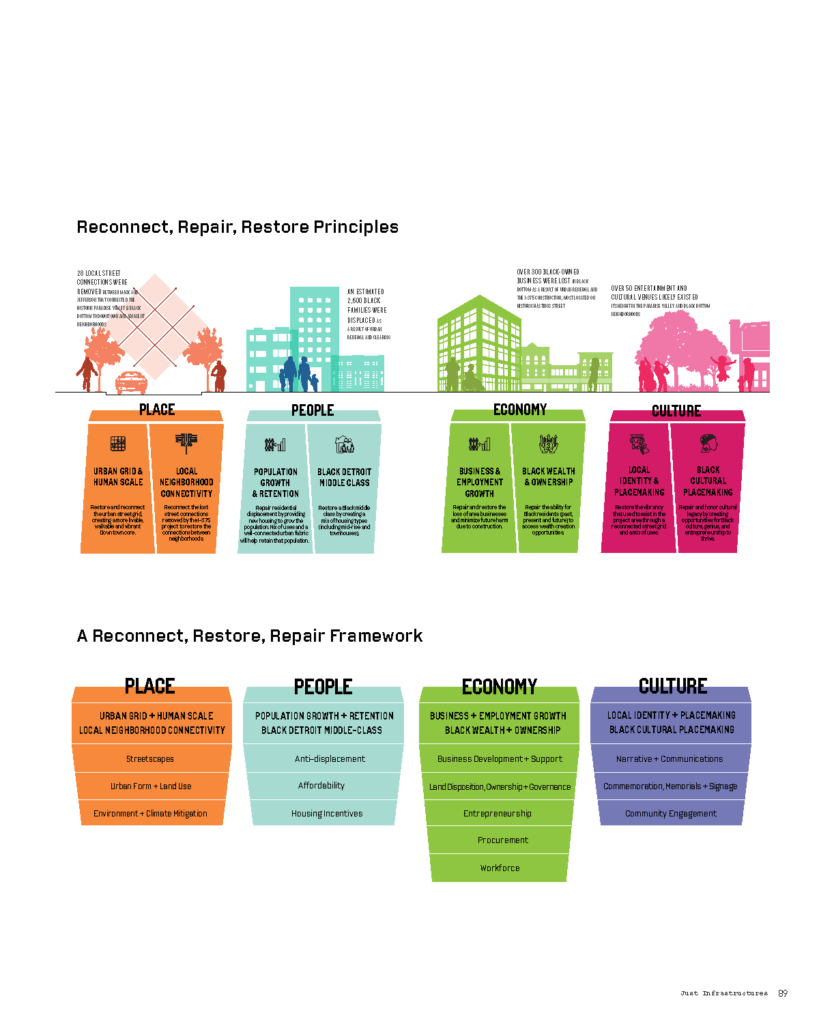
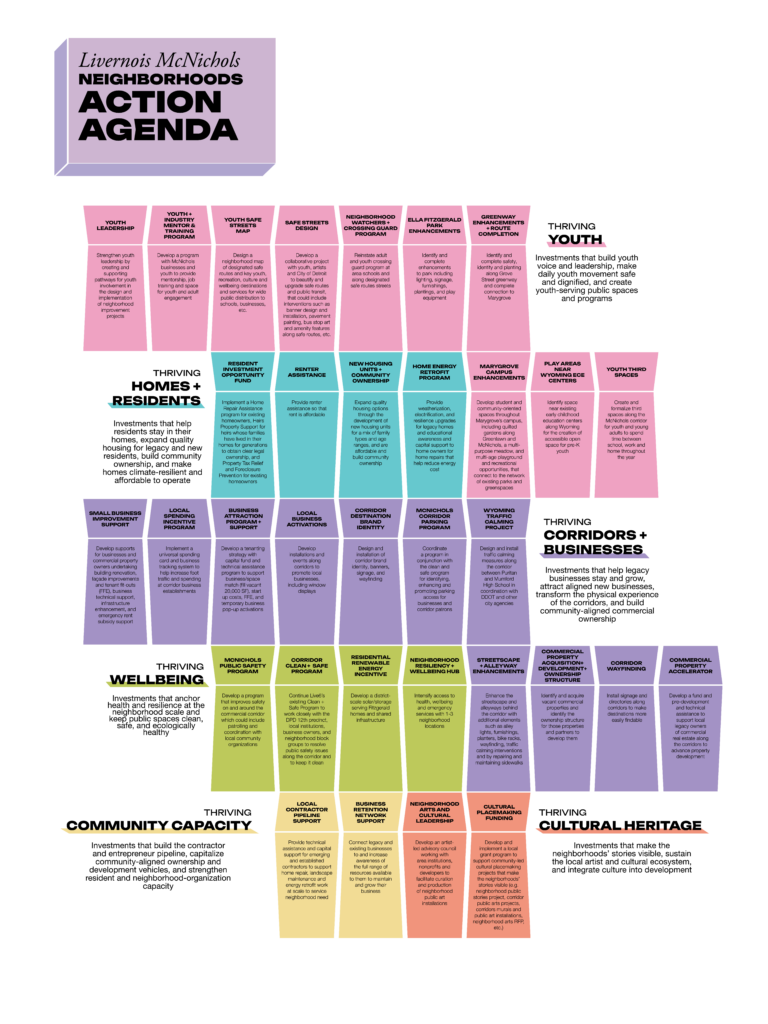
Two of our most recent projects in Detroit use theories and explorations from my design studios and seminar on gentrification. The first looks at the removal of the I-375 highway, where we led a peer review of the state’s proposal and offered a revised roadway design alternative, along with reparative urban design and land reclamation and development strategies that position the project as more than a transportation investment. The second is a project in the Livernois-McNichols neighborhood, where we’re reframing the narrative from anti-displacement to planning to stay, which is actually an old planning term that, to me, is more proactive than reactive. With the Kresge Foundation, community leaders, and anchor institutions, we produced an Action Agenda with specific reparative tools to create more permanence or restore more justice through ownership and control: neighborhood control, community control, land control, who owns land and who develops it. Here, our goal was to create an inclusive process where co-design and shared decision-making happen with everyone at the same table, and also putting the work of designing the solutions in the hands of local organizations that already do the work. This cycle of moving back and forth between practice, pedagogy, and research has been incredibly helpful to me as a practitioner and as an educator. It keeps pushing me towards the innovation and disruption required to repair the deeply rooted harms we find in so many of our urban cities.
Making Invisible Histories Visible: Collage as a Tool for Urban Justice
I know that over the past few years you’ve explored more art practices, like collage and visual essays, and you’ve spoken about the interplay of artmaking and place-building. How has that interplay shifted your approach to design and planning? You’ve also been awarded a Spring 2027 fellowship at the Bogliasco Center to work on The Just City We Cannot See, which will blend your writing with visual media. What is the book trying to do, and what does a “narrative theory of justice-centered city building” mean to you?
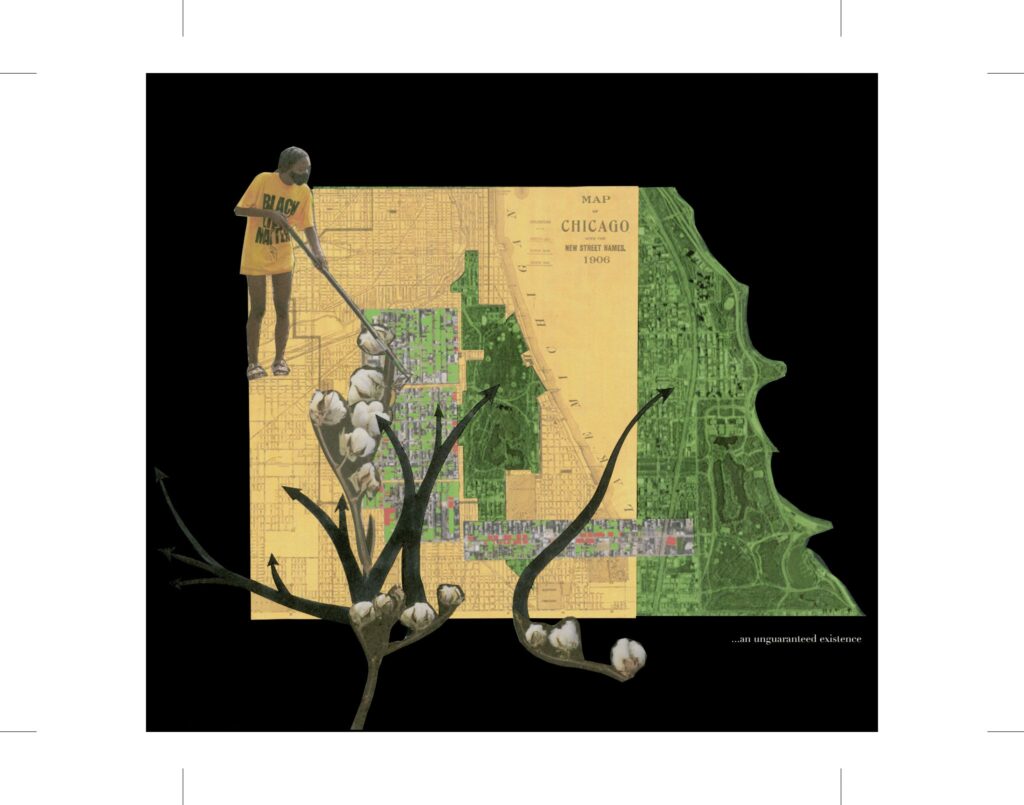
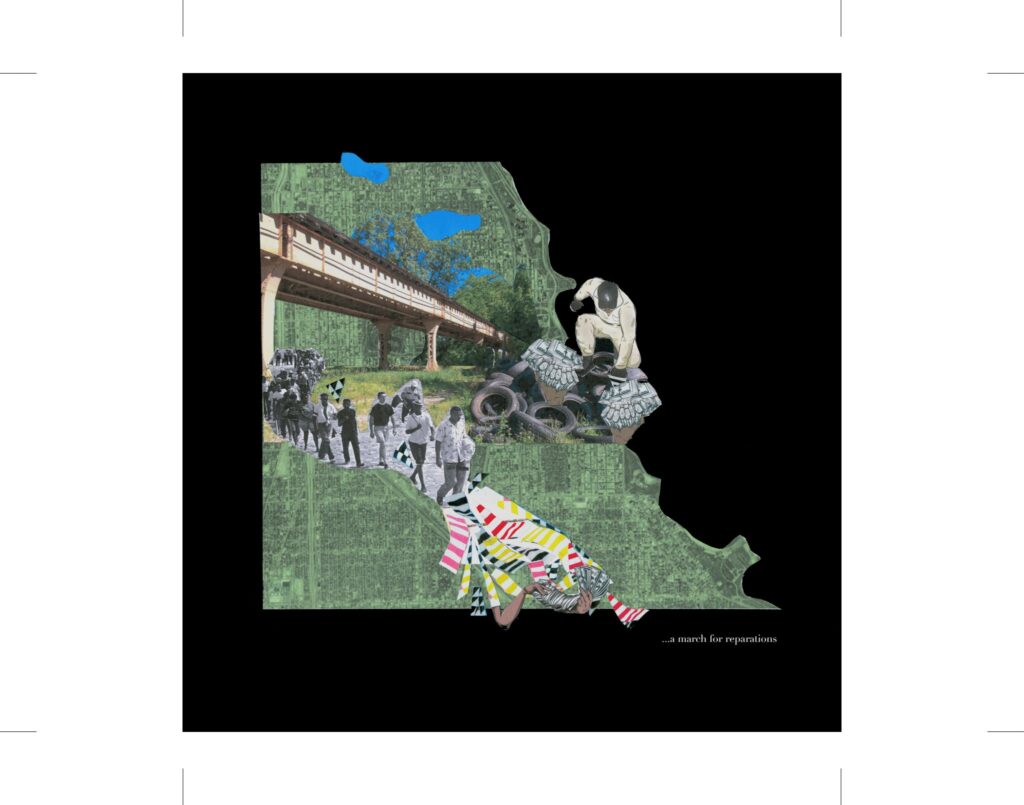
TG: The collaging was, in some ways, my own reparative practice. It has been instructive and clarifying a tool for creating narratives about the cycles of cities. In Chicago, we have been working in the Washington Park neighborhood on the South Side, a neighborhood that still has a lot of vacant land, much of it a result of urban renewal. But it was also part of the historic Bronzeville community, also known as the Black Belt of the city during the Great Migration, where a tremendous amount of Black wealth, Black joy, and Black creativity was produced, despite the area being a space carved out through racialized discriminatory practices to segregate Black and White Chicagoans. Today, there are very few, if any, reminders of that legacy of Black prosperity, entrepreneurship, creativity, and innovation.
Collaging, for me, has become a way to make visible parts of the development histories of Black communities we don’t talk about or know, and certainly don’t document as part of our urban site analysis juxtaposed against a current condition that came about through very intentional and harmful ways. I then try to inspire a sense of deservedness – that a future can be created by the people who exist in that space today, because that is what our grandparents and great-grandparents did before us.
The collage as a narrative practice is becoming a method and informing both my practice and teaching more broadly. urbanAC is producing several frameworks as what I’ll call “policy collages” through our projects. The Just City Index comes out of the academy, but all of urbanAC’s reparative frameworks, whether at the citywide scale of a comprehensive plan, the scale of infrastructure removal, or the scale of neighborhood repair, are rooted in Just City values. These frameworks visualize future propositions more holistically than a spatial plan can alone because they illustrate the interdependence and intersectionality of the systems, structures, spatial arrangements, and actors that must be involved in achieving a more just outcome. So I think the frameworks are a form of narrative theory, and they are making visible what our reparative practice is creating in this moment.
The Bogliasco Fellowship will give me time to peel away for a month to work on a book I’ve long been writing quite honestly, using a series of essays tucked away in my laptop and notebooks, about the work I’ve done over the last couple of decades.
It’s not so much a catalog of the work or a memoir, but more about what I think is emerging as a practice model, and about what the experience of doing that work is like. I think most of us doing justice-centered work bring a different set of values that go beyond design excellence alone. There’s a different weight and responsibility that can bear on you when you’re trying to enable more belonging, inclusion, ownership, and dignity through your work. The experience of fighting for that type of change as a designer holds important lessons and stories for the practitioners coming behind me and alongside me, which we don’t talk about or have a lot of sources to read from, and that are equally instructive as the design outcome itself. That’s what I’m hoping to explore further in writing.
Looking ahead, what upcoming projects are you most excited about?
TG: I have to say, I am beyond honored to be acknowledged by the Urban Land Institute for this extraordinary 2026 Visionaries prize. It’s especially meaningful coming from ULI, an organization made up of developers, designers, policymakers, consultants, and others, because it suggests that the industry broadly is coming to understand the importance of achieving more just cities through the work it does. The acknowledgment means a lot to me because it tells me that the work I’ve been quietly doing, much of it self-directed but enabled by a committed community of practitioners and supportive clients and institutions, is resonating, and that there really is a movement afoot that remains active in creating more just cities.
I’m thrilled and very excited about that. I’m excited for the young professionals I’ve had the opportunity to teach, and for how they’re going out into the world and taking up positions to do this work. Talking to you and seeing where you are ten years on from when we first interacted, I get to see that arc not only continue but expand, and that is something I’m very excited about and proud of.
Would you like to comment on this article? Send your thoughts to: [email protected]
Latest
Viewpoints
What Do Architects Need to Know About Data Centers?
With AI reshaping the scale, technology, and energy demands of data centers, Neil Sheehan of Woolpert discusses what architects need to understand about the design of the infrastructure behind the cloud.
Products
5 Spanish Furniture Brands Prioritizing Play and Personality
At Feria Hábitat València 2026, these designers brought bold colors, sculptural silhouettes, and a healthy dose of whimsy to contemporary furniture.