


October 27, 2026
Yu Nong Khew Uses AI to Question Her Humanity
In 1922, Salvador Dalí augured that “the future of architecture will be soft and hairy.” Today, Yu Nong Khew wants to make Dalí’s vision come true with the launch of a studio that specializes in what she calls “hypertactile objects.” The studio’s name? Studio Soft Hairy, of course.
The Singaporean designer still remembers the moment she discovered Dalí’s quote. “It felt like it hit all the right notes for me,” she notes. “There is something about softness, hairiness, and design for decay and impermanence that draws me in.”
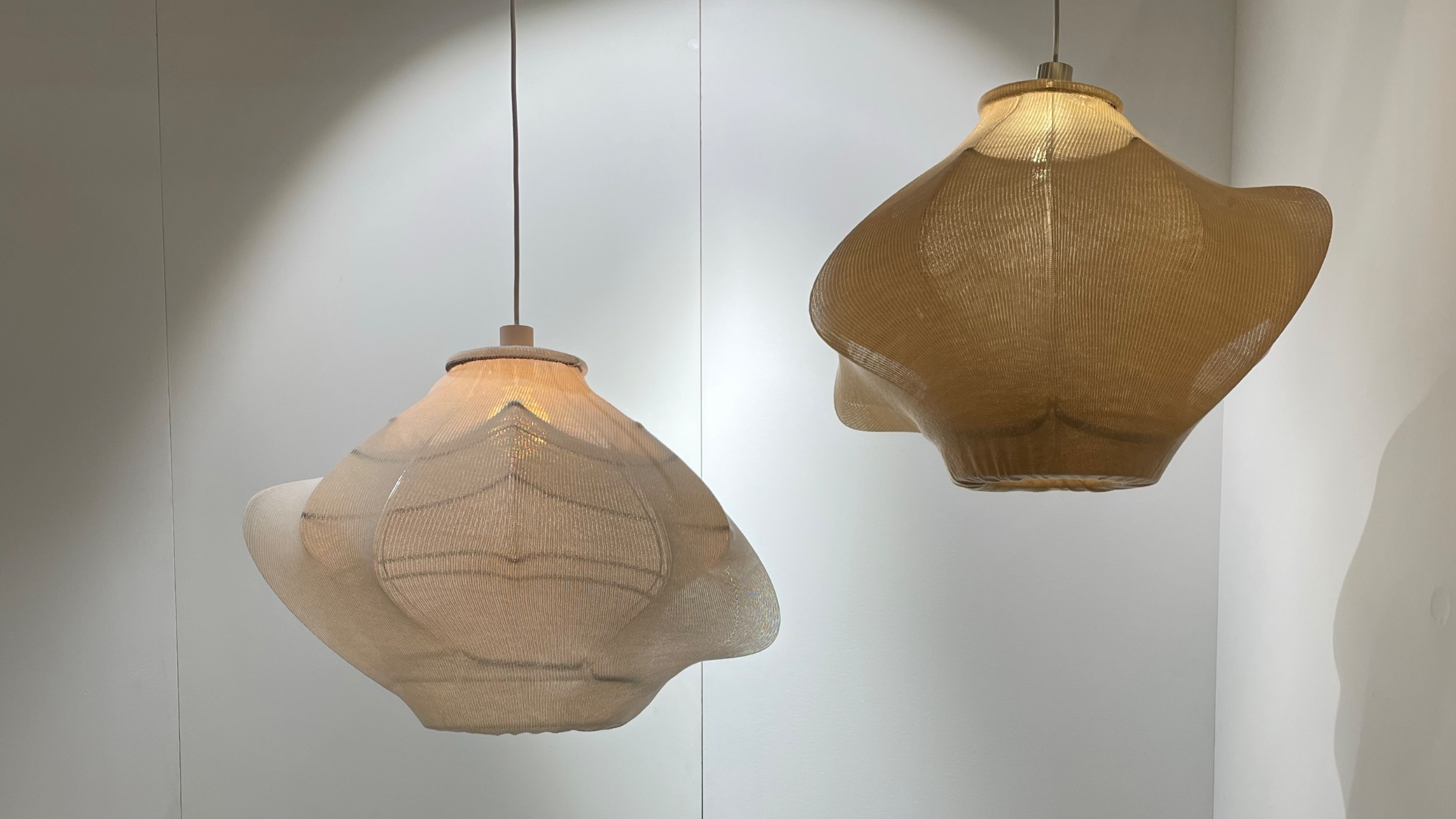
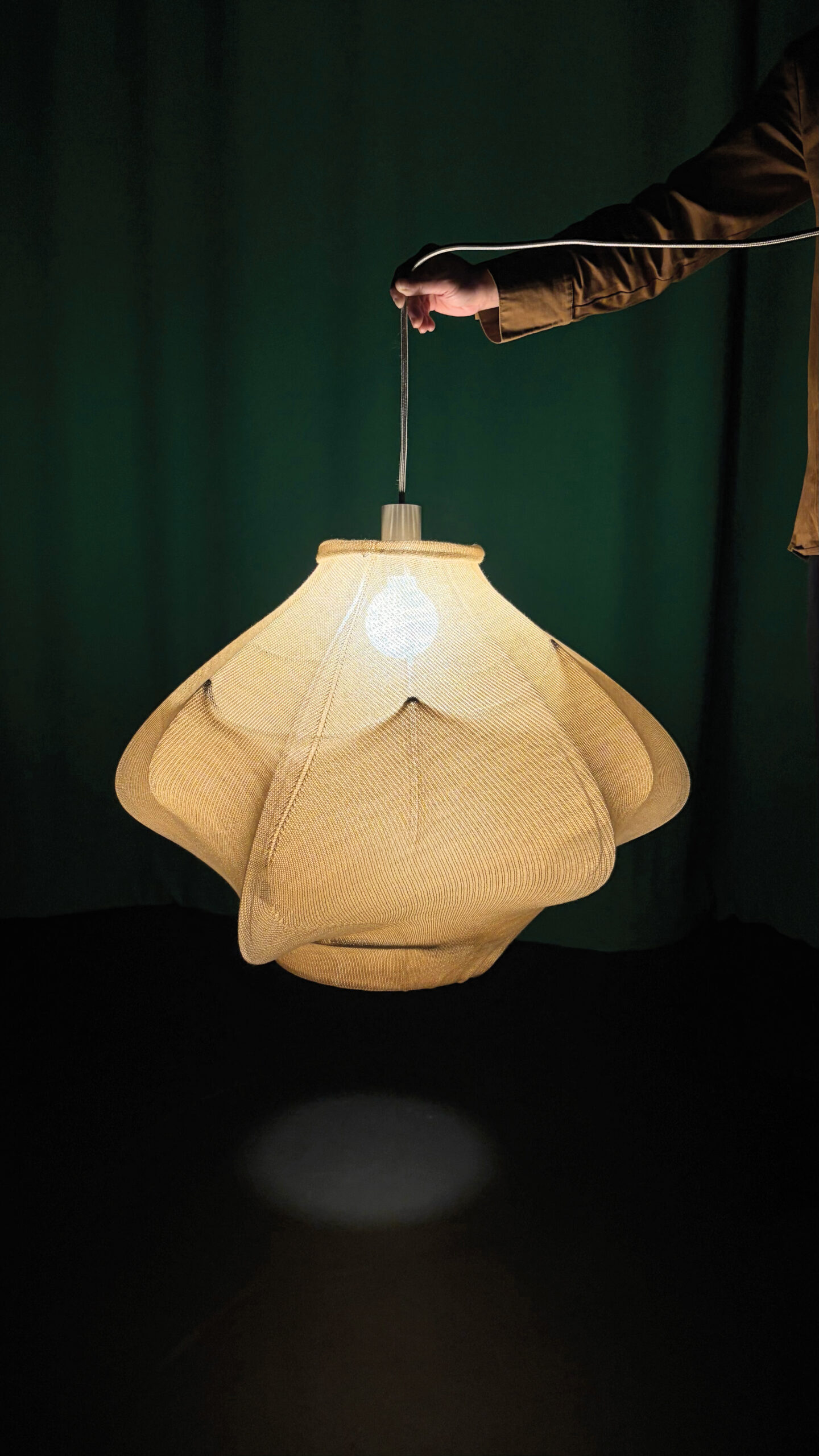
In May, Khew launched Tactility, a collection of three lamps made of 3D-knitted lambswool, which she exhibited at ICFF in New York. She is now working on a knitted mycelium sculpture at Manresa Island, a brownfield in Norwalk, Connecticut, that is being repurposed into a 125-acre park based on a master plan by BIG and Scape. Part of her involvement also entails testing mycelium as an alternative to the more standard concrete cap that is required to cover coal ash at brownfield sites. “My biggest hope is it will spark a community conversation about remediation and how we treat brownfields for public use,” she says.
Khew is running her new studio out of Chester, Connecticut, where she is an assistant professor of Art, Design, and Engineering Studies at Wesleyan. Her research lies at the intersection of digital fabrication and craft, using microbiology and living materials to make objects that hold meaning in big spaces. When asked how she feels about AI, she says she feels a tension between using it and not using it. So far, she has mostly experimented with plugging her own designs into Midjourney and prompting the program to generate alternatives. She acknowledges that AI might have answers that she doesn’t and admits that some machines can perform certain crafts better than she can. “I use AI to question my humanity,” she says.

Khew’s humility is an undercurrent in every facet of her work. She is the kind of designer who describes mycelium as a “coauthor” and who laughs self-deprecatingly at her previous efforts to “revolutionize composting in New York City.”

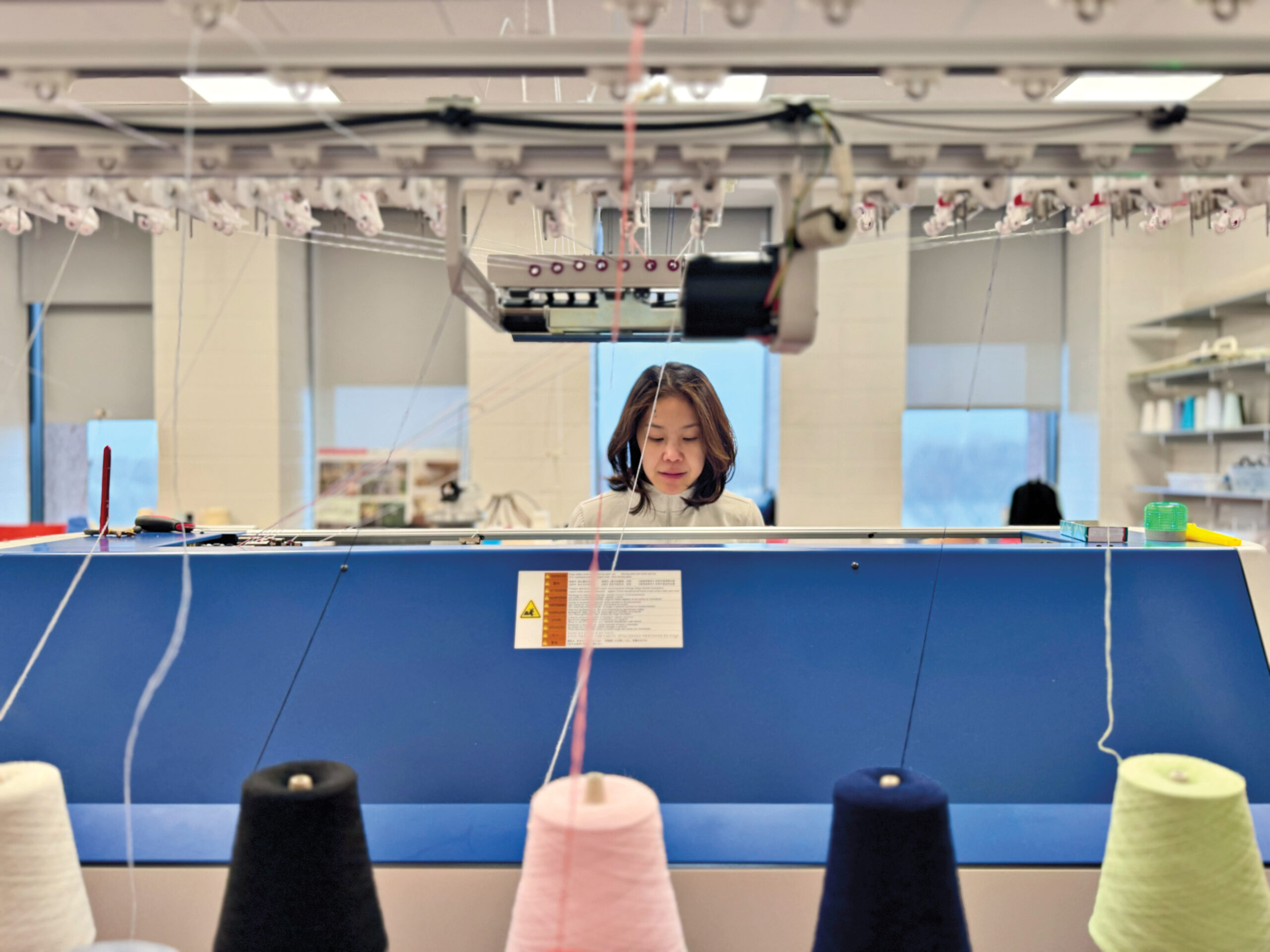
About a year ago, she and a colleague convinced Wesleyan to buy a very complicated, very expensive computational knitting machine by the Japanese company Shima Seiki. (The machine is so complicated that if you ask ChatGPT to produce a knitting file for it, it will fail because the software is proprietary.) Khew then spent a year “fooling around” with the machine and hacking it to produce items at a much larger scale than it was previously capable of, including lamps and knitted structural joints for a sukkah.
She says the machine isn’t going to define her studio, but understanding its quirks took so long that she can’t stop talking about the experience. Whatever happens next, her dream commission is to make a lightweight installation at a high-ceiling airport; she believes that technology can only truly be powered by the human brain. “The embodied knowledge of yarn—that’s what makes me human,” she says. “That’s what makes my work human.”
Would you like to comment on this article? Send your thoughts to: [email protected]
Latest

Viewpoints
Net Zero 2026 Proposes Solutions
Produced by Verdical Group, the one-day conference in Los Angeles brought together experts united in pursuit of a decarbonized future
Viewpoints
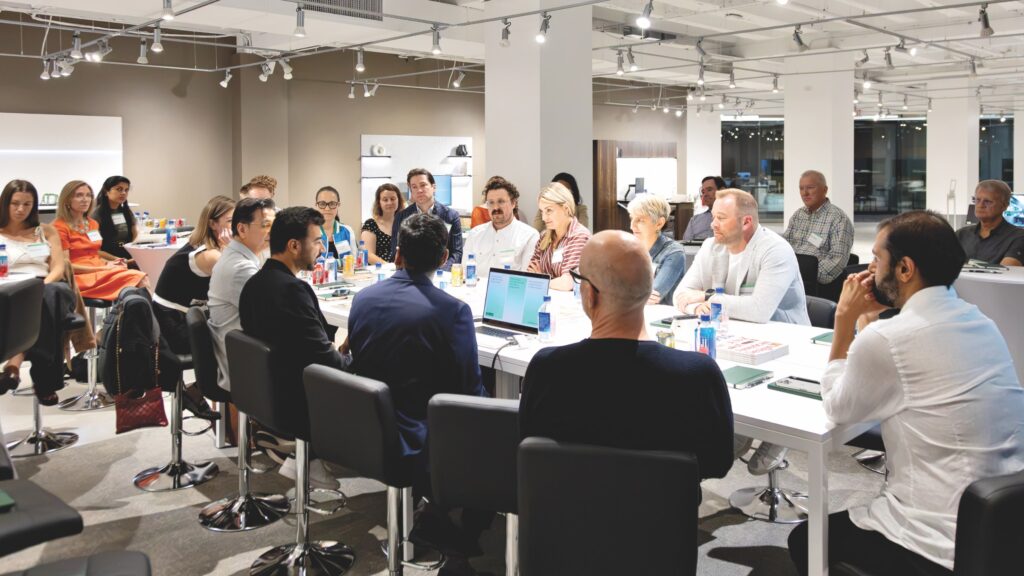
How Are Architects and Designers Navigating AI?
Leading practitioners discuss how AI is changing their practices—and evolving the future of the industry.