



August 1, 2026
The Hidden Cost of Design Workflows
Sustainability in architecture and design has long been measured by what goes into a building. Conversations around embodied carbon, healthier materials, and responsible sourcing have transformed the way architects and designers specify products. Yet another source of environmental impact begins long before construction—and it has largely escaped scrutiny.
Projects depend on physical samples, printed specification binders, showroom visits, and repeated exchanges between manufacturers, designers, contractors, and clients. These familiar processes also generate unnecessary waste in time, transportation, and resources. As firms expand their sustainability commitments, attention is beginning to shift from products alone to the workflows that support design.

A More Efficient Path to Better Design
Bitreel develops digital infrastructure for the architecture and design industry, connecting immersive product experiences, real-time configuration, and AI-powered product knowledge within a single workflow. By helping manufacturers and design teams eliminate unnecessary steps throughout specification, the browser-based platform aims to reduce waste while improving collaboration and decision-making.
“The result is not just better tools—but a connected system that supports how design work actually happens,” says Cosmo Kramer, CEO of Bitreel.
One of the clearest opportunities lies in reducing dependence on physical samples.
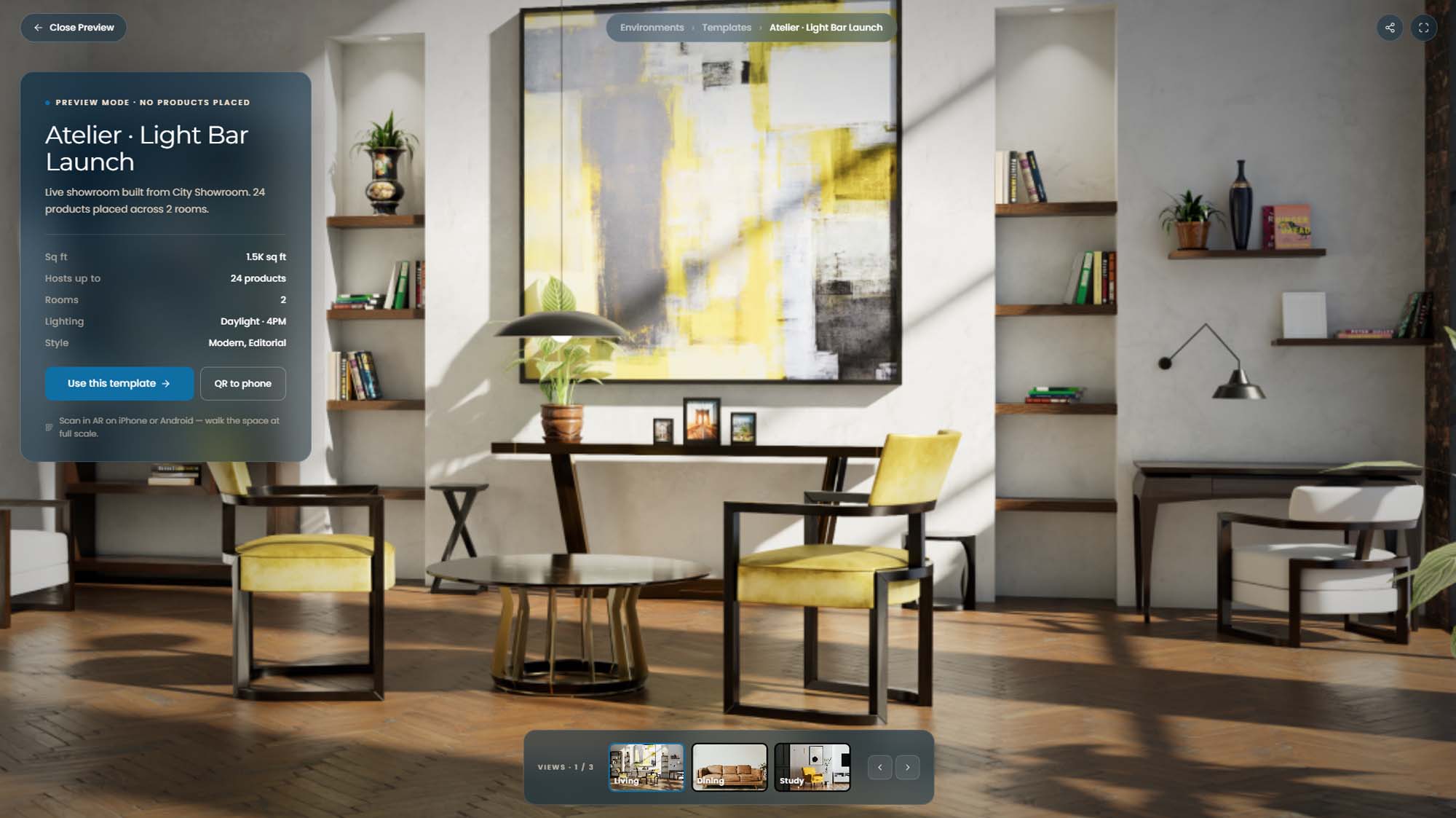
Material samples remain essential for final approvals, but thousands are produced and shipped during the early stages of projects only to be discarded later. Through immersive virtual environments, designers can evaluate finishes, textures, lighting conditions, and material performance in context before requesting physical samples. The result is greater confidence during specification—and fewer samples that never make it beyond the design studio.
This approach is particularly valuable for manufacturers with highly customizable product lines. Bitreel’s work with 3form, for example, allows designers to explore millions of potential product combinations digitally, giving them the ability to compare options at full scale before anything is manufactured or shipped.

From Product Selection to Specification
The platform also addresses another hidden source of waste: specification errors.
Product information is often recreated across multiple software platforms as projects move from concept to documentation. Every manual transfer creates opportunities for inconsistency, leading to duplicated work, project delays, and unnecessary material waste. Bitreel’s real-time configurator generates specification-ready outputs—including native Revit files—allowing designers to move directly from product selection to documentation with fewer manual steps and greater accuracy.
Equally important is access to reliable product information. Manufacturers maintain extensive libraries of technical documentation, certifications, and compliance data that have traditionally been distributed through printed catalogs, static PDFs, or disconnected databases. Bitreel’s AI Knowledge Agent transforms that information into a verified, searchable knowledge base, enabling designers, sales teams, and clients to access accurate answers in real time. Developed in partnership with Amazon Web Services, the system replaces static documentation with information that evolves alongside manufacturers’ product offerings.
What distinguishes Bitreel’s approach is its close collaboration with manufacturers. Rather than applying generic technology to existing product catalogs, the company works directly with each partner to accurately represent products, manufacturing logic, and specification data. That collaboration creates digital experiences designers can trust while building structured product data that manufacturers can continue to use as their digital capabilities evolve.
As architecture and design firms pursue increasingly ambitious sustainability goals, the conversation is expanding beyond material selection to include the processes behind every project. Every unnecessary shipment, outdated catalog, duplicated specification, showroom visit, and preventable delay carries an environmental cost that often goes unnoticed.
By connecting product visualization, specification, and verified product knowledge into a single workflow, Bitreel demonstrates that sustainable design is not only about choosing better materials; it’s also about creating better ways to work. “Bitreel isn’t trying to replace how architects and designers work—it’s trying to make the systems underneath that work more sustainable, so growth doesn’t have to come with more waste,” Kramer says.
As the industry continues to rethink how projects are delivered, reducing workflow waste may prove just as important as reducing material waste—helping firms achieve sustainability goals long before construction begins.
Would you like to comment on this article? Send your thoughts to: [email protected]
Latest

Viewpoints
Detroit Month of Design: A City’s Work in Progress
Now in its 16th year, the celebration offers insights into the Motor City’s ongoing accomplishments without glossing over its hurdles.
Projects
How a Hybrid Building Helped an Historic Manhattan Congregation Remain in Place
On Billionaire’s Row, FX Collaborative designed a new home for Calvary Baptist Church combined with an office tower.