



February 4, 2026
Carnegie Changemakers Hone in on Holistic Impact in San Diego
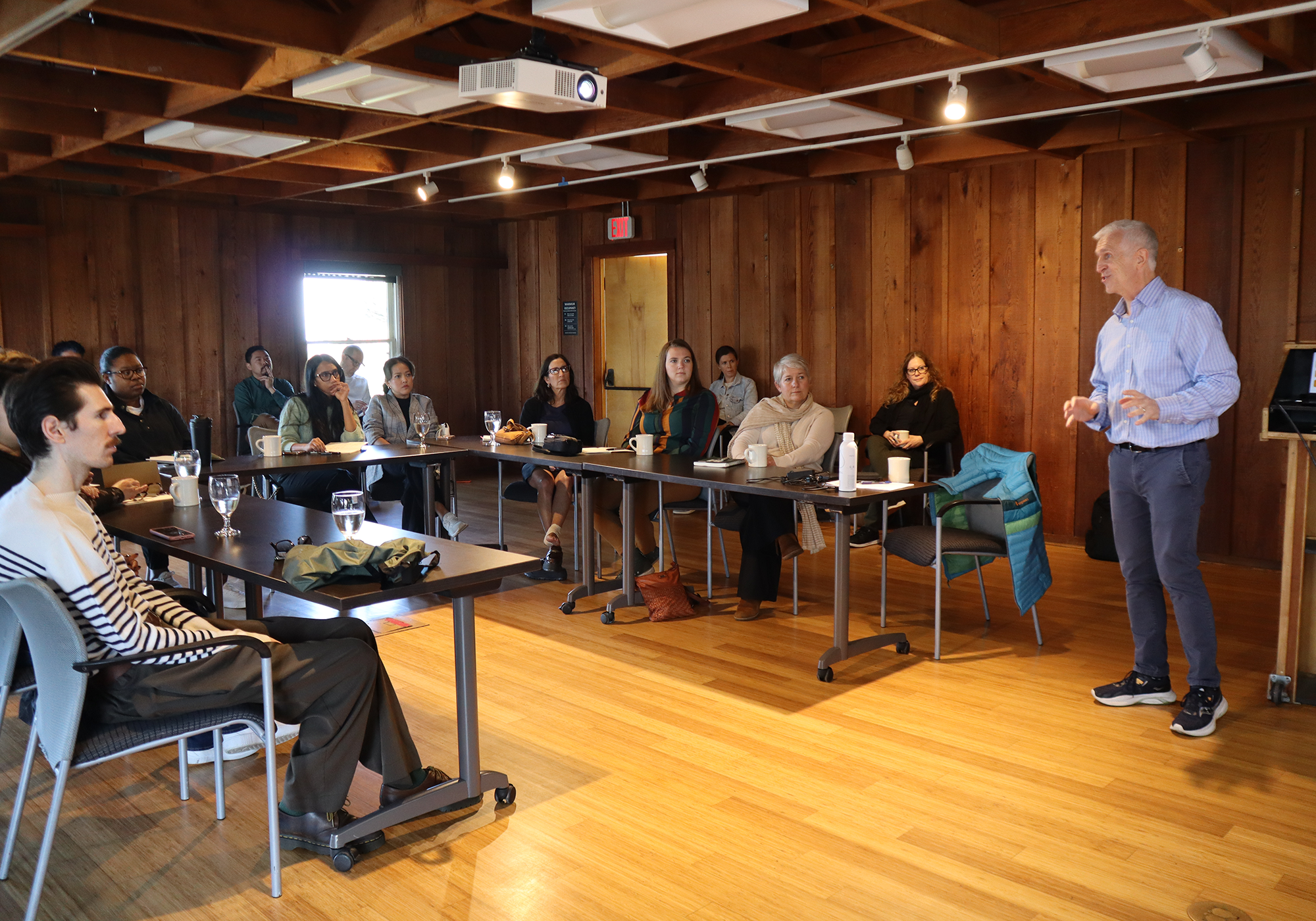
Gordon Boggis, CEO of Carnegie, kicked off the Carnegie Changemakers experience in San Diego with a provocative prompt: “How do we make change at scale?” He was speaking to a group of designers from across the United States, handpicked by Carnegie and METROPOLIS based on their responses to the question, “What does being a changemaker mean to you?” Each participant reflected on how they personally intended to manifest change and arrived eager to be inspired, exchange creative ideas, and form a committed community of peers through the Changemakers experience.
Designers in Dialogue
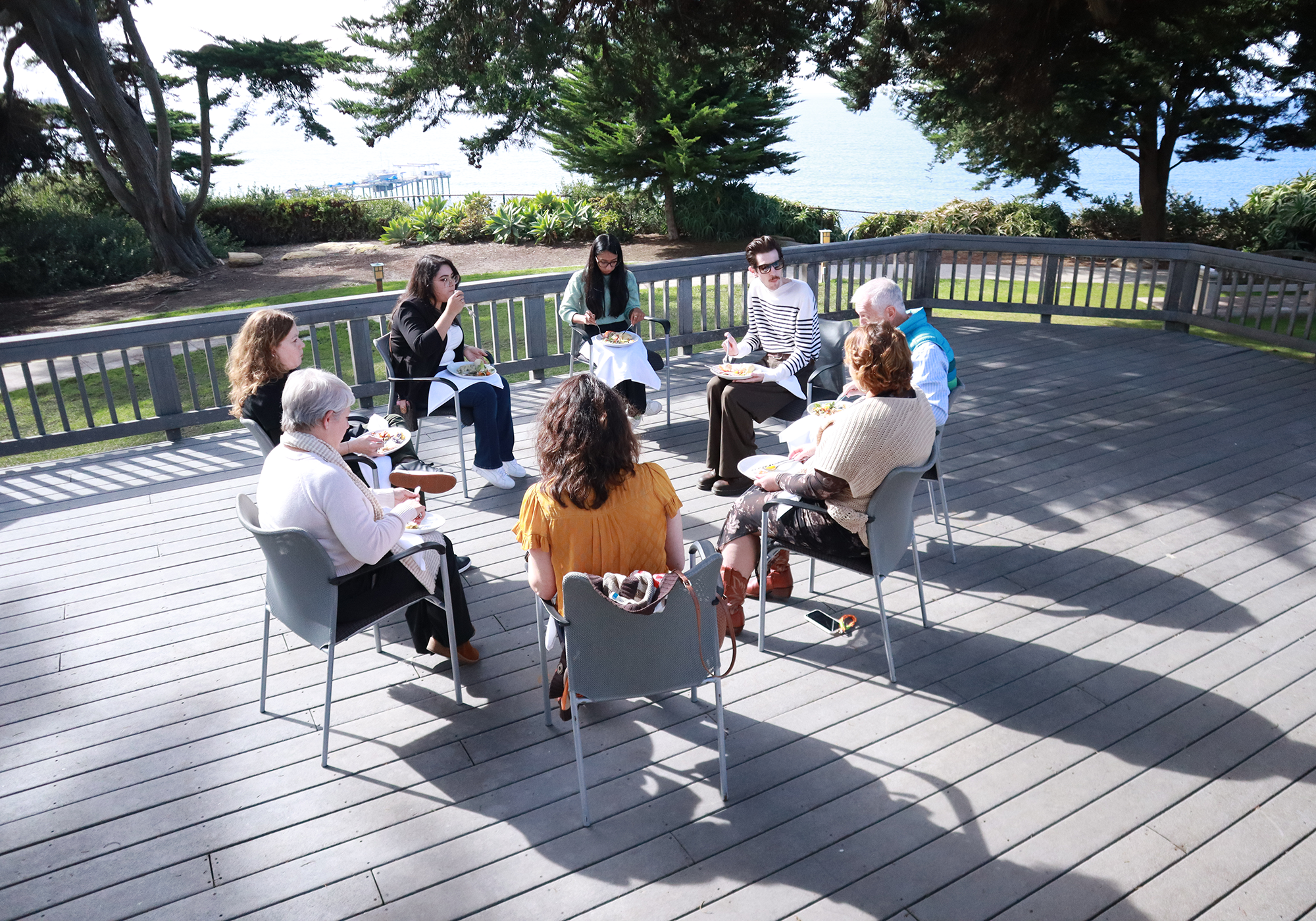
The San Diego experience followed two others organized by Carnegie and METROPOLIS, during which groups of designers toured sustainable manufacturing facilities in Europe and connected with visionary design leaders in New York. Joining the group in California were Shreya Somani, senior designer at Arcadis; Brittany McNairy, senior technical coordinator at Perkins&Will; Emily Sloat Shaw, exhibit designer at Smithsonian National Museum of the American Indian; Jack Hutchens, interior designer at Vocon; Julieanne Zepeda, architectural associate at Silhouette Design Architecture; Mary Rakocy Dietsch, owner at Mary Dietsch Architecture & Design; Megan Brown, project interior designer at Market Square Architects; Viviane Pedruco, interior designer at Perkins&Will; and Vy Lee, architect at Pfluger Architects. I attended as METROPOLIS’s editor-at-large, but also as a designer working toward change. Despite our diverse interests that we discovered as we got to know each other—glassblowing, creating Spotify playlists, and even flying helicopters—we aligned around a unified philosophy: doing good in the world through design.
According to Boggis, a changemaker is a person driven by a desire to make a difference, who intentionally works to bring positive change, especially in social or environmental areas. Carnegie set the bar for what that looks like seventy-five years ago. Bob Goldman, the founder of Carnegie, made the future-forward decision to produce only PVC-free products at a time when PVC wasn’t fully understood as the harmful chemical that we know it to be today. It took years of development, including inventing an entirely new yarn, to make that possible, but Carnegie finally did it. They didn’t stop there. Carnegie has since continued to incrementally improve their products and operations, increasing biobased and recycled content while improving strength and performance.
Carnegie and the B Corp Movement
The company has also embraced the B Corp movement, joining a growing group of businesses focused on design for good and a sustainable future. These businesses advocate for change at scale, model what meaningful change looks like, and use their operations to support people and communities, not just profit. Becoming a B Corp is more than a badge, it is a commitment to doing business differently. Companies must meet rigorous standards for social and environmental performance, transparency, and accountability, demonstrating real impact on workers, communities, and the planet. Certification requires ongoing improvement, from sourcing responsibly to fostering inclusive workplace cultures. For Carnegie, B Corp status reflects a core philosophy, that design, manufacturing, and operations can serve both purpose and profit. It signals to clients, partners, and the design community that sustainability and ethics are not optional, they are integral to every decision.
Over our three days in San Diego, we heard from leaders at several B Corporations, including Eric Edelson, CEO of Fireclay Tile. Fireclay became a B Corp around the same time as Carnegie and remains deeply committed to the movement. Eric inspired me to start my own design firm, Studio O+A, on our B Corp journey after I heard him speak in San Francisco. For the Changemakers group, Eric’s message was clear: doing good isn’t easy, but doing what matters takes work. His motto: “Do hard, better.”
Seeing Sustainability in Action
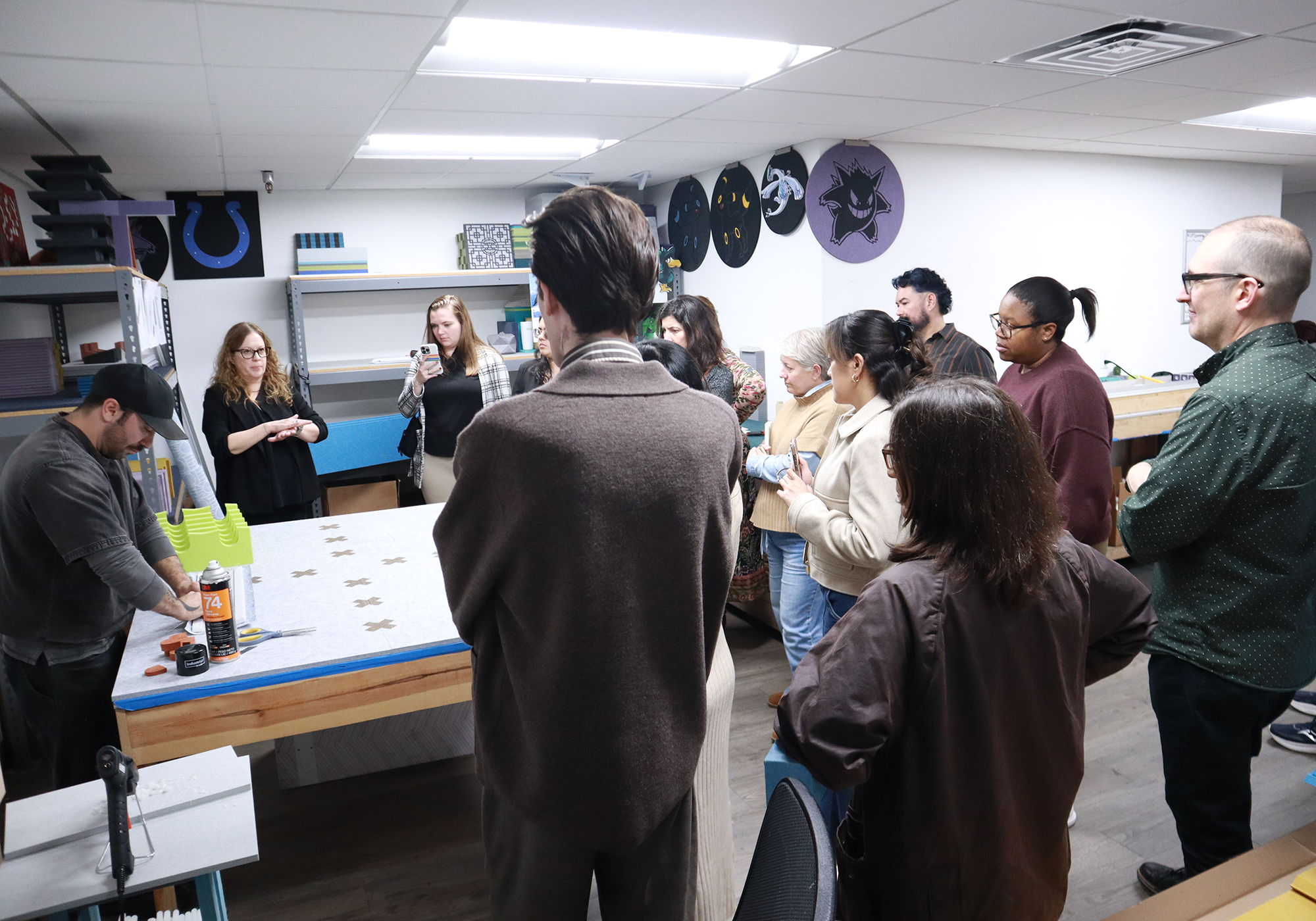
This message was underscored by two tours—one focused on manufacturing and the other on architecture and interiors. We visited Carnegie’s Kirei manufacturing facility, where we watched a skilled group of fabricators excel in their craft. Two Changemaker designers had their pre-selected designs made on the factory floor as we watched. A giant printer layered water-based ink onto an acoustic panel, followed by a CNC machine cutting the puzzle pieces precisely. A Kirei team member did the final assembly using a handmade jig. The Kirei tour was right in line with the Changemakers vision: the company is people- and sustainability-focused, placing a high value on craft, innovation, and customization.
A short drive away at UC San Diego, HKS, Safdie Rabines Architects, and university leaders led us through the LEED Platinum–certified North Torrey Pines Living and Learning campus. The project is huge, yet the design meets students at their scale, weaving in well-researched strategies that support happiness, wellness, connection, and comfort. Just as we stepped out onto a student roof deck the clouds broke, and a brilliant double rainbow appeared in the sky. Paired with the sweeping views of the Pacific Ocean stretching out before us, it was a brilliant end to an inspiring day of tours.
Throughout the trip, the Changemakers reflected on how our experiences and encounters in San Diego could inform our own design process. We dug into the evolving language of sustainability: how our terminology might need to change, how to identify greenwashing, how to communicate with clients, how to leverage partners, and how to use existing resources to accelerate sustainable solutions in design practice. We also pondered why designers need to get permission to design sustainably when that’s just the way design should be done.
At our final breakfast Gordon again asked: “How will you go out and be Changemakers?” Our answers had evolved, and now we each also had concrete action items. We felt ready to go back to our homes and workplaces and do hard, better. The Changemaker cohorts—from Europe, New York, and San Diego—are now a community connected by a powerful shared desire to make meaningful change in the world. Not one designer in this group is waiting for permission, because good design is sustainable design.
Would you like to comment on this article? Send your thoughts to: [email protected]
Latest
Viewpoints
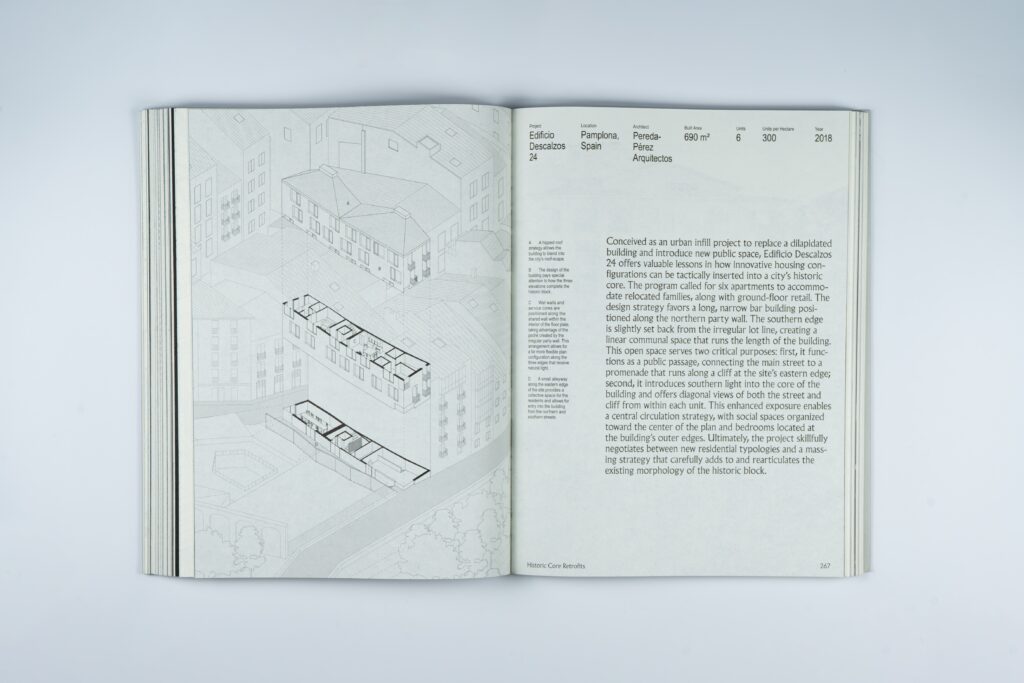
Drawing Collective Housing Back Into a Common Language
Felipe Correa’s Collective Living and the Architectural Imaginary, and why this survey of a century of collective housing was built to argue a point, not cover the field.
Profiles
The Architect Designing Sacred Spaces for the Every Day
RIBA Gold Medal winner Níall McLaughlin strives to design not just buildings but the rituals that unfold within them.