



July 9, 2025
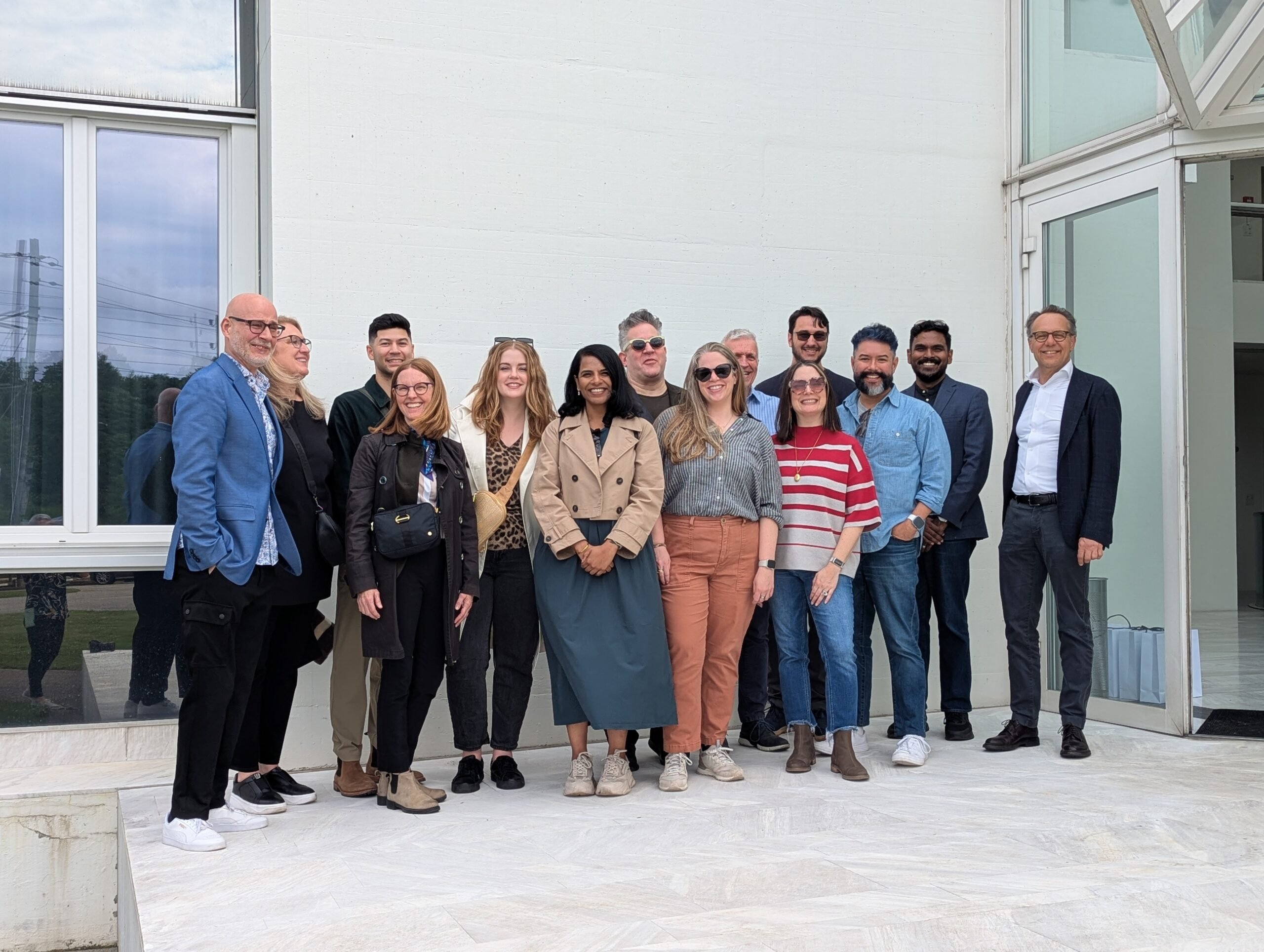
Carnegie Changemakers Tour Europe In Search of Sustainability Insights
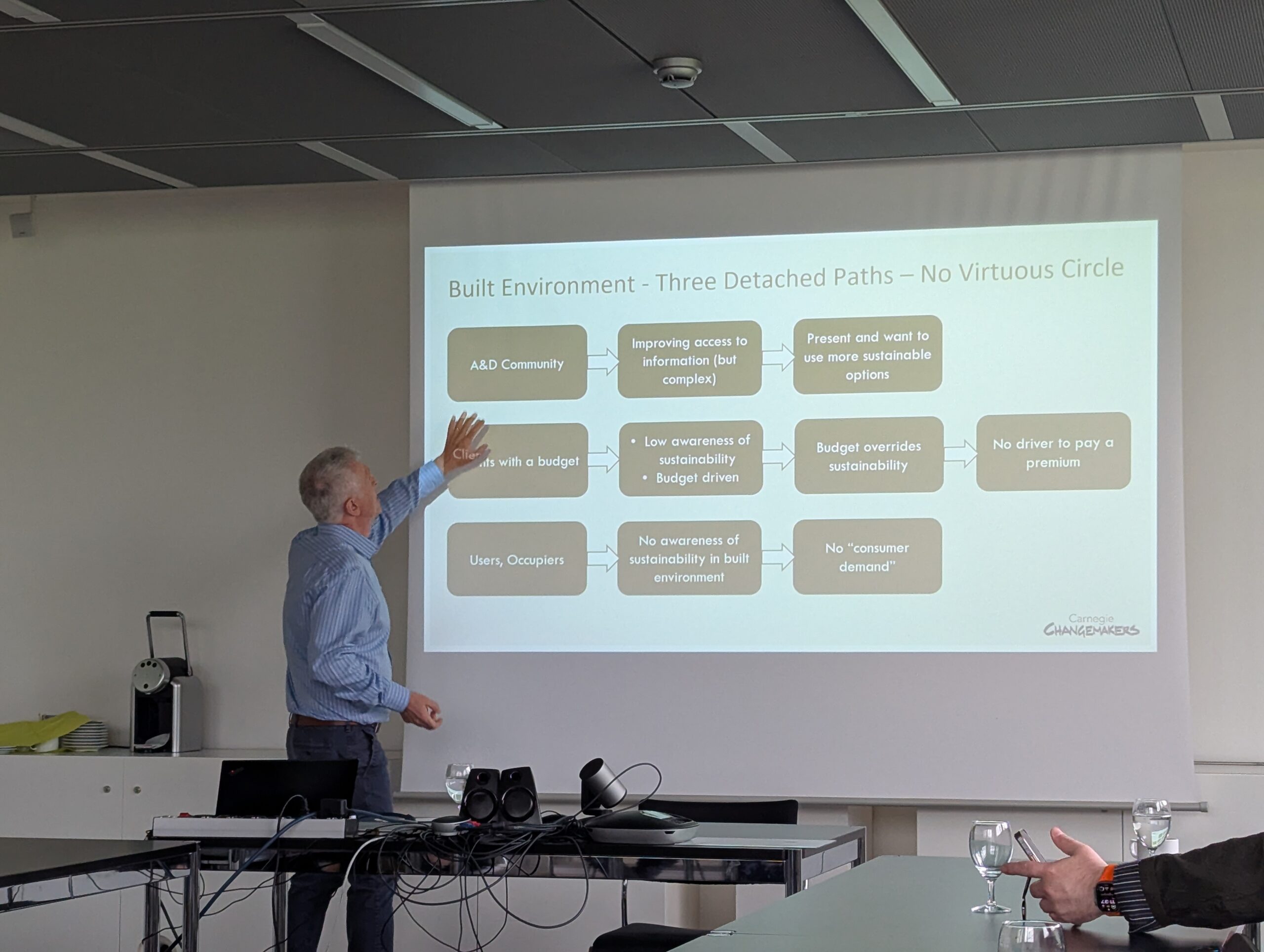
The tour kicked off at headquarters of textile manufacturer Creation Baumann in Lagenthal, Switzerland, where Carnegie CEO Gordon Boggis spoke about why the A&D industry uniquely relies on changemakers to advance sustainability. Consumer demand, regulatory pressures, and corporate commitments have led to big strides in other sectors like the food and beverage industry where transparency on nutritional facts has created a culture of healthier consumer choices and better offerings. But in the built environment, he pointed out, we have three detached pathways to sustainability: “A&D want better alternatives, but clients have limited incentives to switch, and low consumer awareness means low consumer demand.”
Carnegie and Creation Baumann have partnered for decades to provide better, more sustainable textile choices for specifiers. At Creation Baumann’s facilities, the Changemakers not only witnessed how high-performance textiles are developed and made, they also examined the systems by which the company treats both the water used in its processes and the gases emitted during manufacturing to make sure they’re clean before re-entering the local ecosystem.
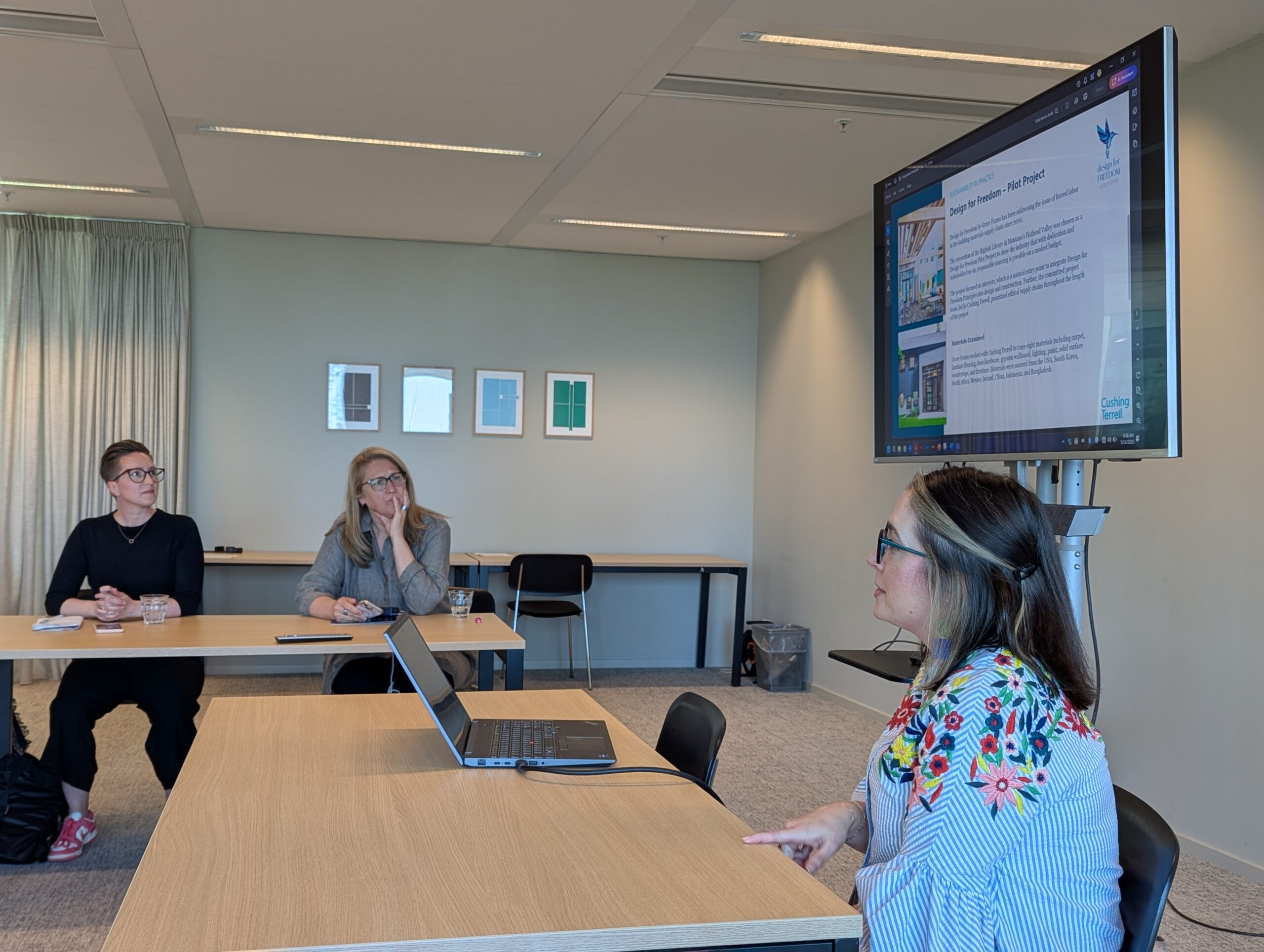
The next day, the group was hosted at Mosa Tiles in Amsterdam to understand the advances the company is making toward circularity and lowering carbon emissions and to engage in a discussion with Ren de Cherney, director, built environment at the Cradle to Cradle Products Innovation Institute. The group discussed circularity and material reuse, advancing social health and equity in the built environment, and navigating different levels of client awareness around sustainability. Eric Corey Freed, sustainability director of CannonDesign, emphasized how an outcomes-based approach is absolutely critical today. Sustainability teams need to make a demonstrable difference to product outcomes, not be content with incremental improvements that only make sense to experts in the field. “Nuance is death,” he said, provoking the group to think beyond ticking boxes on a certification checklist.
The following day, the Changemakers visited The Good Plastic Company, which produces Polygood, a fully recycled and recyclable plastic surface material. Founder and CEO William Chizhovsky guided the group through the story of how Polygood was developed and what its potential applications are. Then the architects and designers were able to try their hand at composing their own custom polygood panels out of a wide selection of scrap plastic.
The group then made its way to the offices of the Amsterdam-based architecture firm Venhoeven CS. Principal architect Tom Venhoeven and architect partner Cecilia Gross explained how their firm is deeply enmeshed in urban planning and policymaking in Amsterdam. Using examples like the Zoe, a mixed use development that has biodiversity and interspecies interactions at the core of its design, and the mass-timber Aquatics Center in Paris, the only ground-up facility built for the 2024 Olympics, they laid out how designing for nonhuman life is an important consideration in their projects. The group then toured IJboulevard, an underwater bike parking garage designed by Venhoeven CS that is an exemplar of the transformational power of architecture.
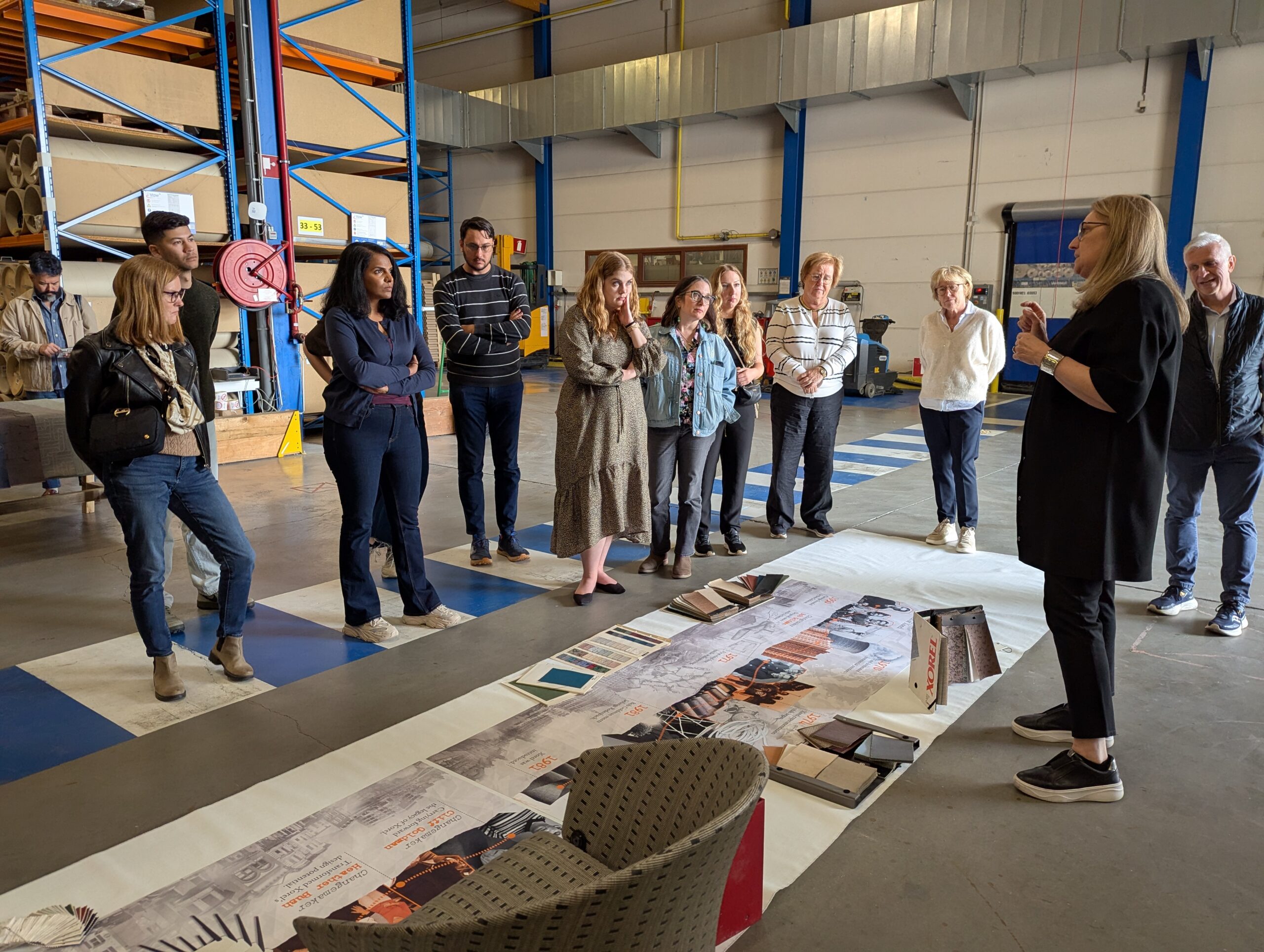
The Carnegie Changemakers experience concluded the next day with an exclusive behind the scenes look at the production of biobased Xorel. The world’s first biobased performance textile, Carnegie’s Xorel is made with up to 91% biobased content and is Cradle to Cradle and Living Product Challenge certified. Carnegie chief creative officer Heather Bush led the first-ever tour of the production facilities where Xorel is woven, leading a discussion on biobased materials and how Xorel can be a platform for creative solutions and expression.
“One of our goals for this experience is to have you connect with each other and form long lasting professional relationships,” said METROPOLIS editor in chief Avinash Rajagopal. Over the course of the five-day trip, the Changemakers found common ground and common cause over a host of challenges and opportunities in the built environment. They returned to their offices “still riding the wave of renewed enthusiasm from the trip,” as one participant put it.
Would you like to comment on this article? Send your thoughts to: [email protected]
Latest
Viewpoints
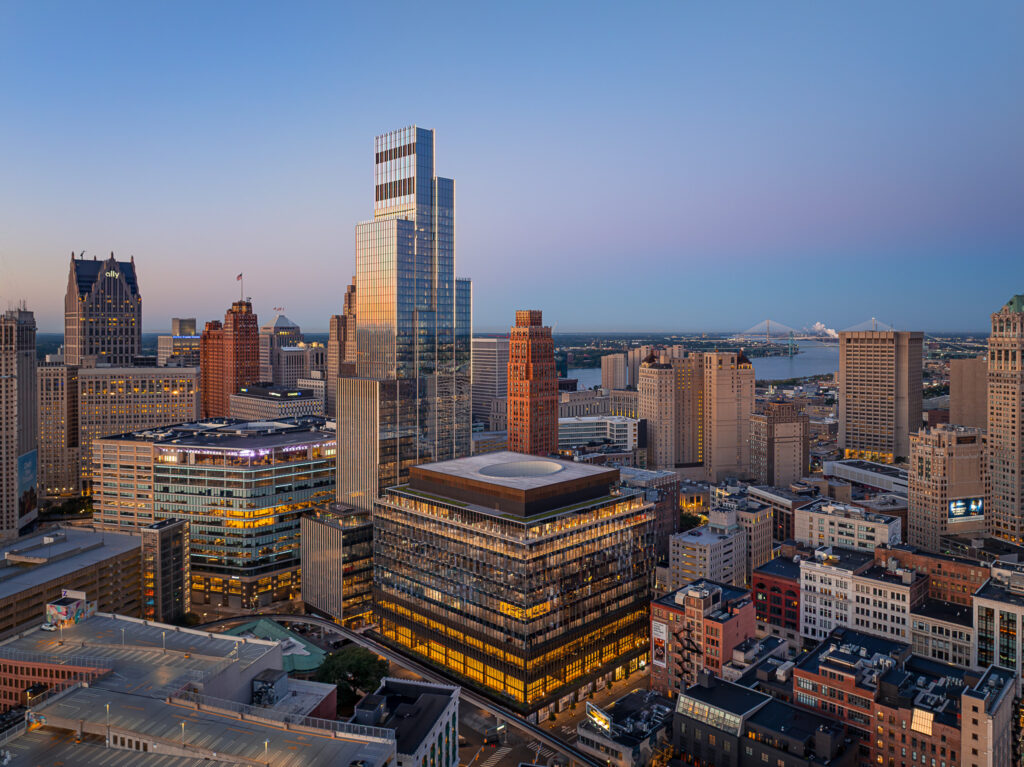
Detroit Month of Design: A City’s Work in Progress
Now in its 16th year, the celebration offers insights into the Motor City’s ongoing accomplishments without glossing over its hurdles.
Projects
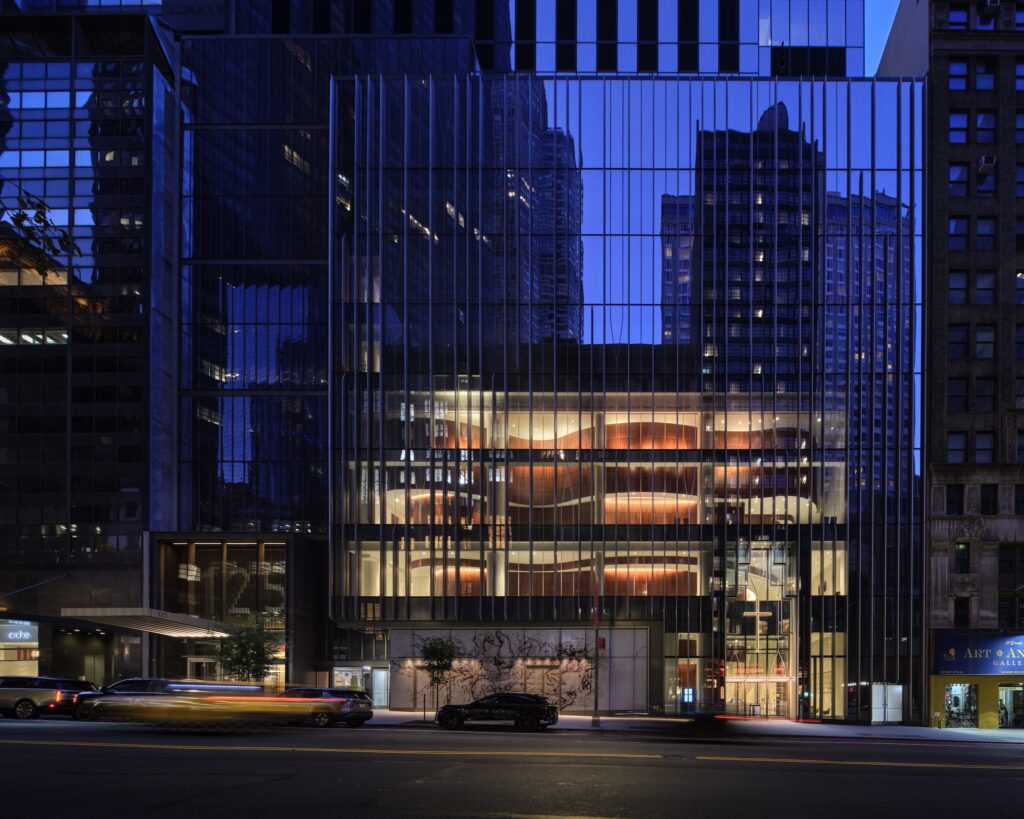
How a Hybrid Building Helped an Historic Manhattan Congregation Remain in Place
On Billionaire’s Row, FX Collaborative designed a new home for Calvary Baptist Church combined with an office tower.