


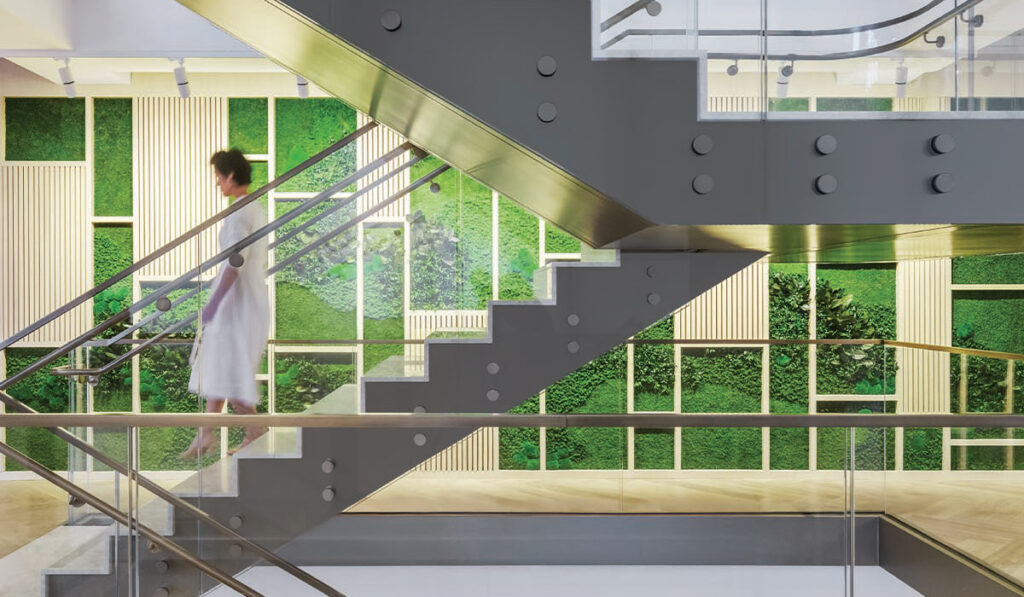
November 9, 2026
Raising the Bar on Biophilic Design
Simply adding a potted plant to a commercial interior is not biophilic design. Instead, designing for biophilia requires a considered approach to providing meaningful and sustained exposure to nature. Many brands promote their biophilic design practices, but few have made bringing nature indoors as central to their mission as Garden on the Wall®.
“Nature is not a finish,” says Can Ozturk, Co-founder and Managing Partner, Garden on the Wall®. “A preserved garden is a biophilic intervention that changes how people feel in a room, so it deserves the same design thinking as lighting or acoustics: where people encounter it, how often, and at what distance.”
That design emphasis is central to the company’s approach. “Decades of research connect contact with nature to lower stress, better attention, and faster recovery from mental fatigue, and the effect is cumulative,” says Ozturk. “It comes from frequent, close contact throughout the day, not one impressive moment in the lobby.”
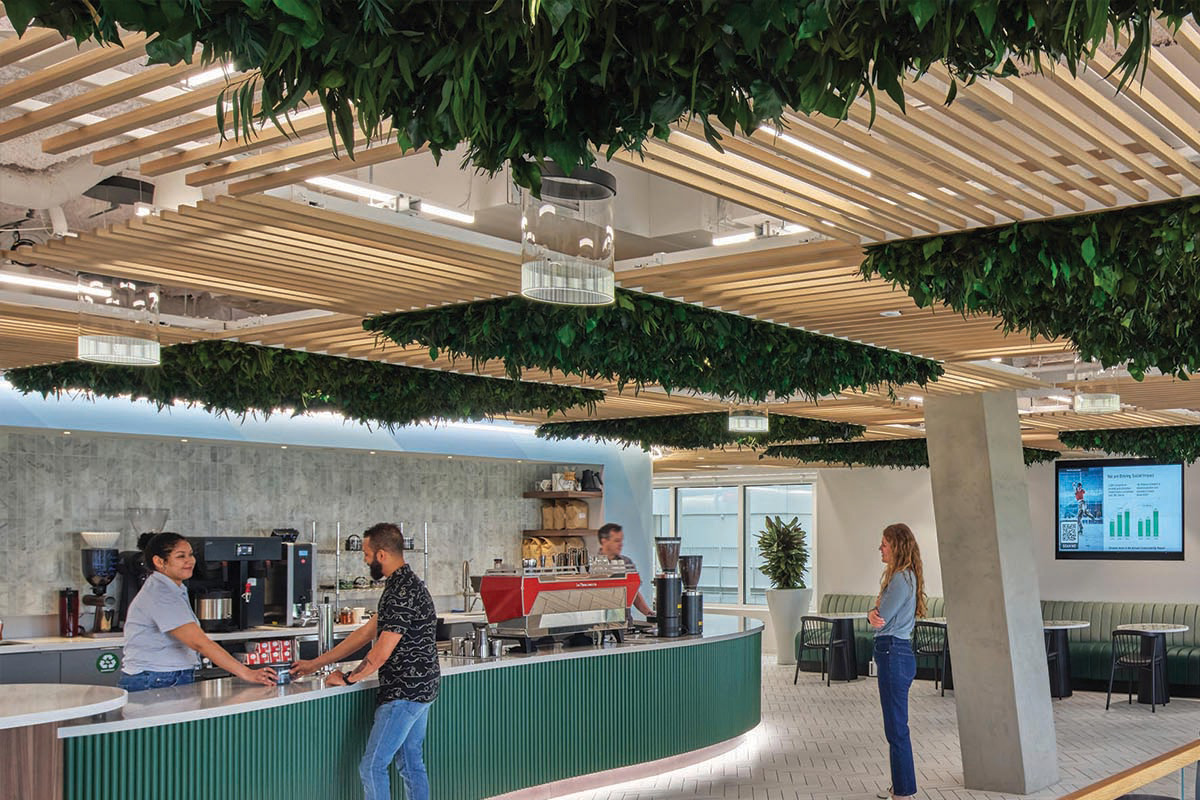
Since 2014, Garden on the Wall® has been supplying designers with no-maintenance plant art systems made from natural materials, including preserved moss and other species, designed to support well-being in commercial environments. There was no category to join, so the company created their own—simultaneously setting the standard for sustainability.
“We remain the only preserved garden provider with a full third-party credential stack: a published EPD, HPD, Declare label, Red List Free status and CDPH compliance. Everything we install is all-natural preserved botanical, no plastics, no Styrofoam, backed by a 7-year warranty and a lifespan past 20 years. More than 2,000 projects across 44 states later, the commitment is the same one we started with: quality, innovation, and transparency,” shares Ozturk.
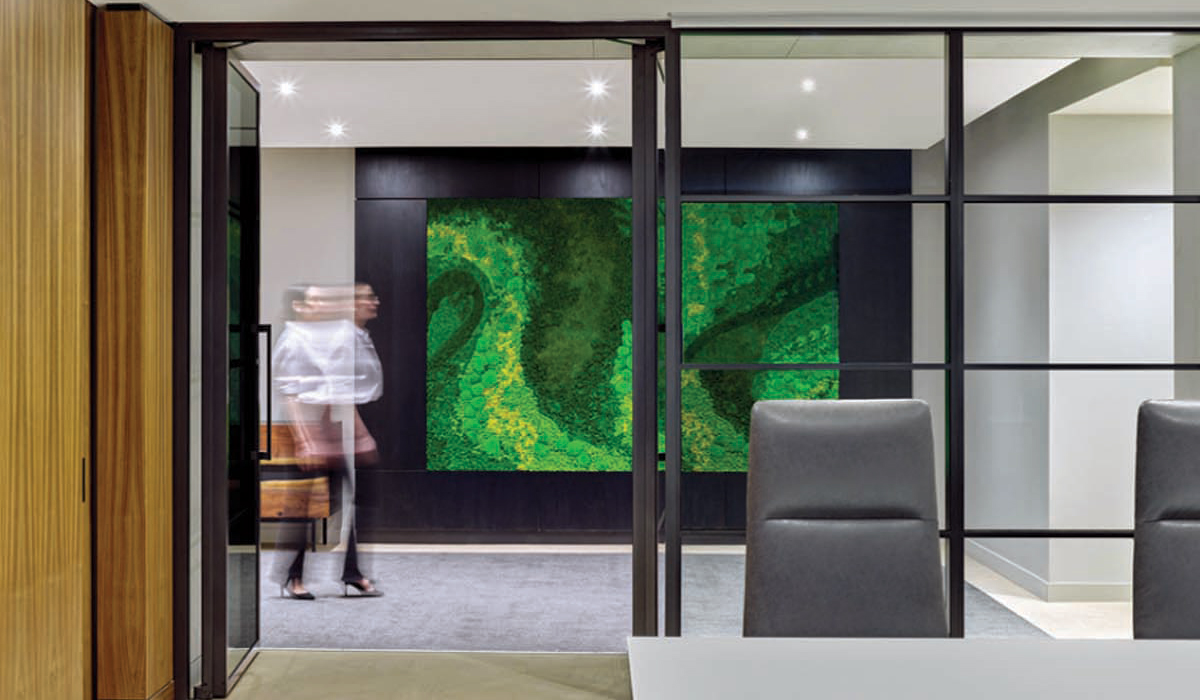
Today, demand for green walls is growing, yet designers don’t always know what they are specifying. With no clear industry standards, the gap between the best- and worst-performing products is substantial—and often difficult to gauge. Garden on the Wall® aims to address that uncertainty through transparent material documentation and a range of preserved botanical installations. Its adhesive formulations are designed with indoor air quality in mind, while its fabrication techniques help installations maintain their integrity for more than two decades.
The brand’s core offerings include textural moss walls, preserved foliage gardens, and preserved planter inserts. All feature botanicals carefully preserved offsite to look just as lush years later as they do upon installation. With ferns, eucalyptus, ivy, and other layered plants, these installations mimic the layers of a forest, creating immersive environments designed to promote a sense of calm. In contrast, brighter and more dynamic species create an energizing effect in social hubs.
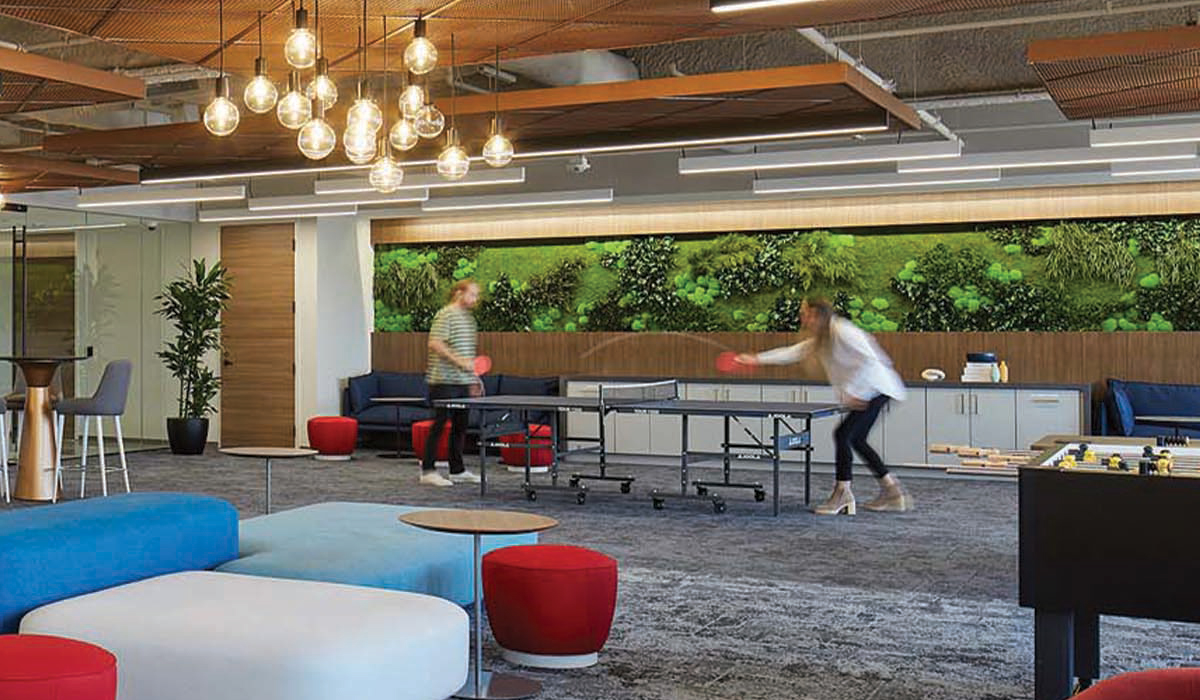
“Nature has an extraordinary ability to shift not only how people feel but how they behave, and composition decides which way,” explains Ozturk. “That is why we pair large gardens with planter inserts, which bring the same preserved botanicals to eye level in planters a project already has, on every floor.”
That emphasis on everyday contact is why preserved planter inserts have become one of the company’s fastest-growing offerings. Many commercial buildings are moving away from live planters, which bring recurring maintenance contracts, water damage to millwork, and gnat and fly infestations that tenants notice long before facilities do. Garden on the Wall® replaces the live material in planters a project already owns, from free-standing and millwork planters to banquette seating and workstation planters, with preserved foliage. “The occupant’s response does not depend on whether the plant is alive,” says Ozturk. “It depends on seeing authentic nature, up close, every day. Preserved inserts deliver that same neural response on every floor, at a fraction of the lifetime cost of a maintenance contract.”
Whether in workplace, healthcare, education, or hospitality environments, preserved botanical installations can provide connection to nature without the upkeep of living plants. As Ozturk puts it, “The environment changes, the human response does not. Our job is to make that response available every day, without asking anyone to water it.”
Latest
Products
5 Spanish Furniture Brands Prioritizing Play and Personality
At Feria Hábitat València 2026, these designers brought bold colors, sculptural silhouettes, and a healthy dose of whimsy to contemporary furniture.
Products
6 Material Trends Shaping Interior Design
From playful plaids and painterly botanicals to sculptural forms, discover what’s next in textiles, surfaces, and acoustic products.