



April 3, 2026
A New Era of Senior Living
Opus Newton, Newton, Massachusetts
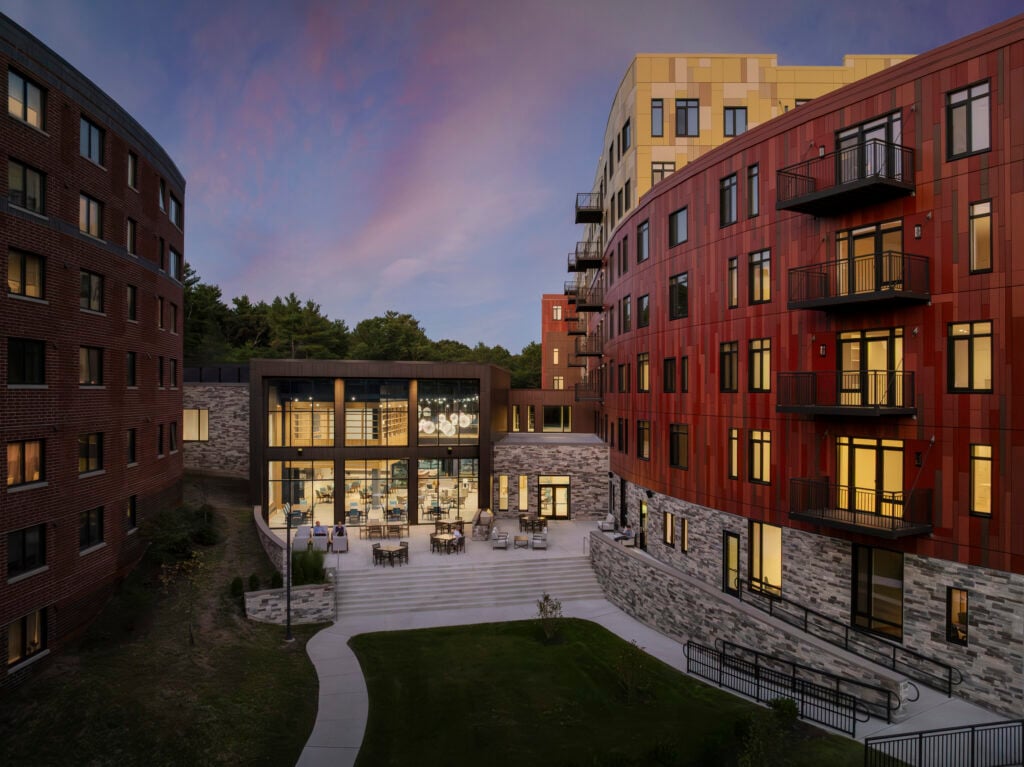
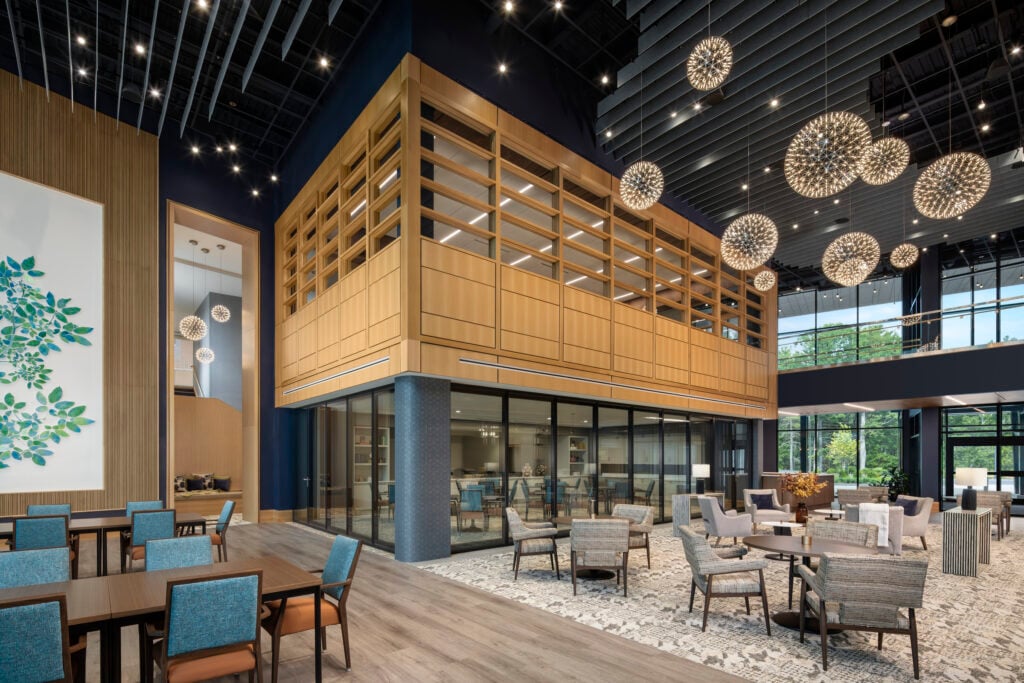
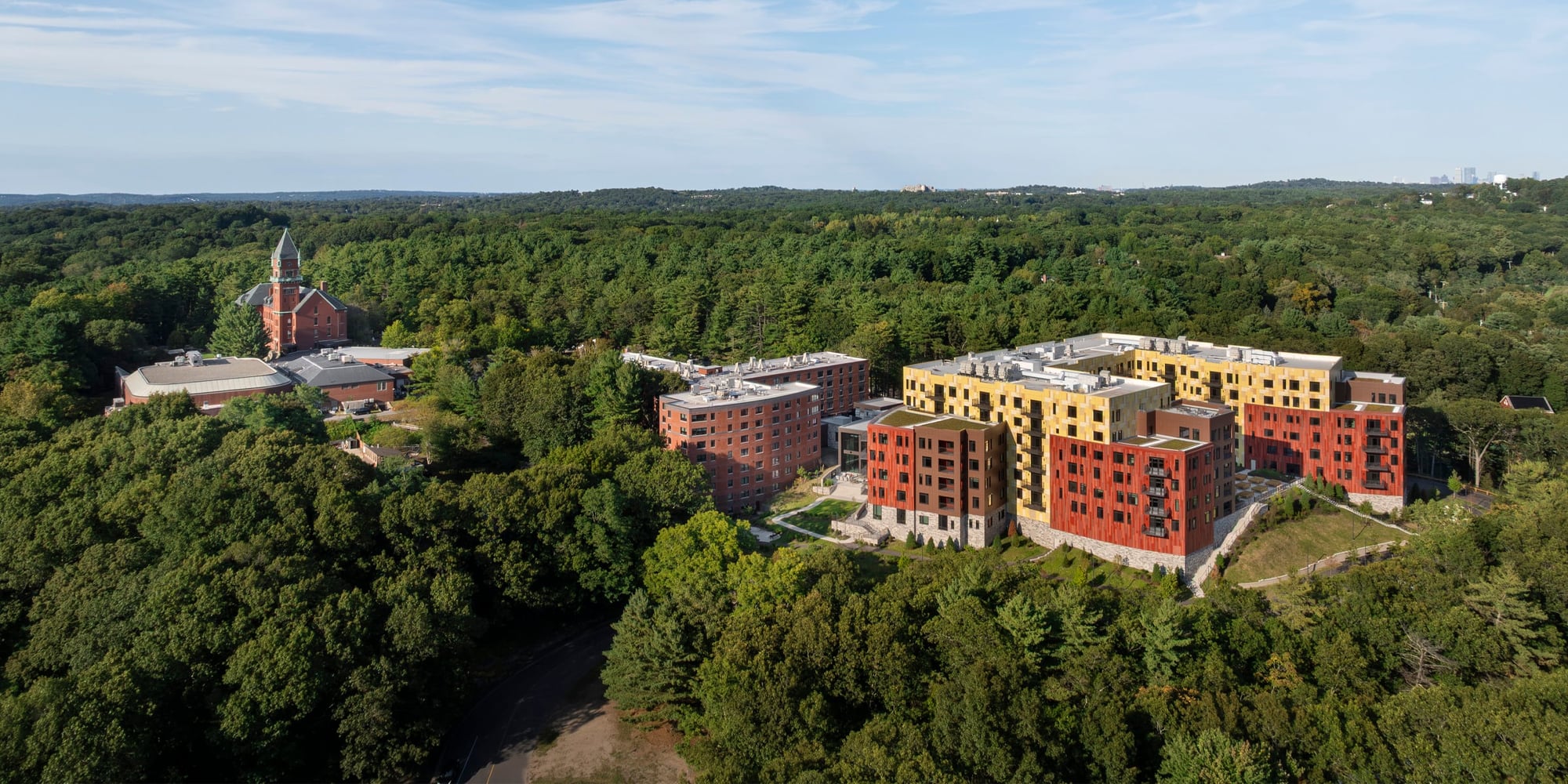
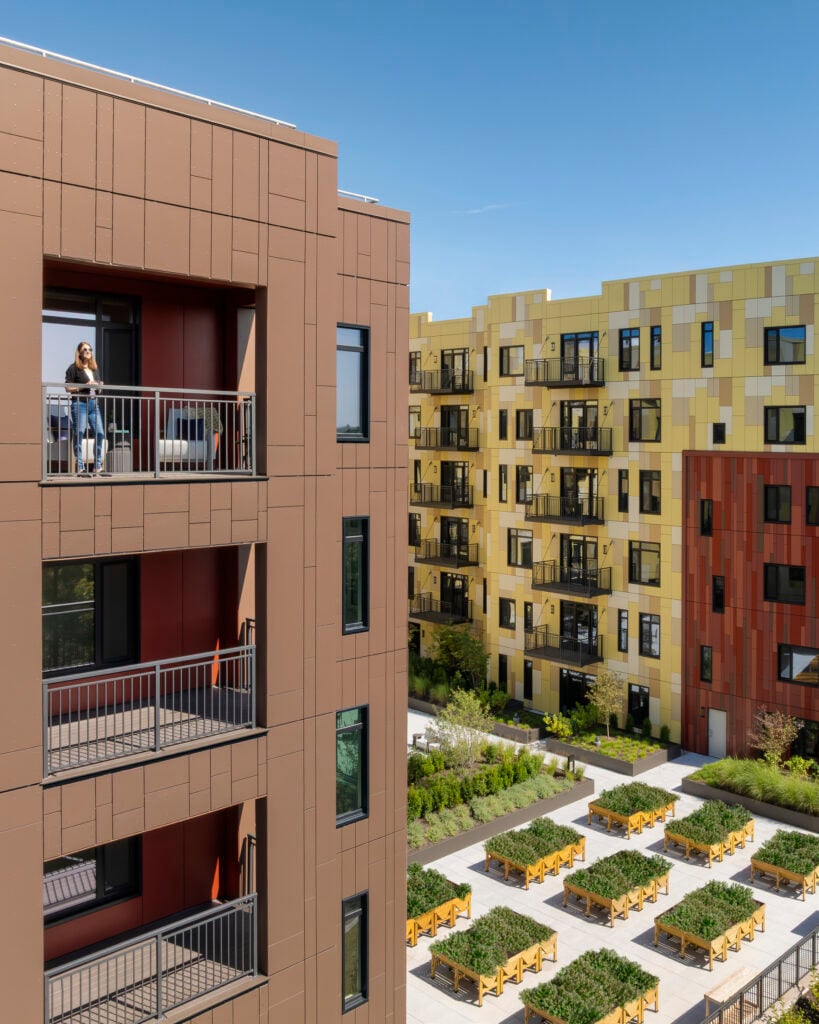
A Pittsburgh-based team from Perkins Eastman recently completed Opus Newton, a 351,500-square-foot senior living facility by 2Life Communities in Newton, Massachusetts. Opened in January 2026, the middle-income community includes 172 independent living residences with shared amenities, a connector hub, and outdoor terraces and courtyards.
“The goal at Opus Newton is not just to create housing but to cultivate intentional, vibrant community life,” explains Emily Pierson-Brown, principal for planning and design, noting that the project includes a volunteer program in which each resident must contribute ten hours a week. “Creating a collective, kibbutz-like community environment was a key to making it affordable, flexible, and a catalyst for resident social wellbeing.”
A two-story “Connector” links the new apartments with the neighboring Coleman House, providing a shared entryway, dining room, and flex spaces that transition to the existing income-based housing.
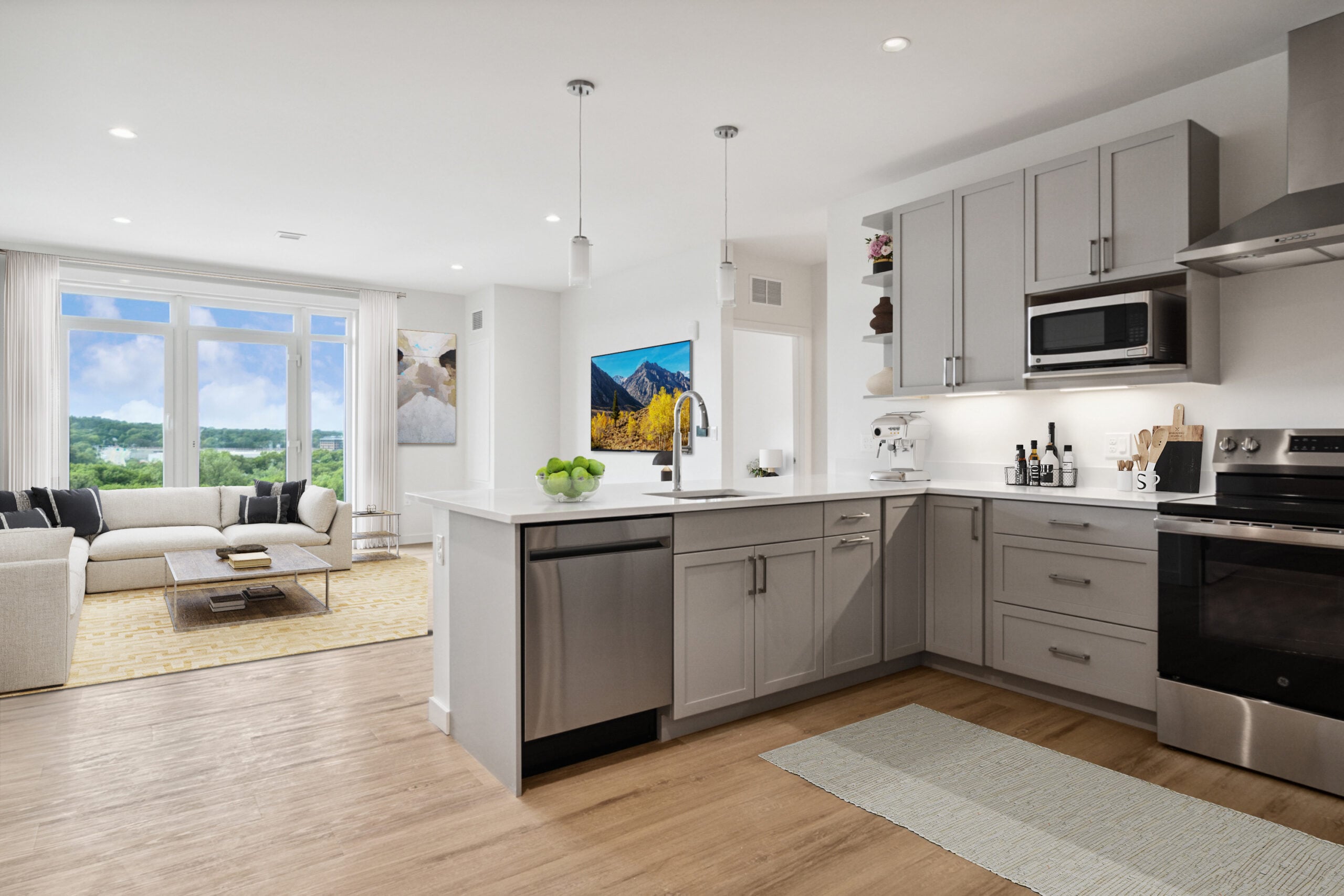
The design integrates with the sloped terrain, spreading the apartments out in steps to minimize the mass of the U-shaped building, which is clad in an array of red and yellow fiber cement panels to respond to the tones of New England’s fall foliage.
“Opus emerged after more than a decade of research by 2Life Communities into how to deliver middle-income senior housing in a traditionally underserved market sector that offers much potential moving forward,” Pierson-Brown says. “The ambition was not simply to build more housing, but to create a replicable model: operationally, architecturally, and financially; providing a human-scale, approachable experience that could expand equitable access to aging in community.”
Rekai Center Cherry Place, Toronto, Ontario
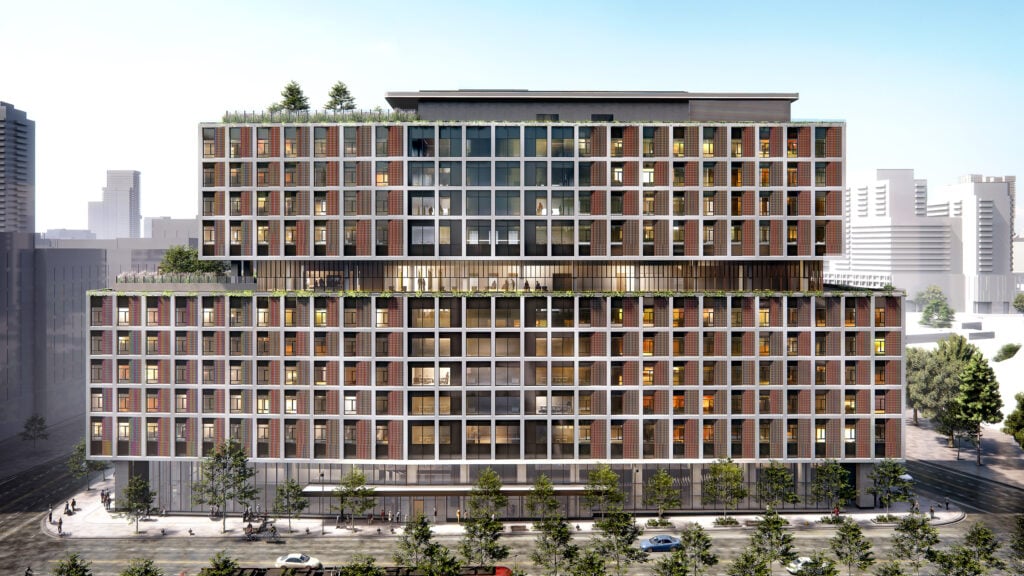

Slated for completion in May of 2028, the Rekai Centre Cherry Place is designed to be like an ocean liner anchored by the city. Montgomery Sisam Architects (MSA) is docking the 260,000-square foot facility near the mouth of the Don River and Lake Ontario in Toronto, Canada.
“The project embraces its setting through promenade decks, terraces, and layered horizontal expressions,” notes Dustin Hooper, MSA principal, explaining that the design is both grounded and in motion.
With 348 long-term care beds and resident homes that will house 22-32 residents each, the large program is organized into human-scale neighborhoods, demonstrating that safety and social connection can coexist.
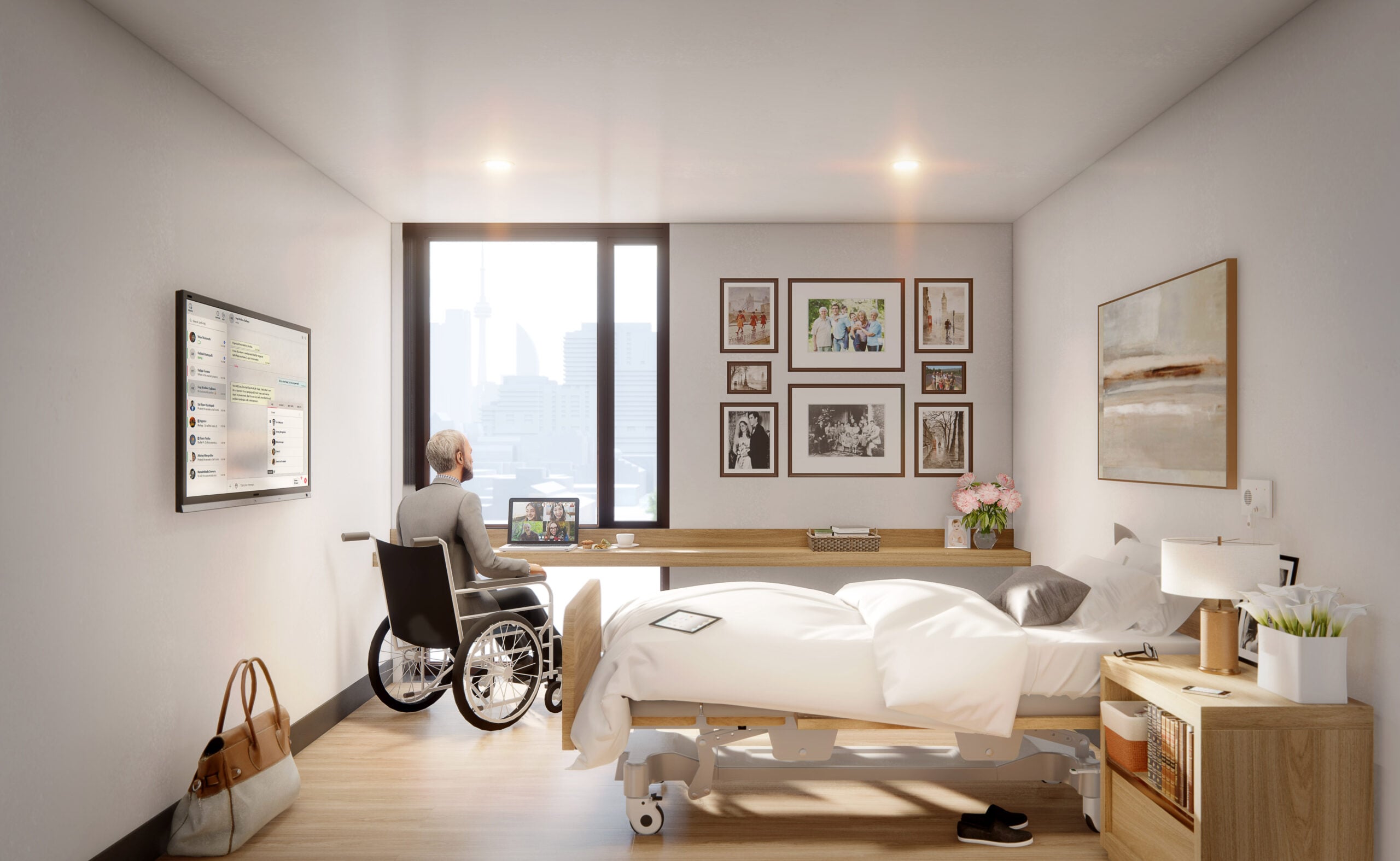
The brick and precast concrete building is centered around a double-height “boardwalk” that functions as an active spine that connects residents, visitors, staff, and members of the onsite George Brown Polytechnic Personal Support Worker training program.
On the exterior, five different brick palettes will alternate with tapered, precast concrete “porthole” window frames, adding rhythm into the long facade. The facade treatment creates the impression of leatherboard books, inspiring MSA to create a “library of residents” concept that celebrates the individuality of each life.
Outdoor terraces and rooftop gardens will be spread throughout the linear, dense site, ensuring that residents have access to fresh air and daylight within the city.
The Grandview, Bethesda, Maryland
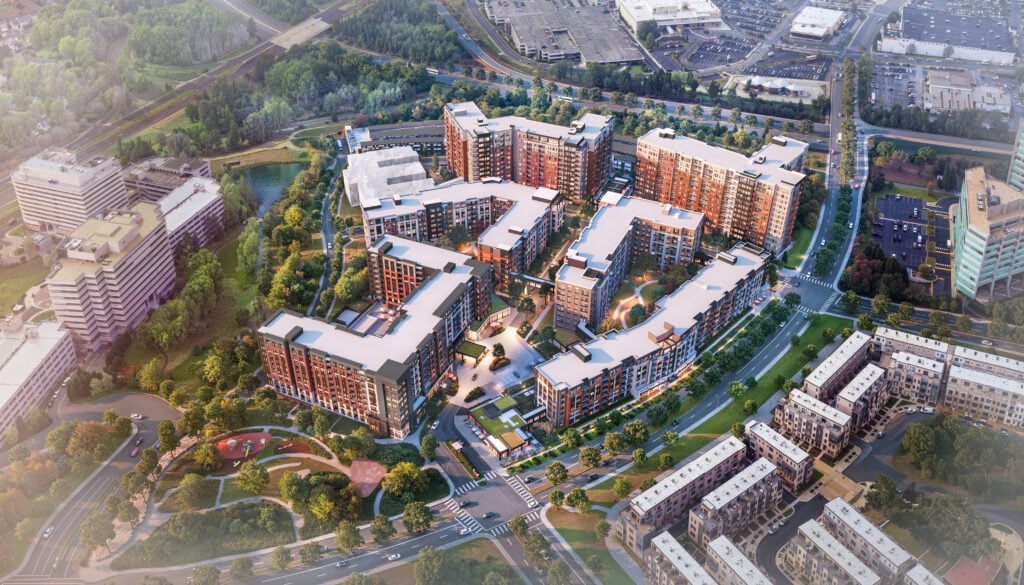
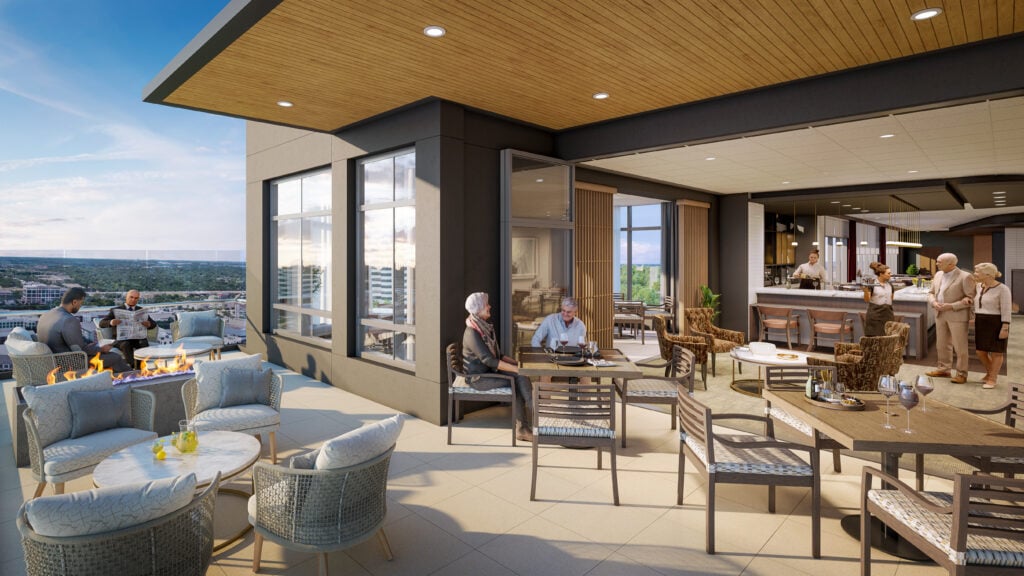
In December 2025, HCM completed the first phase of The Grandview in Bethesda, Maryland, converting a former Marriott International Headquarters—completed by Corgan Associates in 1978—into a two-million square foot senior living complex. Owned by Erickson Senior Living, the first phase of the project included two, 12-story independent living towers, complete with a skyline dining space and roof terrace.
Slated to open in 2029, the full plan for the 33-acre complex will include six residential buildings with 1,400 units of independent living, assisted living, memory care and skilled care, an amenity hub with resort-style features, a 5,000-square-foot marketing center, and ten acres of community parkland and greenspace.
“The design introduces density and urban character through carefully varied massing, building heights and facades, maintaining a pedestrian scale and visual interest across the campus,” says HCM CEO Tim Barnhill, explaining that a curated palette of brick and metal panels give identity to each form while storefront glazing helps blur the line between exterior space and ground-floor amenities. “Rather than a monolithic approach, each building is treated as a distinct yet cohesive piece of a larger urban tapestry, reinforcing the community’s identity.”
The design’s nine buildings are arranged to create outdoor rooms that provide visual and physical connections between the residents and the amenities. Additionally, elevated pathways allow circulation across the campus despite weather conditions or mobility limitations of the residents.
Senior Citizens’ Home, Nový Bydžov, Czech Republic

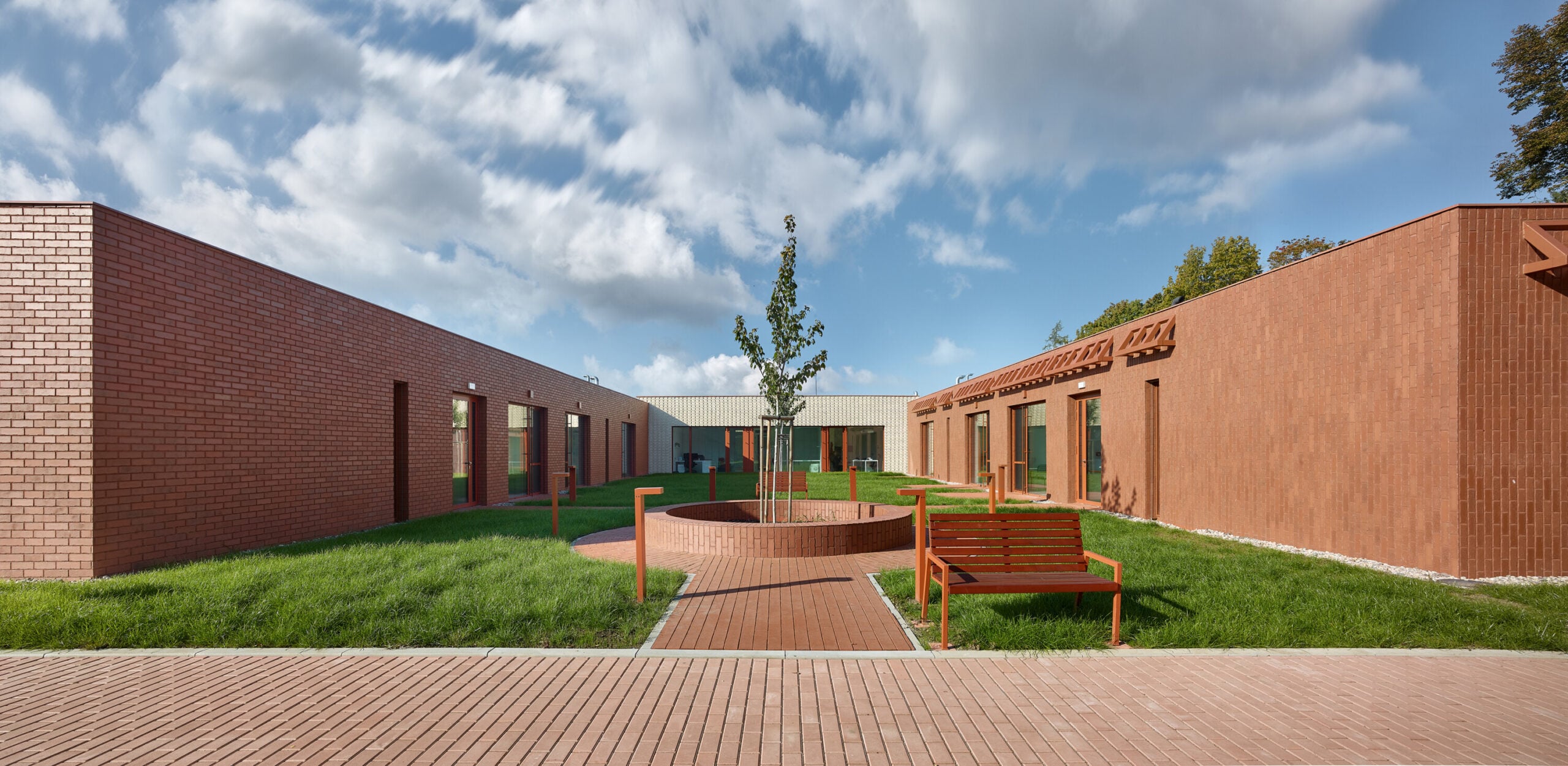
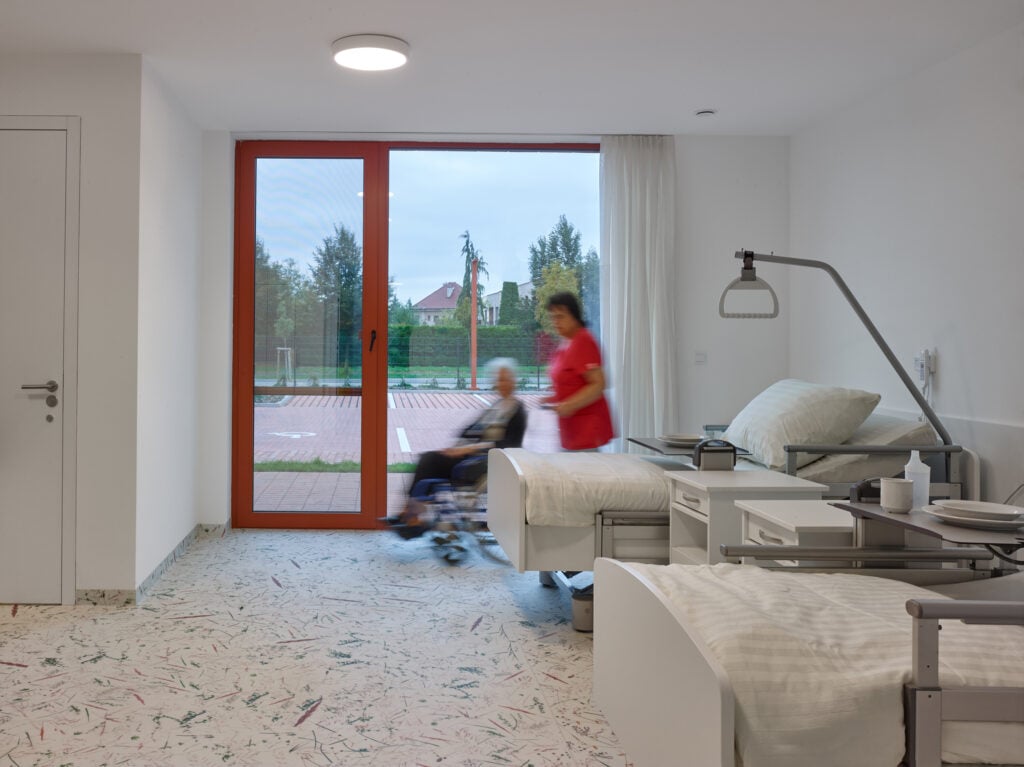
Designed by Architektura s.r.o. in Nový Bydžov, Czech Republic, the project opened in 2025, spanning 35,845-square-feet on the site of a former orchard next to a hospital. The four independent buildings house 15 residents each and surround an internal atrium.
“Our idea was a quiet building with a castle character,” says architect David Kraus, explaining that the building is a low and long red line lying on a green cushion.
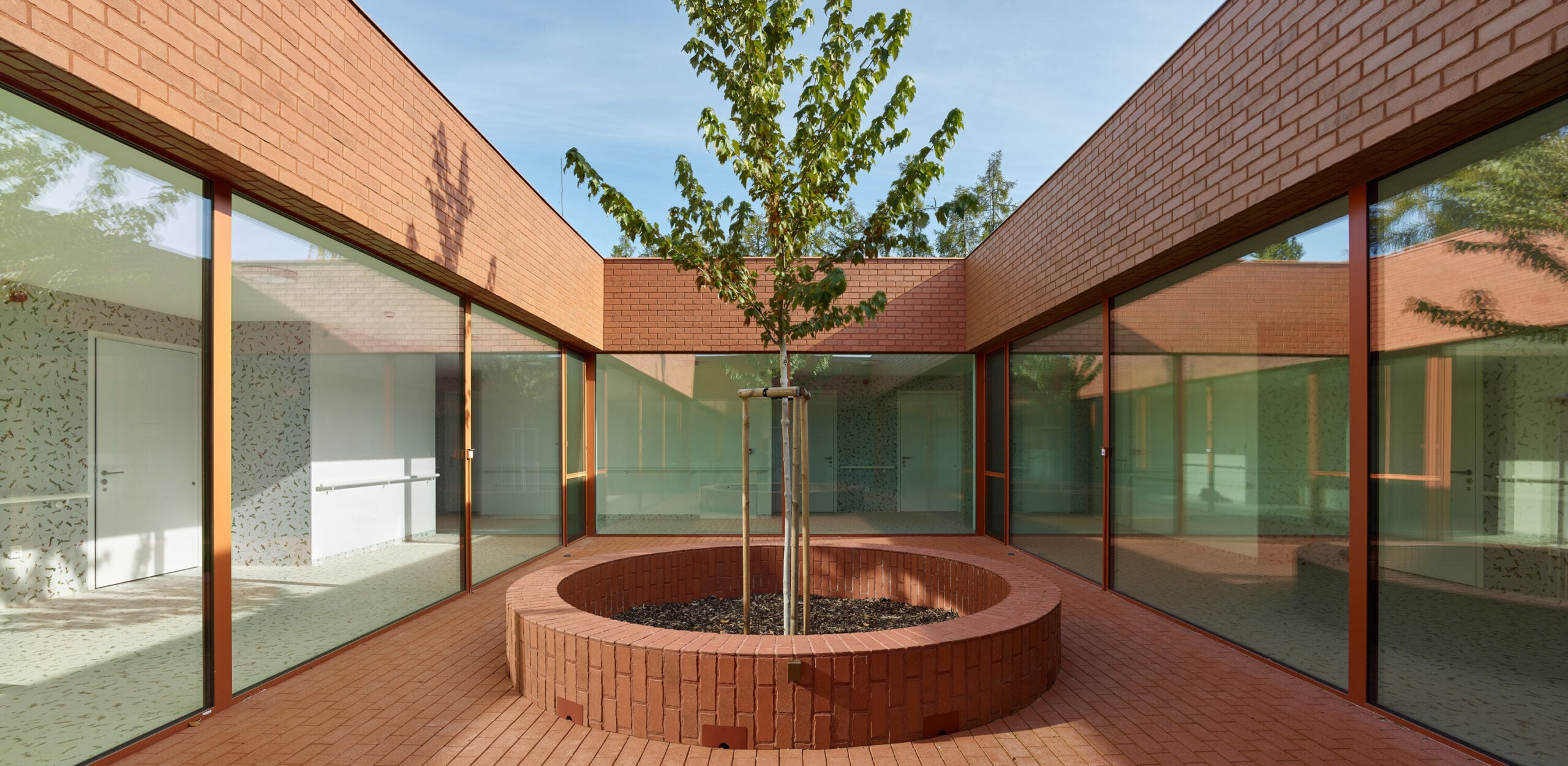
The one-level facility is arranged to reduce long corridors in favor of direct access to the atriums and self-contained resources like technical and storage spaces, staff rooms and common areas. The four houses are connected by a central core that features a large oval-shaped atrium with glass walls.
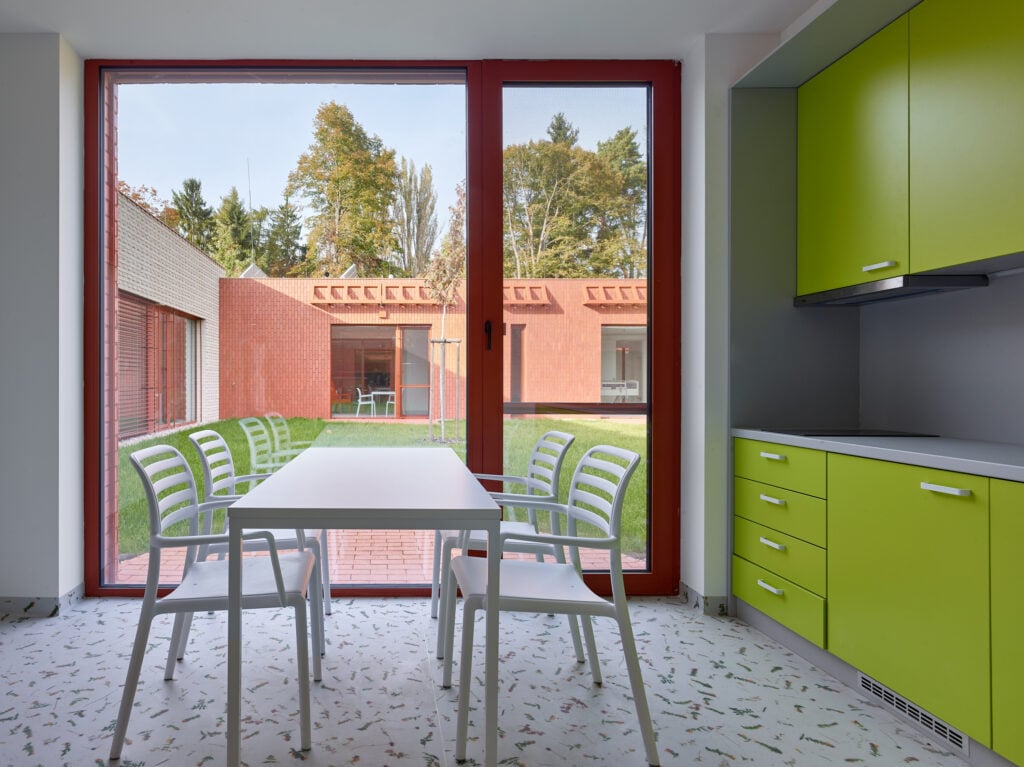
Each of the houses features a distinct red brick pattern on the facade and interior, broken by the rhythm of French windows with shading systems that correspond to the portion of the building. Meanwhile, the central core is characterized by white bricks in a protruding running bond pattern. Inside, the floors feature photos of local flowers and grasses, and color-blocked millwork defines the shared areas.
Kraus says that the design fosters connections and mutual respect between generations and a return to traditional societal principles with diversity in old age.
Would you like to comment on this article? Send your thoughts to: [email protected]
- No tags selected
Latest
Viewpoints
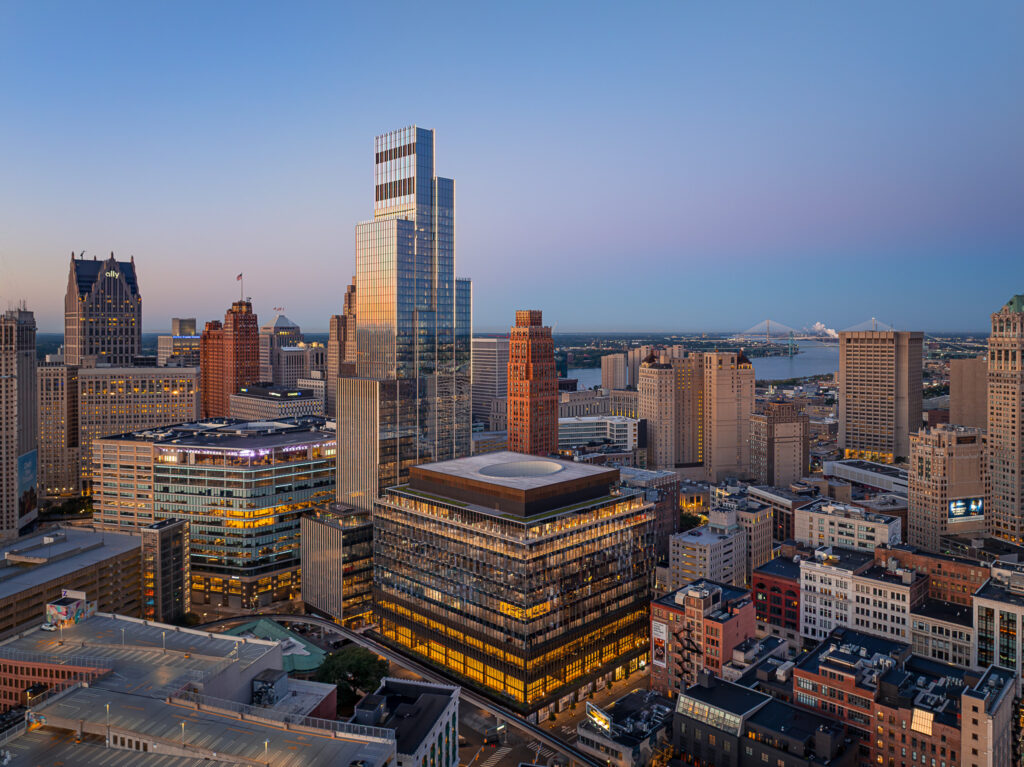
Detroit Month of Design: A City’s Work in Progress
Now in its 16th year, the celebration offers insights into the Motor City’s ongoing accomplishments without glossing over its hurdles.
Projects
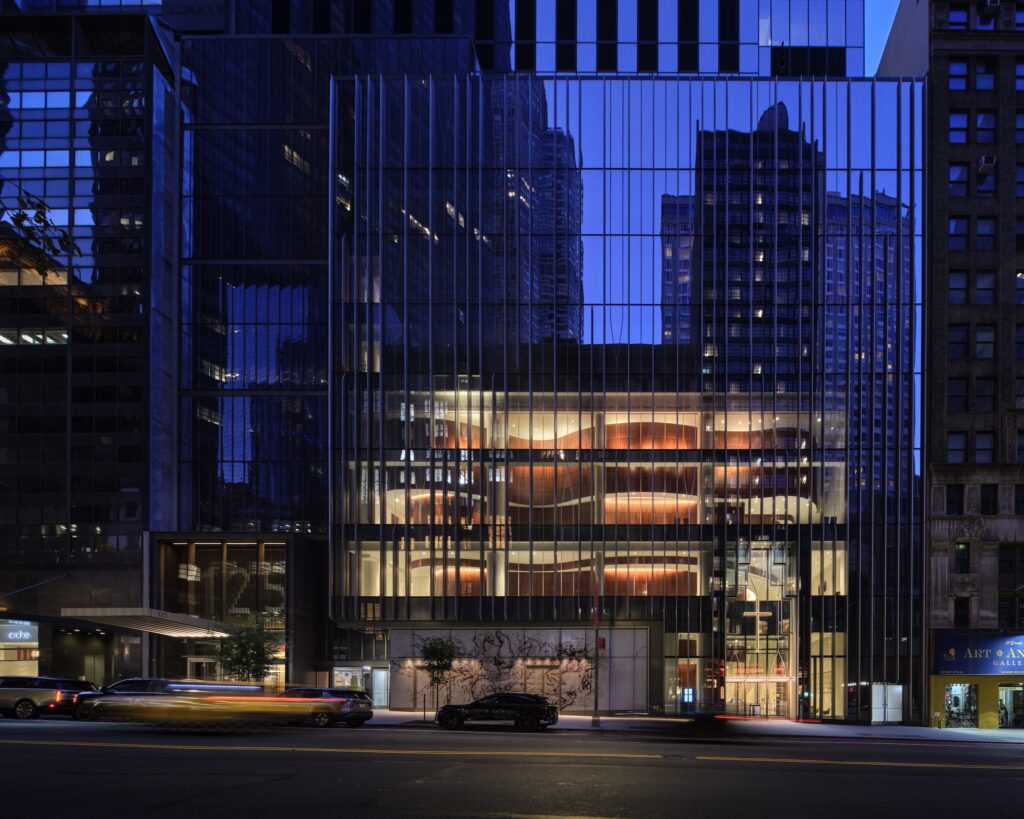
How a Hybrid Building Helped an Historic Manhattan Congregation Remain in Place
On Billionaire’s Row, FX Collaborative designed a new home for Calvary Baptist Church combined with an office tower.