



April 2, 2026
An Ecological Education Center That Goes Beyond Net Zero
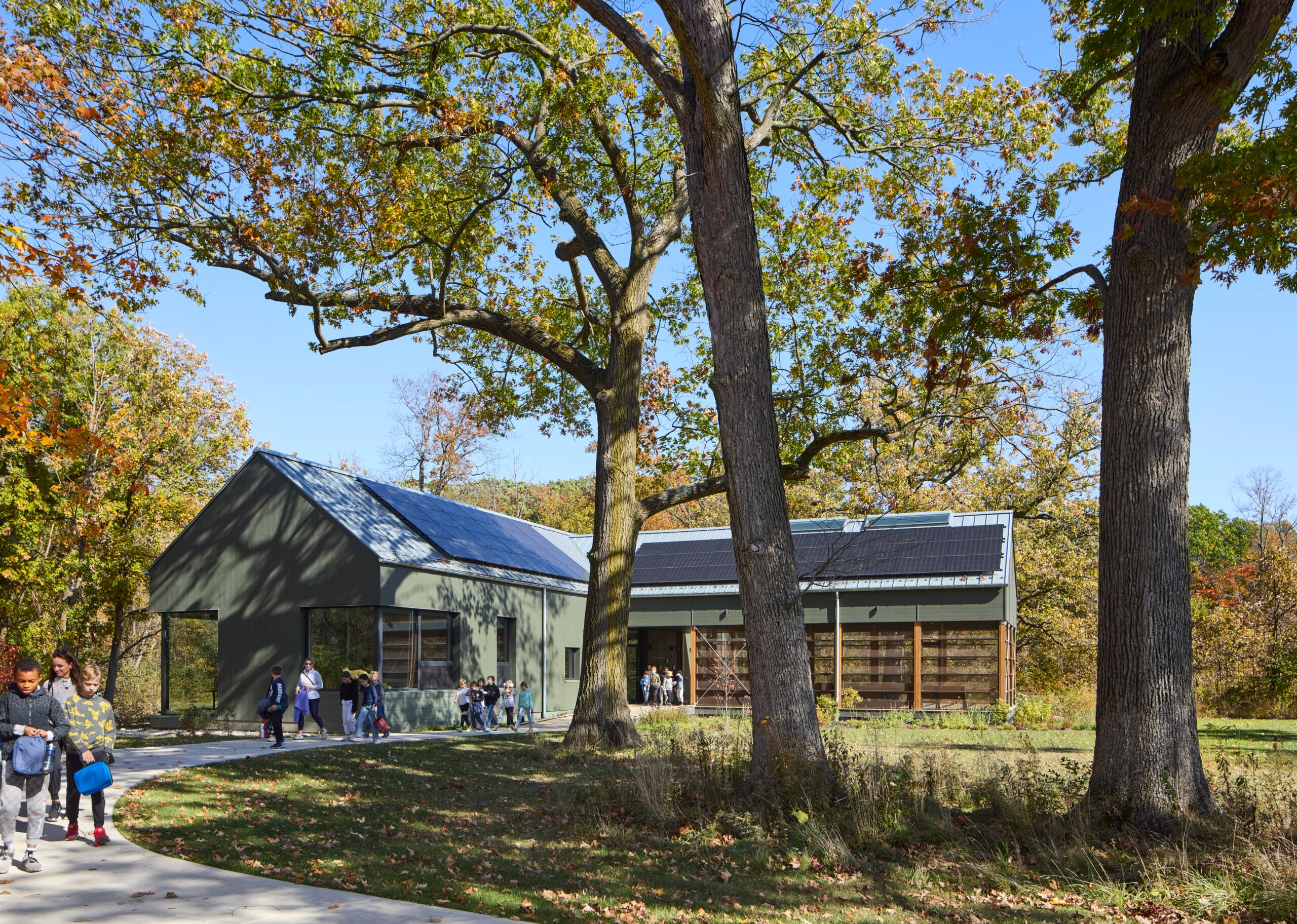
Instead of baseline sustainability standards, the client and landscape architect, the Lake County Forest Preserves, asked Lake Flato to aim higher. Not only does the building meet its net-zero goal, but it produces an energy surplus.
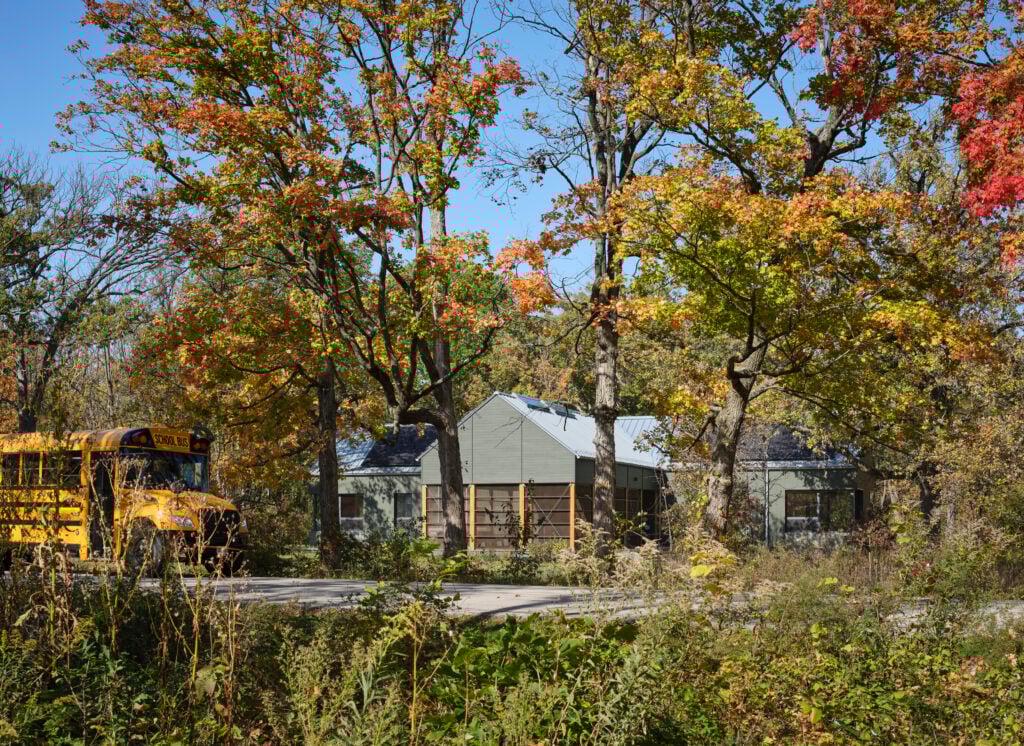
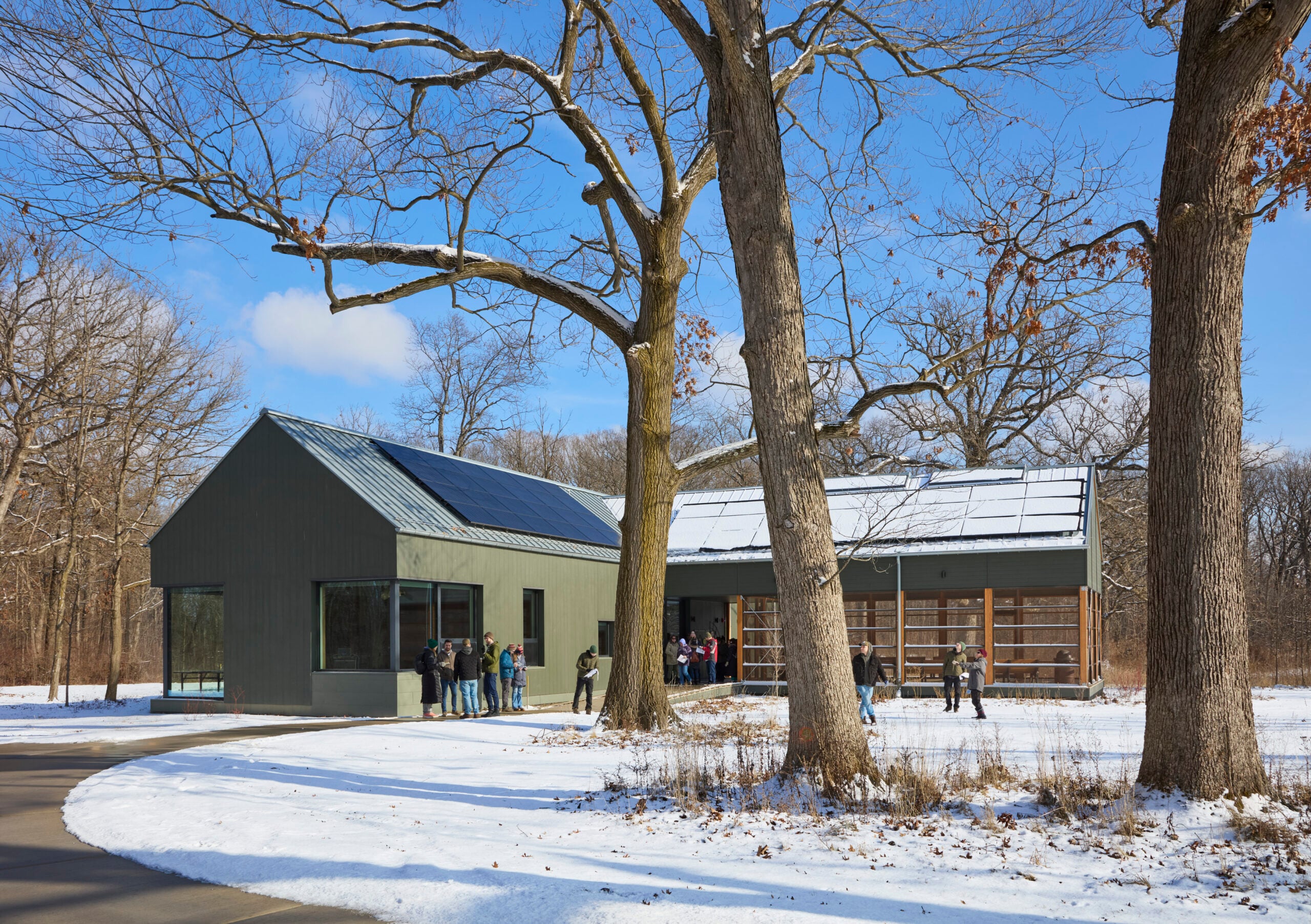
“What really excited us about this project and the client was how strong their desire was to push the boundaries of sustainability,” recalls Lake Flato’s Matt Wallace, co-leader of the firm’s Eco-Conservation Studio. They had completed one of the first LEED Platinum projects in Illinois on the site in 2006, and the new education center was a chance to build on that legacy. Funded by the Illinois Clean Energy Community Foundation, the building now welcomes Chicago school groups, scout troops, and families, serving as a gateway to understanding the ecosystems that define northern Illinois.
Set along the Des Plaines River, the education center replaces two drafty, inaccessible 1940s-era cabins that housed the Forest Preserve’s programming since 1972. In addition to the certification goals, “they wanted a forever building,” remarks architect and Passive House specialist JT Schaffhauser. “As an organization, they were prioritizing it as a public investment that needs to represent not just this generation but generations to come.”
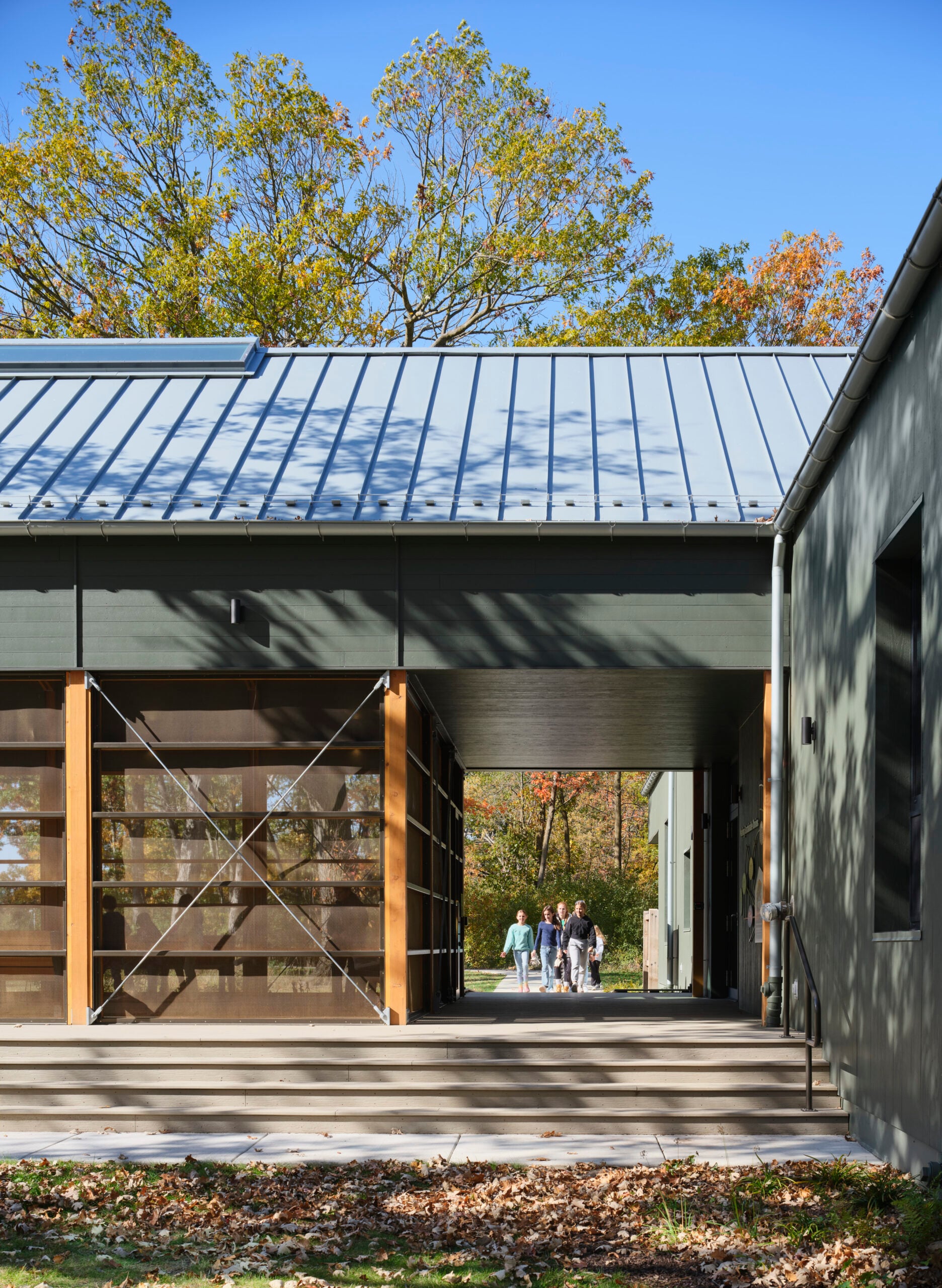
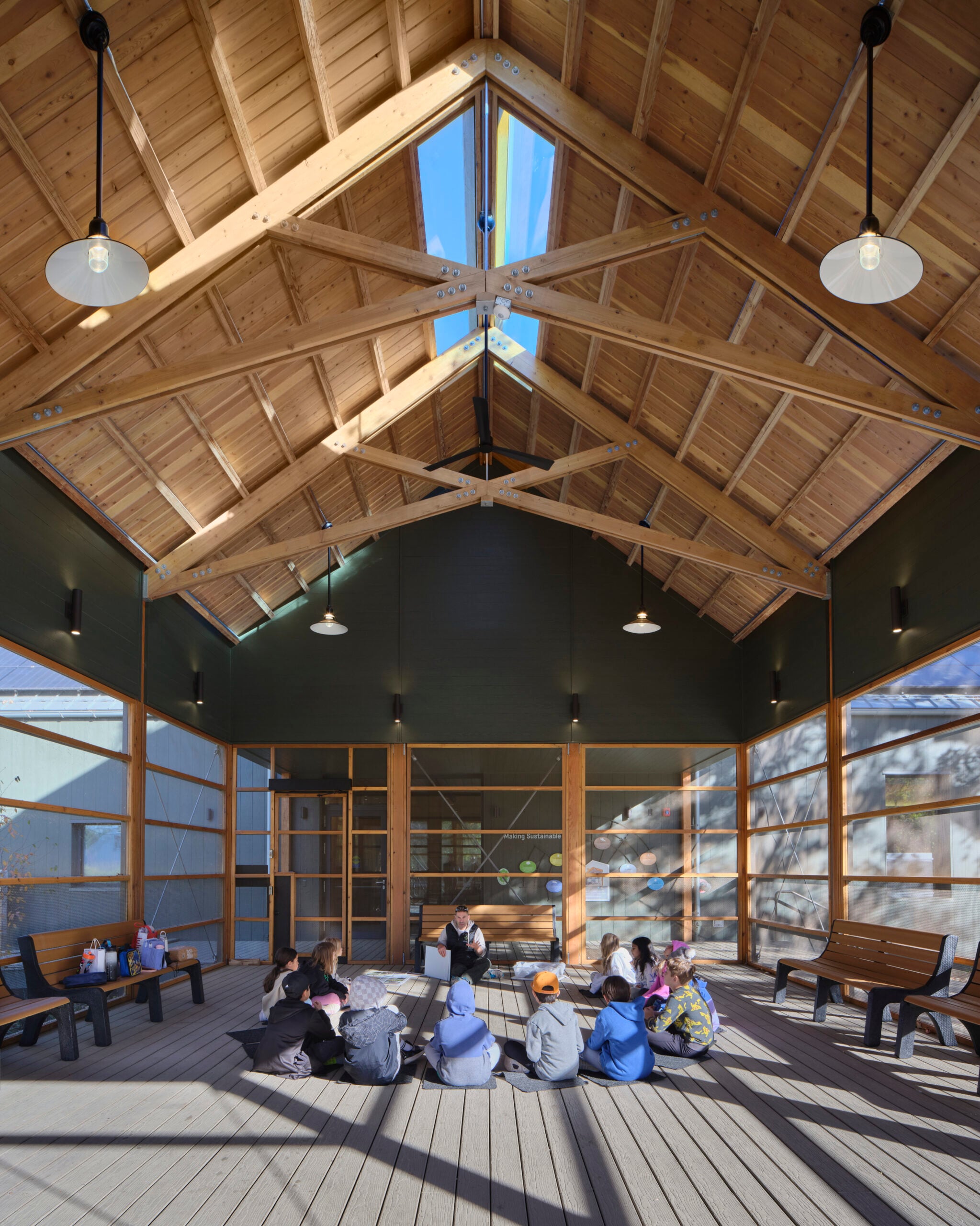
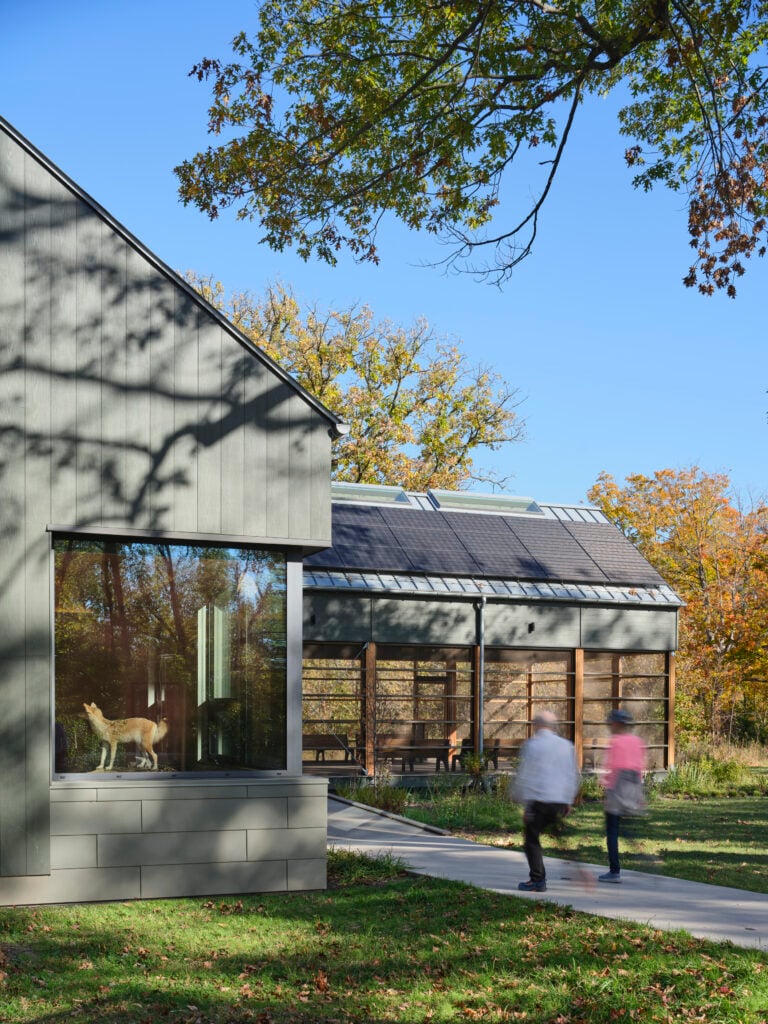
When it came to the site, the original cabins were carefully deconstructed and moved, while the new 3,739-square-foot wood, glass, and zinc-roofed structure was placed within its footprint. The new facility is nestled amongst heritage trees and the outdoor classroom encourages immersive learning through its proximity to the nearby trail network. “Building outside the cabin footprint would’ve done harm to the pristine woodland that they are trying to educate the public about,” Wallace says. They also brought in an arborist for a comprehensive study that looked at floodplain data and vulnerable surrounding species.
Set within a sensitive forest, reducing the energy demand of the building was essential from the outset. Passive House and Phius ZERO certification offered the most direct path to achieving net-zero performance. The facility incorporates a 23.8kW rooftop solar array that offsets 100 percent of its annual energy consumption. Other elements such as high-efficiency HVAC systems with energy recovery ventilation as well as advanced insulation and triple pane windows help reduce the heating and cooling loads.
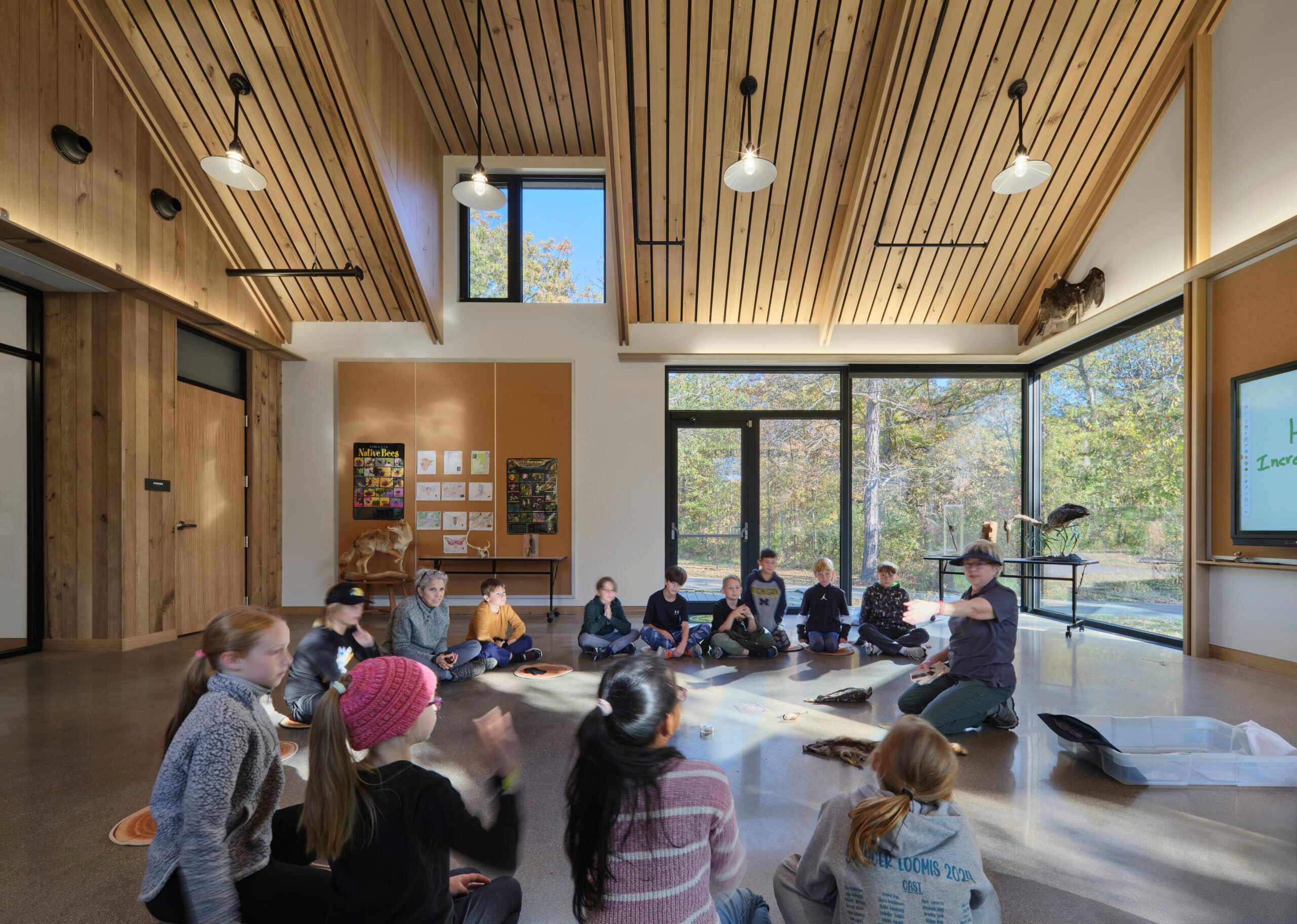
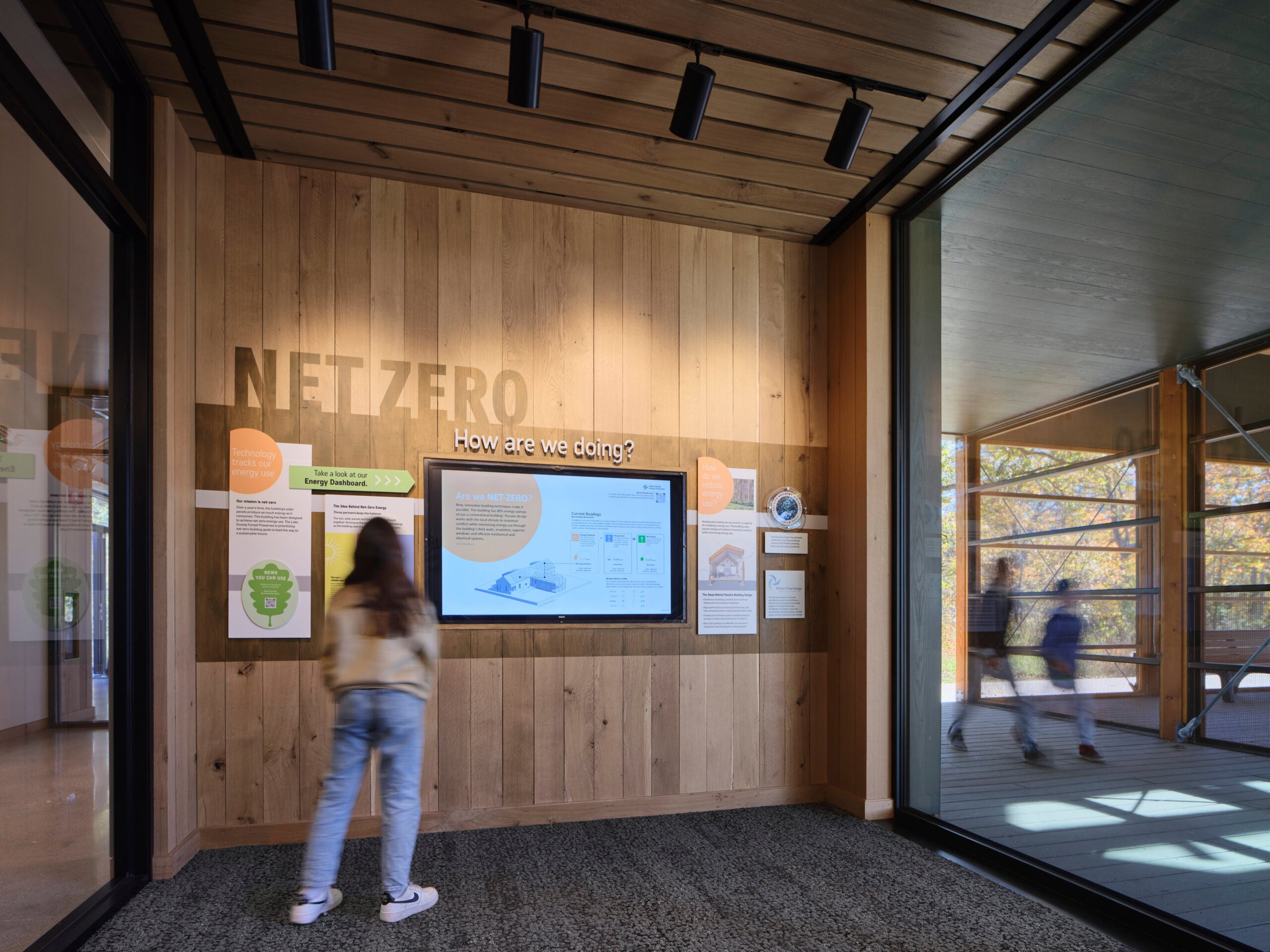
The building required thick walls due to its small footprint, thermally broken connections, and cellulose insulation. Inside, the space features a classroom, a virtual learning area, and 900-square-foot screened-in classroom along with a real-time energy dashboard that makes net-zero exciting even for the center’s youngest visitors. “How do you tell the story in a way that’s relevant to a fourth grader?” asks Schaffhauser. By utilizing biomimicry, the exhibit shows how acorns, beaver lodges, and bird feathers are akin to airtightness, insulation, and heat retention. The QR-enabled exhibition also offers visitors personal actions to take.
“When we work on projects like this, we really try and think of how this building can live on beyond us and push forward sustainability and inspire the next stewards of the environment,” adds Wallace.
The center has already served nearly 15,000 Chicago-area residents, fulfilling its goal of bringing people closer to nature while also making sustainability tangible through design.
Would you like to comment on this article? Send your thoughts to: [email protected]
Latest
Viewpoints
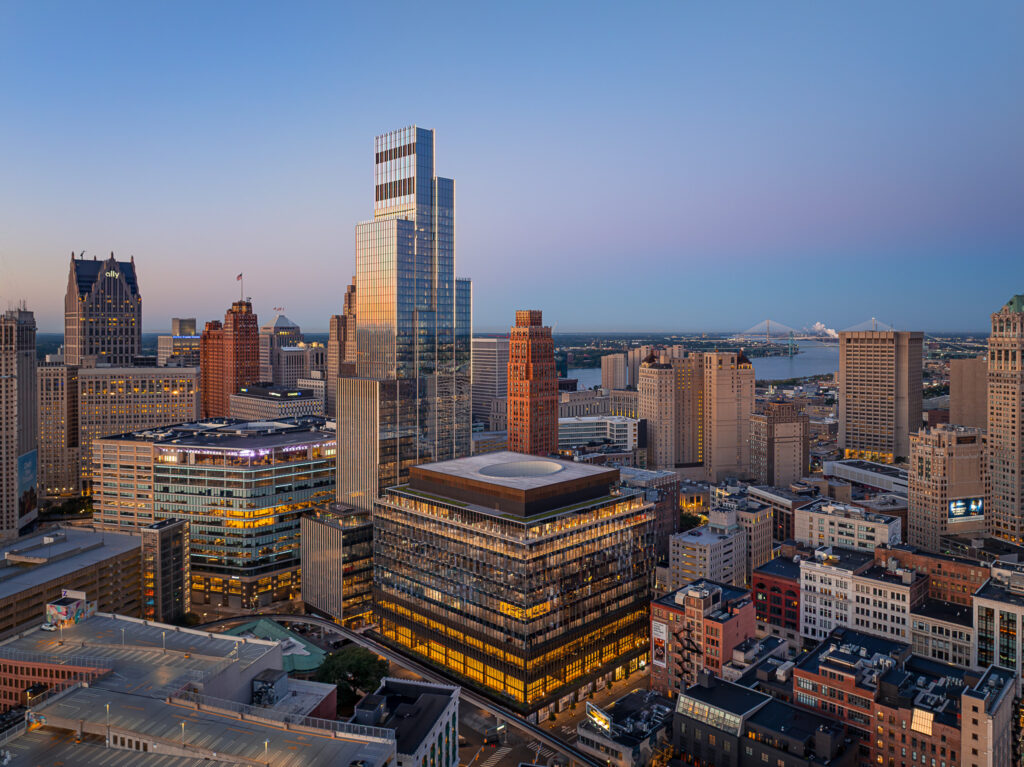
Detroit Month of Design: A City’s Work in Progress
Now in its 16th year, the celebration offers insights into the Motor City’s ongoing accomplishments without glossing over its hurdles.
Projects
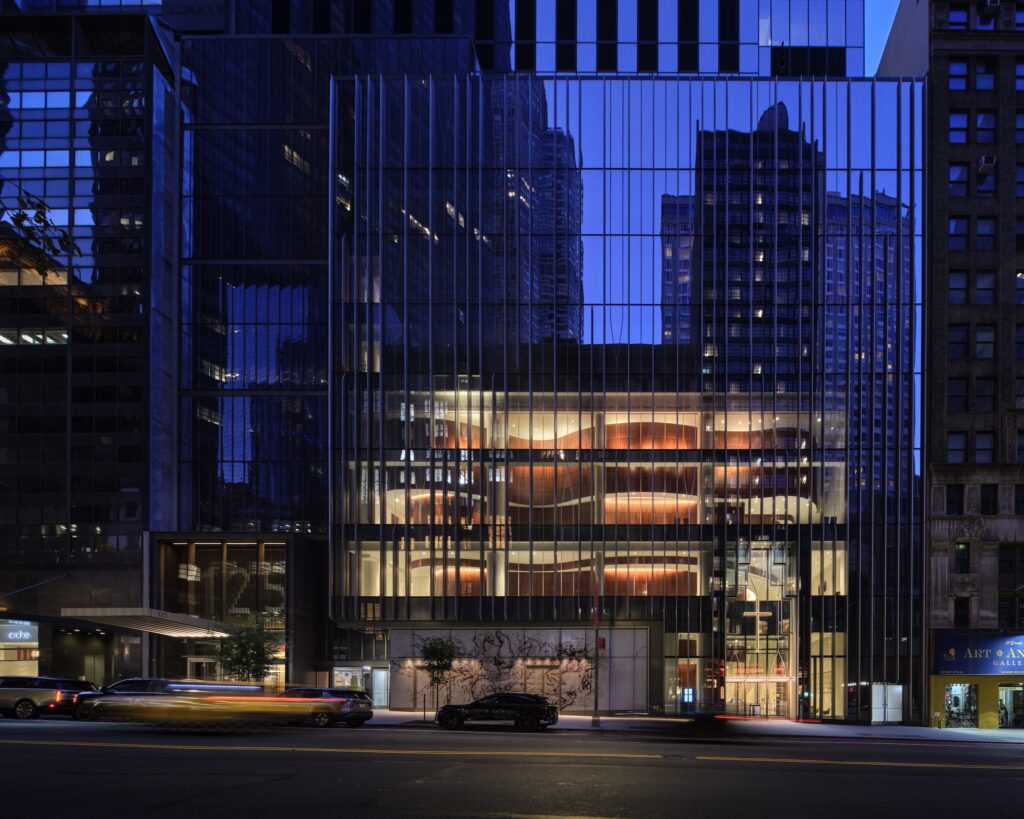
How a Hybrid Building Helped an Historic Manhattan Congregation Remain in Place
On Billionaire’s Row, FX Collaborative designed a new home for Calvary Baptist Church combined with an office tower.