



April 29, 2026
Dyani White Hawk Weaves Lakota Symbolism into Monumental Mosaics
Dyani White Hawk didn’t set out to become a public artist. A painter and multimedia artist based in Minneapolis, she has created works that are grounded in Lakota traditions like beadwork, porcupine quillwork, and parfleche painting, which she draws into conversation with Euro-American abstraction and modernism. She uses the work as a kind of truth telling—challenging how art history has sidelined Indigenous visual systems while quietly absorbing their influence. White Hawk began learning Lakota art forms long before entering studio programs at Haskell Indian Nations University, the Institute of American Indian Arts, and the University of Wisconsin–Madison.
When invitations for large-scale commissions on campuses and in civic spaces first started arriving, she turned them down. The technical demands of permanence, weather, fabrication, and architecture felt far outside her experience. But her thinking shifted after she attended a presentation by Franz Mayer of Munich, the centuries-old, family-run fabrication studio known for monumental mosaics and glasswork. White Hawk could already see her work—its rhythmic lines, chromatic density, and mark-making—reappearing in glass and stone. “I remember thinking, I want to do this for the rest of my life,” she says.
For her first major commission, for CUNA Mutual in Madison, White Hawk worked with Franz Mayer’s team to calibrate color and rhythm and to create a work that feels at one with the building without dissolving into it.
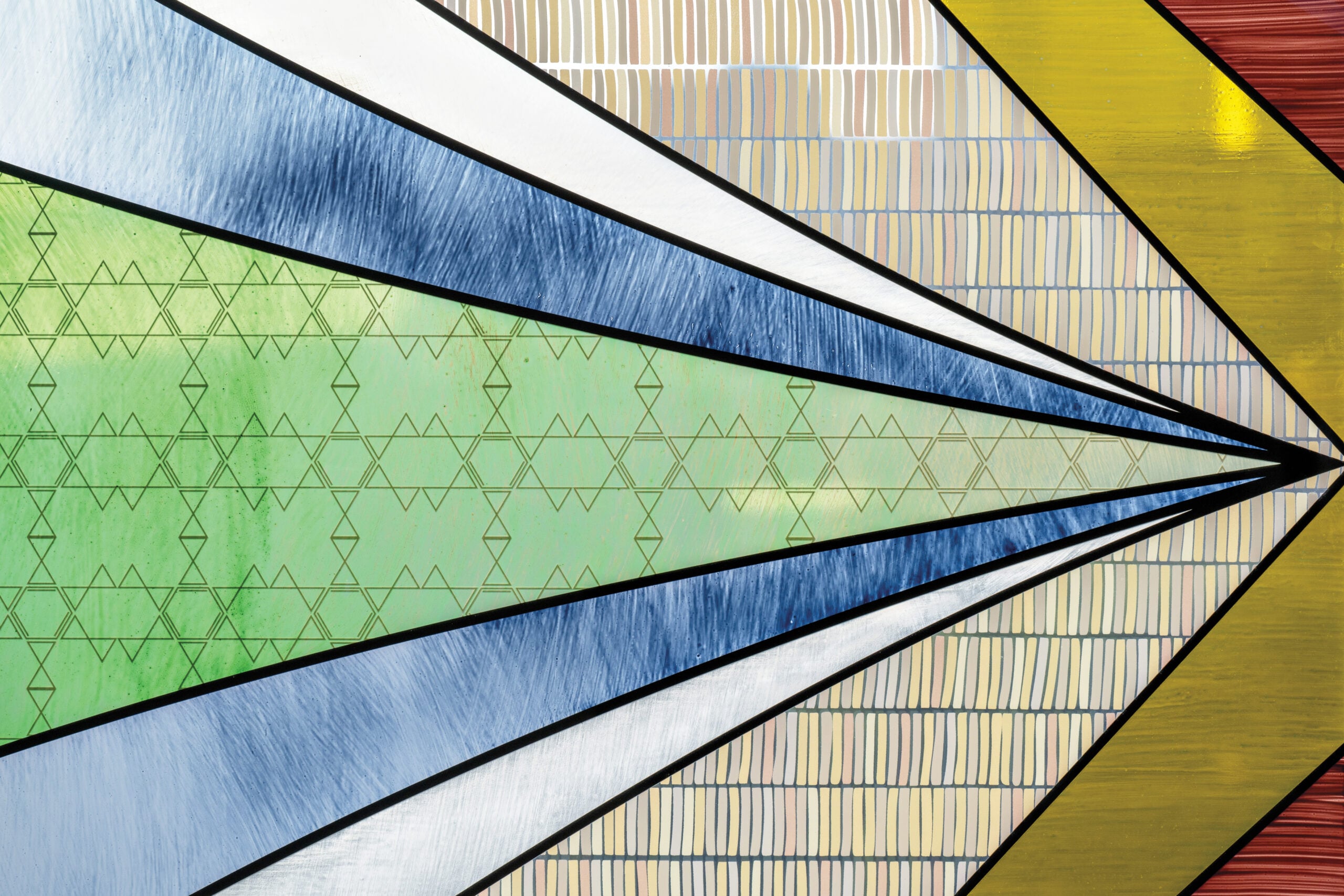
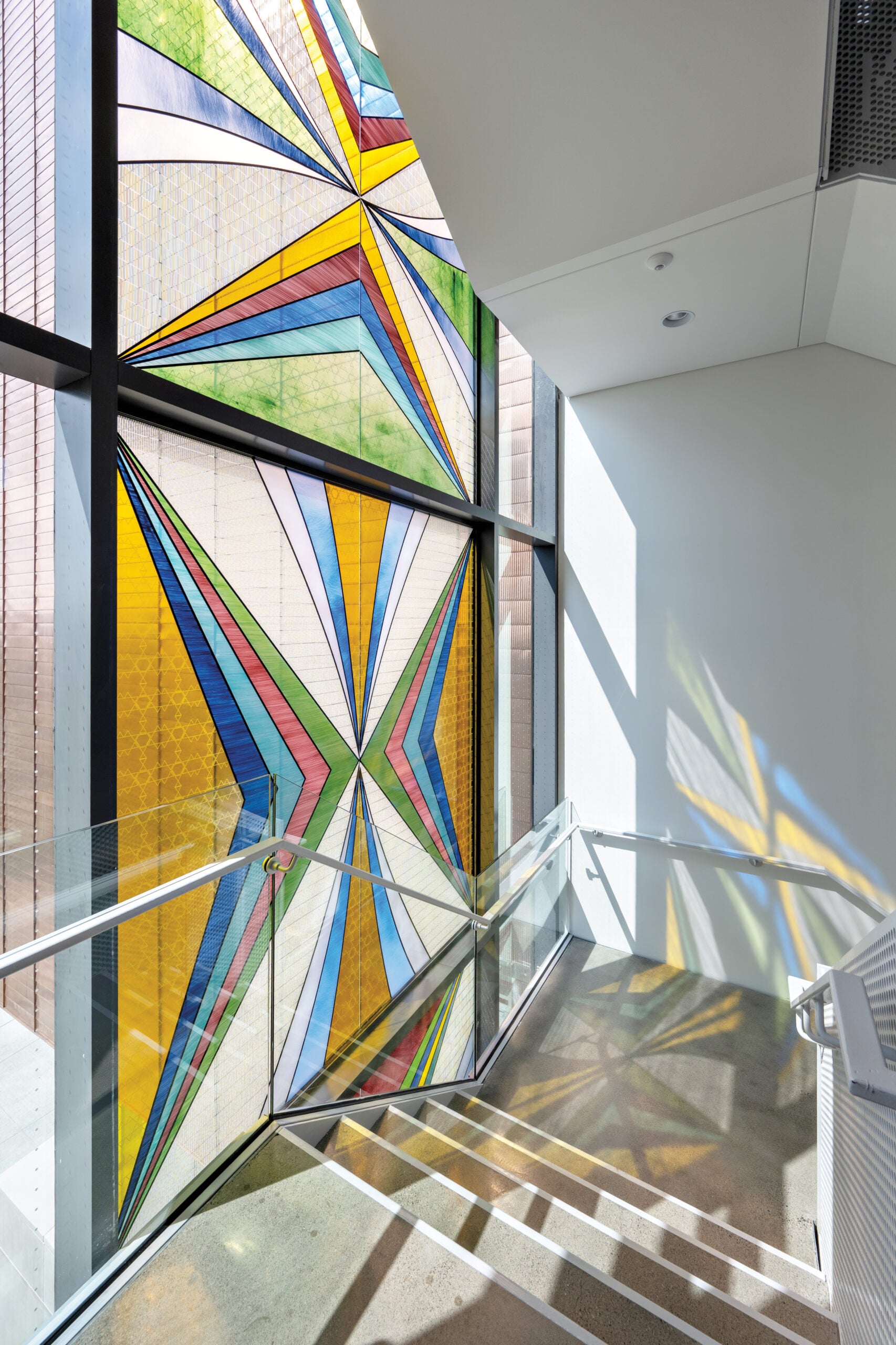
The approach deepened at the University of Minnesota Twin Cities’ Fraser Hall in Minneapolis, where White Hawk created a series of painted float-glass windows integrated directly into the chemistry building’s facade. The work, called Through the Pursuit of Understanding Our Connectivity, We Care for Our World, weaves Lakota systems of knowledge with the visual language of science, layering abstract references to cosmology, nature, and continuity alongside allusions to chemistry and research. She says, “I love getting to meet with architects and think about the design of the building and the space, in conversation with their creative process.”
Would you like to comment on this article? Send your thoughts to: [email protected]
Latest
Viewpoints
Detroit Month of Design: A City’s Work in Progress
Now in its 16th year, the celebration offers insights into the Motor City’s ongoing accomplishments without glossing over its hurdles.
Projects
How a Hybrid Building Helped an Historic Manhattan Congregation Remain in Place
On Billionaire’s Row, FX Collaborative designed a new home for Calvary Baptist Church combined with an office tower.