



June 30, 2026
Field Operations’ Design for Arts Landing Brings Promise to Pittsburgh
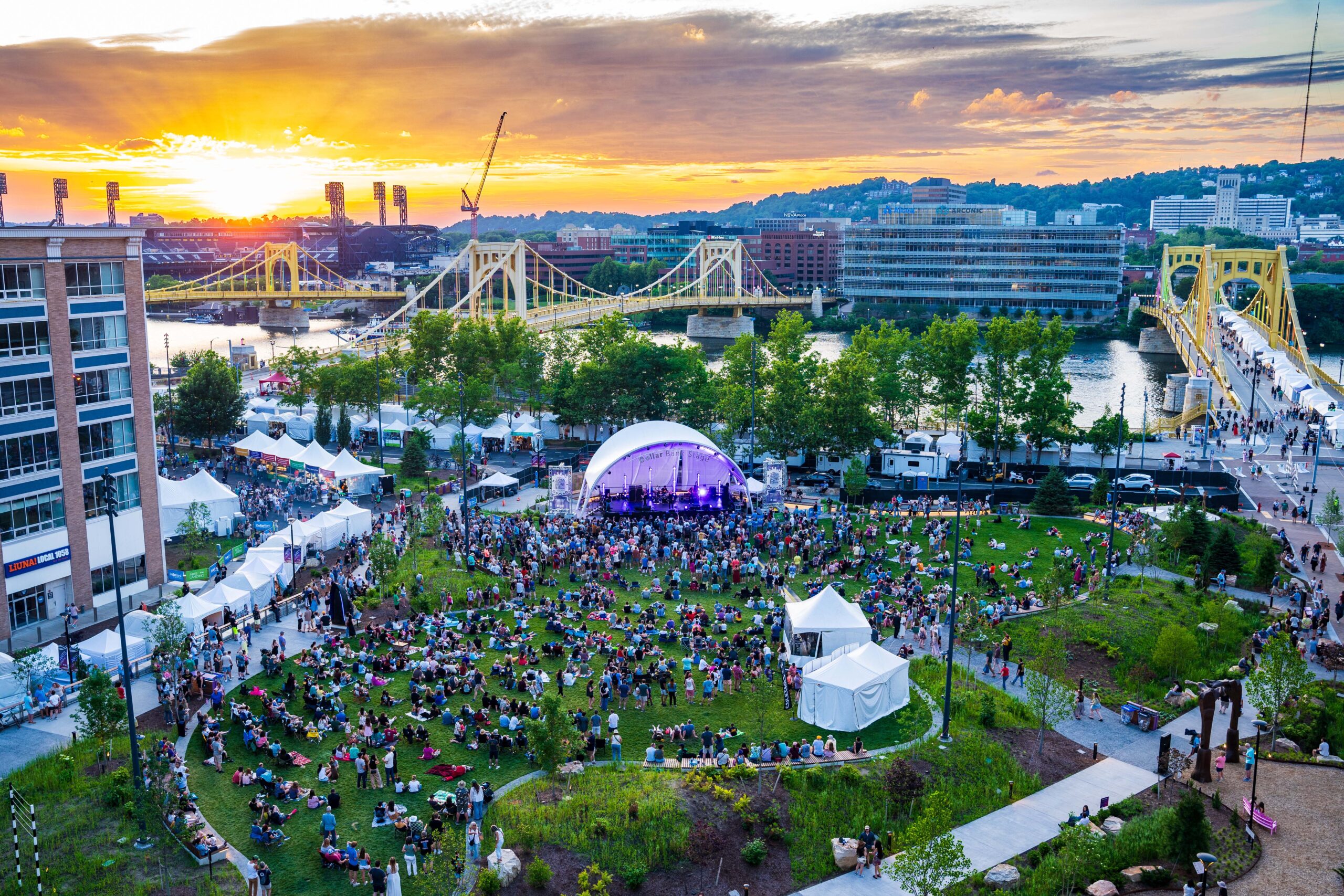
The Trust hopes Arts Landing will help encourage city residents to rethink downtown, whose office buildings were largely cleared out during the COVID-19 lockdowns and are now slowly transforming into mixed-use residences. The city has quickly embraced the civic space, at least, buoyed by the financial and political dexterity the Trust muscled to complete the $31 million project. Established in 1984, the organization has already transformed, through real estate purchases and cultural programming, the downtown red light district into a neighborhood now called the Cultural District. This hub for more family-friendly arts and entertainment boasts world-class galleries like Wood Street Galleries, SPACE, and 707-709 Penn neighboring public sculptures by Louise Bourgeois and buildings by Michael Graves. For Arts Landing, says Field Operations partner Lisa Tziona Switkin, “they were able to amass the land very quickly, which helped to make it become a catalytic project. The vision plan to construction process was less than two years, which is kind of unprecedented.”
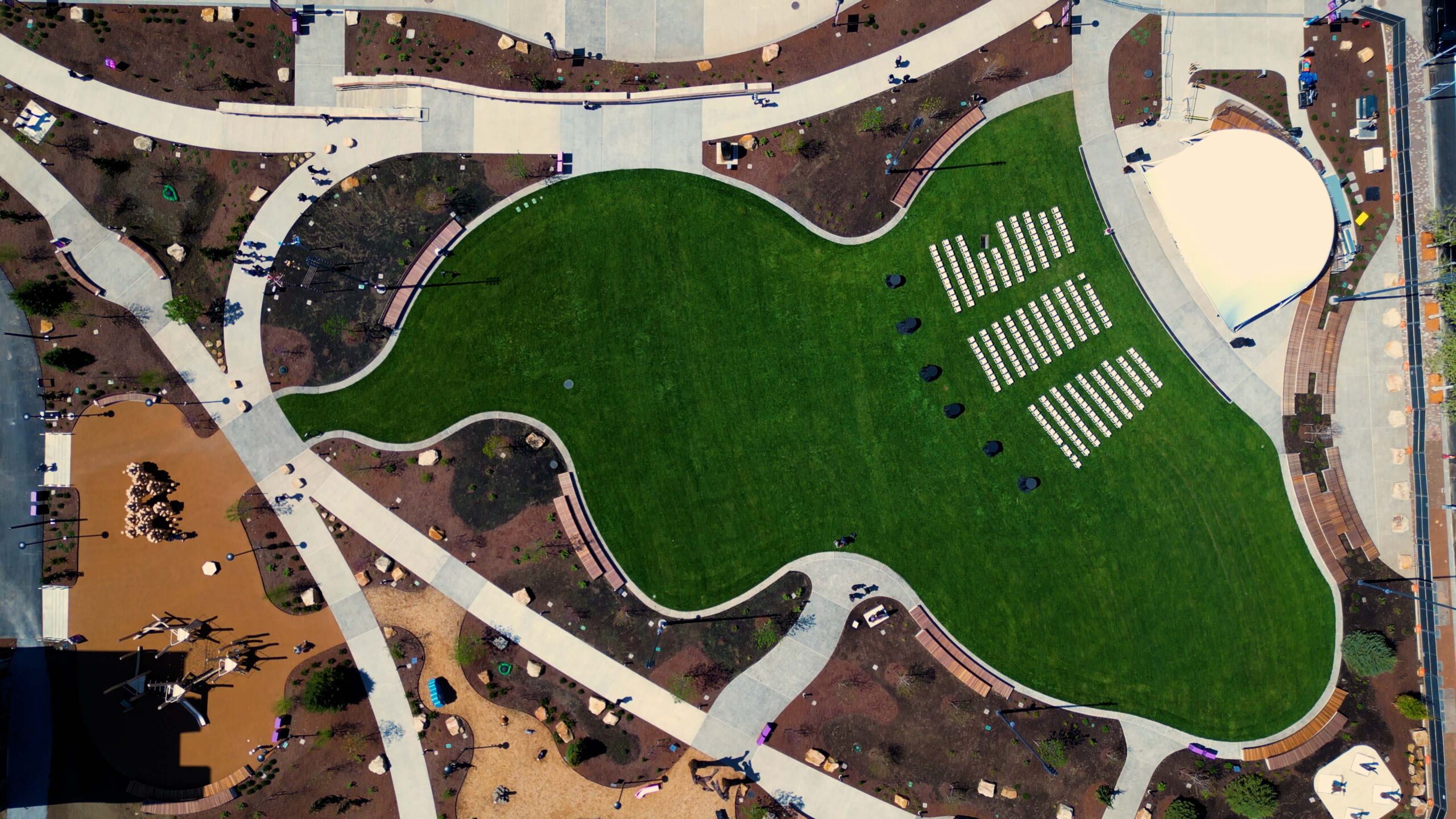
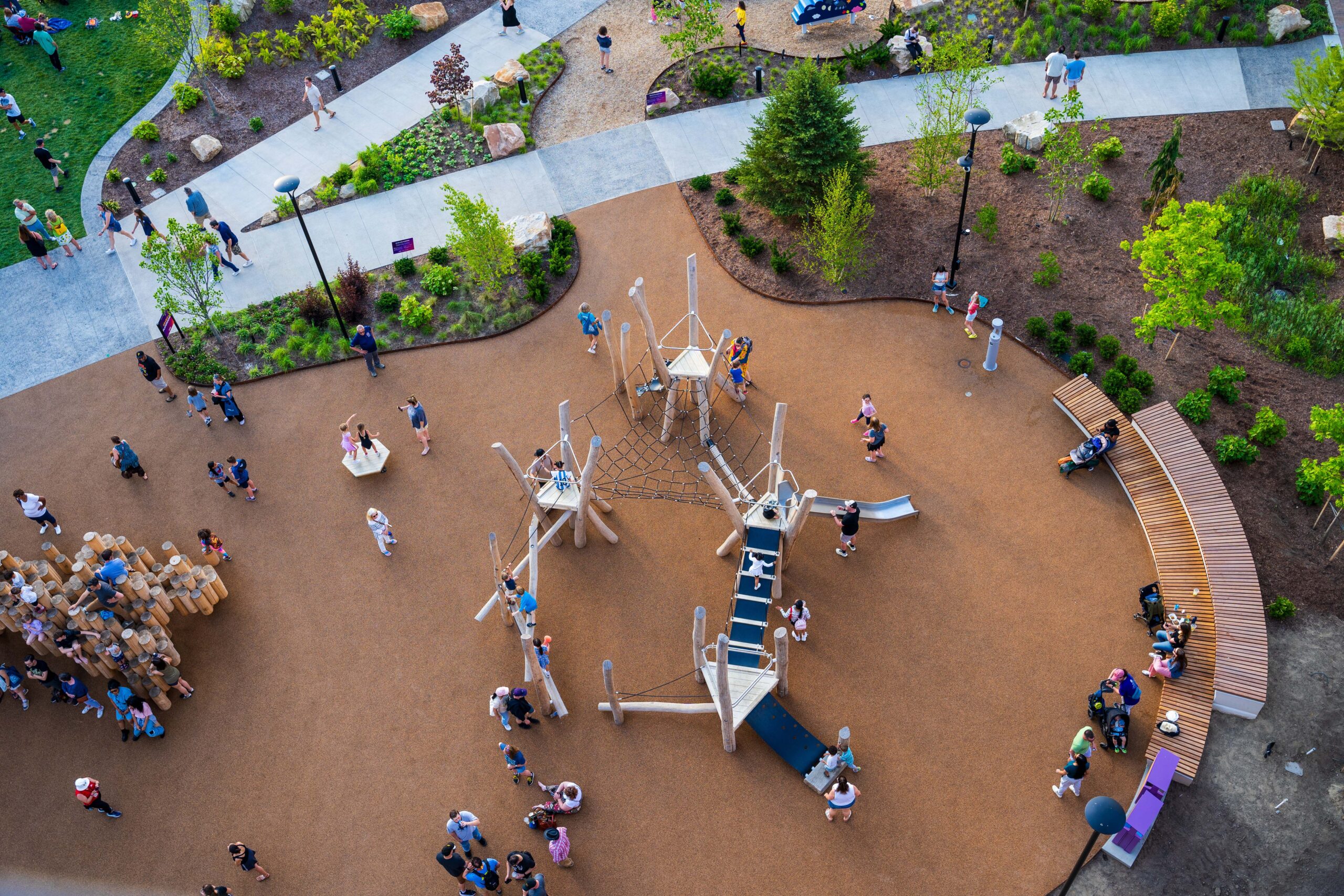
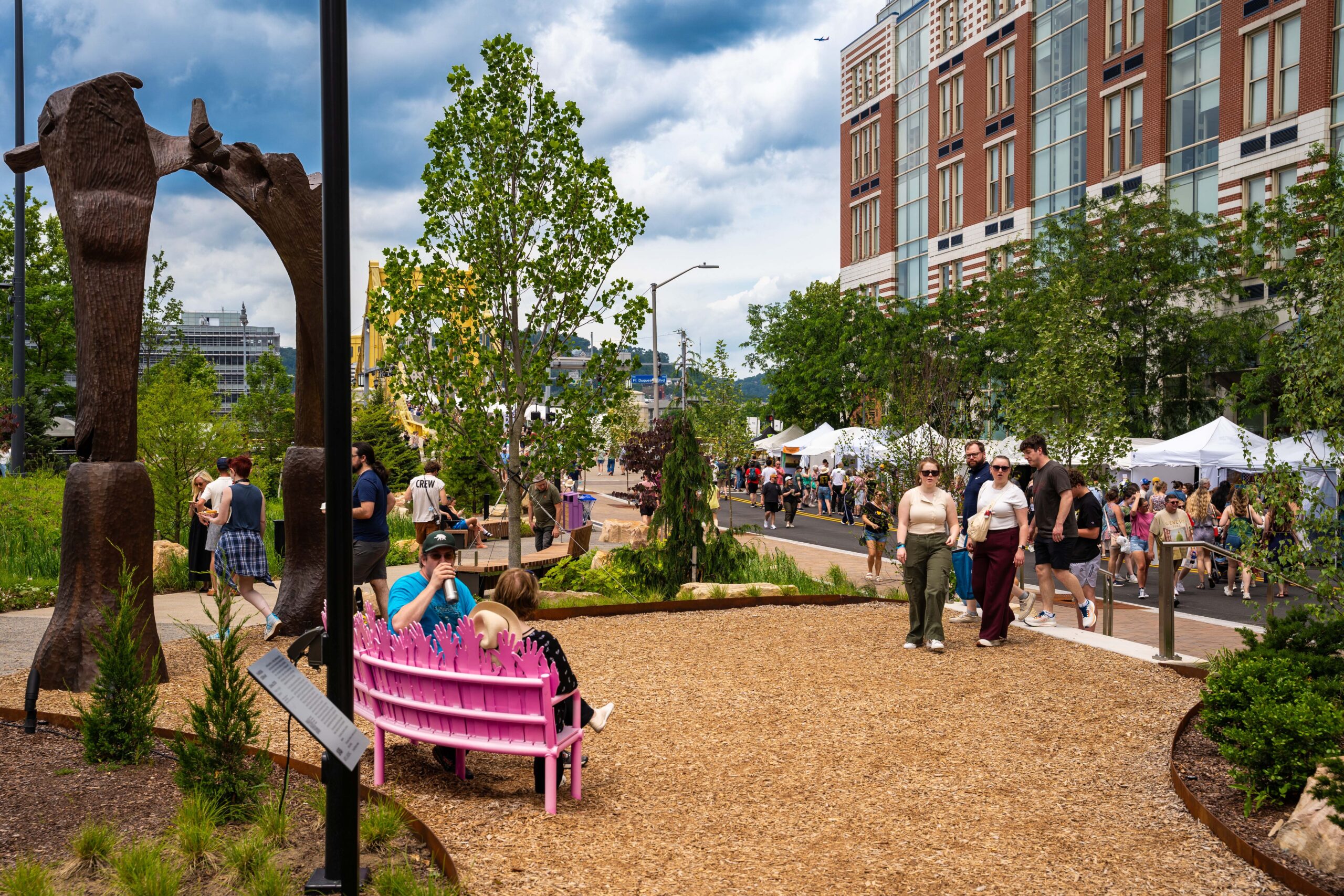
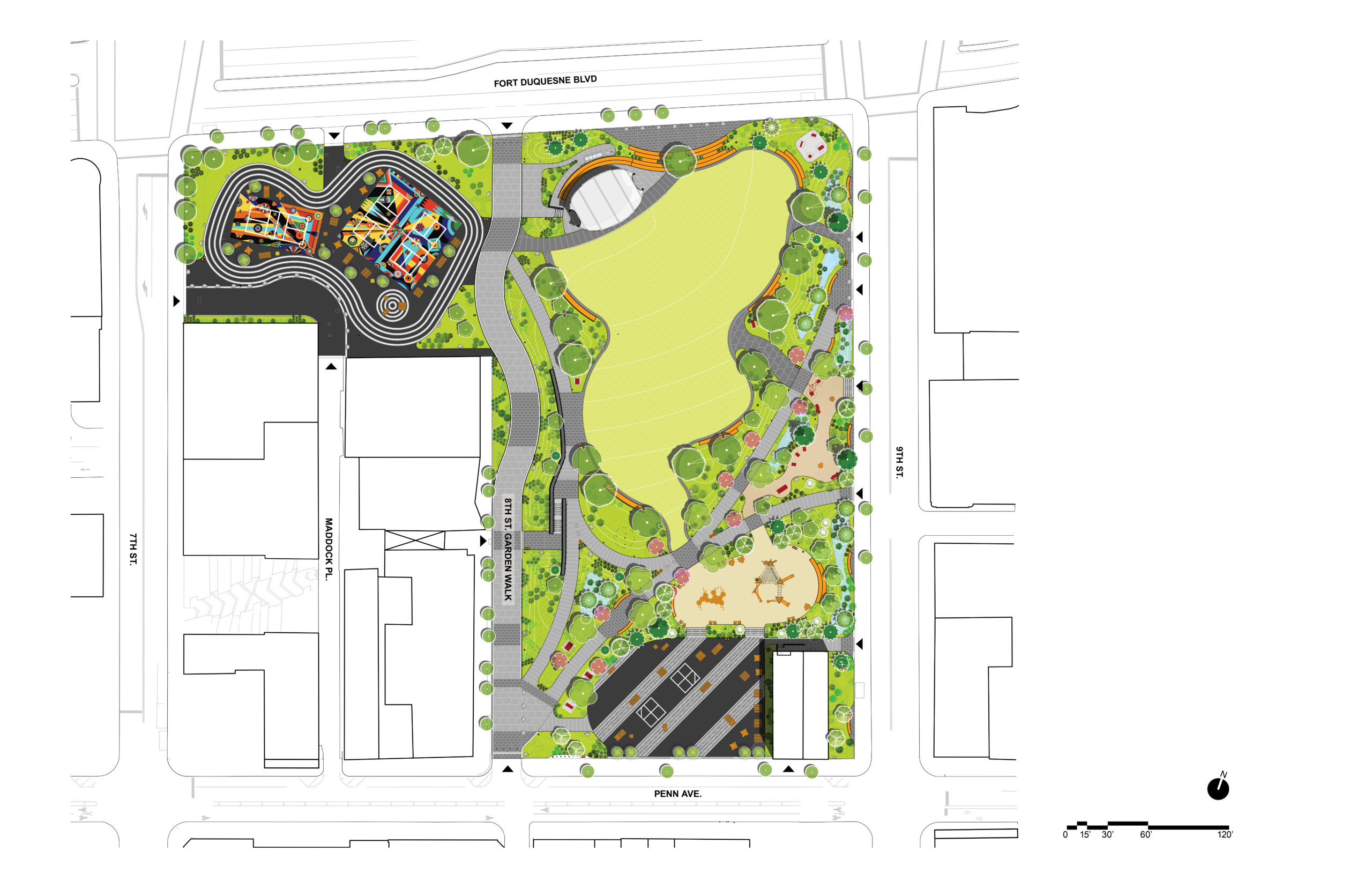
The heart of the four-acre park, which opened in the 8th Street Block Civic Space this June, is the central great lawn which gently rolls down a new five percent grade towards an elegant bandshell with tensile roof. The Trust’s roving Three Rivers Arts Festival now makes the space its home, and brought hometown hip-hop legends the Pharcyde to christen the stage, which will also be available for use by students at the Pittsburgh Creative and Performing Arts Magnet school that rises on one edge of the lawn. At the opposite edge, Field Operations conceived a 30,000-square-foot zone for pickle ball courts and food vendors; during Three Rivers, it was wrung with local artists selling their creations.
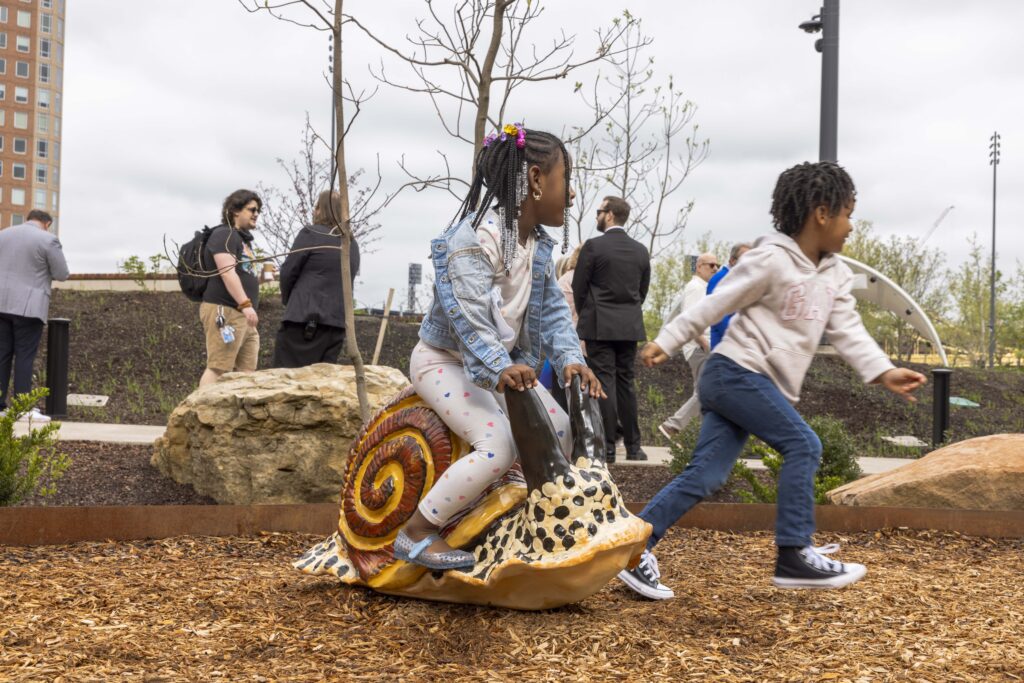
Art has quickly formed the soul of Arts Landing, too. “Cities invest in roads, bridges, parks, restaurants, sports venues, and commercial development because those things support economic activity and quality of life,” says Anastasia James, director of galleries and public art at Pittsburgh Cultural Trust. “Art serves a different but equally important purpose. It helps us make meaning.” At Arts Landing, James has programmed a slowly rotating series of bold installations within a winding garden zone at the top of the elevation, where the park meets the street. “We created interesting ways of moving through the site, with vistas on various edges,” says Field Operations associate partner Sanjukta Sen, “so that the site would present the right places for the pieces of art.”
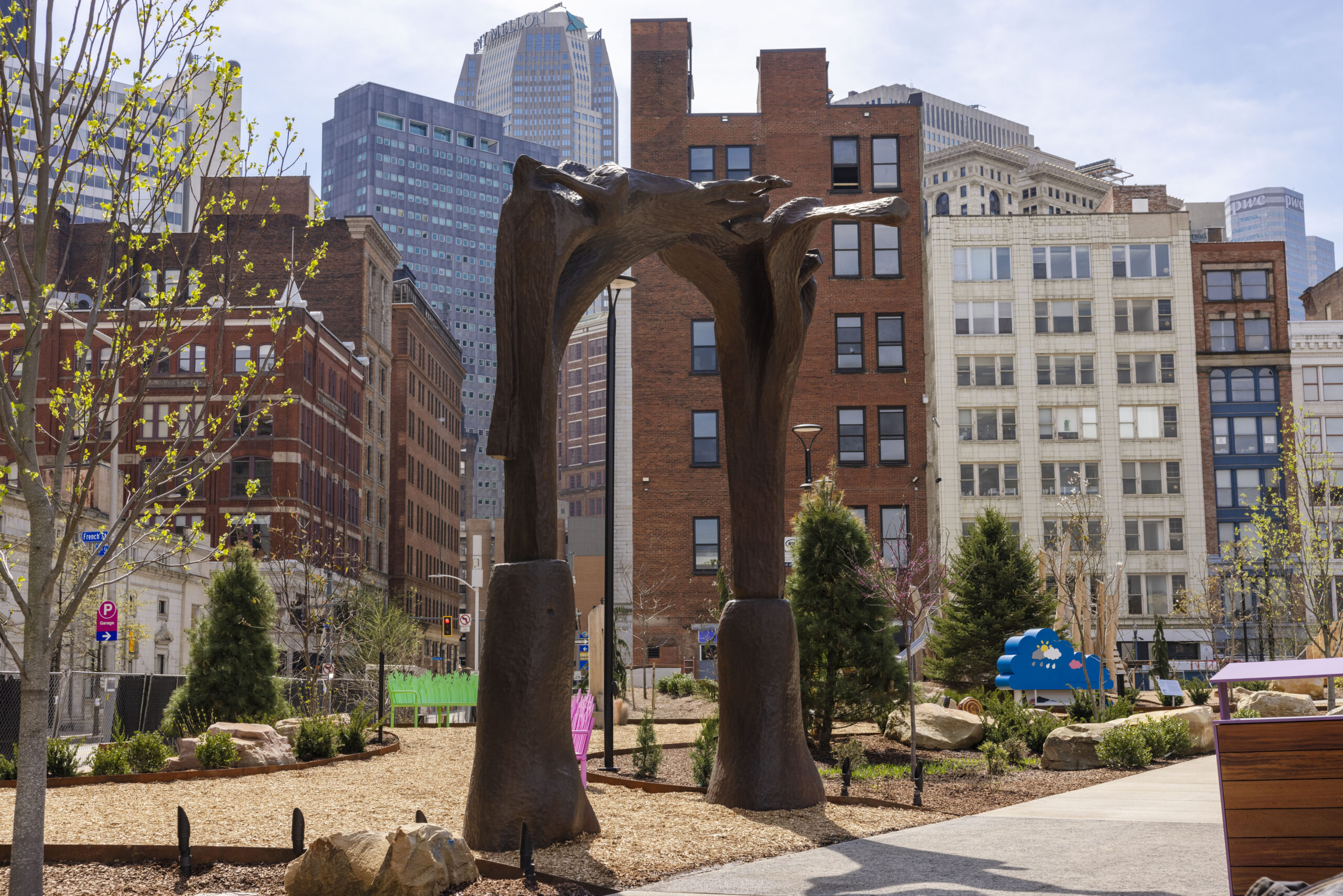
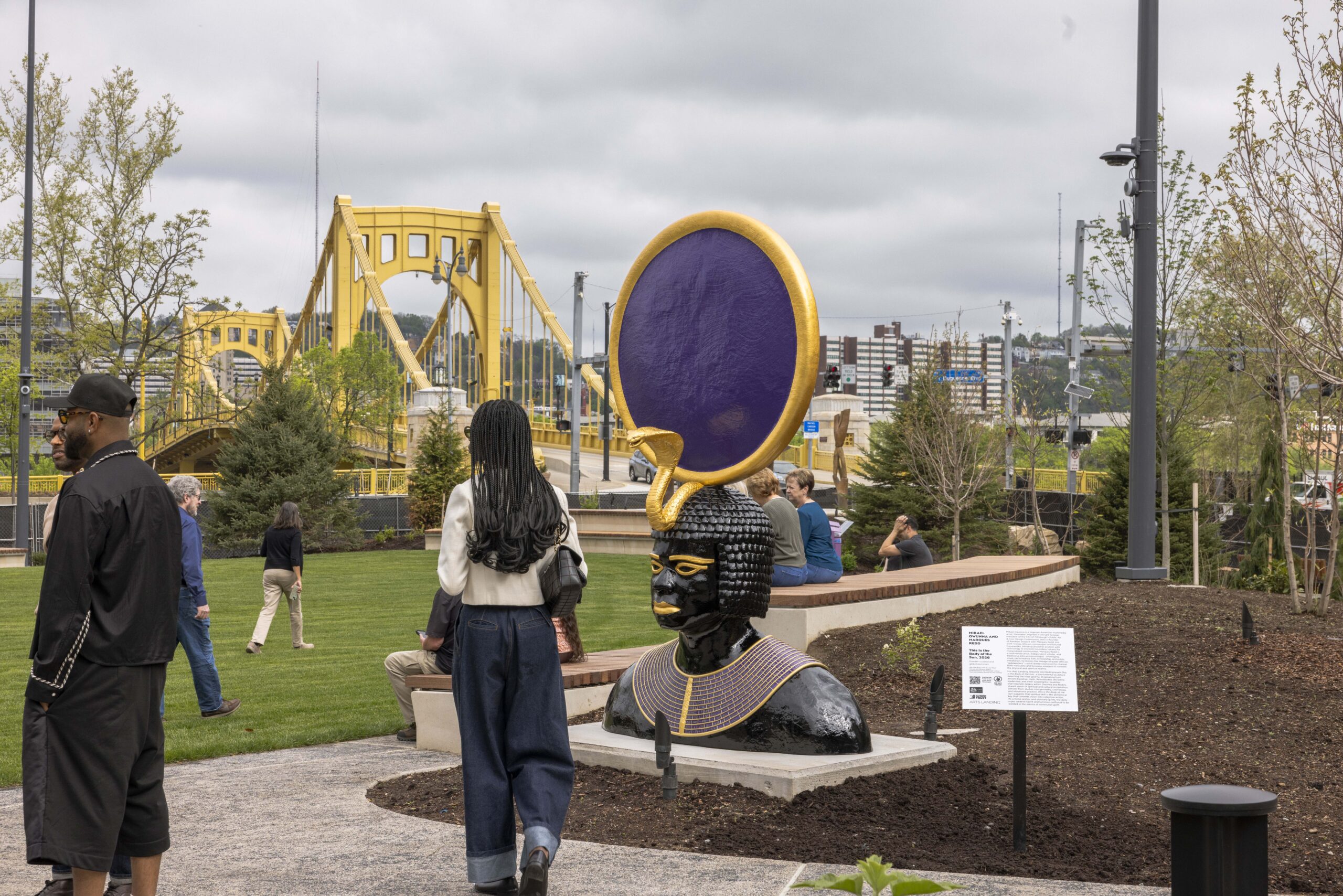
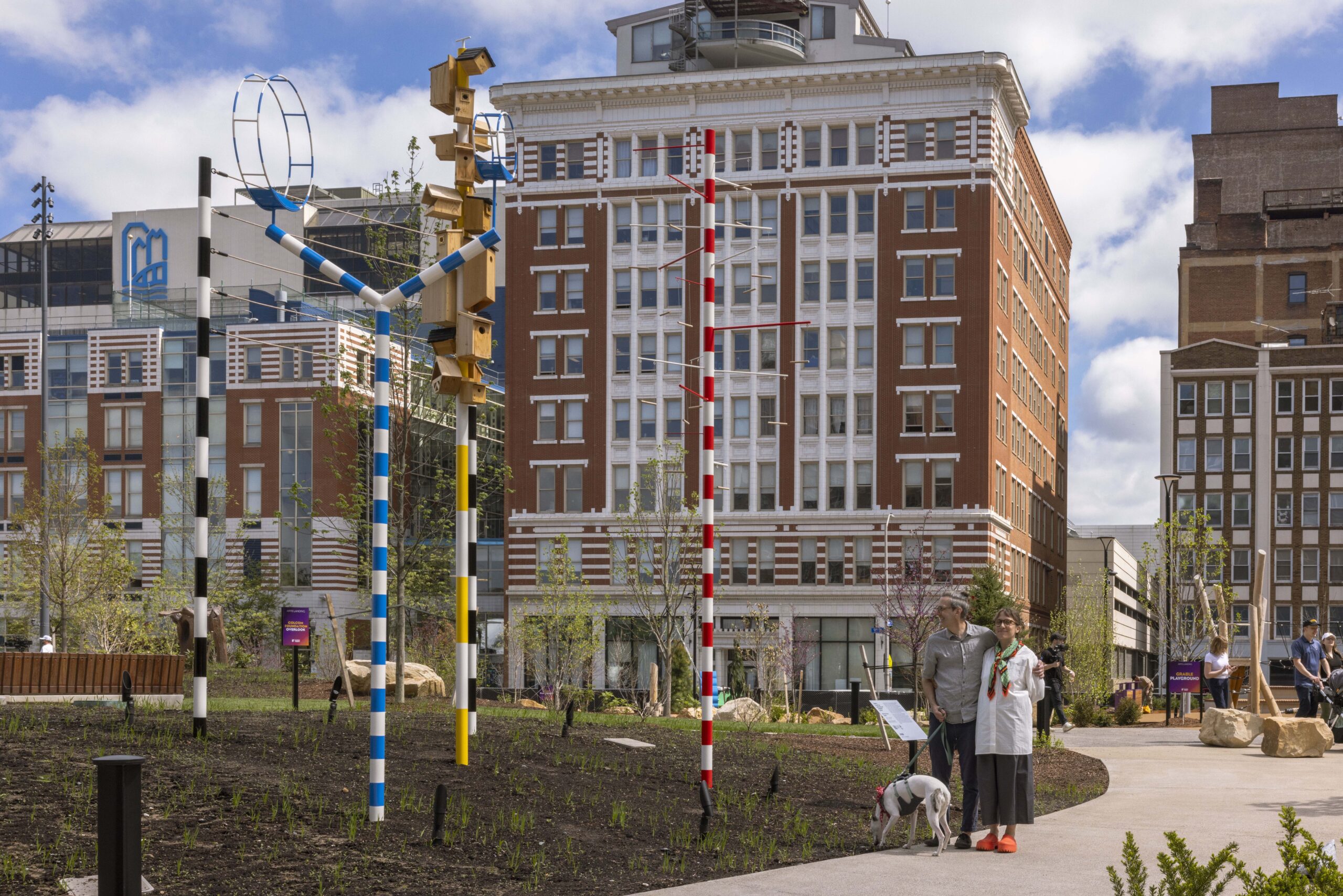
Works by the late Thaddeus Mosley take pride of place. “His monumental Gate III Arch is especially important as a threshold piece,” says James. “It serves not only as a sculpture but as an invitation—a gesture of welcome into the space.” Traversing deeper, the public will encounter aluminum benches sculpted by vanessa german from hand tracings of Pittsburgh centenarians; a monumental bronze sculpture of solar god Ra made by Mikael Owunna and Marquess Redd; and a new neon light sculpture by Shikeith which marks former Underground Railroad sites nearby. And, atop the grade, Pittsburgh-based artists Lenka Clayton and Phillip Andrew Lewis installed their avian big top Bird Circus, replete with platforms and toys for the city’s feathered friends.
“Birds always land on public art, and it’s normally a big issue, right?” says Clayton. “We thought it would be incredible to create something that’s a frame for what’s already happening.” Like the Arts Landing itself, it creates a built environment for those already building new ways of making themselves at home—and proves such things are possible. “The work,” says James, “communicates that Pittsburgh is a place of possibility.”
Would you like to comment on this article? Send your thoughts to: [email protected]
Latest
Viewpoints
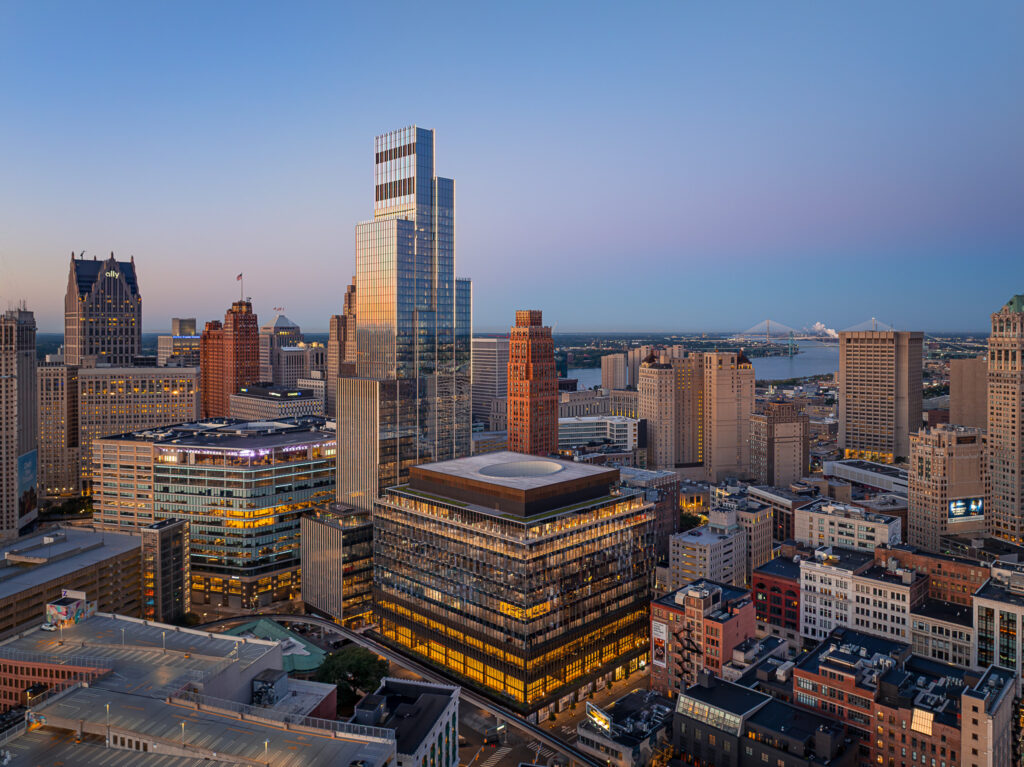
Detroit Month of Design: A City’s Work in Progress
Now in its 16th year, the celebration offers insights into the Motor City’s ongoing accomplishments without glossing over its hurdles.
Projects
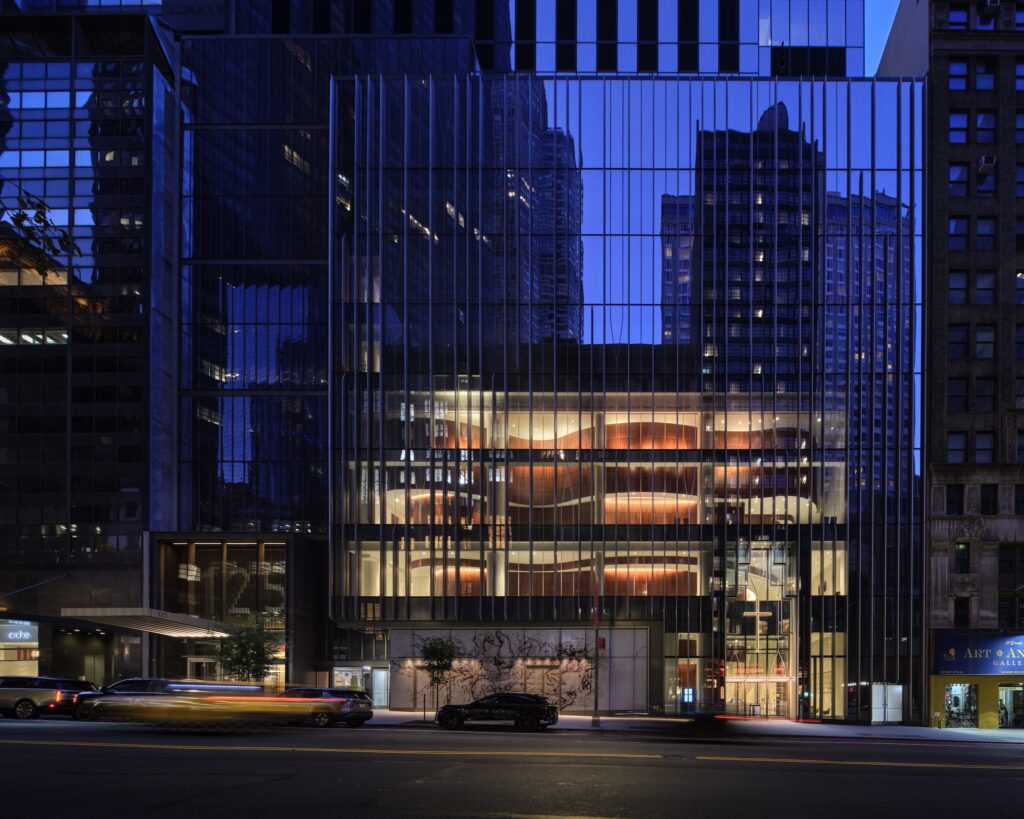
How a Hybrid Building Helped an Historic Manhattan Congregation Remain in Place
On Billionaire’s Row, FX Collaborative designed a new home for Calvary Baptist Church combined with an office tower.