


October 28, 2026
Inside PCA-STREAM’s Unconventional Concert Hall
When sound is put in a round room, it doesn’t like to play nice. Curved surfaces create everything from distortion and unpleasant reverberation to echoes, cancellations, and excessive loudness. The curved surface acts like a big focusing mirror for sound waves; we are ants trapped in its magnifying glass.
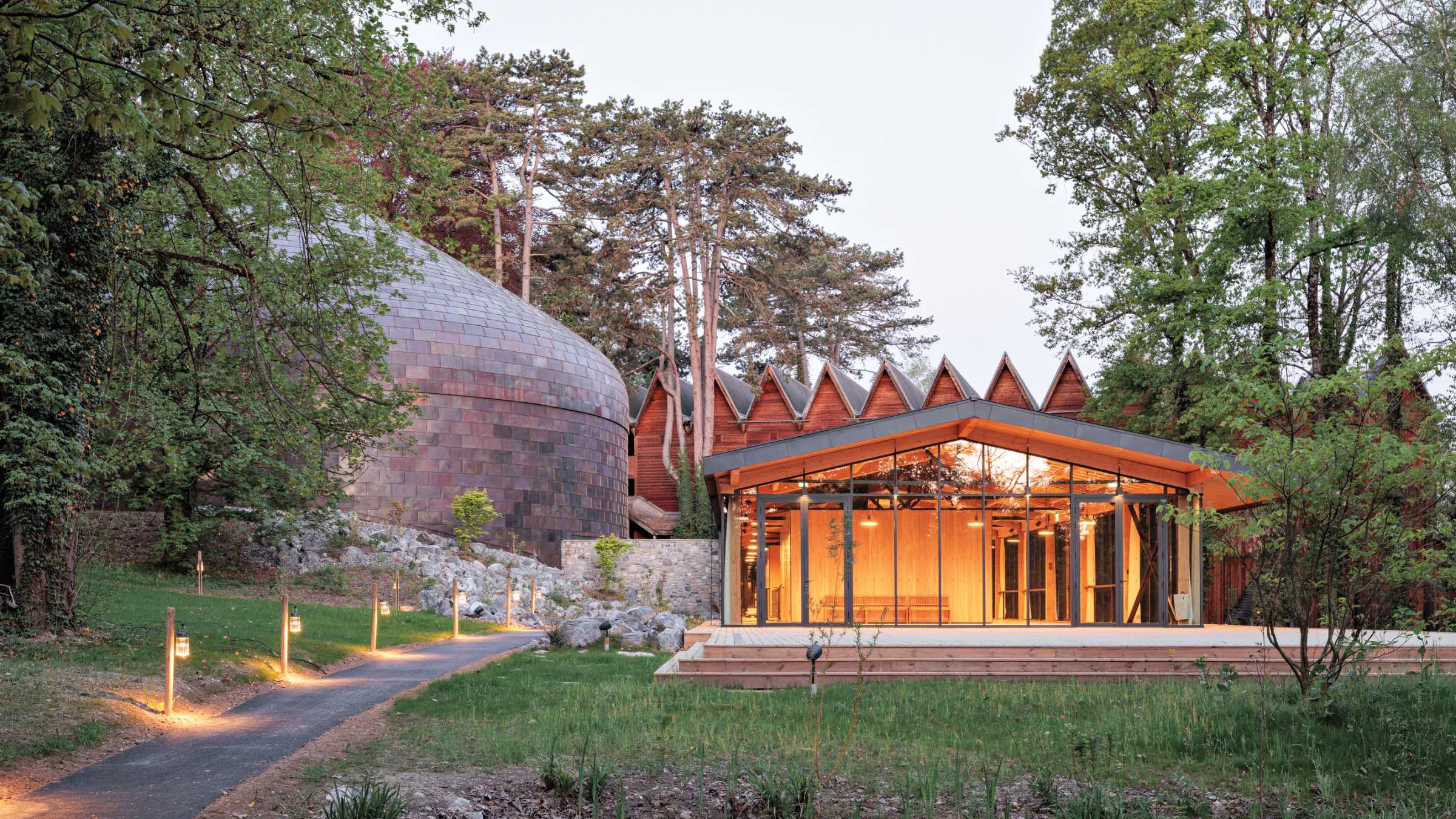
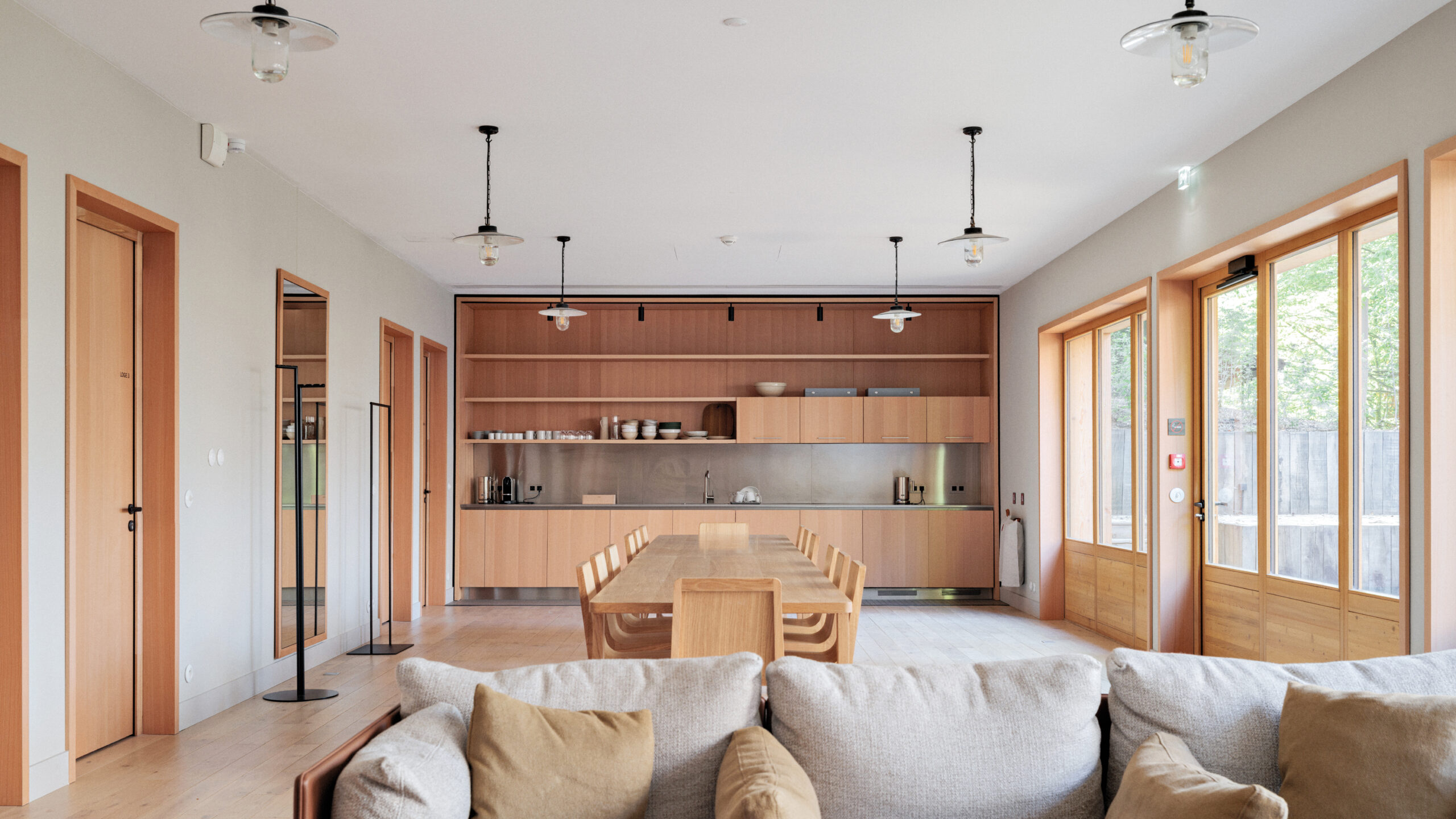
Whenever an architect and their attendant acoustician pick up this age-old problem and try to make something of it, something is almost always gleaned, simply because the prospect is inherently risky. That risk seems to have paid off for PCA-STREAM, the firm headed by French architect Philippe Chiambaretta, which recently completed a small hall called La Source Vive in the resort town of Évian-les-Bains, France. (Yes, that Évian.) Sited collectively for the use of the resort’s world-famous music festivals, the hall (and a new dressing room/artist lounge) joins its sister, La Grange au Lac (1993), a shoebox-style hall with a stripped-bare timber interior designed by Patrick Bouchain, who was the artistic director and co-designer of the space. The pair were joined by the late acoustician Albert Xu. Both halls were inspired by the natural and vernacular landscape of Alpine Switzerland in both form and materials—the earlier hall more reflective of the former (it looks like a timber shed) and the later hall, the latter.
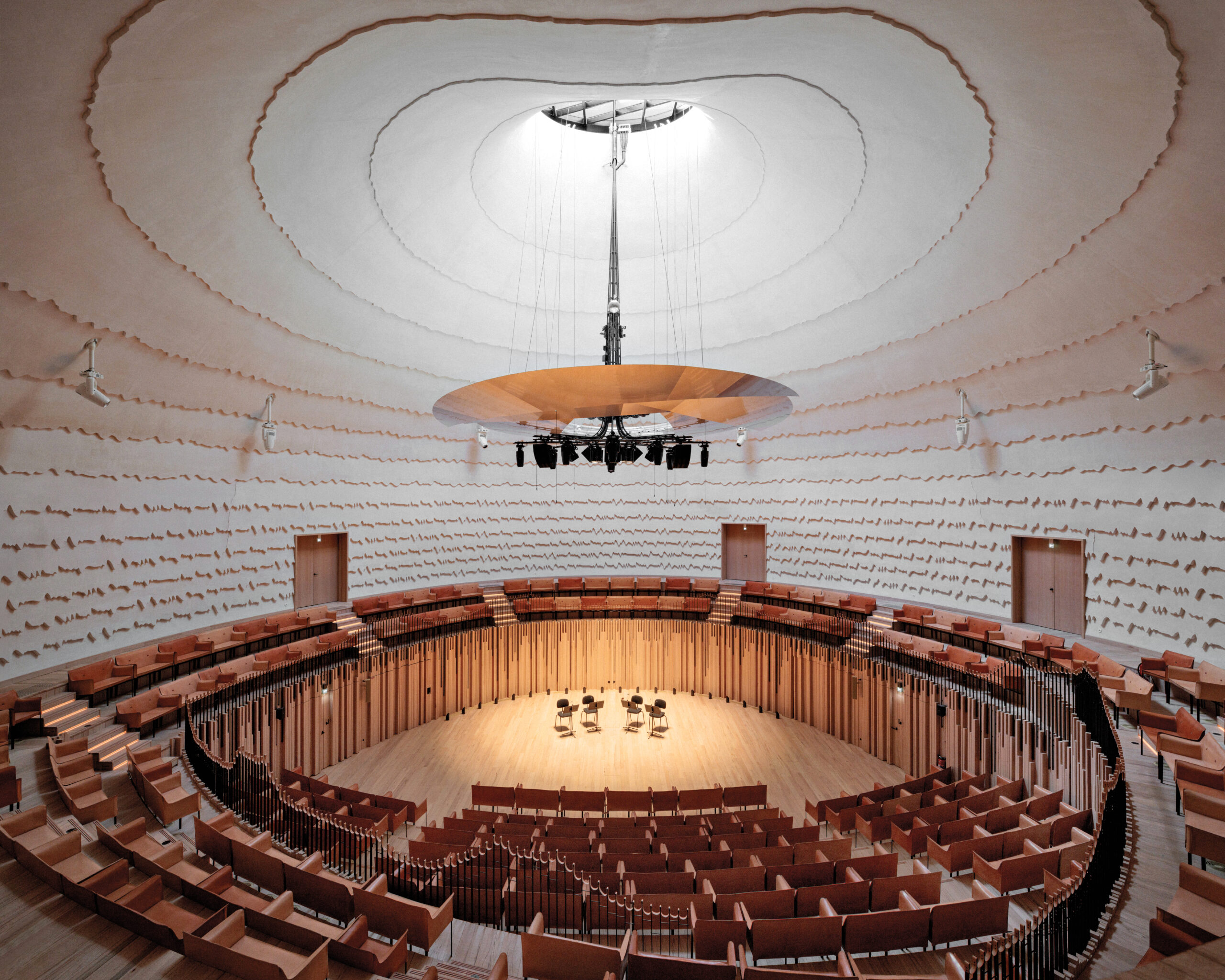
La Source is small, seating only 500. Clad in copper paneling, the hall has a shape that appears organic, almost gourdlike, or, more poetically, like a dewdrop. The plan is oval, with a conical section. Remarkably, the construction happened in layers. “We worked from the inside out,” Chiambaretta tells me in an email. “Once the geometry of the inner dome had been established, we worked with the engineers to determine how such a complex form could actually be built. We concluded that the most appropriate solution was a cast-concrete shell, poured over timber formwork.” The architects, however, did not want the concrete to remain exposed (perhaps in the manner of a different Swiss, Le Corbusier) but for it to have a plaster surface, “reminiscent of the interiors of old churches, with the particular quality of light and sound that plaster can produce.” Around the shell, a second envelope was fabricated, a timber structure clad in the copper skin. A cavity between the two envelopes houses the building’s services.
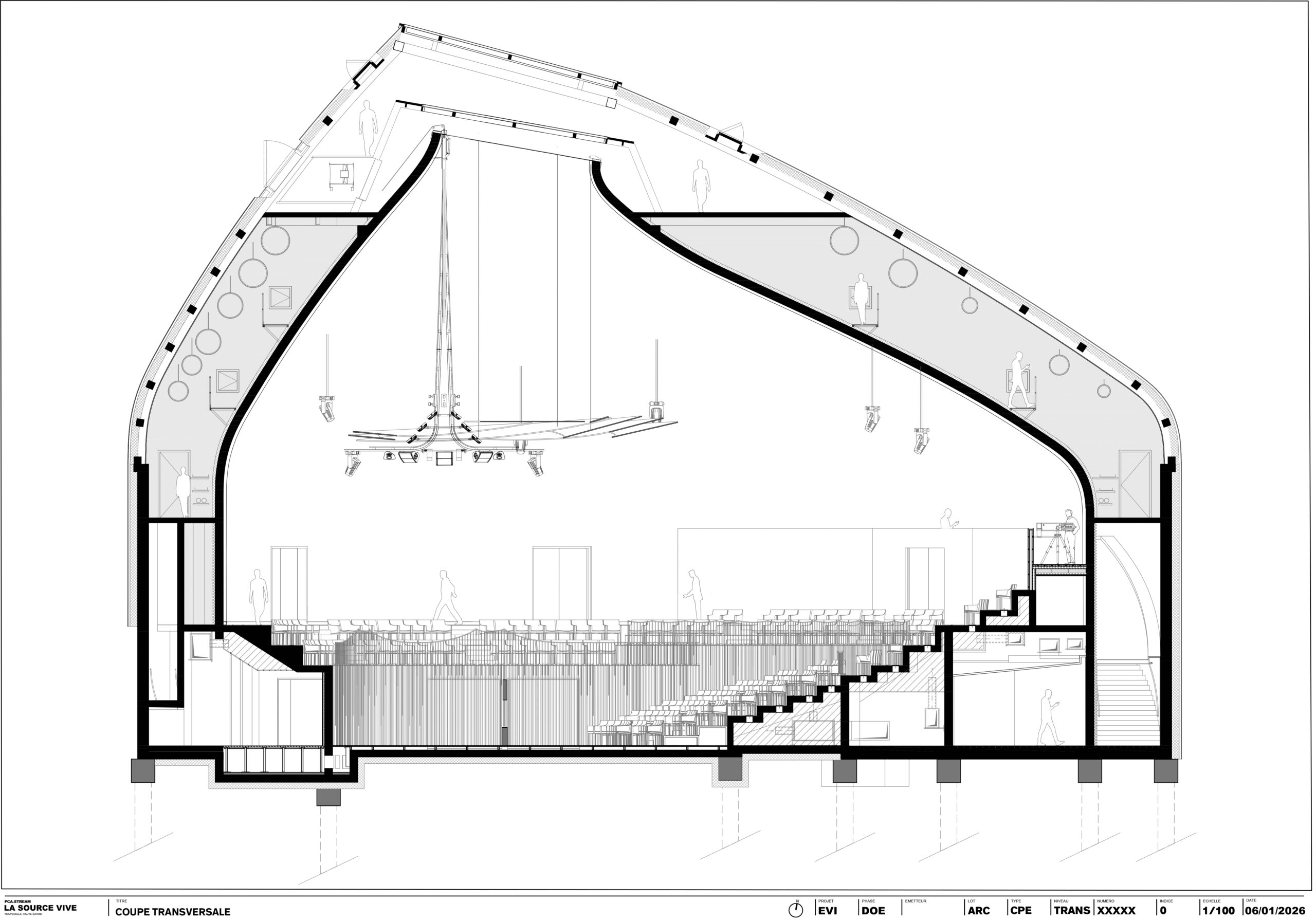
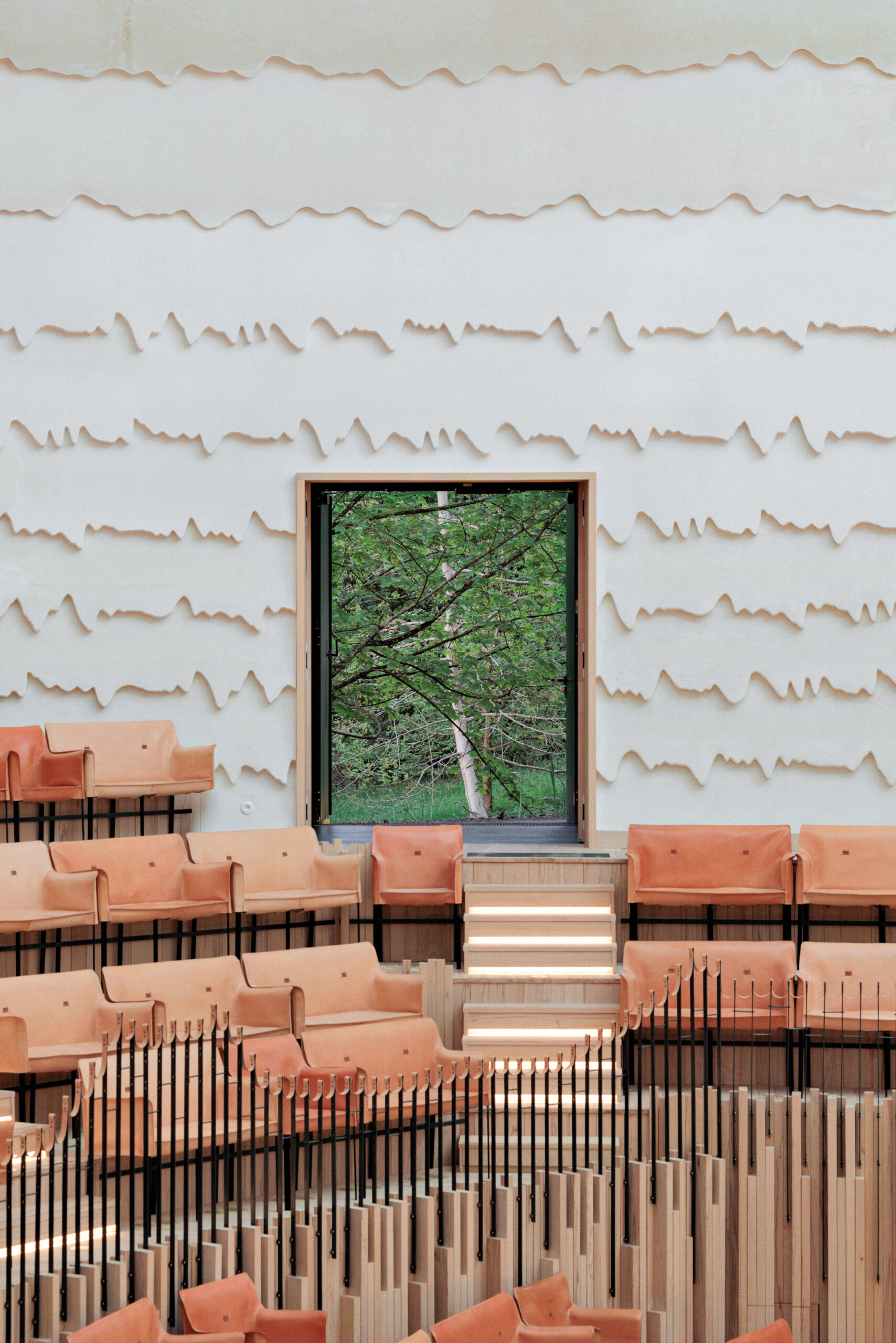
Inside is a hall that is mostly vineyard-style in plan (“egg shaped,” in the words of Chiambaretta), while in section it does indeed appear almost church-like. Layers of seating unfurl petal-like from the center, and on each tier, one can find a forest of wooden blocks that work together to diffuse strong reflections, breaking them up to prevent echoes. The natural light from above gives the interior a milky, intimate glow, contrasted warmly with the leather seating, which is less upholstered than it is draped over forms and hammered like a saddle. As serious as such a space is, there is something cute about it. Beside the saddle seats, the molded plaster ceiling and walls appear as though in sheets—the edges of which are reminiscent of ridges of mountains, the shaggy bark of birches, or, alternatively, of sound waves themselves. Like the wooden diffusers, these, too, help to scatter echoes while keeping a strong reflective profile. All are helped by a suspended ceiling reflector that sends information down to both audience and musicians.
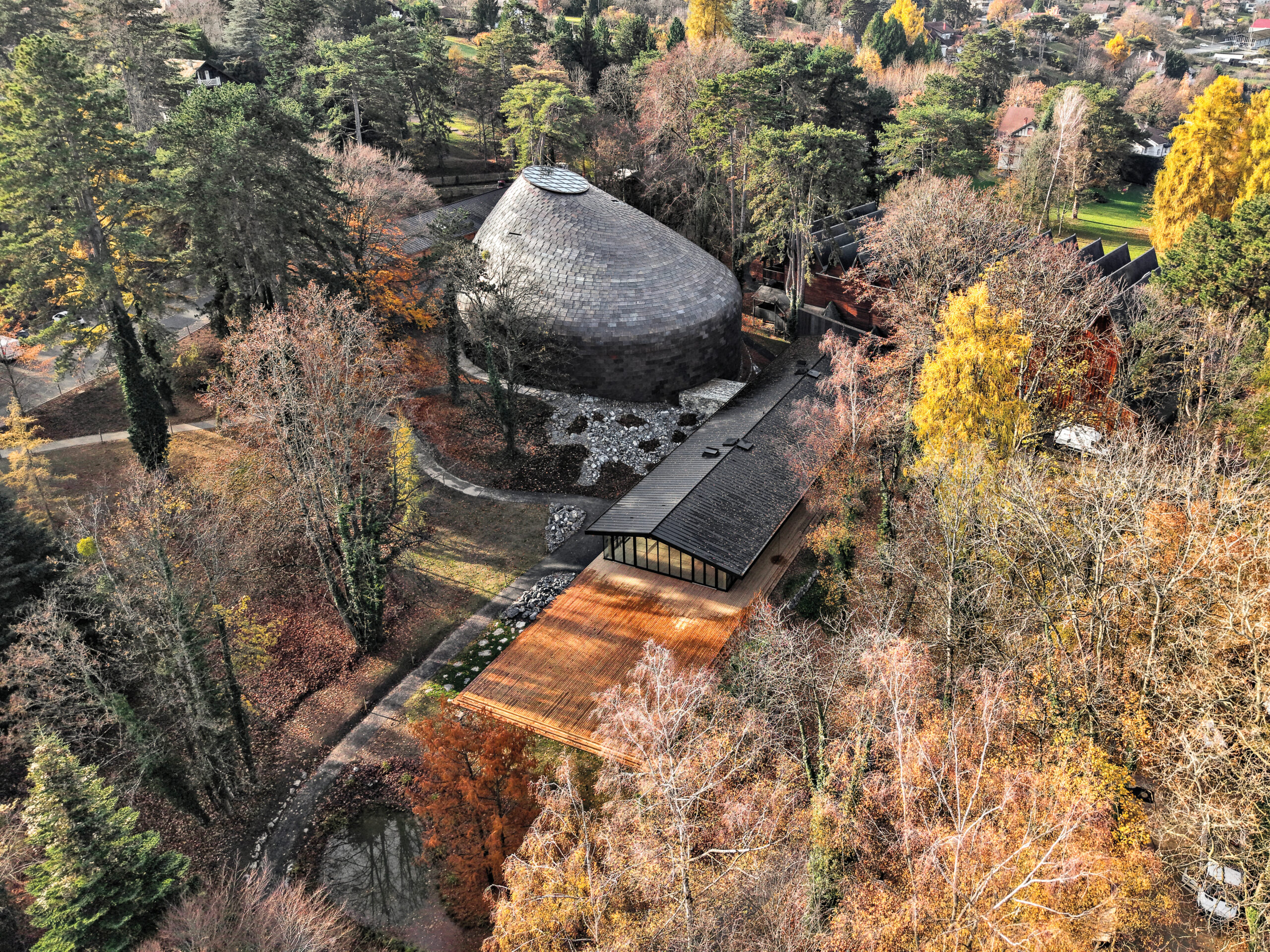
The hall has a pitch-perfect reverberation time of 1.8 seconds when full, something the acousticians worked toward as a baseline. Acoustics technology has progressed significantly since I studied acoustical engineering in the dark ages of the late 2010s. Xu passed away, sadly, before construction of the hall began, but, says Chiambaretta, most of the acoustical decisions had already been made by him.
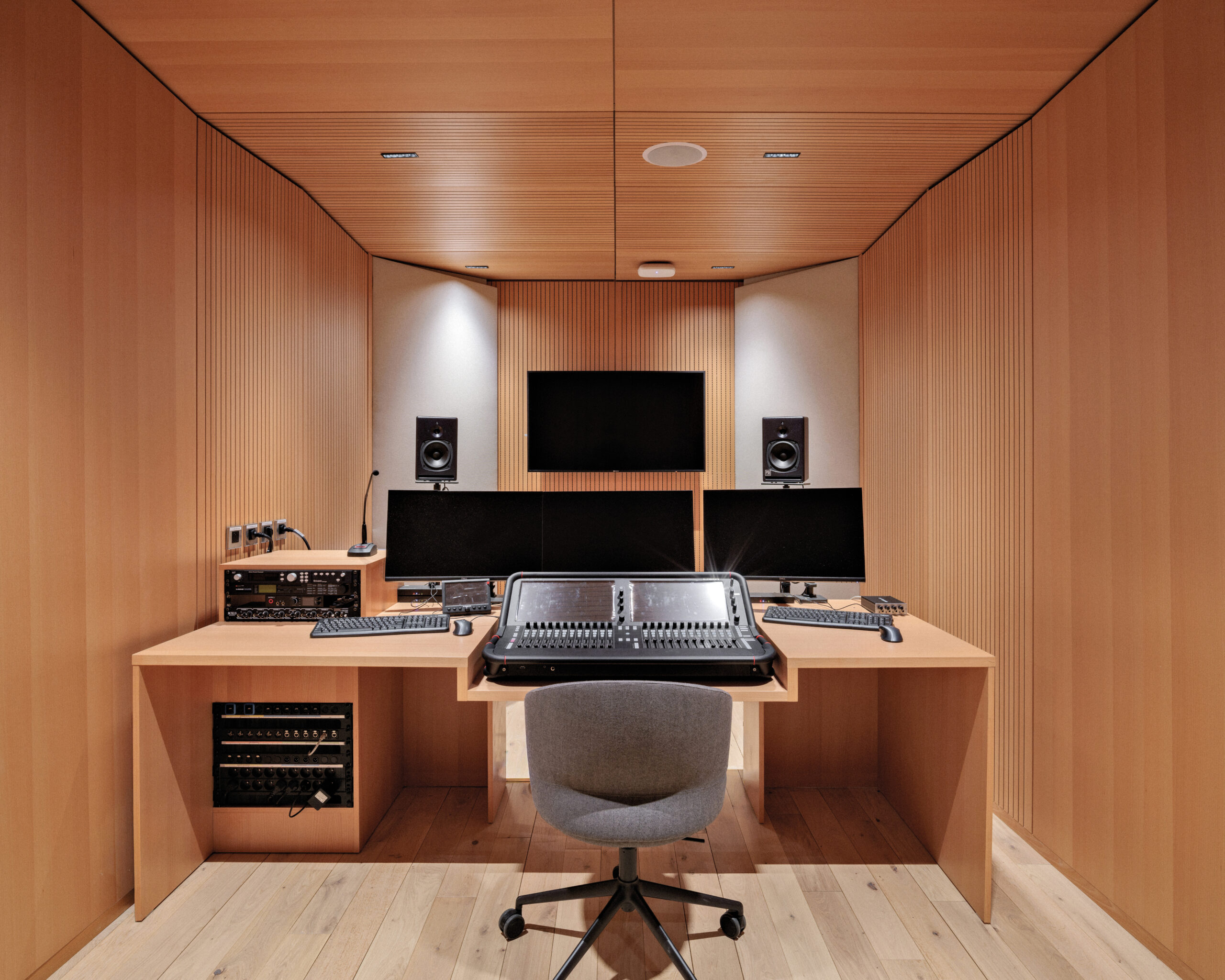
PCA-STREAM, now working with the META acoustic laboratory, developed a digital twin of the hall, which allowed the architects to make accurate simulations. “This allowed us to test, as early as the design phase, the acoustic impact of various choices: seat design, materials used for the tiered seating, shape of the sound baffles, and so on,” says Chiambaretta. Simulations are not new in acoustical design, but they are becoming more advanced—their use has also expanded past the design development phase. During each stage of production, the architects took measurements and double-checked them with the model’s predictions in order to eliminate discrepancies.
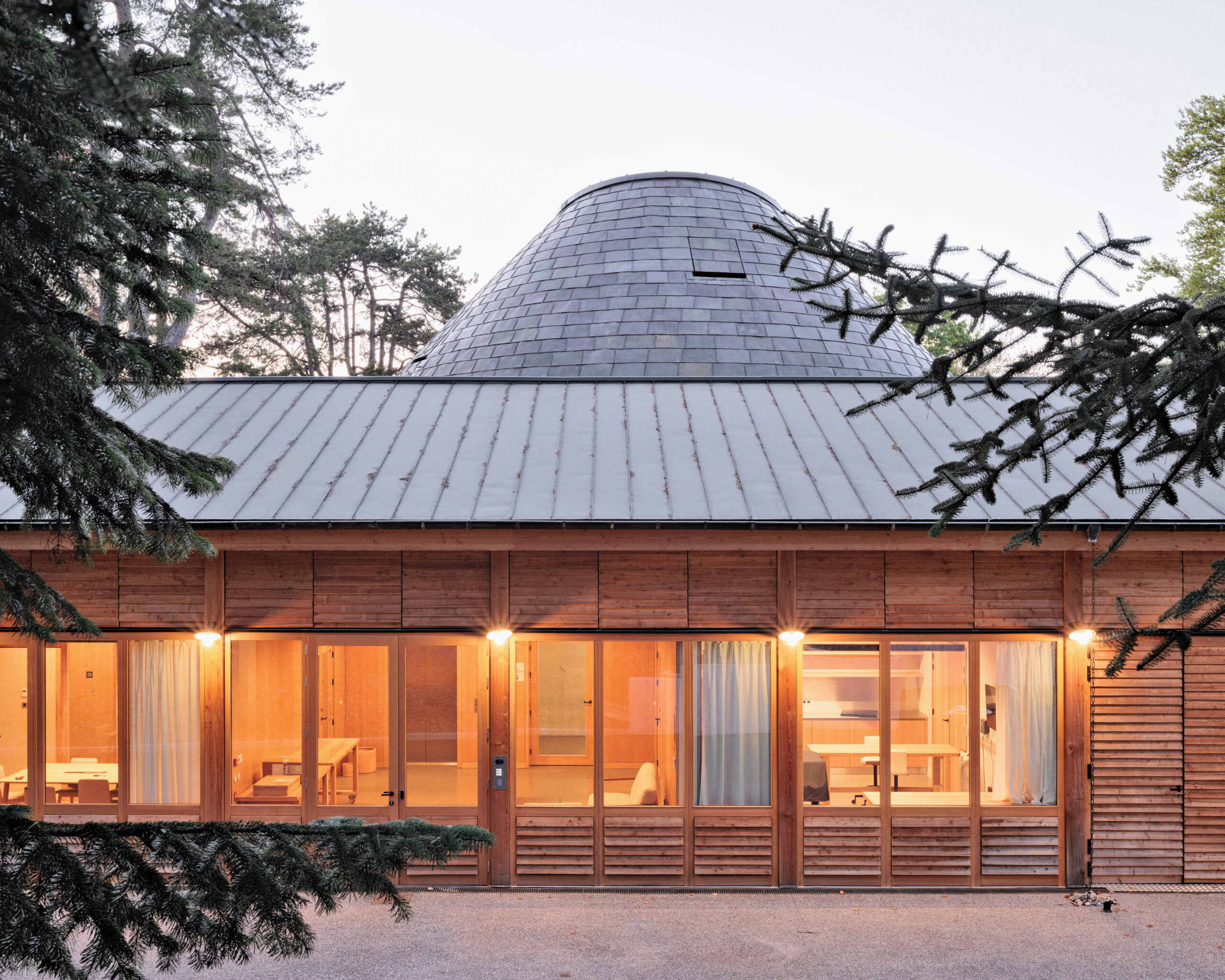
For all its Alpine rusticity, La Source is one of many halls whose designers are working with the cutting edge of acoustical technology. The nature of the hall indeed requires these new developments to work effectively because, despite its visual simplicity, it has an extremely difficult acoustical profile to work with. The end result is a room that is sensuous and full of liveness (the good kind, not the bad) and one that manages to look natural, as though plucked from the forest itself, while possessing, in reality, the least natural conditions possible.
Would you like to comment on this article? Send your thoughts to: [email protected]
Latest
Profiles
Yu Nong Khew Uses AI to Question Her Humanity
The Wesleyan University professor recently launched Studio Soft Hairy, a design practice that balances digital fabrication, craft, and microbiology.

Viewpoints
Net Zero 2026 Proposes Solutions
Produced by Verdical Group, the one-day conference in Los Angeles brought together experts united in pursuit of a decarbonized future