



December 16, 2025
Julia West House Offers Permanent Supportive Housing to Portland’s Elderly
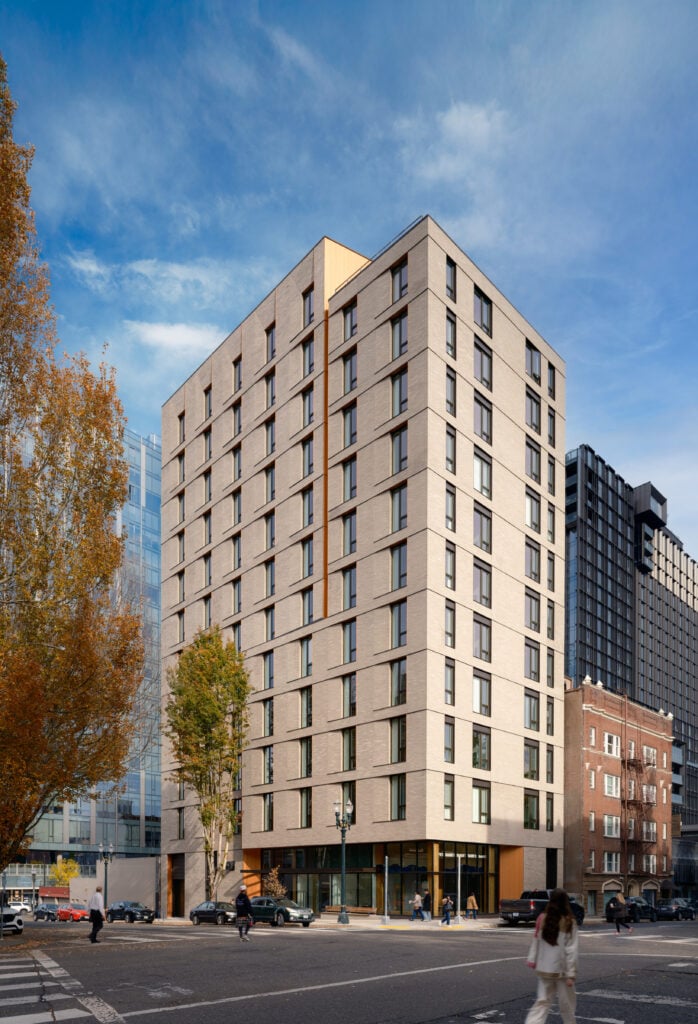
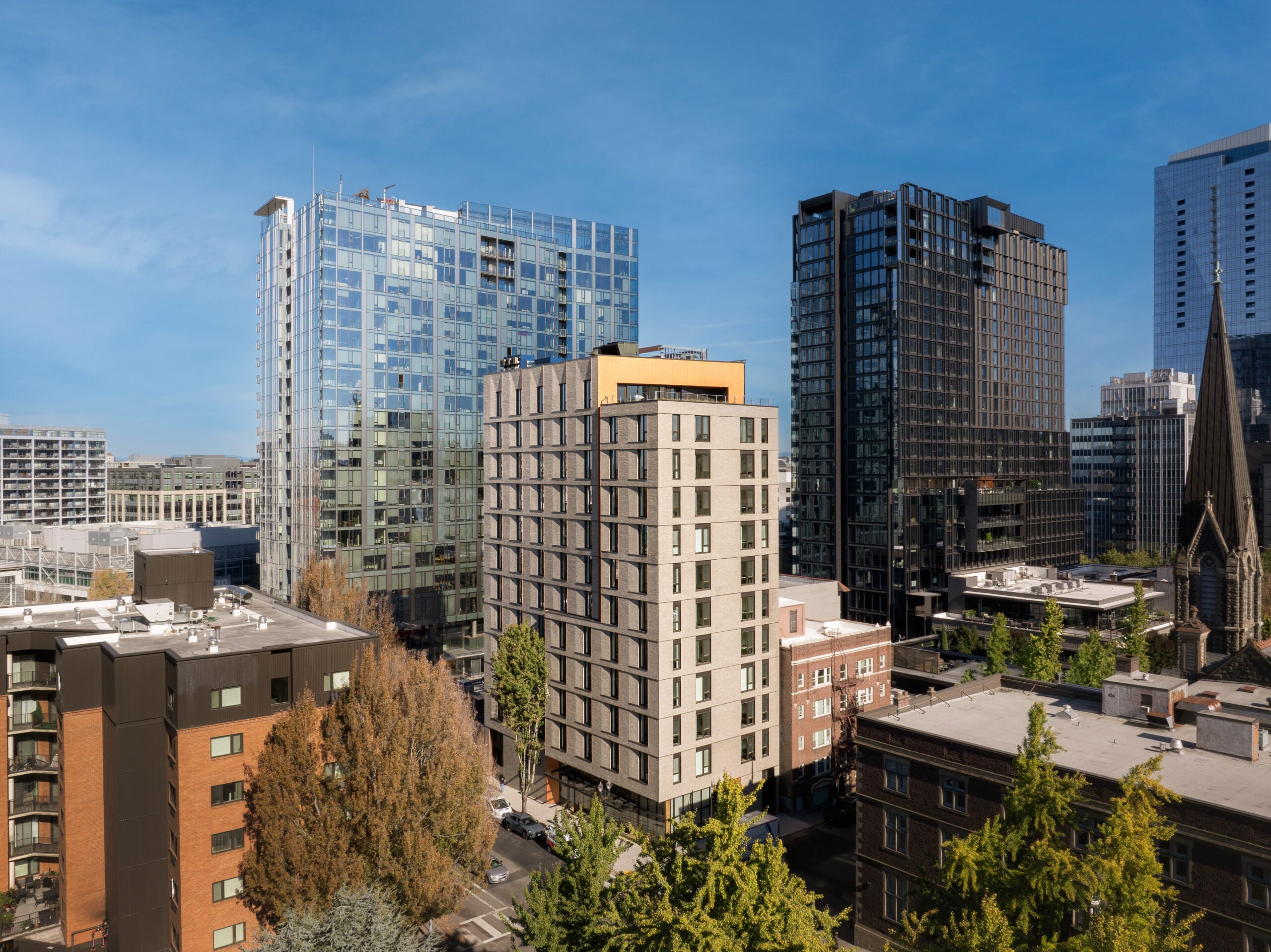
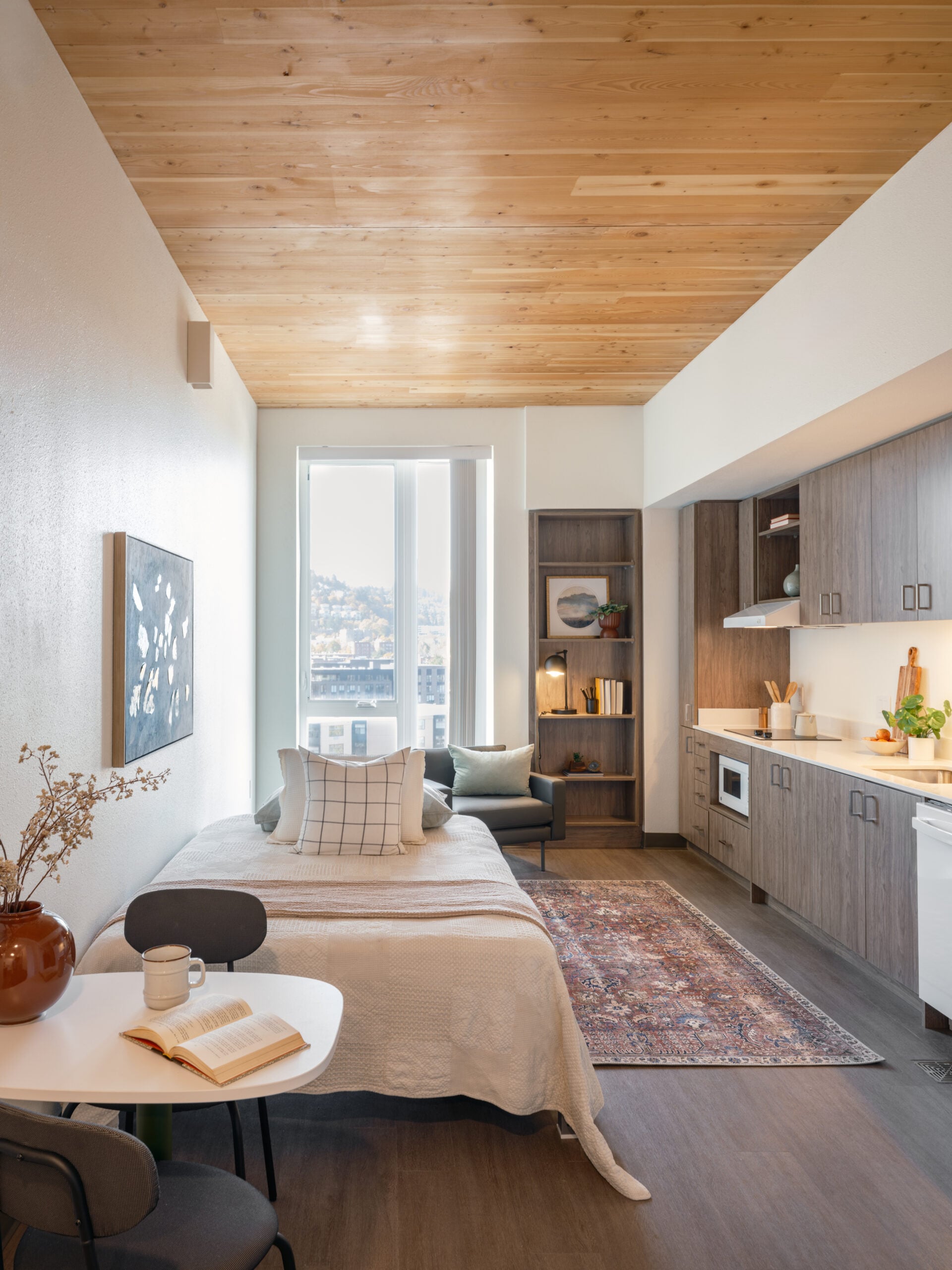
Developed by CDP and designed by Holst Architecture, with structural engineering by KPFF, the 56,000-square-foot building includes fully furnished studio and one-bedroom apartments, alongside community amenities and on-site social services. For the design team, the project represented an opportunity to “be innovative for a group of people that don’t normally get innovative buildings,” says Nici Stauffer, senior associate at Holst.
The tower rises from a compact 5,000-square-foot site formerly owned by the First Presbyterian Church of Portland. After acquiring the property in the 1980s, the church issued a request for proposals for affordable housing in 2018, ultimately selling the site to CDP in 2024. Another CDP project, Alder House, sits directly across the street, allowing the developer and its partners to draw on deep familiarity with the community, including residents facing “trauma and more severe health issues,” Schubert adds.
That layered approach extends to the project’s funding. “We are really lucky because we have the Oregon Housing and Community Services (OHCS) that provides funding for permanent supportive housing,” Schubert says. Julia West House was supported by a mix of public and private sources, including a four percent Low-Income Housing Tax Credit allocation and a Portland Clean Energy Community Benefits Fund grant. Service partners include the Northwest Pilot Project, which provides case management for older adults, and the Native American Rehabilitation Association of the Northwest, which offers culturally specific recovery and support services. Residents pay no more than 30 percent of their income toward rent, and those without income pay nothing.
The project’s tight urban footprint presented a significant design challenge. Measuring just 50 by 100 feet, the site mirrors the size of a typical single-family lot. “We had our work cut out for us. The goal was to make it as beautiful and functional as possible,” Stauffer says.
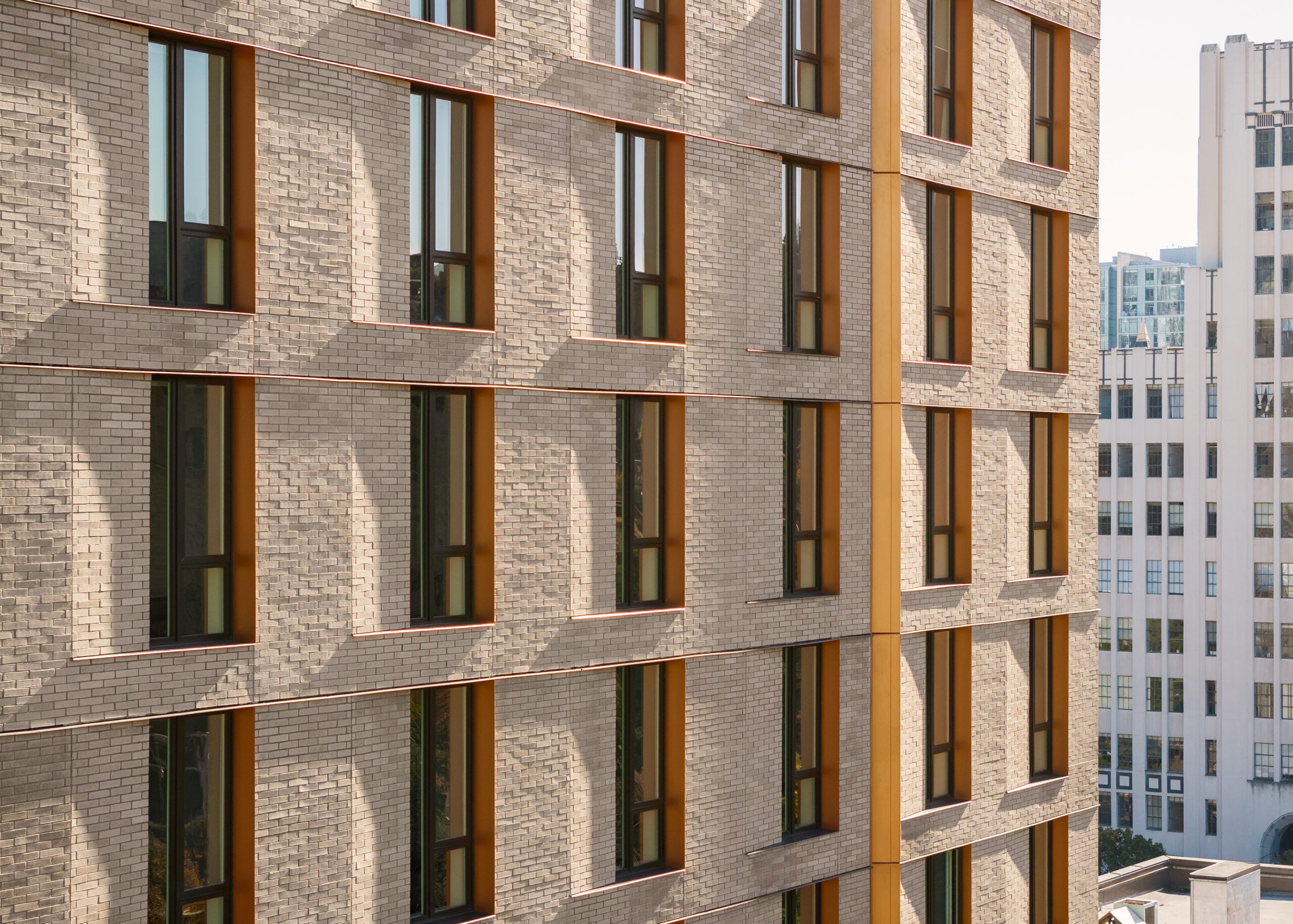
To meet those constraints, they embraced a hybrid mass timber structure, using cross-laminated timber floors paired with a steel-braced frame, a system that “made sense in part due to the size of the project…and the fact that [Julia West House] is located within a busy corridor,” Stauffer adds. Early on, CDP expressed interest in mass timber, which Holst welcomed. “It’s wonderful when the client comes to you and wants to push the envelope in terms of design, sustainability, and construction-ability,” says Holst principal and owner Renée Strand. Installers completed roughly one floor per week of the primary timber structure, with overall construction completed in about a year and a half.
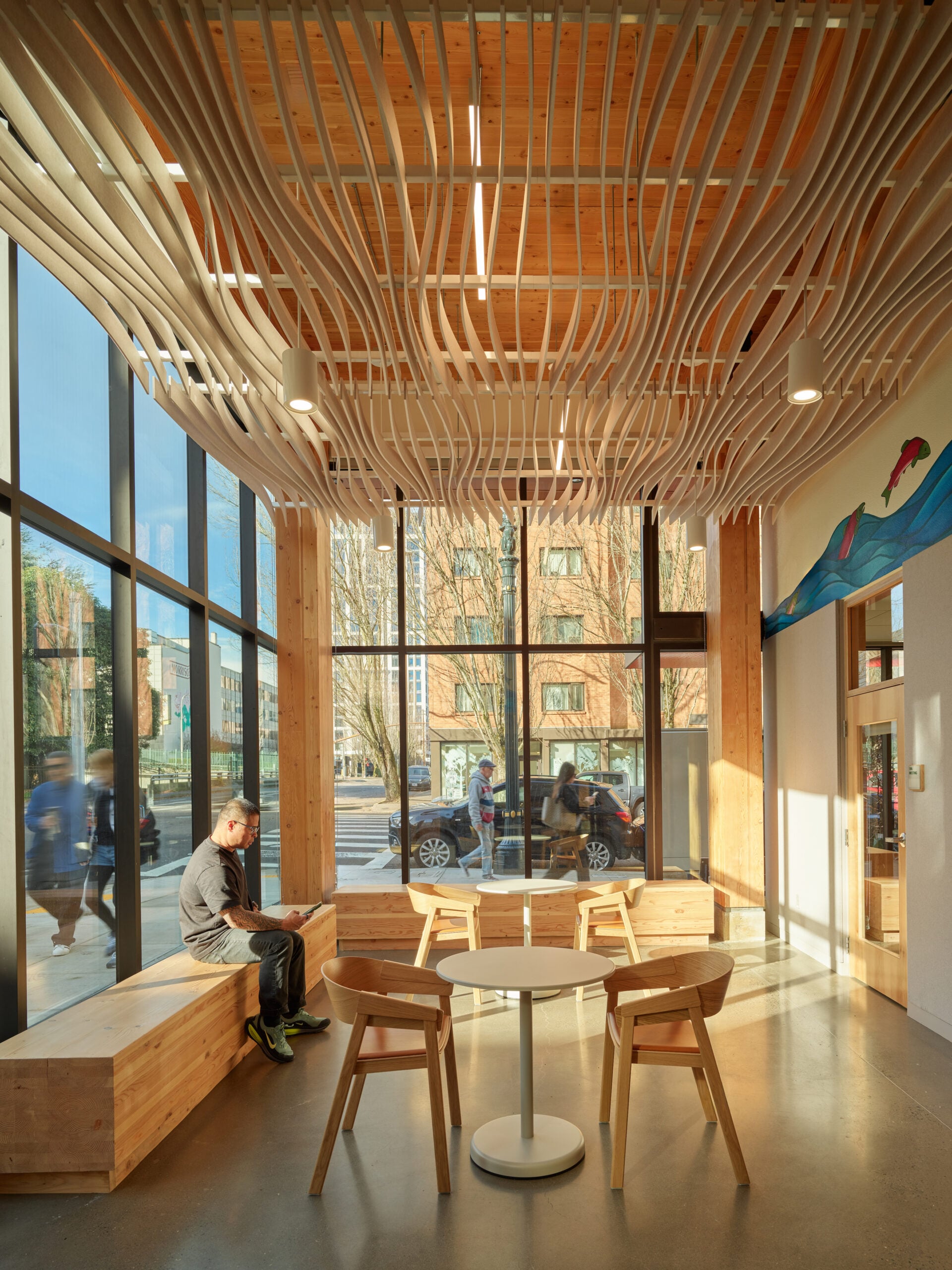
Inside, shared spaces are carved into the building’s massing through a basalt-like vertical fissure that references the Columbia River. Exposed timber structure is concentrated in the lobby and common areas, paired with glass and acoustic baffles, while residential levels remain quiet and homey with ceilings exceeding nine feet and near floor-to-ceiling windows.

Community life is central. “We really wanted to focus on the community spaces and bringing everyone together within the building,” Strand says. The ground floor includes case management spaces and administrative functions, while the 12th floor houses offices and a rooftop deck with expansive city views. “The real work of the building starts after it’s open, so making sure the spaces we designed are in service of everyone was key,” Strand adds.
Now Oregon’s tallest mass timber building, Julia West House is drawing attention not only for its carbon-conscious construction, but for how architectural ambition can be meaningfully applied to housing for those most often overlooked.
Would you like to comment on this article? Send your thoughts to: [email protected]
Latest
Projects
UC Berkeley’s Newest Building Is All About Human Interactions
The long-awaited project highlights uncomfortable truths about Los Angeles’s cultural sector and civic health.

Projects
ZD+A Brings a Modernist Mexico City House in Line with its Context
Architect Yuri Zagoin Alazraki reorganized the speculative house to respond to its site and create unique spaces for contemplation.