



October 21, 2025
Kazakhstan’s Almaty Museum Celebrates Central Asian Art
There are elements of the international museum-familiar: Richard Serra’s Junction, Yayoi Kusama’s Love is Calling, and a curved frozen lagoon piece of Anselm Kiefer’s. But the overwhelming attraction here is the Kazakh and other central Asian art, most of which hasn’t done nearly enough museum and Biennale globetrotting. There is a superb retrospective on Almagul Menlibayeva, who has some international visibility, but there are many other works on display by artists who deserve the same recognition. Almaty fills a gap in the post-Soviet art collecting landscape. The museum’s principal arts collection, the Abilkhan Kasteev State Museum of Arts, features the most important Soviet-era artists but its priorities tend to reflect an official line. Socialist Realism is also well-represented, but emigre and dissident artists are not.
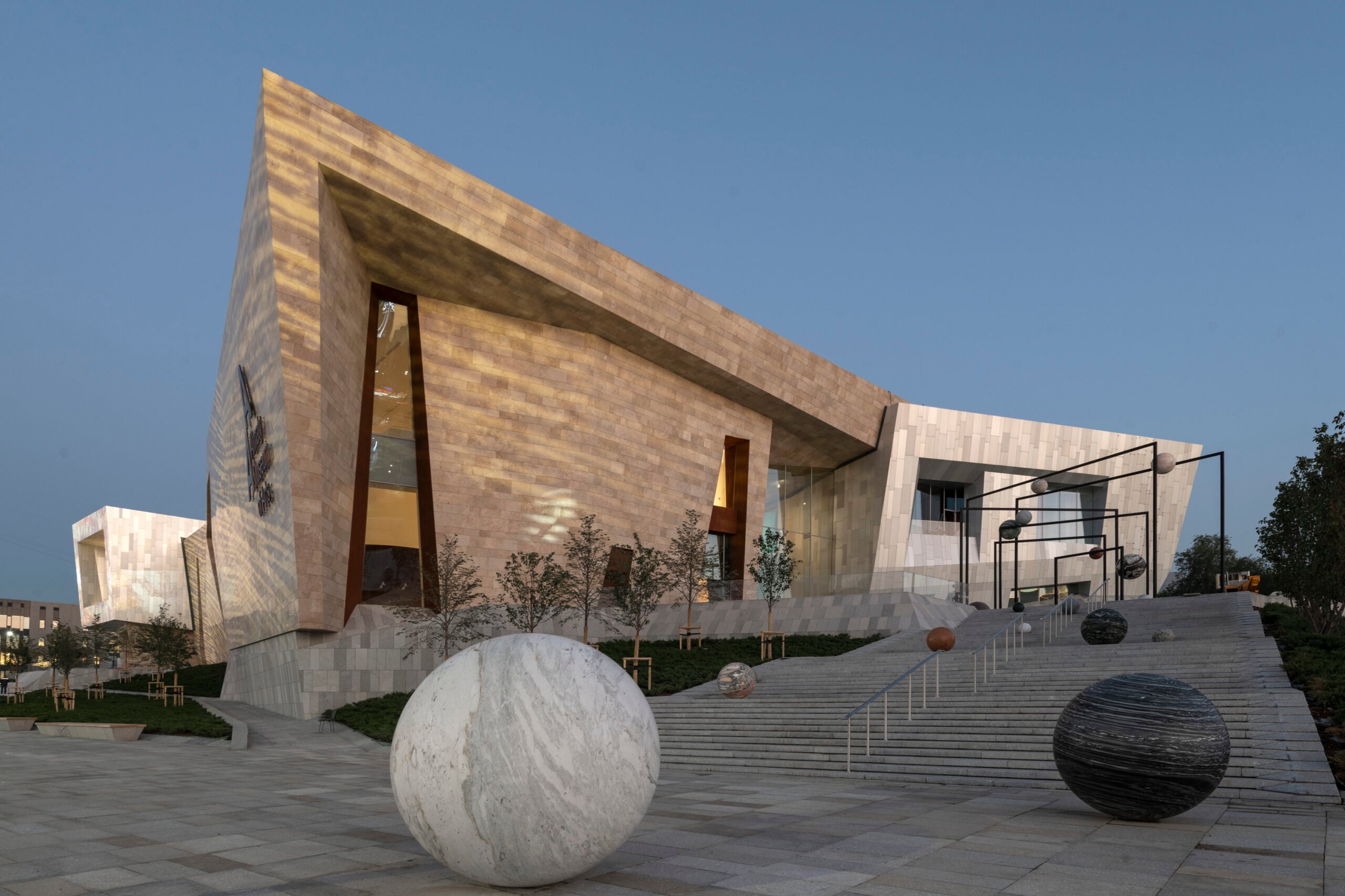
The museum is part of a new cultural cluster, across a park from a forthcoming Ballet theater. This area is located south of the city center, where Almaty’s orderly grid turns to an automobile-oriented sequence of towers and malls (the largest of which, the Essentai, is an SOM project—a sure sign that international capitalism is well-established).
The site is vertiginous; foothills to the adjoining mountains arguably start right there, and the architects largely left them, with the site serving, as design lead Chris Lanksbury explains, “like a plinth to the building,” with two main entrances located to the west and east sides.
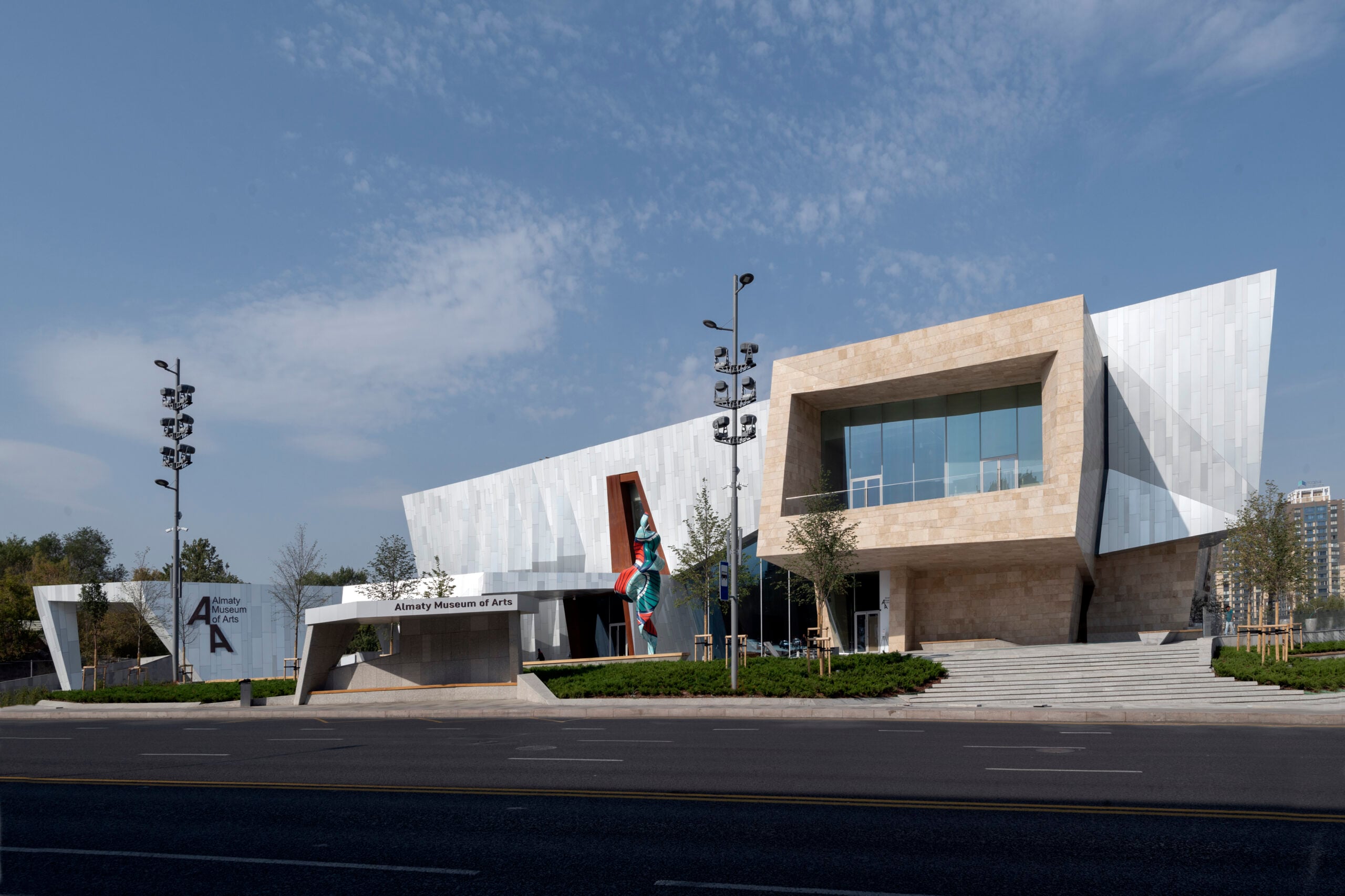
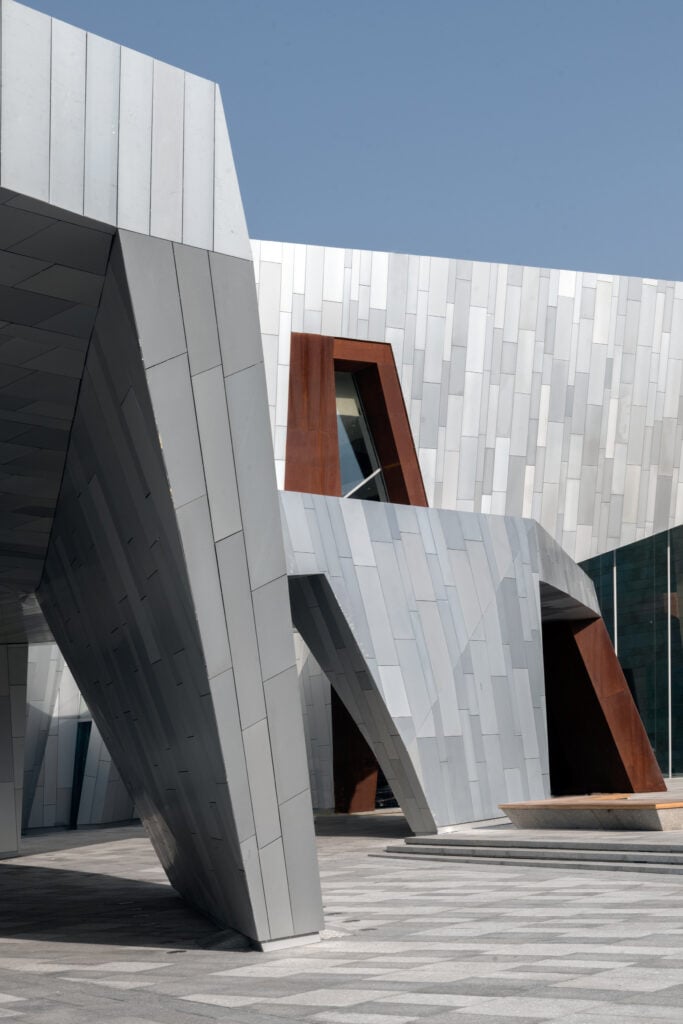
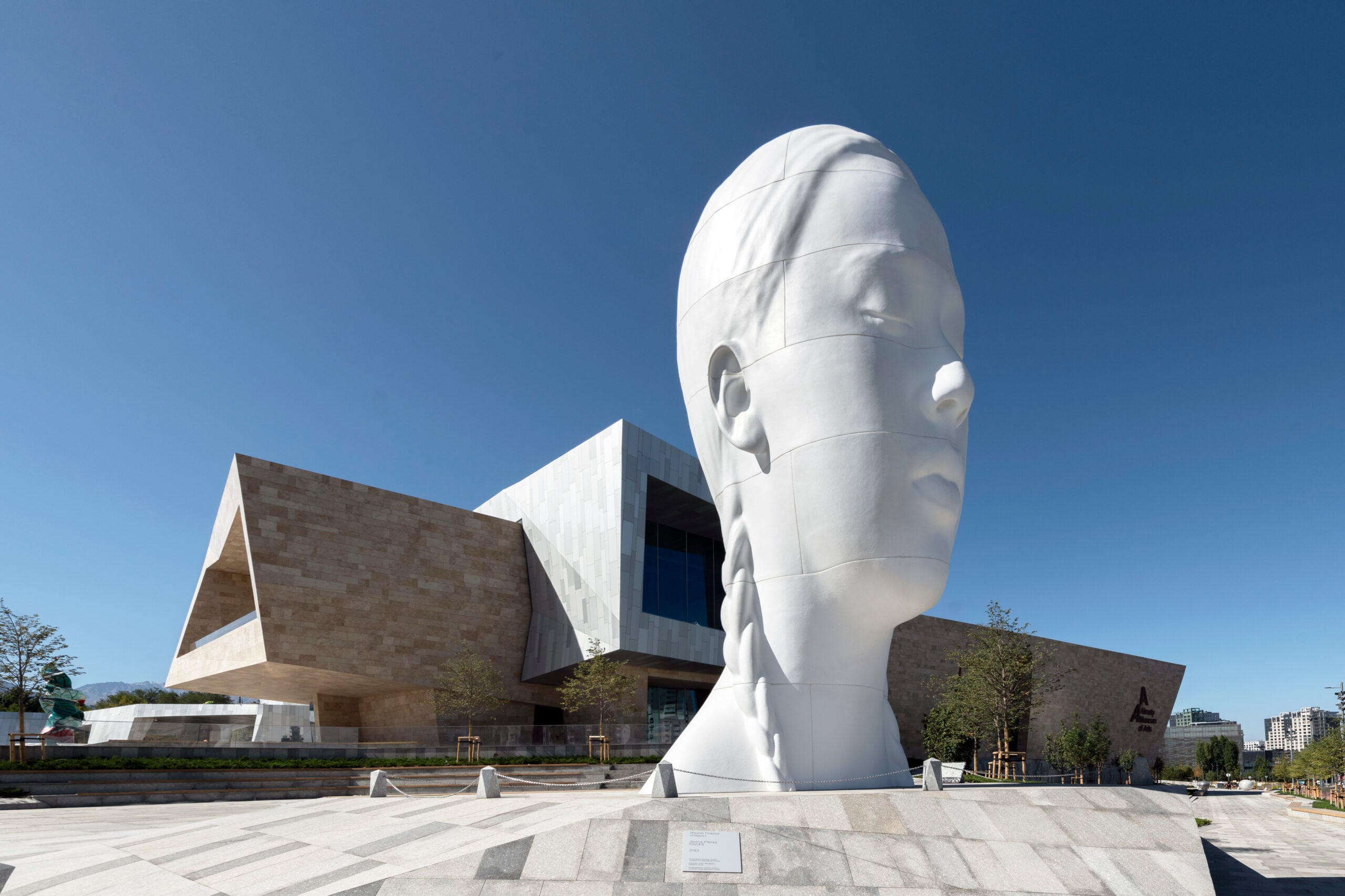
The form of the museum is tectonic, consisting of rough L-shaped volumes clad in Jura limestone and aluminum panels. Their conceptual narrative, Lansksbury explains, was “metal reflecting the city and stone mimicking the mountains.” The limestone frontage is less fenestrated, for good reason, as Lanksbury notes, “the massiveness of the stone was quite important.”
The architects wanted to avoid a “massive box” and instead produced “a sculptural exercise based on a functional base.” They twisted its form in a number of ways—and then still more due the decision to place Serra’s 75 feet-long Junction inside. They had to tweak plans to fit it but this worked out felicitously. He says, “It improved the form of the building by creating further cranking of the facade,” It also enabled another double height space within the museum, providing Serra vantages you don’t always get.
The material binary continues inside, with aluminum and limestone volumes that each border one side of the museum’s main hallway. It’s a nod to Kazakhstan’s wondrous Charyn Canyon about 120 miles away.

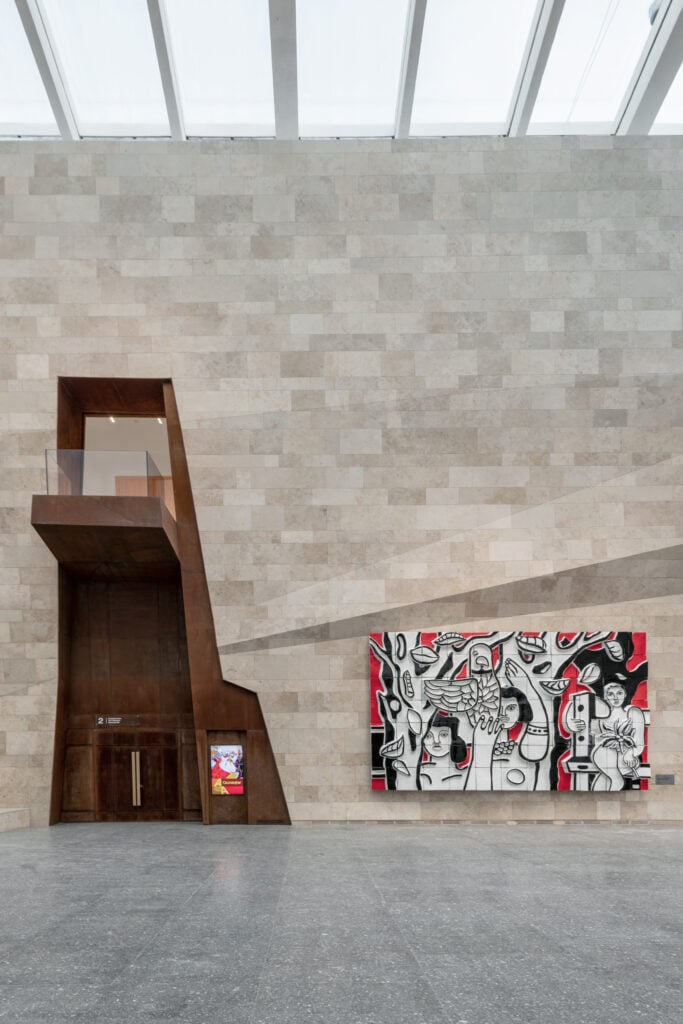
The museum’s interiors make use of Cor-Ten as the material for expressive doorways, casings, and window linings. The concept was geological, as Lanskbury explains, “that when you cut into surfaces there’s something different beneath” and Cor-Ten seldom seems so vibrantly orange as when against the muted limestone. The trouble is that the limestone and Cor-Ten pairing is so inspired that the aluminum portions look a bit anodyne by comparison. More has been done with the limestone otherwise; it morphs naturally into a grand stair and then into a bench, and more. Aluminum unfortunately reads just as cladding. Keep your gaze fixed on the good half.
The art is the thing, in any case, and the museum provides an excellent home to it. In a reverse of typical arrangements, smaller art is on the ground floor. This was deliberate. Curator Inga Lace tells METROPOLIS this placement on first on the “pathway” of visiting the museum, with “modern Kazakh and Central Asian art gallery as the nucleus.”
Its opening permanent collection exhibit is titled Qonaqtar (Qonaqtar meaning ‘guests’ in Kazakh). The exhibition text explains, “It speaks to the deep-rooted tradition of welcoming guests with warmth and respect but also evokes the act of travelling long distances to find shelter in someone else’s yurt—a necessity in vast, often harsh landscapes.” This was a more historically complicated legacy than most offers of tea.
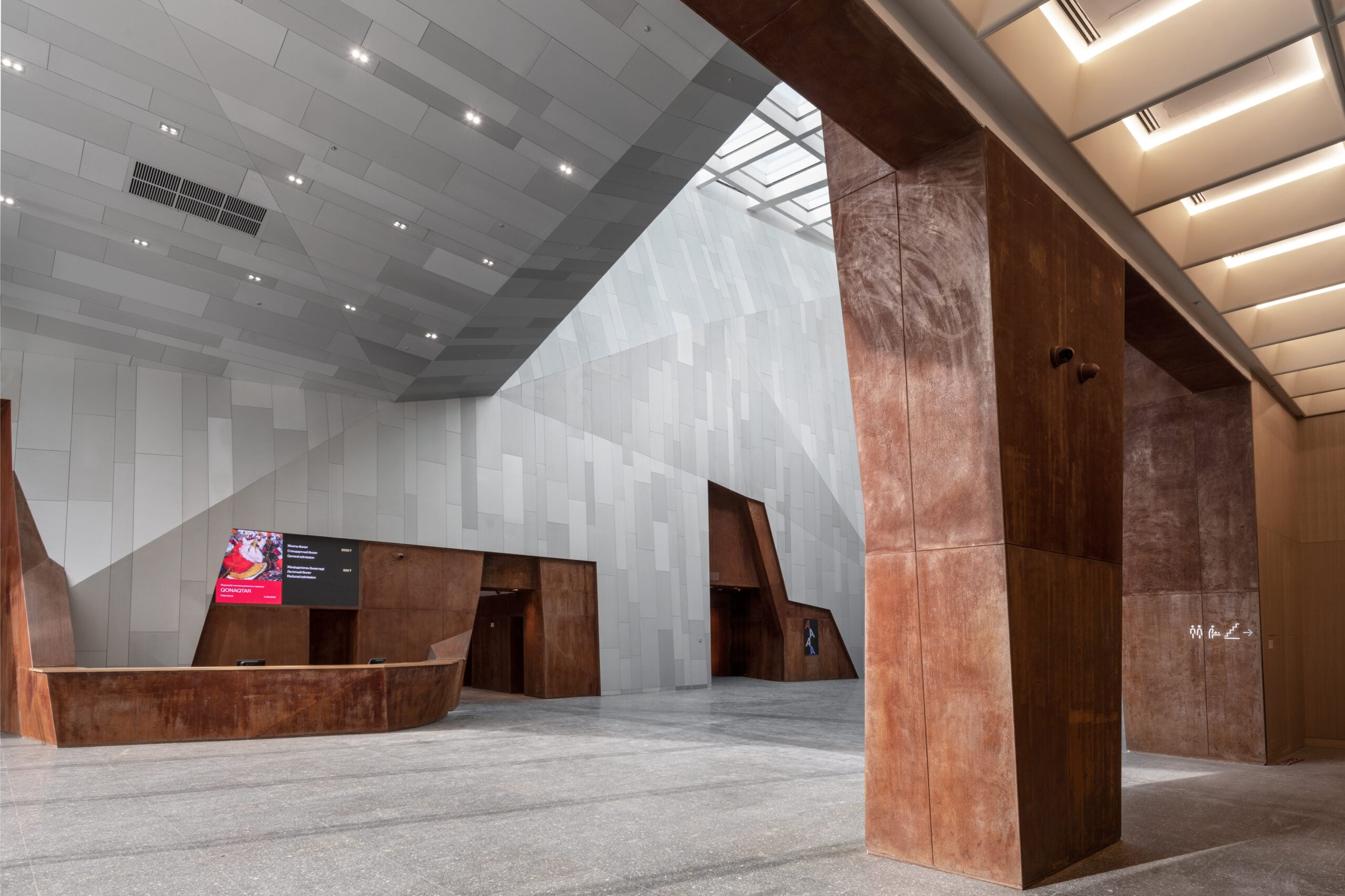
Lace explained that arrival in Kazakhstan was often considerably less than “voluntary.” Many guests didn’t want to go: Koreans, Tatars, Ingush, Chechens, Volga Germans, Uighurs, and dissidents were exiled there. Others arrived with only marginally more agency; settlers turning up under the Khruschev era Virgin Lands campaign to expand agricultural production—in the process all but destroying the Aral Sea. The exhibit, she explained, “invites viewers to think about the different voluntary and forced migrations that made Kazakhstan an international place.”
She notes something of American inattention to this wealth of Central Asian art from her time as a Fellow at MoMA. “I would notice how reluctant western institutions are towards work that comes from the former Soviet Union which isn’t considered purely non-conformist. And in many cases, it’s much more subtle—it wasn’t socialist realism anymore, and artists were looking into their own heritage and reacting to global modernist tendencies as much as was available to them.”
Would you like to comment on this article? Send your thoughts to: [email protected]
- No tags selected
Latest
Viewpoints
Detroit Month of Design: A City’s Work in Progress
Now in its 16th year, the celebration offers insights into the Motor City’s ongoing accomplishments without glossing over its hurdles.
Projects
How a Hybrid Building Helped an Historic Manhattan Congregation Remain in Place
On Billionaire’s Row, FX Collaborative designed a new home for Calvary Baptist Church combined with an office tower.