



December 12, 2025
Lift Ev’ry Voice and Sing: How a New Jacksonville Park Tells A Story
There are many chapters to the history of LaVilla, a neighborhood in downtown Jacksonville, Florida, that was the historic center of Black life in the city: Its boom during Reconstruction as freedmen sought jobs and affordable homes when it was an independent city, the bustling Broad street institutions where artists like Cab Calloway and Billie Holiday performed, and the waves of immigrant communities that made it home through the generations. But, until recently, very little of this past was visible. The construction of the Interstate Highway I-95 in the 1950s, a series of urban renewal projects, and overall disinvestment erased much of the neighborhood’s physical and cultural fabric. What remained was mostly vacant land. However, that’s changing. New development, combined with a city-driven cultural arts plan, is reviving LaVilla.
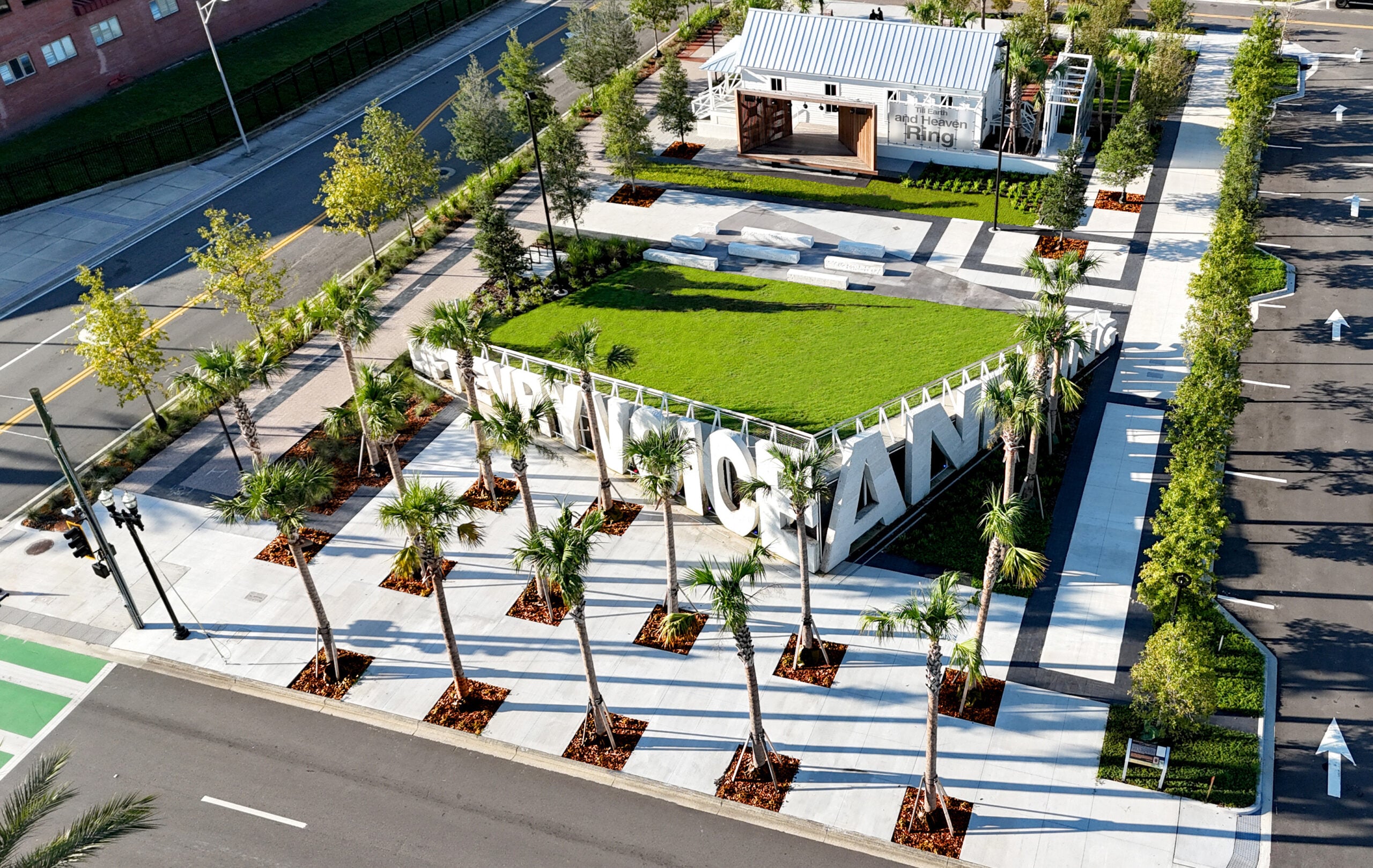
This year, one of the centerpieces of this work, Lift Ev’ry Voice and Sing Park (LEVS), opened. Masterminded by Hood Design Studio, the three-quarter-acre green space is an homage to the neighborhood’s past and a platform for present-day gathering and future community life. It’s an example of how small-scale interventions can contribute to reparative effects along the journey to more equitable and just cities.
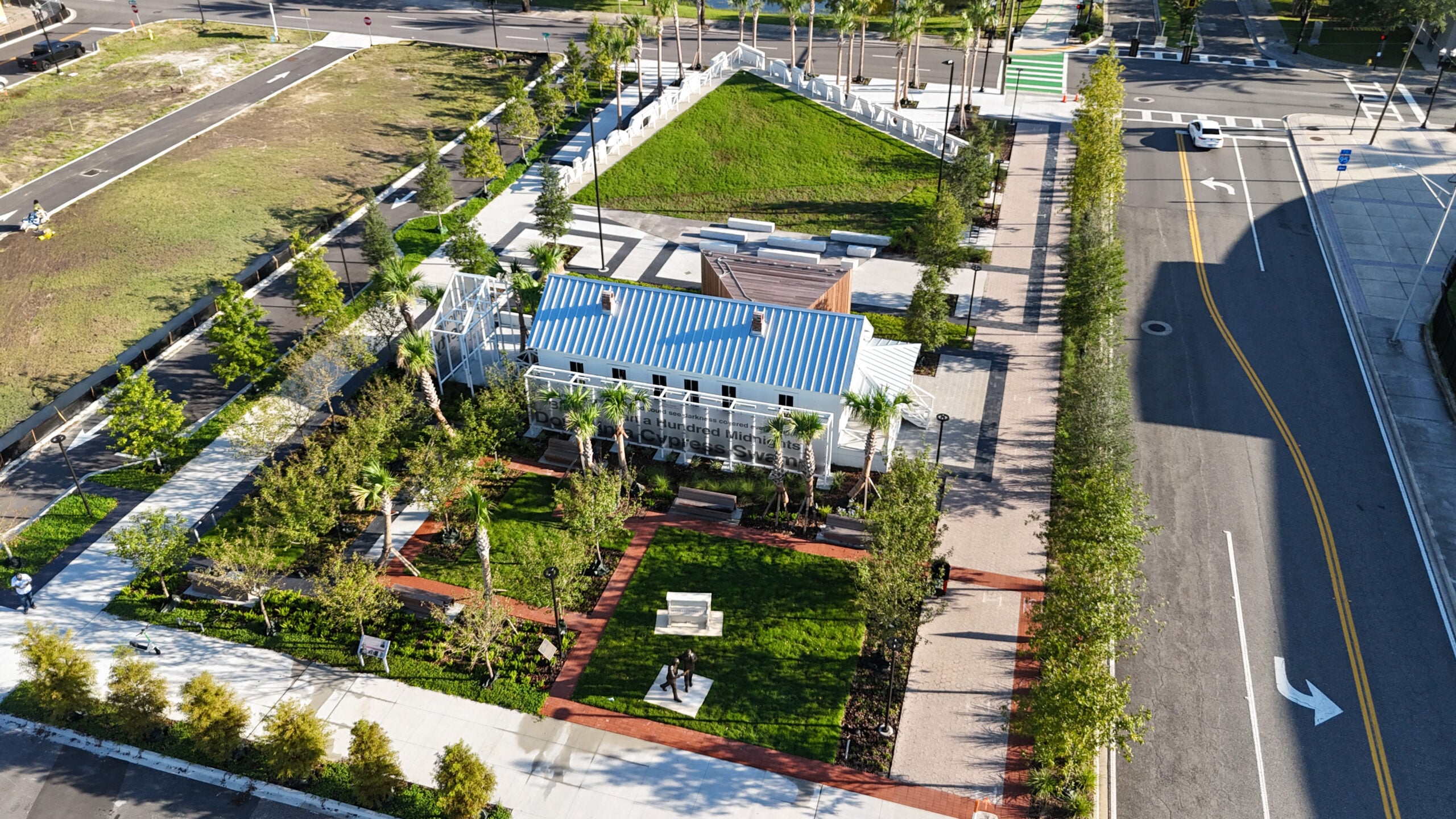
The park, completed in the summer of 2024, serves as a gateway to the neighborhood and the city of Jacksonville due to its proximity to downtown and to the first leg of the Emerald Trail, a 30-mile pedestrian and cycling greenway that courses through town. The site was essentially a flat lawn when Hood Design Studio came onto the project, so their approach involved replenishing it with generations’ worth of history, material culture, and local lore to create a grand symbol. “You can’t have subtlety in a place like this,” says Michael DeGregorio, the studio’s principal in charge of the project.
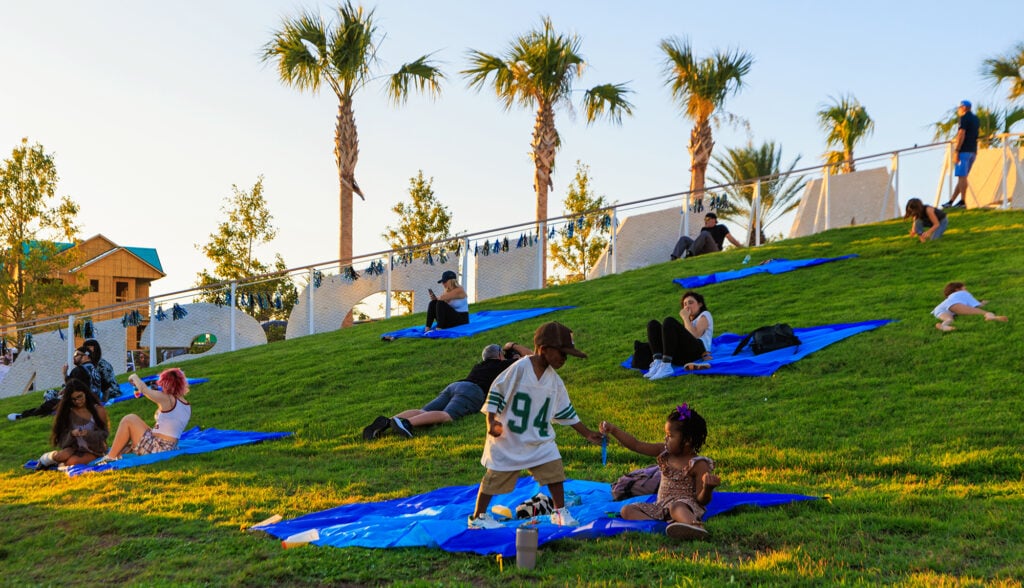
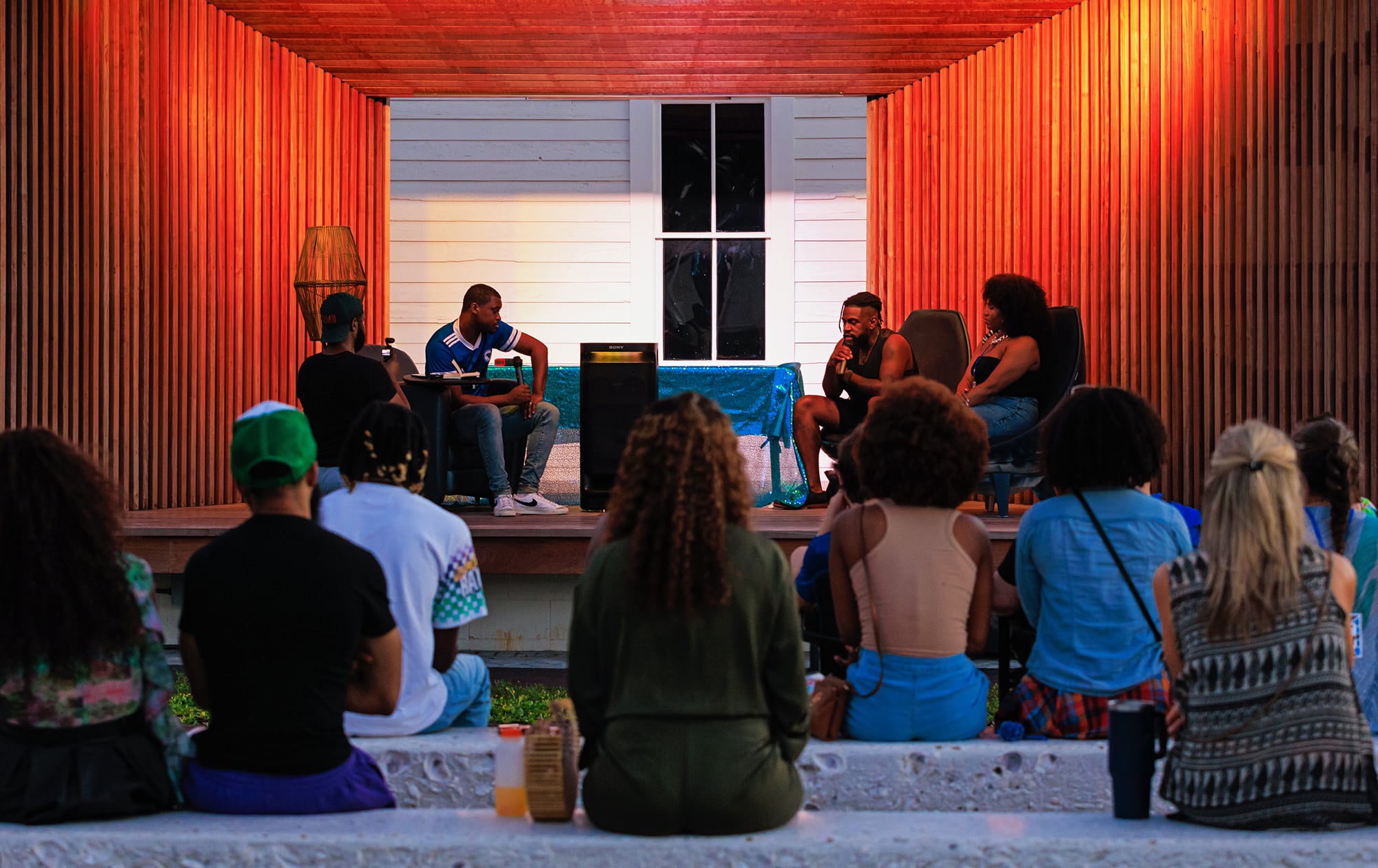
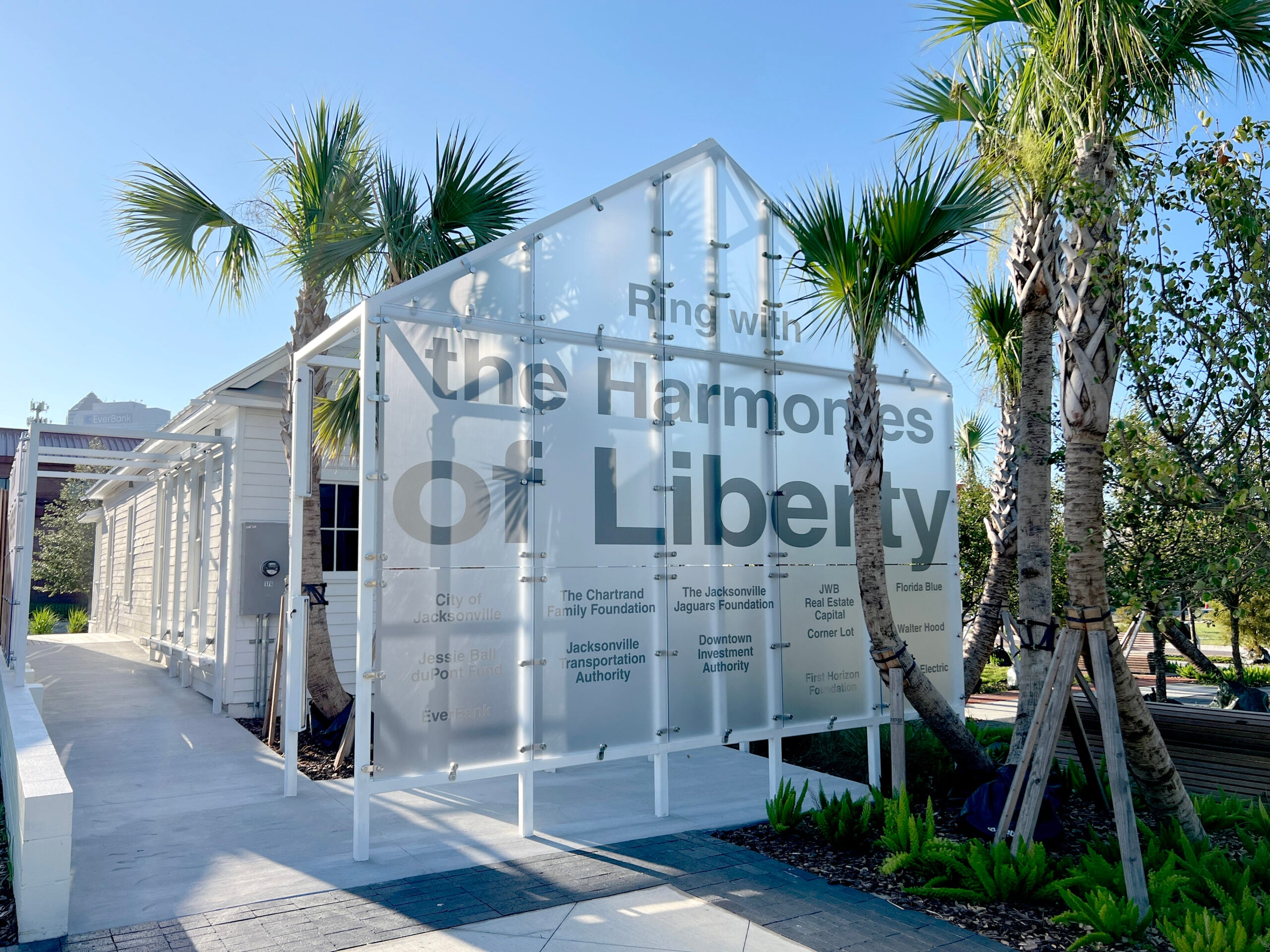
Named after the Black national anthem, LEVS Park is located on the site where its composers, brothers James Weldon Johnson and John Rosamond Johnson, were born. Hood Design Studio paid tribute to this legacy with a typographic sculpture of the song’s lyrics made from tabby concrete, a nod to the materials found in the slave quarters at the nearby Kingsley Plantation. It wraps around a sloped lawn that serves as an amphitheater for a megaphone-shaped stage, ensuring that performing arts remain an active part of public life in the neighborhood. At its center, the site features a restored shotgun house indicative of the late 19th– and early 20th-century residential vernacular in the area, inscribed with a poem by James Weldon Johnson. The Johnsons were affluent and lived in more stately accommodations; to mark this distinction, the designers inscribed outlines of Sanborn Map parcels, including the Johnsons’ actual home, into the paving.
A Landscape Built for Gathering, Memory, and Connection
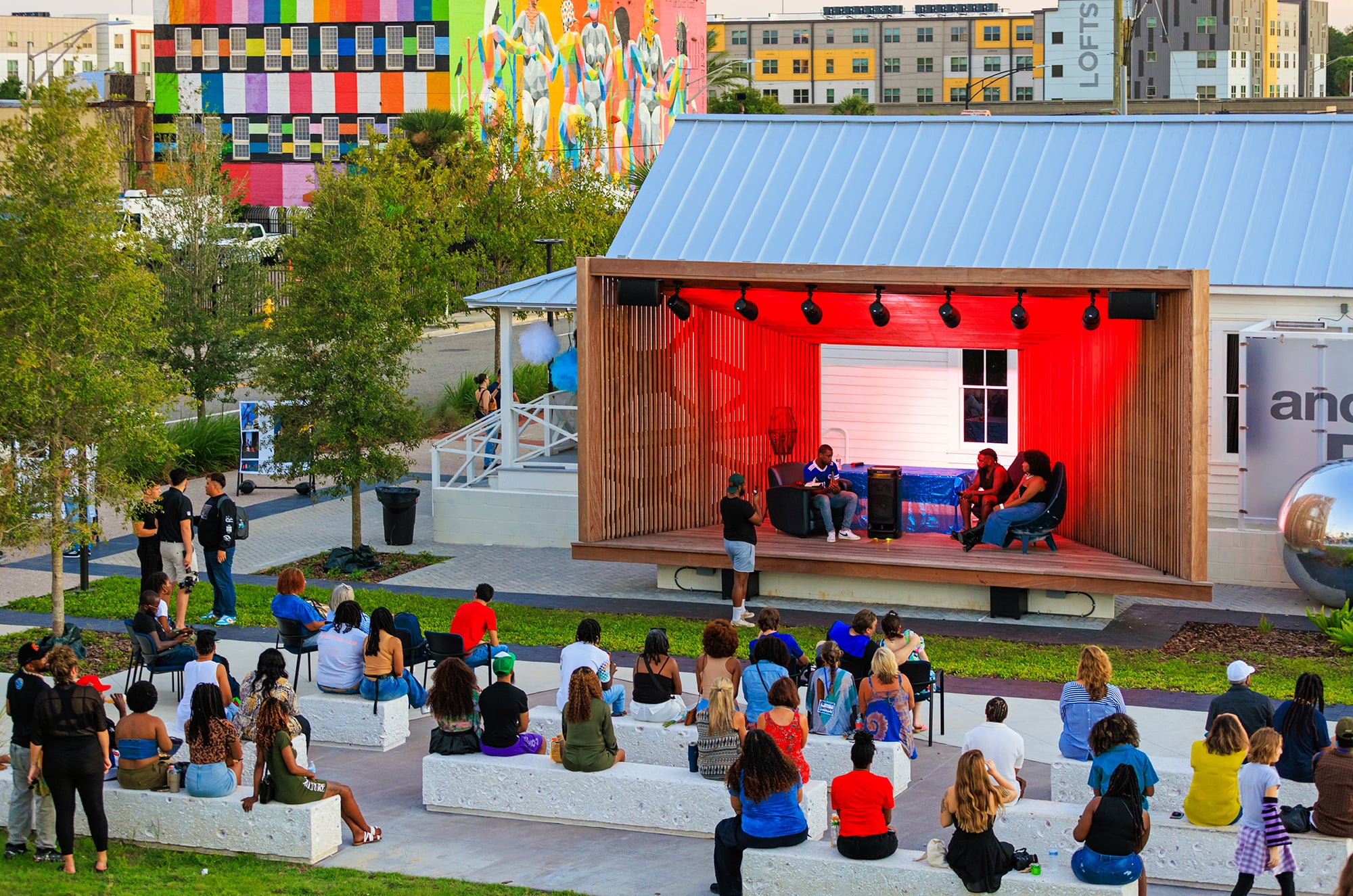
The designers also planned an array of experiences integrated into the project to draw people in. Events — like live bands, yoga on the lawn, family days, and public markets — take place on the lawn, plaza, and stage; while a shaded garden furnished with park benches serves more passive uses, like reading or meeting a friend. Meanwhile, the firm commissioned mostly local fabricators and contractors in the park to strengthen neighborhood connections. “Having people in the community that built it only helps with the long-term support and recognition of the project,” DeGregorio says.
Becoming a beacon for many is critical to the design. “There’s a growing loneliness epidemic in the world and, in an ideal circumstance, you could sit down in the park and talk to someone, learn something, and gain mutual understanding,” DeGregorio says. “Like, ‘Oh, I didn’t know the Johnson brothers lived here. Who are they?’ People are searching for meaning more and more now, and you could have any patch of lawn [as a neighborhood park], but the fact that this tells a story is even better.”
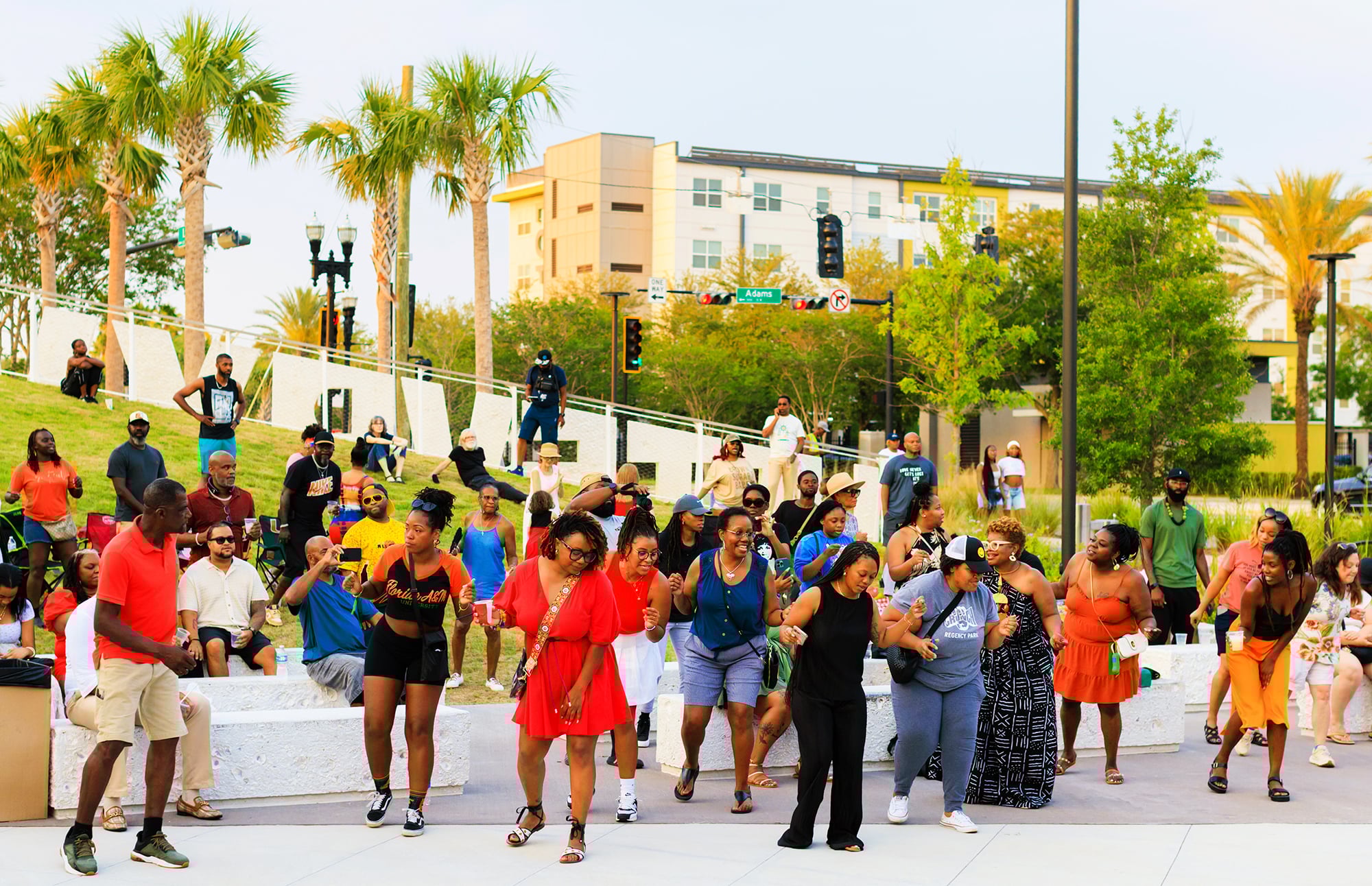
LaVilla is at another inflection point as the city of Jacksonville, the fifth-fastest-growing city in the country, ramps up residential development in the area. Because of this, the park, even at its relatively diminutive size, is a lesson in how designers can bring Black epistemologies into revitalization projects in a manner that acknowledges the limitations and potential of their work. When it comes to systemic problems related to displacement and environmental justice, “we are fooling ourselves as landscape architects if we can solve them,” DeGregorio says. “The best thing we can do is highlight truths about the past or present.”
Would you like to comment on this article? Send your thoughts to: [email protected]
Latest
Viewpoints
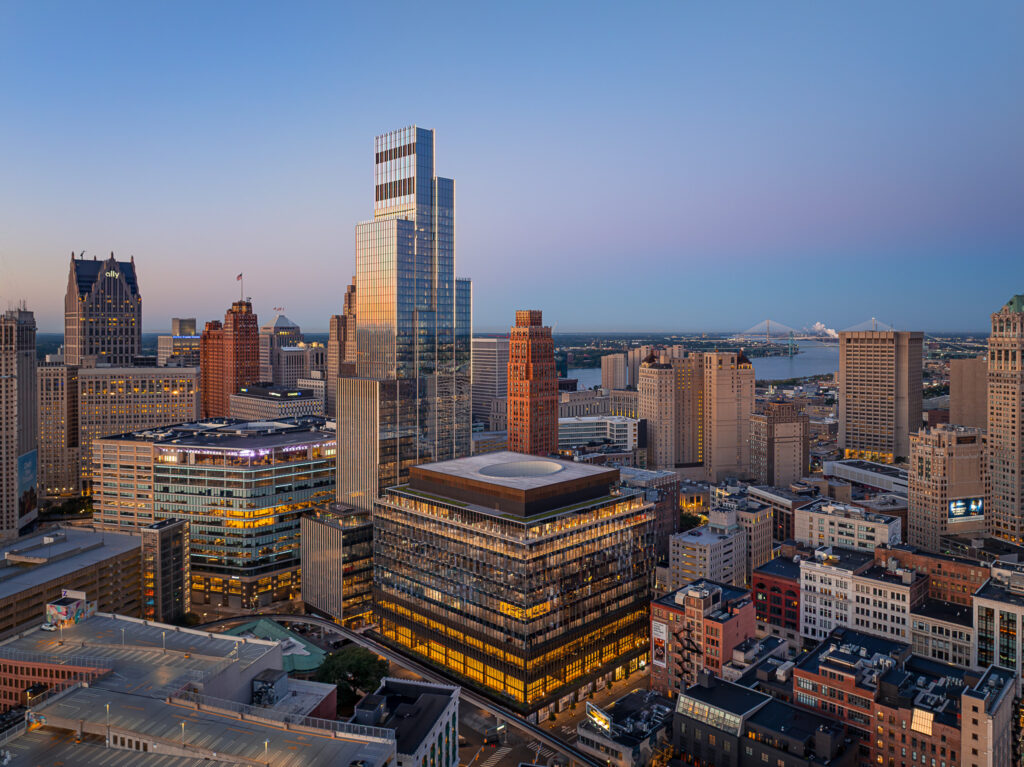
Detroit Month of Design: A City’s Work in Progress
Now in its 16th year, the celebration offers insights into the Motor City’s ongoing accomplishments without glossing over its hurdles.
Projects
How a Hybrid Building Helped an Historic Manhattan Congregation Remain in Place
On Billionaire’s Row, FX Collaborative designed a new home for Calvary Baptist Church combined with an office tower.