



December 2, 2025
The New Portland Art Museum’s Rothko Pavilion Favors Connection
Architecture as Infrastructure, Not Icon
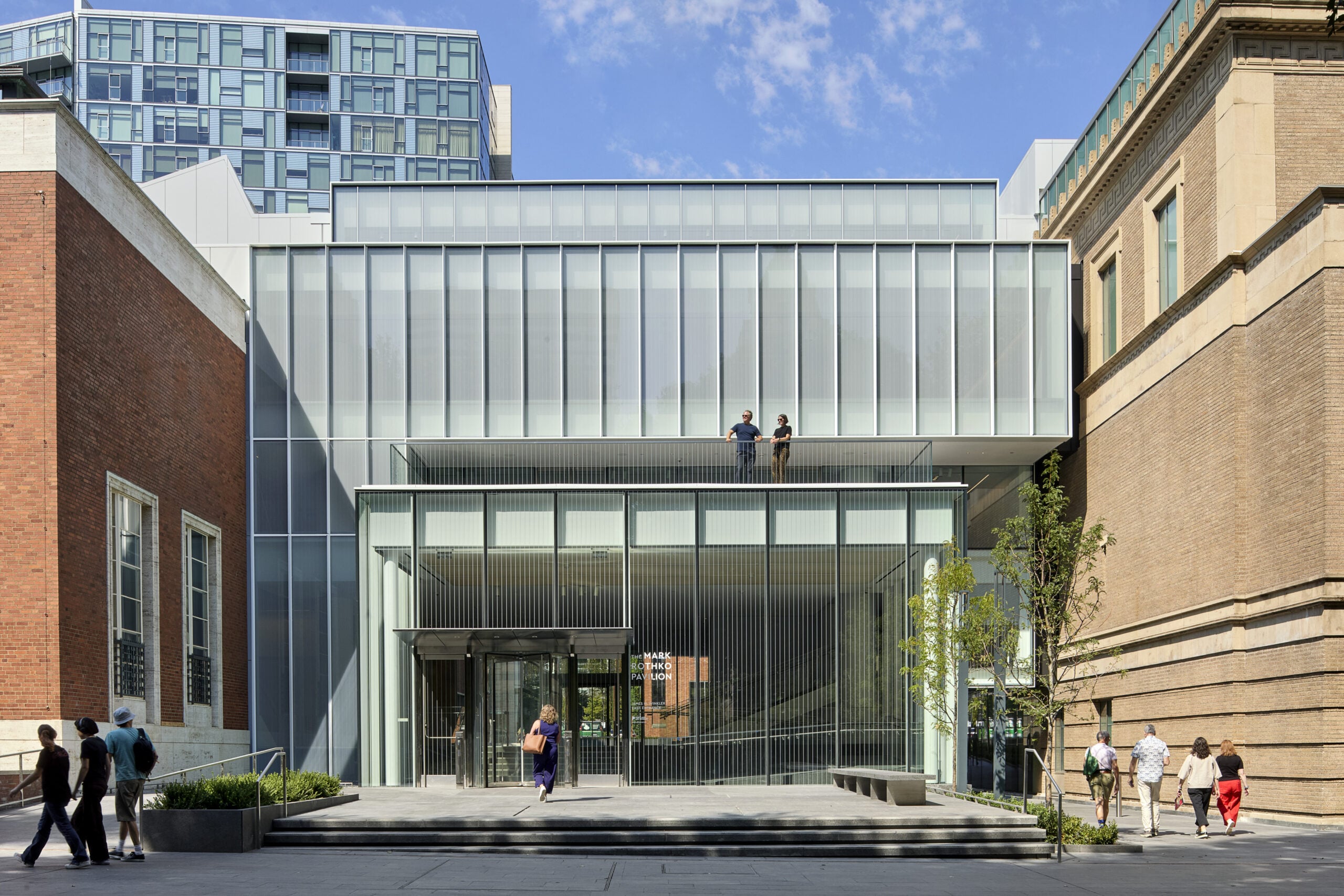
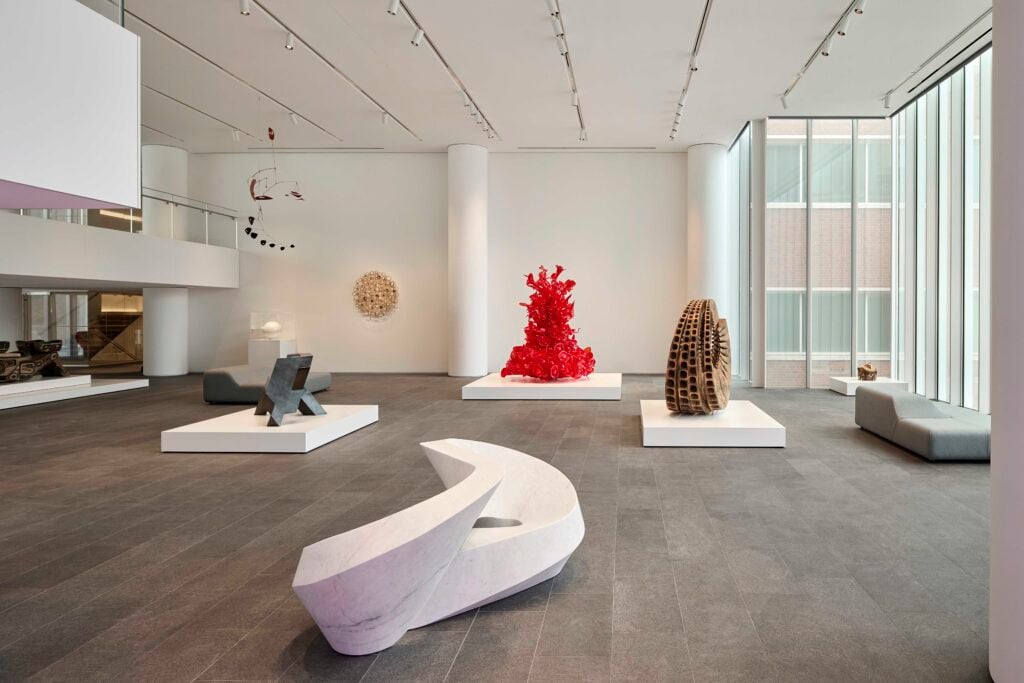
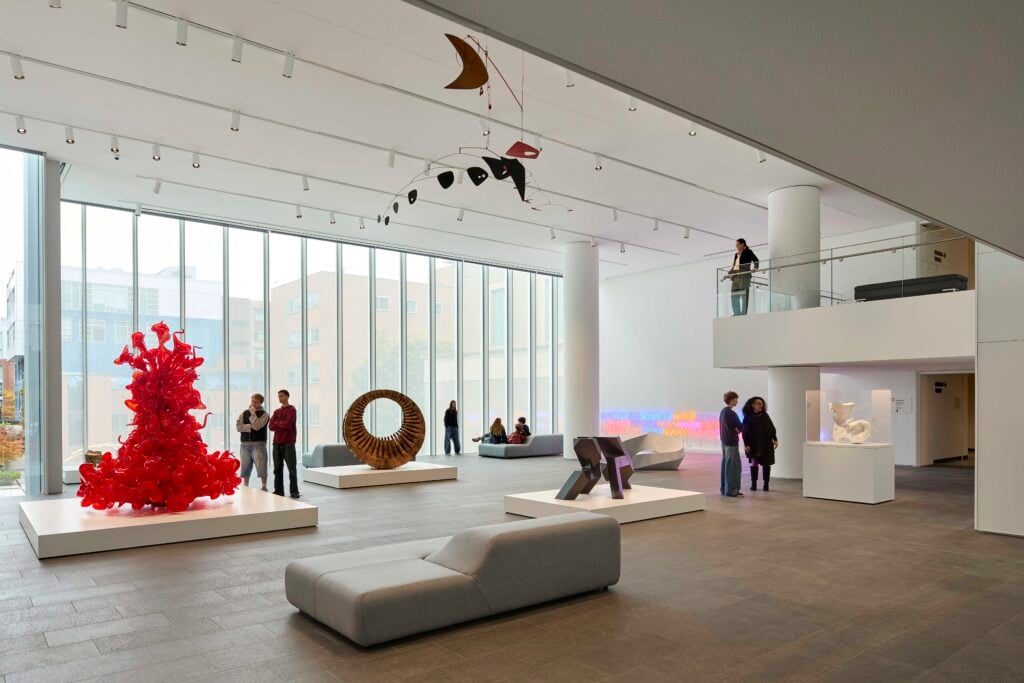
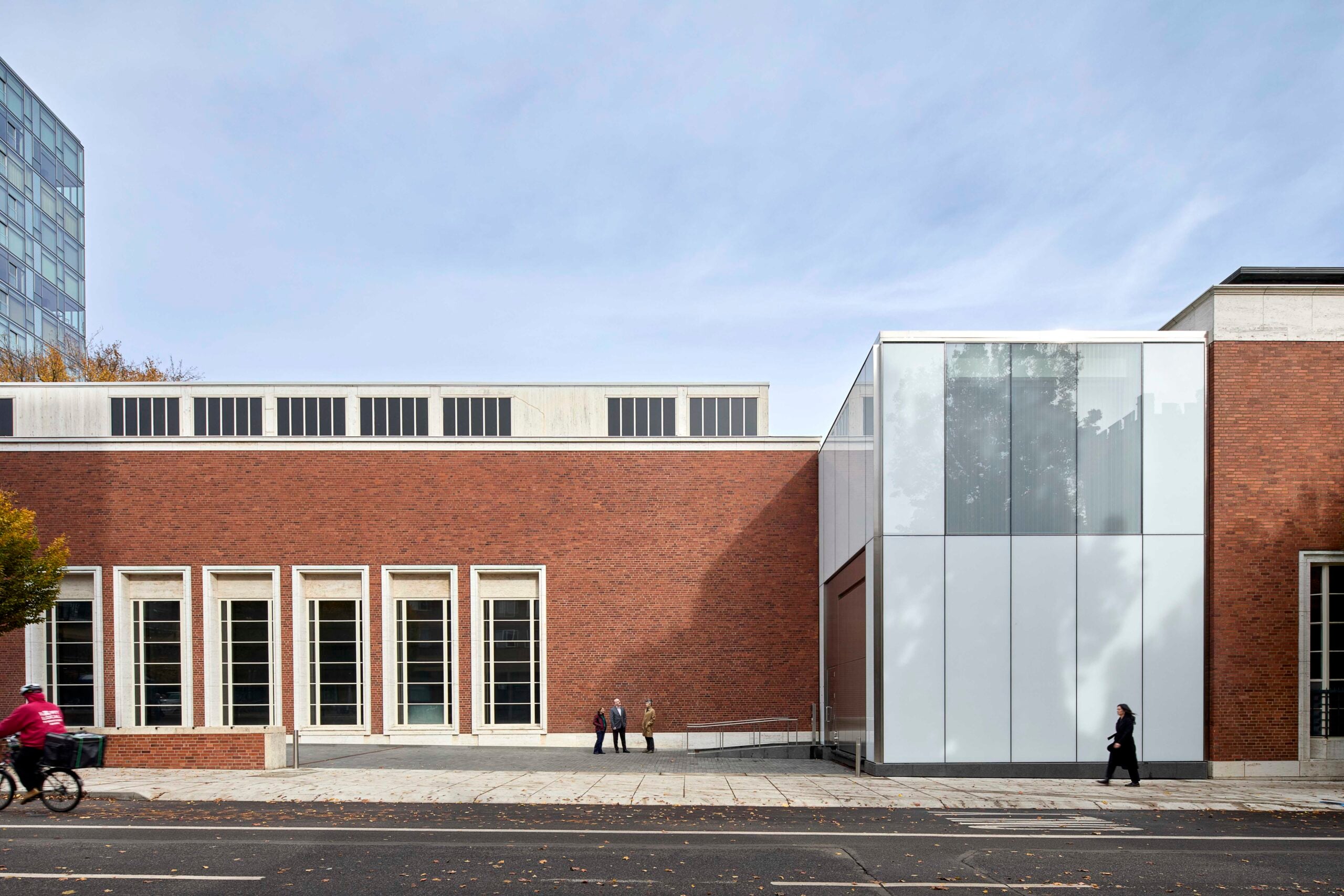
Opened in November, this glass-walled, 21,881-square-foot space, designed by Chicago’s Vinci Hamp Architects and Portland’s Hennebery Eddy Architects, connects and is set back from the downtown Portland museum’s two historic structures: the Main Building, a Modernist landmark by Pietro Belluschi completed in 1932, and the Mark Building, a circa-1926 former Masonic temple designed by Frederick Fritsch. Previously, the buildings’ interiors had been connected only underground, making the unified museum circuitous at best. Now, every floor connects to the next.
“The architectural mission for us here was connectivity,” explains Hennebery Eddy co-founder Tim Eddy. “That’s what this was all about.”
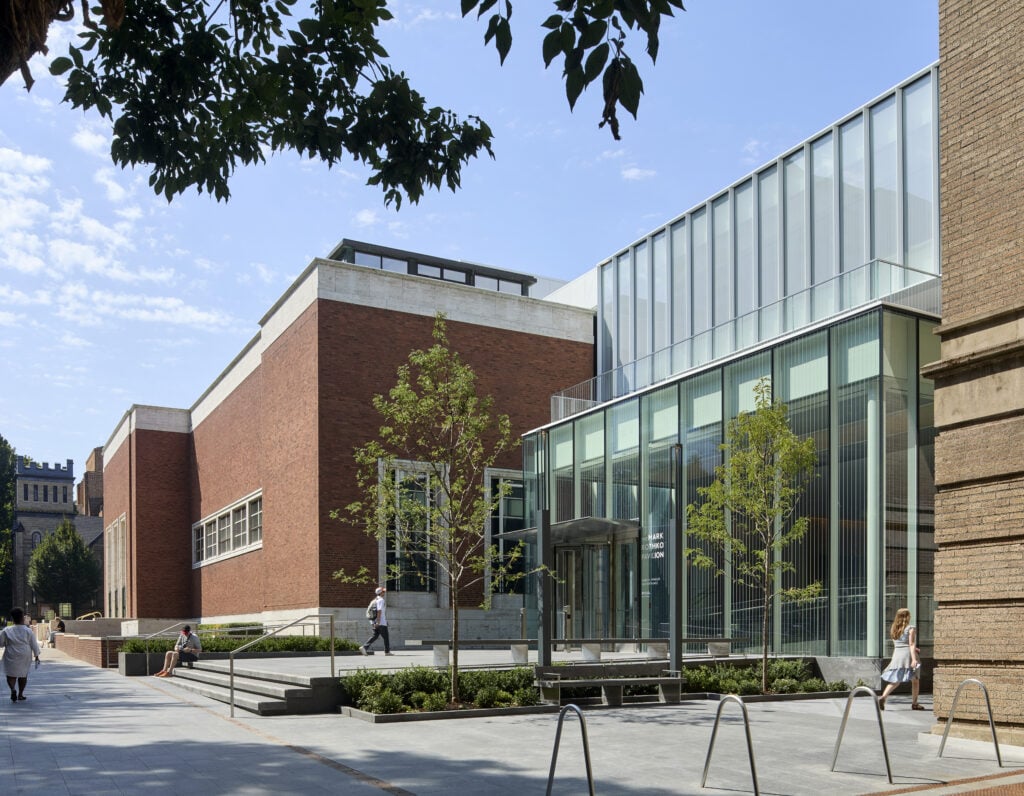
Named for iconic Abstract Expressionist artist Mark Rothko, who spent his childhood in Portland after emigrating from Latvia (and whose family is loaning numerous paintings to the museum), the project adds 100,000 square feet of new or upgraded space. It provides a new front door for the institution along the leafy South Park Blocks while also activating what had been the buildings’ back side, along 10th Avenue, with a new second entry anchored by a café and outdoor tables, as well as Swiss artist Ugo Rondinone’s kinetic golden-hued sculpture, The Sun. Outdoor upper decks on both sides of the Rothko, along with its glazing (including 28-foot-high custom glass panels fabricated in Germany), create newfound transparency and connection to the surrounding cityscape.
A New Front Door—and a New Urban Presence
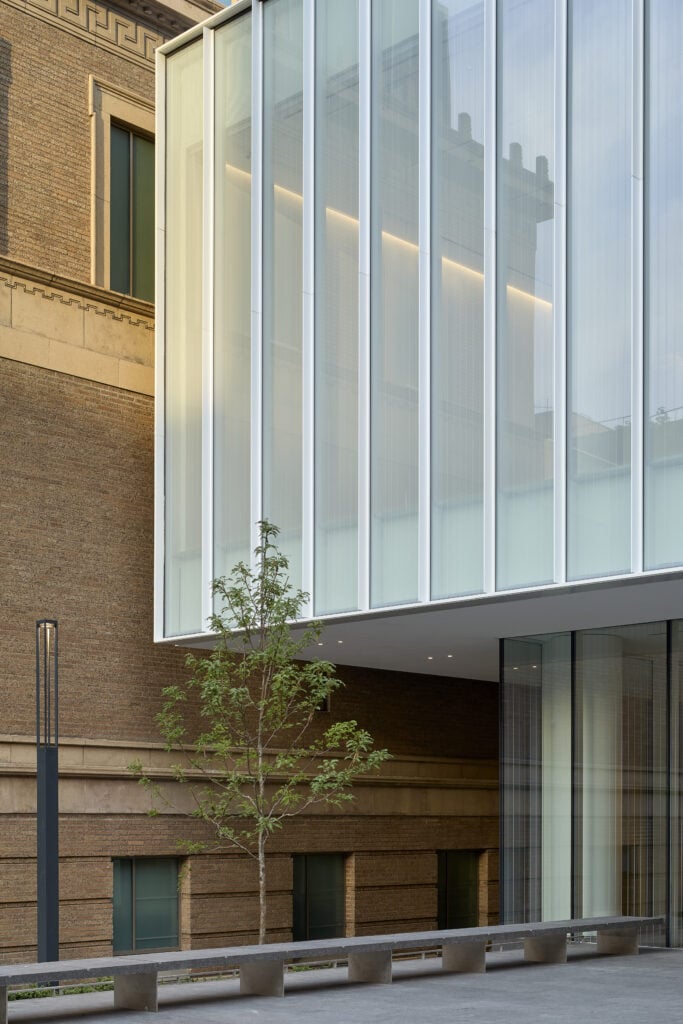
First announced in 2016, the design evolved in response to initial public pushback over the loss of public right-of-way caused by the Rothko Pavilion replacing a pedestrian plaza. An open-air passageway was added along the Mark Building’s south façade by moving the Pavilion’s columns inward and cantilevering the structure on its upper floors.
“It just kind of kisses the building,” says Vinci Hamp partner Philip Hamp. “And that, I think, was the epiphany of the design. It just made everything work so much better.”
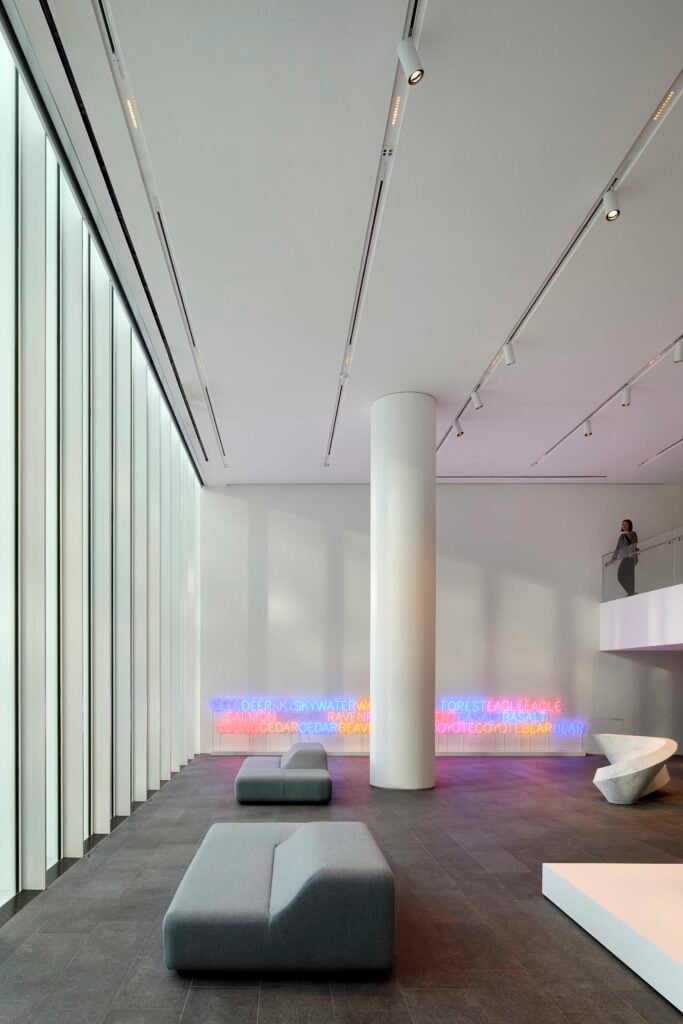
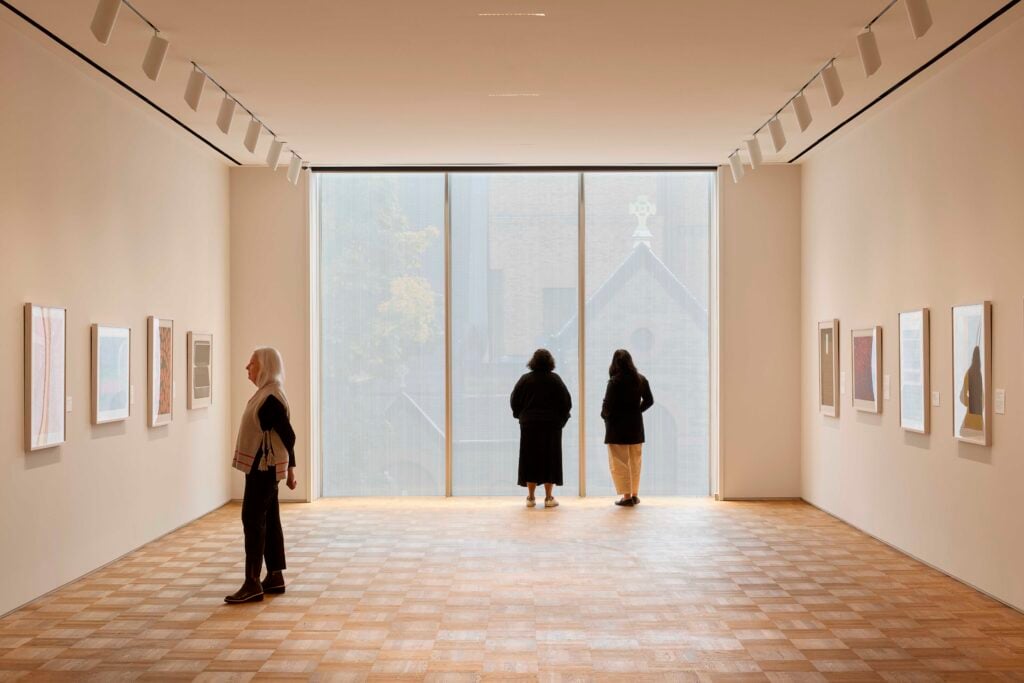
From inside the Rothko, it’s possible to look out at people walking and bicycling through the open-air passageway; from outside, one gets a view into the Mark Building’s ground-floor Black Art and Experiences Galleries. A stairway over the passageway creates a subtly dramatic procession into the museum’s reconfigured contemporary art exhibition spaces, including a room on the top floor reserved solely for the Pavilion’s namesake’s ethereal color-field paintings.
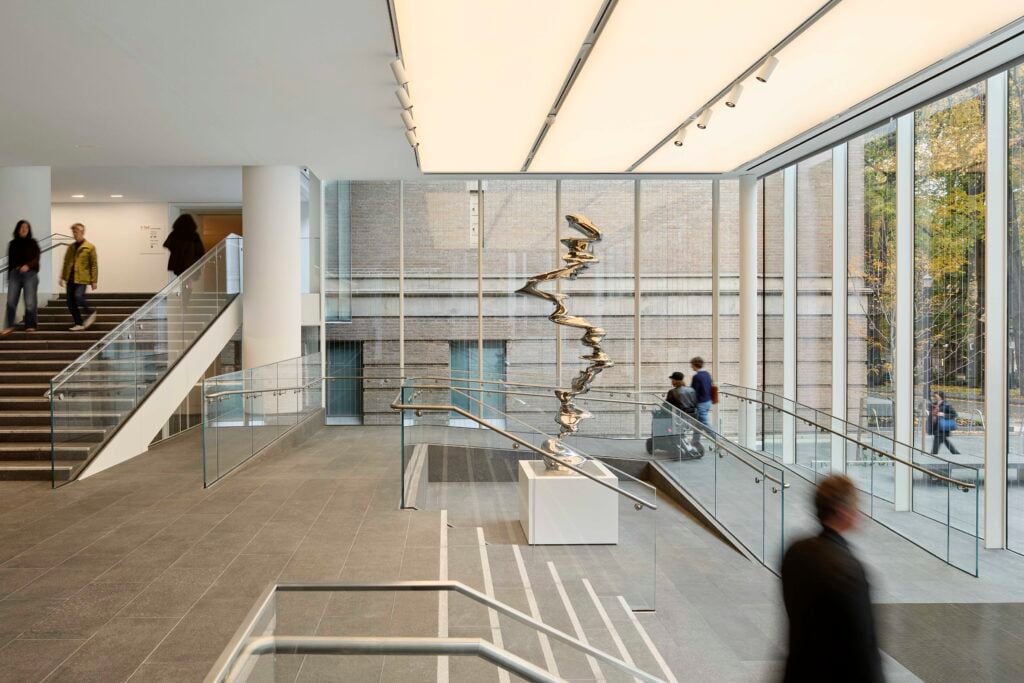
Creating continuous paths between the two buildings wasn’t easy, because their floors didn’t line up; 11 different subtle elevation changes are negotiated with a series of ramps. Yet the Belluschi-designed Main Building proved especially receptive to the Rothko, thanks to its distinct north-south axial connections, which create clear wayfinding and views into a variety of galleries.
Resolving the Historic Puzzle Box
While the Rothko Pavilion’s architecture does not call attention to itself or seek to be iconic, there is a kernel of the Bilbao Effect in its broader aspiration: to act as a catalyst in revitalizing the central city, which has been slow to recover from the pandemic and an ensuing combination of commercial-office downsizing and homelessness.
Ferriso (who will soon depart for the Dallas Museum of Art) believes this is what a 21st-century museum should stand for: cultivating community as much as collections and architecture. “There’s three legs to the stool,” he says. “You have to keep all of them as a priority.”
Would you like to comment on this article? Send your thoughts to: [email protected]
Latest
Viewpoints
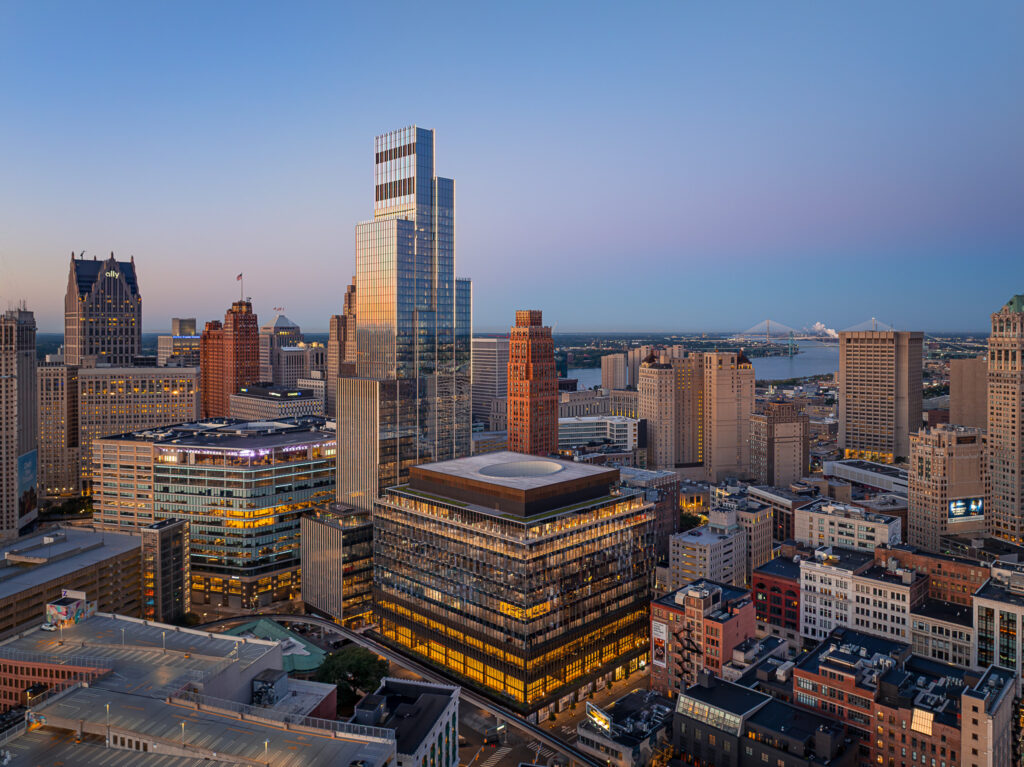
Detroit Month of Design: A City’s Work in Progress
Now in its 16th year, the celebration offers insights into the Motor City’s ongoing accomplishments without glossing over its hurdles.
Projects
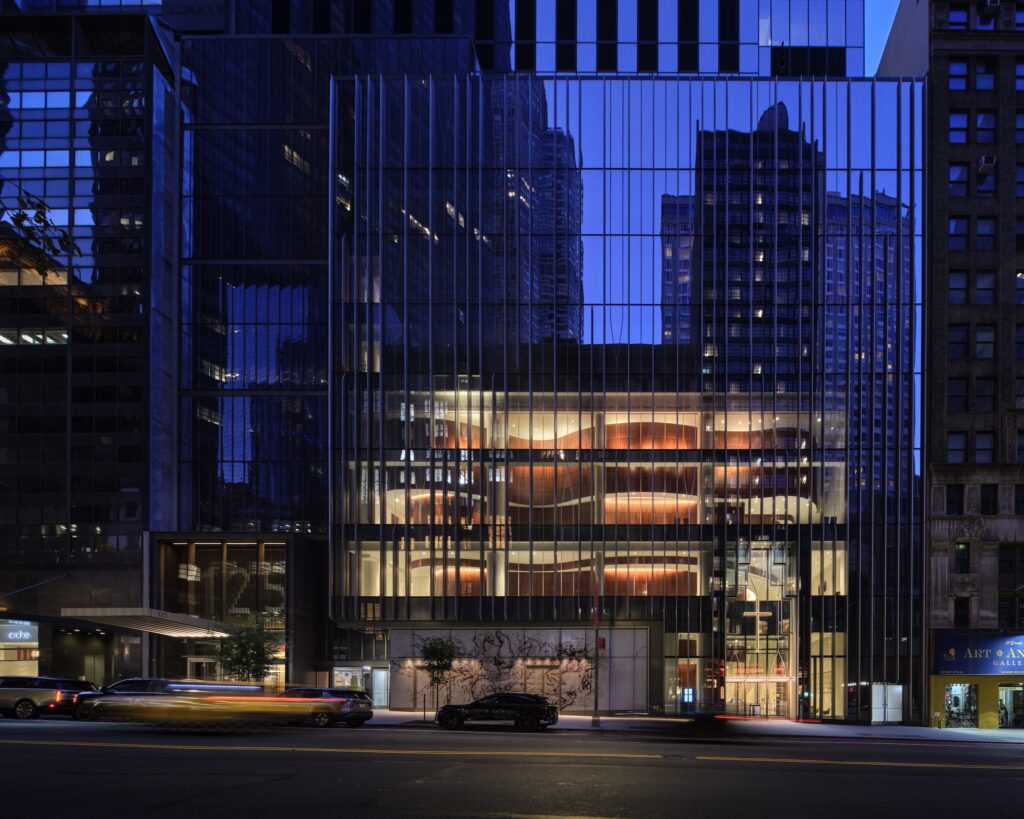
How a Hybrid Building Helped an Historic Manhattan Congregation Remain in Place
On Billionaire’s Row, FX Collaborative designed a new home for Calvary Baptist Church combined with an office tower.