



December 17, 2025
Inside Sydney’s State-of-the-Art Home for Seafood
To get to Sydney’s Fish Market from the Central Business District—where the iconic Sydney Opera House, designed by Danish architect Jørn Utzon, reigns as antipodean tourist attraction number one—I had to take a bus that dropped me off several blocks away. I arrived at the site as indicated on Google Maps but then did a double take in disbelief. A forlorn wayfinding sign suggested I weave my way through rusting, moldy shipping containers to find the entrance to the third largest fish market in the world. Already, I began to see why the New South Wales (NSW) government had ponied up 750 million Australian dollars for a new fish market designed by 3XN and BVN on an adjacent pier in Sydney’s Blackwattle Bay.
Make no mistake, the existing Fish Market—erected in the 1980s with no aspirations to architectural significance—is very important to Sydney, generating an annual A$303 million in economic and social impact, according to a study by Deloitte Access Economics. “One in five international tourists to Sydney visit the existing fish market, and it’s the second-most visited attraction in Sydney behind the Opera House,” the NSW premier at the time, Gladys Berejiklian, declared while unveiling the plans for its replacement in 2016. She might be right, but it appears many of those visitors felt the same way about the Fish Market as I did: in a 2018 survey, 65 percent of frequent visitors felt “the current Fish Market is tired and needs an upgrade.”

A Danish Take on Sydney’s Waterfront
Enter the architects at the Danish firm 3XN, who are very conscious of the coincidence of being the second European team tasked with creating a waterfront icon for Sydney. But, speaking over the din of an already swelling tourist crowd at the market on a Friday morning this past summer, 3XN Sydney partner Fred Holt was clear about why the firm beat out the competition to receive the commission: “There’s a theatricality to an authentic, operating fish market. We won because we kept that front and center.”
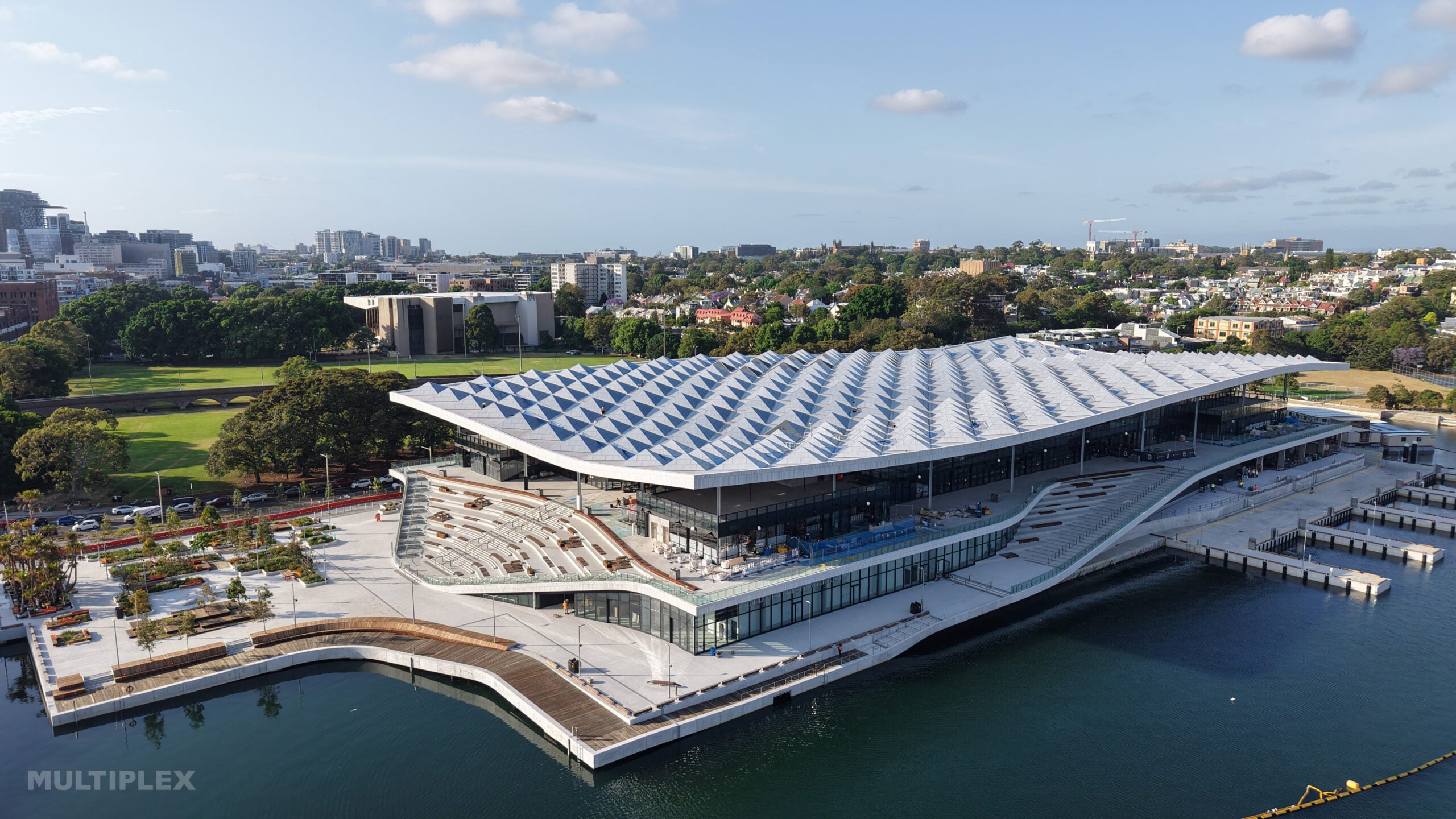
The new building, a gleaming glass box under a dramatically undulating timber roof, sitting out on the water of the bay, has some conceptual echoes of the Sydney Opera House. It too features a public terrace running around the building that is lifted off the pier, oriented toward the water and accessed by stairs that sweep up from landscaped plazas at sea level. And then there’s that canopy—not quite the iconic sails of the music venue, but remarkable in its own right as the largest mass timber roof in the Southern Hemisphere.

Inside, the building has a four-tiered scheme. The ground level is where the fish and crustaceans arrive, by boat or truck, feeding into the glass-walled auction space and operating floor of the Fish Market. “It’s essentially a big, glass refrigerator, and it’s visible to all passersby. You can see products coming in; you can see everything being handled,” Holt says.
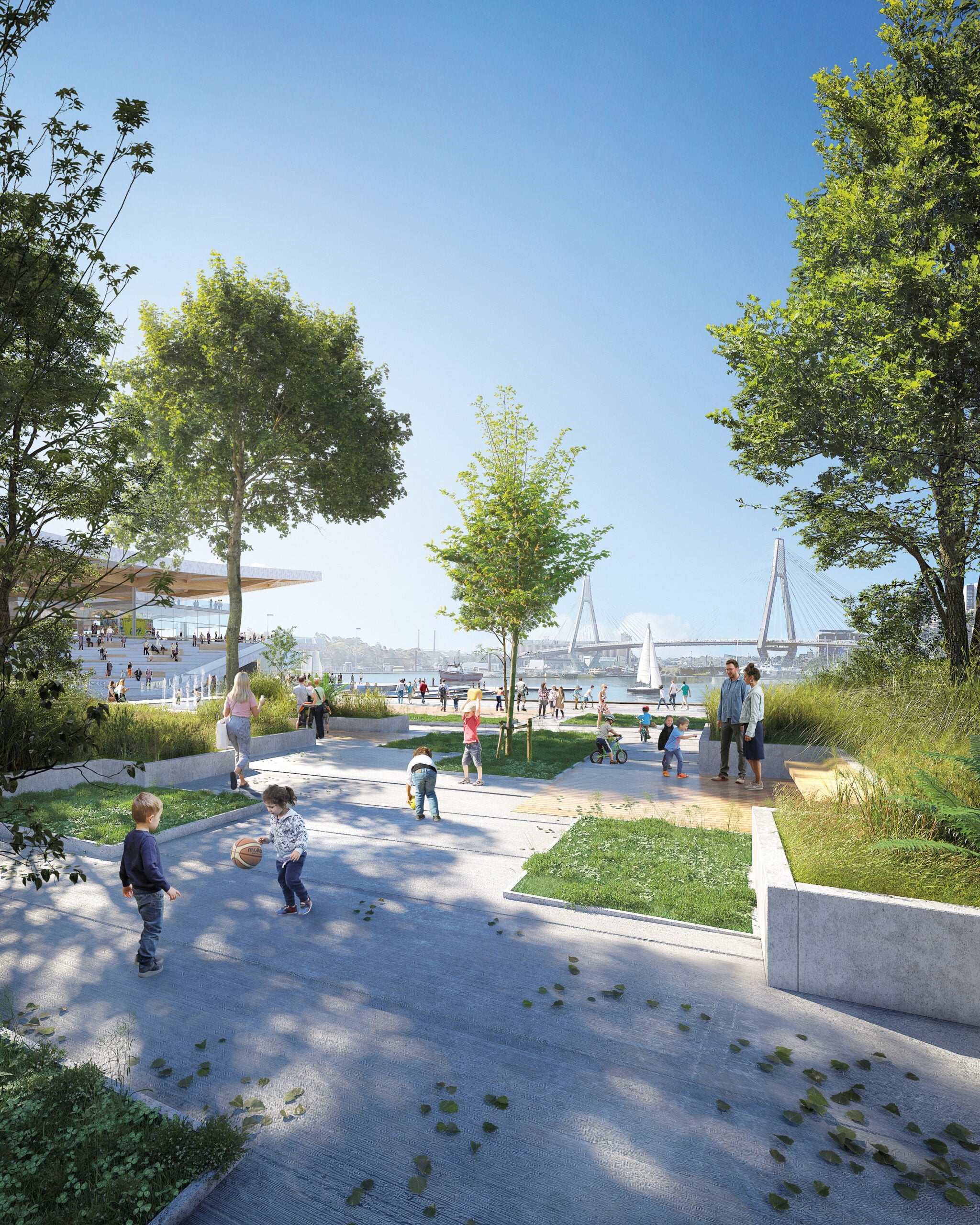
Above this level are the retail spaces—a simple grid of shops and eateries where the existing tenants of the Fish Market will move in ahead of the opening in January 2026, alongside some locally popular food vendors. This tier opens out onto the outdoor space that lines three sides of the building, where vendors and tenants spill out with al fresco dining experiences that are almost certain to become some of the city’s most coveted. These outdoor areas connect to the more than 6,400 square feet of new public space on the pier via sculptural stairs on three sides of the building, providing great places to perch with a seafood meal and take in the views.
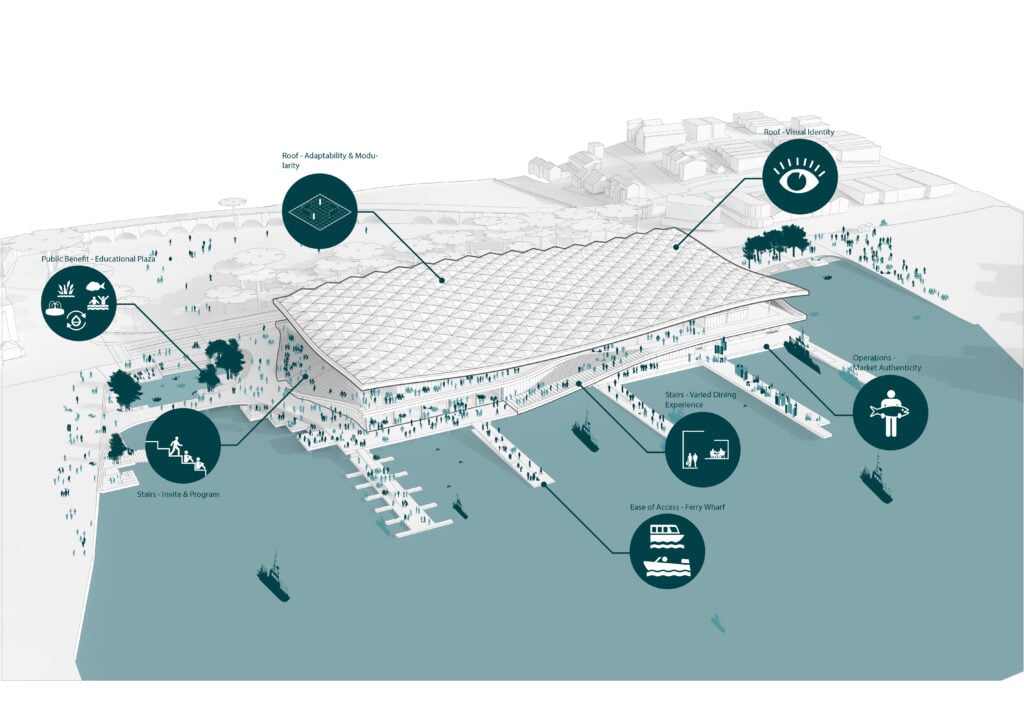
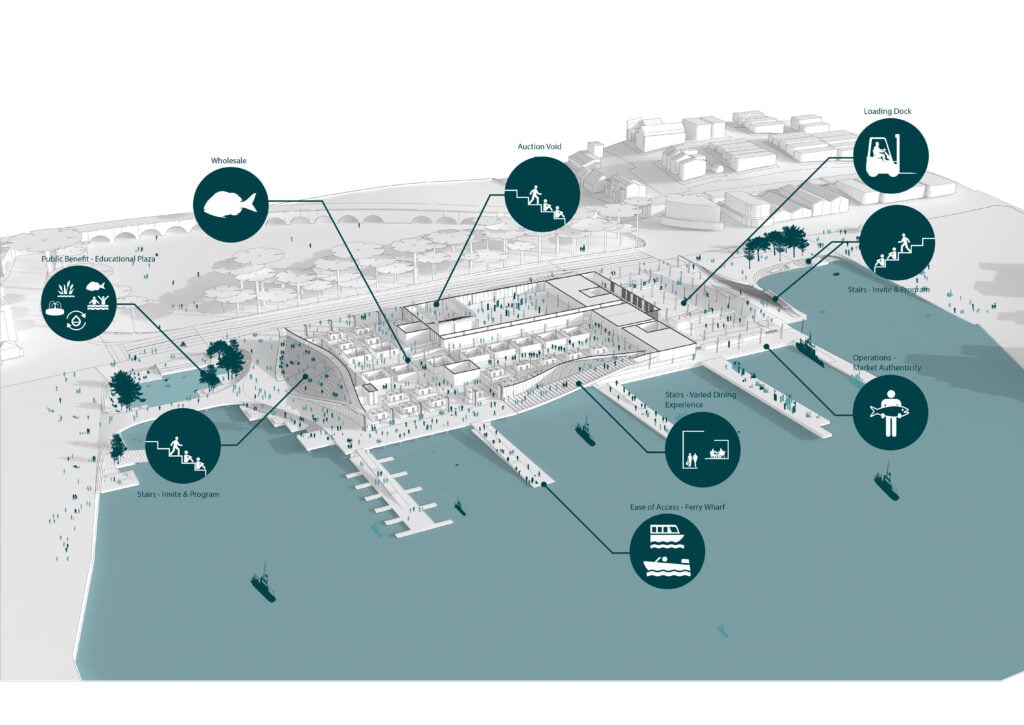
The next tier, a mezzanine level, houses the Fish Market’s offices and the classrooms of a cooking school. And then, lifted several feet above that level on slender columns, is the roof.
Shaping the Future of Blackwattle Bay
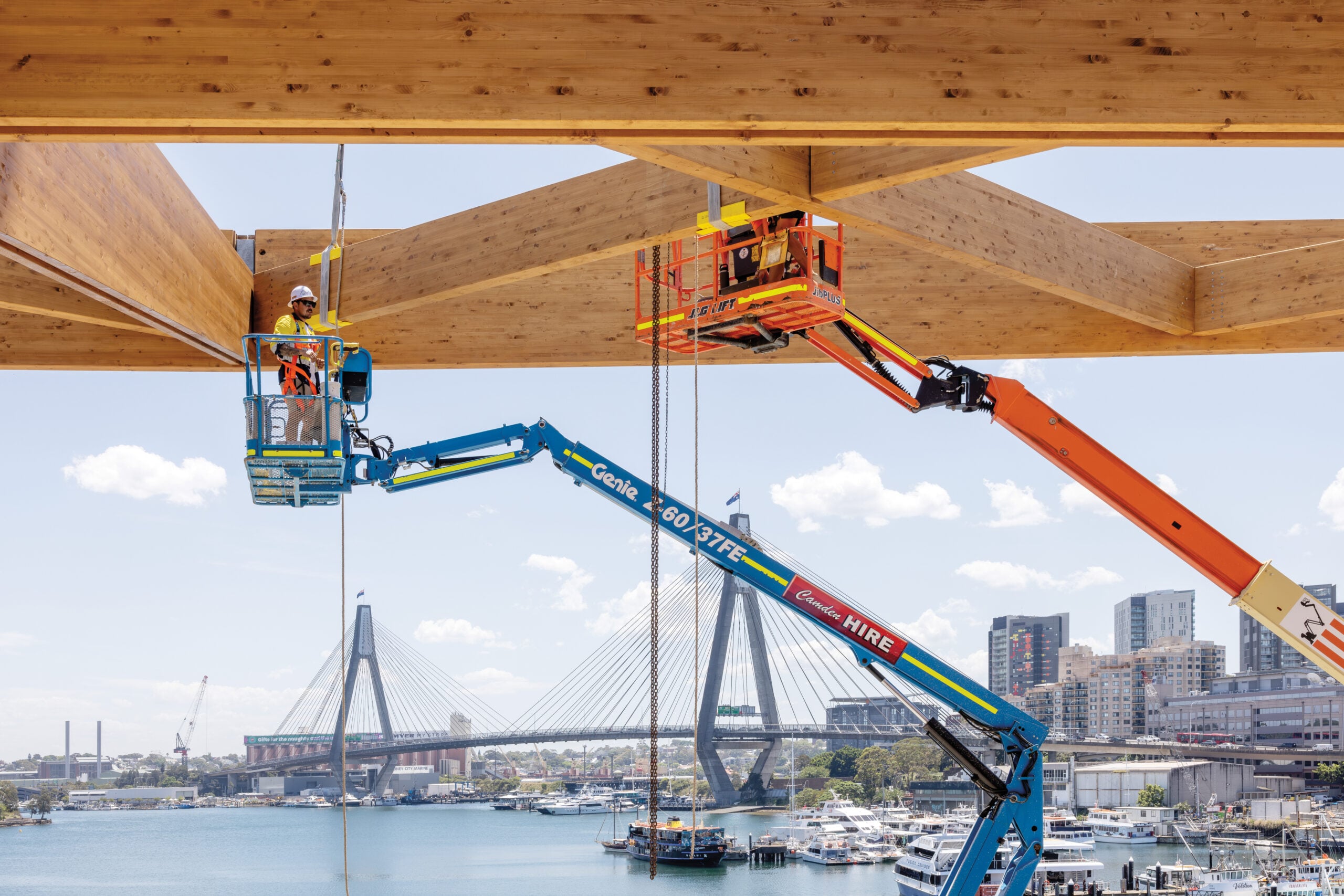
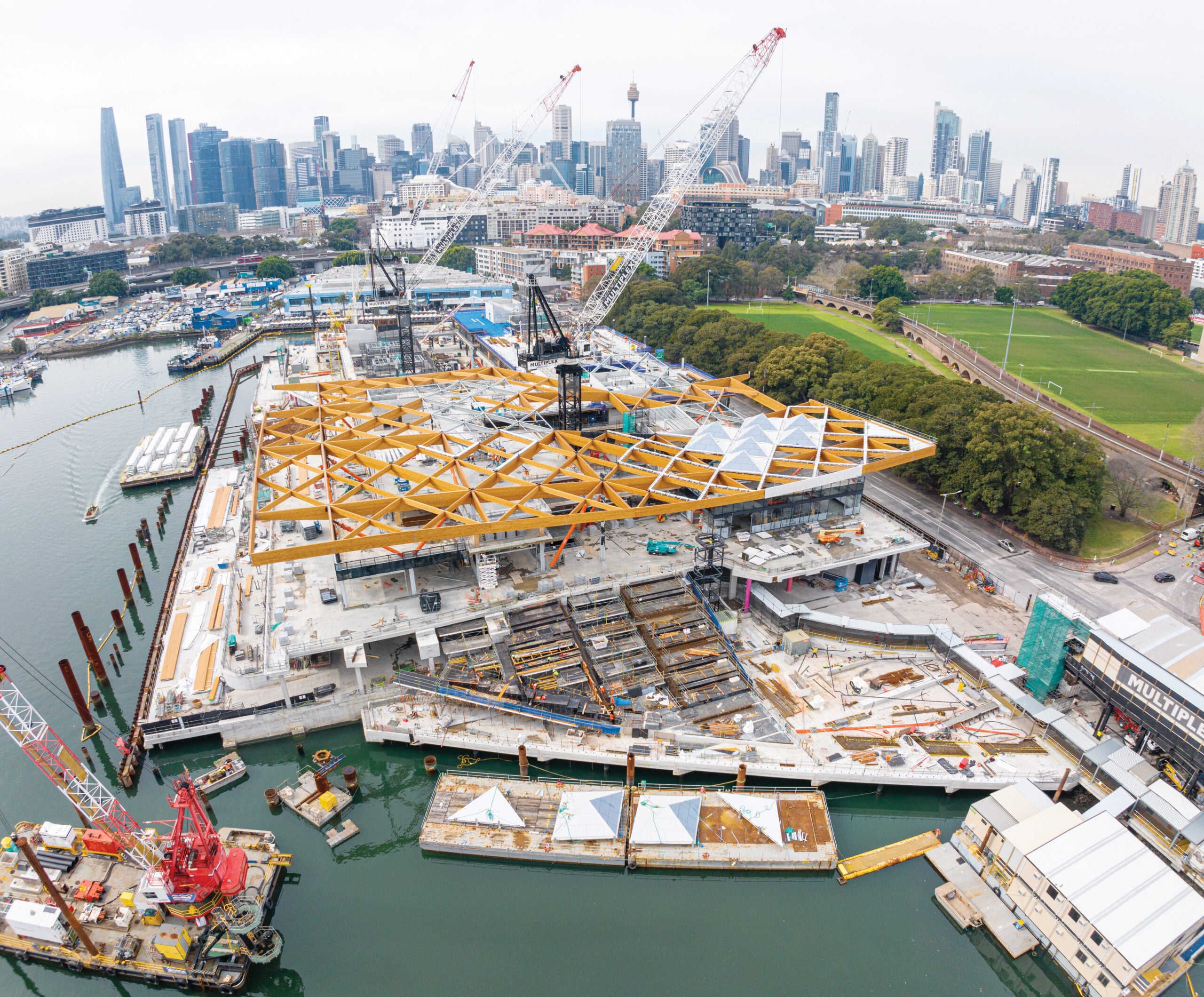
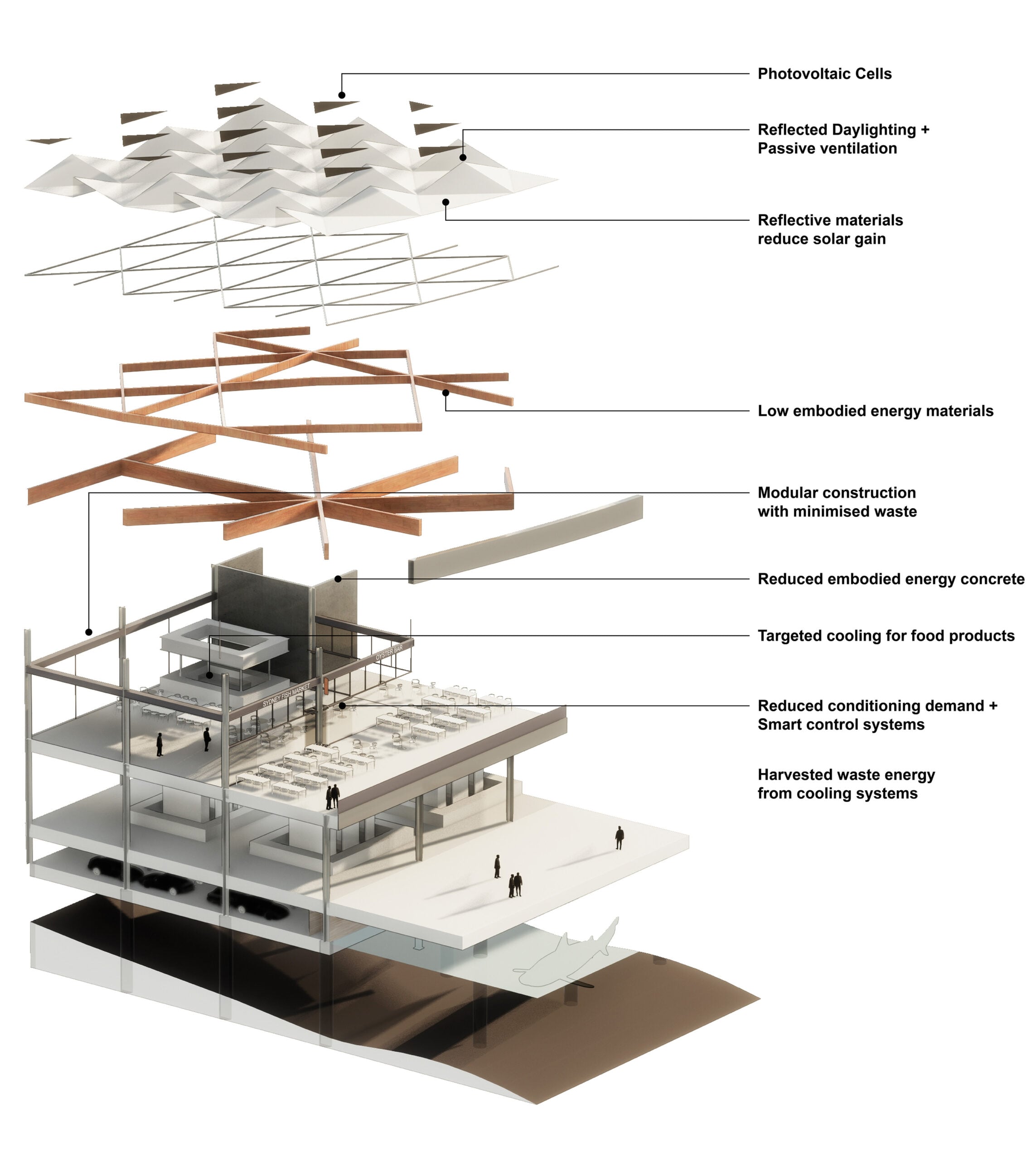
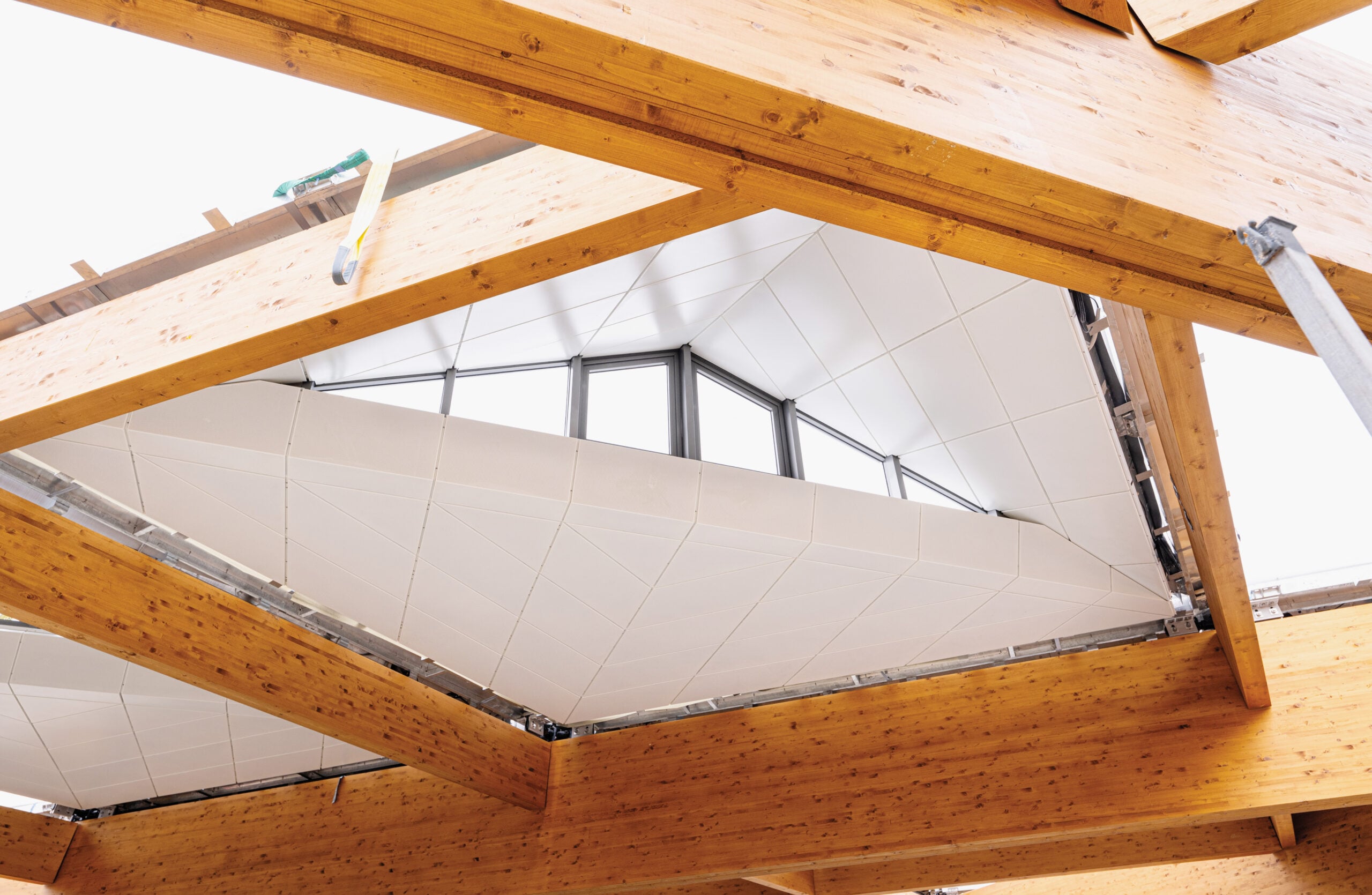
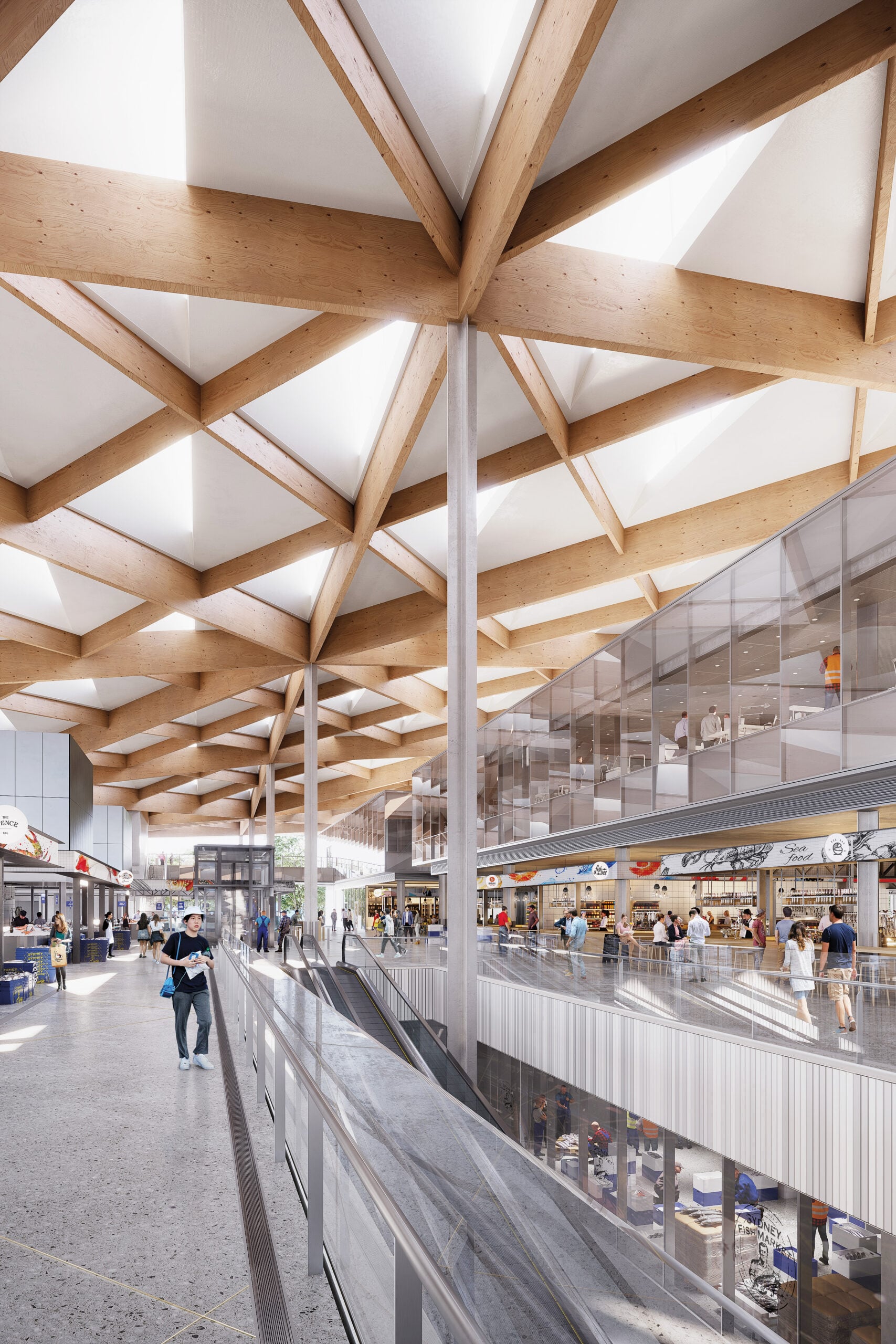
Constructed of 594 timber beams and 400 aluminum cassettes with integrated photovoltaic panels, this mass timber stratum functions more like an enormous canopy over the entire market. This means that cool, shaded breezes can circulate naturally through most of the building (except for the coldest, temperature-controlled areas on the bottommost tier, where fish are stored and handled). “It actually reduces energy loads by 35 percent from a building as usual,” Holt explains. “It allows indirect daylight in through the south-facing skylights and cooling through natural ventilation.” An in-depth study by GXN, the independent research studio that grew out of 3XN in 2007, modeled and calibrated this passive climate control system so that both humans and fish can be at their best—in the temperature-controlled parts and in the open-air areas, in the peak of summer and the cooler months of the year.
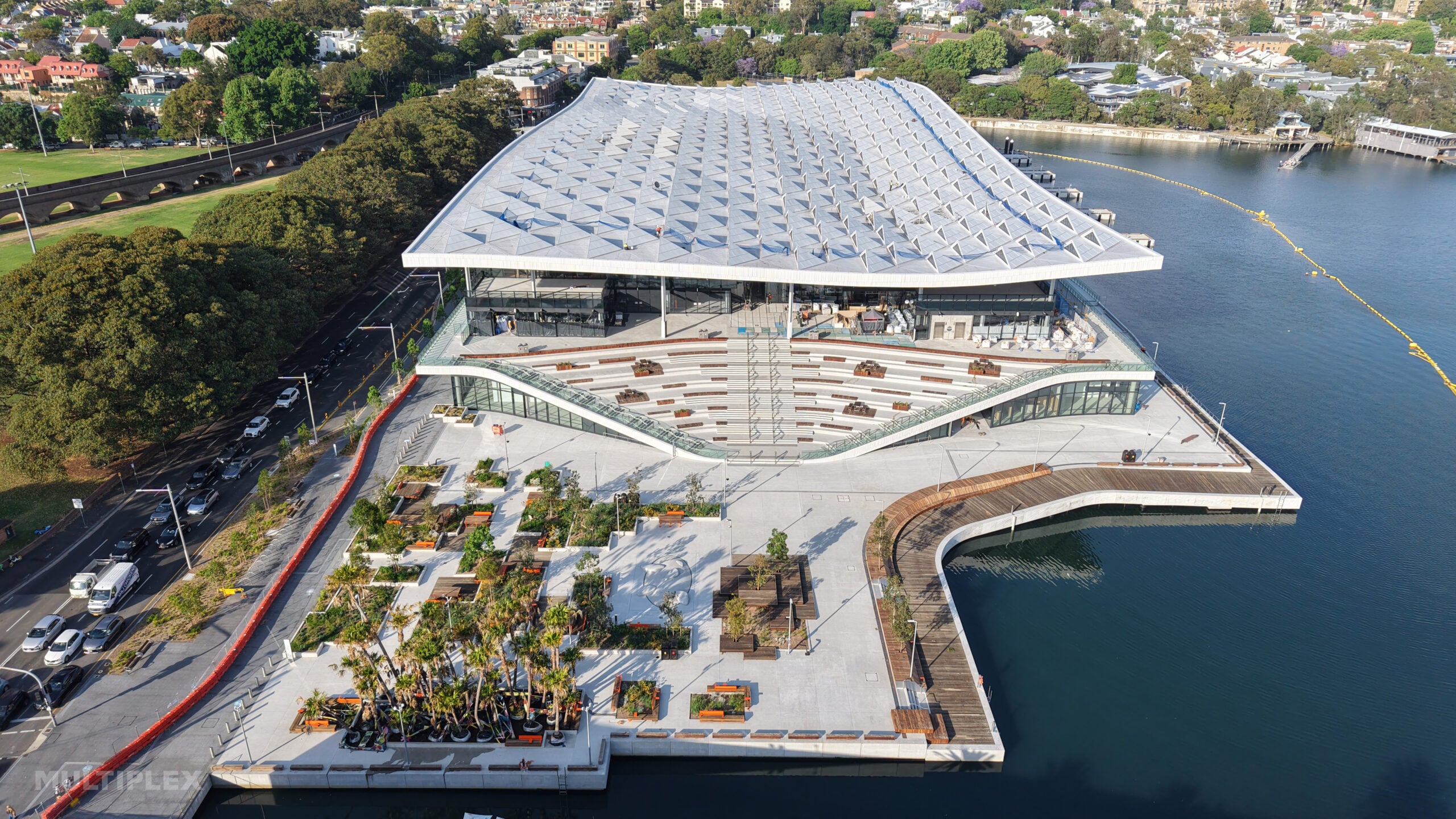
The waves in the roof are a nice nod to the building’s aquatic character, of course, but they serve another purpose as well. “At the mezzanine level, we needed to fit an additional retailer and office space as well as the cooking school. That created two high points and then, therefore, two low points,” generating the curved form, explains John Sham, senior associate at 3XN/GXN. “Those two low points collect every drop of water that hits the Fish Market roof.” Half of that water is filtered, stored, and then used to wash down the Fish Market, cutting the building’s overall water consumption by half. The water used for the wash down is then also collected and filtered to be reused. “We’ve created a closed loop system,” Sham says with pride. Details and systems like this abound at the new market, earning it a 5 Star Green Star rating from the Green Building Council of Australia.
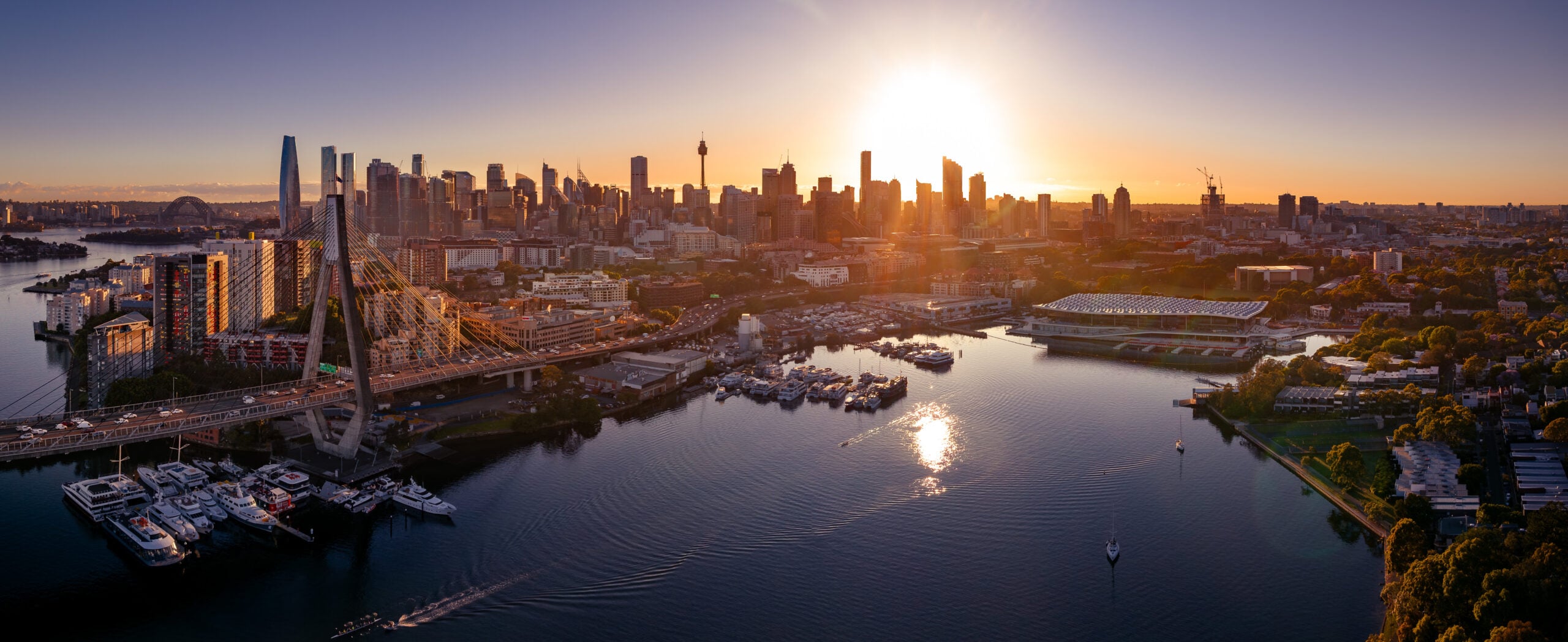
Nearly a decade in the making, the new Fish Market heralds the next chapter in Sydney’s waterfront development. The move from its old location to its new one at the head of Blackwattle Bay opens up approximately 25 acres of harborside land, where the city hopes to spur a mixed-use development that includes 1,500 new homes. Over time, Sydney wants to give more of its citizens access to its most precious asset—a waterfront lifestyle made possible by its temperate climate, and this first new building in Blackwattle Bay sets the tone. As Holt says, “The Sydney Fish Market can only be designed the way it is because it’s in Sydney, on this location.”
Would you like to comment on this article? Send your thoughts to: [email protected]
Latest
Viewpoints
Detroit Month of Design: A City’s Work in Progress
Now in its 16th year, the celebration offers insights into the Motor City’s ongoing accomplishments without glossing over its hurdles.
Projects
How a Hybrid Building Helped an Historic Manhattan Congregation Remain in Place
On Billionaire’s Row, FX Collaborative designed a new home for Calvary Baptist Church combined with an office tower.