



September 28, 2026
The Brumadinho Memorial Is an Exercise in Memory and Materiality
The afternoon of January 25, 2019, was marked by the catastrophic failure of a tailings dam in an iron ore mine in the municipality of Brumadinho, in the Brazilian state of Minas Gerais. The collapse of the dam released a mudflow that engulfed the mine’s headquarters, along with houses, farms, inns, and roads downstream, and a total of 272 lives were lost. Those lost are now memorialized in a recent project by Gustavo Penna Arquitetos Associados.
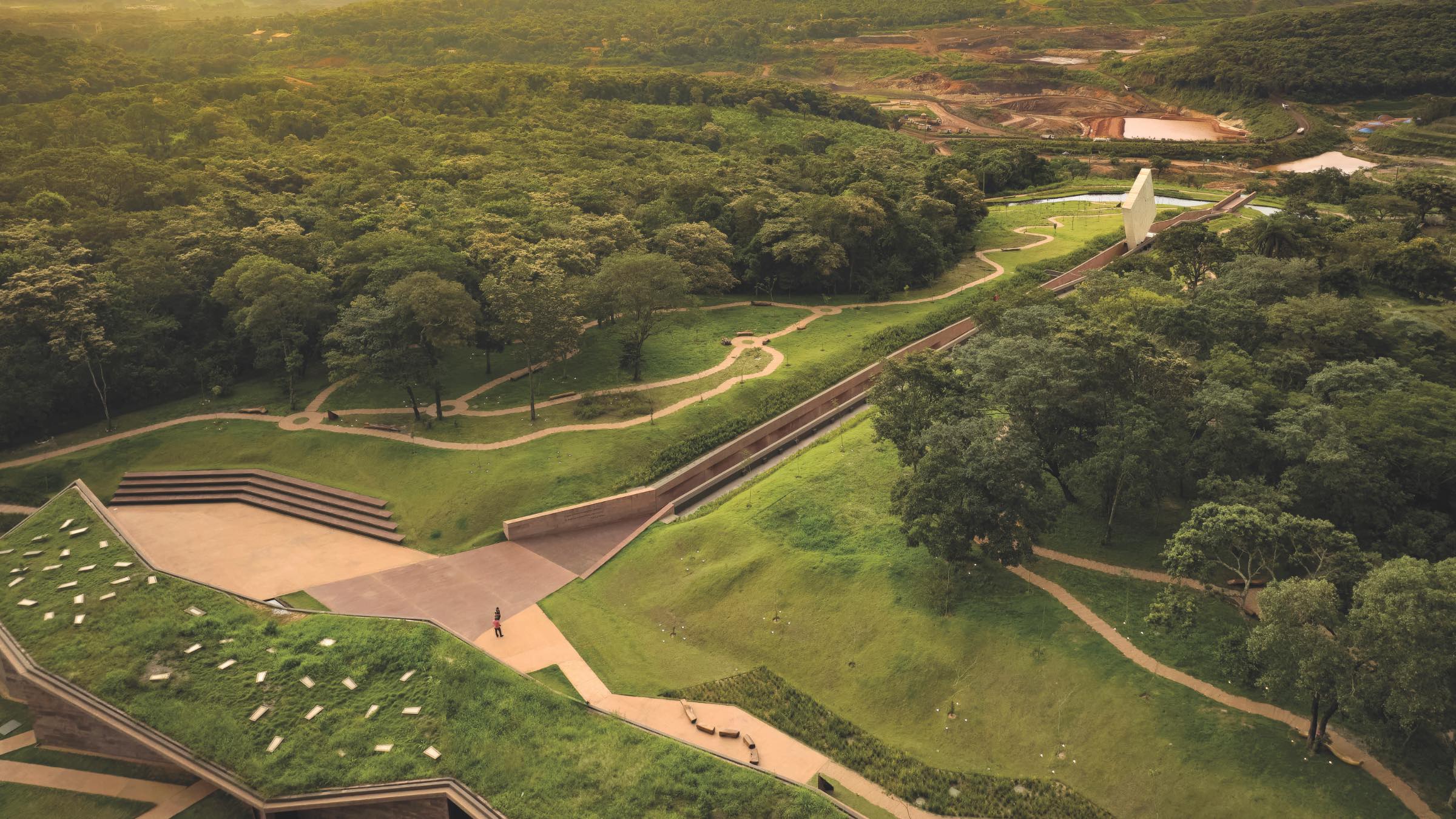
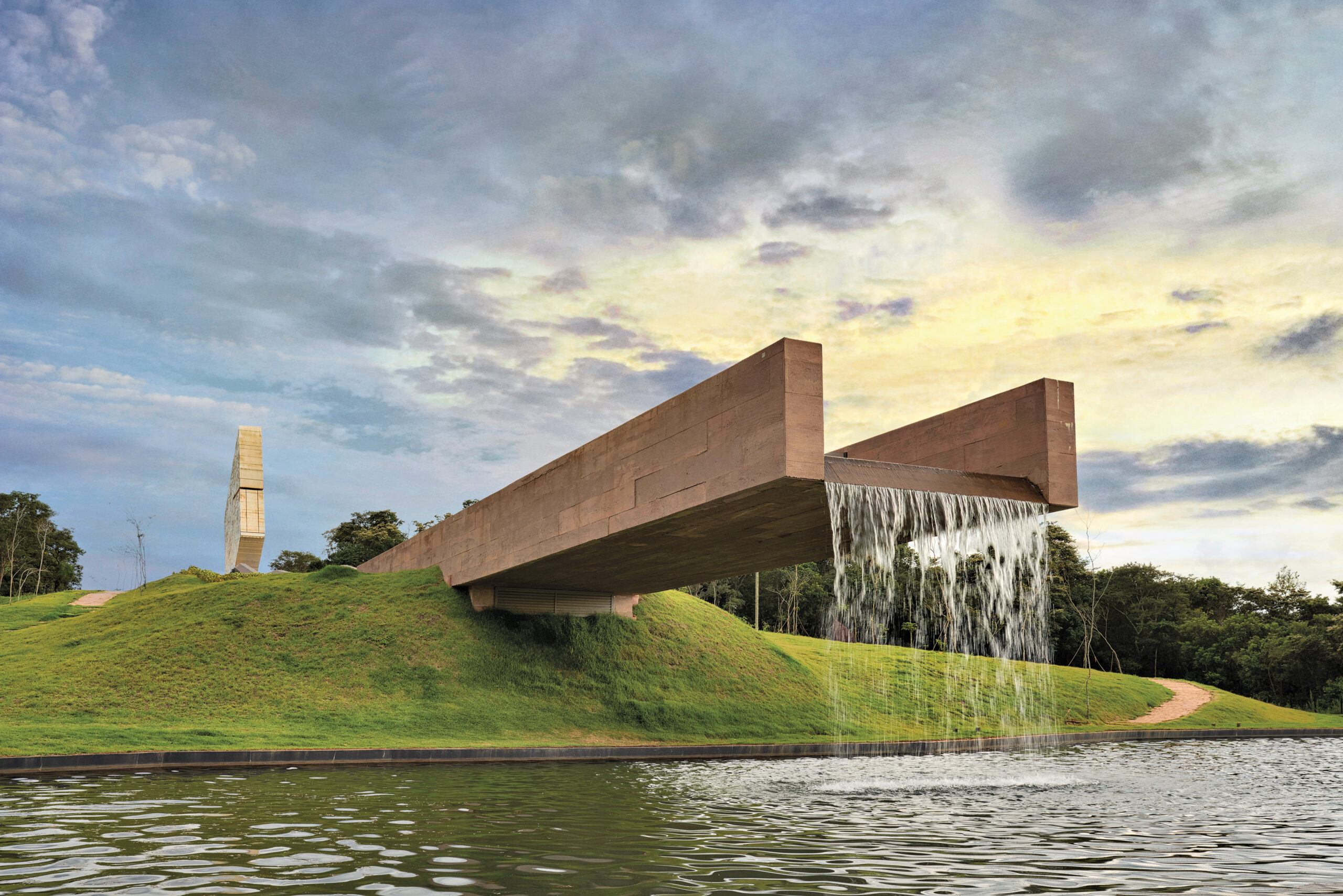
The Brumadinho Memorial opened in 2025 on the exact site of the disaster. Founding principal Gustavo Penna, whose father belongs to the generation of architects and engineers that built Brasília, brings a Modernist approach to his memorial project. His large-scale intervention creates a fragmented ensemble that fractures the landscape with a determined gesture, seeking to echo the violence of the catastrophe. The project was chosen unanimously by members of an organization representing the victims’ families and includes, alongside the memorial itself, a 645,834-square-foot park landscaped with indigenous vegetation and 272 yellow ipê trees, a native South American species, one planted in memory of the deceased.
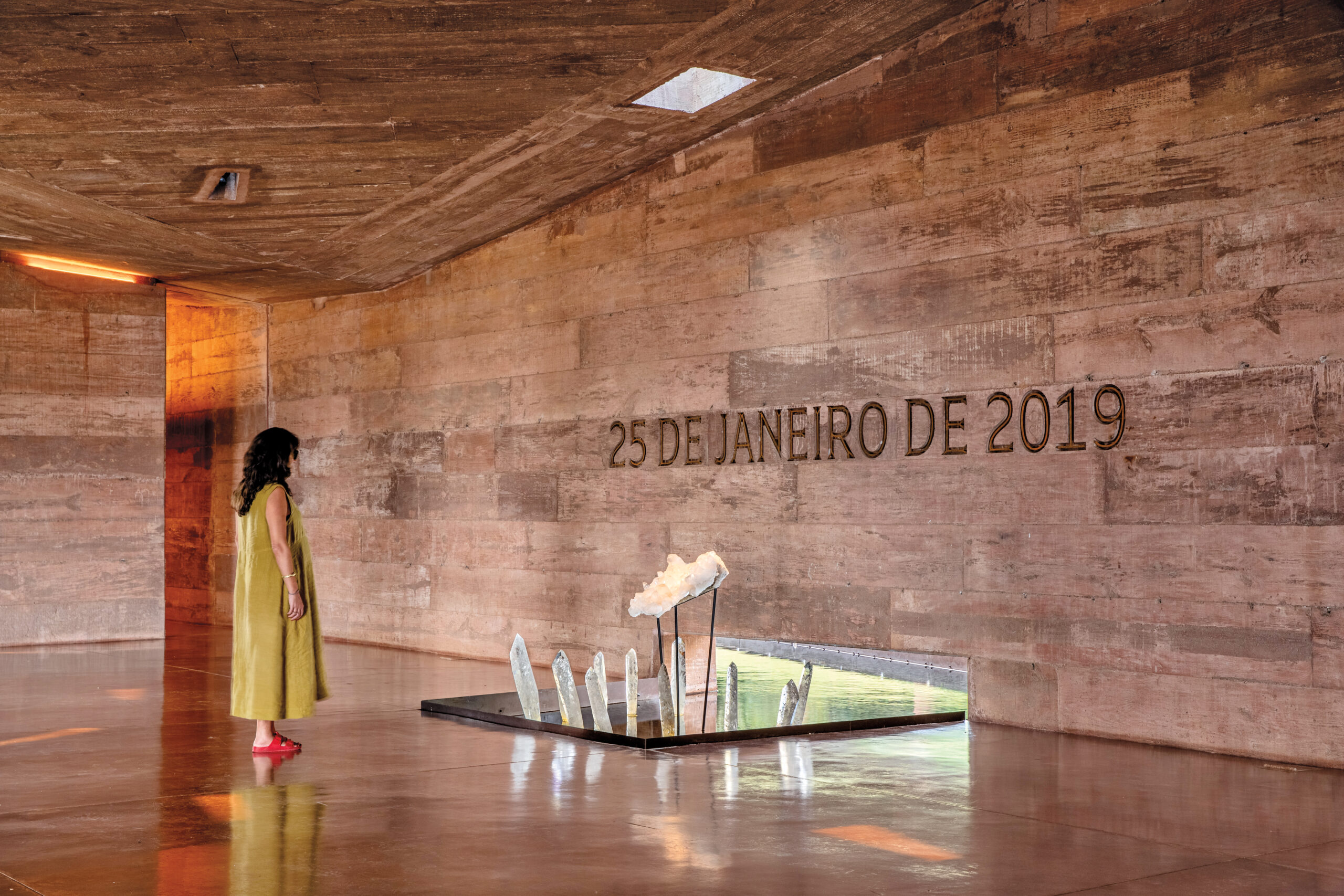
“The memorial is a blade with no handle,” Penna says of his design intentions. “You can’t hold it without being cut.” The ensemble is organized as a sequence of volumes and voids, all in a tinted concrete that holds the same color as the mud at the core of the disaster. The entrance building cuts horizontally through the landscape, hosting a dimly lit solemn space where small skylights perforate the ceiling. Adjacent to this space is an area for meditation and reflection, which opens to a large open-air courtyard flanked by tiered seating.
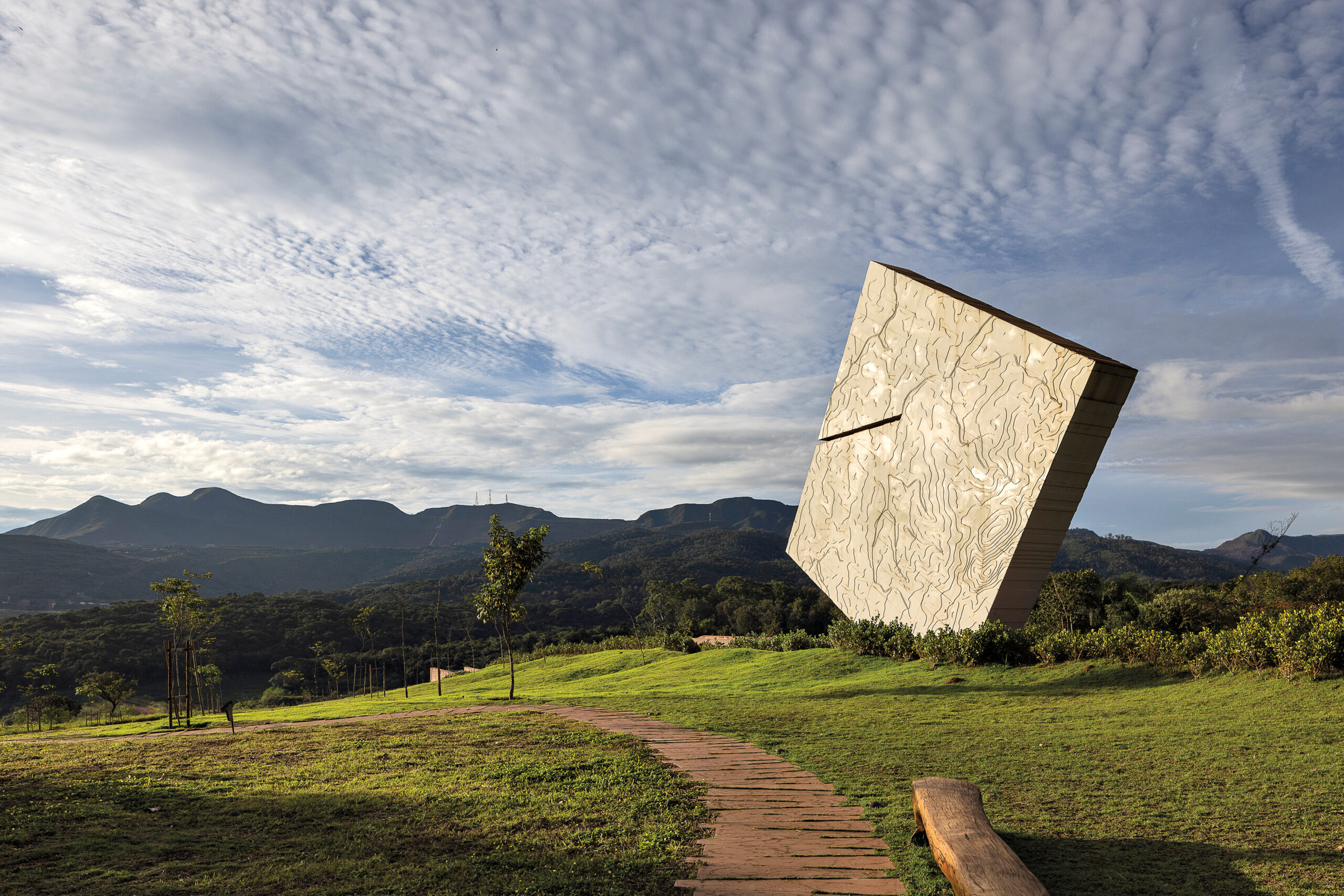
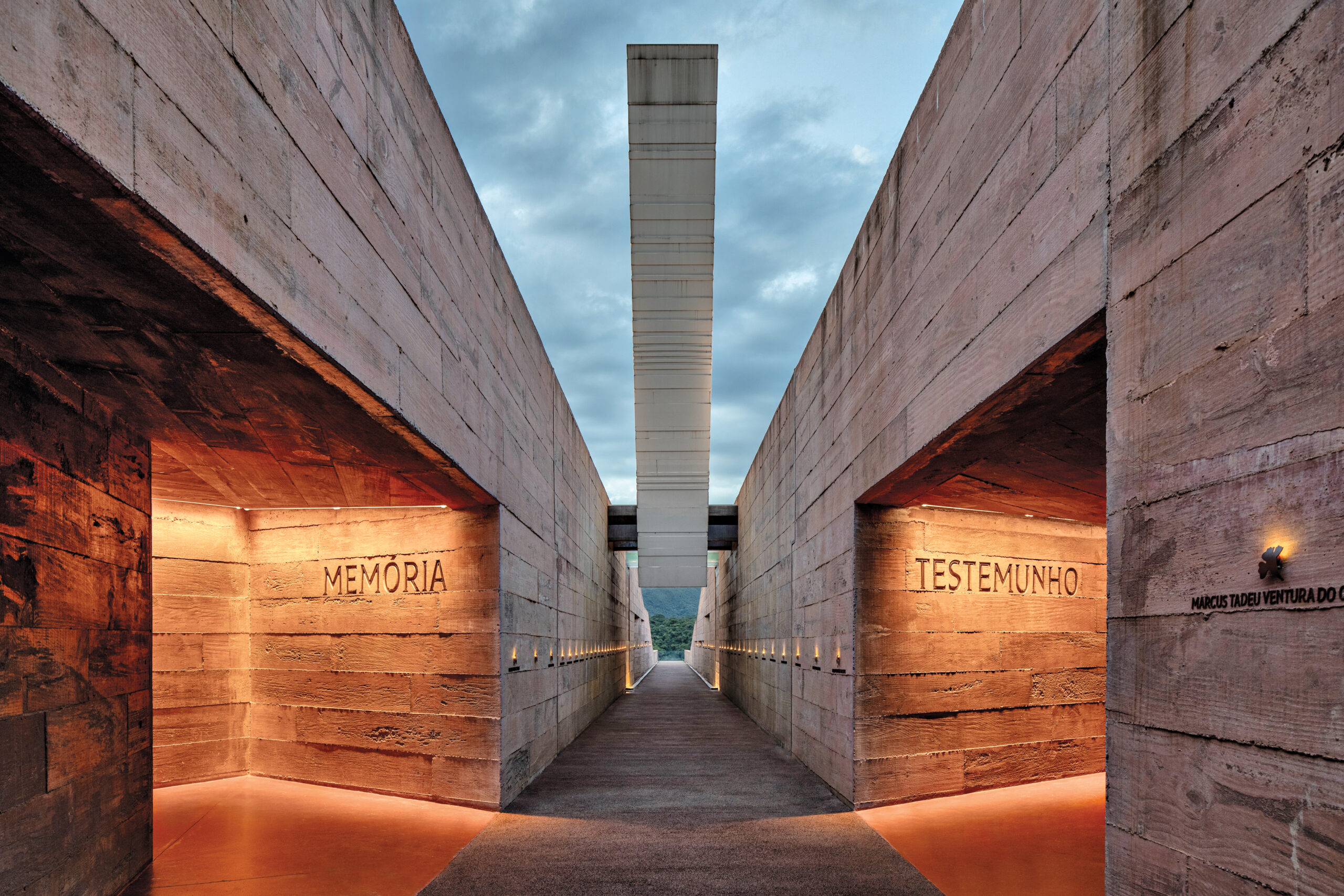
From here, a linear path evokes the course of the mud that dragged everything in its wake, cutting through the landscape like a crack through the earth. On both sides, placed at eye level, the victims’ names are inscribed in a linear sequence. Further ahead on the path, a simple, solemn set of rooms holds more information on the disaster and those who perished, while atop the path sits, in precarious balance, a sculptural, white, square concrete slab. Engraved with the topographic lines of the site, the slab conceals a water feature, which overflows beyond the end of the path and dramatically falls onto a pond directly below.
The ensemble feels dignified but is maximalist in its bulky combination of elements, which at times feels overwrought. Nevertheless, Penna believes “its value lies in the fact that it has been legitimized by use, by the victims’ families who feel represented by it.” The memory now firmly remains, anchored in place, even if those responsible for the disaster have yet to be brought to justice.
Would you like to comment on this article? Send your thoughts to: [email protected]
Latest
Projects
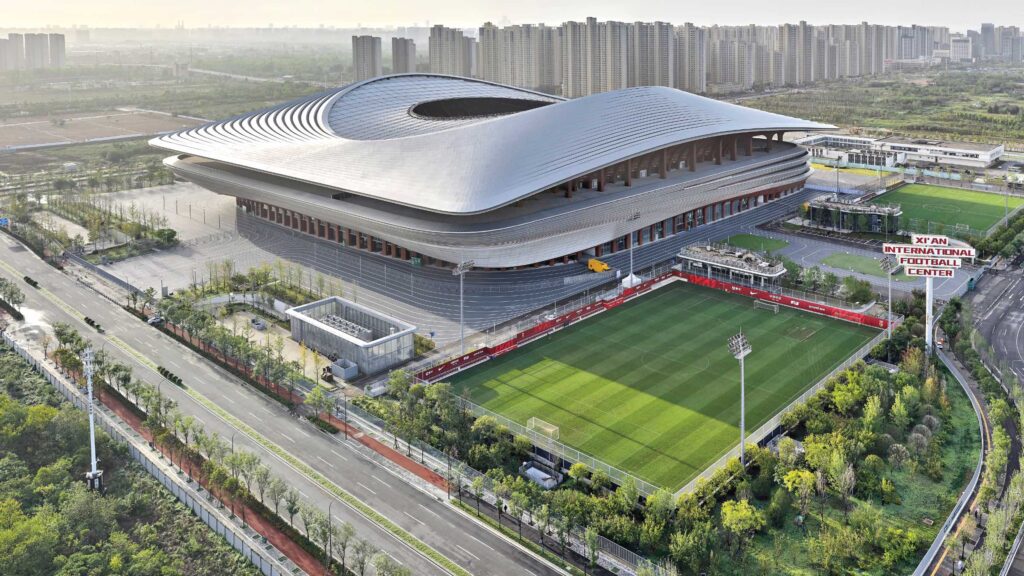
ZHA Channels Ancient Walls for Future Forms
In Xi’an, the firm sets a luminous stadium against the city’s deep architectural memory, transforming football into a new civic ritual.
Viewpoints
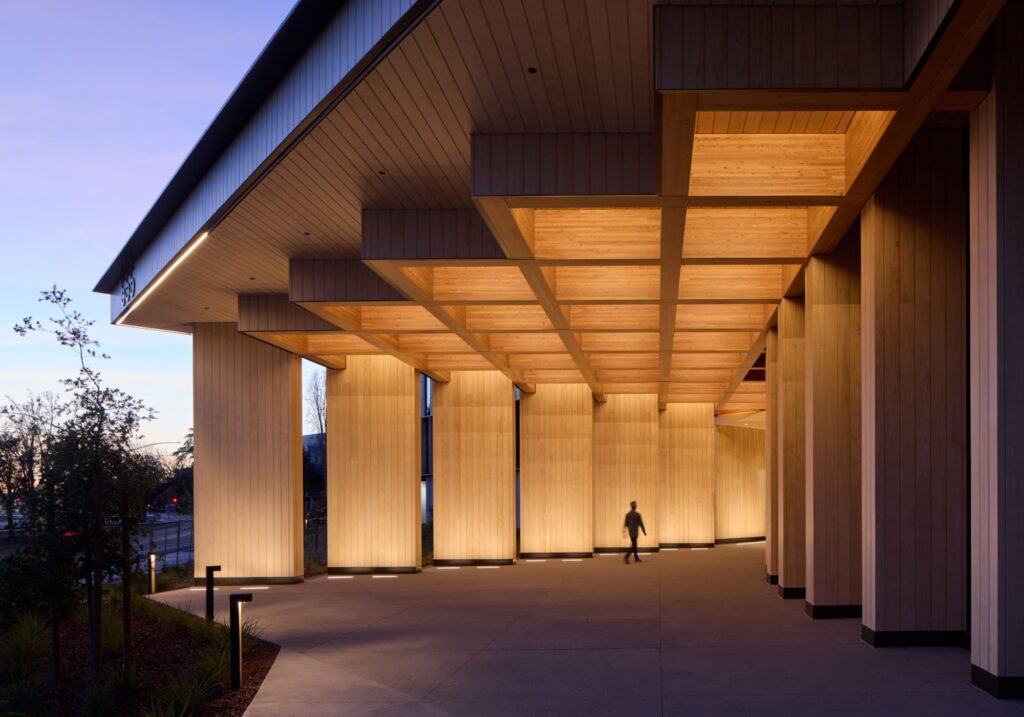
Michael Green Helped Launch the Mass Timber Revolution
In the latest episode of Deep Green, METROPOLIS sits down with the Planet Positive Visionary Award winner to discuss the roots of mass timber.