



August 13, 2026
Antifascist Architecture: Imagining Another Future
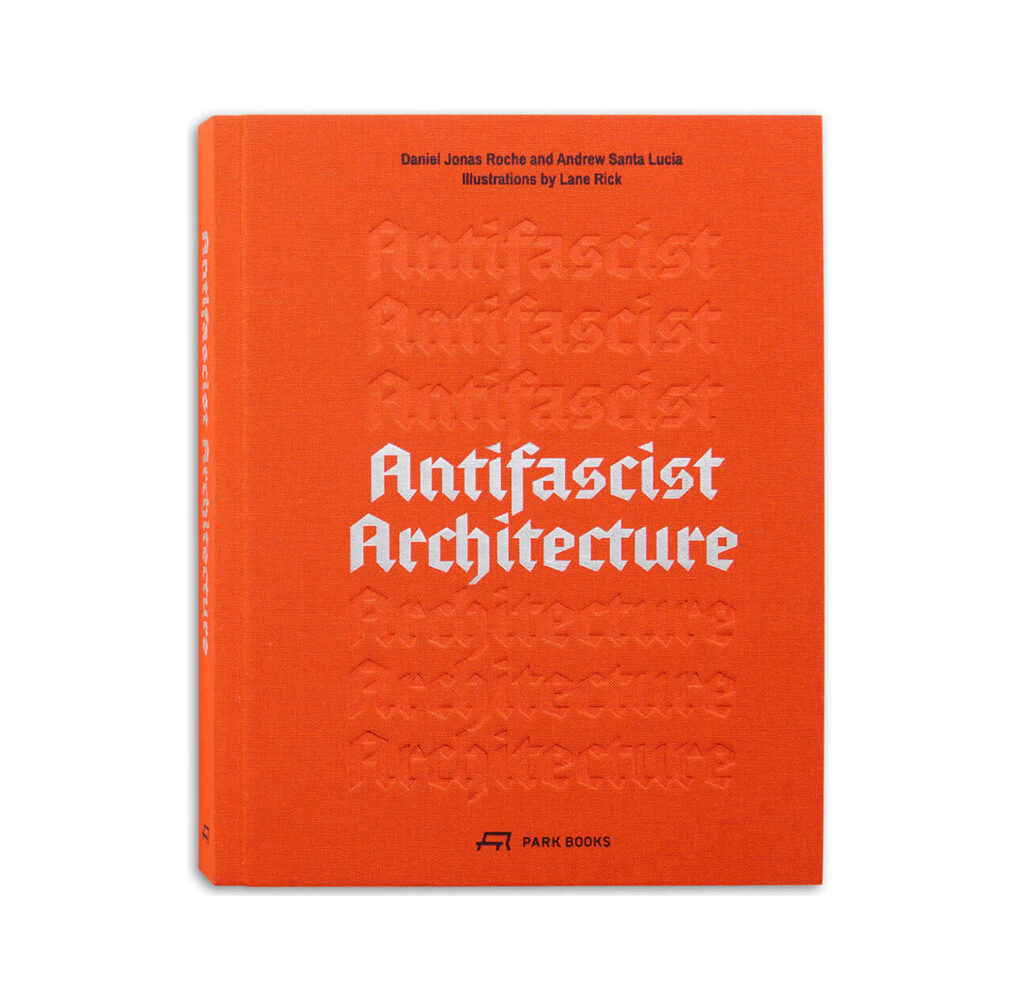
In Antifascist Architecture (Park Books, 2026), architects and scholars Dan Roche, Andrew Santa Lucia, and artist and architect Lane Rick question the foundations of 20th-century architecture education and the conventional boundaries of architectural history. They bring together dismissed and overlooked projects, people, and political movements that sought to imagine alternative futures. What began as an antifascist altar installation years ago evolved into a book exploring architecture through antifascist practices, utopian thinking, mutual aid, and collective action, weaving eye-opening research with thoughtful graphic storytelling.
The book is an essential tool to expand the Western European canon and a guide that pushes back against a profession shaped by problematic actors and ideals at best, and full-on fascist ones at worst, at a time when most of this knowledge, these ideas, and these professors still run our current architecture education globally.
In this edited conversation, METROPOLIS senior editor Francisco Brown speaks with Roche, Santa Lucia and Rick about the origins of the project, the role of drawing and storytelling, the political implications of architectural history, and why imagining—and working toward—a better future remains essential. The main takeaway, in Roche’s words: “you cannot ever decouple a building from its political and economic foundations.”
Rewriting the Architectural Canon
How did you and Andrew end up creating an antifascist altar, and how did that project become the genesis of this book and its research?
Dan Roche: It started in 2021, during COVID. Andrew had been invited by Bellevue Arts Museum in Washington to do an installation, and he decided to design an altar to antifascism. It resulted in a beautiful eight-foot-tall sculpture. He asked me to curate agnostic candles at the base of the altar—40 candles in total—with each candle dedicated either to an antifascist architect or an antifascist building.
When he approached me with the idea, my first question was, “What is that? What is an antifascist building?” We had nothing but time during COVID, so we spent months on Zoom calls and Instagram, texting each other: “Check out this building in Bulgaria,” or wherever. We fleshed out ideas and spent a lot of time arriving at a theory and a working definition.
After that show, Joseph Altschuler invited us to bring the altar to the University of Illinois Urbana-Champaign. Then Jonathan Solomon invited us to do a spinoff exhibition in Chicago at Space P11. Jonathan was the one who said, “I think you guys have a book on your hands.”
Neither of us had ever written a book. I had been working as an editor for years, but a book seemed like a daunting task. We reached out to a few publishers, and Park Books was one of our top choices. They immediately responded, “Yes, let’s do it.” We then had a call with the editor, Thomas Kramer, who was amazing.
But if I rewind the tape, I realize I had been thinking about this book since architecture school. I remember the feeling of repulsion I had sitting in lecture halls and being taught buildings by Giuseppe Terragni and his contemporaries without the historical context necessary to understand them. I was a second-year architecture student when I saw Casa del Fascio, and I remember sitting in my chair feeling paralyzed because so much of my family had been killed in Auschwitz. I thought, “There’s something wrong with what’s going on here. There’s something deeply wrong here.” I was 19 years old. And now, here we are.
Andrew Santa Lucia: I think the pandemic created a moment when people began digging deeper into systemic issues that had previously felt fringe. A lot of the work that became essential to the book was already part of my trajectory, scholarship, and practice. The project became a vehicle for those thoughts, particularly around antifascist architecture.
I had been making a series of altars for about a decade, dealing with impactful architectures around the world. As a “recovering Catholic,” the altar has always been an important vehicle for me. I began thinking about Martin Heidegger’s very apolitical reading of architecture and wondered: why not exorcise the demons of this building through an antifascist religiosity? So I decided to make an altar to antifascist architecture.
Then I thought, what is missing from an altar? We need things to pray to. So I decided the candles should represent antifascist projects, architectures, and buildings. Around that time, I connected with Dan, who had extensive knowledge of Eastern European, socialist, and communist architecture. I brought my knowledge of the Global South and Latin America, and we worked together to produce 40 prayer candles. That was the first iteration of the project.
At its heart, what is an antifascist architectural ideology, and how can it be connected to a profession so embedded in neoliberal models, market economies, and decades of fascist and neofascist theory?
DR: I think it begins with embedding yourself in antifascist struggles. Antifascist architecture manifests in a variety of ways. There is no singular through line between the buildings and architects we discuss, but it starts with radicalizing yourself and embedding yourself in antifascist struggles. Those could be socialist struggles, anarchist struggles, immigrant-rights struggles.
It starts by decoupling your architectural training from the idea that you are here to serve capital and instead using that training to serve other interests. That can take shape in so many different ways. The political action precedes the ideology.
Andrew, why was it important to bring such different geographies, histories, and political traditions together?
ASL: I keep coming back to the fact that I feel angry that all the brilliant scholars who mentored me did not write this before Dan, Lane, and me. It wasn’t hard to do. What it needed was a little courage and maybe a little anger.
The courage was already present in these projects and people. Many of them spent time in prison. The amount of courage required to risk your life or freedom is something that is not often part of architectural history.
We tend to hear about the people who played on both sides, like Le Corbusier, while we hear much less about those who were openly antifascist and acted on those convictions, like Prouvé. Whether these projects [in the first chapters] were built, demolished, or never realized, they are still worth understanding.
That is what we mean by “fail better.” [in the book] This isn’t an easy project because we don’t have a roadmap. But that doesn’t mean we accept the professional world’s business ontology as the discipline of architecture, or the incredibly narrow definitions of architecture that have been handed down to us.
That’s why the final chapter is a continuum rather than a conclusion. That allows us to connect these projects and make a statement about where architecture can go next.
Challenging the Rehabilitation of Fascism
Dan, one of the book’s most compelling arguments concerns the rehabilitation of problematic figures, and I’m thinking about the section on Leni Riefenstahl’s image cleanup years after the Nazis fell. How do we remain vigilant about the ways cultural leaders and institutions can rehabilitate these figures?
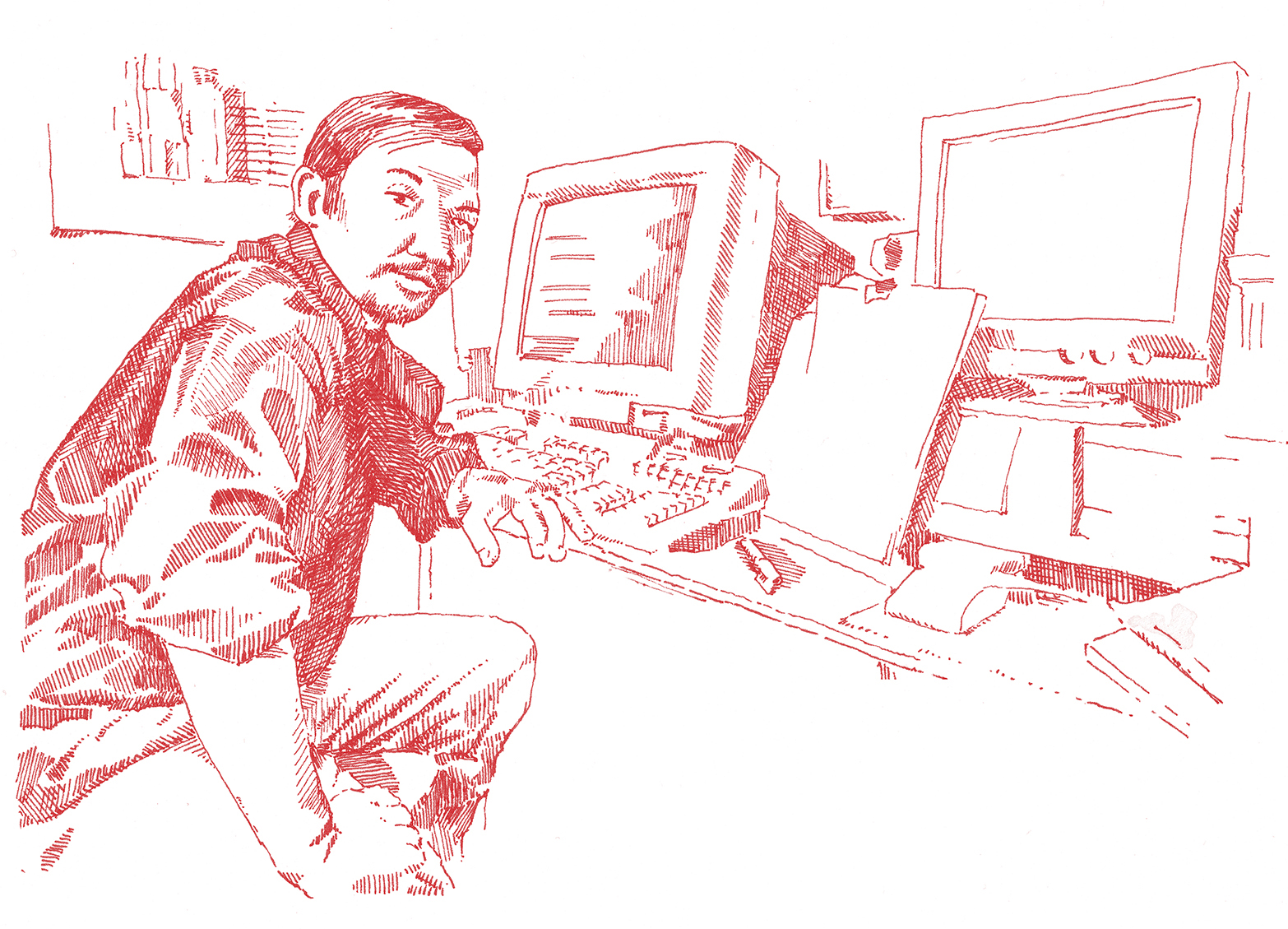
DR: The laundering of powerful people’s images to serve particular interests is still happening today. Andrew and I had serious imposter syndrome because we both had suspicions and criticisms of five decades of scholarship. The number of PhDs, symposiums, courses, and student projects that have taken cues from these figures seemed endless.
The criticism that Susan Sontag and Jonas Mekas made of the film industry in the 1970s, when Leni Riefenstahl was being rehabilitated, never really happened in architecture. When these architects were being reintroduced into the public realm, there was no Sontag or Mekas saying, “Hey, this is fucked up. What the hell is happening right now?”
We felt that this critique was 50 years in the making. We didn’t have PhD support; this was a passion project we started during COVID. Who were we to come up against Eisenman and others? But so many people have since told us how moved they are by the book, and now we feel like we’re not alone.
Why has antifascist architecture not been part of the curriculum or the architectural canon?
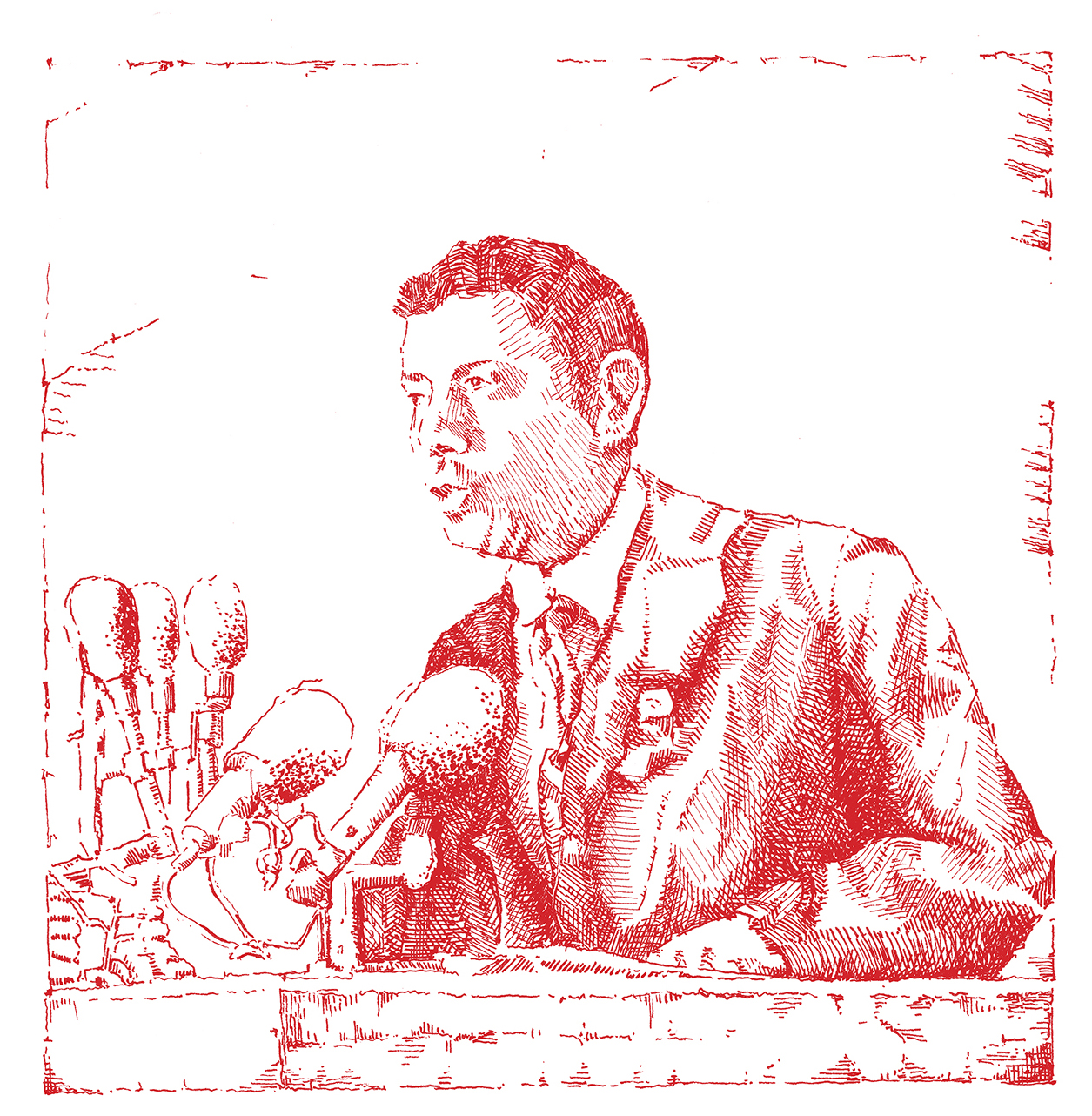
DR: History is a construct. At the height of the Cold War, cultural institutions and people with money supporting publications made a concerted effort to move the country to the right. The rehabilitation of fascists was part and parcel of that movement.
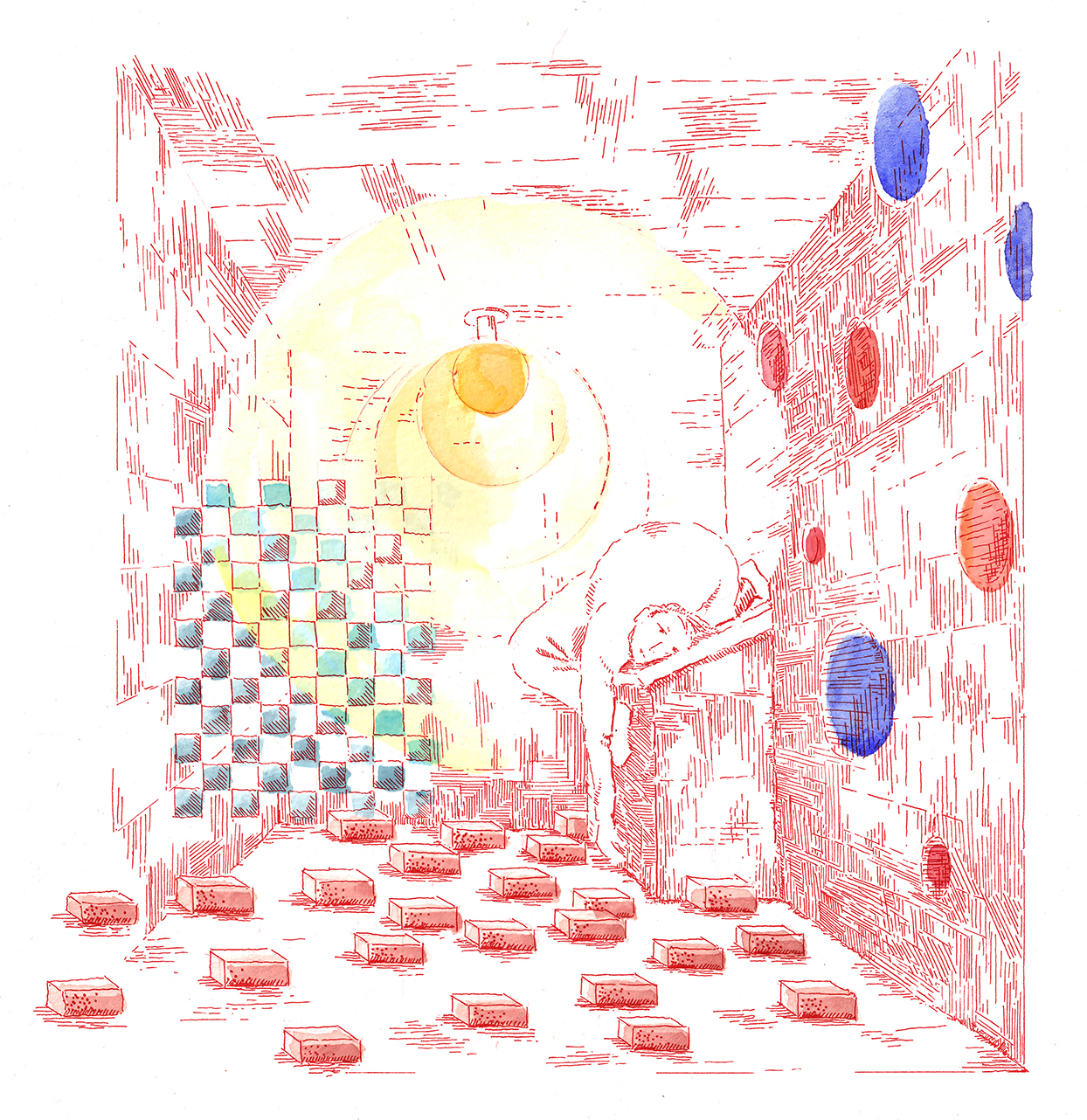
You also introduce new terminology, including the “fascist architecture-industrial complex” and the “antifascist avant-garde continuum.” Why was developing this language important?
DR: One thing I find exciting about the antifascist avant-garde continuum [in the last chapter] is that it helps distinguish traditions that have been wrongly placed together. When I was in architecture school learning about Moisei Ginzburg and the early Soviet avant-garde, it never made sense to me that Italian futurists and fascists were placed in the same bucket as communists simply because their buildings looked similar.
We coined the phrase “antifascist avant-garde continuum” not because it is entirely new, but because it has always existed. It gives us a way to distill the true antifascists from the rest. It is a genealogy that can hopefully decouple future generations from inherited categories and language.
Andrew, on the topic of challenging language. What concept do you most want readers to take away?
ASL: Utopia. That is the concept I didn’t know I needed until we needed it.
A lot of architectural theory has developed an anti-utopian tendency. It became easy to critique Buckminster Fuller, tabula-rasa modernism, and other attempts to imagine a better world. There are plenty of reasons to critique them, but critique them for what went wrong—not because they wanted to create a better world.
There are many versions of utopia, including ones with good intentions that failed to account for the expansiveness of humanity. The point is not to predict the future, but to recognize the utopianism inherent in human existence and to imagine different possibilities.
Two other concepts I care deeply about are the update of the social condenser into the social expander, and the shelter form—the idea that radical formalism can understand its own sheltering nature. I think those could become the next frontier of architectural scholarship.
What guided your selection of the architects, projects, and experiences in the book?
DR: It started as an exercise around Paul Klee: What is the first rule of antifascist art or architecture? A fascist needs to hate it.
We began asking who belonged in this category. We found architects and thinkers we had never encountered before. The picture we were trying to paint is that antifascist architecture is material—it can be a building—but it is also immaterial. It can be a mutual-aid strategy or a piece of software.
We are painting a picture of architecture as a network. First and foremost, we are talking about revolutionary architects whom we hadn’t heard of and who we feel need to be learned from, especially now. But we are also expanding the definition of what architecture can be.
Architecture as Political Action
Lane, how did you become involved, and what did you see in the project?
Lane Rick: Dan and I had known each other for years, and I knew about the altar project and had seen the preparation and photographs. A few years later, he came back and said, “Andrew and I are making that into a book. Do you want to do the drawings?”
I immediately had the same buy-in. I knew these guys and their projects well enough to know that whatever they were doing would be thoughtful and interesting, and would come from a place of knowledge and curiosity.
What became really exciting was reading the book as it developed. They would send me chapters, and Dan and I would talk about the people they were researching. I got excited listening to those stories. For me, it is always about how you tell a story. If I am excited to listen to it, I know I am hooked.
The fascinating challenge was that this is deliberately not an aesthetic project. It asks: What makes an architecture? Is a mutual-aid network architecture? Is a building that was built and demolished architecture? Is a building that was never built architecture? The answer is yes.
Once you expand the definition of architecture, you also expand what it can look like. The challenge became: how do you give visual form to a non-visual project while maintaining a strong sense of unity?
How did drawing become the visual language of the book?
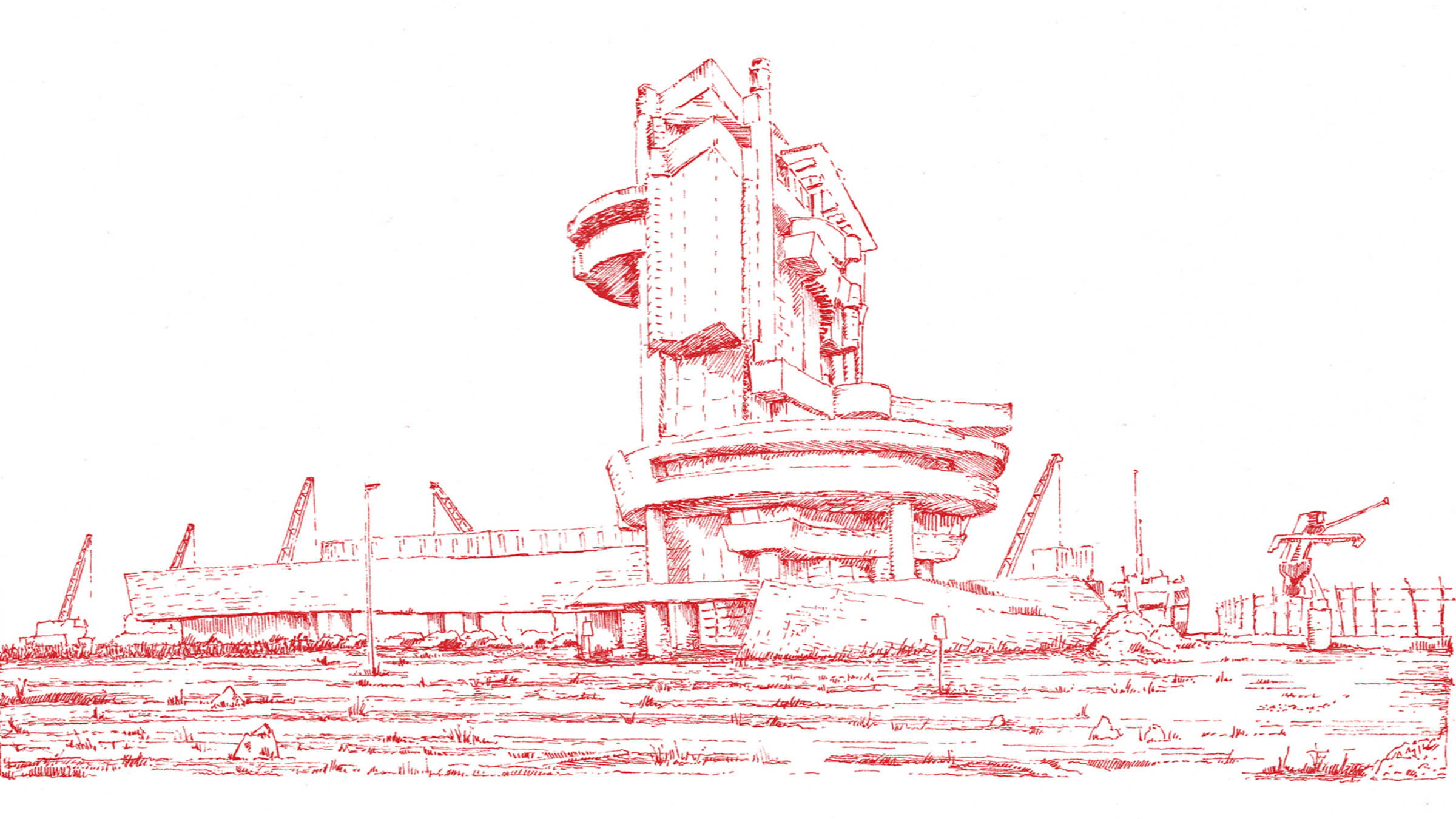
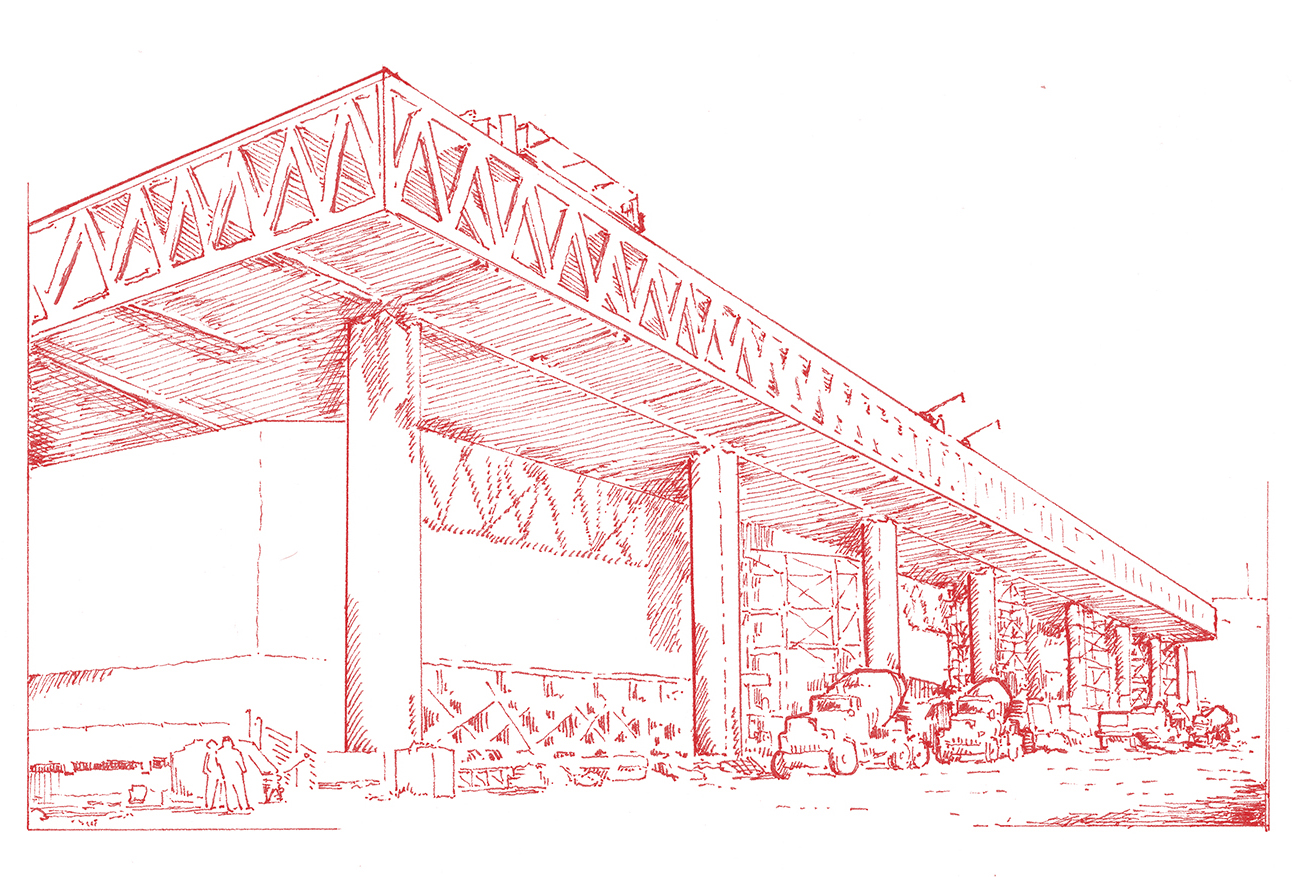
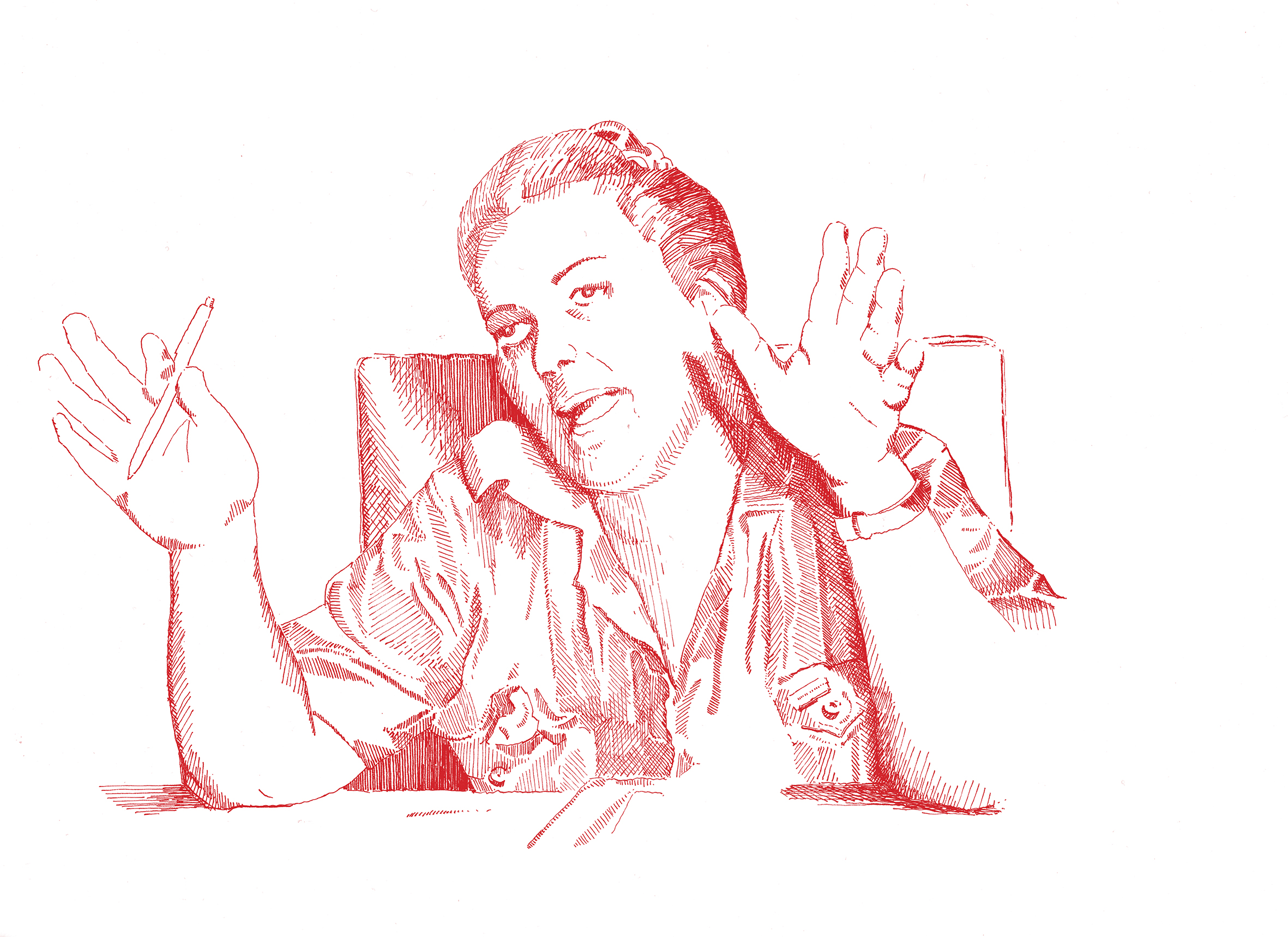
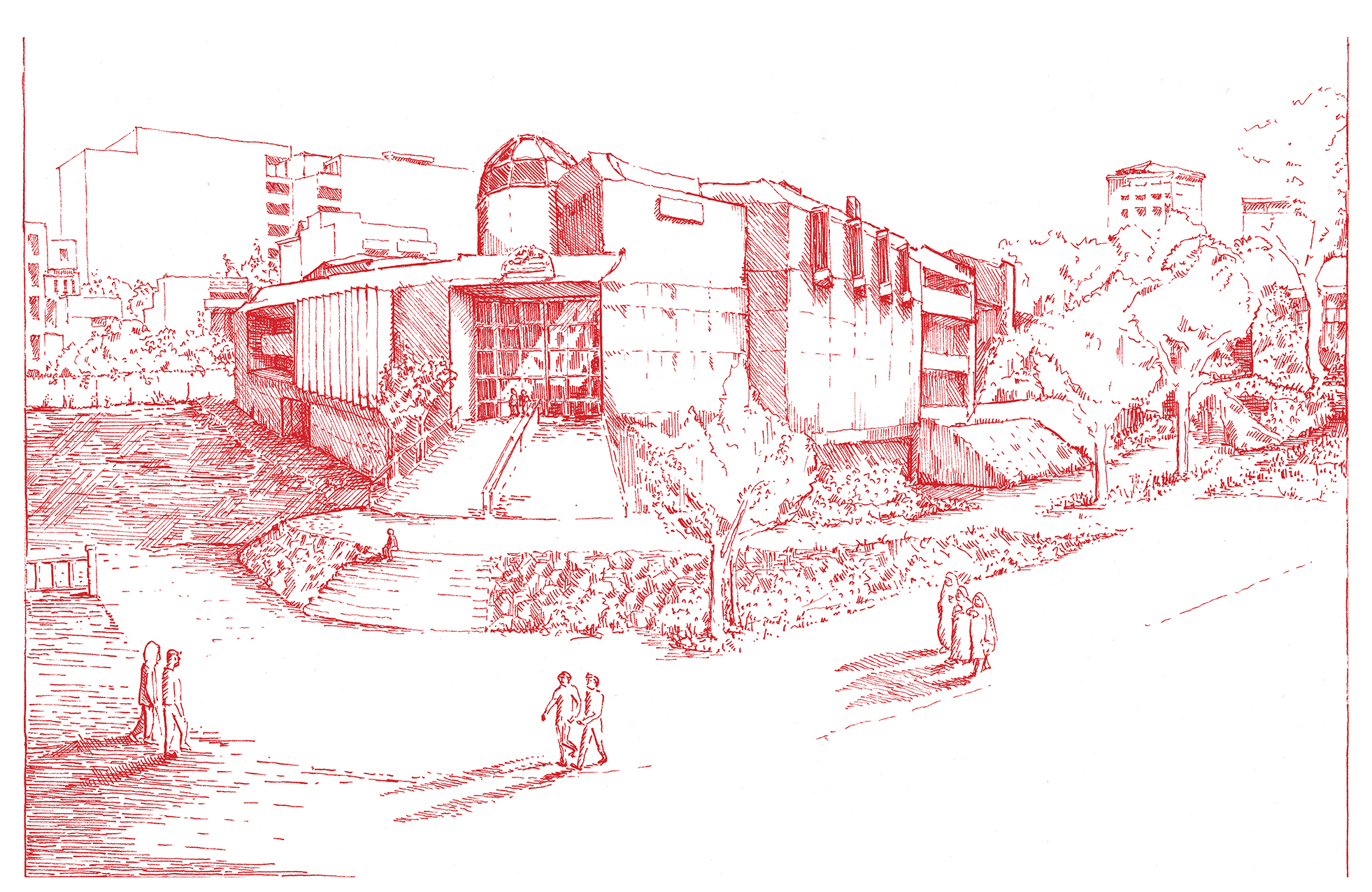
LR: Photographs would have created a patchwork of different qualities, styles, colors, and materials. Drawings could unify everything without stylizing the projects. That was important: they shouldn’t become cartoon versions of themselves.
For me, drawing is a way to learn how to see. You look at a building, you draw it, and then you learn to see the building. So drawing all these people, buildings, places, systems, and networks became a personal meditation on each project. I spent hours thinking about them as I drew.
The hope is that people see the care behind the drawings. These are stories that should be canonical, and for some reason they are not. How do you make a drawing that shows as much care as we have given to these projects and people in the writing and research? That is why the drawings became so detailed.
And my hope is that someone opens the book, sees an image, slows down, and then turns to the text. The writing is accessible and immediately legible. If the image gets someone to start reading, then I think the book worked.
The book argues for reevaluating what we understand as beautiful. If antifascist architecture is about labor, process, decommodification, collectivity, and collective production, how should we evaluate architecture?
DR: A contemporary example is Forensic Architecture. They use architectural systems and ways of thinking to study systems of oppression, but they do it for a humanitarian cause. That is fundamentally different from studying fascist architecture simply because it is formally or intellectually interesting.
Architecture schools should have ethics classes, political education, political science, and a real emphasis on historical context. We care deeply about form and good architecture, but we also care about embedding a strong sense of moral clarity, ethics, and a moral compass into architectural education.
There are many things we hope people take away from this project, but the most important is this: you cannot ever decouple a building from its political and economic foundations.
Imagining Architecture Otherwise
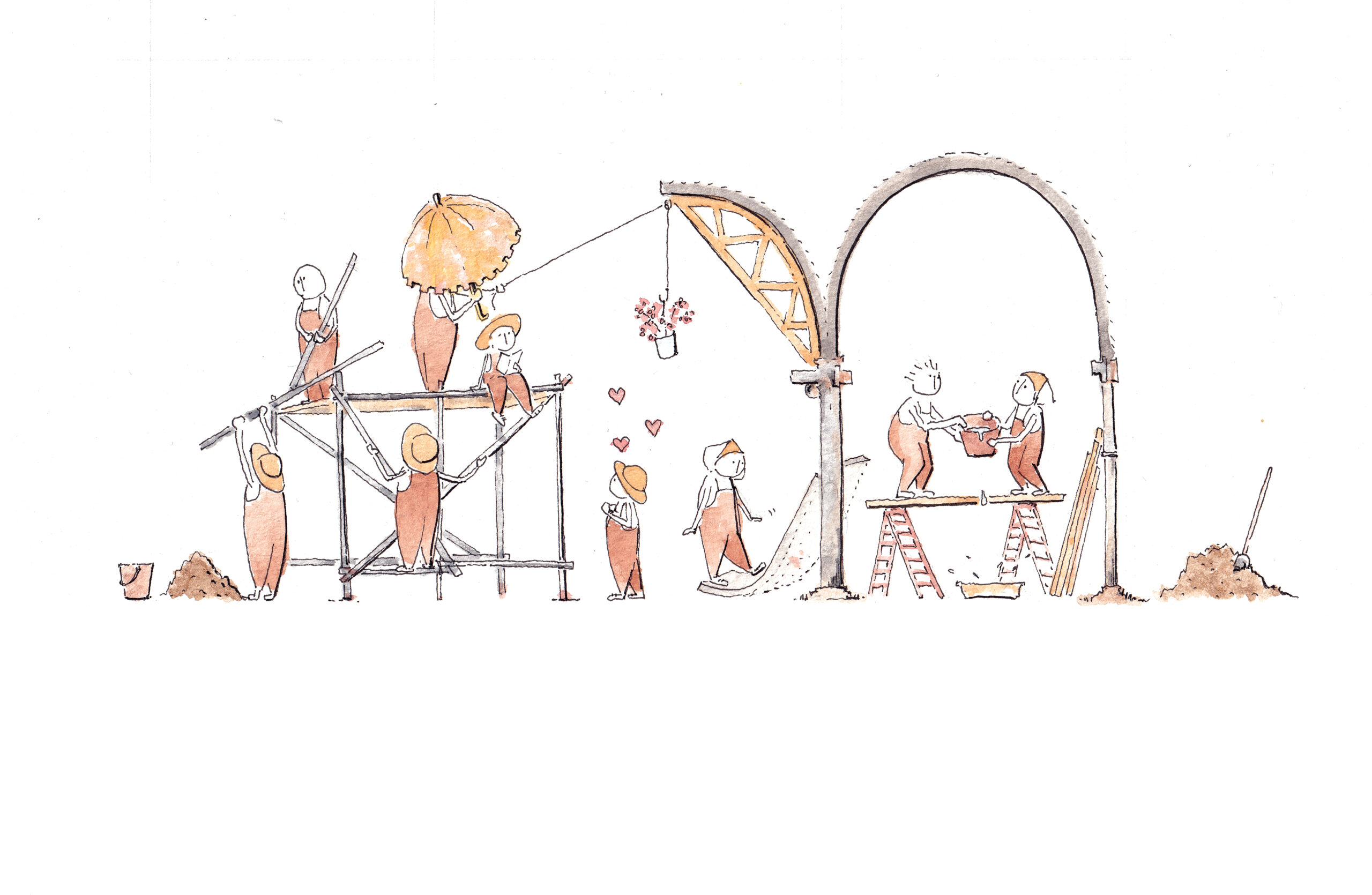
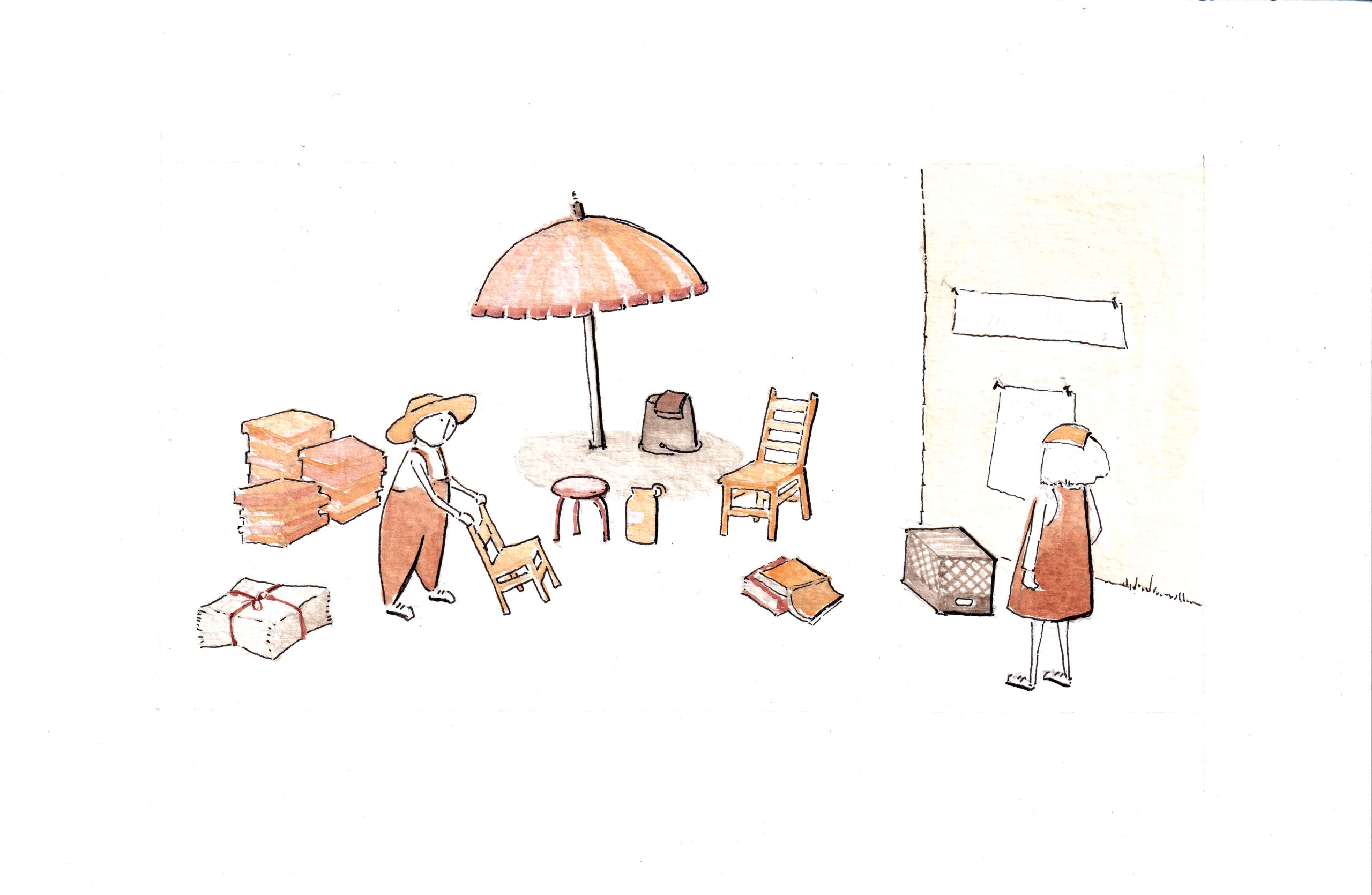
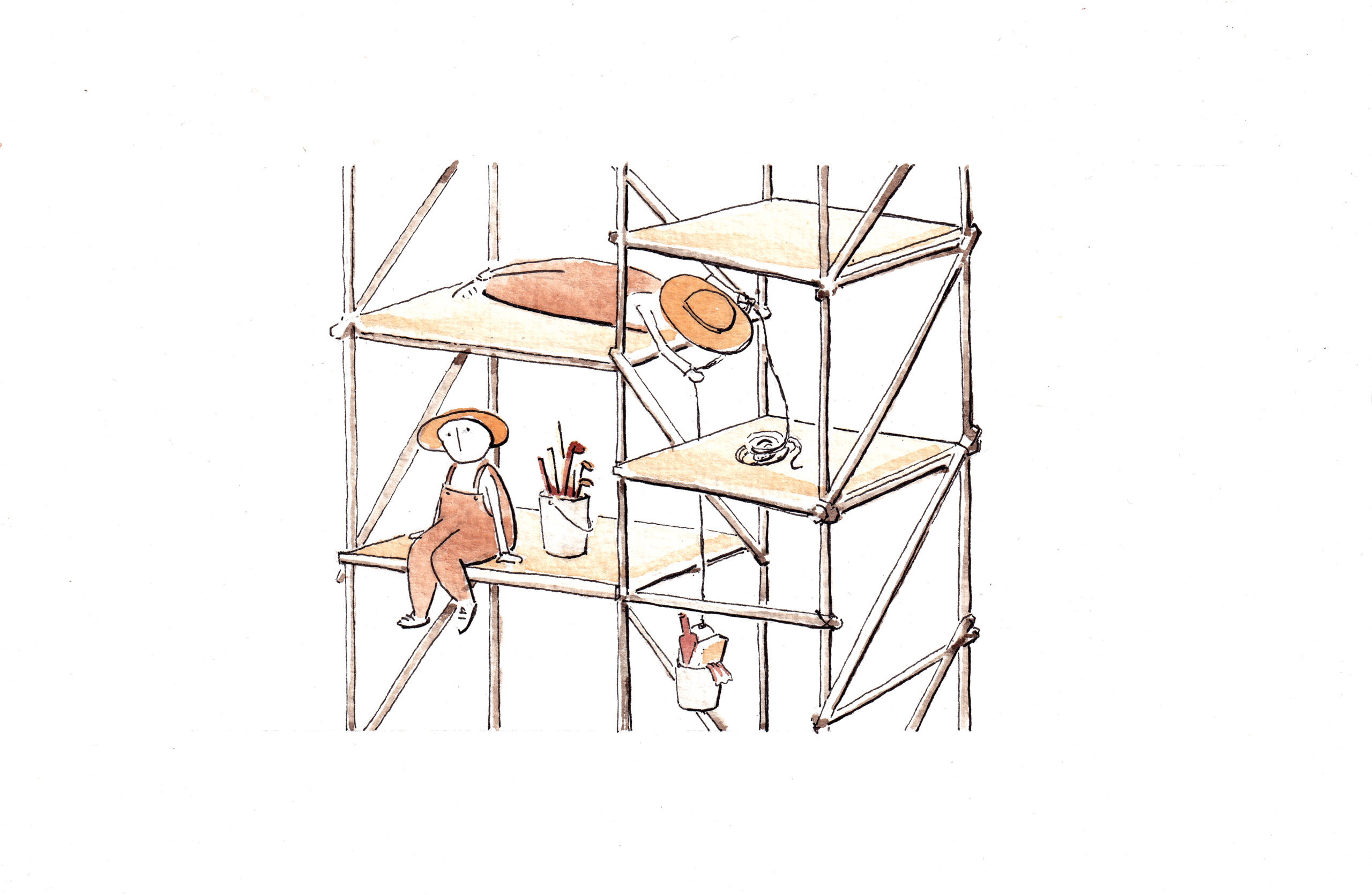
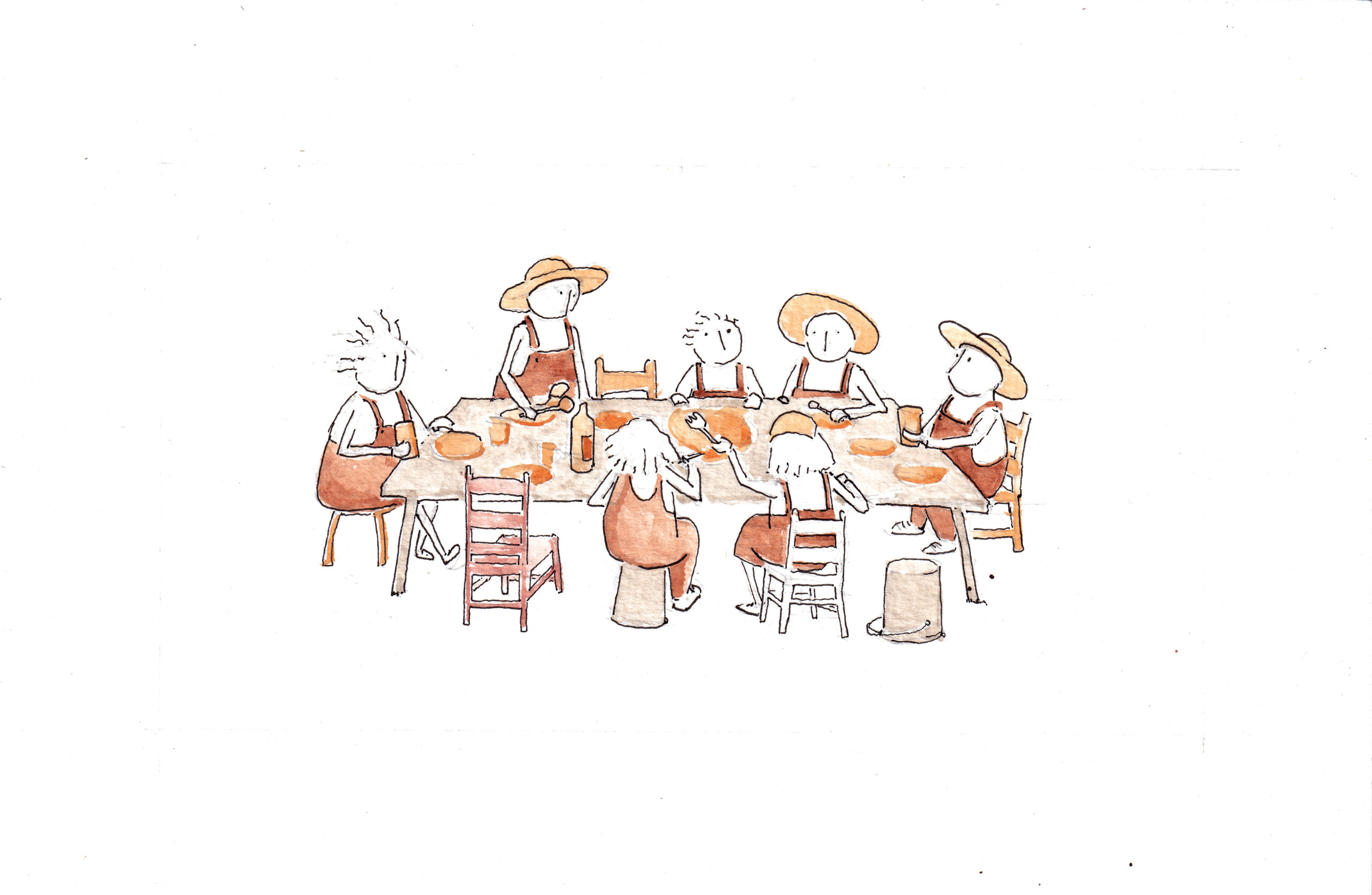
Lane, how did you approach the small figures and comics as the best vehicle to present these ideas of a continuum and possibilities in the final section?
LR: Andrew and I spent many hours talking about those little figures because they are a departure. They describe an imagined action, but also a very real one. It isn’t a utopia that you can never achieve; it is a utopia that you work toward. There is a realness to them.
They are little groups of people, workers who have fun, get things done, get into mischief, and try things. There is a playfulness because fundamentally that is where you get the ability to imagine your utopia.
The figures emerged naturally from the drawings. We tested different versions of them, and eventually they all moved into the same section of the book. Andrew and I draw very differently, but we both care deeply about drawing, so there was a constant back-and-forth. It became a very collaborative process.
The spirit of the book is joyful. It is not a sad or woeful book, even though it recounts some very unfortunate moments. The stakes are high, but we can still have fun with it.
The little figures are us trying to do better things. They are tied to comics, sequences, stories, and frozen moments. They are different from the people earlier in the book, whose struggles we are recounting and honoring. These figures represent us trying to do more and better things, and there is something delightful about that.
How do you navigate the fact that socialism, anarchism, communism, and other movements can themselves become vehicles for oppression?
DR: When people hear “Antifa,” they often think of people in the streets throwing bricks through windows. We consciously chose to call it antifascist architecture and position ourselves as antifascist rather than non-fascist.
People who have survived as firsthand victims of fascism and capitalism often don’t have an interest in theorizing fascism—they have an interest in survival. That takes shape in many different ways: the [Black] Panthers, the Zapatistas, and others.
We don’t have rosy illusions about political movements or institutions. They can all be subject to oppression and become vehicles for oppression. The anarchists in the Spanish Civil War were as much at war with the communists as they were with the fascists. The subject is messy, and ethical boundaries get crossed when you align yourself with a particular movement.
ASL: Political projects, particularly large-scale state projects, are inherently difficult. I don’t think there is an apologism inherent in this work. That is why we work within an anarcho-communist framework that tries to thread the needle between believing that a state can be created to eventually wither away and believing that society can ultimately be run by people.
There will certainly be people who have a difficult time with these political topics. What I would suggest is to deepen their political education by engaging with groups dealing with these issues on the ground, particularly those working in mutual aid and communities.
I understand the skepticism toward what is offered to us in terms of simply voting fascism away or dealing with oppressive state power. But I would encourage people to hear the histories of those living through these realities. Nobody says these strategies are perfect. The point is not that if something fails in one instance, we throw everything away.
This is where utopianism becomes important. Anti-communism works so effectively partly because of its anti-utopianism: it makes people believe there is no way out.
The umbrella of antifascism allows for different political positions. If you are interested in mutual aid and peer-to-peer structures, anarchism is a rich tradition. There are also examples of states doing incredible things for their people. I don’t expect any of this to be easy, but I do expect it to be inspiring—and a little scary. I think that’s what philosophy and political education should help us confront.
Would you like to comment on this article? Send your thoughts to: [email protected]
Latest
Viewpoints
Detroit Month of Design: A City’s Work in Progress
Now in its 16th year, the celebration offers insights into the Motor City’s ongoing accomplishments without glossing over its hurdles.
Projects
How a Hybrid Building Helped an Historic Manhattan Congregation Remain in Place
On Billionaire’s Row, FX Collaborative designed a new home for Calvary Baptist Church combined with an office tower.