


October 28, 2026
The Biomimicry Institute Launches a Nature-Positive Alliance
“The nature-positive concept has a long way to go … right now it’s really about harm reduction.” — Jared Gilbert, COOKFOX’s associate partner and director of communications.
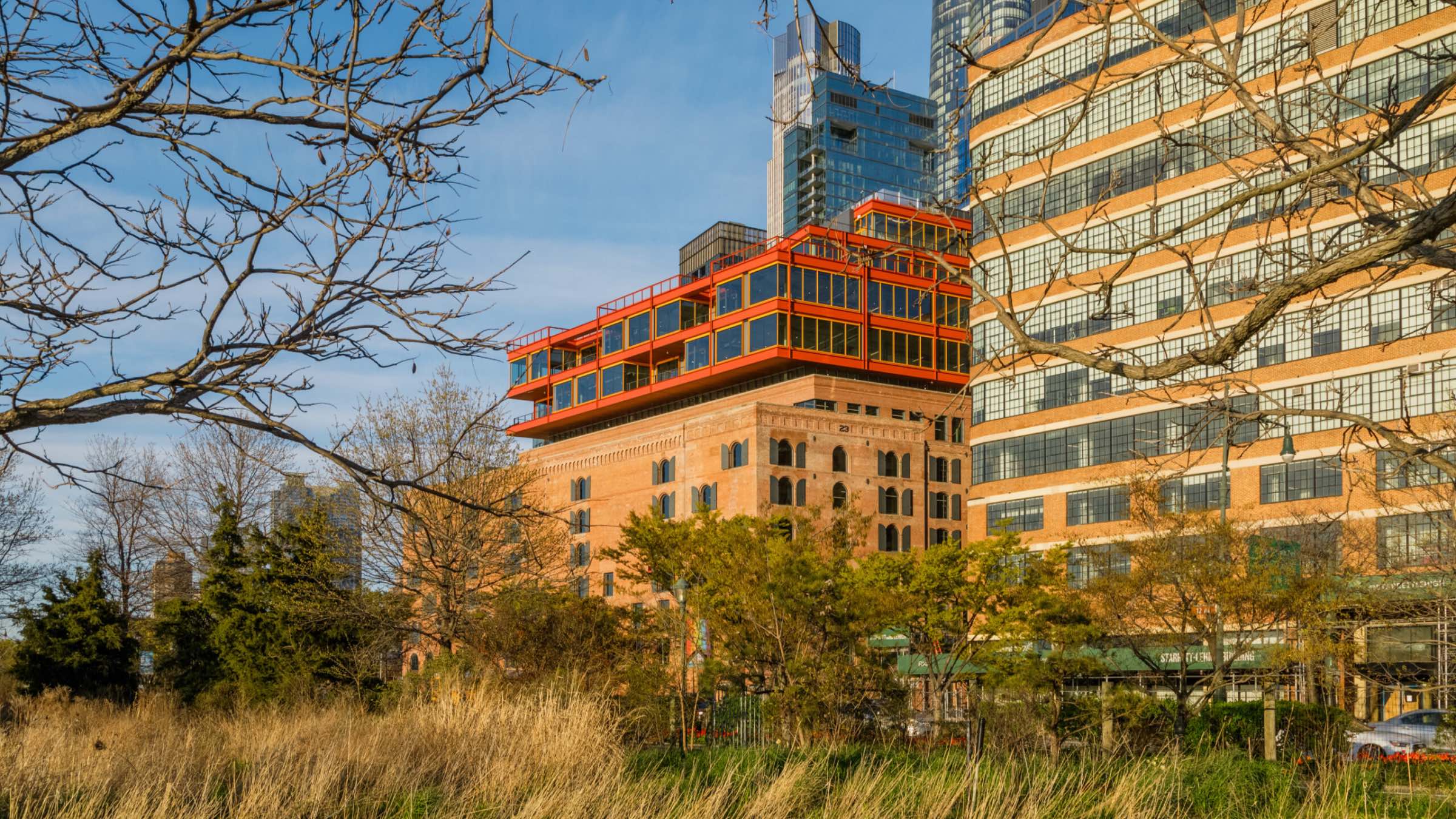
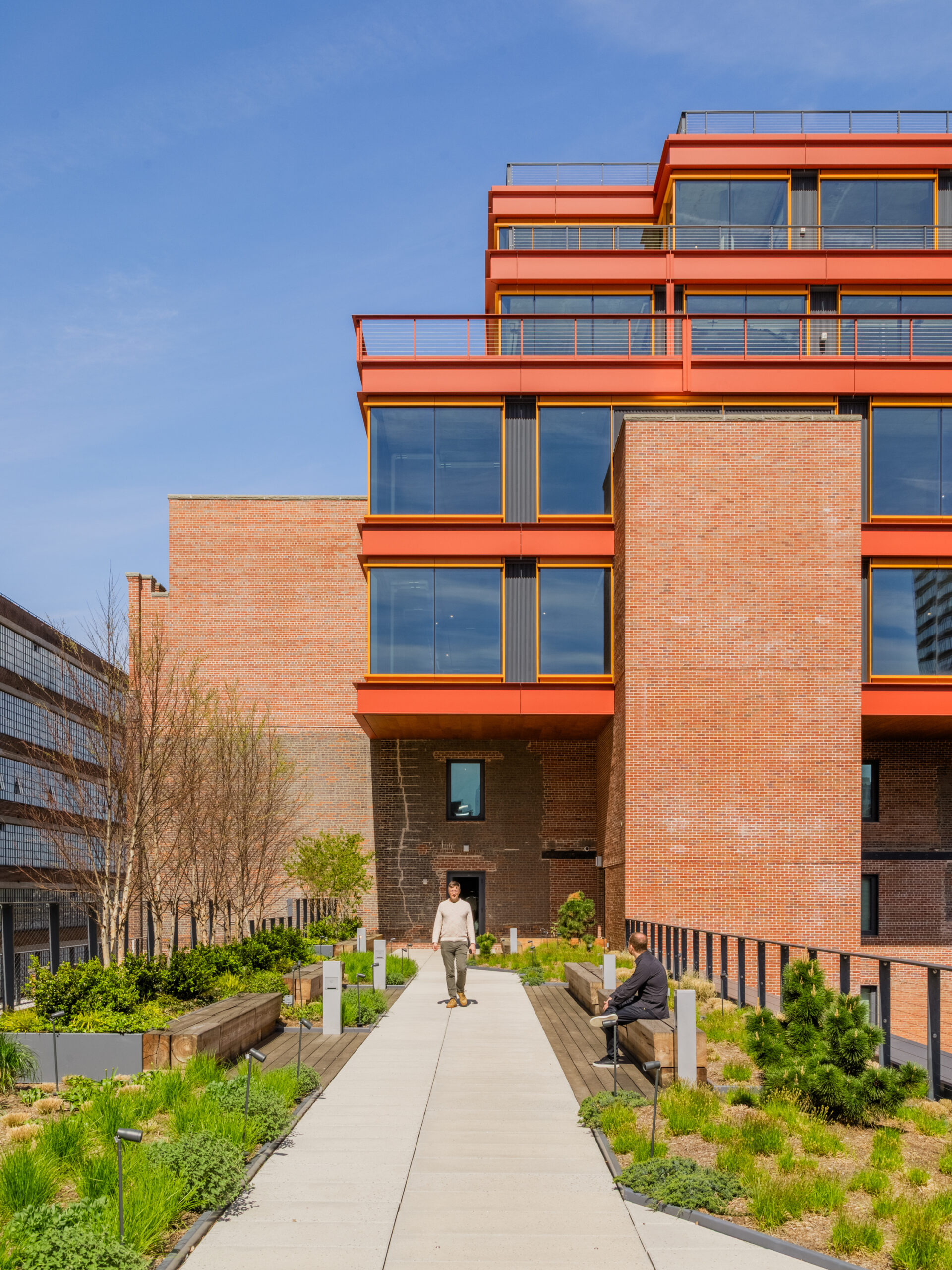
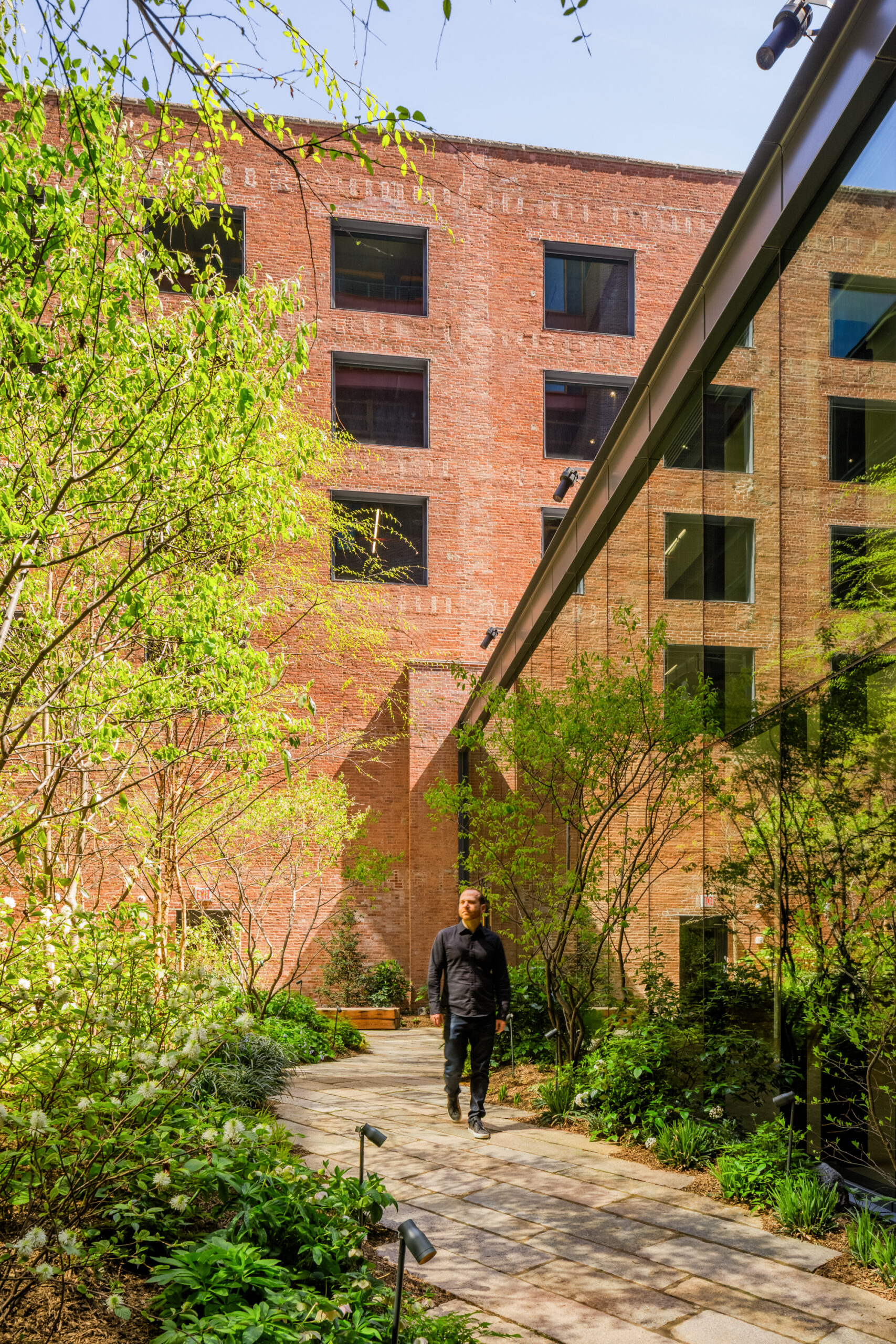
At the launch event, hosted at the Midtown office of COOKFOX Architects, a charter member of the Alliance, Mary Davidge, a TBI board member, remarked that stakeholders of the built environment (e.g., architects, engineers, manufacturers, et al.) rarely “speak the same language about the importance of nature on a project.” Efforts to find that common ground are reflected in the Institute’s pledge, which lays out a general methodology for “sharing information across sectors,” Davidge says.
Signing the Pledge
While the Alliance was technically born just a few weeks ago, the cross-sector collaborative, or Co-Lab, first convened in May 2025 to begin brainstorming how such a network should take shape and drafting the pillars of such a pledge. “The nature-positive concept has a long way to go … right now it’s really about harm reduction,” says Jared Gilbert, COOKFOX’s associate partner and director of communications, and an original Co-Lab participant. Looking beyond that, he insists “we need projects where we’re learning how to create new systems than can displace the old. In nature, when an organism becomes outmoded, it becomes fuel for the next generation. That’s really what the Alliance and this pledge are meant to spark.”
Doing less harm through intentional design, material specifications, construction waste diversion, reuse protocols and other means is clearly an imperative; the growing cast of pledge signatories, among other sustainability-minded professionals, also know this should be baseline in one’s practice. COOKFOX founding partner Rick Cook wants his industry peers to be “rebuilding ecosystems and letting nature do its magic.” Integral to that is using performance metrics that “aren’t normal,” he says, like restoring natural habitats and quantifying the conditions of productive habitats based on the needs and behaviors of local flora and fauna.
For inspiration, Cook points to the conceptual model known as the Muir Web (named after famed naturalist John Muir), which illustrates the complex interconnections between living and abiotic elements in any ecosystem. “We tend to get wrapped up in our own little worlds. But if you step back and look at all the likeminded people who are trying to make a difference in their fields, then we can all agree on some basic principles of protecting nature and looking to nature to solve complex problems.”
Architects would do well to consider Earth for what it truly is—a creature, much like any other organism, that operates by cyclical process of “take and give, death and renewal,” to quote Kate Raworth, the founder of Doughnut Economics. The living world “thrives by continually recycling life’s building blocks,” Raworth wrote in 2018. This viewpoint is shared by Jennifer Preston, senior regenerative design leader with HKS, another pledge signatory. She favors a “return-to-basics” approach and focusing on “the simple poetry of making shelter” that not only keeps us safe and comfortable but is attuned to nature’s capacity to adapt and inspire awe, she says. “Nature is always able to figure out a way to not just survive but thrive across different factors. It has a lovely pace. Nature takes its time, and architecture should take that same approach; its role is to help the human species thrive.”
Sending a Signal
In all fairness, this Alliance isn’t breaking new ground. Across the spectrum of organizations, frameworks, and benchmarking tools, from mindful MATERIALS to AIA’s Framework for Design Excellence and dozens more, these initiatives exist to promote the common cause of designing for regenerative outcomes. Where the Biomimicry Institute’s Alliance differs lies not in some attempt to redefine regenerative design or reframe the bioeconomy, but to connect efforts that remain fragmented, which, according to Erin Rovalo, TBI’s Head of Impact, limits their market traction.
“There’s nothing about biophilic design that says to avoid Red List materials,” Rovalo says, citing one misalignment. She continues: “And there’s nothing in the Red List that tells you how to identify reference habitats and emulate natural systems that are relevant to place,” Rovalo says. “We need a level of fluency amongst the design community.” She notes that plenty of organizations are actively calling for nature-positive design, at least in some form, but the Alliance’s relevance stems from its effort to nurture that fluency. Signing the pledge doesn’t prescribe specific tools, standards, or reporting protocols; rather, it signals to a growing cross-sector community that we share a common purpose, something Rovalo likens to synchronous fireflies during their mating season.
On the night of the Nature Positive Alliance’s launch event, the days-old pledge had already garnered 120 signatures, surpassing TBI’s goal of 100. Those early numbers and the pedigree of the early signatories are both encouraging signs. For her part, Sturgeon believes the Alliance will only be as strong as those involved and what they bring to the effort.
“We need an ecosystem of approaches. We need knowledge sharing and policies, and different tools and standards are of course part of it. There’s a lot of momentum already,” she says, invoking a cautious tone that underscores her organization’s agnosticism towards specific tools or standards. “How does it all come together? We think there needs to be a massive value shift in the building, cities, and infrastructure space to be in alignment with natural systems.”
Would you like to comment on this article? Send your thoughts to: [email protected]
Latest
Projects
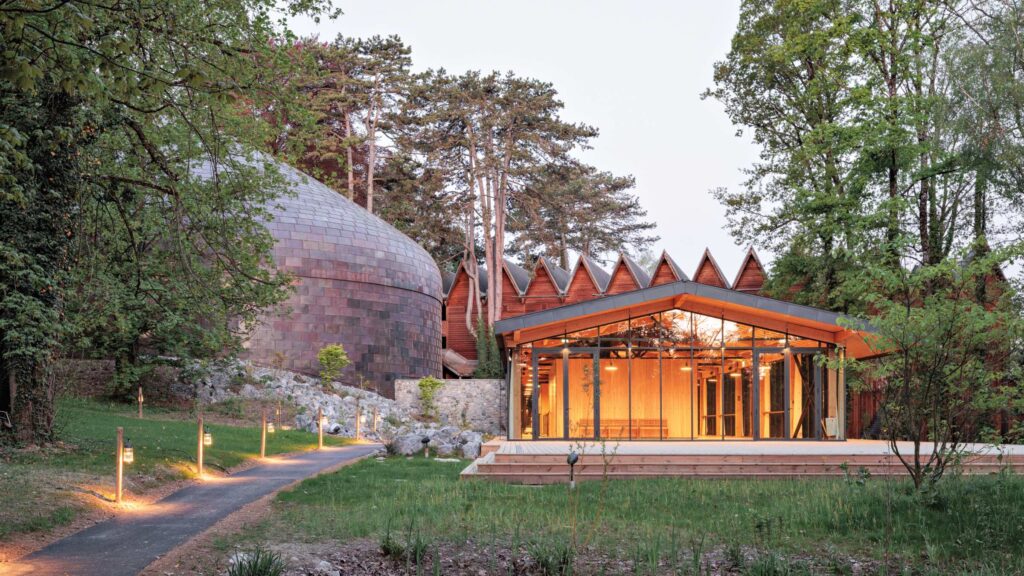
Inside PCA-STREAM’s Unconventional Concert Hall
At La Source Vive, a challenging oval geometry becomes the foundation for an intimate performance space where architecture and acoustics work in concert.
Profiles
Yu Nong Khew Uses AI to Question Her Humanity
The Wesleyan University professor recently launched Studio Soft Hairy, a design practice that balances digital fabrication, craft, and microbiology.