


October 9, 2025
Chicago (Architecture) à la carte

Inside and Outside Cultural Realities
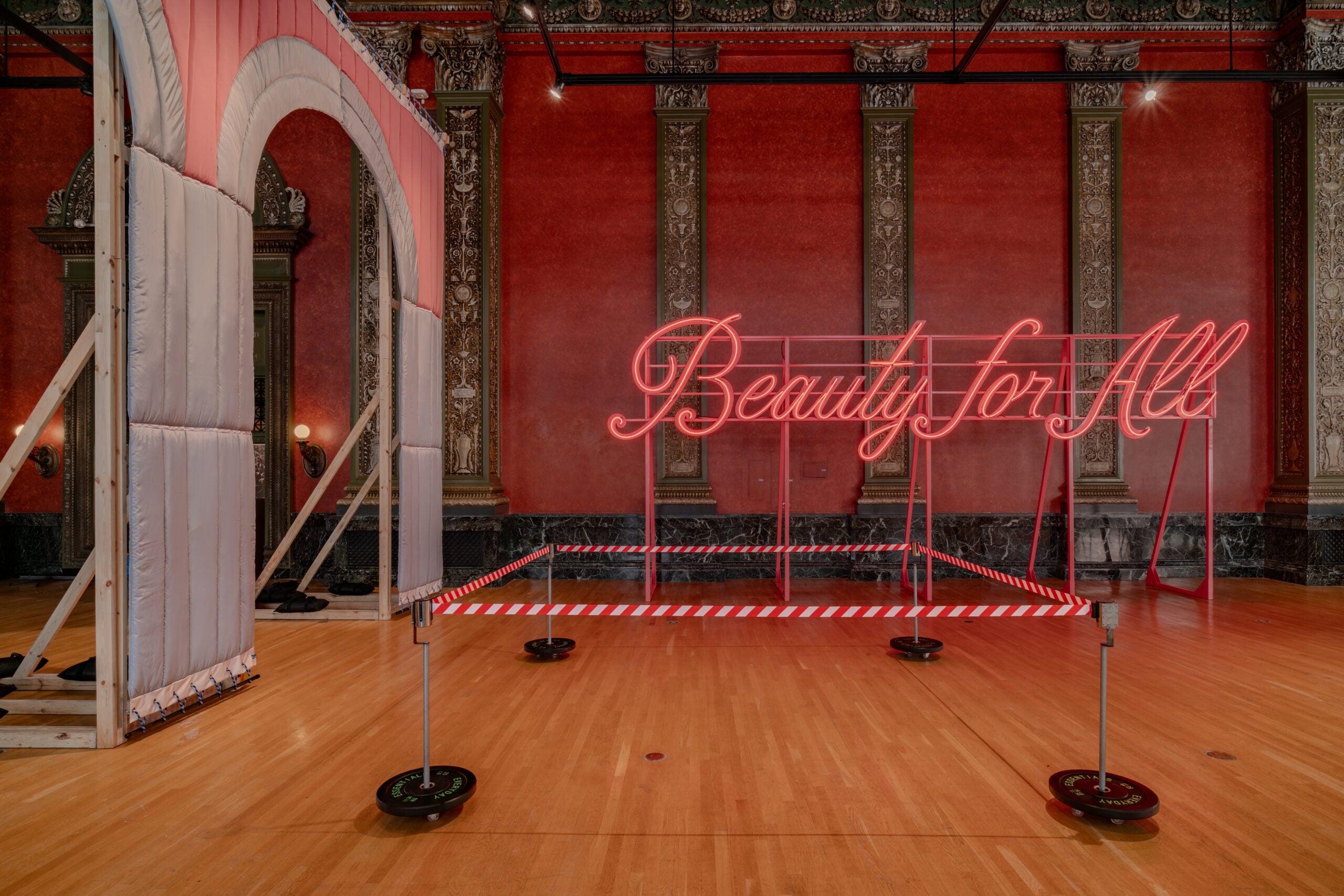
Outside the walls of the Cultural Center in the city’s Loop, and prior to opening weekend, CAB 6 was overshadowed by news of Trump threatening to send the National Guard to Chicago to curb crime, ICE detainments unfolding across the nation, and protests demanding a ceasefire in Gaza. Inside the gilded interiors of the Cultural Center, a different narrative unfolded. While the exhibition wall text acknowledged global political tensions and ecological inequality, few projects directly addressed them. The atmosphere leaned toward the familiar—a space for the architectural elite and returning participants, albeit with some new representation,such as emergent practices like Natura Futura, Alsar-Atelier, Oscar Zamora + Michael Koliner, gru.a, and The Laboratory of Intersectional Ecologies.
One colleague, a local practitioner and educator, remarked on how surreal it felt to see the biennial featuring so many Latin American architects while there was little discussion of national ICE raids or deportations. Just days before, news had broken that a promising local architecture student had been arrested by ICE along with his parents in the Chicago suburb of Cicero. Another colleague from Latin America declined to attend altogether, fearing detainment. These personal accounts made visible the distance between the biennial’s global ambitions and the immediate struggles shaping Chicago’s immigrant communities.Prior to the opening, twenty-one participants signed a letter expressing concern over CAB’s acceptance of funds for educational programming from Crown Family Philanthropies, following public records linking the foundation to partial ownership in a military contractor supplying arms to Israel. In response, some participants withdrew their work entirely in solidarity with Palestinians in Gaza
Prior to the opening, twenty-one participants signed a letter expressing concern over CAB’s acceptance of funds for educational programming from Crown Family Philanthropies, following public records linking the foundation to partial ownership in a military contractor supplying arms to Israel. In response, some participants withdrew their work entirely in solidarity with Palestinians in Gaza.
While a majority of the content within the Cultural Center offered thoughtful takes on material reuse, only a few installations proposed new ways of engaging with the public, new methods of ecological practice, or new ways of drawing inspiration from Chicago.
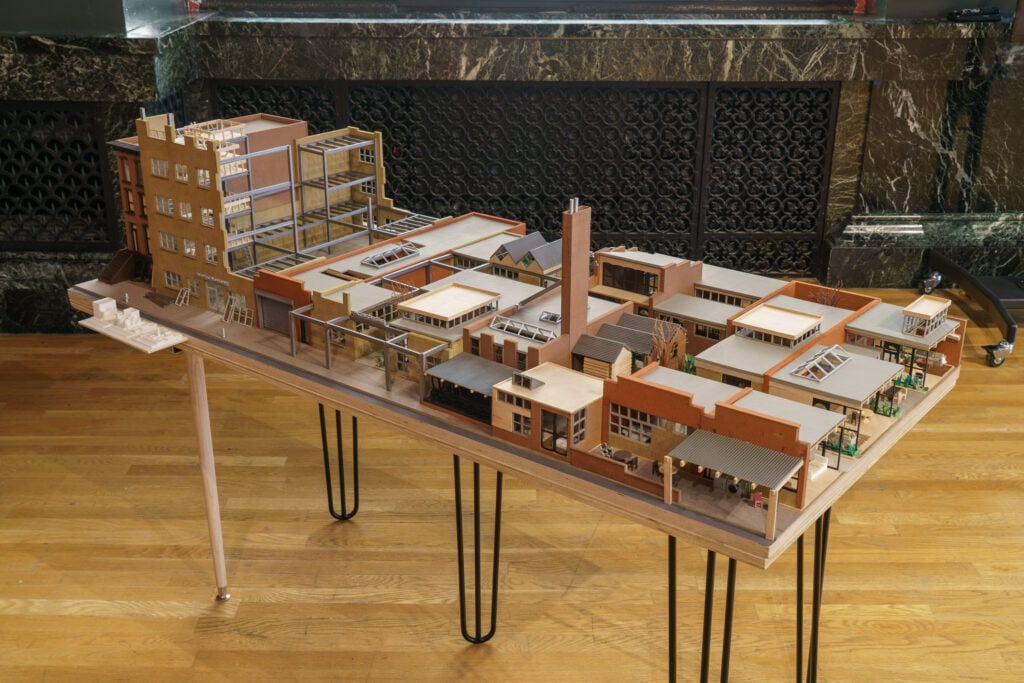
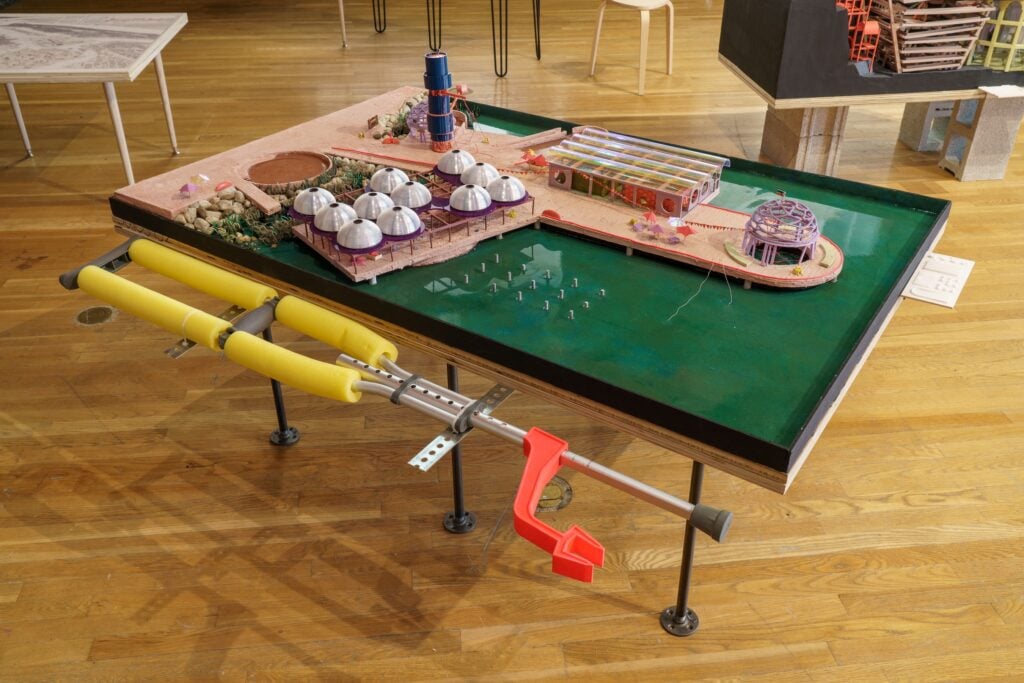
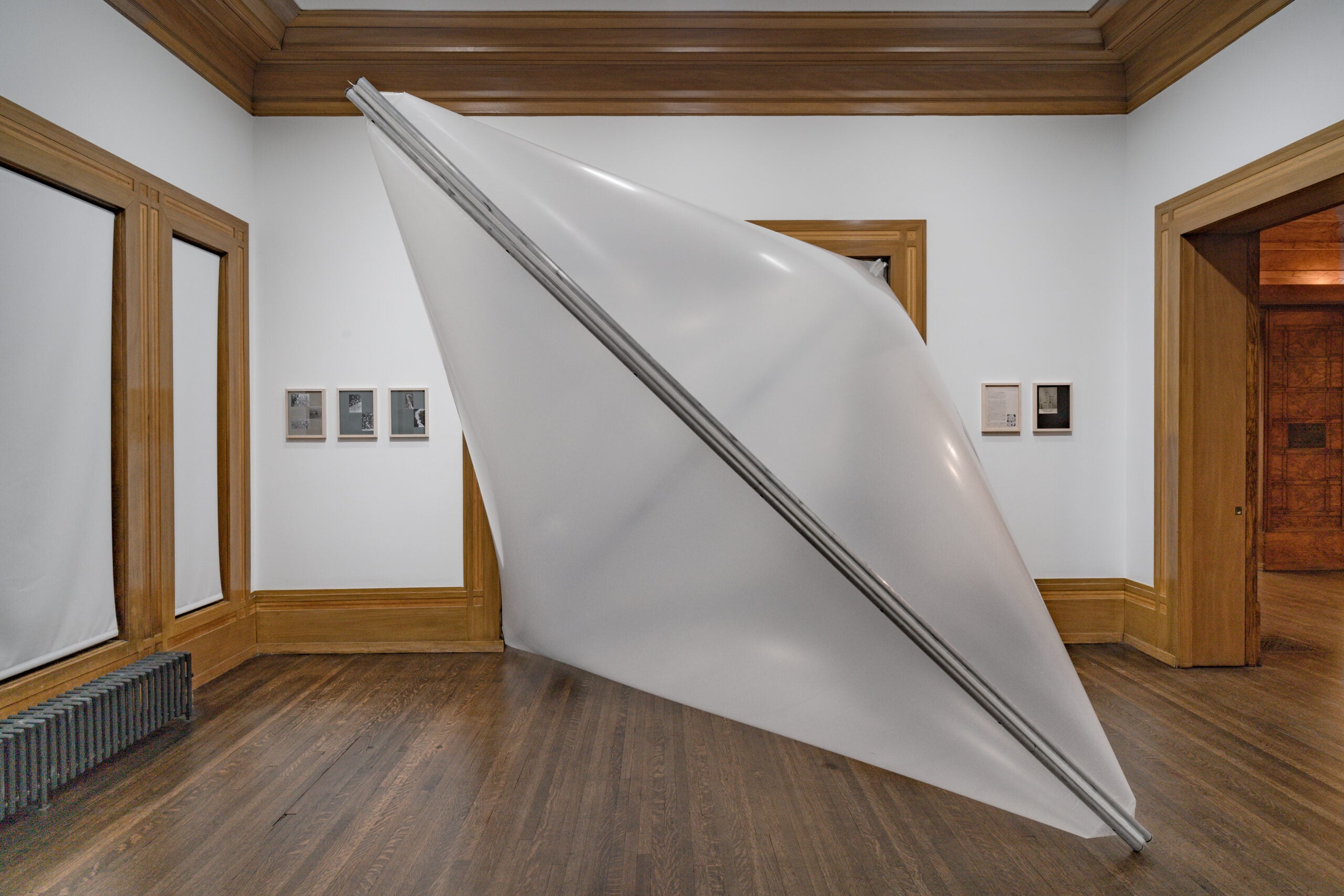
In Fragments of Disability Fictions, Ignacio G. Galán, David Gissen, and Architensions (Alessandro Orsini, Nick Roseboro) curate an installation that reimagines New York City through the past, present, and future experiences of disabled individuals. Building on previous research and exhibitions, the team envisions inclusive, climate-adaptive spaces that move beyond standard code-based “add-on” solutions, instead proposing imaginative environments for those with visual and mobility impairments. The project also reflects on histories of ableist policy: Chicago was the last city in the U.S. to repeal the “ugly law,” which criminalized visible disabilities. The team sets forth a call for forward-thinking design practices that place disabled individuals at the center of their work.
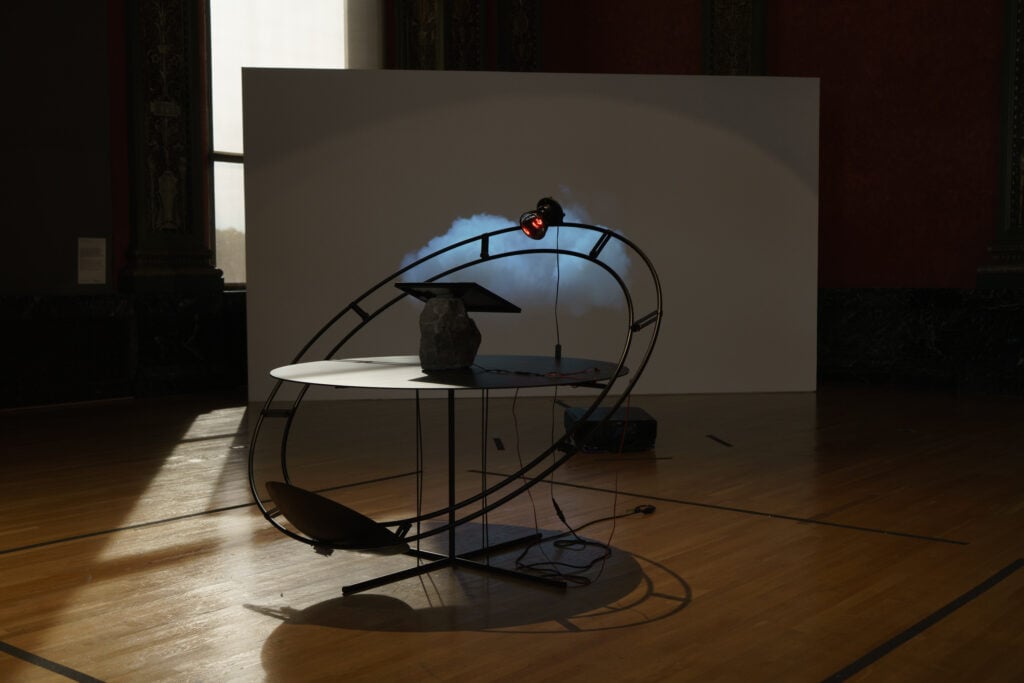
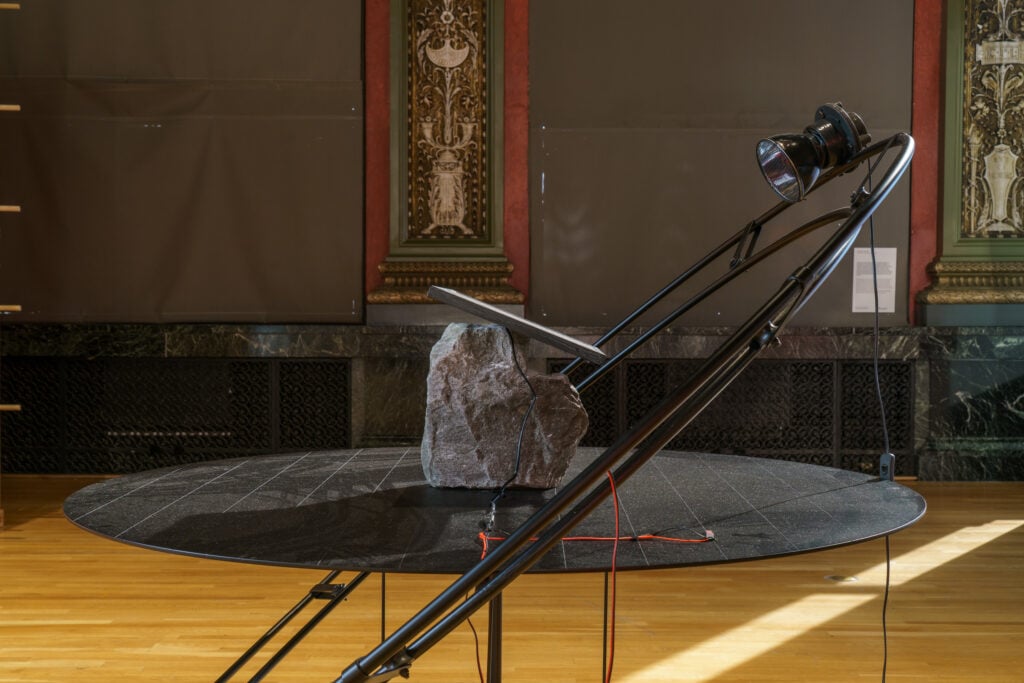
Nicolas Dorval-Bory’s installation A House in the Sun uses a heliodon—a scientific device that simulates the sun’s path across an architectural model—to explore how architecture can reconnect with planetary forces. Referencing local projects such as the Farnsworth House and Yerkes Observatory, Nicolas’ provocation offers Chicagoans a refreshing new reading of our urban Mies playground, reminding us that these icons are part of a larger planetary ecosystem. His body of work critiques Modernist architecture and redefines the practitioner’s role as a mediator between cosmic rhythms and centuries of construction knowledge. As climate change intensifies, his scientific yet poetic approach—aligning buildings and landscapes with solar, thermal, and cosmic systems—offers a promising path forward for ecological design practice.
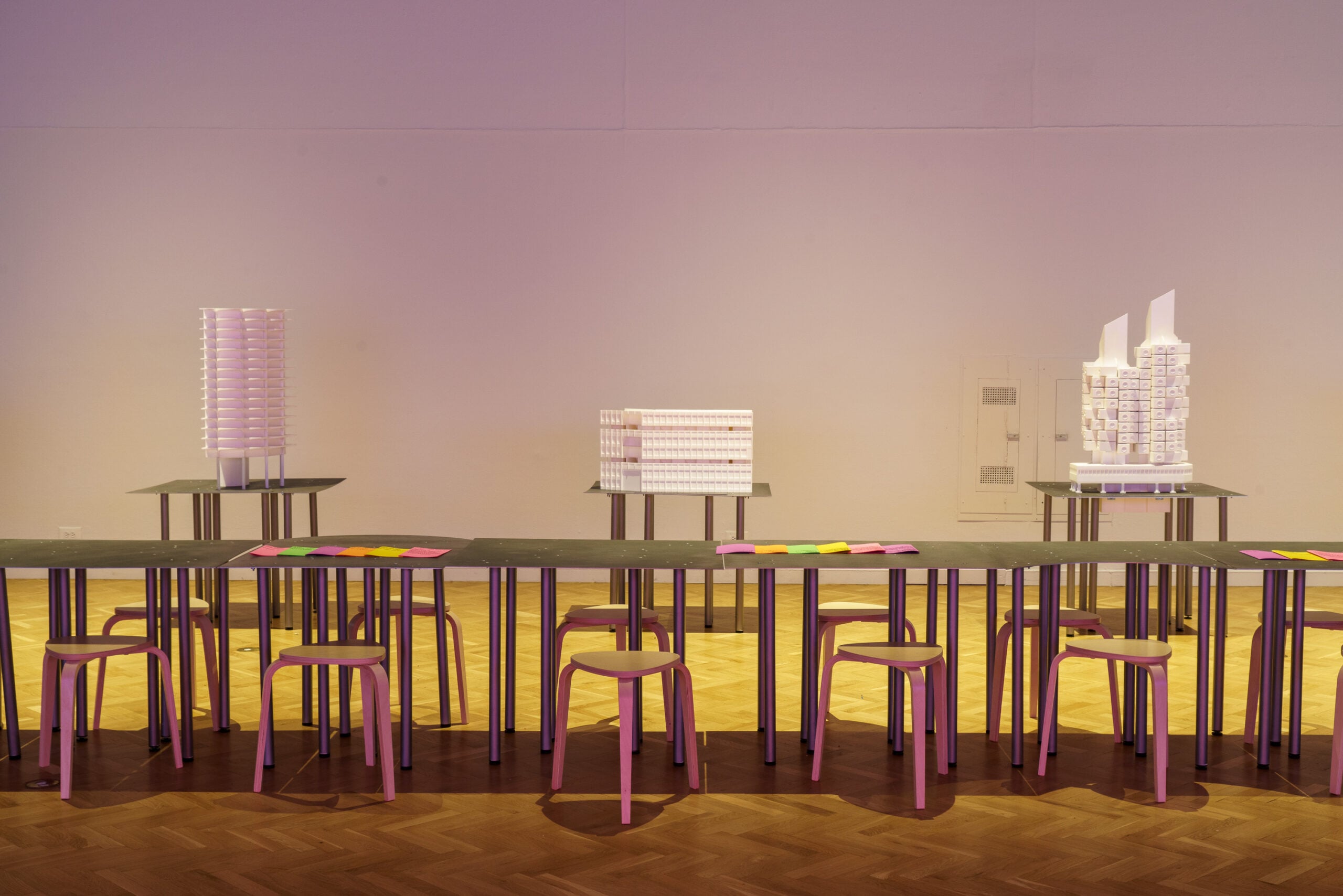
Inhabit/Outhabit by Florencia Rodriguez, Igo Kommers Wender, with Alexander Eisenschmidt, Magdalena Taglibaue and Camilo Restrepo archives twenty-nine recent collective housing projects from around the world, reimagining how we might live together in unconventional ways. By challenging ideas of layout, ownership structures, family, and materials, this index points the profession toward new solutions for optimistic coexistence.
Satellite Exhibitions‘ Points of View
Some of the satellite sites around Chicago proved even more radical in their ecological thinking and public engagement. New to this year’s program is Woodlawn’s Narrow Bridge Arts Club, a former church now transformed into a carbon-positive community arts center. Thoughtfully renovated in 2023 by Adaptive Operations, the building hosts additional CAB programming and embodies the biennial’s themes in both form and function.
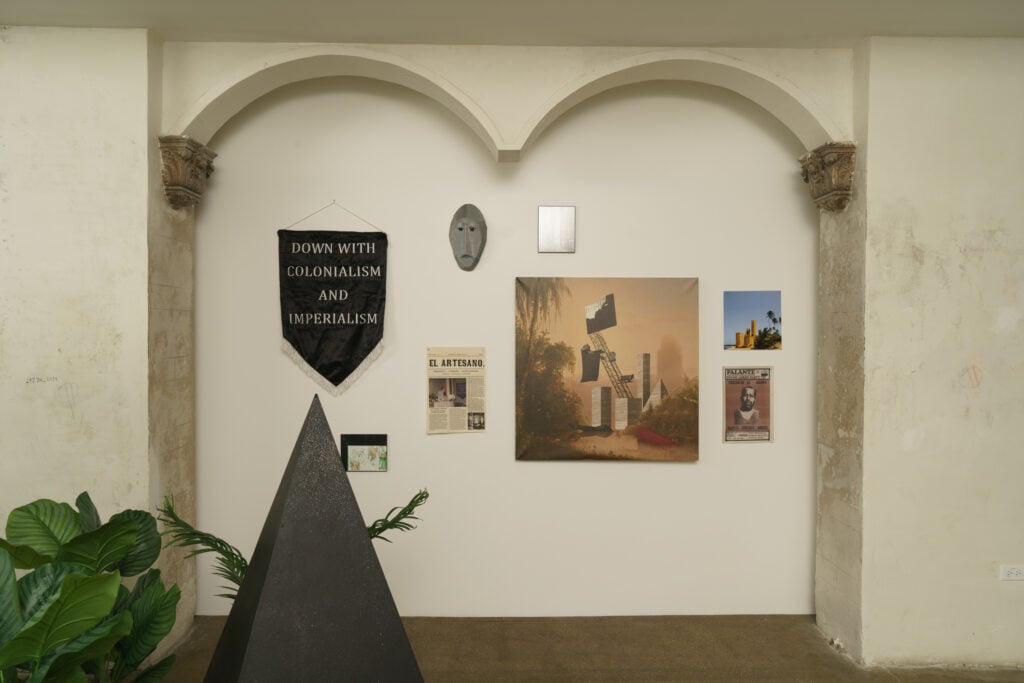
Also newly launched is Theaster Gates’ The Land School, located in a decommissioned Catholic school along Dorchester Avenue. Rescued from demolition, Theaster’s latest project continues his commitment to material reuse and neighborhood-rooted activism. The Land School explores new models of land stewardship, extending Rebuild’s ethos of ecological reinvention. The Stony Island Arts Bank, another site from Theaster’s portfolio, also features CAB participants such as WAI Architecture ThinkTank and their installation A LOUDREADING Tribune (A Post-Colonial Still Life of a Traveling Loudreading Workshop).
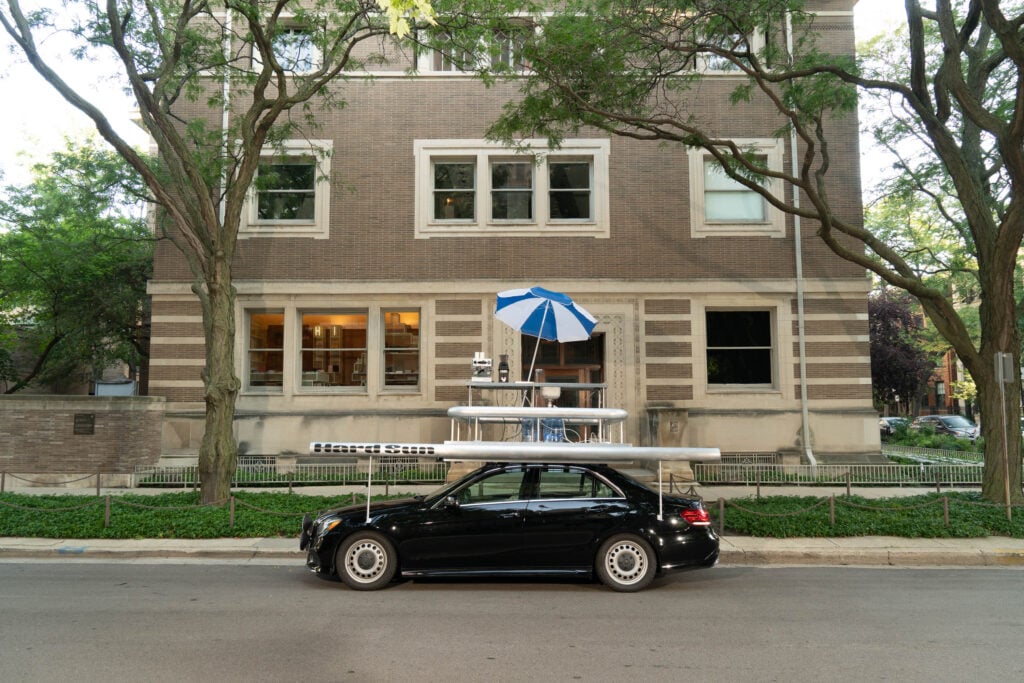
As critics recapped the opening weekend, Michael Meredith noted in the closing panel discussion, “Of all the projects, Sam Chermayeff’s [and Hard Sun’s] project does the most good in the public realm.” Parked outside The Graham Foundation in the Gold Coast neighborhood, Hard Sun Interstate was a glossy black Mercedes E300 (reportedly bought off Facebook Marketplace) outfitted with a La Marzocco, an umbrella, and a Sam Chermayeff-designed platform. This was equal parts sculpture and sidewalk intervention… and probably would have made Jane Jacobs smile. Unlike Canal Café, exhibited at this year’s Venice Architecture Biennale by Diller Scofidio + Renfro, this Marzocco thankfully wasn’t pumping water from Lake Michigan (or pretending to, as DS+R never confirmed whether it was actual canal water due to permitting issues). In addition to handing out coffee, matcha, and sunscreen to curious strangers and biennial goers, people stopped, connected, smiled, and shared a moment – a small, lived instance of architecture as a public gesture.
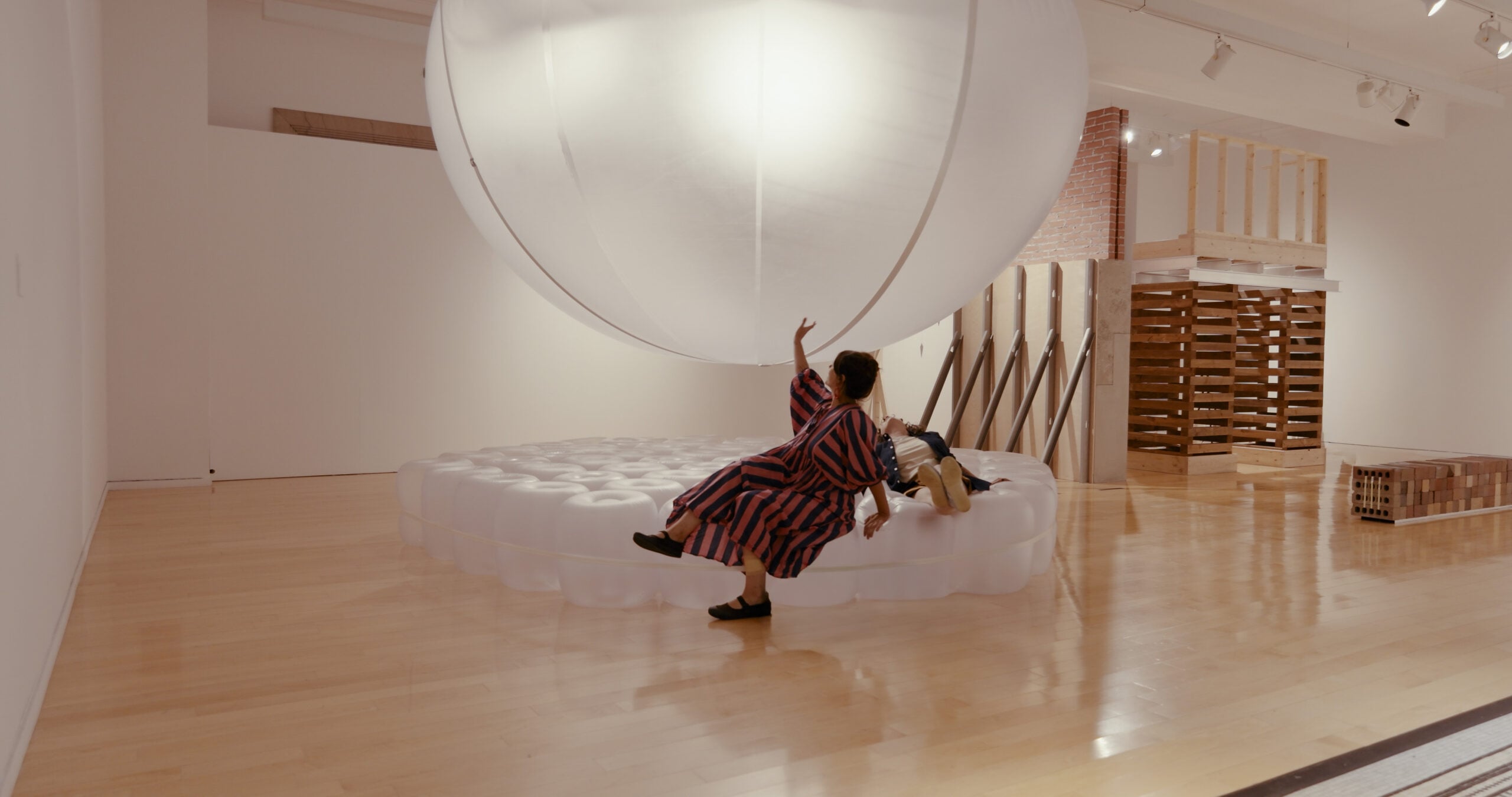
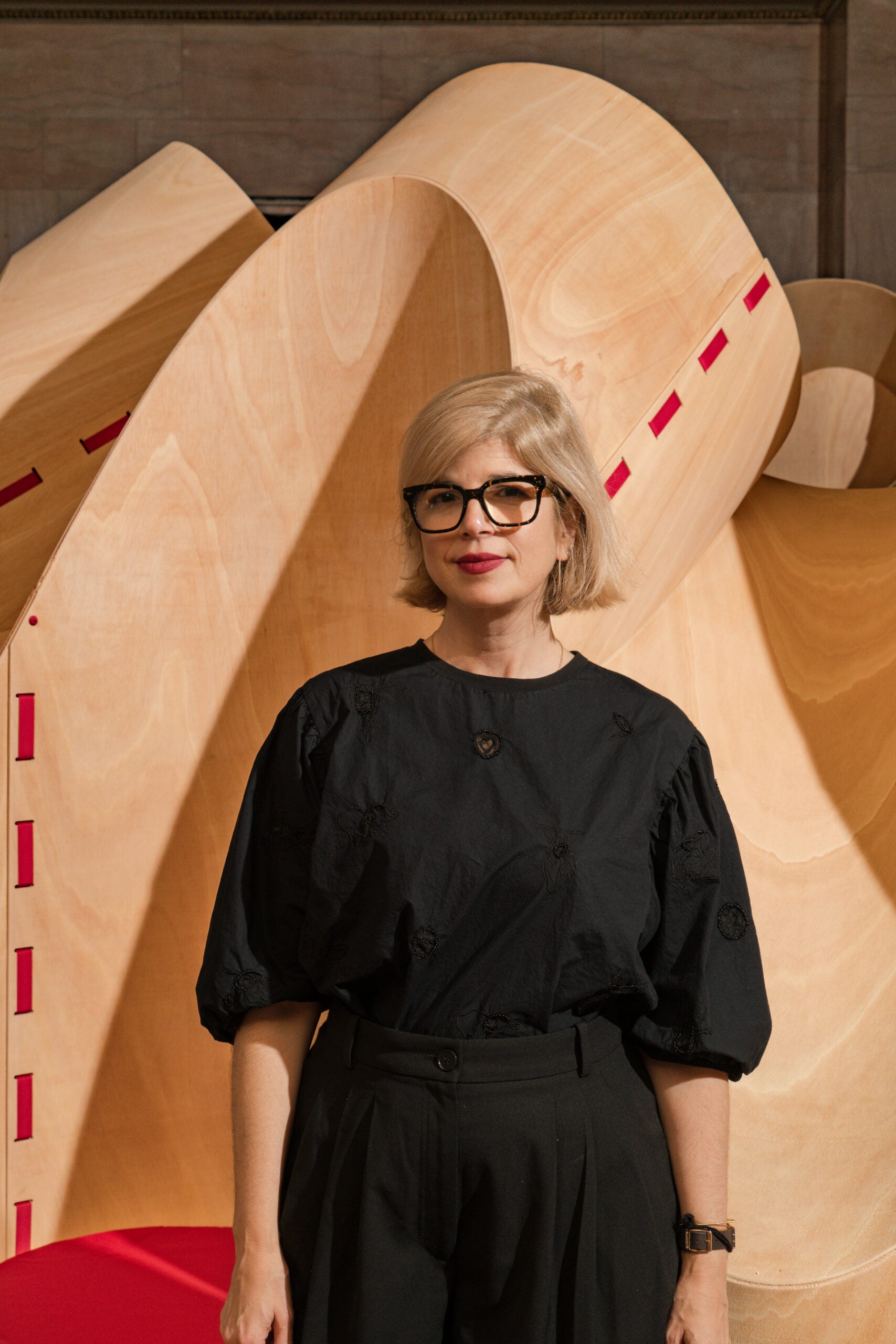
If Boyarsky’s Chicago à la carte saw the city as an energy system, today’s biennial suggests that energy has been dispersed – still dynamic, but in need of redistribution. This shift from centralized energy to dispersed networks mirrors the broader condition of contemporary practice. In the face of climate collapse, displacement, and militarization, SHIFT asks how architecture can serve as a tool for justice and care. Florencia’s curation echoes this call, presenting the city as an evolving organism where architecture becomes a means for coexistence, resistance, and radical care. Yet the context of this year’s CAB also makes clear that good intentions are not enough: the protests and withdrawals reveal how architecture remains entangled in systems of ecological and political violence, demanding that the discipline move beyond abstract discourse to confront its complicity.
Perhaps the biennial has outgrown the spatial and conceptual limits of the Cultural Center, and the logic of traditional exhibition formats can no longer hold the kinds of ideas it seeks to express.
If architecture is to be a tool for justice, care, and ecological transformation, how can it confront the systems of power it remains complicit in – and truly shift, rather than simply reflect, the world around it?
The Chicago Architecture Biennial remains open through February, with a second wave of installations launching in November – featuring an entirely new satellite space dedicated to innovative ecological practices such as Chicago’s own Bittertang Farm.
Would you like to comment on this article? Send your thoughts to: [email protected]
Latest
Viewpoints
Detroit Month of Design: A City’s Work in Progress
Now in its 16th year, the celebration offers insights into the Motor City’s ongoing accomplishments without glossing over its hurdles.
Projects
How a Hybrid Building Helped an Historic Manhattan Congregation Remain in Place
On Billionaire’s Row, FX Collaborative designed a new home for Calvary Baptist Church combined with an office tower.