



December 19, 2025
Design Mumbai Redefines “Made in India”
“India’s most powerful design asset is endurance of its skilled craft traditions.”
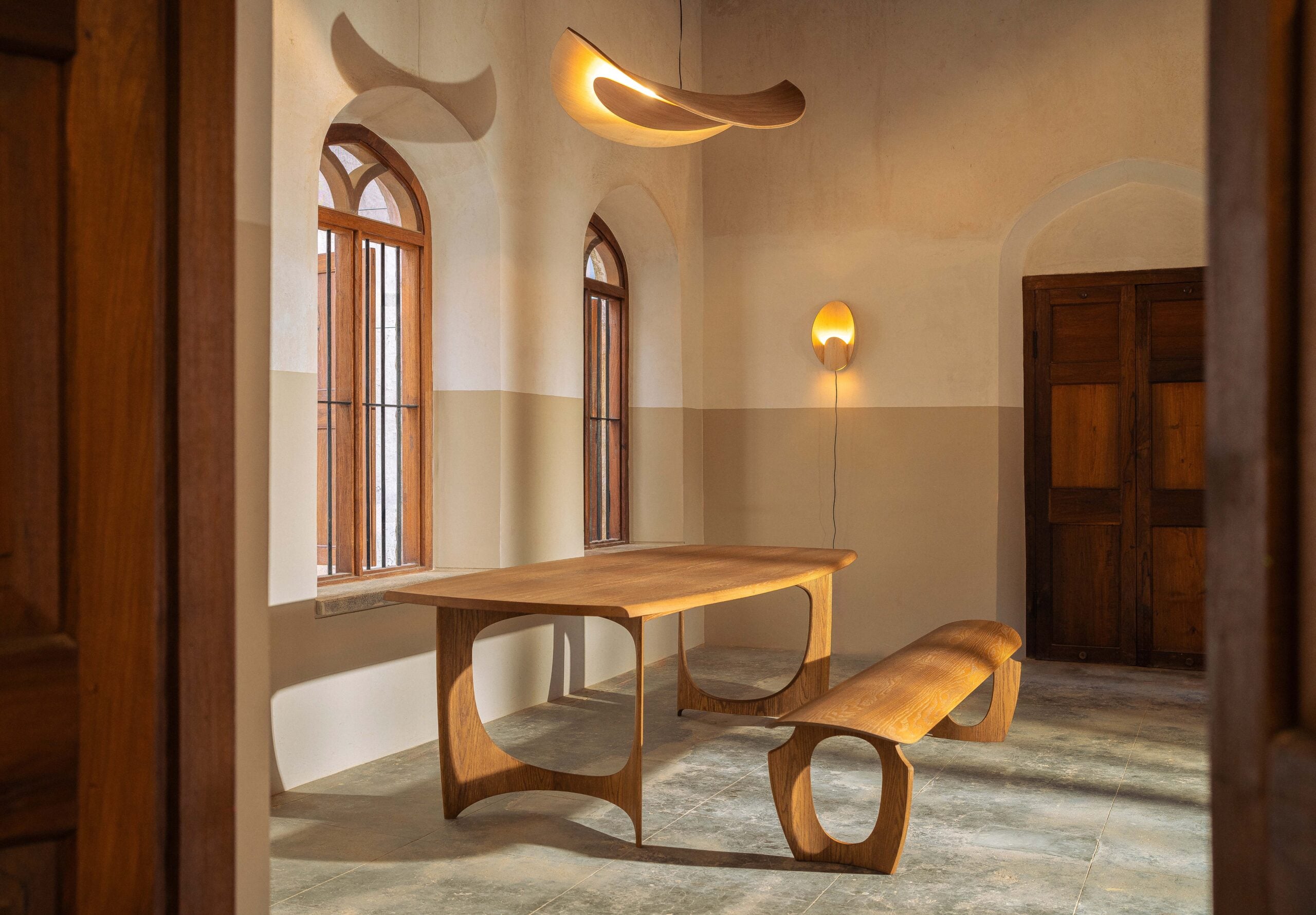
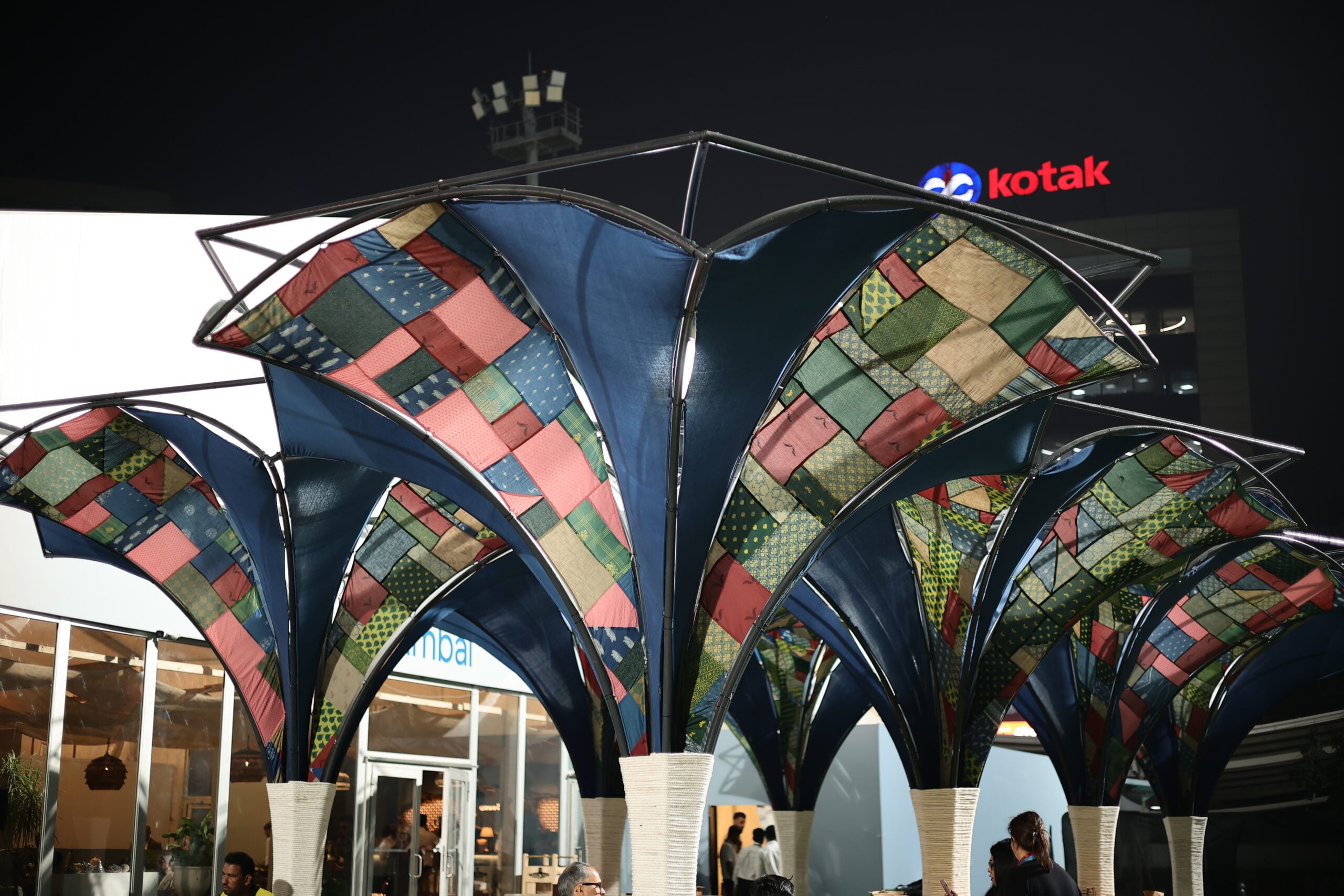
Thirty years on, the song’s promise feels relevant again. Indian consumers now enjoy an abundance of design by homegrown studios, whose work—across products, furniture, interiors and built forms—rivals international counterparts. Indian participants in the fair’s second edition showed work that eschewed European modernist tropes and maximalist cliches, instead drawing on local traditions: regional craft, material restraint, spirituality, and functional innovation. The programme ranged from Phantom Hands’ furniture designed by late Sri Lankan architect Geoffrey Bawa to architect Vinu Daniel’s site-responsive structures. As Design Mumbai co-founder Piyush Mistry says: “The design scene in India is exploding.”
This explosion comes with pressures. Growing demand, escalating production, a dizzying speed of change—and a GDP growth rate of us to 8.2 percent—has consequences for people and the environment. The challenges facing India mirror those troubling capitalist economies everywhere, but they are magnified by the country’s scale.
Inside India’s Design Boom
For example, its vast population of more than 1.4 billion is a central driver of its material culture: both an asset and a vulnerability. A vast, young, upwardly-mobile consumer base with the means to invest in housing, design, and business is a boon for local studios, who hardly need to look abroad for clients. International brands are increasingly drawn in – Baccarat, Poltrona Frau, and String were among those at Design Mumbai. Some forecasts say that by 2030, the Indian middle class will hold the second-largest share in global consumption. To meet this demand, the government is aiming for manufacturing to account for 25 percent of its GDP—up from about 16-17 percent today—partly through its Make in India campaign. “India is such a big market—it can survive without supplying to the West and the West needs India because growth has plateaued there,” Mistry observes.
A parallel boom in construction—which accounts for roughly 18 percent of GDP—is fueling demand for architects and urban planners, creating opportunities for innovation. By the mid 2040s, it is believed that half the Indian population—an additional 270 million people—will live in urban areas. At Design Mumbai, speakers outlined the infrastructural mega-projects, housing developments and business investments emerging to meet that demand—including dozens of airports, train stations, and bus stations across the country.
When it comes to production, the sheer size of India’s workforce means human-driven fabrication remains fast and comparatively affordable—enough that the benefits of automation can often feel marginal. Instead, India’s most powerful design asset is endurance of its skilled craft traditions—at least 3,000 remain active and embedded in daily life—and its culture of repair, reuse, and improvisational innovation, known as jugaad. In the right hands, these offer a vision for more ethical, ecologically-grounded model of making, at a moment when the world urgently needs replace a value system centered on speed and efficiency alone.

The Convergence of Craft and Design
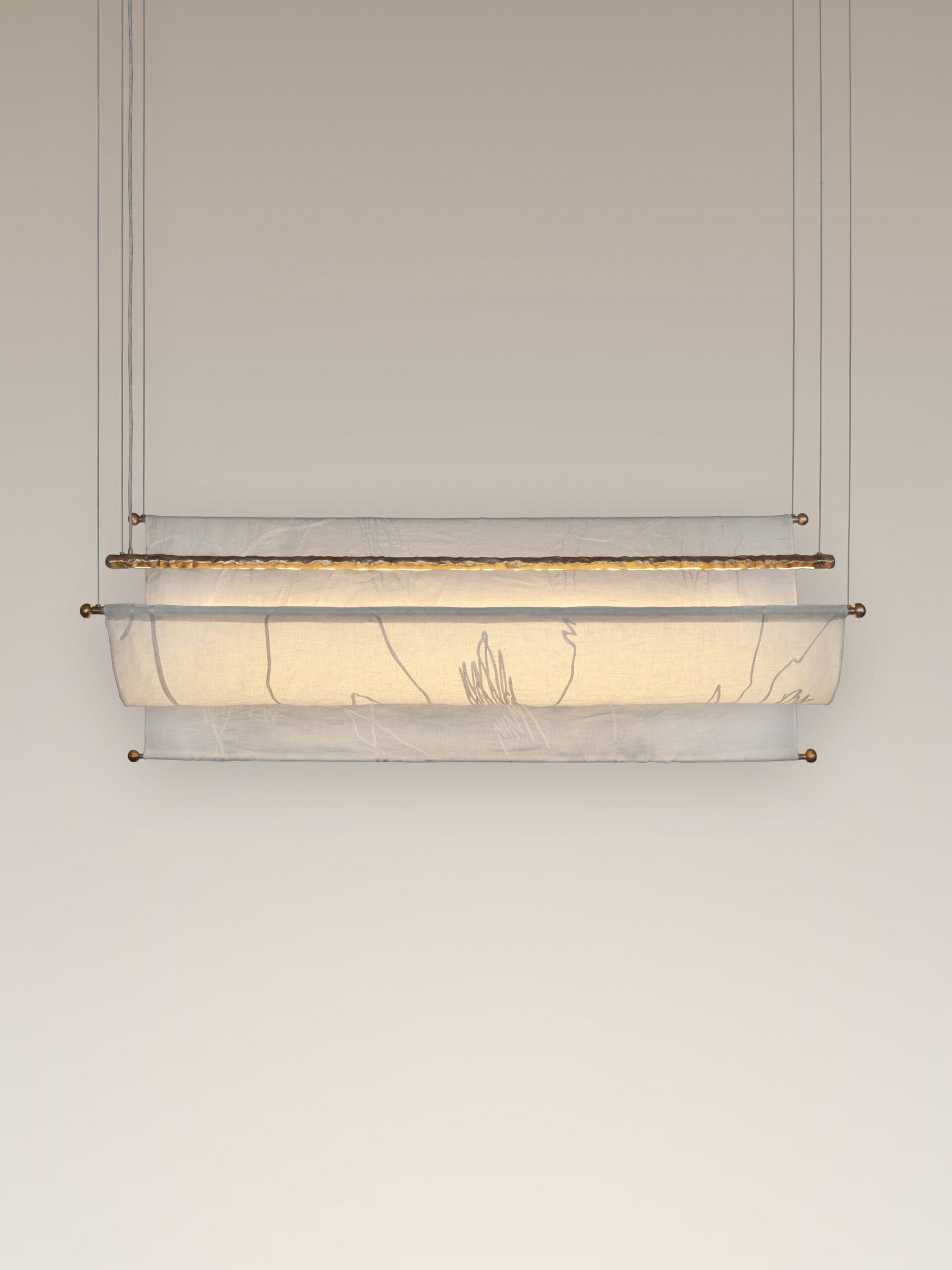
Kamna Malik curated a section of Design Mumbai that brought together practices from across the country engaged in formal and material experimentation—from Stem’s gently swaying textile light that recalls hanging fabrics used for cooling in Mughal palaces to Kaman’s curvaceous, architecturally-inspired armchair. She observes that, in India, craft and design are not drifting apart but converging. “Many designers are making the effort to seek out artisans and creating objects that are interpreting craft in modern ways.”
This centering of human skill has long been India’s USP, but it comes with downsides. Both local and global consumers expect speed, customization and competitive pricing—which, combined with labour oversupply, allows inequities such as low wages, inconsistent safety standards, and informal employment to persist across manufacturing and construction, with weak enforcement of worker protections. The undervaluing of manual work often forces makers to undersell their skills. Meanwhile, many younger people seek office jobs as a path out of from poverty, manual labor and caste associations of many traditional livelihoods. “I’m sure a lot of practices have good policies and fair wages, but it’s not widespread,” says Deepak Srinath, co-founder of Phantom Hands, which works with a group of carpenters, wood polishers, cane weavers, upholsterers, and tailors across the country, and also runs an apprenticeship program to support the passing on of skills to a new generation.

Design Mumbai Rethinks Labor and Equity
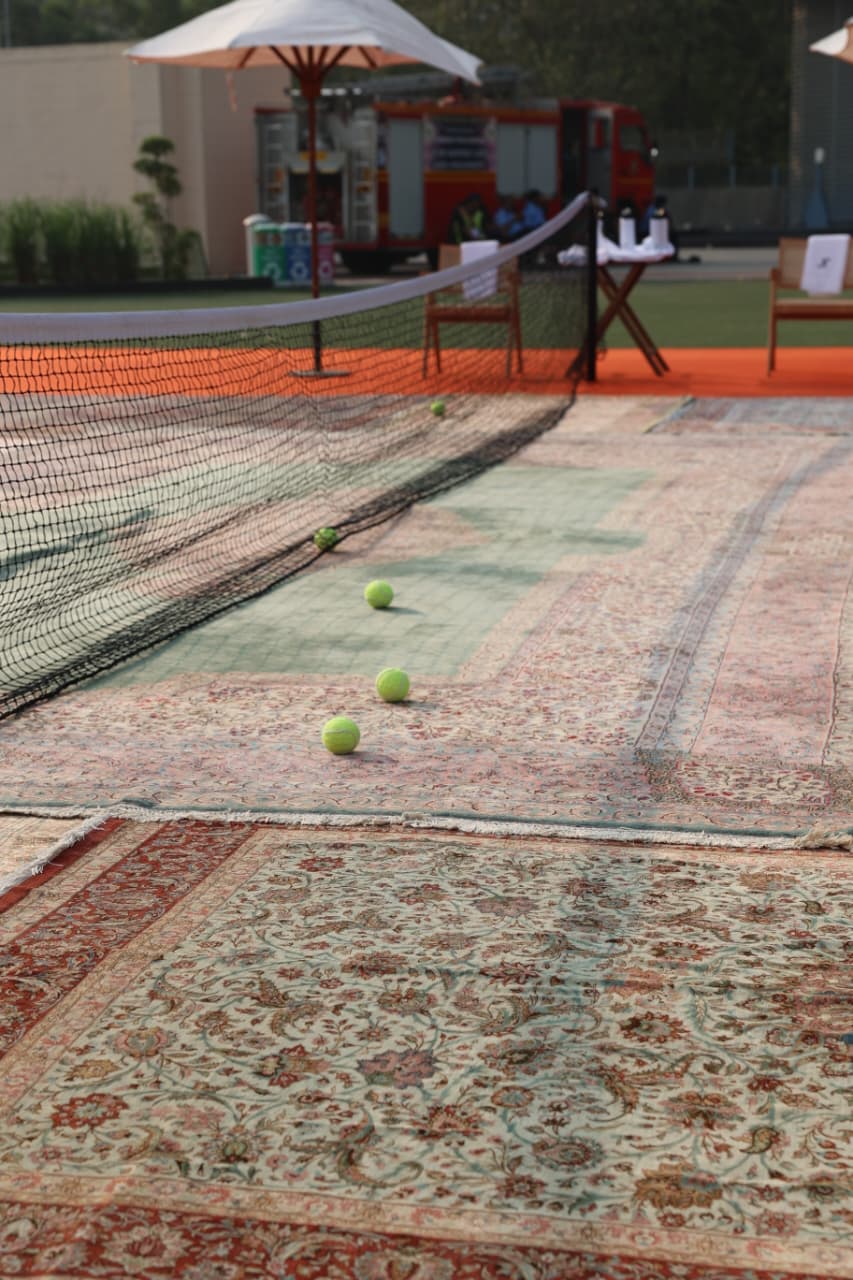
The growth of “design” as a professionalized field in India reflects the broader global split between conceptual and manual labor, which maps on to existing class divisions. Several design practices point to the sensitivity required to work with craft traditions without being exploitative or extractive, a process that takes time and investment few emerging practices can’t afford. “You have to get on the same page with craftspeople: it’s not their responsibility to understand us—it’s our responsibility to communicate what we’re trying to do,” says Iteesha Agrawal, founder of Sarvatva, a new furniture brand exhibiting at Design Mumbai, nodding to the sensitivity required to navigate a craft-based production process ethically.
In architecture, there are similar schisms—in his talk, Vinu Daniel described the personal pressures facing workers on construction projects, a reminder of the unequal impact of progress. More broadly, the pace of urbanisation and construction is putting intense pressure on everyone’s daily life. Pollution continues to rise, traffic disruption is constant and planners are tasked with retrofitting structure onto informal and developer-led spawl, struggling to keep pace. Recognizing the democratic deficit at play, a growing cohort of practitioners are working directly with the people bearing the brunt of these transformations. Tallulah D’silva of Architecture T collaborates with local people in Goa, using natural materials to counter environmentally extractive practices, while Studio Saar is taking a people-centred approach to Udaipur, regenerating parks and public spaces in a rapidly growing city.
Design Mumbai showcased a generation of architects and designers grappling with the realities of India’s scale and politics—from labor conditions to environmental strain to civic participation. Their responses address questions that are relevant far beyond the pressures of the Indian context: how to make and build responsibly and, amid that, value people and the planet, a duty that governments world over have largely abdicated. As overconsumption and overdevelopment push global systems to their limit, how Indian practitioners navigate those tensions hold lessons for us all.
Would you like to comment on this article? Send your thoughts to: [email protected]
Latest
Viewpoints
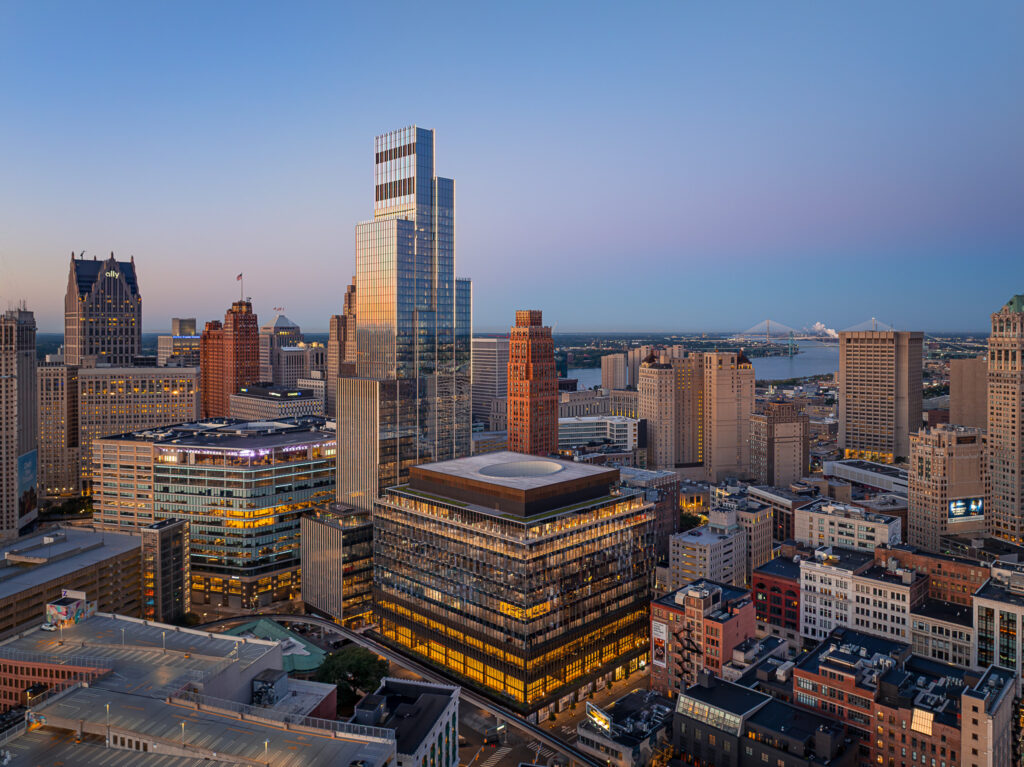
Detroit Month of Design: A City’s Work in Progress
Now in its 16th year, the celebration offers insights into the Motor City’s ongoing accomplishments without glossing over its hurdles.
Projects
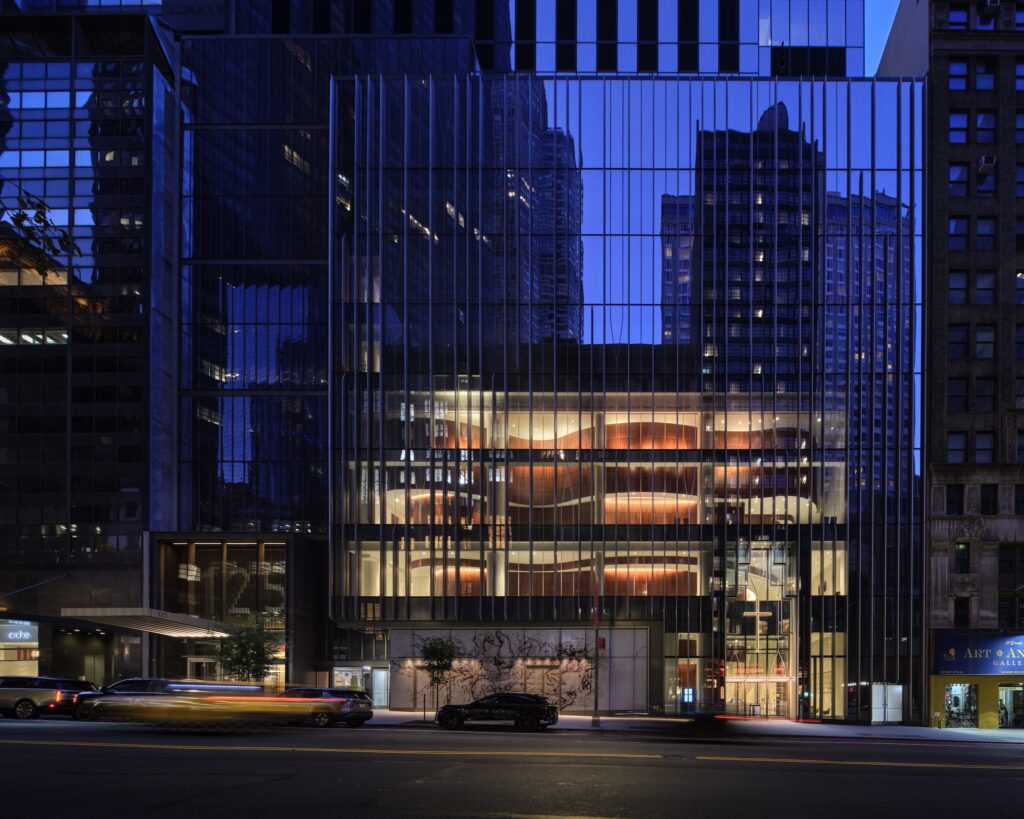
How a Hybrid Building Helped an Historic Manhattan Congregation Remain in Place
On Billionaire’s Row, FX Collaborative designed a new home for Calvary Baptist Church combined with an office tower.