


October 23, 2026
How Are Architects and Designers Navigating AI?
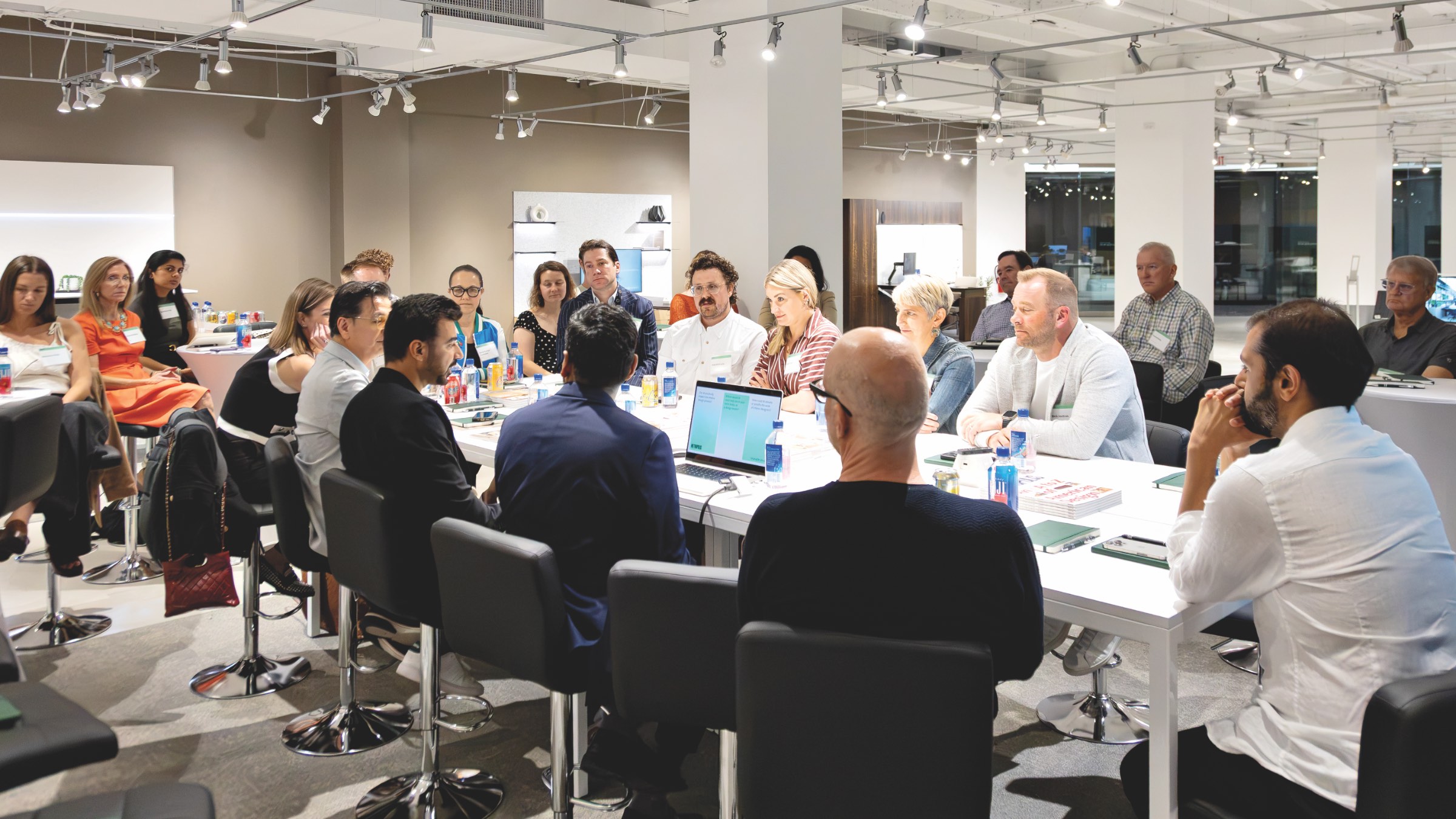
According to a recent Anthropic report, the architecture industry has roughly an 80 percent AI exposure rate—meaning most tasks, from layouts to BIM coordination, could theoretically be automated—yet adoption remains low. With so much external pressure, how are architects and designers actually using AI? This year, METROPOLIS organized three roundtable events in collaboration with Innovant and Motif that brought together leading A&D voices—from firms including Gensler, Perkins&Will, HOK, SHoP Architects, BIG, CannonDesign, Perkins Eastman, Diller Scofidio + Renfro, and more—to tackle the AI issues on the minds of architects and designers today. Here are some highlights from the discussions.
How is AI-driven speed changing client relationships?
Charles Berman, associate principal, Diller Scofidio + Renfro:
Clients say, “Oh these architects, they don’t need three months for schematic design. They can do it in two. Why do you need 12 people on a team? Oh my God, AI can do so much. Compress, compress, compress.” And that’s a problem. All these tools with that speed are like a weapon pointed at my back. “How dare you ask for this much money. Who do you think you are?”
Brandon Smart, design director, Gensler:
I put together a presentation on how we use AI, gave it to the client, and explained the value it gives to our people and the design and the richness of thought and idea. And we actually got a ton more money to use AI as a tool through concept, schematic design, and design development. We weren’t saying “We’re going to do your project faster,” but “We’re going to do it with more thought and more richness.”
Yash Mehta, regional design technology director, Gensler:
I think when you can develop a hundred options in two minutes, judgment becomes more critical, and clients start showing up with “Hey, I’m already here at the table with a couple of options” without fully grasping it. I hope that AI doesn’t help make average design faster.
How can we support the next generation of architects and designers using AI?
Sally Unger, senior design director, JLL:
The thing that hasn’t changed in 20 years is: Come in and be the most teachable person. Having natural aptitude isn’t something you can always teach, but you can become the most teachable person.
Jared de Jonge, director of design technology, Elkus Manfredi Architects:
I think the idea that we’re kind of dancing around here is the idea of comentorship. The students in school right now are really good at using AI, and they’re using it for everything. They’re going to be coming out of school, and they’re going to be better at using AI than we are in practice, but they don’t have the practical experience of putting buildings together. It’s up to us to learn from them and for them to learn from us in a relationship of comentorship. The health, safety, and wellness of our communities depend on us doing that.
Dorin Baul, partner, HWKN:
One of the questions has been “What are they looking at now?” And it’s become interesting because it’s no longer about technical knowledge. It’s no longer even about experience. Those can all be taught along the way. It’s really about creativity and [whether] the mindset that the applicant is in [allows for them] to learn these things, to explore, to have fun. I think it’s creating a new sort of ideal employee that isn’t measured by our current metrics.
How is AI forcing innovation within the practice itself?
Dakotah Lucas, studio director of technology, PBD:
AI has brought back some of the looseness of pen and paper. I think sketching has kind of disappeared from the industry as we get more and more digital, and AI has kind of given us an opportunity to be loose, throw some ideas around, and just talk back and forth.
Yash Mehta, regional design technology director, Gensler:
We all have similar contracts with [Autodesk]. We are all uploading all the information within Revit. Is it using that to train and do all those other things? We can ask the same question for AI. I think AI is just resurfacing some fundamental issues. And it’s good. It’s good that it’s making us dig deeper. I’ve spent more time verifying contracts in my life than I’ve ever wanted to.
Ferdinand Dimailig, principal, Box:
If we rethink what an architecture firm is, is it a combination of architecture, graphics, and engineering? Are we running it based on what we think it’s going to morph into in 10 years? I really think the subjects of architecture and engineering are going to meld more.
Would you like to comment on this article? Send your thoughts to: [email protected]
Latest

Viewpoints
Unmasking Design for Autism
When designing for neuroinclusion, we must consider intersecting identities and overlapping systems of oppression that shape people’s experiences of disability.

Viewpoints
MIT Future Fest Offered a Hopeful View of What’s Next
The inaugural five-day event brought together visionary leaders across design, technology, and art to address the world’s most pressing problems.