



November 13, 2025
Making the Case for Slate
Many traditional building materials have fallen out of favor for a variety of reasons—but they deserve reconsideration by today’s architects and designers, especially those concerned about the environmental and social impacts of their projects.
Slate—a gray, flaky signifier of 19th-century luxury—for example, is one that deserves a second look. Before the 1930s, when asphalt composite shingles became the most common roofing material in North America, the middle class was rushing to build Victorian-style homes or renovate their Georgian and Colonial-style mansions with slate roofs.
And there was a reason. Slate was easy to maintain, elegant in color, and excellent in thermal performance. Many beautiful buildings around the world still prove its durability, with roofs that have lasted hundreds of years. No wonder there was a slate boom in the 19th century—not only in North America but in many other parts of the world where slate roofs have been constructed for thousands of years.
In the latest episode of Deep Green, created in partnership with CUPACLAD, host Avi Rajagopal sits down with Drew Ford, USA regional sales manager for CUPACLAD, one of the world’s leading slate providers. To learn what makes slate a great choice today and what new possibilities have opened for this ancient material, read their conversation below or listen to the full episode on the Surround Podcast Network.
Avinash Rajagopal: Drew, from your point of view, why do you think architects should be looking at slate again today?
Drew Ford: Slate is a great option that many architects have seen on historic projects—castles, cathedrals, and a lot of other projects. There’s a strong perception of slate as a high-quality, long-lasting material. We’re here to explore not just those attributes but also the sustainability factors and the economic benefits of the material. It’s not going to be the most expensive, but it offers a lot of value to designers.
AR: Certainly, it has an artisanal quality to it. How does CUPACLAD bring that into the modern era?
DF: CUPACLAD is part of the Cupa Group and Cupa Pizzaras, the world’s largest slate producer. One out of every two pieces of slate installed globally is ours. We have the capacity to handle projects of all sizes. The Cupa Group has been producing slate under that name since 1890. Many of the slates seen on historic castles and cathedrals are actually Cupa slate that we still produce today. CUPACLAD builds on this history, focusing on the benefits of slate—its longevity, low water porosity, and high density. These qualities allow it to perform exceptionally in various climates.
CUPACLAD takes this time-tested slate material with rain screen technology, offering the best of both worlds: a durable, high-quality exterior with performance characteristics like improved thermal efficiency and moisture management.
AR: I’ve been talking about roofs, but you mentioned a rain screen system as well. So, we’re discussing two things: optimizing this material for current building performance standards and expanding its use from traditional roofing to rain screen facade systems. Take me through what makes slate a high-performance material, and let’s discuss its carbon footprint.
DF: The material’s story begins 300 to 400 million years ago within the Earth’s crust. What happens over that period of time is an intense heat and pressure changing the chemical nature of those raw materials to get a very low water porosity. Slate is a broad term for a type of rock, so it’s important to consider the quarry’s location and the specific geological history.
We pride ourselves on rigorous testing and certification, ensuring durability across various climates. Slate has an excellent sustainability track record. We hold a carbon-neutral certification from Carbon Trust, reflecting our commitment to understanding and minimizing the carbon footprint of our production and the material’s lifecycle. With a 100-year warranty from CUPACLAD, slate promises long-term durability. One of my favorite things is its reusability; after decades, slate can be removed and repurposed for new projects, further extending its life and sustainability.
AR: True, there’s a lot to unpack in what you just said. Could you explain how the stone is treated and prepared for building use after it’s quarried?
DF: Definitely, from our 20 quarries in Northwest Spain, we cut large blocks of slate using diamond-studded steel chains. These blocks are then shaped into manageable sizes. Every slate piece is hand-split with a hammer and chisel, ensuring no two pieces are identical. Unlike molded products, slate’s slight natural variations give it unique beauty while maintaining consistent color and texture due to our quarrying processes.
AR: I’m really intrigued by reusing slate. One of the ways that’s possible is your facade system, right? How did you develop that system, and how does it facilitate easy replacement or reuse?
DF: Based in Europe, we initially developed the system for the European market, where rain screen products have really captured that design community. We combined the benefits of natural slate with rain screen materials and systems. Bringing this to the U.S., we adapted it for wood-frame construction with a system called direct apply. This includes mechanically attaching slate with pre-drilled holes to OSB plywood sheathing, enhancing installation efficiency.
We’re putting a neoprene shim behind the pre-drilled holes, helping as a vapor barrier and thermal break, with a small rain screen cavity for moisture management. Collaborations with Vapor Shield ensure high-performance water resistance and thermal efficiency. This system is customizable, meeting diverse project needs.
AR: You’ve taken the kind of expertise that say a Slater in the 19th century would have, and added this layer of engineering and ingenuity to it to create a flexible system that today’s installers can work with for today’s projects. Can you share U.S. projects where this system has been implemented?
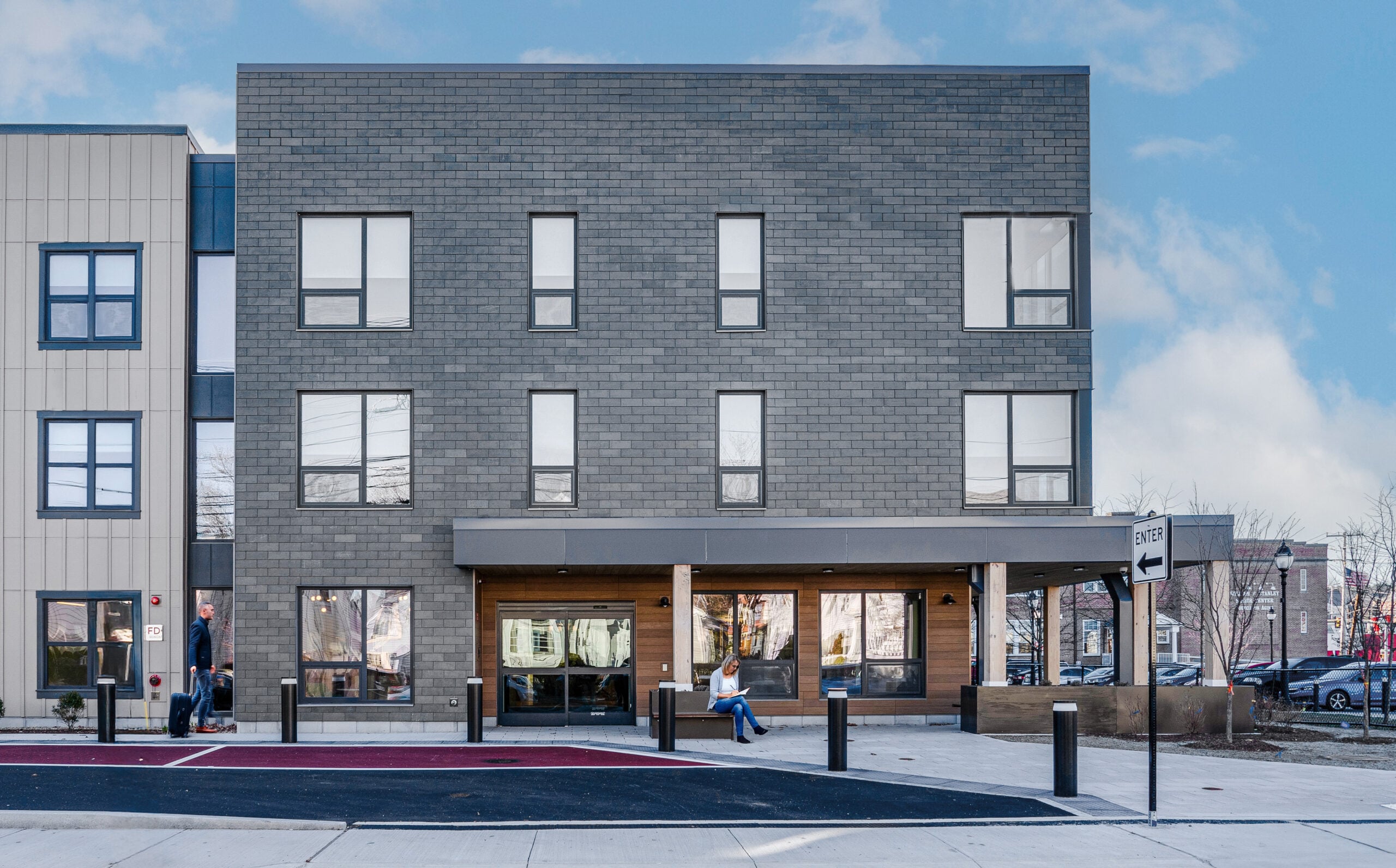
DF: Two projects come to mind. One direct apply project initially considered painter’s brick. After introducing CUPACLAD, the system’s simplicity and cost-effectiveness impressed the team. That’s something that really perked their ears up a little bit was the easy install. Installation costs were lower than painter’s brick, and long-term maintenance costs were reduced.
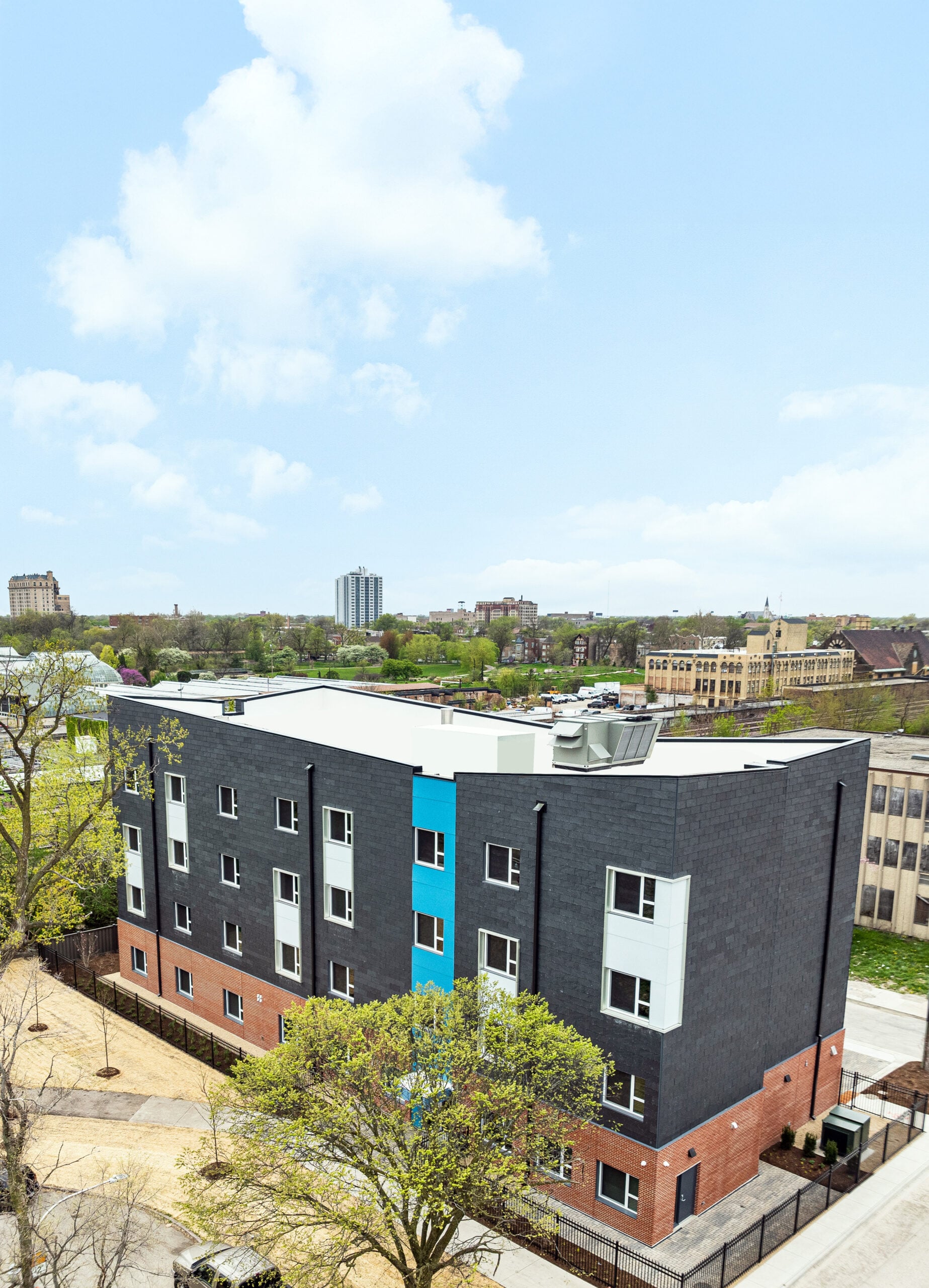
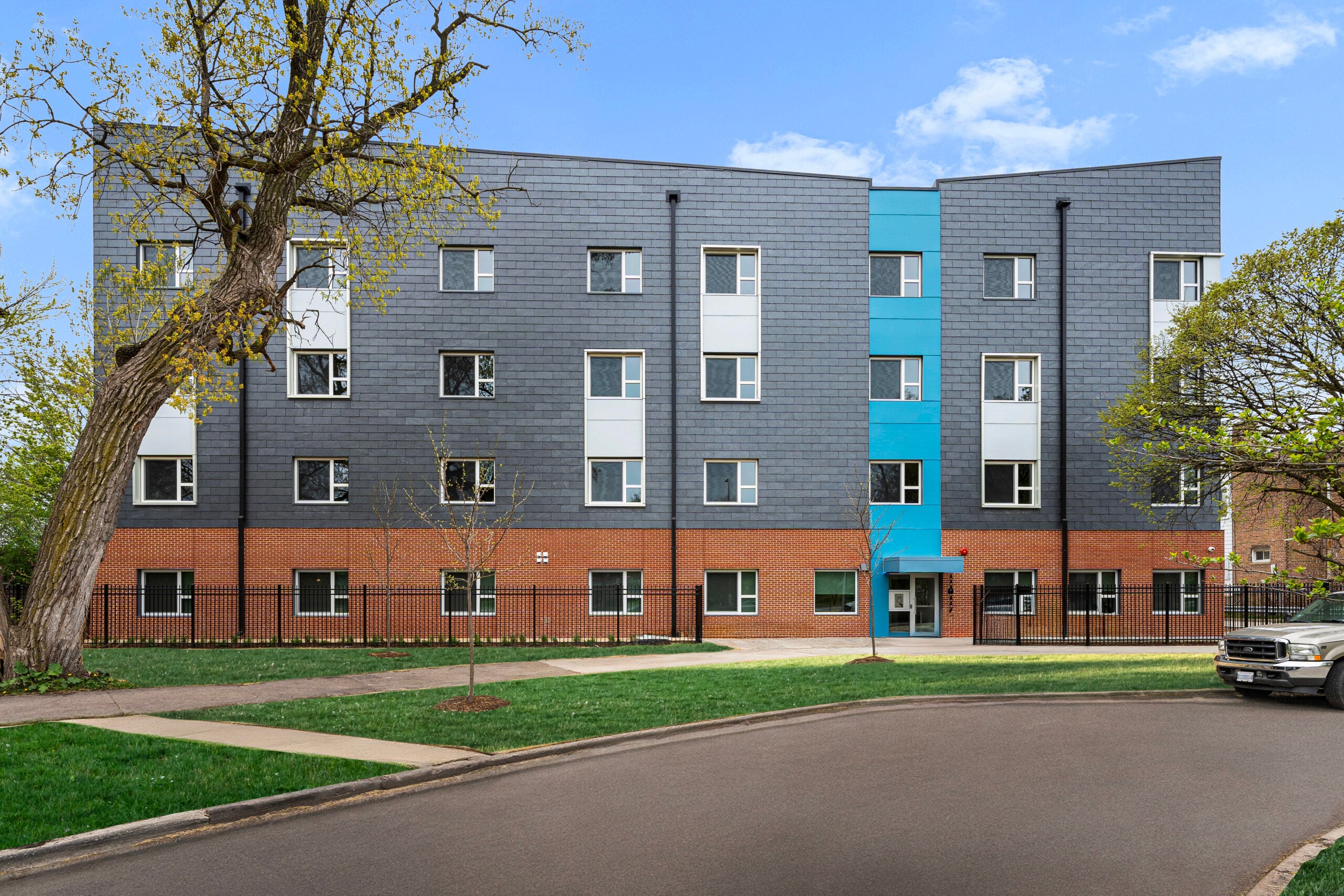
Another project in Chicago, the Conservatory Project—an affordable housing initiative—used our 201 Vanguard system with exposed stainless-steel clips, adding architectural interest. This project was for Passive House certification, focusing on energy efficiency. Our rain screen system accommodated continuous exterior insulation, aiding in achieving that certification. It’s the largest affordable housing Passive House project in Chicago, showcasing slate’s environmental and cost benefits.
AR: Traditional materials like slate often prove more economical and sustainable than modern composites. They also have this great maintenance life. We don’t think of traditional materials like slate as high-performance materials and you’re talking about a passive house project that has very high standards for thermal insulation and slate actually has amazing thermal property. So, it’s working with that installation under the rainscreen facade. But we’ve lost some expertise with materials like slate, so how do you help design teams discover the best way to use slate on their project?
DF: Our AIA Lunch and Learn sessions, provide in-depth education on natural slate as a cladding material. They give us a great opportunity for me to get in front of their office, their whole team, and really dive into natural slate in general as a cladding material, but get into some of the specifics with assembly for the full rainscreen system, the direct apply, and characteristics that make it a great material for their project.
Many architects assume slate is unaffordable, but we love showing how cost-effective it can be. We engage with architects early, helping specify the best system for performance and budget.
During the bidding phase, we support general contractors unfamiliar with slate, ensuring they understand the material and installation process. It’s really going to pop depending on the weather. Slate’s natural beauty—like its silver metallic shimmer under sunlight—adds unique character. We aim to inspire excitement about its aesthetic and performance benefits while emphasizing affordability.
AR: I started this conversation talking about how slate has often been a signifier of luxury and class but it’s remarkable that your Chicago project was affordable housing, demonstrating slate’s accessibility. Are there new possibilities or insights you’d like to share with architects and designers?
DF: One of the great things about natural slate is its flexibility. Beyond standard systems and patterns, we can create custom shapes and designs, allowing architects to be highly creative. Some projects feature standard facades with custom patterns highlighting specific areas. It gives designers a lot of design flexibility to be creative, to think outside of the box with the orientation of the material, the shape of that slate. Collaborating with designers to meet their vision and explore innovative uses of this ancient material in modern architecture is truly inspiring to me.
AR: Absolutely, thank you, Drew, for being such a great advocate for slate and educating us about its sustainable benefits. As we reconsider materials post–World War II, moving away from plastics and composites due to environmental concerns, it’s time to embrace authentic materials like slate. With engineering support, they’re ideal for modern projects. I appreciate your insights today.
Listen to “Making the Case for Slate” on the Surround Podcast Network.
Latest
Projects
UC Berkeley’s Newest Building Is All About Human Interactions
The Barbara and Gerson Bakar Gateway—home to the university’s College of Computing, Data Science, and Society—gently reminds data scientists and AI researchers of what’s really important.
Projects
ZD+A Brings a Modernist Mexico City House in Line with its Context
Architect Yuri Zagoin Alazraki reorganized the speculative house to respond to its site and create unique spaces for contemplation.