


May 4, 2026
Milan Design Week 2026: Beyond the Spectacle
Independent Talents Still Experimenting
Salone del Mobile.Milano remains the largest fair of its kind. Behind endless rows of oversized brand booths lies SaloneSatellite, a special showcase that, for the past 27 years, has identified fledgling talents who have gone on to shape the industry. Curated, as always, by Milanese doyen Marva Griffin, this year’s edition brought together an international group of up-and-comers re-implimenting craft as a means of experimentation and hence, innovation.
Strong focus was placed on the rapidly self-defining Chinese design scene. One thoughtful group presentation outlined how the heritage of the Liangzhu culture has influenced not overly reverential contemporary output: hyper-refined tea pots crafted from jade and bamboo furnishings that accommodate present-day needs while still holding fast to the material’s ancient cultural and spiritual significance. Another exhibitor, Wang Yixian debuted the Foggy collection, ornately crocheted vessels created using malleable strands of fiberglass.
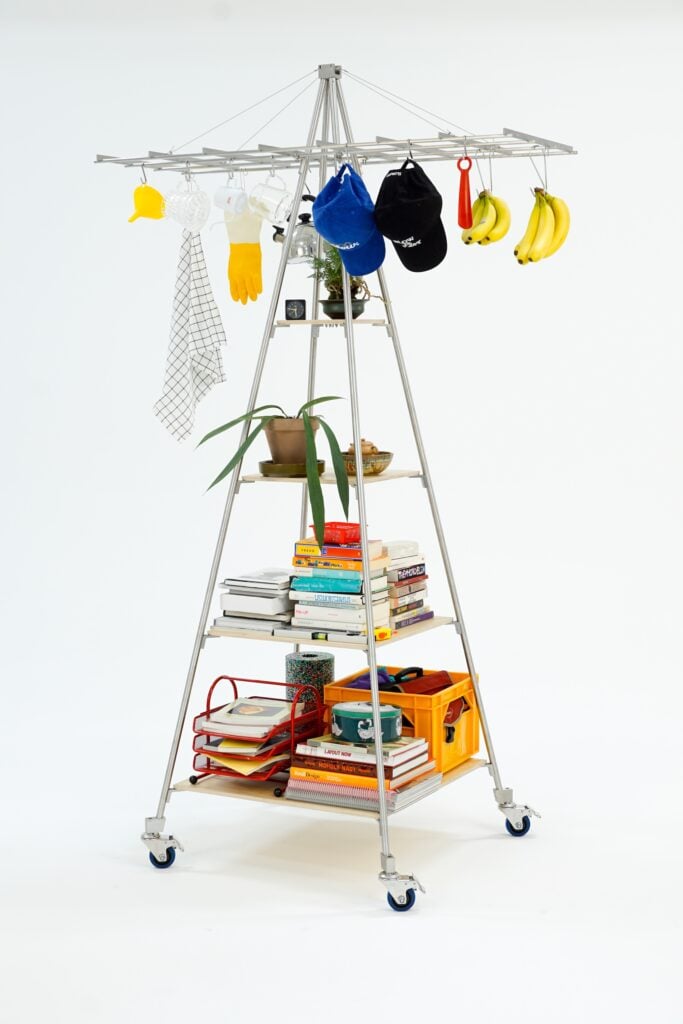
Developed by Shenzhen-based Zhijian Xiong and Junhan Zhang, Living Form Design Studies “is a collective design endeavor to continue the modern design agenda critically… raise questions to the categorization and stylization of home furnishings/accessories as consumer goods. Displayed in a dedicated vignette, their LF1B Tower, an exoskeletal stainless steel and wood design, refigures the cross-cultural practice of hanging items for storage.
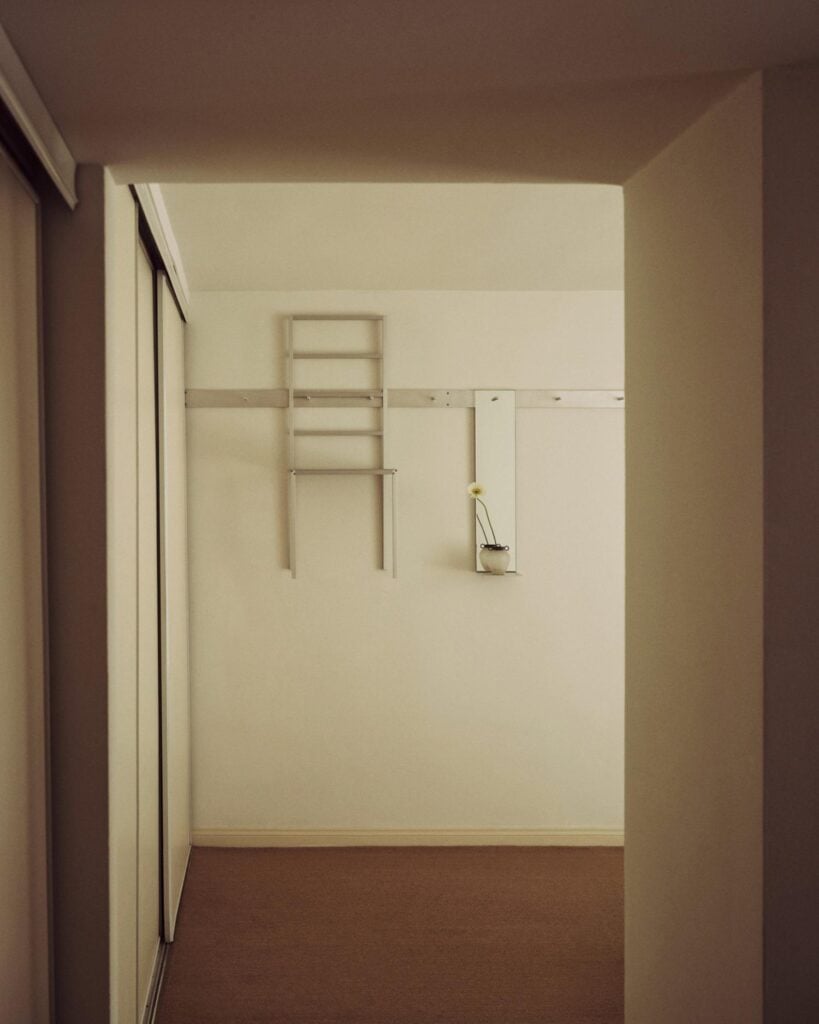
At Convey, a relatively new group exhibition mounted by international agency Simple Flair, Los Angeles duo Joshi / Greene presented its similarly rationalized and aesthetically refined Rail concept. Inspired by Shaker design, the kit-of-parts appears to address the growing need for adaptability in our increasingly compact domestic spaces. The honed aluminum track system is cohesively fitted with pegs that can hold a wide variety of home furnishings—chairs, mirrors, shelves, etc.—kept out of the way when not in use and at the same time, displayed as hung art.
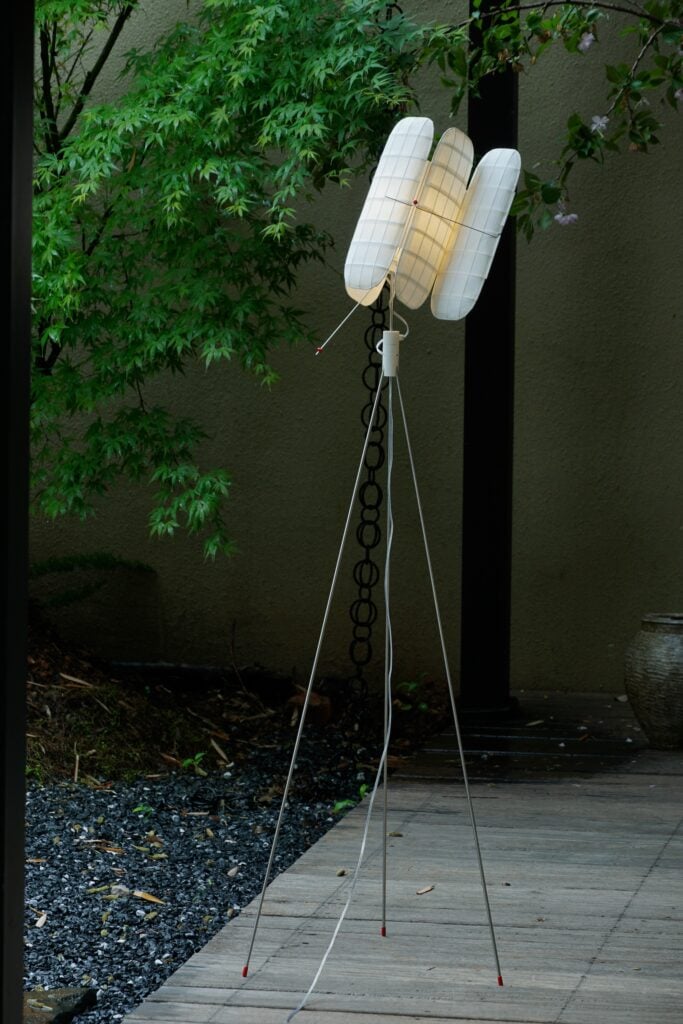
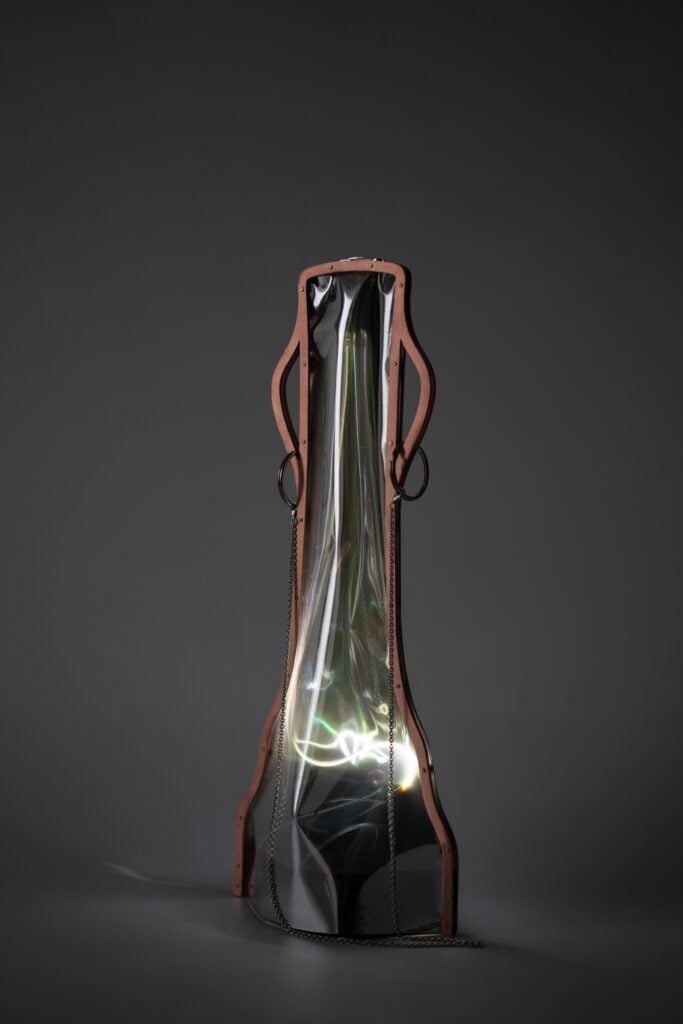
At Alcova, now the main independent talent, small brand, and school showcase counterpoint to Salone, Chinese design also had a strong showing. Experimental duo Ningbo-based Studio Ololoo made their debut with a bevy of speculative lamp and vessel concepts that challenge the common perception of oft-overlooked everyday materials. The new Lantern pendant light project plays up the skewed line between the unnatural and natural in both structure and physical property.
Its shape is bone-like, but it’s made of synthetic textile.
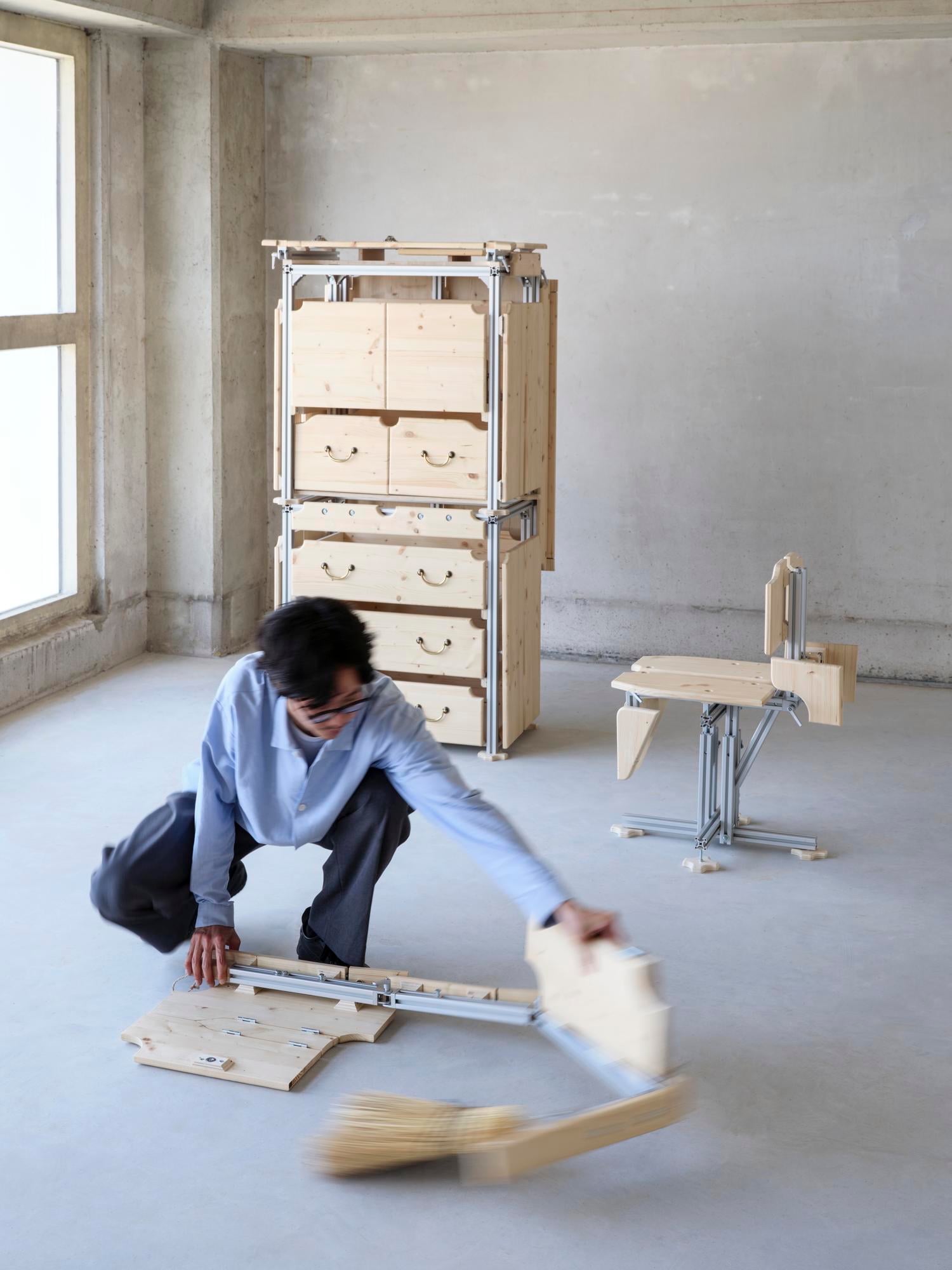
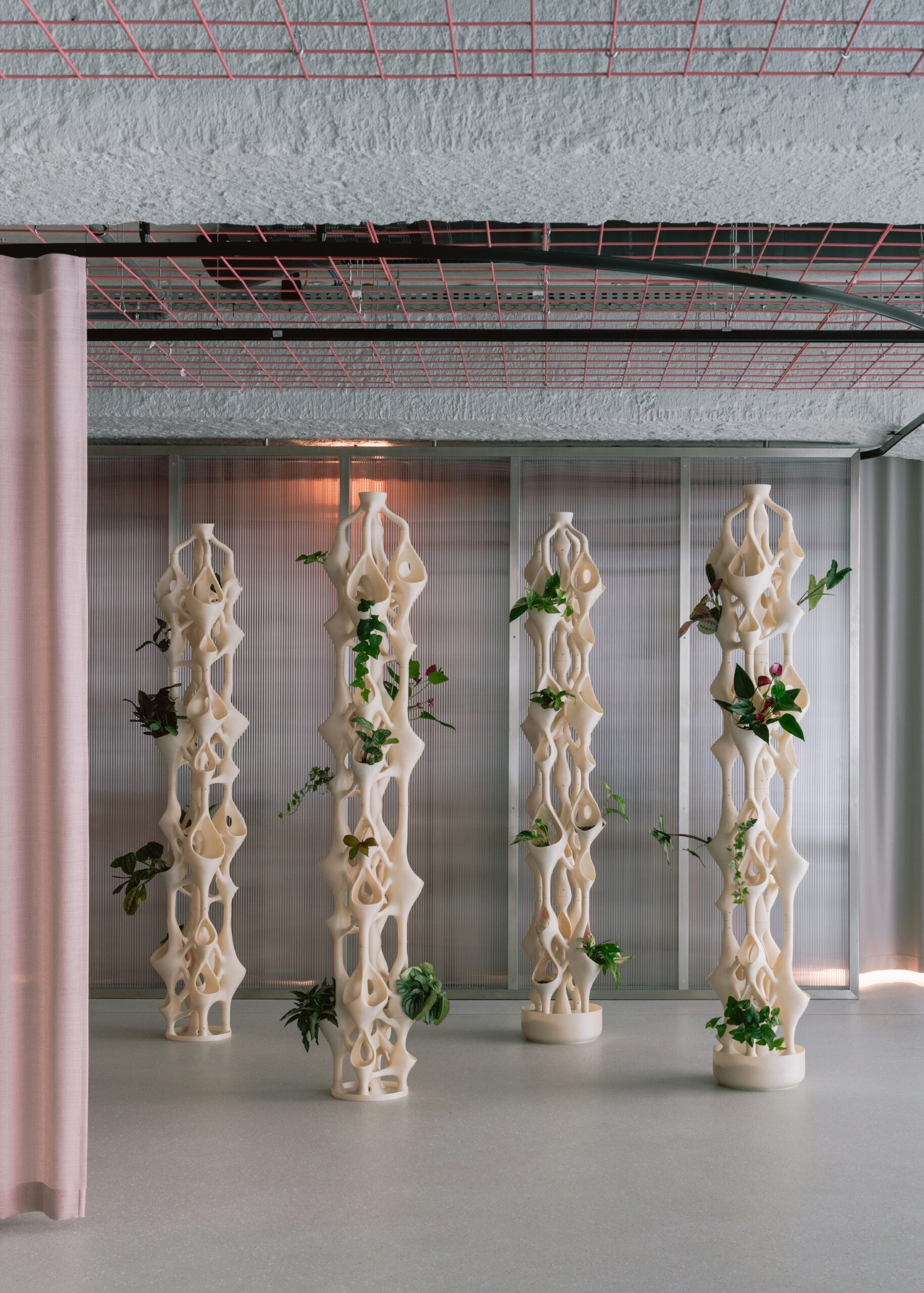
Among a slew of roughly formed ceramics and an i-design metal/digital screen mash-ups—French talent Jean Baptiste Durant’s deftly collaged upcycled construction material settees and science beaker luminaires, and Design Academy Eindhoven masters program grad Jun Fujisaku’s deeply charged TRANSCENDERS collection of metal frame and wood infilled cabinets. Also, Slovakian sustainability-minded studio Crafting Plastics unveiled the fully realized What Grows Between interactive hydroponic biocolumns. The modular biosystem filters rainwater and is engineered to indicate pH levels through self-activating shifts in color.
A similar self-operating—object-oriented—ontology quality was apparent in Dutch engineer-turned-designer Rick Tegelaar’s re-edited Cam Fan concept—a kinetic, multi-panel cooling system powered by just 3 watts. The reimagined solution was presented alongside his widely implemented Tabby illuminated structure product—a woven veneer system that both holds and refracts a grid of LEDs in a single gesture. Within his Oasis solo show, he also presented a few of the customized machines he uses every day.
Material and Application Brought to Task
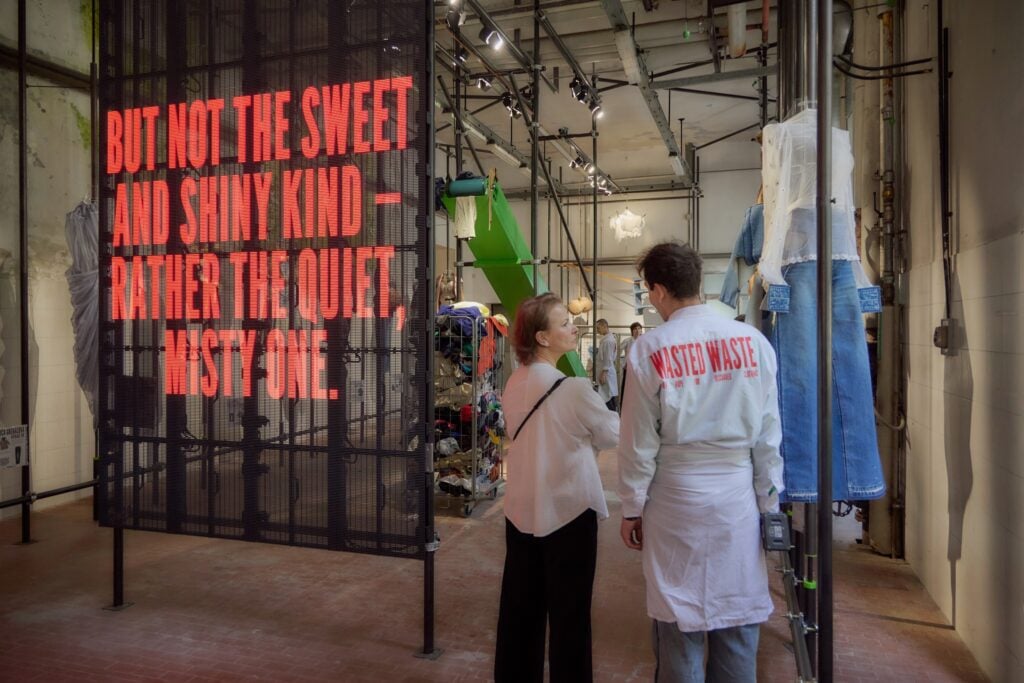
Perhaps the most topically grounded collective showcase at this year’s Milan Design Week—especially when it comes to material research, reinvigorated craft processes, and the question of adaptability—took place at the Dropcity center for architecture and design platform, an unconventional institution housed in the barrelled cellars below the tracks of Milan Central Station. The University of Southern Denmark’s SDU Robotics and I4.0 Lab presented the results of its Robotic Reversible Timber Bean (R2TB) research project: a new structural component circularly constructed through a human-robot collaborative process.
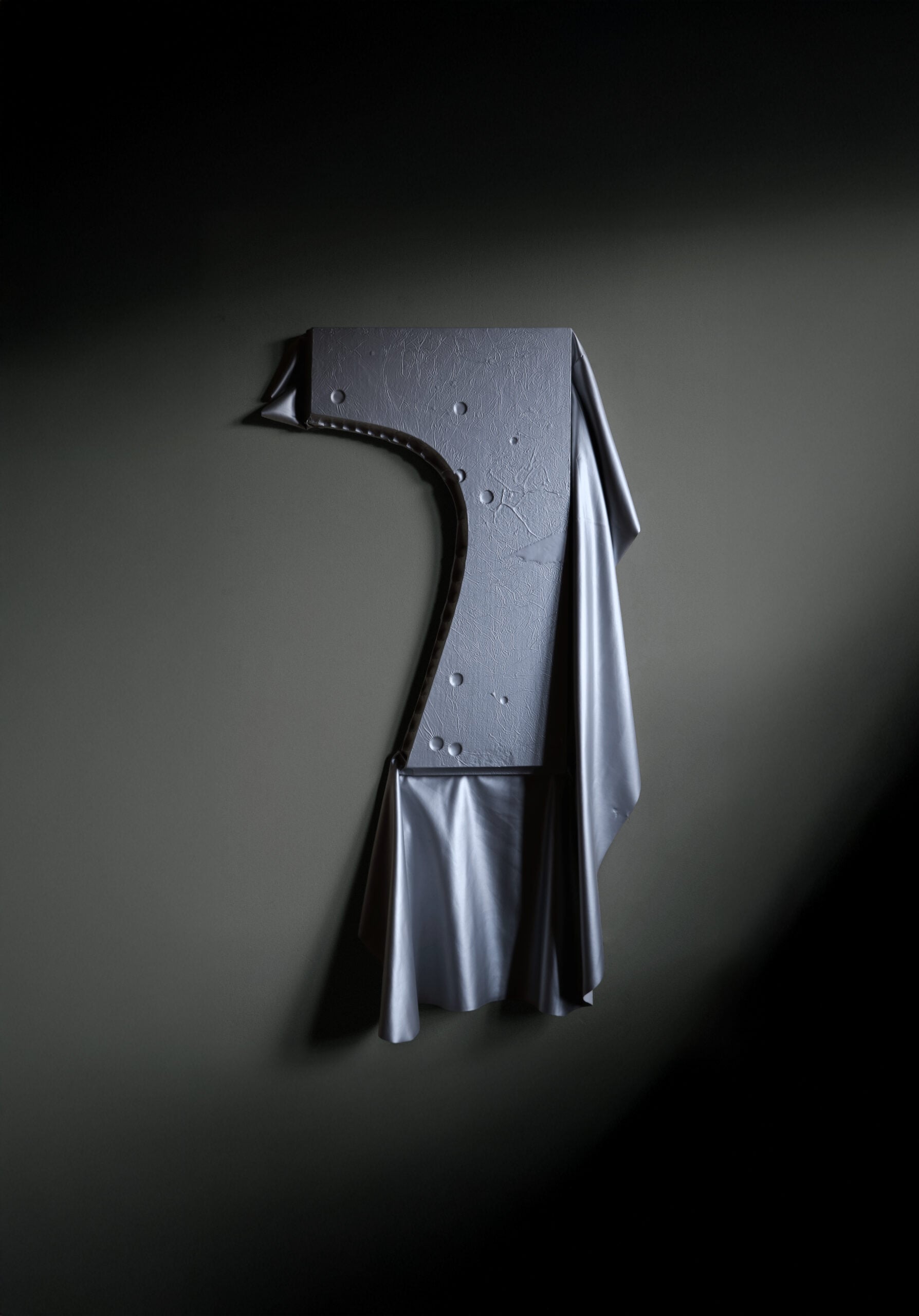
The notion of intersecting industry and craft is also the fil-rouge in the speculative practice of French designer and material researcher Maud Rondot. Developed as part of a Milan Design Week residency, her MECANE SCRIPT project explores “the traces automobiles might leave.” Re-tooling the ubiquitous vacuum-forming technique as a viable finish for repurposed industrial remnants as well as wood fragments, the new material she’s proposing could have innumerable applications.
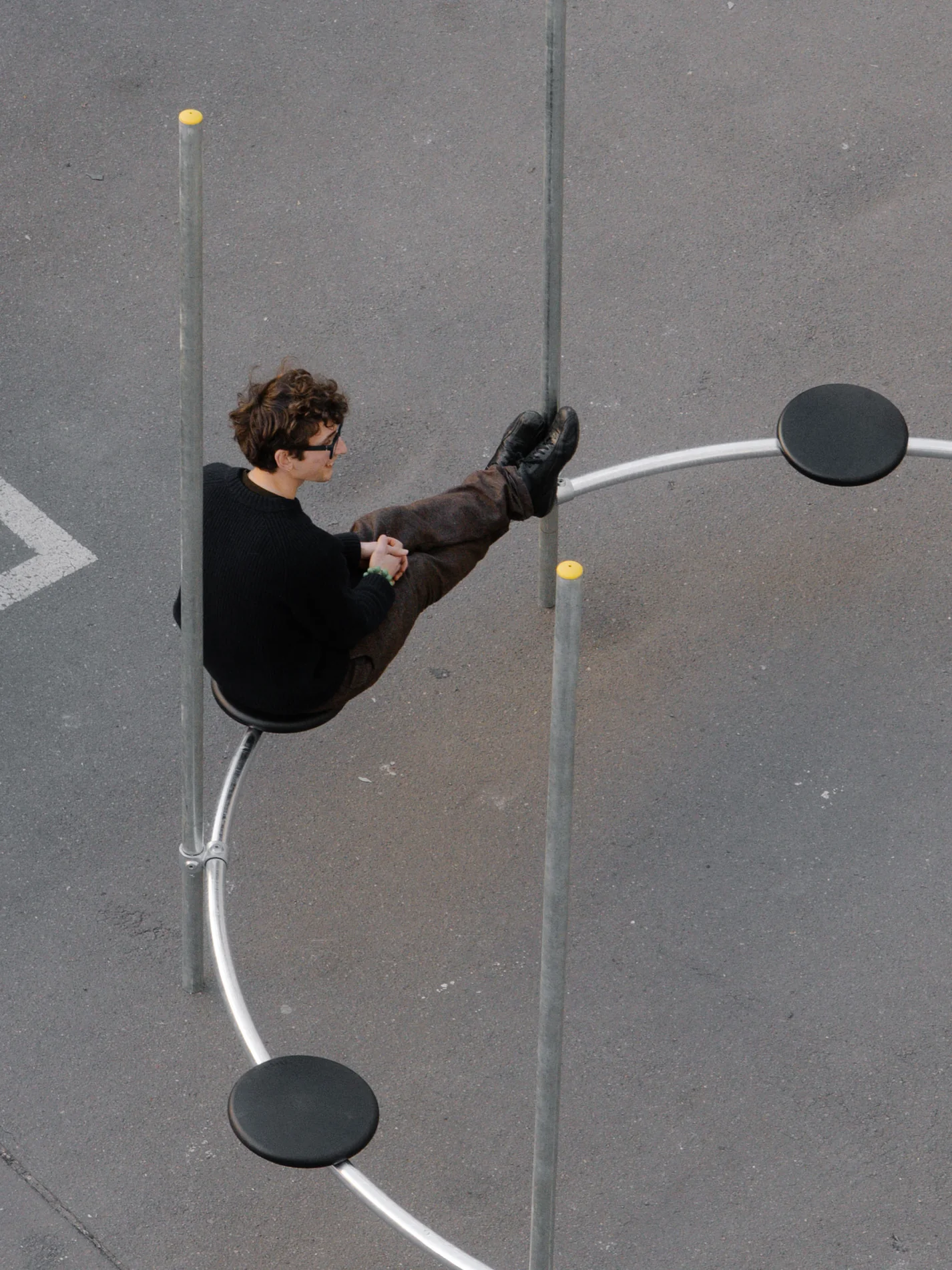
Through his label 25kg, ever-maverick German designer Konstantin Grcic debuted THING_04, a seat produced using rotationally molded, 100% post-industrial PP plastic. According to the brand, “it clamps onto standard scaffolding poles, it’s simple, direct, and works alone or together as a system.”
Brands Taking Risks Again
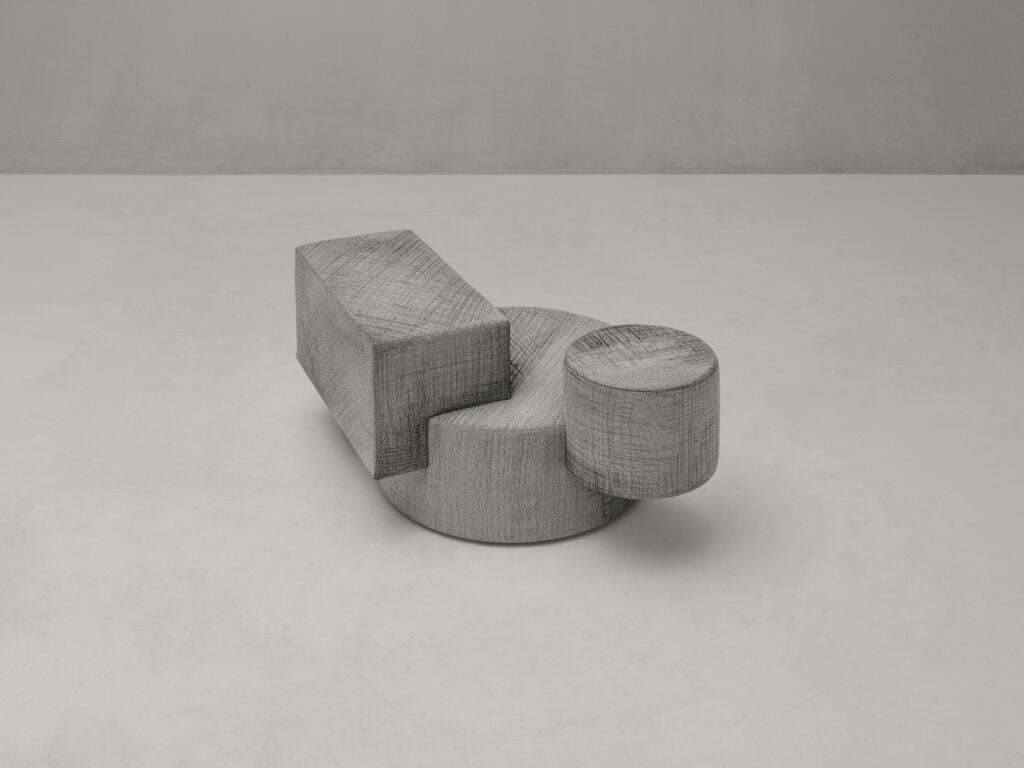
Several established furniture and textile brands also released new products cleverly challenging the conventions of form, function, aesthetics, and application. Never a producer that heeds the trends overly propagated by its Italian counterparts, Moroso collaborated with still-edgy Swedish studio Front on the Geometriæ collection. The geometric shape composed of sofas and rugs plays on the perception of cross-hatched drawings and watercolors, transposing their visual qualities into three dimensions.
Heritage brand Knoll tapped American polymath Dozie Kanu to imagine a new eponymously named table and console collection in which the proverbial static object is transformed into one that’s animated. This was achieved by rendering portions of the extruded ovidial forms in strapped fabric. Somewhat analogous Italian lighting brand Foscarini commissioned architects Jozeph Forakis and Lorenzo Palmeri to experiment with the potential of illuminated open-structure knitted fabric structures.
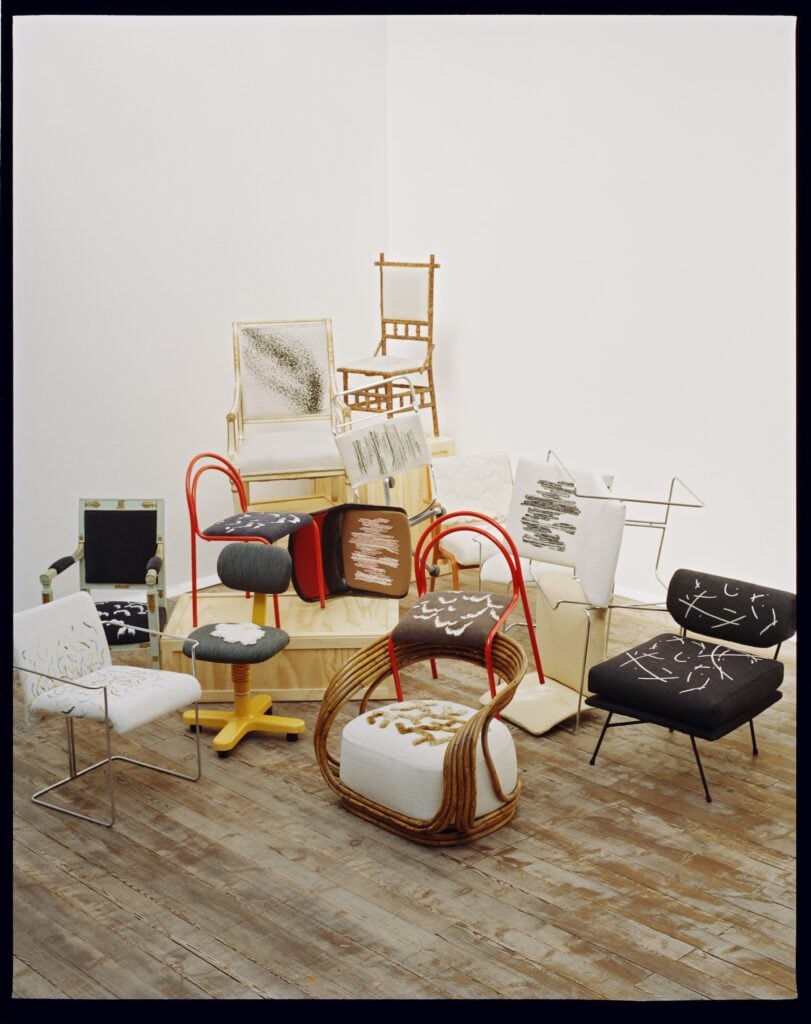
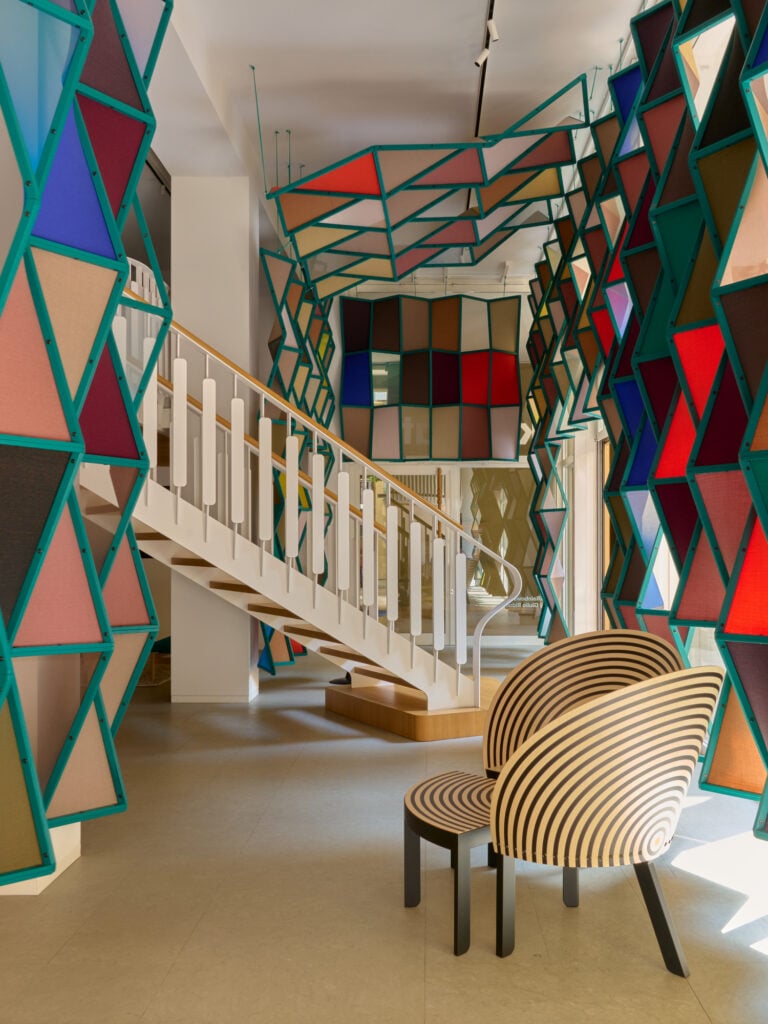
Italian textile brand Dedar set out to celebrate the age-old, if slightly lost, tradition of embellishing dining chair upholstery, in singular motifs. The new Versi Liberi pushes this practice into the aesthetically experimental realm, it would seem, opening the potential of conferring what would normally be discarded of-cuts or mistakes a purpose, as abstract decorative elements. In a moment defined by loud and flippant, pictorial carpets and textiles, Scandinavian brands Kvadrat and Kasthall have taken a more sober yet still slightly expressive approach. The former’s new In Rainbows collection—developed in partnership with Giulio Ridolfo—layers different hues that, in a very nuanced way, imbue the flat pattern fabric with an almost trompe-l’œil effect. The latter collaborated with ever-prolific British practice Barber Osgerby on the Atlas & Bonbon rug offering. The designs articulate the potential for sequential, uncontrolled shifts in coloration inherent to the industrial loom-weaving process.
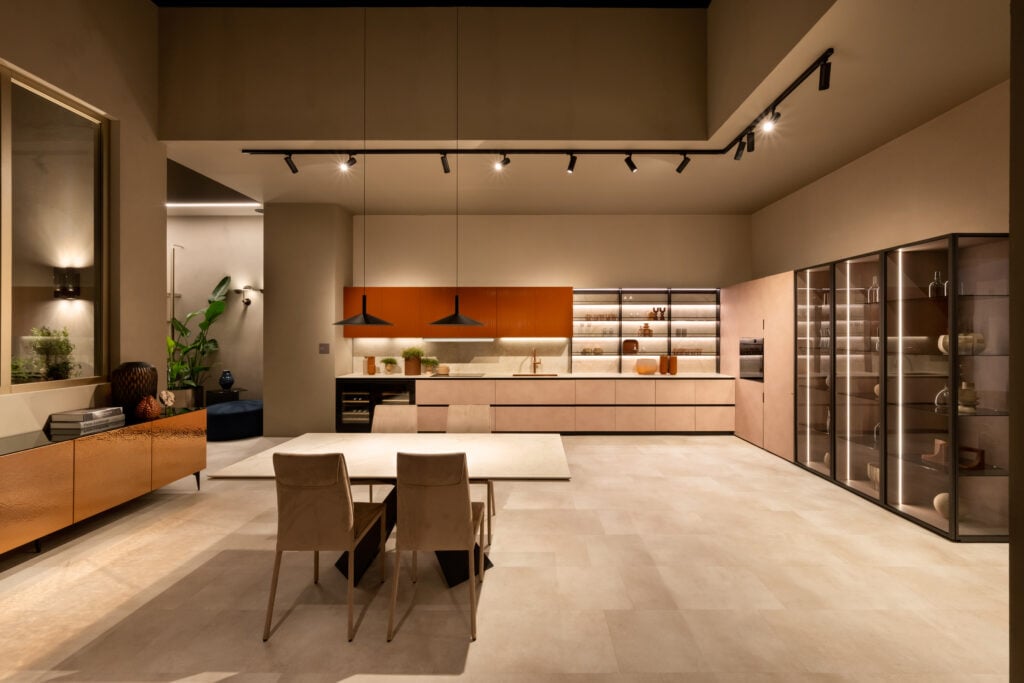
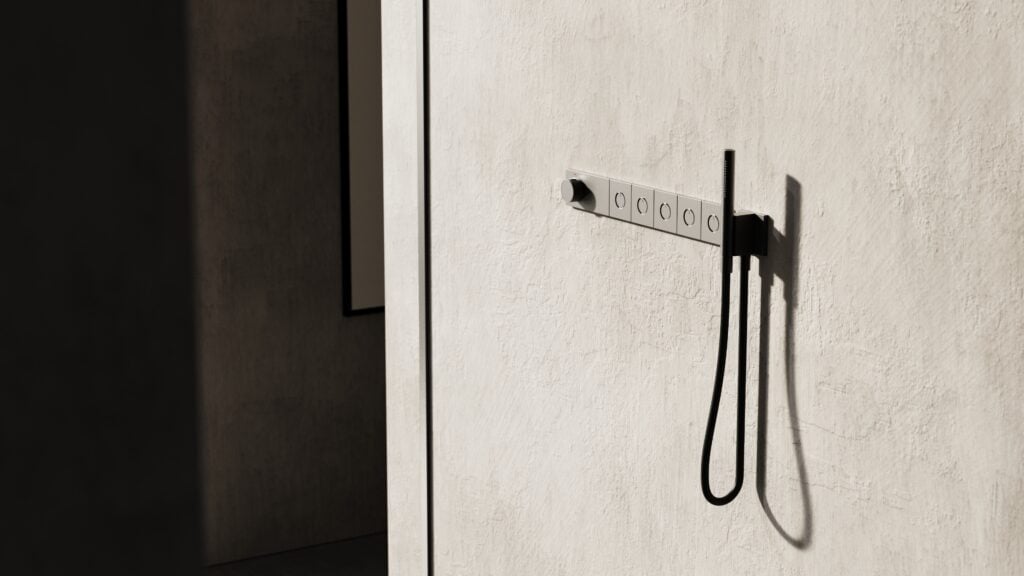
This year’s Salone del Mobile. Milano was joined by the semi-annual EuroCucina / FTK showcase, and with that, most of the big fixture producers pulled out all the stops. GROHE introduced its premium luxury subbrand GROHE SPA with the immersive yet respectful-of-site Aqua Sanctuary showcase at Milan’s storied Piccolo Teatro. With the financial affordance provided at this level, the German producer was able to experiment and push typological limits with new speculative paradigms like an aroma-therapy diffusing sink. In terms of actual products, the equally new format, flat-plane Allure Gravity faucet comes in a wide range of customizable finishes, including the newly engineered Revia material: a durable composite fusing waste wood with the types of plastics that are often hard to recycle.
Across displays mounted by brands and independent studios, representing the blurring boundaries between heavy industrial and craft-led production, on offer at this Milan Design Week were numerous innovative solutions—ones unbothered by the stylistic trends of the day and, if anything, those embracing them as complementary features, not wholly defining identities.
Would you like to comment on this article? Send your thoughts to: [email protected]
Latest
Viewpoints
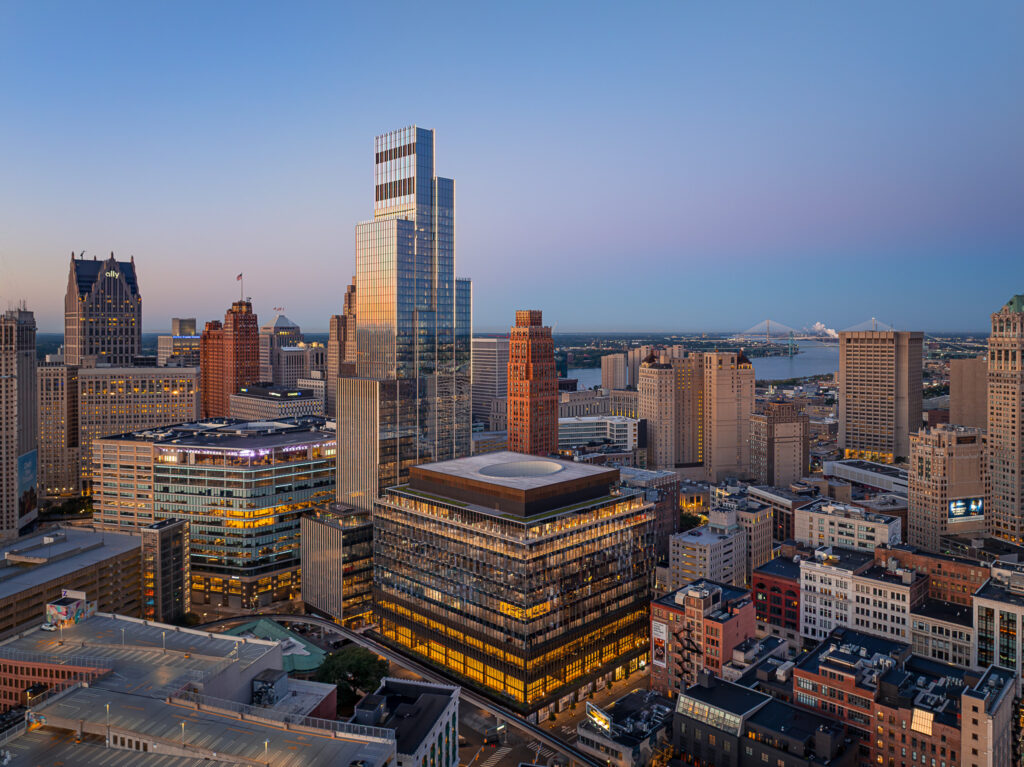
Detroit Month of Design: A City’s Work in Progress
Now in its 16th year, the celebration offers insights into the Motor City’s ongoing accomplishments without glossing over its hurdles.
Projects
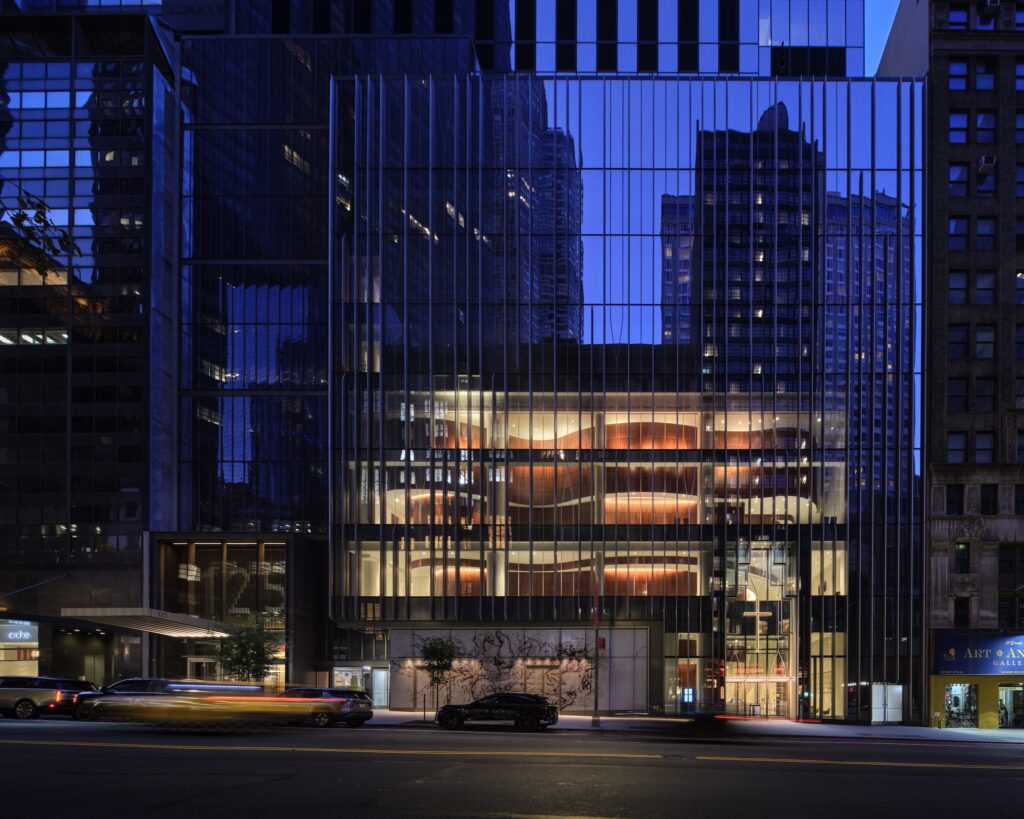
How a Hybrid Building Helped an Historic Manhattan Congregation Remain in Place
On Billionaire’s Row, FX Collaborative designed a new home for Calvary Baptist Church combined with an office tower.